
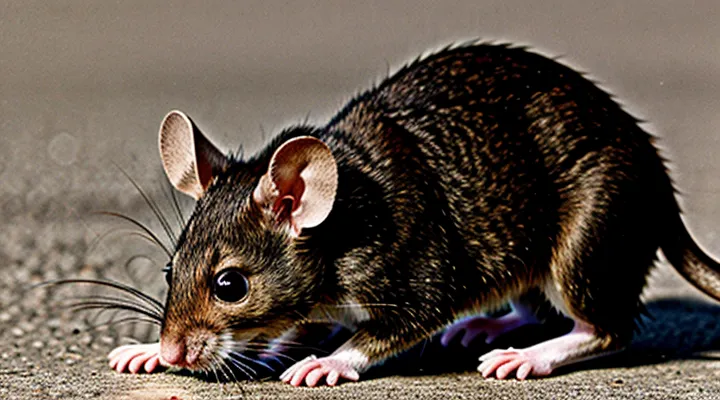
The Simple Answer: Counting Mouse Ears
External Ear Structures: Pinnae
Mice possess two external ears, each capped by a pinna that serves as the visible component of the auditory system. The pinna is a thin, semi‑transparent cartilage framework coated with fine fur, extending approximately 5–7 mm from the skull in adult specimens. Its curvature forms a shallow cup that directs airborne sound waves toward the external auditory canal.
Key structural characteristics of the mouse pinna include:
- Cartilaginous scaffold: flexible yet resilient, allowing subtle adjustments in orientation.
- Vascular network: a dense plexus of capillaries supplies heat and maintains tissue viability.
- Innervation: branches of the auriculotemporal nerve provide tactile feedback and reflexive movement.
- Fur coverage: short, dense hairs reduce drag while preserving acoustic transparency.
Functionally, the pinna enhances acoustic sensitivity by amplifying frequencies between 5 kHz and 30 kHz, the range most relevant to murine vocalizations and predator detection. Its ability to swivel a few degrees improves sound localization, enabling the animal to pinpoint the direction of a source with millisecond precision. Additionally, the vascularized surface contributes to thermoregulation, dissipating excess heat during elevated metabolic activity.
Comparative observations reveal that laboratory strains such as C57BL/6 display slightly larger pinnae than wild‑type Mus musculus, reflecting selective breeding influences. Nonetheless, the fundamental morphology remains consistent across the species, confirming the pinna’s essential role in external auditory mechanics.
Internal Ear Structures: A Brief Overview
Mice possess a single pair of external auditory openings, but the complexity of their inner ear rivals that of larger mammals. The cochlea, a spiraled organ approximately 4 mm in length, houses the organ of Corti where hair cells transduce sound vibrations into neural signals. The basilar membrane runs along the cochlear duct, varying in stiffness to enable frequency discrimination; basal regions respond to high frequencies, while apical regions detect lower tones.
Adjacent to the cochlea, the vestibular system comprises three semicircular canals arranged orthogonally, each containing a fluid‑filled lumen and a sensory epithelium (the crista ampullaris). Rotational movements of the head generate fluid displacement, deflecting cupulae and stimulating hair cells that encode angular acceleration. Two otolithic organs, the utricle and saccule, contain otoconia—calcium carbonate crystals that shift with linear acceleration and gravity. Their maculae provide the brain with information about head position and linear motion.
Neural transmission originates in the spiral ganglion, whose bipolar neurons project through the auditory nerve (cranial nerve VIII) to the cochlear nucleus in the brainstem. Parallel pathways from the vestibular ganglion convey balance data to the vestibular nuclei, integrating with cerebellar circuits for posture control. Myelin sheaths surrounding these fibers ensure rapid signal conduction, essential for precise auditory and vestibular processing.
Key anatomical features can be summarized:
- Cochlear duct: organ of Corti, hair cells, basilar membrane.
- Semicircular canals: three orthogonal loops, crista ampullaris.
- Otolithic organs: utricle and saccule, otoconia, maculae.
- Neural pathways: spiral and vestibular ganglia, auditory nerve, vestibular nuclei.
Anatomy of the Mouse Ear
External Ear: Pinna Function and Structure
Cartilage and Skin Composition
The external ear of a mouse consists of a thin skin envelope covering a core of elastic cartilage. The cartilage is composed primarily of elastic fibers, type II collagen, and a matrix rich in proteoglycans, providing flexibility while maintaining structural integrity. Elastic fibers allow the pinna to bend and recover its shape, a feature essential for the animal’s ability to orient the ear toward sound sources.
Skin over the pinna is comprised of a multilayered epidermis and a dermis. The epidermis is keratinized, forming a protective barrier against abrasion and desiccation. Beneath it, the dermis contains dense collagen bundles arranged in a reticular pattern, supplying tensile strength. Additional dermal components include:
- Elastic fibers interwoven with collagen, contributing to the ear’s pliability.
- Sparse hair follicles and sebaceous glands, offering limited thermoregulation.
- A network of capillaries that sustains tissue viability and supports rapid temperature exchange.
The junction between cartilage and skin is mediated by a perichondrium, a dense connective tissue layer rich in fibroblasts. This interface secures the skin to the underlying cartilage, ensuring that mechanical forces transmitted through the ear are efficiently distributed.
Collectively, the composition of cartilage and skin determines the mouse’s ear morphology, influencing acoustic capture, directional hearing, and protection of delicate inner structures.
Role in Sound Collection
Mice possess a pair of external ears (pinnae) that serve as the primary interface between the environment and the auditory system. The flattened, mobile pinna captures airborne vibrations and directs them into the auditory canal, where the sound pressure is amplified by the canal’s conical shape.
Inside the canal, the tympanic membrane converts pressure fluctuations into mechanical vibrations. These vibrations travel through the middle ear ossicles to the cochlea, where sensory hair cells transduce them into neural impulses. The cochlear architecture of rodents is tuned to frequencies between 1 kHz and 100 kHz, enabling detection of ultrasonic communications used in social and predator‑avoidance contexts.
Key contributions of the mouse ear to acoustic perception include:
- Directional sensitivity: Asymmetrical positioning and independent mobility of the pinnae allow the animal to compare inter‑aural time and intensity differences, facilitating precise sound localization.
- Frequency discrimination: The basilar membrane’s graded stiffness provides a spatial map of frequency, supporting fine resolution of high‑frequency components.
- Signal amplification: The external ear’s funnel shape increases sound pressure at the tympanic membrane by up to 10 dB, enhancing detection of faint stimuli.
Collectively, these anatomical features enable mice to gather, filter, and interpret acoustic information essential for navigation, foraging, and communication.
Middle Ear: Ossicles and Tympanic Membrane
The Eustachian Tube
The Eustachian tube in mice is a narrow, cartilaginous channel that connects the middle ear cavity to the nasopharynx. Its primary function is to equalize air pressure across the tympanic membrane, allowing the ear to maintain optimal acoustic impedance. Unlike the longer, more vertically oriented tube in humans, the murine tube follows a relatively horizontal trajectory, reflecting the compact skull morphology of rodents.
Key anatomical features include:
- A bony proximal segment that merges with the middle ear ossicular chain.
- A cartilaginous distal segment that terminates in the nasopharyngeal opening.
- A mucosal lining rich in ciliated epithelium, which facilitates mucus transport toward the nasopharynx.
Physiological activity of the tube is driven by the tensor veli palatini and levator veli palatini muscles. Contraction of these muscles during swallowing or vocalization opens the lumen, permitting pressure equilibration. In laboratory mice, the opening frequency averages 2–3 times per minute under resting conditions, increasing during periods of heightened auditory activity.
Developmentally, the tube originates from the first pharyngeal pouch during embryogenesis. Histological studies show that cartilage formation begins around embryonic day 12, with full maturation achieved by postnatal day 10. Disruptions in this timeline can lead to chronic middle‑ear effusion, a common model for studying otitis media in rodents.
Research applications frequently exploit the murine Eustachian tube to investigate:
- Pathogenesis of middle‑ear infections, given the tube’s role in fluid drainage.
- Genetic mutations affecting cartilage development, which alter tube patency.
- Pharmacological agents that modulate muscle activity, offering potential treatments for pressure‑related hearing loss.
Understanding the structure and function of the mouse Eustachian tube clarifies how rodents regulate ear pressure, providing a comparative framework for broader studies of auditory physiology.
Vibrational Mechanics
Mice possess a pair of external auditory openings that channel sound waves toward the tympanic membrane. The mechanics of vibration begin when airborne pressure fluctuations strike the pinna, causing the eardrum to oscillate. These oscillations are transferred to the middle ear ossicles—malleus, incus, and stapes—each acting as a lever that amplifies the motion before it reaches the cochlear fluid.
Inside the cochlea, the basilar membrane responds to the frequency-specific vibrations. High‑frequency sounds induce maximal displacement near the base, while low‑frequency tones affect the apex. Hair cells anchored to the membrane convert mechanical displacement into electrical signals through stereociliary deflection, triggering neurotransmitter release to auditory nerve fibers.
Key aspects of vibrational mechanics in mice:
- Ear geometry: Small pinna size and narrow ear canal produce a high‑frequency resonance, enhancing detection of ultrasonic communication.
- Ossicular lever ratio: Approximately 1.5 : 1, providing sufficient gain to overcome the low acoustic impedance of the cochlear fluids.
- Basilar membrane tuning: Gradient in stiffness and width creates a tonotopic map, allowing precise frequency discrimination.
The efficiency of this system enables mice to detect sounds up to 100 kHz, a range essential for predator avoidance and social signaling. Understanding these vibrational pathways informs comparative studies of mammalian auditory evolution and guides the design of bio‑inspired acoustic sensors.
Inner Ear: Cochlea and Vestibular System
Auditory Nerve Transmission
Mice possess two external auditory structures that channel sound to the tympanic membrane. The inner ear converts acoustic energy into neural signals, which are relayed by the auditory (cochlear) nerve to the brainstem. Each cochlear nerve consists of thousands of afferent fibers originating from inner hair cells; these fibers encode frequency, intensity, and timing of the stimulus.
Signal transmission follows a graded depolarization cascade. Hair‑cell depolarization triggers the release of glutamate at the ribbon synapse, activating AMPA receptors on the postsynaptic afferent terminals. The resulting excitatory postsynaptic potentials propagate along the myelinated fibers of the auditory nerve, preserving temporal fidelity essential for sound localization.
Key features of mouse auditory nerve transmission include:
- High spontaneous firing rates in a subset of fibers, supporting detection of low‑level sounds.
- Precise phase‑locking up to several kilohertz, enabling accurate encoding of sound timing.
- Rapid refractory periods that allow high‑frequency firing without significant adaptation.
Termination of the auditory nerve occurs in the ventral cochlear nucleus, where the signal is further processed before reaching higher auditory centers. The efficiency of this pathway determines the mouse’s ability to discriminate ultrasonic vocalizations and environmental noises.
Balance and Spatial Orientation
Mice possess a single pair of external ears, yet the internal architecture of each ear includes the vestibular apparatus responsible for equilibrium and spatial perception. The vestibular system comprises three semicircular canals and two otolith organs (the utricle and saccule). These structures detect angular acceleration and linear displacement, respectively, converting mechanical stimuli into neural signals that inform motor coordination.
The semicircular canals contain fluid (endolymph) that moves relative to hair cells during head rotation. Deflection of hair cell stereocilia generates action potentials transmitted via the vestibular nerve to the brainstem. The otolith organs contain calcium carbonate crystals (otoconia) that shift in response to gravity and linear motion, stimulating hair cells that encode head position relative to the vertical axis.
Key functions of mouse vestibular anatomy:
- Stabilization of posture during rapid locomotion.
- Maintenance of head orientation while navigating confined environments.
- Integration with visual and proprioceptive inputs to produce coordinated movement.
Damage to the vestibular epithelium, such as from ototoxic agents or genetic mutations, results in measurable deficits: circling behavior, loss of righting reflex, and impaired maze performance. Experimental assessments frequently employ rotarod tests and balance beam trials to quantify these effects.
Research on rodent ear morphology consistently links vestibular integrity to spatial cognition. Electrophysiological recordings from the vestibular nuclei reveal patterns of activity that correlate with navigation accuracy in open‑field and radial arm maze tasks. Consequently, the balance and spatial orientation system constitutes a central component of mouse neurobiology, directly influencing exploratory behavior and survival.
Hearing Capabilities of Mice
Frequency Range and Sensitivity
Ultrasonic Hearing in Communication
Mice possess a pair of auricles that are structurally adapted for detecting sound frequencies far beyond the human audible range. Their cochlear hair cells respond to vibrations up to 100 kHz, enabling perception of ultrasonic signals emitted by conspecifics.
Ultrasonic vocalizations serve as the primary channel for rapid information exchange among mice. These calls convey territorial boundaries, reproductive status, and alarm signals with minimal exposure to predators that cannot hear such high frequencies. The acoustic properties of the calls—short duration, high pitch, and narrow bandwidth—facilitate precise encoding of social cues.
Key characteristics of mouse ultrasonic communication:
- Frequency range: 30–110 kHz, with peak energy around 70 kHz.
- Temporal pattern: bursts of 10–100 ms, often organized into syllable sequences.
- Contextual usage: aggression, mating, pup–mother interaction, and predator avoidance.
Neurophysiological studies show that auditory cortex neurons exhibit selective tuning to these frequencies, and that plasticity in the auditory pathway enhances discrimination of socially relevant calls. The combination of specialized ear morphology and dedicated neural processing underlies the effectiveness of ultrasonic signaling in mouse populations.
Predatory and Evasive Maneuvers
Mice rely on acute auditory perception to detect predators and execute rapid escape responses. Their bilateral pinnae capture sound waves from all directions, enabling precise localization of approaching threats. Neural circuits in the brainstem compare timing and intensity differences between the two ears, generating a spatial map of sound sources. This map triggers motor pathways that produce predatory avoidance behaviors.
Key components of the defensive repertoire include:
- Startle reflex – immediate contraction of neck and forelimb muscles within milliseconds of detecting a sudden, high‑frequency noise.
- Freeze response – cessation of movement to reduce acoustic and visual signatures when a predator is identified at a distance.
- Rapid sprint – acceleration to speeds of up to 13 m s⁻¹, guided by continuous auditory feedback that updates the predator’s position.
- Erratic zig‑zag pattern – alternating changes in direction that disrupt the predator’s predictive tracking, achieved by alternating activation of left and right vestibular nuclei.
Predatory attacks on mice often exploit blind spots or generate low‑frequency vibrations that bypass the primary auditory channel. To counter this, mice employ supplementary strategies:
- Vibrissal sensing – whisker hairs detect airflow and ground vibrations, supplementing ear‑derived cues.
- Tactile footpads – pressure receptors in the paws sense substrate movement, allowing immediate adjustment of trajectory.
- Auditory masking – emission of ultrasonic vocalizations that interfere with predator echolocation, especially against bat hunters.
The integration of ear‑based sound localization with somatosensory inputs creates a multi‑modal detection system. This system supports swift transition between defensive modes, ensuring survival in environments where predation pressure is high.
The Importance of Hearing for Survival
Mice rely on acute auditory perception to detect threats, locate food, and maintain social cohesion. Sound waves enter the external auditory canal, vibrate the tympanic membrane, and are transmitted through the middle ear ossicles to the cochlea, where hair cells convert mechanical energy into neural signals. This pathway enables rapid reaction times that are essential for evading predators such as owls, snakes, and domestic cats.
Auditory cues also guide foraging behavior. Vibrations from insect movement, rustling vegetation, or distant conspecific calls indicate the presence of viable food sources. By interpreting frequency and intensity, mice can assess distance and direction, reducing energy expenditure while increasing intake efficiency.
Social interactions depend on precise sound discrimination. Ultrasonic vocalizations convey hierarchy, mating readiness, and territorial boundaries. Accurate hearing ensures appropriate responses, preventing unnecessary aggression and facilitating reproductive success.
Key survival functions of mouse hearing:
- Predator detection and escape initiation
- Food source identification and localization
- Communication of social status and reproductive signals
- Spatial orientation in complex habitats
Disruption of auditory pathways—through genetic mutation, ototoxic exposure, or physical injury—correlates with increased mortality, reduced foraging efficiency, and impaired social structure. Consequently, the integrity of the auditory system is a decisive factor in the overall fitness of rodent populations.
Comparisons with Other Rodents
Similarities Across Rodent Species
Mice, like all members of the order Rodentia, possess a pair of external ears. This bilateral arrangement is consistent across the diverse families that compose the rodent clade, confirming that two ears constitute a fundamental anatomical trait for the group.
The external ear (pinna) in rodents typically exhibits a modest size relative to head dimensions, enabling rapid detection of airborne sounds while maintaining aerodynamic efficiency. Beneath the pinna, the auditory bulla—an ossified cavity housing the middle ear—shows comparable development across species, providing a protected environment for the ossicles and facilitating sound transmission.
Key similarities in rodent ear anatomy include:
- Number of external ears: exactly two, positioned laterally on the skull.
- Pinna structure: thin, flexible cartilage with a well‑vascularized surface.
- Auditory bulla composition: dense bone encasing the middle ear, similar thickness across genera.
- Cochlear morphology: spiral organ of Corti with comparable length and frequency‑response range.
- Ear canal orientation: slightly upward‑tilted, optimizing sound entry while reducing debris accumulation.
These shared characteristics underscore a common evolutionary solution for auditory perception within rodents, reflecting both ecological pressures and phylogenetic constraints.
Unique Adaptations in Specific Rodents
Mice, like all mammals, possess a pair of external ears that function as sound collectors and balance aids. Their ear morphology reflects a broader pattern of specialization across the Rodentia order, where distinct species exhibit modifications that enhance survival in diverse habitats.
- Desert pocket mice develop enlarged auditory bullae that amplify low‑frequency sounds, improving detection of predators moving across sand.
- Aquatic beavers feature a flattened, waterproof pinna that reduces drag while swimming and protects the ear canal from water ingress.
- Arboreal squirrels have a flexible, mobile pinna capable of rapid orientation, allowing precise localization of aerial predators.
- Subterranean mole‑rats possess reduced external ears and thickened skin covering the ear region, minimizing soil entry while still transmitting vibrations through bone conduction.
- High‑altitude pikas display a dense network of capillaries within the ear cartilage, facilitating heat exchange to prevent frostbite in cold, thin‑air environments.
These adaptations illustrate how variations in ear size, shape, and internal structure support specific ecological demands, demonstrating the evolutionary flexibility of rodent auditory systems.
Common Ear-Related Issues in Mice
Infections and Diseases
Mice possess a pair of external auditory structures that serve as portals for a range of microbial challenges. The delicate skin and cartilage of the ear canal provide a habitat for bacteria, fungi, and parasites that can initiate localized inflammation or spread systemically.
Common infections affecting the auditory region include:
- Staphylococcus aureus – colonizes the ear surface, produces purulent discharge, may progress to cellulitis.
- Pseudomonas aeruginosa – thrives in moist environments, causes otitis externa with characteristic odor and tissue necrosis.
- Candida spp. – opportunistic yeast infection, presents as white plaques and erythema, often linked to immunosuppression.
- Mites (e.g., Myobia musculi) – embed in ear canal skin, induce pruritus, secondary bacterial infection, and hair loss.
Systemic diseases frequently manifest through ear symptoms, providing early diagnostic clues:
- Septicemia – bloodstream infection can produce hemorrhagic otitis, audible swelling, and rapid deterioration.
- Viral encephalitis (e.g., mouse hepatitis virus) – may result in vestibular dysfunction, ataxia, and ear canal inflammation.
- Autoimmune polyendocrine syndrome – includes autoimmune otitis, characterized by lymphocytic infiltration and fibrosis.
Preventive measures for laboratory colonies focus on environmental control and health monitoring:
- Maintain low humidity and clean bedding to deter Pseudomonas growth.
- Implement regular ectoparasite screening and topical acaricide treatment.
- Conduct quarterly microbiological cultures of ear swabs to detect subclinical colonization.
Therapeutic protocols rely on targeted antimicrobial agents. Empirical treatment for bacterial otitis typically employs topical aminoglycosides combined with systemic fluoroquinolones. Antifungal therapy uses azole creams, while mite infestations respond to ivermectin or selamectin applications. Prompt intervention reduces the risk of systemic spread and preserves auditory function, which is critical for behavioral and neurophysiological studies that depend on intact sensory input.
Genetic Anomalies Affecting Hearing
Mice typically possess a pair of external ears, but genetic mutations can disrupt normal auditory development and function. Several well‑characterized alleles produce hearing deficits that serve as models for human deafness.
- Cdh23^ahl – a missense mutation in cadherin‑23 reduces tip‑link integrity, leading to progressive sensorineural loss.
- Pcdh15^av – alteration of protocadherin‑15 compromises stereocilia cohesion, causing congenital deafness.
- Tmc1^dn – a dominant‑negative mutation impairs transduction channel activity, resulting in early‑onset hearing impairment.
- Myo7a^sh2 – truncation of myosin‑VIIa disrupts hair‑cell motility, producing profound auditory deficits.
- Gjb2 (Cx26) knock‑out – loss of gap‑junction protein eliminates intercellular potassium recycling, abolishing auditory potentials.
These anomalies affect the cochlear hair cells, the tectorial membrane, or neural pathways, producing measurable changes in auditory brainstem response thresholds. Phenotypic assessment relies on electrophysiological recordings, distortion‑product otoacoustic emissions, and histological examination of the organ of Corti. In laboratory colonies, homozygous carriers display markedly elevated auditory thresholds, while heterozygotes often retain partial function.
Research exploiting these mouse models clarifies the molecular mechanisms of auditory transduction, informs gene‑therapy strategies, and provides a platform for pharmacological screening. The prevalence of such mutations in wild‑type populations remains low, but spontaneous occurrences in breeding colonies necessitate routine genotyping to maintain experimental consistency.
The Evolutionary Advantage of Two Ears
Binaural Hearing and Sound Localization
Mice possess a pair of external auditory structures that channel acoustic energy to the middle and inner ear. Each ear contains a tympanic membrane, ossicular chain, and cochlea, allowing detection of vibrations across a broad frequency range. The bilateral arrangement enables binaural hearing, the process by which the brain compares signals from both sides to extract spatial information.
Binaural cues in mice rely on two primary mechanisms:
- Interaural time differences (ITDs): minute disparities in the arrival time of a sound wave at each ear, effective for low‑frequency sounds.
- Interaural level differences (ILDs): variations in sound intensity between ears, dominant for high‑frequency tones due to head shadowing.
Neural processing of these cues occurs in the superior olivary complex, where specialized neurons compute timing and intensity gradients. The resultant spatial map directs orienting movements, such as head turns and whisker adjustments, facilitating predator avoidance and foraging.
Experimental studies demonstrate that unilateral ear occlusion disrupts localization accuracy, confirming the necessity of both ears for precise sound source discrimination. Consequently, the dual‑ear configuration is integral to the mouse’s auditory navigation system.
Enhancing Survival in the Wild
Mice possess a pair of external auditory structures that function as highly mobile sound collectors. Each ear contains a thin, hair‑covered pinna capable of rotating up to 90 degrees, a flexible cartilage framework, and an extensive network of blood vessels that regulate temperature.
The auditory system enables precise detection of predators and conspecific calls. Frequency sensitivity spans from 1 kHz to 100 kHz, allowing mice to hear ultrasonic vocalizations and low‑frequency rustles. Directional hearing arises from the spatial separation of the ears and the rapid adjustment of the pinnae, providing accurate localization of threats within a few centimeters.
Thermoregulatory control is achieved through vasodilation and vasoconstriction of the ear’s vascular plexus. In cold environments, reduced blood flow conserves core heat; in warm conditions, increased flow dissipates excess heat, preventing hypothermia and supporting metabolic stability.
Practical measures to improve wild mouse survivability:
- Preserve dense ground cover and leaf litter to create acoustic shadows that diminish predator detection.
- Install artificial burrow chambers with insulated entrances, reducing heat loss through the ears.
- Maintain a mosaic of vegetation heights, enhancing sound diffusion and reducing the effectiveness of predator echolocation.
- Limit pesticide exposure that can impair auditory nerve function, ensuring reliable sound processing.