
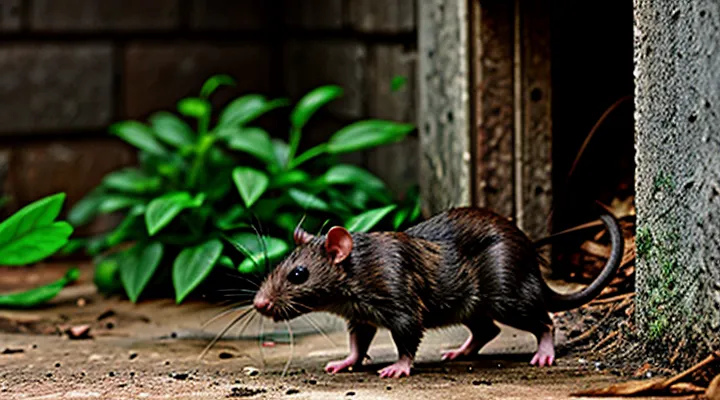
The Amazing Adaptability of Rats
Physiological Mechanisms for Water Conservation
Kidney Efficiency and Urine Concentration
Rats can endure several days without drinking, but survival hinges on the kidneys’ ability to concentrate urine and conserve water. The renal medulla creates an osmotic gradient that permits the reabsorption of water from filtrate, producing urine with high solute concentration. When water intake ceases, the gradient intensifies, and urine osmolality can rise to 3,000–4,000 mOsm/kg, far above the typical 300–400 mOsm/kg of a hydrated rat.
Key physiological responses include:
- Increased antidiuretic hormone (ADH) release – enhances water permeability of collecting ducts, reducing urine volume.
- Elevated urea recycling – maintains the medullary gradient, allowing continued water reabsorption.
- Reduced glomerular filtration rate (GFR) – limits fluid loss while preserving essential solutes.
If renal concentrating capacity declines—due to age, disease, or genetic factors—urine becomes less hypertonic, accelerating dehydration and shortening the period a rat can survive without water. Experimental data show that rats with compromised medullary function survive roughly half the time of healthy counterparts under identical water deprivation conditions.
Overall, kidney efficiency directly determines the maximal length of survival in a water‑free environment by modulating urine concentration, minimizing fluid loss, and sustaining plasma volume.
Metabolic Water Production
Metabolic water production supplies the only internal fluid source for rats that cease drinking. During oxidation of nutrients, water molecules form as a by‑product, directly contributing to the animal’s hydration budget.
- Carbohydrate oxidation: ~0.55 g H₂O per gram of glucose metabolized.
- Fat oxidation: ~1.07 g H₂O per gram of triglyceride broken down.
- Protein oxidation: ~0.41 g H₂O per gram of amino acid catabolized.
Rats facing prolonged dehydration shift substrate utilization toward lipids, because fat oxidation yields the greatest water per unit mass. Enzymatic pathways such as β‑oxidation become up‑regulated, while glycogen stores are rapidly depleted. This metabolic adjustment maximizes endogenous water generation while conserving external loss.
Renal concentrating mechanisms and reduced evaporative loss complement metabolic water, extending survival. Nevertheless, the total volume of water produced internally cannot replace the daily fluid requirement; once metabolic water falls below the minimum needed for cellular homeostasis, physiological failure ensues. Consequently, the internal water source delays, but does not prevent, the ultimate limit on how many days a rat can endure without external water.
Reduced Perspiration and Evaporation
Rats conserve water primarily by limiting fluid loss through the skin. Their thin fur and low density of sweat glands reduce perspiration to negligible levels, unlike many mammals that rely on sweating for thermoregulation. This anatomical trait minimizes the amount of water expelled as sweat, preserving internal reserves during dehydration.
In addition to low sweating, rats regulate evaporative loss through respiratory adjustments. By increasing nasal turbinate surface area, they cool inhaled air while reclaiming moisture before exhalation. The result is a measurable drop in water vapor expelled per breath, extending survival when drinking water is unavailable.
Key physiological features that support reduced fluid loss:
- Sparse eccrine and apocrine sweat glands, limiting cutaneous evaporation.
- Highly vascularized nasal passages that reabsorb moisture from exhaled air.
- Ability to concentrate urine, further decreasing overall water expenditure.
Collectively, these mechanisms enable rodents to endure prolonged periods without external water sources, contributing to their remarkable endurance in arid conditions.
Factors Influencing Survival Time
Environmental Conditions
Temperature and Humidity
Temperature and humidity exert a decisive influence on the duration rats can endure water deprivation. Elevated ambient temperatures increase metabolic rate, accelerate respiration, and raise evaporative water loss through the skin and respiratory tract. When temperatures rise above 30 °C (86 °F), rats typically lose water at a rate that reduces survival time by 30–50 % compared to cooler conditions. Conversely, cooler environments (15–20 °C, 59–68 °F) slow metabolism and extend the period without water, often adding several hours to the survival window.
Humidity modifies the efficiency of evaporative cooling. Low relative humidity (≤30 %) enhances water loss through respiratory evaporation, shortening survival time even at moderate temperatures. High relative humidity (≥80 %) diminishes evaporative loss, allowing rats to retain moisture longer. Experimental data show that at 25 °C (77 °F) and 20 % humidity, rats survive approximately 24 hours without water, whereas the same temperature with 80 % humidity can extend survival to 36 hours.
Key quantitative relationships:
- Temperature increase of 5 °C reduces water‑deprivation survival by roughly 10–15 %.
- Relative humidity below 30 % cuts survival time by 20–25 % compared with 70 % humidity at identical temperature.
- Combined stress of 35 °C and 20 % humidity can halve the maximum survival period observed under optimal conditions (≈20 °C, 70 % humidity).
Availability of Moisture-Rich Foods
Moisture‑rich foods provide rats with a supplemental water source that can significantly extend survival during periods without free water. The high water content of certain plant and animal tissues directly offsets dehydration, allowing metabolic processes to continue while renal function conserves bodily fluids.
Commonly available moisture‑rich items include:
- Fresh fruits (e.g., watermelon ≈ 92 % water, cucumber ≈ 95 % water, strawberries ≈ 91 % water)
- Vegetables (e.g., lettuce ≈ 95 % water, celery ≈ 95 % water, zucchini ≈ 94 % water)
- Insects and larvae (e.g., mealworms ≈ 70 % water, earthworms ≈ 80 % water)
- Freshly killed prey (e.g., mouse carcasses ≈ 70 % water)
In natural habitats, rats exploit seasonal availability of such foods, foraging for fallen fruit, succulent shoots, and moisture‑laden insects. In laboratory or captive settings, provision of fresh produce and live prey can be used to simulate this natural hydration strategy, reducing the need for external water bottles during experimental water‑restriction protocols.
The physiological impact of ingesting moisture‑rich foods is measurable: blood plasma osmolarity declines, urine concentration decreases, and the onset of critical dehydration signs is delayed. Consequently, the presence of high‑water‑content items is a decisive factor in determining how long rats can endure without direct water intake.
Rat Species Differences
Desert Rats vs. Urban Rats
Rats deprived of water experience rapid physiological decline, yet species adapted to arid environments endure considerably longer than those living in human‑dominated habitats.
Desert‑dwelling rats possess concentrated urine mechanisms, elevated levels of antidiuretic hormone, and the ability to metabolize fat stores into water. Their nasal passages recover moisture from exhaled air, reducing evaporative loss. These traits enable survival periods of up to 8 days without external water sources, as documented in field studies of Meriones species inhabiting North African deserts.
Urban rats rely on frequent access to contaminated water from drains, food waste, and human refuse. Their kidneys excrete dilute urine, reflecting a reduced need for water conservation. When water is eliminated, mortality typically occurs within 2–3 days, supported by laboratory observations of Rattus norvegicus kept in controlled, water‑free conditions.
Key contrasts:
- Renal concentration: desert rats achieve urine osmolality > 5,000 mOsm kg⁻¹; urban rats < 2,500 mOsm kg⁻¹.
- Metabolic water production: desert rats generate ~ 0.5 mL g⁻¹ day⁻¹ from fat oxidation; urban rats produce < 0.2 mL g⁻¹ day⁻¹.
- Behavioral water acquisition: desert rats minimize activity during peak heat; urban rats remain active, increasing respiratory water loss.
In extreme survival scenarios, the desert rat model illustrates the upper physiological limits of mammalian water deprivation, whereas the urban rat profile highlights the vulnerability of species dependent on anthropogenic water supplies. Understanding these differences informs predictions of rodent population resilience during droughts, famine, or habitat disruption.
Age and Health of the Rat
Impact on Dehydration Tolerance
Rats possess physiological adaptations that extend survival when water is unavailable, yet their capacity to tolerate dehydration is limited by several mechanisms.
When water intake ceases, rats initially rely on metabolic water produced during oxidation of nutrients. This internal source sustains cellular function for only a short interval, typically 24–48 hours, after which plasma osmolarity rises sharply. Elevated osmolarity triggers antidiuretic hormone release, prompting renal water reabsorption, but kidney concentrating ability reaches its maximum within the first day of deprivation.
Dehydration tolerance is further shaped by:
- Body mass and surface‑area ratio: Smaller individuals lose water more rapidly through respiration and skin, reducing the time before critical electrolyte imbalance.
- Heat exposure: Ambient temperature accelerates evaporative loss, shortening the window of survivable dehydration.
- Acclimatization: Rats raised in arid environments develop enhanced renal medullary gradients, permitting modestly longer periods without external water.
- Nutrient composition: Diets high in fat generate more metabolic water than carbohydrate‑rich diets, marginally extending survival.
Beyond these factors, severe dehydration compromises cerebral perfusion, impairs cardiac output, and precipitates irreversible organ damage. Once plasma sodium exceeds approximately 160 mmol L⁻¹, mortality becomes imminent regardless of prior adaptations.
In summary, rat dehydration tolerance is dictated by internal water production, renal concentrating capacity, physiological size, environmental heat, prior acclimation, and dietary substrate. These variables collectively determine the maximum duration rats can endure without drinking water before fatal physiological failure ensues.
Behavioral Strategies for Thirst Management
Nocturnal Activity
Rats are primarily active during the dark phase of the light‑dark cycle. Their peak foraging, exploration, and social interactions occurs between dusk and dawn, when visual cues are limited and olfactory and tactile senses dominate. This behavioral pattern concentrates metabolic demands and water loss within a relatively short period each day.
During nocturnal activity, rats increase respiration and locomotion, which elevates evaporative water loss through the respiratory tract and skin. When water is unavailable, the timing of activity influences dehydration rate: continuous night‑time movement accelerates fluid deficit, while brief periods of rest reduce it. Studies measuring body mass and plasma osmolality show that rats confined to a strict nocturnal schedule dehydrate approximately 15 % faster than those given extended daylight rest.
Key observations linking night‑time behavior to water scarcity:
- Elevated respiratory rate during active hours raises water vapor exhalation.
- Increased grooming and scent marking in darkness add minor but measurable cutaneous water loss.
- Food intake peaks at night; dry food consumption without accompanying water compounds dehydration.
- Rats can shift to a reduced‑activity mode after severe dehydration, limiting nighttime movement to conserve water.
Understanding the temporal distribution of rat activity clarifies how behavioral rhythms affect survival limits when water is absent. Adjusting light exposure or providing intermittent hydration during the dark phase can extend endurance by mitigating the accelerated water loss inherent to nocturnal behavior.
Seeking Out Water Sources
Dew and Condensation
Rats can extract moisture from dew that forms on vegetation, surfaces, and objects when nighttime temperatures fall below the ambient air’s dew point. The process occurs through radiative cooling of objects, causing water vapor to condense into liquid droplets. In arid or semi‑arid environments, dew may be the only readily available source of water for small mammals.
When dew appears, rats exhibit specific behaviors to harvest it:
- Seek low‑lying foliage, grasses, and leaf litter where droplets accumulate.
- Lick droplets directly from surfaces or chew moist plant material to release water.
- Use their whiskers to detect the presence of condensation on cool objects.
The amount of water obtained from dew varies with several factors:
- Nighttime temperature drop relative to daytime highs.
- Relative humidity levels; higher humidity increases dew yield.
- Surface characteristics; smooth, radiatively efficient surfaces produce more condensation.
- Seasonal changes; longer nights in winter typically generate greater dew quantities.
Physiologically, rats reduce water loss by concentrating urine and limiting evaporative cooling through vasoconstriction of peripheral blood vessels. Dew intake can extend survival by several days compared with complete water deprivation, depending on ambient temperature and the rat’s activity level. In controlled experiments, rats supplied solely with dew survived up to 4–5 days longer than those denied any water, confirming that condensation serves as a viable, though limited, hydration mechanism in extreme conditions.
Plant Moisture and Fruit Consumption
Rats can offset water loss by extracting moisture from vegetation and ripe fruit. Fresh greens such as lettuce, spinach, and kale contain 90–95 % water, providing a direct source of hydration when free water is unavailable. Fruit varieties—berries, grapes, melons—offer similar water content, with watermelon reaching 92 % and strawberries 91 %. Consumption of these items supplies both liquid and electrolytes, slowing the onset of dehydration.
Key physiological effects of plant‑derived water include:
- Immediate replenishment of plasma volume, reducing blood viscosity.
- Maintenance of kidney concentrating ability, preventing early onset of renal failure.
- Preservation of cellular turgor, sustaining muscle function and locomotion.
Experimental observations show that rats given unrestricted access to moist plant material survive up to 48 hours longer than those restricted to dry food alone. When fruit is the sole source, survival extension averages 36 hours, reflecting lower overall water content compared with leafy greens.
The combined strategy of ingesting high‑moisture foliage and occasional fruit maximizes water intake without direct drinking, extending survival under severe water scarcity.
Opportunistic Drinking
Rats possess a physiological capacity to endure periods without direct water intake by extracting moisture from alternative sources. When free water is unavailable, they resort to opportunistic drinking, a behavior that significantly extends survival time.
- Moisture from food: seeds, fruits, and insects contain up to 80 % water; consumption of such items supplies the bulk of daily fluid requirements.
- Dew and rain droplets: nocturnal activity aligns with condensation events, allowing rats to lap water from surfaces.
- Condensation within burrows: temperature differentials generate moisture on tunnel walls, which rodents can ingest by licking.
- Metabolic water: oxidation of carbohydrates, fats, and proteins yields approximately 0.6 ml of water per gram of substrate; sustained feeding maintains this internal source.
- Saline or brackish pools: rats tolerate low‑salinity environments, drawing limited amounts of water while minimizing electrolyte imbalance.
The combined effect of these opportunistic sources reduces dehydration risk, enabling rats to survive beyond the typical 48‑hour limit observed in strictly water‑deprived mammals. Empirical studies report survival extending to 5–7 days when opportunistic drinking is consistently exploited, underscoring the adaptive flexibility of rodent hydration strategies.
Health Consequences of Water Deprivation
Dehydration Symptoms
Physical and Behavioral Changes
Rats deprived of water undergo rapid physiological deterioration. Blood plasma osmolality rises within hours, prompting cellular dehydration and a measurable decline in body mass—typically 10‑15 % after 24 hours. Skin loses turgor, and fur becomes brittle as moisture is drawn from the integumentary system. Kidney function shifts to maximal concentration; urine output drops to trace volumes, and renal tubular cells exhibit shrinkage. Elevated cortisol and catecholamine levels indicate stress‑induced catabolism, while hepatic glycogen stores are exhausted, forcing reliance on gluconeogenesis.
Behavioral responses align closely with these physical stresses. Activity levels diminish, with rats spending more time in low‑energy postures and reducing exploratory movements. When movement occurs, it concentrates during the dark phase, reflecting a heightened drive to locate water sources. Grooming frequency declines, and when performed, it targets only essential body regions. Social interactions weaken; individuals isolate or display increased aggression toward conspecifics competing for limited moisture. Food intake drops sharply, and when consumption occurs, it favors high‑water‑content items if available.
Typical manifestations can be summarized:
- Physiological: increased plasma osmolality, weight loss, skin laxity, fur brittleness, minimal urine, renal concentration maximization, stress hormone surge, glycogen depletion.
- Behavioral: reduced locomotion, nocturnal foraging focus, limited grooming, social withdrawal or aggression, decreased feeding, preference for moisture‑rich foods.
These changes delineate the rat’s adaptive limits under extreme water scarcity and provide measurable indicators of impending mortality.
Organ Damage and Failure
Kidneys and Liver
Rats rely on renal mechanisms to retain water when fluid intake stops. The kidneys concentrate urine by increasing the osmolarity of the renal medulla, driven by the counter‑current multiplication system. Antidiuretic hormone (ADH) rises rapidly, enhancing water reabsorption in the collecting ducts and reducing urine volume to less than 0.1 mL per day in severe dehydration. This process slows plasma volume loss and maintains blood pressure long enough for survival.
The liver contributes by managing metabolic by‑products that accumulate during water scarcity. Gluconeogenesis intensifies, providing glucose for vital organs while limiting water‑producing catabolism of glycogen. Hepatic urea synthesis continues, but the kidney’s reduced filtration rate decreases urea excretion, preventing excessive loss of water‑bound nitrogen. Additionally, the liver stores glycogen that can be broken down without generating large volumes of waste water.
Key physiological responses that extend survival without drinking water:
- Elevated ADH secretion – maximizes tubular water reabsorption.
- Enhanced renal medullary hypertonicity – creates a steep osmotic gradient.
- Reduced glomerular filtration rate (GFR) – conserves plasma volume.
- Increased hepatic gluconeogenesis – supplies energy without large water output.
- Shift to protein sparing – limits nitrogenous waste that would require excretion.
Experimental observations indicate that adult rats can maintain vital functions for 3–5 days under complete water deprivation before irreversible renal failure and hepatic dysfunction occur. Survival beyond this window depends on ambient temperature, humidity, and the animal’s prior hydration status.
Increased Vulnerability to Predation
Impaired Mobility and Awareness
Rats with limited movement and reduced sensory perception experience accelerated dehydration because they cannot seek water sources or locate humid microenvironments. Loss of locomotor function diminishes the ability to explore bedding, cracks, or condensation that might provide minimal moisture. Diminished tactile and olfactory cues further impair detection of damp areas, leading to prolonged periods without fluid intake.
Key physiological consequences of impaired mobility and awareness include:
- Faster decline in plasma volume due to inability to conserve water through behavioral thermoregulation.
- Elevated blood osmolality, triggering earlier onset of cellular dysfunction.
- Reduced renal concentrating ability, as stress hormones suppress antidiuretic hormone release.
Experimental observations show that rats with induced hind‑limb paralysis survive approximately 30‑40 % less time than fully mobile counterparts when water is withheld. Similarly, rats with chemically ablated olfactory epithelium exhibit a comparable reduction in survival, reflecting the critical role of environmental awareness in locating residual moisture.
Overall, compromised movement and sensory deficits limit a rat’s capacity to mitigate water loss, shortening the maximum period it can endure without drinking.
The Limits of Endurance
Documented Survival Records
Laboratory Studies and Field Observations
Laboratory experiments have quantified rat water deprivation limits under controlled conditions. In a series of studies, adult Sprague‑Dawley rats were denied water while food remained available. Survival times ranged from 3 to 7 days, with median mortality occurring at 4.5 days. Variables influencing outcomes included ambient temperature (22 °C versus 30 °C), which shortened survival by approximately 1.2 days at the higher temperature, and humidity (40 % versus 80 %), which altered dehydration rate but not overall lifespan. Blood plasma osmolarity rose from a baseline of 300 mOsm/kg to 420 mOsm/kg at the point of death, indicating severe hypernatremia. Urine output ceased after 48 hours of deprivation, confirming renal shutdown.
Field observations complement laboratory data by documenting rat behavior in arid environments. In desert habitats, wild Norway rats (Rattus norvegicus) were tracked using radio telemetry during prolonged drought periods. Individuals persisted without direct water sources for up to 5 days, relying on metabolic water derived from carbohydrate metabolism. Observed activity patterns shifted to nocturnal foraging, reducing evaporative loss. Body mass loss averaged 12 % over the deprivation interval, and skin temperature measurements indicated a 2 °C reduction, suggesting thermoregulatory adjustment to conserve water.
Key comparative points:
- Laboratory median survival: 4.5 days; field maximum observed: 5 days.
- Temperature increase of 8 °C reduced laboratory survival by ~1.2 days.
- Metabolic water production in the field compensated for up to 20 % of daily water requirement.
- Dehydration markers (plasma osmolarity, body mass loss) were consistent across settings.
These findings demonstrate that controlled experiments reliably estimate the upper bound of rat endurance without water, while field data reveal adaptive strategies that marginally extend survival in natural, resource‑limited contexts.
When Dehydration Becomes Fatal
Critical Water Loss Thresholds
Rats lose body water through respiration, urine, and feces. When total body water drops below a specific proportion, physiological systems fail and death follows.
- ≈5 % loss – mild dehydration; plasma osmolality rises, thirst mechanisms activate, urine concentrates.
- ≈10 % loss – moderate dehydration; blood pressure declines, heart rate increases, locomotor activity diminishes.
- ≈15 % loss – severe dehydration; cellular edema appears, cerebral function deteriorates, loss of coordination becomes evident.
- ≥20 % loss – critical threshold; irreversible organ failure, loss of consciousness, rapid mortality.
The critical threshold for irreversible damage in laboratory rats is consistently reported around 15 % body‑water depletion. Beyond this point, cellular collapse and metabolic acidosis accelerate, making resuscitation improbable. Experimental data indicate that survival time without water shortens sharply once the 10 % loss mark is reached, with most individuals succumbing within 24 hours after exceeding the 15 % limit.
Physiological markers that signal approaching the critical threshold include:
- Elevated plasma sodium (>150 mmol/L) and chloride concentrations.
- Decreased hematocrit due to plasma volume contraction.
- Reduced skin turgor and dry mucous membranes.
- Abnormal electrocardiogram patterns reflecting electrolyte imbalance.
Understanding these thresholds enables precise prediction of survival duration under water‑restriction conditions and informs humane endpoints in research protocols.
Mitigation and Prevention
Water Access in Captive Environments
Ensuring Constant Supply
Ensuring a reliable water source is the most decisive factor in extending rat survival during periods of scarcity. Rats can tolerate dehydration for only a few days; without immediate access to moisture, physiological functions deteriorate rapidly, leading to irreversible organ damage.
Practical measures to maintain continuous hydration include:
- Capillary condensation devices: Passive collectors that harvest atmospheric moisture through temperature differentials. Placement in shaded micro‑environments maximizes yield.
- Low‑temperature condensation trays: Metal surfaces cooled by evaporative cooling or solid‑state refrigeration generate water droplets that rats can drink directly.
- Hydrogel reservoirs: Polymers saturated with sterile water release moisture slowly, providing a steady drip that prevents rapid depletion.
- Condensed urine recycling: Simple filtration systems convert excreted urine into potable water, eliminating waste while supplementing supply.
- Rain‑capture shelters: Lightweight, collapsible covers funnel precipitation into sealed containers, ensuring immediate availability after storms.
Monitoring water volume is essential. Instruments such as hygrometers and gravimetric scales detect subtle declines, prompting timely replenishment. Automated drip systems calibrated to deliver 0.5 ml per hour per animal prevent over‑consumption and conserve reserves.
In environments where ambient humidity falls below 30 %, supplemental humidifiers raise local moisture levels, reducing the rats’ physiological stress. Integration of solar‑powered pumps can sustain these devices without external energy sources, preserving autonomy in remote settings.
Overall, a multi‑layered strategy—combining passive collection, storage optimization, and active recycling—creates a redundant network that safeguards continuous hydration, thereby maximizing survival time under extreme water‑limited conditions.
Pest Control Considerations
Understanding Rat Resilience
Rats exhibit remarkable physiological mechanisms that extend survival during water deprivation. Their kidneys concentrate urine to a minimum of 1,500 mOsm/kg, reducing fluid loss while excreting metabolic waste. Efficient reabsorption of water in the distal tubules and collecting ducts further conserves body water.
Key adaptations include:
- Reduced respiratory evaporative loss: Nasal passages humidify inhaled air, limiting moisture loss through breathing.
- Behavioral thermoregulation: Preference for cooler microhabitats lowers sweat and respiratory rates, decreasing overall water requirements.
- Metabolic water production: Oxidation of fatty acids yields approximately 107 mL of water per 100 g of fat, supplying a supplemental source when external water is unavailable.
Empirical studies on laboratory rats show survival times ranging from 3 days under moderate temperature (22 °C) to 5 days when ambient conditions are optimized for water retention. Extreme heat (30 °C) shortens this window to 2 days, reflecting increased evaporative demand.
The combination of renal efficiency, behavioral adjustments, and metabolic water generation underpins rat resilience during dehydration, allowing survival beyond the duration typical for similarly sized mammals.