
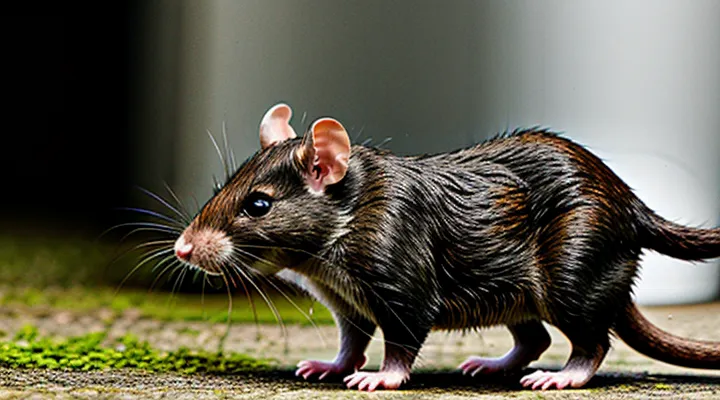
Understanding Rat Growth Potential
The Average Size of Common Rat Species
«Brown Rat (Rattus norvegicus)»
The brown rat (Rattus norvegicus) is the most common laboratory and urban rodent worldwide. Adult individuals typically reach a body length of 20–25 cm, not including the tail, which adds an additional 15–20 cm. Standard weight ranges from 250 g to 500 g, with well‑nourished males often exceeding 600 g.
Maximum recorded specimens approach the limits of physiological growth:
- Total length (head‑to‑tail): up to 45 cm
- Tail length: up to 25 cm
- Body mass: 900–1,000 g
These extremes occur in environments with abundant food, minimal predation, and reduced competition. Genetic factors, age, and sex also influence size; males generally grow larger than females, and individuals older than 12 months exhibit the greatest mass. Environmental stressors—such as limited nutrition or high disease burden—constrain growth, keeping most populations well below the recorded maxima.
«Black Rat (Rattus rattus)»
The black rat (Rattus rattus) is a globally distributed rodent commonly found in urban and rural environments. Adult individuals typically exhibit a head‑body length of 16–20 cm, a tail length roughly equal to or slightly longer than the body, and a mass ranging from 70 g to 200 g. These dimensions represent the average range for healthy, mature specimens.
Maximum growth records indicate that exceptionally large black rats can reach a head‑body length of 30 cm, a tail length of up to 35 cm, and a body mass approaching 350 g. Such individuals are rare and usually occur in regions with abundant food supplies and limited predation pressure.
Factors influencing size variation include:
- Genetic lineage: certain subspecies possess slightly larger skeletal structures.
- Nutrition: consistent access to high‑calorie foods promotes greater body mass.
- Environmental conditions: warm climates with low seasonal fluctuations reduce metabolic stress, allowing prolonged growth periods.
- Health status: absence of disease and parasites supports optimal development.
Comparative data show that the black rat’s maximum size exceeds that of the common brown rat (Rattus norvegicus) in length but remains lower in overall mass. The larger tail of R. rattus contributes to its distinctive silhouette and aids in arboreal locomotion, a behavioral adaptation that distinguishes it from ground‑dwelling relatives.
In summary, while typical black rats fall within a moderate size spectrum, the species is capable of reaching lengths over 30 cm and masses near 350 g under favorable conditions. These extremes define the upper limits of growth for the species.
Factors Influencing Rat Size
«Genetics and Breed»
Genetic composition determines the upper limits of body mass in laboratory and pet rats. Specific alleles influencing growth hormone receptors, insulin-like growth factor, and skeletal development produce measurable variations among individuals. Inbreeding of lines selected for size amplifies these traits, while outbred populations retain broader size ranges.
Breed selection further refines size potential. Commonly recognized groups include:
- Giant Flemish – individuals regularly exceed 1 kg, with some reaching 1.5 kg under optimal nutrition.
- Dwarf (e.g., Hairless, Miniature) – adult mass typically falls between 150 g and 250 g.
- Standard laboratory strains (e.g., Sprague‑Dawley, Wistar) – average mature weight ranges from 300 g to 500 g, with occasional outliers approaching 600 g.
- Hybrid crosses – combine traits from large and small lines, producing intermediate sizes that can surpass standard strains when selected for growth.
Environmental factors such as diet, housing density, and health status modulate the expression of genetic potential, but the primary determinants remain the inherited growth-regulating genes and the breeding program’s emphasis on size. Consequently, the maximum attainable mass for a typical rat is constrained by the genetic architecture of its breed, with the largest documented specimens belonging to lines expressly bred for enhanced growth.
«Diet and Nutrition»
Rats reach their maximum body length and mass when genetic potential aligns with adequate nutrition. Insufficient protein or excess calories truncate growth, while balanced diets allow individuals to approach species‑specific size ceilings.
- Protein: 18‑22 % of total calories; essential amino acids (lysine, methionine, tryptophan) support muscle development and organ enlargement.
- Fat: 5‑10 % of calories; provides energy for rapid growth phases and assists in absorption of fat‑soluble vitamins.
- Carbohydrates: 60‑70 % of calories; supply readily available glucose for metabolism and thermoregulation.
Micronutrients influence skeletal and tissue expansion. Calcium (1.2 % of diet) and phosphorus (0.8 %) maintain bone density; vitamin D enables calcium utilization. Vitamin C, B‑complex vitamins, and trace elements (zinc, selenium) prevent growth‑related deficiencies and support immune function, indirectly affecting size potential.
Feeding schedule impacts growth velocity. Continuous access to nutritionally complete pellets prevents feed‑gaps that trigger catabolism. Supplemental fresh vegetables supply fiber and additional vitamins, but must not dilute caloric density below the thresholds listed above.
When rats receive diets meeting these specifications, adult body mass typically ranges from 300 g to 500 g, with total length (head‑to‑tail) reaching 30 cm to 35 cm. Deviations from the nutrient profile reduce these measurements, confirming that diet and nutrition are decisive determinants of the species’ upper size limit.
«Environment and Habitat»
Rats thrive in a broad spectrum of environments, from dense urban infrastructure to sparsely vegetated fields. Their capacity to reach larger dimensions correlates directly with the availability of resources and shelter within these settings.
Key habitat characteristics that support increased growth include:
- Abundant, high‑calorie food sources such as grain stores, waste debris, and cultivated crops.
- Warm, stable microclimates that reduce metabolic strain, commonly found in insulated buildings or underground burrows.
- Protection from predators, provided by complex structures like sewer systems, compost piles, or dense ground cover.
- Access to water, whether from natural streams, rain‑filled containers, or human‑supplied sources.
In rural or semi‑natural areas, rats encounter seasonal fluctuations that limit sustained growth, whereas urban locales often present continuous nourishment and refuge, enabling individuals to approach the upper limits of typical size.
«Age and Maturity»
Rats reach physical maturity between 10 and 12 weeks of age. At this stage skeletal growth slows, and weight stabilizes near the species‑specific ceiling. In laboratory strains such as Rattus norvegicus domesticus, adult males average 300–350 g, while females average 250–300 g; exceptional individuals can exceed 500 g, but only after extended maturation periods of 6–9 months.
Growth patterns follow a rapid early phase driven by hormonal surges of growth hormone and insulin‑like growth factor‑1. After the pre‑pubertal peak, daily weight gain drops from 5–7 g per day to less than 1 g. The transition from juvenile to mature status is marked by:
- Closure of epiphyseal plates in long bones
- Development of full dentition and whisker length
- Stabilization of body length at 20–25 cm (head‑to‑tail)
Beyond the maturity window, additional size increase relies on fat accumulation rather than skeletal expansion. Consequently, the maximum attainable size for a typical rat is constrained by the age at which growth plates fuse and metabolic capacity plateaus.
Beyond the Typical: Exceptional Rat Sizes
Documented Cases of Large Rats
«Records and Anecdotes»
Rats typically reach a body length of 20–30 cm, yet documented extremes exceed this range considerably. The largest verified specimen is a brown rat (Rattus norvegicus) captured in 1934 near New York City, measuring 43 cm from nose to tail base and weighing 1.1 kg. A subsequent record from 1998 in the United Kingdom reported a brown rat of 49 cm total length and a mass of 1.4 kg, confirmed by museum curators.
Anecdotal accounts describe even larger individuals, often based on eyewitness testimony from pest‑control professionals. Reports include:
- A purported 55 cm rat observed in a warehouse in Shanghai, claimed to weigh approximately 1.6 kg; photographic evidence remains unverified.
- A farmyard sighting in rural Brazil of a giant rat estimated at 60 cm in length, judged by comparison with a standard ruler; no physical specimen was recovered.
- A recurring legend among dockworkers in the Port of Los Angeles of “monster rats” exceeding 50 cm, supported by occasional skeletal fragments lacking definitive species identification.
Scientific literature acknowledges that exceptional size correlates with abundant nutrition, limited predation, and genetic factors. Controlled breeding experiments have produced brown rats approaching 1.2 kg under optimal laboratory conditions, confirming the species’ capacity for substantial growth when environmental constraints are minimized.
«Urban Legends vs. Scientific Evidence»
Urban folklore often describes rats the size of small dogs, capable of swallowing whole pieces of meat or climbing walls with ease. Stories circulate about “monster rats” that appear in sewers, basements, or abandoned buildings, suggesting lengths exceeding a foot and weights over five kilograms.
Scientific surveys of the common brown rat (Rattus norvegicus) show an average head‑body length of 20–25 cm, a tail of similar length, and a typical mass of 250–350 g. The largest documented individuals reach 40 cm body length, a tail of 30 cm, and a weight near 1 kg. No peer‑reviewed study records rats larger than this range in natural populations.
Exaggeration arises from several sources. Misidentification of large rodents such as coyotes, feral cats, or unusually sized capybaras can be mistaken for oversized rats. Laboratory or pet rats occasionally exhibit hypertrophy due to selective breeding, yet these specimens live in controlled environments and do not represent wild populations. Photographic distortion, anecdotal recounting, and the human tendency to amplify fear also contribute to inflated narratives.
-
Legend: Rats larger than a domestic cat, capable of breaking through steel doors.
Evidence: Maximum wild specimens weigh less than half a kilogram, lack the strength to breach reinforced barriers. -
Legend: Rats that grow continuously, reaching lengths of 60 cm or more.
Evidence: Growth ceases after sexual maturity; adult size stabilizes within documented limits. -
Legend: Swarms of giant rats causing mass fatalities.
Evidence: Population density studies show typical urban rat colonies number in the low hundreds per hectare, with no mass‑mortality events linked to size.
The contrast between myth and measurement underscores the need for empirical data when assessing rodent size. Reliable field observations and controlled studies provide clear boundaries that urban legends routinely exceed.
Misconceptions About Giant Rats
«Distinguishing Rats from Other Rodents»
Rats belong to the genus Rattus and can be separated from other rodent families by a combination of morphological and ecological traits.
Body length typically ranges from 15 cm to 25 cm, excluding the tail, which is proportionally long—often equal to or slightly longer than the body. In contrast, many squirrel‑like rodents have shorter tails relative to body size. The tail surface is sparsely haired and covered with fine scales, while the fur on the tail of many other rodents is denser.
Skull structure provides a reliable identifier. Rats possess a blunt, rounded snout with a pronounced, square-shaped rostrum; the incisors are continuous, orange‑tinged, and extend forward beyond the lower jaw. Voles and mice exhibit more pointed snouts and a different incisor orientation.
Ear size and placement differ markedly. Rats have relatively large, rounded ears set low on the head, whereas gerbils and hamsters display smaller, more oval ears positioned higher.
Foot morphology also aids distinction. The hind feet of rats feature a well‑developed, elongated fifth digit and a pronounced plantar pad that supports efficient climbing and swimming. Many other rodents, such as beavers, have broader, webbed hind feet adapted for aquatic environments.
Habitat preferences further separate rats from their relatives. Rattus species thrive in urban and agricultural settings, showing high adaptability to human-made structures. In contrast, prairie‑dwelling rodents like prairie voles favor open grasslands, and tree‑climbing squirrels occupy forest canopies.
Key discriminators summarized:
- Tail: long, sparsely haired, scale‑covered
- Snout: blunt, square rostrum, forward‑projecting incisors
- Ears: large, low‑set, rounded
- Hind foot: elongated fifth digit, strong plantar pad
- Habitat: urban, sewers, farms; high adaptability
These characteristics enable reliable identification of rats among the diverse rodent order, supporting accurate assessment of their potential size limits.
«The Role of Media in Exaggeration»
Media coverage frequently inflates public perception of rodent dimensions, especially when stories address the upper limits of typical rat growth. Reporters often select the largest documented specimens, present them without statistical context, and employ sensational language that implies extraordinary size as common. This practice creates a skewed mental model that overestimates average adult size.
- Headlines highlight outlier measurements (e.g., “Giant Rat Spotted”) while omitting median length data.
- Images are cropped or digitally enlarged to emphasize bulk, reinforcing the impression of abnormal growth.
- Comparative statements link rare large individuals to species norms, suggesting a direct correlation.
- Social platforms amplify sensational posts through shares and likes, reinforcing the exaggerated narrative.
Consequences include public misunderstanding of pest control needs, policy decisions based on inflated risk assessments, and heightened fear that drives unnecessary eradication efforts. Accurate reporting requires presenting size ranges, citing peer‑reviewed studies, and distinguishing exceptional cases from typical growth patterns.