
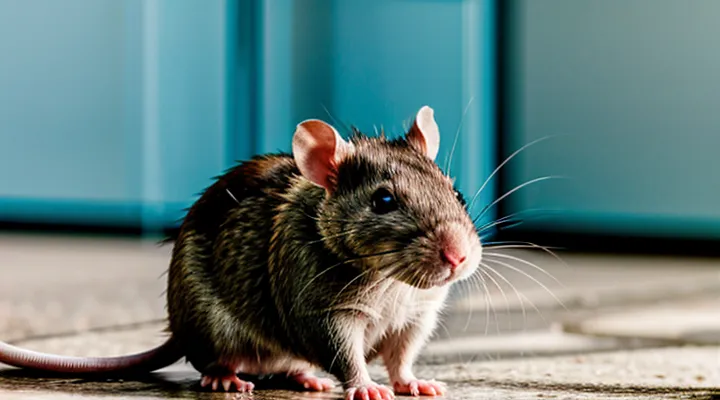
The Mechanics of a Rat Sneeze
Understanding the Rat's Respiratory System
Anatomy of the Upper Respiratory Tract
The upper respiratory tract of a rat consists of a compact series of structures that condition inhaled air and generate the mechanical forces required for a sneeze. Air enters through the external nares, passes into the nasal cavity where it contacts a highly vascularized mucosal lining. The lining contains ciliated epithelium and mucus-producing cells that trap particles and humidify the airflow.
Key components of the rat nasal cavity include:
- Nasal turbinates – bony ridges covered by mucosa that increase surface area for heat and moisture exchange.
- Nasal septum – midline partition that divides the cavity into left and right passages, providing structural stability.
- Olfactory epithelium – specialized region located on the dorsal roof of the cavity, responsible for odor detection but also contributing to airflow turbulence.
- Nasopharynx – posterior extension that connects the nasal cavity to the oropharynx, serving as a conduit for expelled air during a sneeze.
The nasopharyngeal space terminates at the choanae, openings that lead to the soft palate and ultimately to the laryngeal inlet. Muscular control of the soft palate and the rapid contraction of the diaphragm generate a sudden increase in intrathoracic pressure. This pressure is transmitted through the nasopharynx, forcing air out of the nostrils in a high‑velocity jet that characterizes a rat sneeze.
Understanding the precise arrangement of these anatomical elements clarifies how mechanical and neural signals coordinate to produce the explosive expulsion of air observed in rodent sneezing events.
Anatomy of the Lower Respiratory Tract
The lower respiratory tract of a rat comprises the trachea, main bronchi, branching bronchioles, and the alveolar network that terminates gas exchange. The trachea is supported by C‑shaped cartilaginous rings that maintain patency during rapid airflow bursts such as sneezing. Posteriorly, the trachealis muscle modulates lumen diameter, allowing fine control of airflow resistance.
Bronchi divide into left and right primary branches, each surrounded by a layer of smooth muscle and a mucosal lining rich in ciliated epithelium. The cilia, together with mucus, form a clearance system that removes particulate matter and pathogens, a process that intensifies during a sneeze to expel irritants from the airway.
The distal airway consists of:
- Terminal bronchioles: smallest airways with minimal cartilage, extensive smooth‑muscle coverage, and a dense network of Clara cells that secrete protective surfactant.
- Respiratory bronchioles: transition zone where alveolar sacs begin to emerge, featuring thin walls for efficient diffusion.
- Alveolar ducts and sacs: clusters of thin‑walled alveoli lined by type I and type II pneumocytes; type II cells produce surfactant that reduces surface tension, preventing collapse during the high‑velocity expulsive flow of a sneeze.
- Pleural membranes: visceral and parietal layers that enclose the lung, allowing smooth movement within the thoracic cavity.
Together, these structures coordinate to generate the rapid, high‑pressure airflow characteristic of a rat’s sneeze, ensuring that irritants are expelled while preserving lung integrity.
The Neurological Pathway of a Sneeze
Sensory Input and Triggers
Rats detect irritants through a network of sensory receptors located in the nasal epithelium, trachea, and upper airway mucosa. Mechanoreceptors respond to sudden changes in airflow, while chemoreceptors react to chemical agents such as dust, pollen, or volatile compounds. These receptors generate action potentials that travel via the trigeminal nerve to the brainstem respiratory centers.
The sneeze reflex initiates when afferent signals reach the sneeze center in the lateral medullary reticular formation. Integration of sensory input triggers a coordinated sequence: deep inspiration, closure of the glottis, contraction of expiratory muscles, and rapid expulsion of air through the nasal passages. This cascade clears the airway of the offending stimulus.
Typical triggers include:
- Fine particulate matter (e.g., bedding fibers)
- Environmental allergens (e.g., mold spores)
- Irritating vapors (e.g., ammonia)
- Sudden temperature shifts causing mucosal cooling
Each trigger activates the appropriate receptor type, ensuring a swift protective response.
Brainstem Reflex Arc
The sneeze response in rats operates through a brainstem reflex arc that links nasal sensory input to coordinated respiratory muscle activity. Sensory receptors in the nasal epithelium detect irritants and generate afferent signals that travel via the trigeminal nerve to the brainstem.
- Afferent limb: trigeminal sensory fibers convey stimulus to the spinal trigeminal nucleus.
- Central integration: interneurons in the medullary reticular formation receive the sensory burst and engage respiratory nuclei, including the pre‑Bötzinger complex and the parabrachial area.
- Efferent limb: motor output descends through the vagus, facial, and spinal motor neurons to activate intrathoracic, facial, and abdominal muscles, producing the characteristic expulsive airflow.
The timing of the arc is sub‑second; the sensory burst precedes the motor burst by approximately 30–50 ms, reflecting rapid synaptic transmission and minimal polysynaptic delay. Activation of the pre‑Bötzinger complex initiates a brief inspiratory pause, while the facial nucleus triggers closure of the nasal passages. Simultaneously, spinal motoneurons contract the abdominal wall, increasing intrathoracic pressure and expelling air through the nostrils.
Experimental lesions of the spinal trigeminal nucleus abolish the sneeze reflex, confirming the necessity of this relay. Pharmacological blockade of glutamatergic transmission within the medullary reticular formation reduces motor output amplitude, indicating excitatory drive as a key component of the arc.
The brainstem reflex arc thus provides a compact, high‑speed circuitry that translates nasal irritation into a synchronized respiratory maneuver, offering a model for studying sensorimotor integration in mammalian breathing control.
Physiological Stages of a Sneeze
Inspiratory Phase
During a sneeze, the inspiratory phase prepares the airway for the forceful expulsion that follows. In rats, nasal airflow is driven by contraction of the diaphragm and external intercostal muscles, which increase thoracic volume and reduce intrapulmonary pressure. This negative pressure draws ambient air through the nasal passages, filling the nasal turbinates and the upper airway cavity.
The inspiratory cycle in a rodent sneeze exhibits the following characteristics:
- Rapid diaphragmatic descent reaching peak displacement within 30–50 ms.
- Simultaneous activation of the external intercostals, expanding the rib cage laterally.
- Elevation of nasal cavity pressure to approximately –5 cm H₂O, sufficient to mobilize particulate matter toward the olfactory epithelium.
- Coordination with the pre‑sneeze reflex arc, initiated by mechanoreceptors in the nasal mucosa detecting irritants.
Neural control originates in the ventral respiratory group of the medulla, which sends excitatory bursts to the phrenic and intercostal motor neurons. The burst pattern is synchronized with the trigeminal afferent input triggered by the irritant, ensuring that inhalation precedes the subsequent expiratory thrust. This precise timing maximizes the volume of air that can be expelled during the sneeze, thereby enhancing the clearance efficiency of the nasal passages.
Compressive Phase
The compressive phase marks the moment when intrathoracic pressure sharply rises, propelling air through the nasal passages. During this interval, the diaphragm contracts forcefully while the external intercostal muscles elevate the rib cage, reducing thoracic volume. Simultaneously, the glottis closes, preventing airflow into the lungs and directing the pressure gradient toward the upper airway.
Key physiological events in the compressive phase include:
- Rapid increase in pleural pressure exceeding atmospheric pressure by several kilopascals.
- Contraction of the abdominal musculature, which augments intra-abdominal pressure and assists thoracic compression.
- Activation of the nasopharyngeal reflex arc, causing stiffening of the soft palate and narrowing of the nasal valve.
- Accumulation of mucus and particulate matter at the anterior nares, ready for expulsion.
The heightened pressure forces a brief, high‑velocity jet of air out of the nostrils, carrying irritants and secretions. This jet generates acoustic vibrations that manifest as the audible sneeze sound. After the pressure peak, the glottis reopens, and the expiratory muscles relax, transitioning to the expulsive phase where the expelled material is cleared from the nasal cavity.
Expulsive Phase
The expulsive phase marks the final, high‑velocity segment of a rat’s sneeze. During this interval, the glottis opens abruptly, allowing the previously built‑up intrathoracic pressure to be released as a turbulent jet of air. Contraction of the abdominal and intercostal muscles drives this pressure surge, producing peak airflow rates that exceed 10 m s⁻¹. The rapid expulsion clears the nasal passages by dislodging particulate matter and microbial contaminants.
Key physiological events in the expulsive phase include:
- Sudden relaxation of the laryngeal adductors, creating a wide airway lumen.
- Maximal activation of the diaphragm and external intercostals, raising thoracic volume.
- Generation of a pressure gradient of 30–50 cm H₂O across the upper airway.
- Formation of a vortex ring at the nostril openings, enhancing particulate transport.
The resulting airflow is accompanied by a characteristic acoustic signature, typically a brief, high‑frequency burst lasting 30–80 ms. Electromyographic recordings confirm that the expiratory muscles maintain a firing rate of 150–200 Hz throughout this period. The coordinated muscular effort ensures efficient clearance while minimizing tissue stress, reflecting an adaptation optimized for small mammals.
Factors Influencing Rat Sneezing
Environmental Irritants
Dust and Allergens
Rats constantly sample ambient air; particulate matter settles on the nasal epithelium and can initiate the sneeze reflex. Dust consists of mineral fragments, skin flakes, and microbial debris, typically ranging from 1 µm to 100 µm in diameter. Allergens such as pollen, fungal spores, and rodent‑specific epithelia proteins possess surface proteins that bind IgE antibodies, sensitizing nasal mucosa.
When inhaled particles contact the nasal turbinates, mechanosensitive and chemosensitive receptors depolarize. The trigeminal nerve transmits afferent signals to the brainstem respiratory centers, which coordinate a rapid inspiratory burst followed by a high‑velocity expiratory jet. This sequence expels irritants and restores airway patency.
Key factors influencing sneeze intensity include:
- Particle size: larger grains stimulate mechanoreceptors more effectively.
- Allergen potency: IgE‑mediated responses amplify neural firing.
- Airflow velocity: higher breathing rates increase particle deposition depth.
Experimental data show that dust concentrations above 5 mg m⁻³ trigger spontaneous sneezes in laboratory rats, while allergen‑rich aerosols lower the threshold to approximately 1 mg m⁻³. Repeated exposure leads to habituation, reducing sneeze frequency despite constant particulate presence.
Understanding dust and allergen interactions with the rodent nasal apparatus clarifies the physiological basis of the sneeze response and informs the design of controlled exposure studies.
Chemical Fumes
Chemical fumes that contain volatile irritants trigger the sneeze reflex in rodents by activating nasal sensory pathways. Exposure to substances such as acrolein, formaldehyde, ammonia, and sulfur dioxide produces a rapid depolarization of trigeminal nerve endings embedded in the nasal mucosa.
The irritant detection relies on transient receptor potential (TRP) channels. TRPA1 and TRPV1 channels respond to electrophilic and acidic compounds, respectively, converting chemical signals into neural impulses. Activation thresholds differ among agents; acrolein elicits a response at concentrations as low as 10 ppm, whereas ammonia requires approximately 30 ppm.
Impulse generation propagates along the nasociliary branch of the trigeminal nerve to the brainstem sneeze center. The central pattern generator coordinates a sequence of muscular contractions: inspiratory diaphragmatic contraction, closure of the glottis, and forceful expulsion of air through the nasal passages. Peak expiratory flow rates in rats can exceed 2 L s⁻¹, generating sufficient shear stress to dislodge particulate matter and dissolved chemicals.
Physiological consequences include rapid mucosal clearance, dilution of inhaled toxins, and temporary reduction of airway resistance. Repeated sneezing episodes produce measurable changes in intrathoracic pressure, detectable via telemetric pressure transducers.
Experimental protocols typically define:
- Minimum effective concentration (MEC) for each irritant.
- Exposure duration required to evoke a single sneeze.
- Latency between stimulus onset and sneeze initiation.
- Number of sneezes per standardized exposure period.
These parameters allow quantitative assessment of chemical fume potency and the integrity of the respiratory protective reflex in laboratory rats.
Health-Related Causes
Respiratory Infections
Respiratory infections in rodents directly influence the neural and muscular pathways that generate a sneeze. Pathogens colonize the nasal epithelium, irritate trigeminal sensory fibers, and trigger the reflex arc responsible for the explosive expulsion of air. The resulting sneeze reflects altered airflow dynamics, increased intrathoracic pressure, and coordinated contraction of the diaphragm and expiratory muscles.
Common infectious agents include:
- Streptococcus pneumoniae – induces mucosal inflammation and thickened secretions.
- Mycoplasma pulmonis – causes chronic rhinitis, leading to frequent sneezing bouts.
- Sendai virus – produces epithelial damage and heightened sensitivity of sensory receptors.
- Bordetella bronchiseptica – generates purulent discharge that mechanically stimulates the nasal cavity.
Infection‑driven changes in airway resistance modify the velocity of the expelled plume. Elevated resistance forces a higher peak airflow, which can be measured by plethysmography. Simultaneously, inflammatory mediators such as prostaglandins and bradykinin lower the threshold for sneezing, resulting in shorter latency between irritant detection and response.
Therapeutic interventions that reduce microbial load—antibiotics, antiviral agents, or targeted immunization—restore normal sneeze patterns by decreasing epithelial irritation and normalizing airway compliance. Monitoring sneeze frequency and intensity provides a non‑invasive indicator of respiratory health and infection progression in laboratory rat colonies.
Allergies and Sensitivities
Rats exhibit a rapid, high‑velocity expulsion of air when irritants stimulate the nasal mucosa, a response governed by the trigeminal sensory pathway and coordinated by the brainstem respiratory centers. The sneeze reflex involves a brief apnea, contraction of the expiratory muscles, and a forced release of air that clears particulate matter from the nasal passages.
Allergic and hypersensitivity reactions in rats mirror many mechanisms found in other mammals. Common allergens—dust mites, pollen, and fungal spores—activate IgE‑mediated mast cells within the nasal epithelium. Degranulation releases histamine, leukotrienes, and prostaglandins, which increase vascular permeability and stimulate sensory nerves, lowering the threshold for sneeze initiation. Sensitivity to specific proteins can be quantified through serum IgE assays and nasal lavage cytology, providing objective measures of allergic status.
The presence of allergies modifies the sneeze pattern. Histamine‑induced inflammation produces longer sneeze latency, increased sneeze frequency, and altered airflow dynamics measurable by plethysmography. Antihistamine administration reduces both the number of sneezes and the amplitude of nasal pressure changes, confirming the direct link between immune activation and respiratory reflexes. Ongoing studies employ genetically engineered rat models to dissect the contribution of specific cytokines, offering insight into therapeutic targets for allergic rhinitis and related respiratory disorders.
Behavioral Context of Sneezing
Communication and Social Cues
Rats emit sneezes that serve as rapid, airborne signals within a colony. The sudden expulsion of air carries odorants and acoustic components that can be detected by nearby conspecifics. This dual-modality output allows individuals to convey immediate information about potential irritants, territorial boundaries, or stress levels without visual contact.
Key aspects of sneeze‑based communication include:
- Acoustic pattern – a brief, high‑frequency burst that other rats can localize, prompting alert or investigative behavior.
- Chemical payload – volatile compounds released from nasal secretions that convey identity, reproductive status, or health condition.
- Temporal context – frequency and clustering of sneezes indicate the intensity of a disturbance or the presence of a predator, influencing group movement and vigilance.
The integration of respiratory mechanics with signal production ensures that a sneeze functions as both a defensive reflex and a social cue, shaping interactions and hierarchy within dense rodent populations.
Stress and Anxiety
Stress and anxiety modulate the neural circuits that trigger a rat’s sneeze, altering respiratory dynamics and reflex thresholds. Activation of the hypothalamic‑pituitary‑adrenal axis elevates circulating corticosterone, which interacts with central chemoreceptors and nasal mucosal afferents. Sympathetic outflow increases airway smooth‑muscle tone, while parasympathetic withdrawal reduces mucosal secretion. The combined effect lowers the stimulus intensity required to initiate a sneeze and shortens the latency between irritant detection and motor response.
Key physiological changes observed under acute stress include:
- Elevated basal respiratory rate and tidal volume.
- Reduced nasal airway resistance due to heightened mucosal blood flow.
- Increased excitability of trigeminal sensory neurons.
- Amplified phrenic and intercostal muscle activity during the expiratory phase of the sneeze.
Experimental data demonstrate that rats exposed to unpredictable mild stressors exhibit a 20‑35 % rise in sneeze frequency when presented with the same olfactory irritant, compared with non‑stressed controls. Chronic anxiety models show prolonged recovery periods after a sneeze, reflecting sustained sympathetic activation and delayed parasympathetic rebound.
Researchers must control for emotional state when measuring sneeze parameters, as stress‑induced alterations can confound interpretations of airway reflex sensitivity, drug efficacy, and neural pathway mapping. Incorporating habituation protocols, baseline cortisol assessment, and randomized exposure schedules mitigates these effects and yields more reliable respiratory physiology data.
Comparative Respiratory Physiology
Similarities with Human Sneezing
Reflex Mechanisms
Rats initiate a sneeze through a tightly regulated reflex arc that links nasal irritation to coordinated muscular activity. Sensory receptors in the nasal epithelium detect particulate or chemical stimuli, generating afferent impulses via the trigeminal nerve. These signals converge on the sneeze center in the brainstem, primarily within the medullary reticular formation, where integration triggers a rapid motor response.
The motor phase involves sequential activation of respiratory and facial muscles:
- Expiratory muscles (diaphragm, external intercostals) contract to produce a forceful burst of air.
- Laryngeal adductors close the glottis briefly, increasing intrathoracic pressure.
- Facial muscles (orbicularis oculi, nasal dilators) contract to protect the eyes and open the nasal passages.
- The glottis reopens at the peak of pressure, allowing a high‑velocity jet of air to expel irritants.
Feedback from mechanoreceptors monitors airway pressure and airflow, modulating the duration and intensity of the sneeze until the irritant is cleared. This reflex loop operates autonomously, ensuring rapid defense of the respiratory tract without conscious input.
Airflow Dynamics
Airflow dynamics during a rat sneeze involve rapid pressure changes within the nasal cavity and upper airway. Muscular contraction of the diaphragm and intercostal muscles generates a sudden increase in intrathoracic pressure, which is transferred to the nasopharynx. The resulting pressure gradient forces air through the narrow nasal passages at velocities exceeding 30 m s⁻¹, producing the characteristic acoustic burst.
The laminar‑to‑turbulent transition occurs as airflow encounters the complex geometry of the turbinates and nasal valve. Turbulence intensifies shear stress on the mucosal surface, enhancing the dispersion of irritant particles. Measurements with high‑speed videography reveal that the sneeze plume expands to a diameter of approximately 2 cm within 10 ms, indicating efficient mixing with ambient air.
Key factors governing the flow include:
- Nasal cavity cross‑sectional area, which determines resistance and peak velocity.
- Compliance of the soft palate, influencing the timing of airway closure and reopening.
- Viscosity of the mucus layer, affecting drag forces on expelled particles.
After the expiratory burst, a rapid decompression phase follows, driven by elastic recoil of the thoracic wall. This reversal restores baseline airflow and prepares the respiratory system for subsequent inhalation. Understanding these mechanisms provides insight into how small mammals clear airborne contaminants through high‑speed expulsive events.
Differences in Respiratory Anatomy
Nasal Turbinates
Nasal turbinates are bony ridges covered by a highly vascularized mucosa that line the nasal cavity of rats. Their curved shape creates a series of narrow passages, increasing the surface area available for air–mucus interaction. This architecture forces inhaled air to follow a serpentine path, which slows airflow and enhances contact with the epithelial surface.
The turbinates condition incoming air through three primary mechanisms:
- Heat exchange: blood vessels within the mucosa transfer warmth to cold air, maintaining core temperature.
- Moisture regulation: the mucosal layer adds humidity, preventing desiccation of the lower respiratory tract.
- Particle filtration: cilia and mucus trap dust, pollen, and microbial particles before they reach the lungs.
Sensory innervation of the turbinate epithelium includes mechanoreceptors and nociceptors that detect rapid changes in airflow or irritant concentration. When a stimulus exceeds a threshold, afferent signals travel via the trigeminal nerve to the brainstem, triggering the sneeze reflex. The reflex contracts the diaphragm, intercostal muscles, and abdominal wall, generating a high‑velocity jet of air expelled through the nasal passages and, in rats, often accompanied by a brief, forceful tail flick.
In rats, the relatively large turbinate surface relative to body size amplifies their ability to sense and respond to airborne irritants. This heightened sensitivity contributes to the frequency of sneezing observed in laboratory settings, providing a reliable model for studying airway defense mechanisms and the neural control of respiratory protective actions.
Laryngeal Structure
The rat larynx consists of a compact framework of cartilages, intrinsic muscles, and mucosal folds that together regulate airflow and protect the lower respiratory tract. The primary cartilages include the thyroid, cricoid, and arytenoid elements; the thyroid forms the anterior protrusion, the cricoid provides a complete ring at the airway’s base, and the paired arytenoids support the vocal folds. Intrinsic muscles—posterior, lateral, and transverse arytenoid—adjust the position and tension of the vocal folds, while the epiglottic cartilage shields the trachea during swallowing.
Key structural components relevant to a sneeze:
- Vocal folds (plicae vocales): elastic, layered tissue that can close rapidly to generate a sudden pressure surge.
- Arytenoid cartilages: pivot points allowing precise adduction and abduction of the folds.
- Cricoarytenoid muscles: contract to bring the folds together, creating a sealed airway segment.
- Epiglottis: folds back to maintain airway patency while protecting the glottis from expelled material.
During a sneeze, sensory receptors in the nasal mucosa trigger a reflex arc that activates the cricoarytenoid muscles, causing abrupt vocal‑fold adduction. The sealed glottis forces intrathoracic and nasopharyngeal pressures to rise sharply. When the reflex signal reaches the expiratory muscles, the vocal folds open explosively, releasing the accumulated pressure as a high‑velocity jet of air. The coordinated movement of the arytenoids and the elasticity of the vocal folds ensure the rapid opening necessary for the characteristic burst of a rat sneeze.
Research and Diagnostic Implications
Sneezing as an Indicator of Health
Monitoring Respiratory Health in Rats
Monitoring respiratory health in rats is essential for interpreting sneezing behavior and underlying physiological mechanisms. Accurate assessment requires continuous or periodic measurement of airway function, gas exchange, and inflammatory status.
Key parameters include tidal volume, respiratory rate, and minute ventilation, which can be obtained with whole‑body plethysmography or head‑out chambers. Blood oxygen saturation and arterial blood gases provide information on gas exchange efficiency, while capnography records end‑tidal CO₂ levels.
Common techniques for data acquisition are:
- Whole‑body plethysmography: non‑invasive, captures breathing patterns in freely moving animals.
- Telemetry implants: allow real‑time recording of pressure, temperature, and heart‑lung interactions.
- Nasal airflow sensors: detect rapid airflow changes associated with sneezing events.
- High‑resolution micro‑CT: visualizes airway structure and detects edema or obstruction.
Interpretation of these measurements must consider species‑specific baseline values and environmental factors such as temperature, humidity, and aerosol exposure. Integration of physiological data with behavioral observations yields a comprehensive picture of respiratory integrity, enabling precise correlation between sneezing episodes and pathological changes.
Early Detection of Disease
Research on the reflex that causes a rat to expel air through the nasal cavity provides a precise model for monitoring respiratory changes that precede pathology. The sneeze reflex is triggered by activation of sensory neurons in the nasal epithelium, which transmit signals to brainstem nuclei that coordinate muscular contraction. Because the trigger threshold, latency, and amplitude of the response are measurable with high temporal resolution, they serve as early indicators of alterations in airway sensitivity, inflammation, or neural dysfunction.
Early disease detection leverages several measurable parameters derived from the sneeze reflex:
- Threshold pressure required to elicit a sneeze; a reduction often signals heightened irritant sensitivity associated with infection or allergic response.
- Latency between stimulus onset and sneeze execution; prolonged latency may reflect compromised neural transmission in neurodegenerative conditions.
- Peak airflow velocity during the expulsive phase; deviations correlate with obstructive changes in the upper airway.
- Acoustic signature of the sneeze; spectral shifts can reveal mucus composition changes indicative of bacterial colonization.
These metrics are obtained through non‑invasive instrumentation such as pressure transducers, high‑speed video, and acoustic microphones, allowing continuous monitoring in laboratory settings. Correlating the data with molecular assays (e.g., cytokine levels in nasal lavage) enhances specificity, distinguishing between inflammatory, infectious, and neurogenic origins of the observed respiratory alterations.
Implementing this approach in translational studies enables detection of disease processes before overt clinical signs emerge. By establishing baseline sneeze profiles for healthy rodents and identifying statistically significant deviations, researchers can flag the onset of pathology, initiate targeted interventions, and assess therapeutic efficacy with quantitative precision.
Experimental Models in Respiratory Research
Studying Allergic Responses
Studying allergic responses provides quantitative data on the neural and muscular pathways that trigger a rodent nasal reflex. Exposure to known allergens elicits measurable changes in airway resistance, mucus secretion, and activation of trigeminal afferents, all of which can be recorded with plethysmography and electrophysiology. By comparing baseline respiratory patterns with those after allergen challenge, researchers isolate the stimulus‑response cascade that culminates in a sneeze.
Key experimental components include:
- Administration of standardized allergen doses via intranasal droplets.
- Real‑time monitoring of airflow and pressure fluctuations using whole‑body plethysmographs.
- Recording of trigeminal nerve firing rates with microelectrodes.
- Quantification of nasal epithelial cytokine levels through ELISA assays.
- Application of pharmacological blockers to dissect the contribution of histamine, leukotrienes, and neuropeptides.
Data derived from these protocols clarify how sensitization amplifies the sneeze reflex, reveal the relative influence of immune mediators versus mechanical irritation, and refine models of respiratory control in small mammals. The resulting insights support translational research on human allergic rhinitis and improve the predictive value of rodent sneeze assays for inhaled therapeutic testing.
Investigating Viral Transmission
Investigating viral transmission through the sneeze of a laboratory rodent requires precise measurement of aerosol generation, particle size distribution, and pathogen viability. The sneeze event initiates a rapid expulsion of air from the nasal passages, producing a turbulent plume that can carry viral particles across distances measured in centimeters to meters, depending on environmental conditions.
Key parameters influencing transmission include:
- Peak expiratory flow rate, which determines the initial velocity of the aerosol cloud.
- Droplet diameter spectrum, ranging from submicron droplets that remain suspended to larger droplets that settle quickly.
- Ambient temperature and humidity, factors that affect droplet evaporation and virus stability.
- Pathogen load within the nasal cavity, influencing the concentration of infectious units in the expelled plume.
Experimental protocols typically involve high-speed videography to capture sneeze dynamics, laser diffraction to quantify droplet sizes, and plaque assays to assess infectious virus recovered from collected aerosols. Data integration across these methods enables the construction of quantitative risk models that predict the probability of infection for nearby conspecifics or human handlers.
Understanding the physiological mechanisms that generate the sneeze, such as the coordinated contraction of respiratory muscles and the sudden release of intranasal pressure, informs the design of containment strategies. Modifications to cage ventilation, the use of sneeze‑suppressing agents, or the implementation of barrier devices directly reduce aerosol spread, thereby mitigating transmission risk in research facilities.