
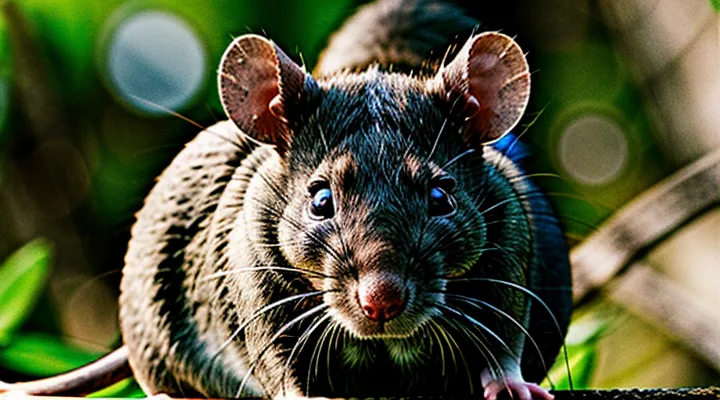
The Rodent Eye: An Overview
Anatomy of the Rat Eye
Retina Structure and Photoreceptors
Rats possess a relatively thin retina compared with diurnal mammals, yet its organization supports the visual tasks required for a nocturnal lifestyle. The retinal wall comprises, from outer to inner surface, the photoreceptor layer, the outer nuclear layer (photoreceptor cell bodies), the outer plexiform layer (synapses between photoreceptors and bipolar cells), the inner nuclear layer (bipolar, horizontal, and amacrine cells), the inner plexiform layer (bipolar‑ganglion synapses), and finally the ganglion cell layer whose axons form the optic nerve.
Photoreceptors dominate the outermost segment and determine the rat’s spectral and sensitivity profile. Their distribution and functional properties are as follows:
- Rods – represent roughly 95 % of the photoreceptor population; elongated outer segments maximize photon capture; peak sensitivity near 500 nm; enable scotopic vision and motion detection in low light.
- Cones – account for the remaining 5 %; two subtypes express short‑wave (S‑opsin, peak ~360 nm) and middle‑wave (M‑opsin, peak ~510 nm) pigments; concentrated in the ventral retina, providing limited photopic acuity and color discrimination.
- Mixed rods‑cone zones – transitional regions where cone density rises toward the visual streak, enhancing resolution in the central visual field.
The high rod density, combined with a relatively sparse cone mosaic, produces a visual system optimized for detecting contrast and movement rather than fine detail. Retinal ganglion cells in rats are predominantly of the melanopsin‑expressing intrinsically photosensitive type, contributing to circadian entrainment and pupil reflexes, while conventional ganglion cells transmit rod‑mediated signals to the dorsal lateral geniculate nucleus.
Synaptic organization follows the classic vertebrate pattern: photoreceptor terminals release glutamate onto bipolar cells, which in turn modulate ganglion cell firing. Horizontal and amacrine interneurons shape receptive fields through lateral inhibition, sharpening edge detection under dim illumination.
Overall, the rat retina integrates a rod‑centric architecture with a modest cone complement, delivering a visual system tailored to nocturnal navigation, predator avoidance, and limited daytime discrimination.
Lens and Pupil Characteristics
Rats possess a relatively small, spherical lens that provides high refractive power to focus images on a retina dominated by rod cells. The lens is composed of densely packed protein fibers, granting it a gradient index that reduces spherical aberration. Unlike many mammals, rats lack a pronounced ability to change lens shape; accommodation is limited, and visual acuity relies on static optical properties.
- High curvature yields focal length of approximately 2 mm.
- Gradient refractive index increases central refractive power, decreasing peripheral distortion.
- Minimal accommodative range; focus adjustment occurs mainly through changes in pupil diameter.
The pupil of a rat is round and capable of rapid dilation and constriction. Under bright conditions the pupil contracts to a diameter of 1–2 mm, reducing light entry and enhancing depth of field. In dim environments it expands to 5–6 mm, maximizing photon capture for the rod‑rich retina. The swift pupillary reflex compensates for the limited accommodative capacity of the lens, maintaining functional vision across a broad luminance spectrum.
- Light‑dependent diameter variation regulates retinal illuminance.
- Constriction improves image sharpness by increasing depth of field.
- Dilation enhances sensitivity for nocturnal activity.
Together, the lens’s high static focusing ability and the pupil’s dynamic aperture define the visual performance of rats, enabling effective detection of movement and contrast in low‑light habitats.
Visual Capabilities and Limitations
Color Perception in Rats
Dichromatic Vision Explained
Rats possess a dichromatic visual system, meaning their retinas contain two distinct cone photoreceptor types. Each cone type expresses a specific opsin protein that determines its spectral sensitivity, allowing the animal to discriminate colors across a limited portion of the visible spectrum.
The short‑wave-sensitive (S) cones peak around 360 nm, placing them in the ultraviolet (UV) range. The medium‑wave-sensitive (M) cones reach maximal absorption near 510 nm, corresponding to the green region. This combination enables rats to perceive differences between UV and green light but not to resolve the full array of hues available to trichromatic mammals.
Key functional consequences of dichromacy in rats include:
- UV detection: UV sensitivity supports foraging on seeds and fruits that reflect UV light, and aids in navigating environments illuminated by natural sunlight.
- Contrast enhancement: The separation of UV and green channels improves detection of edges and textures, especially under low‑light conditions where rod activity dominates.
- Limited color discrimination: Absence of a long‑wave (red) cone restricts the ability to distinguish reds from greens, confining color perception to a binary UV–green axis.
Behavioral experiments confirm that rats can learn to associate a reward with a specific UV‑green color cue, demonstrating functional use of dichromatic vision despite its simplicity compared to human trichromacy.
Sensitivity to Different Wavelengths
Rats possess two cone types, each linked to a distinct opsin protein, which defines their spectral sensitivity. The short‑wave (S) cone expresses a UV‑sensitive opsin with a peak around 360 nm, enabling detection of ultraviolet light that is invisible to most mammals. The medium‑wave (M) cone contains an opsin maximally responsive near 508 nm, providing sensitivity across the blue‑green region. Rod photoreceptors dominate the retina, peaking at approximately 498 nm, and support vision under low‑light conditions while contributing to overall spectral perception.
Sensitivity to short wavelengths is pronounced; behavioral experiments demonstrate rats’ ability to discriminate UV cues and navigate using UV‑reflected patterns. The UV cone contributes to circadian entrainment and predator detection, as many natural surfaces reflect UV light.
Medium‑wave sensitivity allows discrimination of greenish hues, facilitating food identification and social signaling. The M cone’s response overlaps with rod sensitivity, producing a broad band of functional vision in dim to moderate illumination.
Long‑wavelength (red) detection is minimal. Rats lack a dedicated L‑cone, and their rods and M cones exhibit negligible response beyond 620 nm. Consequently, red objects appear indistinct, limiting color discrimination in the red spectrum.
Key spectral characteristics
- UV cone peak: ~360 nm (high sensitivity)
- M cone peak: ~508 nm (blue‑green sensitivity)
- Rod peak: ~498 nm (scotopic vision)
- Minimal response > 620 nm (red region)
Acuity and Resolution
Near-Sightedness
Rats possess a visual system adapted for low‑light environments, resulting in limited spatial resolution. Their eyes are optimized for detecting motion and contrast rather than fine detail, leading to a pronounced near‑sightedness.
- The retinal architecture is dominated by rods (≈85 % of photoreceptors), which enhance sensitivity but sacrifice acuity.
- Cone density is low, especially in the central retina, reducing the ability to resolve distant objects.
- The focal length of the rat eye is short; the lens can accommodate only modest changes, so objects beyond a few centimeters appear blurred.
- Behavioral studies show rats rely on whisker and olfactory cues for navigation, confirming that visual detail is secondary to tactile information.
Near‑sightedness in rats influences experimental design: visual stimuli must be presented within a 5–10 cm range to ensure detection. Researchers often employ high‑contrast patterns or moving bars to compensate for the species’ reduced sharpness. Understanding this limitation is essential for interpreting visual‑based behavioral assays.
Detection of Movement
Rats rely on a visual system optimized for detecting rapid changes in their environment. Their retinas contain a high density of rods, providing sensitivity to low‑light conditions and enabling the perception of motion even at dusk or night. Temporal resolution exceeds that of many diurnal mammals; flicker fusion thresholds reach 30–40 Hz, allowing rats to distinguish fast‑moving objects from static backgrounds.
Key mechanisms underlying motion detection include:
- Specialized retinal ganglion cells that respond preferentially to directional movement, generating action potentials when an object traverses their receptive fields.
- Superior colliculus integration, where visual input merges with auditory and somatosensory cues to produce coordinated orienting responses.
- Contrast‑sensitivity enhancement through lateral inhibition, sharpening the edges of moving silhouettes and improving detection of low‑contrast stimuli.
Behavioral experiments confirm that rats can track moving targets across a range of speeds, adjusting head and whisker positions to maintain focus. Neural recordings reveal that motion‑sensitive pathways transmit information to motor circuits within milliseconds, supporting swift escape or pursuit actions. Overall, the rat visual apparatus prioritizes dynamic scene analysis over fine spatial detail, reflecting an evolutionary adaptation to predator avoidance and foraging in cluttered habitats.
Light Sensitivity and Night Vision
Adaptations for Low Light Conditions
Rats thrive in dim environments due to several physiological modifications of their visual system. Their eyes possess exceptionally large pupils that expand dramatically, allowing maximal photon entry when illumination drops. The cornea and lens are proportionally larger than in diurnal mammals, increasing light-gathering capacity and reducing focal length, which enhances retinal illumination.
The retinal architecture is dominated by rods, which outnumber cones by a factor of roughly 10:1. This rod prevalence raises photon detection efficiency and extends sensitivity into the scotopic range. Rods are densely packed in the central retina, creating a “visual streak” that provides high-resolution detection of movement across the horizon—a critical adaptation for navigating cluttered, low‑light habitats.
Additional mechanisms support nocturnal vision:
- Rapid regeneration of photopigments by the retinal pigment epithelium, shortening recovery time after each photon capture.
- Presence of a reflective layer behind the retina (tapetum-like structure) that redirects unabsorbed light back through photoreceptors, effectively doubling photon utilization.
- Elevated expression of melanopsin in intrinsically photosensitive retinal ganglion cells, enabling detection of very low luminance levels and contributing to circadian regulation.
- Sensitivity to ultraviolet wavelengths, expanding the usable spectrum beyond visible light.
Collectively, these adaptations grant rats a functional visual system optimized for low‑light foraging, predator avoidance, and social interaction.
Role of Rods
Rats rely almost entirely on rod photoreceptors for visual perception. These cells dominate the retinal surface, especially in the peripheral region, providing a dense mosaic that maximizes photon capture. The high rod density enables detection of extremely low light levels, allowing rats to navigate and forage in near‑dark conditions.
Rods contribute to several functional aspects of rat vision:
- Sensitivity to scotopic illumination, extending visual capability to intensities far below human detection thresholds.
- Limited spatial resolution; the predominance of rods reduces image sharpness, resulting in coarse visual detail.
- Absence of color discrimination; rod photopigments respond primarily to green‑blue wavelengths, rendering chromatic information negligible.
- Rapid adaptation to darkness; rod-mediated responses recover within seconds after exposure to bright light.
The distribution pattern of rods supports a behavioral strategy focused on motion detection rather than fine pattern recognition. Peripheral rod concentration enhances detection of moving objects against a dim background, facilitating predator avoidance and foraging. Central retinal areas, though less rod‑dense, still retain sufficient sensitivity to guide head and whisker movements during nocturnal exploration.
Overall, rod photoreceptors define the visual limits of rats, shaping their nocturnal lifestyle through heightened light sensitivity, reduced acuity, and monochromatic perception.
Field of View and Depth Perception
Panoramic Vision
Rats possess laterally positioned eyes that grant them an extensive field of view, approaching 300 ° horizontally. This panoramic arrangement minimizes blind spots and enables simultaneous monitoring of surroundings while the animal navigates confined spaces.
Key characteristics of rat panoramic vision include:
- Overlap of the visual fields from each eye is limited to roughly 30 °, reducing depth perception but expanding peripheral coverage.
- Retinal architecture emphasizes rod photoreceptors, providing high sensitivity to dim light at the expense of sharp detail.
- Visual acuity averages 1 cycle/degree, far below that of primates, reflecting an adaptation to motion detection rather than fine resolution.
- The visual cortex processes broad, low‑resolution input, supporting rapid assessment of threats and obstacles.
The wide-angle view is complemented by a high flicker‑fusion frequency, allowing rats to perceive rapid changes in illumination and movement. Consequently, their visual system prioritizes detection of motion across a large spatial expanse, a capability essential for nocturnal foraging and predator avoidance.
Limited Binocular Overlap
Rats possess a visual field that extends nearly 360°, a consequence of laterally positioned eyes. The region where the visual fields of both eyes intersect—known as the binocular zone—is markedly narrow, spanning only about 30° in front of the animal. This limited binocular overlap contrasts sharply with the extensive overlap observed in predators such as cats or owls, which can exceed 200°.
The restricted overlap influences depth perception. Within the small frontal zone, rats can extract stereoscopic cues, enabling precise judgment of distances for tasks such as navigating tight passages or handling food. Outside this zone, depth assessment relies on monocular cues, including motion parallax, texture gradients, and changes in object size.
Key characteristics of rat binocular vision:
- Overlap width: approximately 30°, centered on the nose tip.
- Visual acuity: low resolution, about 1–2 cycles per degree, limiting fine detail discrimination.
- Functional emphasis: stereopsis confined to the frontal field; peripheral vision dominates for predator detection and spatial orientation.
- Comparative note: larger mammals with frontally placed eyes exhibit broader overlap, supporting enhanced three‑dimensional perception, whereas rats prioritize a wide panoramic view at the expense of stereoscopic range.
Comparison with Human Vision
Key Differences in Visual Perception
Color Spectrum
Rats possess a limited color vision system compared with humans. Their retinas contain two types of cone photoreceptors, enabling detection of short‑wave (approximately 360–380 nm) and medium‑wave (approximately 508–530 nm) light. Consequently, rats are dichromatic, perceiving a spectrum that spans ultraviolet (UV) to green but lacking sensitivity to longer wavelengths such as red.
- UV sensitivity: The short‑wave cone responds to ultraviolet light, allowing rats to discriminate objects illuminated by UV sources. This capability aids navigation in low‑light environments where UV reflections are present.
- Green perception: The medium‑wave cone peaks in the green region, providing rats with the ability to differentiate between shades of green and gray. This is the upper limit of their chromatic range.
- Absence of red detection: Photoreceptors tuned to wavelengths above 600 nm are virtually absent, rendering red light effectively invisible to rats. Experiments using red illumination confirm that rats do not exhibit behavioral responses to red stimuli.
- Behavioral implications: Color discrimination tasks reveal that rats can be trained to distinguish between UV‑bright and green‑bright cues, but they fail to separate red from gray. Their performance aligns with the spectral sensitivities of the two cone types.
Overall, the rat visual system is adapted for detecting UV and green light, supporting activities such as foraging and predator avoidance in dimly lit habitats, while providing no functional perception of red hues.
Acuity and Detail
Rats possess limited visual acuity compared with primates. Photoreceptor density peaks in the central retina, yet the overall density remains low, resulting in a spatial resolution of approximately 1–2 cycles per degree. Consequently, objects smaller than about 5–6 mm at a distance of 30 cm appear indistinct.
Key characteristics of rat visual detail:
- Resolution gradient: Highest acuity in the limited area of the visual streak; peripheral regions provide coarse detection of motion and shape.
- Contrast sensitivity: Enhanced for low‑spatial‑frequency patterns; performance declines sharply with high‑frequency gratings.
- Temporal processing: Ability to perceive rapid changes compensates for reduced spatial detail, supporting navigation in dim environments.
- Depth perception: Relies on binocular overlap of a narrow visual field; fine stereoscopic cues are scarce, limiting precise distance judgments.
Overall, rat vision prioritizes detection of broad outlines and movement over fine pattern discrimination, aligning with their nocturnal and crepuscular activity patterns.
Evolutionary Drivers of Rat Vision
Predation and Survival
Rats rely on a visual system tuned to detect threats and locate resources in complex environments. Their eyes are positioned laterally, granting a panoramic field that exceeds 300°, enabling simultaneous monitoring of ground and overhead space. This configuration reduces blind spots where aerial or terrestrial predators might approach.
Key visual characteristics include:
- Low visual acuity: Rod-dominated retinas resolve coarse details, sufficient for recognizing movement rather than fine patterns.
- Enhanced motion sensitivity: Temporal resolution surpasses that of many mammals, allowing detection of rapid displacements at speeds up to 150 ° s⁻¹.
- Superior scotopic performance: High rod density and a reflective tapetum lucidum amplify photons, supporting functional vision under dim conditions typical of burrows and nocturnal activity.
- Broad spectral range: Sensitivity peaks in the blue‑green region, aligning with the wavelengths most prevalent in twilight and forest understory light.
These visual traits shape anti‑predator strategies. When motion is detected within the peripheral field, rats initiate a rapid freeze response, minimizing silhouette against the background. If the stimulus persists, a stereotyped escape burst follows, guided by the wide-angle view that directs the animal away from the source. The limited acuity does not hinder this behavior; the system prioritizes detection of looming silhouettes over detailed recognition, a trade‑off that conserves energy while maintaining vigilance.
Foraging success also depends on vision. Low-light capability permits exploration of dimly lit tunnels and the edges of open fields where food items are exposed. Motion detection helps distinguish edible insects from inert debris, reducing time spent handling non‑nutritive material. The combination of expansive coverage, rapid motion processing, and nocturnal sensitivity directly contributes to survival rates by lowering predation risk and increasing foraging efficiency.
Foraging Behavior
Rats rely on a visual system adapted to low‑light environments, which shapes their foraging tactics. Their eyes contain a high proportion of rods, granting sensitivity to dim illumination but limiting color discrimination. This sensitivity allows detection of subtle movements and shadows that indicate food sources on the ground or within crevices. The limited acuity, roughly 1 cycle/degree, restricts the distance at which objects can be resolved, prompting rats to explore food items through close‑range scanning and tactile confirmation.
Key visual attributes influencing foraging:
- Enhanced scotopic vision – facilitates activity during night and in burrow darkness.
- Wide field of view (~300°) – enables simultaneous monitoring of surroundings while moving forward.
- Monocular peripheral zones – provide motion cues from the sides, aiding detection of approaching predators and competing conspecifics during food search.
- Reduced color perception – directs reliance on brightness gradients rather than hue for locating edible items.
Behavioral patterns reflect these sensory constraints. Rats exhibit a “stop‑and‑sniff” sequence: they pause, visually assess a potential food patch, then use whisker contact and olfactory sampling to confirm edibility. When navigating cluttered terrain, they preferentially follow low‑contrast edges that stand out against the background, a strategy supported by their ability to detect contrast changes rather than fine detail. In open spaces, rapid head movements broaden the visual sweep, compensating for limited focal resolution and allowing quick identification of food‑related motion.
Overall, rat foraging is a multimodal process in which visual perception provides early detection of food cues, while tactile and olfactory systems verify and guide consumption. The visual system’s adaptation to low light and broad spatial coverage directly shapes the search patterns and decision‑making steps observed during food acquisition.
How Rats Use Vision in Their Environment
Navigation and Orientation
Object Recognition
Rats rely on a visual system optimized for low‑light environments, yet they can discriminate and identify objects with reliable accuracy. Their retinas contain a high proportion of rods, providing sensitivity to dim illumination, while a modest cone population supplies limited color discrimination. The optic nerve projects to the lateral geniculate nucleus and then to primary visual cortex (V1), where basic features such as edges and orientation are extracted.
Object recognition emerges from hierarchical processing. Early cortical stages encode simple visual cues; subsequent layers in the ventral stream integrate these cues into complex representations of shape and size. Neurons in higher visual areas respond selectively to specific objects regardless of position, supporting invariant recognition.
Behavioral studies demonstrate this capability. In two‑alternative forced‑choice tasks, rats distinguish between objects differing in contour, texture, or silhouette, achieving performance levels above 80 % after brief training. When objects are presented from novel viewpoints, recognition persists, indicating reliance on abstract visual templates rather than memorized images.
Key factors influencing rat object recognition:
- High rod density → enhanced detection of movement and contrast.
- Limited visual acuity (~1 cycle/degree) → dependence on coarse shape rather than fine detail.
- Integration with whisker input → multimodal reinforcement of object identity.
- Predominant use of the ventral visual pathway → specialization for object categorization.
Constraints include reduced spatial resolution, susceptibility to low‑contrast conditions, and a bias toward motion cues. Nevertheless, rats exhibit robust object identification, providing a valuable model for studying the neural circuitry underlying visual perception in mammals.
Pathfinding
Rats rely on a visual system adapted to low‑light environments, which shapes their ability to navigate complex spaces. Their eyes are positioned laterally, granting a wide field of view that exceeds 300°, allowing simultaneous monitoring of obstacles on both sides while moving forward. This panoramic perception compensates for limited visual acuity, which averages 1–2 cycles per degree, by emphasizing motion and contrast over fine detail.
The rod‑dominated retina maximizes photon capture, enabling detection of subtle changes in luminance. Rats respond to moving silhouettes and high‑contrast edges, using these cues to construct a coarse map of their surroundings. When a corridor narrows or a new opening appears, rapid shifts in retinal illumination trigger orienting responses that redirect locomotion toward the most salient path.
Depth estimation derives primarily from optic flow rather than stereopsis. As a rat advances, the pattern of visual motion expands across the retina; the rate of expansion correlates with distance to objects. This information integrates with proprioceptive feedback to adjust stride length and turning angle, producing smooth avoidance of barriers. Experiments with virtual‑reality tunnels demonstrate that altering optic flow speed modifies walking speed, confirming reliance on visual motion cues for path selection.
Key visual attributes supporting navigation:
- Broad peripheral coverage for simultaneous monitoring of left and right sectors.
- High sensitivity to contrast, facilitating detection of edges and silhouettes.
- Dominant rod photoreceptors for performance under dim conditions.
- Optic‑flow–based distance estimation guiding speed and direction adjustments.
Together, these characteristics enable rats to locate routes, bypass obstacles, and maintain orientation within cluttered environments despite relatively poor spatial resolution.
Social Interactions and Communication
Visual Cues
Rats rely on a limited yet effective visual system to navigate environments dominated by olfactory and tactile information. Their eyes are positioned on the sides of the skull, giving a wide field of view that exceeds 300 degrees, but providing a modest region of binocular overlap essential for depth perception when approaching objects directly ahead.
Key visual cues that guide rat behavior include:
- Motion detection – retinal ganglion cells respond strongly to moving silhouettes, allowing rapid identification of predators or conspecifics.
- Contrast sensitivity – high contrast between objects and background enhances detection, especially under low‑light conditions.
- Ultraviolet (UV) perception – photoreceptors sensitive to UV wavelengths reveal markings on fur or urine trails invisible to humans.
- Low‑light (scotopic) vision – a predominance of rod cells enables functional sight in dim environments such as burrows or night‑time foraging.
- Spatial frequency – rats preferentially process coarse patterns; fine details are less salient, directing attention to large shapes and edges.
- Depth cues within the binocular zone – disparity between the two eyes supplies limited stereoscopic information for precise reaching and obstacle avoidance.
These cues combine to support tasks such as locating food, avoiding hazards, and recognizing mates, despite the overall modest acuity and absence of true color discrimination. The visual system therefore complements other sensory modalities, providing a rapid, coarse map of the surrounding space.
Body Language Detection
Rats rely on a visual system adapted to low‑light environments, yet their eyes provide sufficient resolution to interpret conspecific body language. The retina contains a high proportion of rod cells, granting sensitivity to movement and contrast rather than fine detail. This visual profile enables rats to detect changes in posture, limb orientation, and tail position that signal aggression, submission, or readiness to mate.
Key aspects of rat body‑language perception include:
- Detection of silhouette shape against the ground, allowing rapid assessment of size and stance.
- Sensitivity to motion cues; sudden shifts in direction trigger attention and can influence escape or approach behavior.
- Integration of visual input with whisker‑mediated tactile information, refining interpretation of close‑range gestures.
- Processing of facial expressions through the limited but functional central visual field, supporting recognition of threat or affiliative cues.
The combination of heightened motion detection, contrast sensitivity, and multimodal integration equips rats with an effective mechanism for reading the physical signals of their peers, shaping social interactions and survival strategies.