
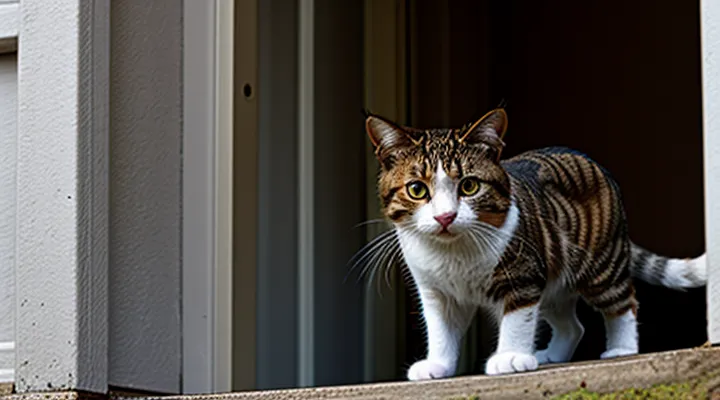
The Instinctive Hunter: Feline Predatory Behavior
Genetic Predisposition and Early Development
Innate Hunting Drive
Cats possess a genetically encoded predatory impulse that activates long before a mouse is detected. This impulse originates in the brain’s limbic system, where the hypothalamus and amygdala coordinate arousal and motor preparation. Elevated dopamine levels reinforce successful captures, ensuring the behavior persists across generations.
When a mouse enters a cat’s sensory field, the innate drive translates visual motion, auditory cues, and vibrissal feedback into a rapid decision cascade. The cat’s eyes detect minute, erratic movements; the ears pinpoint high‑frequency squeaks; the whiskers sense air currents near the ground. Each input converges on neural pathways that trigger the stalking posture: lowered body, focused gaze, and tail stabilization.
The ensuing sequence follows a predictable pattern:
- Crouch: Muscles contract to lower the center of gravity, reducing silhouette.
- Silent advance: Paws pad without claws extended, minimizing sound.
- Calibration: Whiskers sweep to gauge distance, adjusting stride length.
- Pounce: Hind limbs generate explosive force, front paws extend, claws engage.
- Capture: Bite applied to the neck, immobilizing the prey.
Observations of domestic and feral cats confirm that this pattern appears even in individuals with limited hunting experience, indicating that the drive is hardwired rather than learned. Experiments that deprive kittens of live prey still produce adult cats that exhibit the full sequence when presented with a moving target.
Environmental factors modulate the intensity of the drive. Seasonal hormone fluctuations, particularly increased testosterone in spring, amplify aggression and pursuit speed. Nutritional status also influences engagement: well‑fed cats may display reduced vigor, yet the core sequence remains intact.
Overall, the innate hunting drive equips cats with a self‑contained set of sensory‑motor programs that enable efficient mouse capture without external instruction. This biological framework explains the consistency of hunting behavior across diverse feline populations.
Learning Through Play and Observation
Cats acquire hunting competence primarily through two mechanisms: interactive play and visual monitoring of adult behavior. Play sessions generate repetitive motor patterns that mirror the rapid strikes required to capture rodents. Repeated bouts of pouncing, batting, and chasing refine limb coordination, depth perception, and timing of bite execution.
Young felines observe their mothers while she stalks and dispatches mice. During these observations, kittens synchronize their eye focus, ear orientation, and body posture with the adult’s actions. Mirroring this sequence enables the transfer of species‑specific predatory scripts without verbal instruction.
Key tactics that emerge from play and observation include:
- Stalk‑to‑pounce timing – calibrated intervals between low‑profile approach and explosive launch.
- Target fixation – sustained visual lock on the prey’s movement, reducing susceptibility to sudden escapes.
- Bite placement – learned preference for the neck or spinal region to incapacitate quickly.
- Escape anticipation – recognition of common flee routes, allowing pre‑emptive positioning.
These behaviors become entrenched as the kitten matures, resulting in a repertoire capable of subduing agile rodents. The combination of self‑generated practice and modeled execution ensures that domestic and feral cats maintain effective predatory performance throughout their lives.
The Hunting Sequence: A Step-by-Step Analysis
Stalking: The Art of Stealth
Scent and Sound Detection
Cats locate prey primarily through two sensory channels: smell and sound. Their olfactory system includes a large nasal epithelium and a vomeronasal organ that registers volatile compounds in mouse urine, feces, and glandular secretions. Detection of these chemical cues occurs at distances of several meters, enabling a cat to focus attention before visual confirmation.
Auditory perception complements olfaction. Cats possess a frequency range extending to 64 kHz, far beyond human hearing. This range captures the high‑pitched rustle of mouse whiskers and footfalls within confined spaces. The ear pinna rotates up to 180 degrees, aligning the auditory canal with the source of the noise and improving localization accuracy.
Key aspects of scent and sound detection:
- Chemical identification: Recognition of mouse-specific pheromones triggers predatory arousal.
- Spatial mapping: Gradient analysis of odor concentration directs movement toward the source.
- Acoustic triangulation: Time‑difference processing between ears determines the direction of rustling sounds.
- Dynamic adjustment: Simultaneous processing of olfactory and auditory inputs refines the cat’s approach path.
When both cues converge, the cat’s neural circuitry prioritizes rapid, precise motor responses, resulting in a stealthy stalk and a successful capture.
Visual Tracking and Body Language
Cats rely on acute visual acuity to locate potential prey. Their eyes detect minute movements against static backgrounds, allowing detection of a mouse’s twitching whiskers or rapid foot placement. The retinal architecture provides a wide field of view, with a high density of rods that enhance motion perception in low light. When a mouse enters the peripheral zone, a cat’s pupils dilate, increasing light intake and sharpening focus on the target. The animal then fixes its gaze, aligning the head so that the target occupies the central visual axis. This fixation persists until the mouse’s trajectory is predicted.
Body language translates visual data into coordinated motor output. A cat’s stance conveys readiness and intention:
- Front legs lowered, elbows flexed, creating a spring-loaded posture.
- Hindquarters rotated outward, storing potential energy.
- Tail held low or flicking gently, indicating concentration and balance.
- Ears angled forward, aligning auditory cues with visual tracking.
During the stalk, the cat advances in short, silent steps, maintaining a constant visual lock. The eyes remain narrowed, reducing glare and sharpening depth perception. If the mouse changes direction, the cat adjusts head orientation within milliseconds, preserving the line of sight. Upon reaching optimal distance, the cat launches, using the stored muscular tension to deliver a rapid bite. The entire sequence demonstrates how visual tracking and nuanced body signals integrate to produce efficient predation.
The "Prey Drive" State
The “prey drive” state represents a highly focused arousal condition that prepares a cat for capture. Activation triggers a cascade of neural signals originating in the midbrain, amplifying visual and auditory sensitivity while suppressing non‑essential motor activity.
Elevated catecholamines and dopamine levels sustain the state, sharpening reflexes and increasing muscular tension. The hypothalamus regulates the release of adrenaline, which fuels rapid acceleration and precise paw placement.
Observable indicators include:
- Fixed stare on moving prey or a surrogate stimulus
- Tail‑up posture with slight twitch at the tip
- Ears rotated forward, pupils dilated to near‑full size
- Low, rhythmic vibration of the throat (chattering) when the target is within striking distance
- Sudden, explosive sprint followed by a controlled pounce
Intensity varies with age, prior hunting success, and environmental enrichment. Younger cats display more frequent transitions into the drive, while seasoned adults may reserve it for high‑value targets. Exposure to varied prey simulations sustains responsiveness; monotony reduces activation thresholds.
For observers, recognizing the prey drive state enables accurate timing of interventions, such as redirecting energy with interactive toys or allowing safe outdoor excursions to fulfill instinctual needs. Consistent documentation of the listed behaviors supports assessment of a cat’s hunting proficiency and overall welfare.
The Pounce: Precision and Agility
Calculating Distance and Timing
Cats rely on precise distance assessment and split‑second timing to secure a mouse. Visual stereopsis provides depth cues within the first two meters of range, while vibrissae detect subtle changes in airflow and surface proximity as the cat approaches. Auditory localization supplements the visual map, allowing the predator to adjust its trajectory when the prey moves out of sight.
Distance estimation combines three mechanisms:
- Binocular overlap creates a disparity map that translates pixel shift into meters.
- Whisker deflection registers the distance to nearby obstacles, refining the final approach.
- Temporal lag between visual capture and muscle activation is calibrated through repeated hunts.
Typical performance parameters are:
- Strike distance: 0.5 – 2 m from launch point.
- Acceleration phase: 0.3 – 0.5 g, reaching peak speed in 0.2 s.
- Contact window: 0.15 – 0.25 s from paw extension to bite closure.
Timing integrates with distance through predictive motor planning. The cat extrapolates the mouse’s trajectory, computes the required launch angle, and synchronizes hind‑leg thrust with fore‑paw extension. The neuromuscular system compensates for latency by initiating the jump slightly before the mouse reaches the anticipated location, ensuring contact within the narrow contact window.
Observations of hunting bouts consistently show that successful captures occur when calculated distance aligns with the cat’s maximal pounce range and the timing of muscle activation matches the prey’s escape latency. This alignment confirms that distance and timing are inseparable components of feline predatory efficiency.
The Killing Bite: Anatomy and Technique
The killing bite is the final phase of a cat’s predatory sequence, delivering immediate incapacitation through precise dental and muscular action. Sharp, elongated canines penetrate the mouse’s cervical region, while the lower premolars assist in securing the head. The masseter and temporalis muscles generate the force needed to crush vertebrae or sever the spinal cord, ensuring rapid loss of motor control. Blood vessels in the neck are also targeted, causing swift hemorrhage.
Execution follows a fixed pattern. The cat grips the prey with forepaws, aligns the head, and drives the canines into a specific zone:
- Upper canine pierces the dorsal side of the neck, near the cervical vertebrae.
- Lower canine slides beneath the upper tooth, completing a bilateral puncture.
- Premolars apply pressure to the ventral side, crushing the trachea and major vessels.
- Muscular contraction peaks within milliseconds, delivering a lethal shock to the nervous system.
The combination of anatomical specialization and coordinated bite timing makes the killing bite a highly efficient mechanism for neutralizing small rodents.
Post-Hunt Behavior
Consumption and Storage
Cats that capture mice follow a precise sequence when handling the kill. First, they immobilize the prey with a bite to the neck or spine, ensuring rapid incapacitation. The mouth then positions the mouse for swallowing, often after a brief inspection of the carcass. Saliva contains enzymes that begin breaking down tissue, facilitating ingestion. Cats usually consume the entire animal, but may leave specific parts—such as fur or indigestible bones—when the effort outweighs nutritional gain.
Storage behavior varies among individuals and environmental conditions. When surplus prey is available, cats may:
- Hide the mouse in concealed locations (under bedding, in foliage, behind objects) to protect it from scavengers.
- Transport the kill to a safe area before consumption, reducing exposure to competing predators.
- Retain the carcass temporarily, allowing delayed feeding during periods of scarcity.
These practices serve two functions: preserving a future food source and minimizing the risk of theft. The choice of storage site reflects the cat’s assessment of safety, proximity to the hunting ground, and the likelihood of future need. In domestic settings, cats often leave prey near feeding stations, indicating an instinctual link between capture and later consumption. In wild habitats, the same instinct drives the creation of short‑term caches, supporting survival during lean intervals.
Play with Prey: A Form of Practice
Cats often engage with captured mice before delivering a final bite. This behavior serves as a rehearsal of the motor patterns required for successful predation. By alternating between holding, shaking, and releasing the animal, the cat refines grip strength, bite placement, and timing. Repeated bouts of such play sharpen sensory feedback loops that coordinate visual tracking with paw and jaw movements.
Key functions of prey play include:
- Calibration of bite force to ensure rapid immobilization while minimizing injury to the prey.
- Development of ambush tactics through repeated testing of escape routes.
- Reinforcement of neural pathways linking whisker contact, auditory cues, and muscular response.
Observations from field studies indicate that younger felines display longer play sequences, gradually shortening the duration as proficiency increases. Adult predators often limit the activity to a brief assessment, suggesting that the practice phase has become internalized. The transition from prolonged handling to swift killing correlates with measurable improvements in capture efficiency, as recorded in controlled experiments with laboratory mice.
Overall, the act of manipulating prey reflects an adaptive learning process. It equips cats with the precision and confidence needed to secure food in variable environments, reducing the risk of missed strikes and conserving energy during actual hunts.
Environmental Factors and Influences
Habitat and Prey Availability
Domestic and feral cats occupy environments ranging from rural barns to densely populated apartments. In each setting, structural features—such as narrow passages, cluttered corners, and elevated perches—provide concealment and launch points for ambushes. Access to outdoor spaces expands the range of potential hunting grounds, while indoor confinement limits opportunities to areas where mice are present, such as kitchens, storage rooms, and utility closets.
Prey availability depends on several variables that directly affect feline hunting success:
- Seasonal fluctuations in mouse populations, with peaks in late summer and early autumn.
- Proximity to food sources like grain stores, compost piles, or garbage, which attract rodents.
- Presence of competing predators (e.g., snakes, birds of prey) that can reduce mouse numbers.
- Human activity patterns that influence mouse movement, such as nighttime lighting or cleaning schedules.
When habitats combine abundant hiding spots with a steady influx of rodents, cats exhibit higher capture rates. Conversely, environments lacking structural complexity or with low rodent density result in reduced hunting activity, prompting cats to shift focus to alternative prey or to display increased exploratory behavior.
Domesticated vs. Feral Hunting Differences
Impact of Human Interaction
Human presence alters feline hunting patterns through environmental modification, behavioral conditioning, and physiological stress. Domestic cats exposed to regular interaction often experience reduced reliance on instinctual pursuit, shifting from ambush tactics to opportunistic strikes when humans provide food. Consequently, their success rates in capturing rodents decline, and learned predatory sequences become fragmented.
Key effects of human interaction include:
- Resource substitution – consistent feeding diminishes motivation to seek prey, leading to decreased stalking frequency.
- Habituation to disturbance – frequent handling or noise desensitizes cats to typical prey cues, weakening auditory and visual responsiveness.
- Stress-mediated suppression – unpredictable human activity elevates cortisol, impairing motor coordination and reducing capture efficiency.
- Spatial restriction – indoor confinement limits exposure to natural hunting arenas, curtailing practice of complex pursuit strategies.
Observational data reveal that cats retaining occasional outdoor access and limited human feeding maintain higher predation proficiency. Conversely, cats confined to indoor environments with extensive human contact exhibit simplified hunting behavior, relying on brief pounce attempts rather than prolonged chase sequences. These trends underscore the direct relationship between human interaction and the functional expression of feline predatory skills.
Skill Development in Different Settings
Cats acquire mouse‑hunting competence through progressive refinement of sensory, motor, and decision‑making abilities. Early play bouts with moving objects trigger predatory sequences; repeated exposure calibrates depth perception, whisker feedback, and timing of the pounce. Neural pathways governing stealth, rapid acceleration, and bite precision strengthen as the animal transitions from novice to proficient predator.
Observations from domestic, suburban, and rural environments reveal distinct pathways for skill acquisition:
- Indoor settings: limited space forces cats to rely on short‑range bursts, precise paw placement, and heightened auditory cues from rustling debris.
- Urban gardens: mixed terrain introduces variable cover, encouraging adaptive stalking, use of vegetation for concealment, and flexible attack angles.
- Rural fields: expansive ground promotes long‑distance stalking, coordinated use of sight and whisker detection, and sustained pursuit before the final capture.
Each context shapes the cat’s repertoire. In confined areas, repeated micro‑captures hone reflexive grip and bite force. In open habitats, prolonged chases develop endurance and spatial mapping of mouse routes. Exposure to diverse obstacles trains problem‑solving, allowing the predator to modify its approach when prey alters behavior.
The cumulative effect of these experiences produces a versatile hunter capable of adjusting tactics to any environment. Skill development proceeds through iterative feedback: successful captures reinforce the employed sequence, while missed attempts trigger recalibration of timing, angle, or sensory focus. This adaptive loop underlies the cat’s consistent efficiency in securing rodents across varied settings.
Physiological Adaptations for Hunting
Sensory Perception
Night Vision Capabilities
Cats rely on specialized visual adaptations to locate mice in dim environments. The feline eye combines a large cornea, a highly elastic lens, and a broad pupil that expands to maximize light entry during nocturnal activity.
Key anatomical features enable superior low‑light performance:
- Tapetum lucidum – a reflective layer behind the retina that redirects photons, effectively doubling the light available to photoreceptors.
- Rod‑rich retina – rods outnumber cones by a factor of three, providing heightened sensitivity to faint illumination and motion.
- Vertical slit pupil – contracts sharply in bright light and widens dramatically in darkness, allowing rapid adjustment to varying luminance.
These structures allow cats to detect objects at approximately 0.5 lux, comparable to a full moon, and to discern movement of prey within a 30‑meter radius. Visual acuity in low light remains sufficient to resolve the outline of a mouse and to track its rapid, erratic motions.
Night vision operates in concert with other sensory systems. Whisker feedback confirms proximity, while acute hearing pinpoints rustling sounds. The integrated sensory network reduces reliance on any single modality, ensuring efficient capture of rodents even when ambient light is minimal.
Olfactory and Auditory Acuity
Cats rely on highly developed smell and hearing to locate and capture rodents. Their olfactory system contains roughly 200 million receptors, far exceeding the human count. This density enables detection of mouse urine, feces, and skin secretions at concentrations below one part per billion. When a scent plume reaches a cat’s nose, the vomeronasal organ processes pheromonal cues, allowing the predator to discriminate between species and assess the mouse’s health and reproductive status. Rapid nasal airflow combined with a large olfactory bulb accelerates signal transmission, guiding the cat toward the source within seconds.
Auditory capabilities complement olfactory detection. Cats hear frequencies from 48 Hz up to 85 kHz, a range that includes the ultrasonic squeaks produced by mice during movement. Their pinna can rotate up to 180°, focusing sound waves onto the tympanic membrane with minimal loss. Temporal resolution of the auditory cortex enables detection of minute time differences between ears, permitting precise triangulation of a mouse’s position even in complete darkness. The combination of high‑frequency sensitivity and directional hearing ensures that a cat can pinpoint a fleeing rodent before visual confirmation.
Key aspects of sensory performance:
- Scent sensitivity: detection threshold ≤ 1 ppb; discrimination of individual mouse signatures.
- Olfactory processing speed: signal relayed to brain within 50 ms of inhalation.
- Frequency range: 48 Hz – 85 kHz, covering mouse ultrasonic emissions.
- Ear mobility: 180° rotation for optimal sound capture.
- Temporal acuity: inter‑aural time difference detection as low as 20 µs, enabling spatial resolution within 1 cm at typical hunting distances.
These sensory mechanisms operate together, allowing cats to locate, stalk, and capture mice with minimal reliance on sight.
Musculoskeletal System
Agility and Flexibility
Cats rely on rapid, precise movement to capture rodents. Their musculoskeletal architecture permits swift acceleration, sudden direction changes, and tight-space navigation, all essential when pursuing evasive prey. Muscle fibers are predominately fast‑twitch, delivering bursts of power within milliseconds, while the spine’s segmented vertebrae act as a flexible lever, extending and contracting to amplify stride length and height.
The feline shoulder joint rotates nearly 180 degrees, allowing forelimbs to reach forward and backward without compromising balance. This range enables a cat to:
- Extend claws while leaping, securing grip on the mouse’s hideout.
- Rotate the hindquarters to generate torque for abrupt turns.
- Compress the body to slip through narrow gaps, such as mouse holes.
Flexibility also supports stealth. The ability to flatten the body against surfaces reduces silhouette and noise, facilitating silent approaches. Combined with proprioceptive feedback from whiskers and vestibular sensors, agility and flexibility form a coordinated system that maximizes hunting efficiency.
Jaw Strength and Dentition
Cats capture mice with a bite that combines high force and precise tooth arrangement. The jaw musculature—primarily the masseter, temporalis and pterygoid groups—produces a bite force of roughly 20–30 N in domestic cats and up to 50 N in larger felids. This force is transmitted through a short, robust mandible that resists deformation during rapid closure.
Dental morphology supports the mechanical advantage of the jaws. Four incisors at the front of the lower jaw trim fur and skin, while elongated upper canines penetrate the mouse’s neck vertebrae. The premolars, rounded and robust, crush bone, and the carnassial pair (upper fourth premolar and lower first molar) functions as a scissor‑like shear, slicing spinal cord and soft tissue.
Key adaptations that enhance rodent killing:
- Masseter muscle cross‑section area exceeding 30 mm², delivering peak bite pressure.
- Canines with curvature of 45–60°, enabling deep, stable penetration.
- Carnassial teeth with sharp, shearing edges, reducing prey length within milliseconds.
- Premolars possessing blunt cusps, optimized for crushing vertebrae and skull.
Together, strong bite force and a specialized dentition allow cats to immobilize, decapitate, and dismember mice in a single, swift bite, ensuring efficient predation without prolonged struggle.