
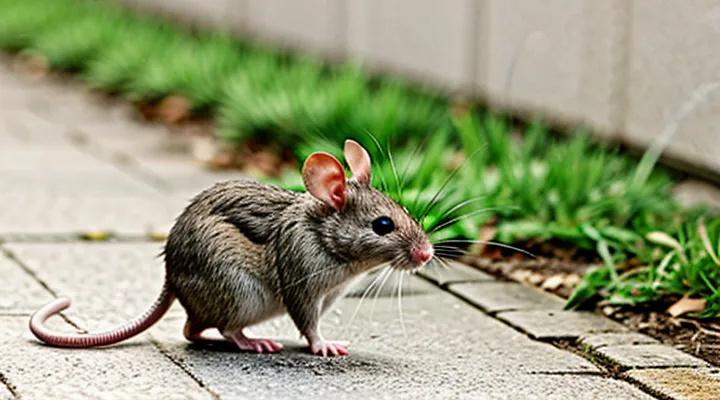
Size and Build
Body Length
Rats are generally larger than mice, a distinction that becomes evident when measuring total body length from snout to the base of the tail. Adult Norway rats (Rattus norvegicus) commonly reach 20–25 cm (8–10 in) in body length, with some individuals extending to 30 cm (12 in). In contrast, the common house mouse (Mus musculus) typically measures 7–10 cm (2.8–4 in) in body length, rarely exceeding 12 cm (4.7 in).
Key size ranges:
- Rats: 20–30 cm (body only)
- Mice: 7–12 cm (body only)
These measurements exclude the tail, which further differentiates the species: rat tails add approximately 15–20 cm, while mouse tails contribute 5–9 cm. The pronounced disparity in body length influences habitat use, predator avoidance, and resource competition, reinforcing the visual distinction between the two rodents.
Tail Proportion
Rats possess longer, thicker tails relative to body length than mice. A typical rat tail measures about 60–80 % of its head‑body length, while a mouse tail averages 70–90 % of that measurement, but the rat’s tail is noticeably broader and more robust.
Key measurements:
- Length ratio: Rat tail ≈ 0.6–0.8 × body length; mouse tail ≈ 0.7–0.9 × body length.
- Diameter: Rat tail diameter ranges from 4 mm to 7 mm; mouse tail diameter ranges from 2 mm to 4 mm.
- Scaling: Rat tails exhibit less tapering, maintaining a relatively uniform thickness along most of their length; mouse tails taper sharply toward the tip.
These proportional differences affect locomotion and thermoregulation. The rat’s sturdier tail supports balance during rapid climbing and provides a larger surface for heat dissipation. The mouse’s slender, longer tail enhances maneuverability in confined spaces and contributes to fine temperature control.
Head Shape
Snout Features
Rats possess a noticeably longer, broader snout than mice. The increased length extends the nasal cavity, giving rats a more tapered, rod‑like profile, whereas mice display a short, blunt muzzle that ends almost abruptly.
- Length: Rat snout averages 2–2.5 cm; mouse snout measures 1–1.2 cm.
- Width: Rats have a wider nasal bridge, contributing to a flatter facial appearance; mice retain a narrow bridge, accentuating a pointed look.
- Nasal pads: Rats exhibit larger, more pronounced nasal pads that support stronger whisker arrays; mice have smaller pads with finer whiskers.
- Dental arrangement: The rat’s elongated snout accommodates a longer incisor gap, facilitating stronger gnawing; the mouse’s compact snout houses a shorter gap, suited for delicate chewing.
These morphological distinctions affect feeding behavior, sensory perception, and species identification.
Ear Size and Shape
Rats have noticeably larger ears than mice. The average ear length of a common rat ranges from 2.5 to 3.5 cm, whereas a typical house mouse ear measures about 1 to 1.5 cm. This size disparity contributes to a broader, more triangular ear shape in rats, while mice possess smaller, more rounded ears.
Key structural differences include:
- Thickness of cartilage: Rat ears contain thicker cartilage, giving a sturdier appearance; mouse ears have thinner, more delicate cartilage.
- Fur coverage: Rat ears are often sparsely furred, exposing the pink skin; mouse ears are densely covered with fine hair.
- Position on the head: Rat ears sit slightly higher and more laterally, creating a wider profile; mouse ears sit lower and closer to the midline.
These characteristics enable rapid identification of each species based on ear morphology alone.
Eye Size
Rats possess noticeably larger eyes than mice, a distinction that influences visual acuity and field of view. Average rat eye diameter ranges from 6 mm to 7 mm, while mouse eye diameter typically measures 2 mm to 3 mm.
- Rat eyes occupy a greater proportion of the skull’s facial region, contributing to a more prominent ocular appearance.
- Larger ocular lenses in rats allow greater light intake, supporting nocturnal activity patterns.
- The relative size difference results in rats having a wider visual field, whereas mice rely more on peripheral whisker sensing.
Fur and Coloration
Fur Texture
Rats possess fur that feels coarse and relatively sparse. Individual hairs are thicker, often ranging from 2 to 4 mm in length, and lie flat against the skin, giving the coat a slightly oily sheen. The texture varies among species; brown rats typically display a rough, bristly surface that resists moisture and facilitates burrowing.
Mice exhibit a markedly softer pelage. Guard hairs are short, usually under 2 mm, while a dense undercoat creates a plush, velvety feel. The fine fibers lie close together, producing a uniformly smooth appearance that enhances insulation in colder environments.
Key points of contrast:
- Thickness: rat hairs > mouse hairs
- Length: rat hairs 2‑4 mm; mouse hairs ≤ 2 mm
- Density: mouse coat denser, rat coat sparser
- Surface feel: rat fur coarse, mouse fur soft
- Moisture resistance: rat fur more oily, mouse fur less so
Common Color Variations
Rats and mice can be distinguished by the range and distribution of their coat colors, a reliable feature for identification.
Rats exhibit a limited palette. The most frequent colors are:
- Black (solid, glossy fur)
- Brown (medium to dark, often with a lighter belly)
- White (albino, pink eyes, pink nose)
- Agouti (mix of dark and light hairs, giving a speckled appearance)
Mouse coats display greater variability. Common colors include:
- Gray (standard laboratory strain, uniform dorsal fur)
- Brown (light to dark, sometimes with a distinct dorsal stripe)
- White (albino, pink eyes, pink nose)
- Agouti (similar to rat agouti but generally lighter overall)
- Cinnamon (reddish‑brown hue, less common)
Both species share white and agouti forms, yet the texture and shade differ. Rat fur tends to be coarser and darker, while mouse fur is finer and often lighter. The presence of a dorsal stripe is typical for many mouse strains but rare in rats. These color patterns, when observed together with size and tail characteristics, provide a clear basis for separating the two rodents.
Leg and Paw Characteristics
Foot Size
Rats possess noticeably larger feet than mice. Adult brown rats (Rattus norvegicus) typically have hind foot lengths ranging from 20 mm to 24 mm, while common house mice (Mus musculus) exhibit hind foot lengths of 12 mm to 15 mm. Forefoot dimensions follow a similar pattern, with rat forepaws measuring approximately 15 mm to 18 mm compared to mouse forepaws of 9 mm to 11 mm.
The disparity reflects overall body size: rat hind limbs are proportionally longer, providing greater stride length and supporting higher body mass. In contrast, mice have compact paws suited to maneuvering through narrow tunnels and dense vegetation.
Key morphological distinctions:
- Toe count: Both species display five toes on each hind foot, but rat toes are broader and more robust.
- Pad thickness: Rat foot pads are thicker, offering enhanced shock absorption for rapid, sustained movement.
- Claw curvature: Rat claws are less sharply curved, facilitating digging in looser substrates; mouse claws are more acute, aiding grip on fine surfaces.
These measurements and structural features consistently separate the two rodents in visual identification and functional capability.
Claw Prominence
Rats and mice can be separated by the visibility and structure of their claws. Rats possess larger, more robust claws that extend noticeably beyond the toe pads. The claw length in rats typically measures 2–3 mm, allowing clear observation when the animal is stationary. Mice exhibit shorter claws, usually 1–1.5 mm, which remain partially concealed beneath the surrounding fur and pads.
Key distinctions in claw prominence include:
- Size: Rat claws are approximately double the length of mouse claws.
- Curvature: Rat claws display a gentle, outward curve; mouse claws are straighter and less arched.
- Visibility: Rat claws are evident even without close inspection; mouse claws require magnification to discern.
- Function: Larger rat claws support heavier body mass and facilitate climbing on rough surfaces; smaller mouse claws suit lightweight locomotion and fine maneuvering.
These morphological differences provide reliable criteria for species identification in field studies, laboratory settings, and pest management assessments.
Other Distinguishing Marks
Presence of Scrotum (Males)
Male rats possess a well‑developed, external scrotum that is visibly larger and more elongated than that of male mice. In mice, the scrotum is smaller, often appearing as a compact, rounded sac that may be partially concealed by surrounding fur. These size and shape differences affect the overall silhouette of the animal’s ventral region.
- Rat scrotum: pronounced, elongated, easily observed; located low on the abdomen, creating a noticeable bulge.
- Mouse scrotum: compact, rounded, less conspicuous; positioned higher on the ventral side, sometimes hidden by the tail base.
The disparity in scrotal dimensions contributes to a distinct visual contrast between the two species, aiding identification based on external morphology.
Overall Proportions and Stature
Rats display a more robust build than mice. Their bodies are longer relative to head size, typically measuring 20–25 cm from nose to tail base, whereas mice rarely exceed 10 cm. The tail of a rat is thick, proportionally shorter, and often covered with coarse hair; a mouse tail is slender, longer relative to body length, and mostly hairless.
Key proportional distinctions include:
- Body length: Rat – 20–25 cm; Mouse – 7–10 cm.
- Head‑to‑body ratio: Rat – larger head with a broader skull; Mouse – smaller, more tapered head.
- Tail thickness: Rat – thick, hair‑covered; Mouse – thin, mostly naked.
- Weight: Rat – 250–500 g; Mouse – 15–30 g.
These measurements result in a rat’s overall stature appearing heavier and more muscular, while the mouse maintains a delicate, compact silhouette.