
Understanding the Common Misconception
Why People Confuse Mice and Rats
General Appearance Similarities
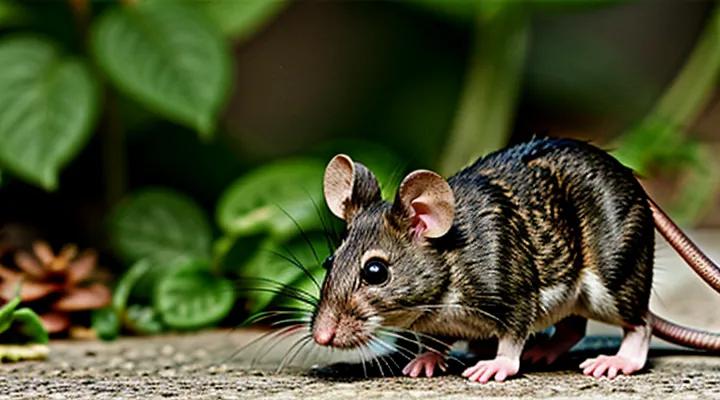
Mice and rats share a fundamental rodent body plan that creates a recognizable visual overlap. Both species possess a compact torso covered with dense fur, a pair of prominent whiskers for tactile navigation, and a long, hair‑covered tail that aids balance. Their limbs are short and end in clawed paws suited for climbing and digging, while the facial structure includes a pointed snout, small eyes, and a set of incisors that protrude continuously.
- Fur coloration ranges from brown to gray, often indistinguishable at a distance.
- Whisker placement follows the same bilateral pattern, extending from the rostral region.
- Tail length approximates the body length, though absolute measurements differ.
- Four limbs retain the same skeletal arrangement: scapula‑humerus‑radius/ulna in the forelimb, pelvis‑femur‑tibia/fibula in the hindlimb.
- Ear shape is rounded, positioned laterally on the head, providing similar auditory capabilities.
These shared characteristics result from common evolutionary pressures within the Muridae family, producing a visual template that can mislead casual observation despite size and proportion differences.
Key Differentiating Features
Size and Body Proportions
Overall Body Length
Mice and rats differ markedly in overall body length, a primary visual cue for identification. An adult house mouse (Mus musculus) typically measures 7–10 cm from the tip of the nose to the base of the tail; the tail adds an additional 5–10 cm, resulting in a total length of roughly 12–20 cm. In contrast, an adult brown rat (Rattus norvegicus) ranges from 20–25 cm in head‑body length, with a tail of comparable length, yielding a combined measurement of 40–50 cm.
- Mouse: head‑body 7–10 cm; tail 5–10 cm; total 12–20 cm.
- Rat: head‑body 20–25 cm; tail 20–25 cm; total 40–50 cm.
These dimensions place the mouse well below half the size of the rat, making length a reliable field characteristic for rapid distinction.
Weight Comparison
Weight serves as a decisive metric for separating the two species.
An adult house mouse (Mus musculus) typically weighs between 15 g and 30 g (0.5 oz – 1.0 oz).
A common brown rat (Rattus norvegicus) usually falls in the 250 g to 500 g range (9 oz – 1.1 lb).
- Mouse: 15–30 g (0.5–1.0 oz)
- Rat: 250–500 g (9–1.1 lb)
The rat’s mass exceeds that of the mouse by roughly ten to thirty times, reflecting a substantial disparity that influences locomotion, habitat preference, and predator avoidance. This quantitative contrast clarifies one of the most apparent physical distinctions between the two rodents.
Head Size Relative to Body
Mice have proportionally larger heads relative to their bodies than rats. The cranial length of a typical house mouse (≈ 30 mm) represents about 30 % of its total body length, whereas a common rat (≈ 120 mm head) accounts for roughly 20 % of its overall length. This disparity results in a noticeably rounder, more compact facial profile in mice.
Key comparative points:
- Skull width: Mouse skulls are broader in relation to body width; rat skulls are narrower and elongated.
- Snout length: Mice possess short, blunt snouts; rats display longer, more tapered snouts.
- Ear placement: In mice, ears are positioned closer to the top of the head, accentuating the head‑to‑body ratio; rat ears sit lower on a larger skull, reducing visual prominence.
Tail Characteristics
Tail Length vs. Body Length
Mice and rats display distinct proportions between tail and body, a reliable visual cue for identification.
The tail of a common house mouse measures roughly 75–100 % of its body length. A typical adult mouse, with a head‑body length of 7–10 cm, carries a tail of similar length, often slightly longer than the torso.
In contrast, a Norway rat or brown rat possesses a shorter tail relative to its body. The tail usually reaches 50–70 % of the head‑body length. An adult rat with a head‑body length of 20–25 cm therefore has a tail of 10–15 cm.
Key proportional differences:
These ratios remain consistent across age groups and provide a quick metric for distinguishing the two rodents in field observations.
Tail Thickness and Hairiness
Mice possess slender tails that measure roughly one‑to‑one‑and‑a‑half times their body length. The diameter remains consistently narrow, often less than 3 mm, and the surface is largely smooth, with a sparse covering of fine, short hairs. Rats, by contrast, display markedly thicker tails—typically 4–6 mm in diameter—approaching half the width of the animal’s body. Their tails are densely furred, especially near the base, providing noticeable insulation.
Key visual cues for distinguishing the two species based on tail characteristics:
- Diameter: mouse tail ≈ 2–3 mm; rat tail ≈ 4–6 mm.
- Hair coverage: mouse tail mostly naked with occasional fine hairs; rat tail heavily furred, especially proximally.
- Length proportion: mouse tail ≈ 1–1.5 × body length; rat tail ≈ 0.8–1 × body length, but appears bulkier due to thickness.
These attributes allow rapid identification without reliance on other anatomical features.
Scaly vs. Furred Appearance
Mice display a fine, soft coat that forms a uniformly smooth surface across the body. Individual hairs measure only a few millimeters, creating a sleek silhouette that emphasizes the animal’s small size. The tail, while hairless, has a thin, translucent skin that feels leathery and may be described as slightly scaly, but the overall impression remains delicate.
Rats possess a denser, coarser fur that lies in longer, thicker strands. The hair length and texture produce a visibly rougher outline, especially along the back and flanks. Their tail, also hairless, is thicker and exhibits a more pronounced, ridged skin texture, contributing to a distinctly scaly appearance compared with the mouse’s smoother tail.
Ear Morphology
Ear Size Relative to Head
Mice possess ears that occupy a noticeably larger proportion of the head than those of rats. In most laboratory and wild species, the ear length of a mouse ranges from 10 to 15 mm, while the head width measures approximately 12 mm, giving an ear‑to‑head ratio of roughly 0.8–1.2. Rats, by contrast, exhibit ear lengths of 15 to 25 mm against a head width of 20–30 mm, resulting in a ratio near 0.5–0.8. This disparity makes mouse ears appear more prominent when the animal is observed from the side.
The larger relative ear size in mice serves several functional purposes:
- Enhanced auditory sensitivity to high‑frequency sounds, aiding in predator detection.
- Greater surface area for thermoregulation, compensating for the mouse’s higher surface‑to‑volume ratio.
- Visibility of the ear cartilage, which is less covered by fur than in rats.
Rat ears are comparatively smaller relative to the skull, with thicker fur covering the pinna and a more subdued silhouette. The reduced ear proportion contributes to a more streamlined head profile, which aligns with the rat’s generally larger body size and different ecological niches.
In summary, ear size relative to head dimensions provides a clear visual cue for distinguishing mice from rats: mice display proportionally larger, more exposed ears; rats exhibit smaller, less conspicuous ears relative to their heads.
Ear Shape and Hair Coverage
Mice have proportionally larger ears that are triangular and extend noticeably beyond the head. The ear surface is mostly hair‑free, revealing a thin, translucent membrane that facilitates acute hearing. In contrast, rats possess smaller, more rounded ears that sit closer to the skull. Their ear rims are covered with a fine layer of fur, giving a softer appearance and reducing exposure of the underlying skin.
Hair coverage distinguishes the two rodents as well. Mice display a sparse, fine coat that is often lighter in color on the ventral side and may include a faint dorsal stripe. The fur is short and lies close to the body, leaving portions of the tail and hind feet relatively bare. Rats exhibit a denser, coarser pelage that envelops the entire body, including the tail, which is covered with short hairs. The uniform thickness of rat fur provides a smoother silhouette and greater insulation.
Key visual cues:
- Ear shape: triangular and prominent (mouse) vs. rounded and modest (rat).
- Ear surface: largely hairless (mouse) vs. lightly furred edges (rat).
- Fur density: sparse, short, and partially exposed skin (mouse) vs. thick, continuous coat covering all body parts (rat).
Snout and Facial Structure
Snout Length and Pointiness
Mice possess a compact snout that terminates abruptly, giving the nose a blunt appearance. The length typically measures 5–7 mm in adult house mice, and the tip is rounded rather than sharply tapered. This short, blunt rostrum aligns with the overall small head size and contributes to a proportionally wider facial profile.
Rats display a markedly elongated snout that extends noticeably beyond the mouth, often reaching 12–15 mm in adult Norway rats. The tip narrows to a distinct point, creating a more triangular silhouette. The increased length and pointedness enhance the rat’s ability to probe crevices and manipulate food items, and the snout appears proportionally longer relative to the skull.
Key morphological contrasts:
- Length: mouse ≈ 5–7 mm; rat ≈ 12–15 mm
- Tip shape: blunt and rounded in mice; sharp and tapered in rats
- Proportion: snout occupies a smaller fraction of the head in mice; dominates the facial outline in rats
Eye Size and Placement
Mice possess proportionally larger eyes relative to head length than rats. The ocular diameter in a typical house mouse measures approximately 4 mm, while a common brown rat’s eye averages 6 mm, representing a lower eye‑to‑head ratio. This difference results from mice’s reliance on visual cues for navigating tighter spaces.
Eye placement also diverges. In mice, the orbits sit more laterally, granting a broader peripheral field but reducing binocular overlap. Rats exhibit slightly more forward‑facing eyes, increasing overlap and depth perception. The contrast can be summarized:
- Mouse: larger eyes, pronounced lateral placement, wider peripheral vision.
- Rat: smaller eyes relative to head, modestly forward placement, enhanced binocular field.
These anatomical variations affect each species’ visual acuity and behavioral strategies in their respective habitats.
Whisker Length and Density
Mice and rats both rely on whiskers for tactile navigation, yet their facial hair exhibits distinct measurements.
- Mouse whiskers typically measure 30–45 mm from base to tip, extending only a short distance beyond the snout. Rat whiskers commonly reach 60–80 mm, protruding well past the muzzle.
- In mice, whisker follicles are densely packed, averaging 12–14 vibrissae per side of the face. Rats possess fewer follicles, usually 8–10 per side, but each whisker is thicker in diameter.
- The spacing between individual whiskers is tighter in mice, creating a finer sensory grid. Rat whisker spacing is broader, reflecting the larger head size and differing foraging behavior.
These dimensional and density variations contribute to the mouse’s ability to detect minute obstacles, while the rat’s longer, sturdier whiskers support navigation in more open or subterranean environments.
Fur Color and Texture
Common Color Variations
Mice and rats display distinct, though sometimes overlapping, coat color patterns that aid identification.
Mice commonly exhibit a broader palette, including:
- Agouti – dorsal hairs banded with dark and light pigments, giving a speckled brown appearance.
- Brown – uniform dark brown to chocolate tones, often with a lighter belly.
- Black – solid black fur, sometimes with a pink or white underbelly.
- White – fully albino or pink-eyed white, the most frequent laboratory strain.
- Gray – medium gray dorsally, lighter ventrally, occasionally with a subtle dorsal stripe.
Rats tend toward fewer natural variants:
- Brown/Black – dense, glossy fur ranging from deep brown to black, typical of wild and many domestic strains.
- Albino – pure white coat with pink eyes, common in laboratory settings.
- Hooded – dark dorsal area with a white or light ventral side, characteristic of some pet breeds.
Key differences: mouse coats frequently show marked color diversity and lighter ventral patches, while rat coats are generally darker and less variable, with the hooded pattern as a notable exception. These visual cues provide reliable markers for distinguishing the two species in the field.
Fur Smoothness and Coarseness
Mice possess a fine, soft pelage that feels almost velvety to the touch. The individual hairs are thin, uniformly tapered, and lie close to the skin, giving the coat a sleek appearance. This smooth texture reduces friction as the animal navigates tight spaces and contributes to a glossy sheen when the fur is clean.
Rats, by contrast, display a coarser coat. Their hairs are thicker, often with a slightly flattened shaft that creates a rougher surface. The fur may appear matte and uneven, especially on the dorsal region where guard hairs are more prominent. The coarseness provides additional protection against abrasive environments and aids in thermoregulation for a larger body mass.
Key differences in fur characteristics:
- Thickness: mouse hair – thin; rat hair – thick
- Surface texture: mouse – smooth, velvety; rat – rough, matte
- Guard hair presence: mouse – minimal; rat – pronounced, especially on the back
- Visual effect: mouse – glossy; rat – dull
These attributes serve as reliable visual cues for distinguishing the two rodents in field observations and laboratory settings.
Behavioral and Habitat Clues (Indirect Visual Indicators)
Locomotion and Movement
Agility and Speed
Mice exhibit a compact body, proportionally longer hind limbs, and a lighter skeletal frame that together produce rapid, erratic bursts of movement. Their small paws generate a higher stride frequency, allowing swift changes in direction within confined spaces.
Rats possess a bulkier torso, shorter hind limbs relative to body length, and denser bone structure. These attributes yield a steadier, more powerful gait but reduce overall agility. Their longer stride covers greater distance per step, favoring sustained speed over short, abrupt maneuvers.
Key morphological contributors to performance differences:
- Limb length ratio – mice: hind‑to‑forelimb ratio >1; rats: ratio closer to 1.
- Muscle fiber composition – mice: higher proportion of fast‑twitch fibers; rats: mixed fiber types favoring endurance.
- Tail flexibility – mice: highly mobile, assists balance during rapid turns; rats: thicker, less flexible, supports stability at higher speeds.
Resulting behavior: mice excel in navigating tight, cluttered environments with quick, unpredictable motions; rats dominate open pathways where steady, prolonged running is advantageous.
Gait and Stance
The way a mouse moves and positions its body differs noticeably from the way a rat does, providing reliable visual markers for species identification.
Mice exhibit a rapid, high‑frequency gait. Each step covers a short distance, resulting in a compact stride length that keeps the animal’s center of mass close to the ground. The tail is typically held upright or slightly arched, contributing to balance during quick, erratic bursts of motion. Hind limbs are proportionally longer relative to forelimbs, producing a pronounced “hopping” appearance when the mouse accelerates.
Rats display a slower, lower‑frequency gait. Stride length is longer, allowing smoother, more energy‑efficient travel across larger distances. The tail trails low and may swing laterally, reflecting a steadier balance strategy. Hind limbs are more robust, supporting a heavier body and generating a measured, rolling motion rather than the abrupt hops seen in mice.
Key distinctions in gait and stance:
- Stride length: short (mouse) vs. long (rat)
- Step frequency: high (mouse) vs. low (rat)
- Tail posture: upright or arched (mouse) vs. low and sweeping (rat)
- Body elevation: close to ground (mouse) vs. slightly higher, more pronounced sway (rat)
- Limb proportion: longer fore‑to‑hind ratio (mouse) vs. stronger, more balanced hind limbs (rat)
These locomotor characteristics, combined with overall size and fur coloration, enable accurate visual differentiation between the two rodents.
Droppings (Indirect Visual Cue)
Size and Shape Differentiation
Mice are markedly smaller than rats. Adult house mice typically measure 2‑4 inches (5‑10 cm) in body length, while common rats range from 7‑10 inches (18‑25 cm). Weight reflects the same disparity: mice weigh 0.5‑1 oz (15‑30 g), rats exceed 10‑16 oz (300‑450 g). The size gap influences habitat selection, predator avoidance, and food intake.
Shape characteristics further separate the two rodents:
- Body proportions: Mice possess a compact, slender torso with a relatively short, tapered tail. Rats exhibit a bulkier build, longer torso, and a thicker, sometimes hair‑covered tail.
- Head and snout: Mouse heads are small, with a pointed snout and large, rounded ears positioned near the eyes. Rat heads are broader, snouts less tapered, and ears proportionally smaller relative to head size.
- Feet and claws: Mice have fine, delicate paws suited for climbing narrow surfaces; rat paws are larger, with more robust claws for digging and handling heavier objects.
- Tail texture: Mouse tails are hairless, thin, and flexible; rat tails may display sparse fur, increased girth, and reduced flexibility.
These dimensional and morphological distinctions create a clear visual separation between the two species, facilitating identification in field observations and laboratory settings.