
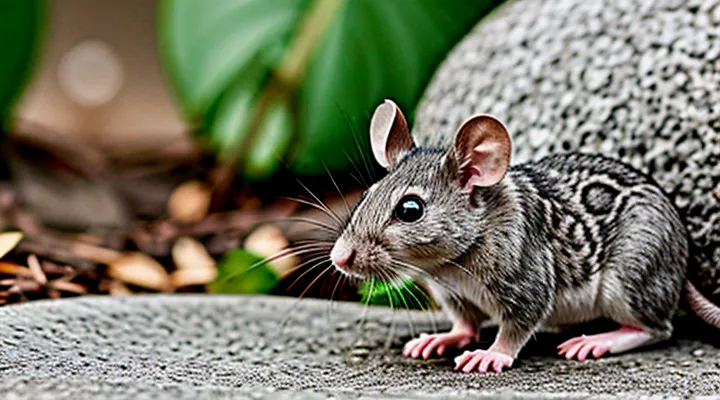
The World of the Gray Mouse
Habitat and Environment
The Comforts of the Old Barn
The aged barn offers a stable microclimate that shields the gray mouse from wind, rain, and temperature extremes. Its thick wooden walls retain heat during cold nights, while the thatched roof diverts moisture, maintaining a dry interior.
Inside, the structure contains several elements that sustain the mouse’s daily needs:
- Loose straw bedding that cushions the animal and absorbs waste, reducing the risk of disease.
- Stored grain and seed remnants that serve as an immediate food source, eliminating the need for foraging beyond the barn’s perimeter.
- Narrow crevices and hidden chambers that provide concealment from predators and allow quick escape routes.
- Familiar scents of hay and aged timber that lower stress levels, supporting regular metabolic functions.
These attributes collectively create a self‑contained refuge, enabling the mouse to allocate energy toward growth and reproduction rather than constant survival maneuvers. The barn’s enduring design thus functions as a pivotal resource hub within the gray mouse’s endurance narrative.
Dangers in the Meadow
The meadow presents a hostile environment for a solitary gray mouse seeking to survive. Open grasslands expose the rodent to aerial predators such as hawks and owls, whose keen eyesight detects movement from great distances. Ground predators—foxes, snakes, and feral cats—lie in wait among the tall stalks, capitalizing on any lapse in vigilance. Sudden weather changes intensify risk; heavy rain floods burrow entrances, while scorching sun accelerates dehydration.
Key hazards include:
- Predatory birds and mammals that hunt by sight and scent.
- Rapidly shifting temperature and moisture levels that compromise shelter integrity.
- Toxic plants and parasites that can cause illness or death upon ingestion or contact.
- Human activity, including mowing equipment and pesticide application, which can inflict injury or contaminate food sources.
Effective navigation of these threats requires constant alertness, strategic use of cover, and timely relocation to safer microhabitats within the meadow’s varied terrain.
Daily Life and Challenges
Foraging for Sustenance
The gray mouse survives by locating edible material within a limited territory, relying on acute olfactory and tactile perception to identify viable sources. Nighttime activity reduces exposure to predators, while daylight foraging concentrates on sheltered microhabitats such as under leaf litter or within crack systems.
- Seeds from grasses and wildflowers
- Insect larvae uncovered in decaying wood
- Fungal spores harvested from damp substrates
- Small arthropods captured on surface debris
Selection prioritizes high‑calorie items that replenish glycogen stores quickly. The animal evaluates each find against the energetic cost of extraction, discarding low‑yield material in favor of dense nutrients. Water intake is secured through succulent plant tissues and moist soil particles encountered during digging.
Energy allocation follows a predictable pattern: initial exploration incurs a fixed metabolic expense, followed by a rapid intake phase where the mouse consumes the chosen resource, and finally a rest period allowing digestion and storage. This cycle repeats until seasonal changes alter resource availability, prompting adjustments in foraging range and diet composition.
Evading Predators
The gray mouse survives by mastering several predator‑avoidance tactics that combine sensory acuity, spatial awareness, and rapid response.
First, the animal relies on acute hearing and whisker feedback to detect approaching threats. Vibrations transmitted through the substrate alert the mouse to the presence of aerial or ground predators before visual confirmation is possible. This early warning system triggers an immediate assessment of escape routes.
Second, the mouse maintains a network of concealed pathways within its habitat. Burrow entrances, narrow crevices, and dense foliage are positioned to provide multiple exit options. By regularly updating these routes, the mouse reduces the likelihood of being trapped.
Third, the mouse employs erratic locomotion when fleeing. Sudden changes in direction, vertical leaps, and brief pauses disrupt the predator’s pursuit algorithm. This unpredictability lowers capture probability even against swift hunters.
Key behavioral components can be summarized as follows:
- Continuous environmental scanning using auditory and tactile cues.
- Maintenance of a diversified shelter system with redundant escape tunnels.
- Execution of irregular sprint patterns that impede predator tracking.
Finally, physiological traits support these tactics. Muscular fibers optimized for short bursts of high speed, combined with a flexible spine, enable rapid acceleration and tight maneuvering. The mouse’s coloration blends with the muted tones of its surroundings, providing passive camouflage during moments of stillness.
Collectively, these strategies form a comprehensive defense framework that allows the contented gray rodent to persist in a landscape populated by numerous predators.
Pip's Journey: A Tale of Resilience
The Genesis of a Survivor
A Small Mouse, A Big Heart
The narrative follows a diminutive gray mouse whose courage exceeds its size. Throughout the ordeal, the creature confronts predators, scarcity of food, and harsh weather, yet it consistently chooses actions that protect its community. Its decisions illustrate how empathy can drive survival strategies, turning self‑preservation into collective benefit.
Key behaviors that define the mouse’s impact:
- Resource sharing – gathers surplus seeds and distributes them to weaker members.
- Risk assessment – evaluates predator routes before leading others through safe passages.
- Leadership by example – endures exposure to cold to guide the group toward shelter.
These actions demonstrate that emotional strength can compensate for physical limitations. The mouse’s story serves as a case study in adaptive resilience, highlighting how altruistic instincts reinforce group endurance in hostile environments.
Early Lessons in Survival
The gray mouse’s early journey through a rugged landscape forces rapid acquisition of fundamental survival skills. Each encounter with scarcity, danger, and environmental change shapes instinctive responses that later define the animal’s resilience.
- Identify edible seeds and roots while avoiding toxic plants.
- Recognize predator silhouettes and sound patterns to trigger immediate escape.
- Construct concealed nests using shredded bark and soft moss for temperature regulation.
- Schedule foraging trips during low-light periods to reduce exposure to hunters.
- Form temporary alliances with neighboring rodents to share warning signals and resources.
These foundational practices reduce mortality risk, establish a reliable food supply, and create a secure base for future growth. Mastery of such techniques enables the mouse to navigate increasingly complex challenges, reinforcing adaptive behavior that sustains the species across successive generations.
Trials and Tribulations
The Great Flood of the Cellar
The cellar’s sudden inundation forces the gray mouse to confront a hostile environment that threatens its limited resources. Water levels rise within minutes, submerging stored grain, nesting material, and the narrow escape routes the creature has carved over months.
Key challenges presented by the flood include:
- Loss of dry food supplies, forcing reliance on scarce, damp foraging.
- Disruption of ventilation, leading to rapid temperature drops and increased respiratory risk.
- Collapse of the structural supports that maintain the cellar’s integrity, creating hazards of falling debris.
The mouse’s response follows a sequence of adaptive actions. First, it detects rising moisture through tactile sensors on its whiskers, prompting immediate relocation to higher ground. Second, it utilizes a series of pre‑carved tunnels that connect the cellar to an elevated attic space, preserving access to dry storage. Third, it employs its innate ability to hoard and redistribute remaining dry provisions, ensuring a minimum caloric intake during the crisis.
Survival outcomes hinge on three factors: the speed of tunnel construction, the effectiveness of moisture‑resistant insulation, and the capacity to maintain a stable microclimate in the attic refuge. By optimizing these variables, the gray mouse sustains physiological stability until the water recedes and normal conditions resume.
The Claw of the Owl
The owl’s claw is a single, curved talon measuring roughly two centimeters in length, composed of keratin reinforced with a dense network of micro‑fibers. Its curvature creates a natural hook that penetrates prey’s flesh with minimal force, while the serrated edge prevents escape. In the gray mouse’s survival narrative, this talon functions as both a lethal weapon and a critical environmental cue.
When an owl descends, the mouse detects the sudden shift in air pressure and the faint rustle of feathers. Immediate response involves:
- Freezing to reduce silhouette against the night sky.
- Seeking refuge in burrows with narrow entrances that prevent the talon’s entry.
- Deploying rapid, erratic scurrying to exploit gaps between the owl’s grasp.
If the claw makes contact, the mouse’s integumentary system releases a coagulating protein that slows blood loss, buying time for escape. Additionally, the mouse’s dentition can sever the talon’s connective tissue if the animal manages to bite the exposed portion while the owl’s grip loosens.
Ecologically, the talon shapes the mouse’s behavioral repertoire. Repeated exposure drives the development of:
- Enhanced auditory sensitivity to detect wing beats.
- Muscular adaptation for swift, vertical jumps.
- Social signaling that warns conspecifics of aerial predators.
Thus, the owl’s claw serves as a decisive factor in the gray mouse’s ongoing struggle for survival, influencing physiology, behavior, and group dynamics.
Triumph and Adaptability
Finding New Havens
The gray mouse, driven by instinct and necessity, seeks refuge beyond the crumbling confines of its original nest. Survival depends on locating environments that provide shelter, food, and minimal predator exposure.
The process of identifying new havens involves several observable behaviors:
- Scouting elevated terrain to gain a panoramic view of potential shelters.
- Following scent trails that indicate recent activity of other small mammals.
- Testing soil composition for stability and insulation properties.
- Assessing proximity to water sources while monitoring for flood risk.
Successful relocation hinges on the mouse’s ability to evaluate risk versus reward in real time. Rapid adaptation to temperature fluctuations, altered lighting conditions, and the presence of competing species determines whether a chosen site becomes a permanent refuge or a temporary stopover.
Long‑term viability of a haven requires:
- Structural integrity that withstands seasonal weather patterns.
- Abundant foraging opportunities within a reachable radius.
- Limited access points for predators, often achieved through narrow entryways or concealed entrances.
By systematically applying these criteria, the gray mouse maximizes its chances of establishing a secure base, thereby extending its lifespan and contributing to the species’ persistence in fluctuating ecosystems.
The Wisdom of the Elders
The elderly rodents of the burrow impart practical knowledge that sustains the gray mouse through hostile environments. Their experience translates into actionable strategies:
- Identify safe tunnels by scent markers left by previous generations.
- Prioritize food sources that remain viable during droughts, such as tuber roots stored in deeper chambers.
- Employ silence and low-profile movement to avoid predatory birds that patrol surface openings.
Elders also enforce disciplined routines. Daily foraging begins at first light, limiting exposure to nocturnal hunters. Seasonal migrations are timed by lunar cycles, ensuring the mouse reaches fertile ground before winter scarcity. The collective memory of successful escape routes is reinforced through communal drills, reducing individual hesitation when threats arise.
By internalizing these teachings, the gray mouse adapts swiftly, turning inherited wisdom into a reliable survival framework.
The Unseen Heroes
The Role of Community
Shared Knowledge and Warnings
The narrative of the resilient gray mouse illustrates how collective insight safeguards individual survival. Experienced members of the mouse community transmit observations about safe routes, hidden caches, and seasonal shifts. Newcomers receive this information through brief, precise exchanges that focus on actionable details rather than abstract concepts.
Shared warnings concentrate on three primary hazards:
- Predatory birds patrol open fields at dawn; concealment under low vegetation reduces exposure.
- Flood-prone burrows become treacherous after heavy rain; markers placed at entrance points alert for rising water levels.
- Toxic fungi proliferate near decaying logs; visual cues such as discoloration and odor serve as immediate indicators of danger.
The transmission of these alerts follows a structured pattern: an elder detects a threat, records the location using a simple landmark system, and communicates the data to nearby foragers during brief gatherings. Recipients verify the information by cross‑checking with personal observations before disseminating it further. This redundancy ensures that false reports are filtered out quickly, preserving the reliability of the knowledge network.
By maintaining a disciplined flow of verified warnings, the mouse population minimizes loss and maximizes resource acquisition. The system’s efficiency depends on each individual’s obligation to both heed and contribute to the shared repository of survival data.
Collective Defense Strategies
The gray mouse survives by relying on group‑based protection rather than solitary tactics. Members maintain constant visual and auditory contact, allowing instant recognition of danger. When a predator appears, the group initiates a coordinated response that reduces individual exposure.
- Rapid signal exchange: a high‑pitched squeak alerts all nearby individuals within seconds.
- Synchronized retreat: designated pathways guide the collective away from threat zones, minimizing bottlenecks.
- Shared food caches: stored seeds and nuts are distributed to sustain the group during prolonged evasion periods.
- Predator deterrence: coordinated dust‑cloud creation obscures vision, disrupting predator targeting.
- Role rotation: individuals alternate between sentry, forager, and caretaker duties, preventing fatigue and ensuring continuous vigilance.
Implementation requires disciplined training. Young mice observe experienced members, internalizing signal patterns and escape routes. The system lowers mortality rates by distributing risk, preserving essential resources, and maintaining group cohesion under stress.
The Cycle of Life
Passing on the Legacy
The survival narrative of the resilient gray mouse contains a legacy that extends beyond individual endurance. This legacy comprises learned escape routes, communal foraging techniques, and symbolic markings that identify safe habitats.
Transmission occurs through three primary channels:
- Oral recounting: Elders describe past threats and successful evasions, embedding strategies in the collective memory of younger mice.
- Physical markers: Scratched trails and scent deposits serve as tangible guides, preserving spatial knowledge across generations.
- Apprenticeship: Juveniles accompany seasoned individuals on expeditions, acquiring practical skills through observation and participation.
Each channel reinforces the others, ensuring that survival knowledge remains accessible even when environmental conditions shift. The continuity of these practices safeguards the species’ adaptability and preserves the cultural identity forged by the gray mouse’s arduous experiences.
Ensuring the Next Generation's Success
The resilient gray mouse’s struggle illustrates how survival skills must be transferred to offspring to guarantee continuity. Parents must embed essential behaviors in the young before environmental pressures intensify.
- Provide consistent access to safe shelter; teach nest construction through repeated demonstration.
- Model foraging techniques that balance risk and reward; expose juveniles to varied food sources under supervision.
- Instill predator‑avoidance cues by pairing visual or auditory warnings with immediate retreat actions.
- Encourage social cooperation; organize group drills that reinforce collective vigilance and resource sharing.
- Document environmental changes; update teaching protocols as climate or habitat shifts alter threat patterns.
Each element functions as a measurable component of intergenerational resilience. By embedding these practices into daily routines, the mouse lineage enhances its capacity to adapt, reproduce, and thrive despite hostile conditions.