
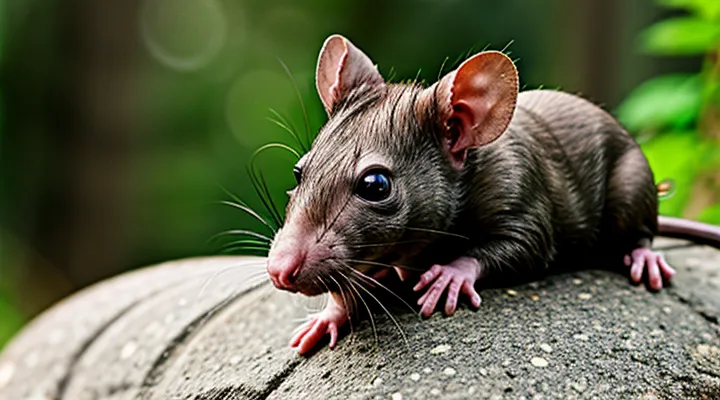
The Truth About Hairless Rats
Are They Truly Hairless?
Genetic Mutations and Breeding
Genetic mutations that eliminate or reduce fur in rodents are well documented. In mice, the nude (Nd) allele disables hair follicle development, while the Rex mutation produces a soft, sparse coat. Both result from single‑gene disruptions that affect keratinocyte differentiation or signaling pathways such as Wnt and BMP.
Breeding programs can transfer these mutations to rats through targeted cross‑breeding or genome editing. The process typically follows these steps:
- Identify a donor animal carrying the desired loss‑of‑hair allele (e.g., a mouse nude carrier or a rat with a spontaneous hair‑less mutation).
- Perform backcrosses with a standard laboratory rat strain to maintain overall health and fertility while preserving the hair‑less genotype.
- Use polymerase chain reaction (PCR) or sequencing to confirm the presence of the mutation in each generation.
- Apply CRISPR‑Cas9 to introduce precise edits in rat embryos when a natural allele is unavailable, targeting genes homologous to mouse nude or Rex.
Successful establishment of a hair‑less rat line requires careful management of recessive inheritance. Homozygous individuals display the phenotype; heterozygotes appear normal but serve as carriers. Maintaining a breeding colony thus involves pairing heterozygotes to produce a predictable proportion of hair‑less offspring (approximately 25 % per litter).
Ethical considerations mandate monitoring for secondary health effects, such as skin irritation or impaired thermoregulation, which are common in fur‑deficient mammals. Regular veterinary assessment and environmental controls (e.g., temperature‑regulated housing) mitigate these risks and ensure the viability of the colony.
The Sphynx Rat: A Closer Look
The Sphynx Rat is a selectively bred variant of the common laboratory rat that exhibits a pronounced reduction or complete absence of fur. Originating from targeted genetic experiments in the mid‑20th century, the strain was established to facilitate dermatological studies and to provide a visual model for hair‑loss disorders.
Physical characteristics include a soft, pinkish skin that reveals underlying vasculature, elongated whiskers, and a slightly larger ear pinna to compensate for reduced insulation. Body weight and growth rates mirror those of standard Sprague‑Dawley rats, while body temperature regulation relies more heavily on ambient conditions.
The hairless phenotype results from a recessive mutation in the Hr (hairless) gene, which disrupts keratinocyte differentiation. Homozygous individuals display the full phenotype; heterozygotes retain normal fur. Breeding programs maintain the trait through careful genotype screening and backcrossing.
Care requirements differ from furred counterparts:
- Maintain ambient temperature between 22 °C and 26 °C to prevent hypothermia.
- Provide bedding with low dust content to avoid skin irritation.
- Apply a mild, hypoallergenic moisturizer twice daily to reduce epidermal dryness.
- Monitor for increased susceptibility to UV radiation; limit exposure to direct sunlight.
The strain is commercially available from specialized laboratory animal suppliers in limited numbers. Ongoing research evaluates its utility in studying alopecia, wound healing, and skin pharmacokinetics, confirming the existence of a viable hairless rat model for scientific investigation.
Characteristics and Care
Physical Traits of Hairless Rats
Skin and Sensitivity
Hairless rats, whether occurring naturally or produced through selective breeding, possess a markedly different integumentary system from their fur‑covered counterparts. The epidermis lacks the protective keratin layer provided by hair, exposing the underlying dermis directly to the environment. Consequently, the skin exhibits a higher density of sensory receptors and a greater rate of transepidermal water loss.
Physiological implications include:
- Enhanced tactile acuity: mechanoreceptors are situated closer to the surface, allowing finer discrimination of texture and pressure.
- Increased thermal sensitivity: absence of insulating fur leads to rapid heat exchange, making the animal more responsive to ambient temperature fluctuations.
- Elevated susceptibility to irritants: the barrier function is reduced, so chemicals, dust, and microbial agents can penetrate more readily.
Care protocols must address these characteristics. Housing should maintain stable humidity (45‑55 %) and temperature (20‑24 °C) to prevent desiccation. Bedding material must be low‑dust and free of abrasive particles. Topical moisturizers formulated for rodent skin can mitigate dryness, while regular health checks should focus on signs of dermatitis or ulceration.
Research data confirm that the lack of fur does not eliminate the fundamental skin architecture; rather, it amplifies the role of the epidermal and dermal layers in sensory processing and environmental interaction. Understanding these attributes is essential for accurate identification, humane handling, and scientific study of rats without hair.
Ears and Whiskers
Hairless rats, if they occur, present distinctive sensory anatomy. Their external auditory structures lack the dense fur that typically insulates the pinna, exposing the skin and cartilage. This exposure increases vulnerability to temperature fluctuations and minor injuries, requiring careful environmental control. The ear musculature remains functional, allowing precise positioning for sound localization, but the absence of hair reduces acoustic damping, potentially enhancing sensitivity to high‑frequency sounds.
Whisker (vibrissal) systems in hairless specimens retain the follicular base and innervation despite the lack of surrounding pelage. Key characteristics include:
- Follicle depth: unchanged, providing a stable anchor for mechanoreceptors.
- Sensory nerve density: comparable to furred rats, ensuring tactile discrimination.
- Mobility: preserved through intrinsic muscles, enabling active scanning of the environment.
- Protection: skin surrounding each whisker is more exposed, increasing risk of abrasion and infection; hygiene protocols must address this.
Overall, the auditory and vibrissal apparatus of hairless rats remains biologically intact, but the removal of protective hair demands heightened management of temperature, hygiene, and injury prevention.
Unique Care Requirements
Temperature Regulation
Hairless rats, if they occur naturally or are produced through selective breeding, face a distinct thermoregulatory challenge because the absence of a protective fur coat eliminates the primary insulation that most rodents rely on to maintain core temperature.
Without fur, heat loss occurs primarily through the skin’s surface and evaporative cooling from the respiratory tract. To compensate, hairless individuals must increase metabolic heat production, elevate activity levels, and rely on behavioral strategies such as seeking warm bedding, nesting material, or external heat sources. Vasoconstriction of peripheral vessels reduces heat dissipation, while shivering thermogenesis provides rapid temperature elevation during acute cold exposure.
Key physiological mechanisms involved in temperature control for hairless rodents include:
- Enhanced basal metabolic rate to generate additional internal heat.
- Upregulated uncoupling protein expression in brown adipose tissue, promoting non‑shivering thermogenesis.
- Increased sympathetic nervous system activity, causing peripheral vasoconstriction.
- Elevated thyroid hormone levels, which accelerate metabolic processes.
Effective husbandry for hairless rats therefore demands controlled ambient temperature, supplemental heating, and provision of insulating materials to offset the loss of fur‑based insulation and prevent hypothermia.
Dietary Needs
Hairless rats require a diet that compensates for their lack of fur, which increases heat loss and skin exposure. High‑quality protein sources such as laboratory‑grade mouse or rat chow provide essential amino acids for tissue repair and growth. Fat content should be moderate, around 5–7 % of the diet, to supply energy without promoting obesity, which can exacerbate skin irritation.
Calcium and phosphorus must be balanced at a ratio of approximately 1.2:1 to support skeletal development and prevent metabolic bone disease. Vitamin E supplementation is advisable because it protects the thin epidermis from oxidative damage. Vitamin C is unnecessary for rats, as they synthesize it endogenously.
Water intake is critical; hairless individuals lose moisture through the skin more rapidly than furred counterparts. Fresh, filtered water should be available at all times, with a daily consumption of 10–15 ml per 100 g body weight.
Key dietary components can be summarized:
- Protein: 18–20 % of total calories
- Fat: 5–7 % of total calories
- Calcium: 0.5 % of diet (by weight)
- Phosphorus: 0.4 % of diet (by weight)
- Vitamin E: 30–50 IU/kg feed
- Water: 10–15 ml/100 g body weight per day
Regular monitoring of body condition and skin health informs adjustments to nutrient levels, ensuring that hairless rats maintain optimal growth and avoid dermatological complications.
Skin Care and Hygiene
Hairless rats are a documented genetic mutation found in laboratory colonies; they lack the protective fur layer and present exposed skin comparable to that of certain mouse models. Their skin resembles that of humans in permeability, making them valuable for dermatological research and for studying wound healing, infection resistance, and topical treatments.
Because the epidermis is uncovered, routine hygiene must prevent desiccation, irritation, and microbial colonization. Daily cleaning with a mild, fragrance‑free saline solution removes debris without stripping natural oils. After each wash, a thin coat of veterinary‑grade emollient restores moisture and supports barrier function. Environmental humidity should be maintained between 50 % and 60 % to reduce transepidermal water loss.
Key maintenance practices include:
- Providing a dust‑free cage with soft bedding to avoid abrasion.
- Monitoring temperature; optimal range is 20‑24 °C.
- Inspecting skin for erythema, ulceration, or discharge at least once per day.
- Limiting exposure to direct sunlight and harsh lighting to prevent UV‑induced damage.
Nutritional support influences skin integrity. Diet enriched with omega‑3 fatty acids, vitamin E, and zinc contributes to collagen synthesis and anti‑inflammatory pathways. Regular veterinary check‑ups ensure early detection of dermatologic conditions and allow adjustment of care protocols.
Health Considerations
Common Health Issues
Hairless rats, a mutation of laboratory or pet strains, lack protective fur and therefore face distinct medical challenges. Their skin is exposed to environmental irritants, temperature fluctuations, and microbial agents, which predisposes them to several recurrent conditions.
- Dermatitis – chronic inflammation caused by dry air, abrasive bedding, or contact with chemicals; symptoms include redness, scaling, and ulceration. Immediate treatment involves topical moisturizers and avoidance of irritants.
- Respiratory infections – heightened susceptibility due to compromised thermoregulation; typical agents are Mycoplasma pulmonis and viral pathogens. Prompt antibiotic or antiviral therapy, along with humidified housing, reduces morbidity.
- Thermoregulatory stress – inability to retain heat leads to hypothermia in cooler environments and hyperthermia when temperatures rise; continuous ambient temperature monitoring and provision of heated pads prevent fatal episodes.
- Dental overgrowth – lack of gnawing material accelerates incisor elongation, risking oral trauma and feeding difficulty; regular trimming or provision of hard chew objects maintains proper length.
- Skin infections – opportunistic bacteria such as Staphylococcus spp. colonize minor abrasions, producing purulent lesions; systemic antibiotics and sterile wound care are required.
Effective management relies on controlled housing conditions, regular health examinations, and swift intervention at the first sign of pathology.
Lifespan Comparison
Hairless rats, a genetic mutation that eliminates most body fur, exhibit a lifespan that differs markedly from that of typical laboratory and wild‑type rats. Standard laboratory strains (e.g., Sprague‑Dawley, Wistar) commonly live 2.5–3.5 years under optimal conditions, with occasional individuals reaching 4 years. Wild rats, exposed to predation, disease, and environmental stressors, average 1–2 years in natural habitats.
The hairless phenotype shortens the expected lifespan. Reported survival for hairless laboratory rats ranges from 12 months to 18 months when housed under standard conditions. The reduction is attributed to several factors:
- Increased susceptibility to skin infections and dermatitis, which can progress rapidly without fur protection.
- Elevated heat loss leading to metabolic strain, especially in colder environments.
- Higher incidence of tumor development in skin and underlying tissues, observed in longitudinal studies.
Comparative data:
| Group | Median lifespan (months) | Primary limiting factors |
|---|---|---|
| Standard lab rats | 30–42 | Age‑related organ decline |
| Wild rats | 12–24 | Predation, disease, nutrition |
| Hairless lab rats | 12–18 | Dermatological disease, thermoregulation, neoplasia |
Management practices can mitigate some risks. Maintaining ambient temperatures above 22 °C, providing humidified bedding, and implementing rigorous veterinary monitoring extend hairless rat survival toward the upper end of the reported range. Nevertheless, even under optimal care, the hairless condition imposes a measurable lifespan penalty relative to fully furred conspecifics.
Living with a Hairless Rat
Temperament and Behavior
Socialization
Hairless rats, a laboratory‑bred strain lacking fur, exhibit social behaviors comparable to those of standard rats but require specific management to prevent stress. Their skin sensitivity amplifies the impact of tactile interactions; gentle handling reduces the risk of injury and promotes habituation.
Social structures among hairless rats follow the typical hierarchical pattern observed in Rattus norvegicus, with dominant individuals establishing access to resources. Group housing supports natural hierarchy, encourages grooming, and mitigates isolation‑induced anxiety.
Key considerations for effective socialization:
- Environment: Provide a temperature‑controlled cage with soft bedding to protect delicate skin.
- Group size: Maintain groups of three to five animals to allow stable hierarchies while minimizing overcrowding.
- Enrichment: Include chewable items, tunnels, and climbing platforms to stimulate exploratory behavior and reduce aggression.
- Handling protocol: Approach slowly, support the body with both hands, and limit contact duration to a few minutes initially, extending sessions as tolerance increases.
Observations indicate that hairless rats develop stronger bonds when introduced simultaneously rather than sequentially. Early-life cohabitation, beginning at weaning, results in reduced fight frequency and more frequent affiliative behaviors such as huddling.
Monitoring indicators—elevated vocalizations, excessive grooming of cage mates, or refusal to eat—signals social tension. Intervention may involve redistributing individuals, adjusting enrichment density, or providing temporary solitary periods for the aggressor.
Implementing these practices sustains the physiological health of hairless rats and preserves the integrity of experimental outcomes that depend on stable social conditions.
Play and Enrichment
Hairless rats, when present in a laboratory or pet setting, require targeted stimulation to prevent boredom and reduce stereotypic behaviors. Structured play provides physical exertion, mental challenge, and opportunities for natural foraging instincts.
Effective enrichment strategies include:
- Puzzle feeders that release food only after manipulation.
- Tunnels and climbing structures that encourage exploration of three‑dimensional space.
- Swappable objects (e.g., cardboard tubes, wooden blocks) that introduce novelty.
- Social interaction with conspecifics or supervised human handling to promote affiliative behaviors.
- Scheduled auditory and olfactory stimuli, such as recorded rustling sounds or safe scent cues, to diversify sensory input.
Implementing a rotation schedule for these items ensures that the environment remains dynamic. Monitoring activity levels and stress indicators (e.g., grooming frequency, weight stability) helps assess the adequacy of the enrichment program and allows adjustments tailored to the specific needs of hairless individuals.
Debunking Myths
Misconceptions About Hairless Animals
Hairless mammals result from specific genetic mutations that suppress hair growth. The condition appears in rodents, felines, canines, and other taxa, demonstrating that lack of fur is not exclusive to any single group.
Common misconceptions often obscure accurate understanding:
- Hairless rats constitute a distinct species. They are phenotypic variants of the common laboratory or pet rat (Rattus norvegicus). The mutation affects the keratin gene cascade without altering species classification.
- Absence of fur guarantees superior health. Hairlessness can increase susceptibility to skin injuries, temperature extremes, and dehydration. Proper husbandry—controlled ambient temperature, humidity, and regular skin inspection—mitigates these risks.
- Hairless pets require no grooming. Skin oil buildup, debris, and ulceration are frequent without the protective barrier of fur. Routine cleansing with mild, veterinary‑approved products and moisturization are essential.
- Hairless animals are universally hypoallergenic. Allergens derive primarily from saliva, urine, and dander, not hair itself. Individuals allergic to rodents may react equally to hairless specimens.
Effective care for hairless rodents mirrors that of their haired counterparts, with added emphasis on environmental stability and dermatological maintenance. Misinterpretations persist because popular media often equates hairlessness with novelty rather than biological nuance. Accurate information supports responsible ownership and informed scientific inquiry.
Ethical Breeding Practices
Hairless rats result from targeted genetic selection that eliminates normal fur development. The phenotype originates from mutations affecting keratin production, and the animals are bred for research, exhibition, or pet markets.
Ethical breeding requires prioritizing animal health, minimizing genetic disorders, and preventing unnecessary suffering. Breeders must avoid practices that increase the incidence of skin lesions, thermoregulation problems, or respiratory complications associated with the lack of fur.
Key practices include:
- Comprehensive health screening of parent stock for known hereditary defects.
- Controlled mating pairs to reduce inbreeding coefficients below accepted thresholds.
- Regular veterinary examinations throughout gestation and after birth.
- Provision of temperature‑controlled housing, humidity regulation, and enrichment that compensates for reduced tactile protection.
- Detailed record‑keeping of lineage, health outcomes, and any interventions.
Compliance with national animal welfare statutes, acquisition of appropriate breeding licenses, and transparent reporting of breeding protocols further reinforce ethical standards. These measures collectively ensure that the production of hairless rats aligns with responsible animal stewardship.