
What is a Ground Mouse?
Common Misconceptions
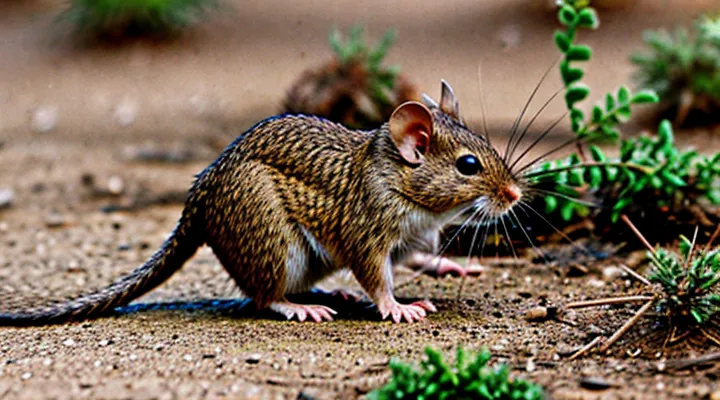
Ground mice are often misidentified, mischaracterized, and misunderstood. Photographic records frequently show individuals with muted fur tones, yet many observers assume the species displays bright coloration. In reality, the coat varies from pale gray to deep brown, providing camouflage in grasslands and arid scrub.
Common misconceptions include:
- Size exaggeration – Images captured from a distance can make the animal appear larger; adult ground mice typically measure 8–12 cm in body length, not the 20 cm sometimes reported.
- Habitat restriction – Popular pictures often depict the species in desert dunes, leading to the belief it inhabits only dry environments. Field surveys confirm presence in moist meadows, agricultural fields, and forest edges.
- Nocturnal exclusivity – Night‑time photographs reinforce the idea of strict nocturnality. Ground mice are crepuscular, active at dawn and dusk, and may forage during daylight under low predation risk.
- Uniform diet – Visuals of seed‑laden cheek pouches suggest an exclusively granivorous diet. Analyses of stomach contents reveal opportunistic consumption of insects, green vegetation, and fungi.
Misinterpretations also arise from taxonomic confusion. Several closely related species share similar silhouettes, causing observers to label all small ground-dwelling rodents as a single type. Genetic studies differentiate them by subtle cranial measurements and mitochondrial DNA markers.
Accurate identification relies on combining clear photographic evidence with morphological details such as ear length, tail proportion, and hind‑foot structure. When these criteria are applied, many of the prevailing myths dissolve, yielding a realistic picture of the ground mouse’s appearance and ecological role.
Geographic Distribution
Ground mice occupy a broad but patchy range across the Northern Hemisphere. Populations are concentrated in temperate grasslands, open woodlands, and semi‑arid steppes, extending from western Europe through central Asia to North America. Specific distribution patterns include:
- Western Europe: Scandinavian and British lowlands, where moist soils support dense colonies.
- Central and Eastern Europe: Poland, Hungary, and the Balkans, primarily in river valleys and meadow complexes.
- Siberian and Central Asian steppes: Extensive steppe zones of Kazakhstan, Mongolia, and the Russian Altai, where arid conditions limit abundance.
- North America: Great Plains of the United States and southern Canada, especially in prairie and savanna habitats; isolated populations occur in the Rocky Mountain foothills.
- Alpine zones: Upper montane meadows of the Alps and the Carpathians, where altitude reaches 2,000 m; individuals adapt to cooler temperatures and shorter growing seasons.
Species endemic to particular regions display restricted ranges. For example, the Iberian ground mouse is confined to the Iberian Peninsula, while the Siberian form occupies the eastern taiga‑steppe boundary. Seasonal migrations are minimal; most movements involve local dispersal in response to food availability and predator pressure.
Overall, the geographic footprint of ground mice reflects adaptation to open, herbaceous environments with moderate climate variability, while isolated mountain and island populations illustrate the genus’s capacity for niche specialization.
Physical Characteristics
The ground mouse is a small, terrestrial rodent adapted for life close to the soil surface. Adult body length typically ranges from 7 to 12 cm, with a tail that is proportionally short, measuring 3 to 6 cm. Weight varies between 15 and 30 g, reflecting the species’ lightweight build.
Fur coloration is generally muted, providing camouflage in leaf litter and grass. Dorsal hues span brown, gray, or reddish tones, while the ventral side is lighter, often pale gray or white. The pelage is dense and soft, offering insulation against temperature fluctuations.
Key morphological traits include:
- Head and facial structure: Short, blunt muzzle; small, rounded ears positioned low on the skull.
- Eyes: Relatively small, providing limited visual acuity; reliance on tactile and olfactory cues is high.
- Limbs: Forelimbs are short with dexterous claws for digging; hind limbs are slightly longer, facilitating rapid sprinting over short distances.
- Digits: Five toes on each foot, each ending in a sharp nail rather than a true claw, enhancing grip in loose substrate.
- Tail: Semi‑naked, lacking extensive fur; serves as a balance aid during quick maneuvers.
Skeletal composition is lightweight yet robust, featuring a flexible spine that allows the animal to navigate narrow burrows. The ribcage is shallow, accommodating a compact digestive system suited to a diet of seeds, insects, and plant material.
Overall, the physical design of the ground mouse reflects an evolutionary emphasis on concealment, rapid ground locomotion, and efficient burrowing.
Behavioral Traits
Diet and Foraging
The ground mouse consumes a varied diet that reflects its opportunistic foraging strategy. Primary food items include seeds, grains, and nuts harvested from grasses and low‑lying vegetation. In addition, the species supplements its intake with insects, larvae, and other small arthropods, especially during the breeding season when protein demand rises. Plant material such as buds, leaves, and occasional fruit also appears in stomach contents, indicating flexibility in resource use.
Foraging occurs primarily at ground level and within the shallow burrow network. Mice employ rapid, tactile searches, using whisker contacts to locate concealed seeds and insects. Seasonal shifts affect food selection: winter diets rely heavily on stored seeds and cached grains, while spring and summer see increased ingestion of insects and fresh vegetation. The animal’s ability to hoard food in underground chambers reduces exposure to predators and ensures a stable supply during periods of scarcity.
Typical diet composition (percentage of total intake):
- Seeds and grains: 45 %
- Insects and larvae: 30 %
- Fresh vegetation (leaves, buds, fruit): 15 %
- Other items (fungi, carrion): 10 %
Social Structure
The ground mouse exhibits a social organization that varies with habitat density and seasonal resource availability. In temperate grasslands, individuals form small colonies comprising 4‑12 adults that share burrow systems. Colonies maintain a loose dominance hierarchy; dominant females secure preferred nesting chambers and gain priority access to food caches, while subordinate members assist in burrow maintenance and predator vigilance.
Reproductive cooperation is limited. Breeding females typically produce one litter per season, and offspring remain in the natal burrow for 3‑4 weeks before dispersal. Male competition intensifies during the breeding window, with dominant males defending entrance tunnels and emitting ultrasonic calls to deter rivals.
Communication relies on a combination of tactile, olfactory, and acoustic signals. Scent markings deposited on tunnel walls convey individual identity and reproductive status. Short‑duration chirps transmitted through the ground facilitate coordination during foraging excursions.
Key aspects of the ground mouse’s social structure:
- Colony size: 4‑12 adults, adjusted to local food abundance.
- Hierarchy: Female‑biased dominance; access to nesting space and resources.
- Breeding: Seasonal, single litter; limited cooperative care.
- Male behavior: Territorial defense of tunnel entrances; ultrasonic vocalizations.
- Communication: Scent marks for identity; ground‑borne chirps for coordination.
These traits enable the species to exploit heterogeneous environments while minimizing intra‑group conflict and maximizing reproductive success.
Reproductive Cycle
The reproductive cycle of the ground mouse is tightly linked to seasonal temperature and food availability. Breeding commences in late spring when daylight length exceeds twelve hours, peaks during midsummer, and declines as temperatures drop. Males reach sexual maturity at five weeks, females at six weeks, allowing multiple breeding opportunities within a single season.
Females undergo a short estrous cycle of four to five days, synchronized with the photoperiod. After successful copulation, gestation lasts approximately 21 days, producing litters of three to six neonates. Newborns are altricial, blind and hairless, and rely entirely on maternal care for the first ten days.
Weaning occurs around three weeks of age, after which juveniles attain independence and begin foraging. Sexual maturity is reached by eight weeks, enabling a second breeding round before the seasonal decline. In optimal conditions, a single female may produce two to three litters per year, contributing to rapid population turnover.
Key factors influencing reproductive success:
- Ambient temperature: temperatures above 15 °C accelerate estrus onset.
- Food abundance: high seed and insect availability increases litter size.
- Predator pressure: elevated risk shortens breeding season length.
- Habitat quality: dense ground cover supports nesting and reduces stress.
Understanding these parameters assists in population monitoring and habitat management for the species.
Habitat and Ecosystem
Preferred Environments
Ground mice occupy a range of terrestrial settings characterized by specific physical and biological conditions. Their distribution reflects adaptations to moisture levels, substrate composition, vegetation structure, and climatic stability.
Typical habitats include:
- Open grasslands with dense herbaceous cover that provides concealment and abundant seed resources. Soil is usually loamy to sandy, offering easy burrowing.
- Shrub‑dominated scrublands where low woody vegetation supplies shelter and a mixed diet of seeds, insects, and plant material. These areas often feature well‑drained, rocky soils.
- Agricultural margins such as field edges, orchards, and pasture borders. Human‑modified landscapes supply supplemental food and nesting opportunities while maintaining natural ground cover.
- Semi‑arid plateaus where sparse vegetation and compacted earth allow for extensive tunnel networks. Temperature fluctuations are moderated by underground burrows.
- Riparian zones with moist, loamy banks that support a diverse seed bank and insect prey. Proximity to water sources enhances humidity, benefiting reproductive success.
Environmental preferences are shaped by:
- Soil texture – fine to medium particles facilitate excavation and structural stability of burrows.
- Vegetation density – moderate cover reduces predation risk while permitting foraging visibility.
- Climate consistency – temperate to semi‑arid regimes with limited extreme temperature swings favor year‑round activity.
- Human disturbance level – low to moderate disturbance creates edge habitats that increase resource availability without triggering excessive predator presence.
These factors collectively define the ecological niches where ground mice thrive, guiding field observations and conservation planning.
Role in the Ecosystem
Ground mice are small, ground‑dwelling rodents that inhabit a range of temperate ecosystems. Their foraging behavior, burrowing activity, and position in food webs generate measurable effects on habitat structure and biological processes.
- Burrow construction loosens compacted soil, enhances aeration, and promotes water infiltration.
- Consumption of seeds and plant material regulates vegetation density and influences plant species composition.
- Excretion of organic matter returns nutrients to the soil, accelerating decomposition cycles.
Predators such as raptors, foxes, and snakes rely on ground mice as a consistent food source, supporting higher trophic levels and stabilizing predator populations. Their presence also limits the spread of certain arthropod vectors by reducing host availability, thereby influencing disease dynamics.
By modifying seed banks, altering soil properties, and sustaining predator communities, ground mice act as agents of ecosystem engineering, shaping community structure and maintaining functional resilience.
Conservation Status
Threats and Challenges
Ground mice face a convergence of environmental and anthropogenic pressures that diminish population stability and complicate scientific observation. Habitat conversion for agriculture and urban development reduces the availability of native grasslands and shrublands, fragmenting remaining territories and limiting dispersal routes. Climate variability intensifies drought cycles and alters vegetation composition, decreasing food resources and exposing rodents to extreme temperatures. Predation pressure escalates where open habitats replace dense cover, while introduced carnivores and mesopredators increase mortality rates. Chemical contaminants from pesticides and rodenticides accumulate in food chains, causing sub‑lethal toxicity and reproductive failure. Disease agents, such as hantavirus and ectoparasite infestations, spread more readily in stressed, densely packed populations.
Documenting ground mouse morphology and behavior encounters additional obstacles. Their cryptic coloration blends with soil and leaf litter, reducing visual detection during daylight surveys. Nocturnal activity patterns require low‑light imaging equipment, which raises technical complexity and cost. Rapid movement and burrowing behavior limit the duration of clear photographic exposure, demanding high‑speed lenses and precise timing. Seasonal coat changes alter visual markers used for species identification, complicating comparative analyses across years.
Key threats and challenges:
- Habitat loss and fragmentation
- Climate‑induced resource scarcity
- Increased predation from native and invasive species
- Pesticide and rodenticide exposure
- Disease transmission in stressed populations
- Difficulty of visual detection due to camouflage
- Technical constraints of low‑light and high‑speed photography
- Seasonal morphological variation affecting identification
Addressing these factors requires coordinated habitat protection, mitigation of chemical use, disease monitoring, and investment in specialized imaging technologies.
Conservation Efforts
Ground-dwelling mouse species face accelerated habitat loss, fragmented populations, and predation pressure from invasive mammals. Conservation programs target these threats through coordinated actions that preserve genetic diversity and sustain viable populations.
- Preserve native grasslands and shrublands by establishing protected reserves and restoring degraded sites.
- Implement predator‑control measures, focusing on feral cats and rats, to reduce direct mortality.
- Conduct systematic population monitoring using live traps, camera stations, and genetic sampling to track trends and inform management decisions.
- Operate captive‑breeding colonies that maintain a broad gene pool and supply individuals for strategic reintroductions.
- Engage local communities with education workshops and citizen‑science projects that encourage reporting of sightings and participation in habitat stewardship.
Long‑term data demonstrate increased breeding success and expansion of occupied territory where predator control and habitat restoration overlap. Genetic analyses confirm reduced inbreeding coefficients in reintroduced groups, indicating effective maintenance of diversity.
Continued funding, policy support for land‑use planning, and expansion of collaborative networks remain essential to scale successes across the species’ range.
Ground Mouse Photography
Tips for Observation
Observing ground mice in their natural habitat requires preparation, patience, and attention to detail. Successful documentation begins with selecting a suitable environment. Choose areas where the species is known to forage—grasslands, low shrubbery, or fields with abundant seed heads. Early morning and late afternoon provide optimal lighting for clear photographs and increase the likelihood of activity.
Equipment considerations:
- Use a camera with a macro lens or a telephoto lens capable of focusing at close range; set a high shutter speed to capture rapid movements.
- Attach a tripod or monopod to stabilize the device, reducing motion blur.
- Employ a flash diffuser or natural light to avoid startling the animal with harsh illumination.
Field techniques:
- Move slowly, keeping a low profile; crouch or sit to match the animal’s eye level.
- Remain silent; wind rustling or footsteps can cause immediate retreat.
- Deploy bait such as seeds or grains in a shallow tray placed a short distance from the observation point; replenish as needed to maintain interest.
- Record environmental data—temperature, humidity, and vegetation type—to correlate behavior patterns with conditions.
Safety and ethical guidelines:
- Maintain a minimum distance of 1–2 meters when the mouse is active; avoid direct contact.
- Do not alter the habitat; remove any temporary structures after observation.
- Release any captured individuals promptly and unharmed.
By adhering to these practices, observers can obtain high‑quality images and reliable behavioral data while minimizing disturbance to the ground mouse population.
Ethical Photography Practices
Ethical photography of ground-dwelling rodents requires respect for animal welfare, habitat integrity, and scientific accuracy. Photographers must minimize stress, avoid habitat disturbance, and ensure images represent true species features.
- Use non‑invasive methods: capture images from a distance, employ zoom lenses, and refrain from handling unless necessary for research.
- Limit exposure time: keep lighting natural or low‑intensity, avoid flash that can startle or alter behavior.
- Secure permits: obtain authorization from relevant wildlife agencies before entering protected areas.
- Document context: record location, date, and environmental conditions to support species identification and ecological studies.
- Share responsibly: label images with accurate species names, avoid sensationalism, and provide credit to source data.
Adhering to these practices preserves the well‑being of the subjects, maintains ecological balance, and enhances the reliability of visual documentation for scientific and educational purposes.