
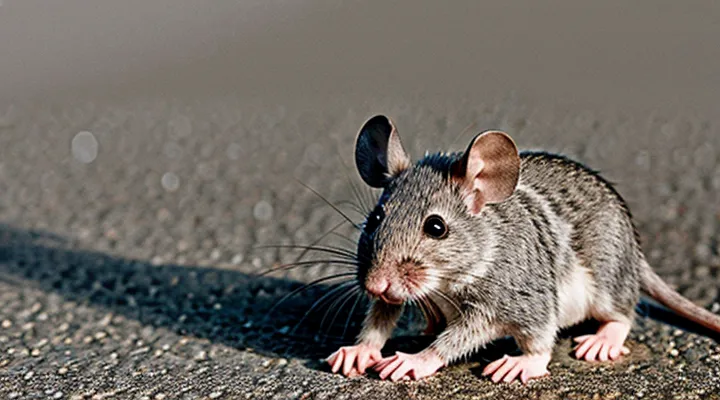
The Gray Mouse in Cultural Symbolism
Ancient Perceptions and Folklore
Rodents in Mythology and Religion
Rodents occupy a prominent position in mythic narratives and religious rites, providing a framework for interpreting the cultural image of the gray mouse. Ancient Egyptian texts associate the field mouse with the goddess Mut, depicting the animal as a protector of grain stores and a symbol of domestic stability. Greek myth records the mouse as a messenger of Demeter, linking it to fertility cycles and seasonal renewal. In Hindu tradition, the rat‑like creature known as Mushika serves as the vehicle of the deity Ganesha, embodying both humility and the capacity to overcome obstacles. Indigenous North American legends describe the mouse as a trickster figure that navigates between the human and spirit realms, often delivering moral lessons. East Asian folklore portrays the gray mouse as an auspicious omen of wealth, a motif that appears in porcelain, poetry, and woodblock prints.
- Egypt: field mouse, protector of harvest, associated with Mut.
- Greece: messenger of Demeter, emblem of fertility.
- India: Mushika, mount of Ganesha, symbol of modest power.
- North America: trickster spirit, conduit between worlds.
- East Asia: herald of prosperity, recurring visual motif.
The symbolic functions converge on three core themes: abundance, transition, and subversion. Abundance emerges through the animal’s connection to stored grain and seasonal bounty. Transition appears in myths that assign the mouse a role in guiding souls or marking seasonal change. Subversion is expressed by the creature’s ability to infiltrate human spaces, challenge authority, and provoke reinterpretation of social norms.
These ancient associations shape contemporary representations of the gray mouse in literature, visual arts, and popular media. The animal’s dual identity as a humble pest and a sacred emissary informs artistic portrayals that oscillate between realism and allegory, reinforcing its status as a versatile cultural signifier.
Folk Tales and Superstitions
The gray mouse appears repeatedly in traditional narratives, where it functions as a symbol of cunning survival and hidden danger. In agrarian societies, stories often portray the animal as a nocturnal intruder that steals grain, reinforcing lessons about vigilance and the protection of resources. In contrast, some myths elevate the creature to a trickster archetype, granting it the ability to outwit larger predators and human opponents, thereby embodying the triumph of intellect over brute force.
Superstitious practices linked to the gray mouse reflect its ambiguous status. Households historically placed protective charms above thresholds to deter mice, believing that a single sighting foretold imminent loss of food or illness. Conversely, hunters sometimes welcomed the animal’s presence, interpreting it as an omen of abundant game, and performed rituals that invoked the mouse’s stealth to improve hunting success.
Key motifs across regional folklore include:
- Stealth and secrecy – narratives emphasize silent movement and unseen influence.
- Resource protection – tales warn against neglecting storage, using the mouse as a cautionary figure.
- Transformation – legends describe the mouse morphing into a human or spirit, highlighting themes of metamorphosis and hidden identity.
These recurring elements illustrate how the gray mouse functions as a versatile cultural emblem, simultaneously embodying threat, wit, and supernatural potential within folk belief systems.
The Mouse as a Literary Device
Fables and Moral Lessons
The gray mouse appears repeatedly in folklore and literary fables, serving as a symbol of modesty, survival, and understated wisdom. Authors employ the creature to illustrate the benefits of humility and the dangers of complacency, contrasting its quiet perseverance with the hubris of more ostentatious characters.
In traditional narratives, the mouse’s modest size and unassuming behavior enable it to navigate complex social hierarchies, often outwitting larger adversaries through cleverness and adaptability. These stories reinforce the principle that intellect and resourcefulness can compensate for physical weakness, encouraging audiences to value strategic thinking over brute force.
Moral lessons derived from these fables include:
- Resourcefulness triumphs over strength – the mouse’s ability to solve problems with limited means underscores the power of ingenuity.
- Humility safeguards against pride – modest conduct protects the mouse from the pitfalls that befall arrogant rivals.
- Community cooperation yields survival – collective efforts among mice illustrate the importance of collaboration in adverse conditions.
- Adaptation ensures continuity – the mouse’s capacity to adjust to changing environments highlights resilience as a cultural virtue.
By embedding these teachings within the cultural image of the gray mouse, storytellers convey enduring ethical guidance, shaping perceptions of modest power across generations.
Children's Literature and Animation
The gray mouse appears repeatedly in stories aimed at young readers and in animated productions, offering a recognizable figure that conveys modesty, ingenuity, and resilience. Authors and animators employ the animal to illustrate everyday challenges and subtle moral lessons without relying on overt didactic language.
In children's literature the gray mouse functions as a central or supporting character in several notable works:
- A classic tale where a timid gray mouse outwits larger adversaries through clever planning.
- A contemporary picture book that pairs the mouse’s quiet demeanor with bright illustrations to emphasize perseverance.
- A series of early‑grade readers that use the mouse’s modest size to explore themes of friendship and self‑confidence.
Animated media adopt the same creature for visual storytelling, often emphasizing movement and expression:
- A short film that follows a gray mouse navigating a bustling cityscape, highlighting urban adaptability.
- A feature‑length cartoon where the mouse leads a group of small animals on a rescue mission, demonstrating teamwork.
- A television series that presents episodic adventures of a gray mouse detective, reinforcing problem‑solving skills.
The visual representation of the mouse’s gray fur carries specific connotations. The muted hue suggests anonymity, allowing the character to blend into varied settings while retaining a distinct identity. This neutrality enables creators to assign the mouse a flexible symbolic role, ranging from humble underdog to resourceful guide.
Collectively, literature and animation reinforce the gray mouse as an accessible emblem for children, encouraging identification with a creature that embodies quiet strength and adaptive intelligence. The recurring presence of this figure across mediums sustains its cultural relevance and ensures continued resonance with new generations of readers and viewers.
Symbol of the Underdog and the Meek
The gray mouse repeatedly appears in literature, visual arts, and popular media as a representation of the underdog and the meek. Its unassuming coloration and small stature convey vulnerability, while its survival instincts illustrate resilience in hostile environments. Authors often assign the creature to protagonists who lack power yet achieve success through ingenuity, reinforcing the notion that modesty can overcome oppression.
Key cultural manifestations include:
- Folk tales where a timid mouse outwits larger predators, emphasizing cleverness over brute strength.
- 19th‑century novels that feature a gray mouse as a metaphor for social marginalization, highlighting the plight of lower‑class individuals.
- Contemporary animated films that portray a mouse character navigating adversity, providing audiences with a relatable figure of perseverance.
- Visual art series that juxtapose the gray mouse with towering symbols of authority, underscoring the contrast between meekness and dominance.
These examples demonstrate how the gray mouse functions as a visual and narrative shorthand for those who are overlooked, reinforcing the cultural belief that humility paired with determination can challenge established hierarchies.
Artistic Representations of the Gray Mouse
Paintings and Sculptures
The gray mouse has appeared repeatedly in visual art, serving as a vehicle for commentary on vulnerability, adaptability, and the relationship between humanity and the natural world. In painting, the animal often occupies a peripheral position, drawing attention to themes of marginality while simultaneously asserting a presence that challenges the viewer’s expectations of subject hierarchy.
Key examples include:
- A 19th‑century oil work by French realist painters that places a solitary gray mouse among domestic objects, highlighting the tension between domesticity and wildness.
- A mid‑20th‑century surrealist canvas in which a cluster of gray mice emerges from a landscape of industrial machinery, symbolizing the intrusion of nature into mechanized environments.
- A contemporary mixed‑media piece that layers photographic imagery of laboratory mice with abstract brushstrokes, interrogating ethical considerations surrounding scientific research.
Sculptural representations extend the dialogue into three dimensions. Bronze and ceramic figures crafted in the early 2000s depict gray mice in dynamic poses, emphasizing movement and alertness. Public installations often feature life‑size replicas positioned in urban settings, confronting passersby with an unexpected encounter that foregrounds the animal’s role as a silent observer of human activity.
Across both mediums, the gray mouse functions as a visual shorthand for resilience and marginality. Its recurring presence in artistic production underscores a sustained interest in exploring the boundaries between the ordinary and the symbolic, inviting continuous reinterpretation within cultural discourse.
Modern Art and Installations
The gray mouse, long recognized as a symbol of survival and adaptability, has become a focal point for contemporary artists exploring themes of marginality and resilience. In modern visual practice, creators employ the animal’s understated coloration and ubiquitous presence to interrogate social invisibility and urban anonymity. By embedding the creature within sculptural forms, video loops, and immersive environments, artists translate its cultural resonance into tangible experiences that challenge viewers to reconsider the status of overlooked entities.
Installation works frequently juxtapose the mouse’s modest scale with expansive settings, thereby magnifying its metaphorical weight. For instance, a gallery space may feature dozens of life‑size silhouettes cast in matte gray, arranged along a dimly lit corridor that evokes subterranean tunnels. Another project could integrate real‑time sound recordings of city rodents, synchronized with kinetic sculptures that mimic frantic movement, underscoring the tension between natural instinct and constructed habitats. Such strategies foreground the animal’s dual identity as both participant in and observer of human environments.
The aesthetic choices surrounding the gray mouse often involve restrained palettes and minimalist compositions, reflecting the creature’s camouflage and the artist’s intent to strip away superfluous narrative. By limiting color to muted tones and focusing on texture, creators highlight the animal’s tactile qualities—soft fur, delicate paws, and keen whiskers—thereby fostering a sensory connection that transcends purely visual representation. This emphasis on materiality aligns with broader contemporary concerns about the physicality of objects in an increasingly digital culture.
Collectively, modern art and installation practices reinterpret the gray mouse’s historical symbolism, positioning it as a conduit for discourse on marginality, adaptability, and the interplay between the natural and fabricated worlds. The resulting works invite sustained contemplation of how an ostensibly insignificant creature can illuminate profound cultural dynamics.
The Gray Mouse in Popular Culture
Cinema and Television
The gray mouse appears repeatedly in visual narratives, serving as a visual shorthand for vulnerability, survival, and unnoticed influence. In early cinema, silent comedies employed the animal to generate slap‑stick mishaps that underscored human folly. The 1925 film The Mouse’s Shadow used the creature’s nocturnal habits to illustrate hidden threats within urban environments. Later, the 1952 drama Grey Silence positioned a laboratory mouse as a metaphor for scientific ethics, highlighting societal anxieties about experimentation.
Television series have expanded the motif. In the 1978 episode of The Twilight Zone titled “The Little Observer,” a laboratory mouse observes human interactions, prompting viewers to consider the perspective of the overlooked. The 1990s sitcom Friends introduced a recurring gray mouse in a coffee‑shop set, using its presence to subtly comment on the bustling yet impersonal nature of city life. More recent streaming productions, such as the 2021 sci‑fi anthology Echoes, feature a genetically engineered gray mouse that becomes a catalyst for exploring themes of artificial intelligence and the blurring line between organic and synthetic consciousness.
Patterns emerging across these works include:
- Symbolic association with marginality: the mouse’s small size and nocturnal behavior convey the experience of peripheral characters.
- Representation of resilience: narratives often depict the animal surviving harsh conditions, reinforcing messages about adaptability.
- Instrument of critique: filmmakers and showrunners employ the mouse to question power structures, scientific boundaries, or societal neglect.
Cinematic techniques reinforce these meanings. Close‑up shots of the mouse’s whiskers emphasize sensory perception, while low‑angle lighting creates a chiaroscuro effect that mirrors the animal’s hidden world. Sound design frequently isolates subtle squeaks or rustling, contrasting with louder human dialogue to draw audience attention to the mouse’s unnoticed existence.
Collectively, cinema and television have constructed a layered image of the gray mouse, transforming a common laboratory specimen into a versatile emblem that articulates complex cultural concerns without explicit exposition.
Video Games and Digital Media
The gray mouse appears repeatedly in interactive entertainment, where designers employ its visual traits to convey modesty, resilience, or urban survival. In many titles the creature serves as a non‑human protagonist, allowing players to experience environments from a low‑profile perspective while highlighting themes of stealth and adaptation. Its muted coloration supports camouflage mechanics, reinforcing gameplay that rewards cautious movement and environmental awareness.
Digital platforms extend the mouse’s symbolic range through stylized avatars, background art, and narrative motifs. When rendered in pixel art, the gray mouse evokes nostalgia for early computer graphics, linking contemporary experiences to the medium’s origins. In high‑definition 3D environments, realistic fur shading and motion capture emphasize biological authenticity, shifting the focus toward empathy with small mammals and their ecological niches.
Key examples illustrate the diversity of representation:
- A platformer where a gray mouse navigates laboratory mazes, using scent cues to avoid hazards.
- An adventure game that incorporates a mouse‑shaped AI companion, delivering dialogue that references urban folklore.
- A simulation title featuring mouse colonies, modeling population dynamics and resource competition.
- An indie visual novel that employs mouse silhouettes as metaphors for marginalization and personal growth.
Across these instances the creature functions as both aesthetic element and narrative device, shaping player perception of vulnerability, ingenuity, and the hidden layers of digital worlds. The recurring presence of the gray mouse underscores its role as a versatile cultural signifier within the interactive medium.
Everyday Expressions and Idioms
The gray mouse surfaces repeatedly in colloquial speech, where its modest size and nocturnal habits serve as shorthand for inconspicuousness, vulnerability, and quiet perseverance. In English idioms, the animal functions as a metaphor for individuals who go unnoticed yet influence outcomes from the shadows.
- “Quiet as a mouse” describes a person who avoids drawing attention, emphasizing restraint rather than inactivity.
- “Mouse‑like” qualifies behavior that is timid or unassertive, often applied to negotiations or social interactions.
- “Mouse in the house” refers to an unwelcome but manageable problem, suggesting a nuisance that can be resolved without alarm.
- “Mickey‑mouse” (derived from the iconic cartoon mouse) critiques something as trivial or poorly executed, highlighting a contrast between appearance and substance.
In everyday language, the gray mouse also appears in proverbs and sayings that convey moral lessons. The adage “Even a mouse can gnaw through stone” illustrates persistence overcoming obstacles, reinforcing the notion that small forces can achieve significant effects over time. Similarly, “Don’t let the mouse think the cat is asleep” warns against complacency, reminding listeners that danger may linger despite apparent calm.
Literary and cinematic references further embed the animal in common speech. Characters described as “mouse‑hearted” inherit a reputation for cowardice, while protagonists labeled “the mouse” often embody underdog triumphs. These associations persist across media, shaping public perception and informing idiomatic usage.
Overall, the gray mouse functions as a versatile linguistic tool, encapsulating themes of subtlety, endurance, and understated influence within everyday expressions. Its recurring presence in idioms underscores the animal’s capacity to convey complex ideas through simple, familiar imagery.
Psychological and Sociological Interpretations
Fear and Disgust: The Pest Aspect
The gray mouse has long been associated with fear and disgust, reflecting its status as a pest in human environments. Its capacity to infiltrate homes, contaminate food supplies, and spread disease creates a visceral aversion that underlies many cultural depictions.
- Rapid reproduction and nocturnal activity amplify the perception of uncontrollable infestation.
- Presence in grain stores and sewage systems links the animal to unsanitary conditions.
- Historical outbreaks of plague and rodent-borne illnesses reinforce the connection between mice and danger.
Literary and visual narratives often emphasize these traits, portraying the mouse as a symbol of hidden threat. In folklore, the creature appears as a silent invader, evoking anxiety about unseen contamination. Contemporary media maintain this image, using the mouse to illustrate vulnerability and loss of control.
The pest aspect shapes societal responses: eradication campaigns, architectural designs that limit entry points, and public health policies targeting rodent populations. These measures reinforce the cultural narrative that the gray mouse represents a persistent, undesirable force demanding active management.
Affection and Empathy: The Pet Aspect
The gray mouse occupies a distinct niche as a companion animal, prompting human caretakers to project affection and develop empathy that differ from traditional pet species. Owners often respond to the mouse’s subtle behaviors—such as grooming, nest building, and exploratory foraging—by providing tailored enrichment, gentle handling, and consistent feeding schedules. These interactions reinforce a reciprocal bond, wherein the mouse’s calm demeanor reduces stress for the caregiver and the caregiver’s attentiveness encourages the mouse’s sense of security.
Key expressions of affection and empathy include:
- Provision of varied textures and concealment spaces that mimic natural habitats, supporting the mouse’s instinctual need for shelter.
- Regular, brief hand‑to‑hand contact that allows the animal to associate human presence with safety rather than threat.
- Monitoring of health indicators—weight, fur condition, activity levels—to adjust care promptly and prevent discomfort.
The cultural portrayal of the gray mouse reflects this pet aspect, emphasizing its capacity to elicit nurturing responses despite its small size and quiet nature. Documentation in literature, visual media, and social platforms frequently highlights stories of owners forming lasting connections, thereby reinforcing the mouse’s role as a modest yet impactful companion in human households.
The Mouse as a Metaphor for Society
Social Hierarchy and Class
The gray mouse functions as a visual and narrative marker of social stratification across diverse cultural media. Its modest appearance conveys the position of the lower tier in hierarchical systems, while its interactions with dominant characters illustrate power imbalances.
Literary works frequently assign the mouse to subordinate roles, emphasizing dependency, marginality, and survival within oppressive structures. Visual arts portray the animal alongside symbols of wealth, reinforcing contrast between the modest creature and opulent surroundings. Folklore narratives employ the mouse to critique aristocratic excess, presenting the animal’s cleverness as a counter‑weight to privileged authority.
Key aspects of the mouse’s symbolic deployment:
- Representation of the working class as resilient yet constrained.
- Illustration of class tension through the mouse’s proximity to elite settings.
- Use as a didactic element, highlighting inequities and prompting reflection on social mobility.
- Embodiment of adaptability, suggesting alternative pathways within rigid hierarchies.
Ingenuity and Adaptability
The gray mouse appears repeatedly in artistic and narrative traditions as a compact embodiment of resourcefulness and flexibility. Its small stature and nocturnal habits have encouraged creators to associate it with clever problem‑solving and the capacity to thrive under constrained conditions.
Typical representations illustrate this dual quality:
- Folktales portray the mouse outwitting larger predators through hidden passages and quick thinking.
- Literary works assign the creature a role as a reluctant hero who navigates complex social hierarchies by exploiting marginal spaces.
- Visual art frequently depicts the mouse manipulating tools or assembling makeshift shelters, emphasizing technical ingenuity.
- Contemporary media employ the mouse as a metaphor for adaptive entrepreneurship, highlighting rapid pivoting and inventive reuse of materials.
Across these contexts, the mouse’s survival tactics—such as selective foraging, communal nesting, and opportunistic migration—serve as analogues for human strategies that prioritize efficiency and resilience. By mirroring the animal’s ability to adjust to variable environments, cultural narratives reinforce the value of flexible thinking and inventive action.
The cumulative effect of these portrayals establishes the gray mouse as a concise reference point for discussions of creativity under pressure. Its recurring image supplies a readily recognizable symbol for educators, marketers, and strategists seeking to illustrate the benefits of adaptive ingenuity.
Evolution of the Mouse Image
From Nuisance to Companion
The gray mouse, once regarded as a pest threatening stored grain and spreading disease, has gradually acquired a more nuanced cultural presence. Early agricultural societies documented the animal’s destructive impact in administrative records, emphasizing its economic threat. Religious texts from ancient Near Eastern cultures depicted the mouse as a symbol of chaos, associating it with divine punishment for neglect.
Literary sources from the classical period began to reinterpret the creature. In Aesop’s fables, the mouse appears as a clever survivor, illustrating the value of wit over size. Medieval bestiaries listed the mouse alongside other vermin but noted its capacity to infiltrate fortified spaces, reinforcing its reputation for stealth. The Renaissance introduced allegorical paintings where the mouse represented hidden vice, often positioned near larger predators to highlight vulnerability.
Scientific illustration in the eighteenth and nineteenth centuries transformed the mouse into an object of study rather than mere nuisance. Naturalists produced detailed plates that emphasized anatomical features, laying groundwork for later laboratory use. By the early twentieth century, the gray mouse became a standard model organism, its physiological similarity to humans enabling breakthroughs in genetics, immunology, and pharmacology.
Contemporary media portray the mouse as a companion animal. Popular television series feature anthropomorphic mouse characters that embody curiosity, resilience, and affection, influencing public perception. Pet trade data show a steady increase in ownership of domesticated gray mice, with owners citing low maintenance, social behavior, and educational value for children. Veterinary guidelines now address health monitoring, enrichment, and ethical breeding practices for these pets.
Key developments in the mouse’s cultural trajectory can be summarized:
- Agricultural records: pest status, economic loss.
- Classical literature: moral allegory, cleverness.
- Visual arts: symbol of hidden danger, later innocence.
- Scientific documentation: anatomical study, model organism.
- Modern entertainment and pet industry: companion role, educational tool.
The shift from destructive presence to valued companion reflects broader societal changes in how humans assess animal utility, sentiment, and symbolic meaning.
Contemporary Reinterpretations
Contemporary reinterpretations treat the gray mouse as a mutable symbol rather than a static cultural artifact. Artists, designers, and writers extract the creature’s associations with modesty, resilience, and anonymity, reshaping them to comment on current social dynamics.
Across media, creators employ the gray mouse in distinct ways:
- Visual art: street murals juxtapose the animal with urban decay, highlighting marginalization.
- Graphic design: brand logos simplify the mouse into minimalist silhouettes, signaling approachability and low‑key sophistication.
- Literature: short stories cast the mouse as an unreliable narrator, exploring themes of invisibility and agency.
- Digital culture: memes animate the mouse to mock bureaucratic absurdities, reinforcing its role as a vehicle for satire.
These interventions shift the animal’s meaning from a quiet laboratory subject to a versatile emblem of subtle power. By emphasizing traits such as adaptability and quiet resistance, contemporary works recast the mouse as a critique of surveillance, consumerism, and hierarchical structures.
The cumulative effect reshapes public perception: the gray mouse moves from peripheral folklore into a recognized signifier of nuanced critique, capable of conveying complex ideas through a familiar, unassuming form.