
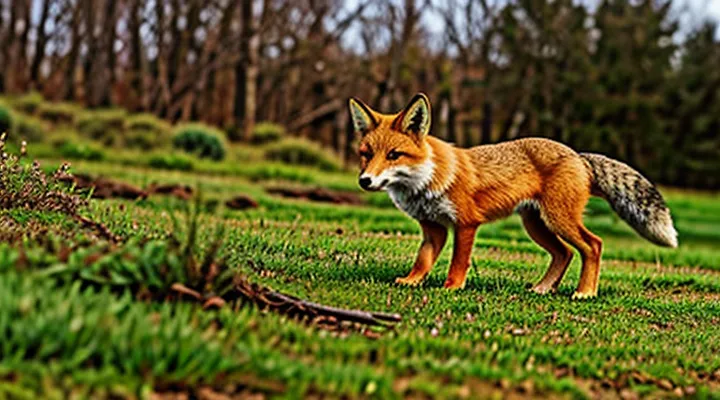
The Keen Senses of a Fox
Auditory Acuity
Pinpointing Prey
Foxes locate mice through a combination of acute senses and learned hunting patterns. Vision provides detection of movement against ground cover, especially during low‑light periods when rod cells dominate. Auditory perception captures rustling sounds produced by a mouse’s rapid footfalls, while the ear’s ability to pinpoint direction enables rapid orientation toward the source.
Olfactory cues complement visual and auditory data. Foxes detect mouse scent trails left by urine, feces, and glandular secretions, allowing them to follow a path even when the prey is concealed. The nasal epithelium can differentiate between fresh and aged odors, guiding the predator toward the most recent activity.
Successful targeting relies on environmental assessment:
- Ground texture: Soft soil or leaf litter amplifies sound transmission, making prey more audible.
- Vegetation density: Sparse cover reduces escape routes, increasing capture probability.
- Temperature gradients: Warm air currents rise, carrying scent particles upward; foxes exploit this by positioning themselves downwind.
Learning enhances precision. Juvenile foxes observe adult hunts, internalizing the timing of pounce, the angle of approach, and the force required to subdue a mouse. Repeated encounters refine neural pathways, resulting in faster decision‑making and higher success rates.
Olfactory Prowess
Scent Tracking
Foxes rely on an acute olfactory system to locate mice hidden in burrows, leaf litter, or dense vegetation. Their nasal receptors detect volatile compounds released by rodent urine, feces, and skin secretions, allowing the predator to pinpoint prey even when visual cues are absent.
The scent‑tracking process involves several steps:
- Detection: Air currents carry mouse odor particles to the fox’s nostrils, where specialized receptors bind specific molecules.
- Discrimination: Neural pathways separate mouse scent from background forest odors, prioritizing the strongest signals.
- Directionality: Foxes compare odor intensity between nostrils, adjusting head position to follow the gradient toward the source.
- Verification: Upon reaching a potential location, the fox samples the ground and vegetation to confirm the presence of a mouse before initiating a strike.
Environmental factors such as humidity, wind speed, and temperature influence odor dispersion. High humidity enhances particle suspension, extending detection range, while strong winds can dilute scent trails, forcing the fox to rely on intermittent cues. Seasonal changes in vegetation density also affect the ease with which odor molecules travel.
Adaptations in fox physiology support this hunting strategy. The vomeronasal organ processes pheromonal cues, and a larger olfactory bulb relative to body size increases processing capacity. These traits collectively enable foxes to efficiently locate and capture mice despite the prey’s cryptic behavior.
Hunting Strategies and Techniques
The «Mousing» Technique
Pouncing and Capturing
Foxes employ a rapid, high‑precision pounce when targeting mice. The predator first locates prey through acute hearing and scent, then closes the distance while maintaining low visibility. At the optimal moment, the fox launches its hind limbs, propelling the body forward to intersect the mouse’s path.
The capture sequence consists of three stages:
- Stalk: Motion slows, ears pivot toward sound, whiskers detect airflow.
- Leap: Hind muscles generate thrust; forepaws extend to increase reach.
- Seizure: Teeth clamp on the neck or torso, forepaws pin the prey, preventing escape.
Muscular development in the hindquarters and flexible spine enable the explosive jump. The dental structure, featuring sharp canines and carnassial blades, ensures a secure bite. Forepaws possess retractable claws that grip tightly, while tactile pads provide feedback on prey movement.
Success rates improve under cover of vegetation, during twilight, and when the mouse’s escape routes are limited. Weather conditions that suppress scent diffusion, such as dry air, reduce detection efficiency. Conversely, moist environments enhance auditory cues, allowing the fox to time the pounce more accurately.
Stalking and Ambush
Patience and Precision
Foxes capture mice through a methodical blend of waiting and exact movement. The animal remains motionless for extended periods, allowing scent and sound cues to pinpoint a rodent’s location. This stillness conserves energy and prevents the prey from detecting a threat too early.
When a mouse appears, the fox executes a rapid, targeted strike. Muscular coordination directs the bite to the neck or spinal region, ensuring immediate incapacitation. Vision, hearing, and whisker sensitivity converge to locate the target within centimeters, reducing the chance of a missed attack.
Key aspects of this approach include:
- Extended observation – minutes of quiet vigilance before any motion.
- Controlled approach – low, silent steps that keep the prey’s awareness low.
- Focused bite – precise jaw placement on vulnerable anatomy.
- Immediate release – quick withdrawal after a successful capture to avoid injury.
The combination of deliberate waiting and exact execution defines the fox’s effectiveness in small‑prey hunting.
The Role of Mice in a Fox's Diet
Nutritional Value
Essential for Survival
Foxes depend on small rodents such as mice to meet their daily energy requirements. Each captured mouse supplies approximately 15 % of a fox’s caloric intake, providing protein, fat, and micronutrients in a single prey item.
Hunting mice involves acute hearing, a keen sense of smell, and low‑light vision. Foxes locate prey by detecting rustling sounds and scent trails, then execute rapid, low‑profile sprints to seize the animal before it escapes. This strategy minimizes exposure to larger predators while maximizing capture efficiency.
The reliance on mouse predation supports several survival functions:
- Sustains lactating females and growing kits with high‑quality nutrients.
- Maintains adult body condition during winter when larger prey are scarce.
- Enhances reproductive success by ensuring adequate food reserves for mating and denning.
- Stabilizes territory occupancy by allowing foxes to defend resource‑rich areas with minimal competition.
Consequently, the ability to hunt mice constitutes a fundamental component of fox ecology, directly influencing individual fitness and population stability.
Prey Abundance and Seasonality
Adaptability to Availability
Foxes adjust their hunting strategies according to the fluctuating presence of mice. When rodent populations surge, they increase daytime foraging, expand territory boundaries, and rely on speed to capture abundant prey. During lean periods, foxes shift to nocturnal activity, incorporate alternative food sources such as insects, berries, and carrion, and reduce travel distances to conserve energy.
Key adaptive responses include:
- Temporal flexibility: Switching between diurnal and nocturnal hunting based on mouse activity cycles.
- Spatial expansion: Extending home range to locate scattered rodent pockets.
- Diet diversification: Adding non‑rodent items to the menu when mice are scarce.
- Learning and memory: Retaining successful hunting routes and techniques for future use.
These adjustments enable foxes to maintain nutritional intake despite irregular mouse availability, ensuring survival across varied ecosystems.
Ecological Impact of Fox Predation
Pest Control Benefits
Natural Population Regulation
Foxes regulate mouse numbers through direct predation, which reduces juvenile survival rates and limits reproductive output. When fox density rises, encounter frequency with mice increases, leading to higher mortality among the prey population. This top‑down pressure prevents exponential growth of mouse colonies and maintains ecological balance.
Predation intensity fluctuates with seasonal prey availability. In spring, abundant newborn mice provide ample food, allowing foxes to consume large quantities and suppress the cohort that would otherwise reach reproductive maturity. During winter, reduced prey numbers force foxes to expand their hunting range, spreading pressure across multiple mouse habitats and preventing localized overpopulation.
Key mechanisms of natural population regulation include:
- Density‑dependent mortality: Higher fox numbers correspond to increased mouse deaths, directly linking predator abundance to prey population size.
- Reproductive suppression: Frequent predation lowers the proportion of mice that survive to breed, curbing future generations.
- Spatial redistribution: Seasonal shifts in fox foraging patterns disperse predation pressure, avoiding concentration of survivors in any single area.
Long‑term data demonstrate that areas with stable fox populations exhibit lower peaks in mouse abundance, reduced crop damage, and fewer disease vectors associated with rodent overgrowth. Maintaining healthy predator numbers thus serves as an effective, self‑sustaining control method for mouse populations.
Impact on Ecosystem Dynamics
Food Web Interactions
Foxes that pursue rodents occupy a pivotal position in terrestrial food webs, linking primary consumers to higher trophic levels. By capturing mice, they convert herbivore biomass into carnivore energy, thereby sustaining predator populations such as birds of prey and larger mammals that may scavenge fox carcasses.
The predation pressure exerted on mouse populations regulates herbivore density, which in turn influences plant community composition. Reduced mouse abundance can lead to lower seed predation rates, allowing certain plant species to increase seedling recruitment. Conversely, elevated mouse numbers may suppress plant regeneration through intensified seed consumption.
Indirect interactions arise when foxes alter the behavior of alternative prey. Presence of foxes often forces smaller mammals to shift activity periods or habitats, reducing their exposure to other predators and modifying competition dynamics among rodent species.
Key food‑web connections include:
- Fox → mouse (direct predation)
- Mouse → seeds and insects (herbivory)
- Fox → scavengers (carrion provision)
- Fox → competing predators (inter‑specific suppression)
These pathways illustrate how the hunting behavior of foxes integrates multiple energy flows, stabilizes community structure, and influences ecosystem productivity.
Dangers and Challenges for Hunting Foxes
Human Interference
Habitat Loss
Habitat loss reduces the areas where red and arctic foxes can establish dens, limiting their access to prey-rich environments. Fragmented landscapes force foxes to travel longer distances to locate mouse populations, increasing energy expenditure and exposure to predators.
The decline of natural grasslands, wetlands, and forest edges directly diminishes mouse abundance. Fewer shelter sites and reduced seed and insect availability lower rodent reproductive success, shrinking the primary food source for foxes.
Key consequences of habitat degradation include:
- Decreased hunting efficiency due to sparse mouse distribution.
- Higher mortality rates among juvenile foxes caused by insufficient nutrition.
- Elevated competition with other mesopredators that adapt better to altered environments.
- Greater reliance on anthropogenic food sources, which can lead to human‑wildlife conflicts.
Restoration of native vegetation, protection of riparian corridors, and preservation of low‑intensity agricultural mosaics can mitigate these effects. Reestablishing continuous habitats supports robust mouse populations and sustains the predator‑prey dynamics essential for fox health and ecosystem balance.
Predatory Competition
Other Hunters
Foxes are not the only predators that regularly capture mice; a variety of species compete for the same small‑rodent resources. Each alternative hunter employs distinct tactics, sensory adaptations, and ecological niches that influence mouse populations.
- Owls: nocturnal vision and silent flight enable precise aerial attacks from perches or while hovering low over fields. Barn owls and tawny owls specialize in locating prey through acute hearing, often extracting mice from dense vegetation.
- Hawks and falcons: daytime raptors rely on sharp eyesight and rapid stoops to seize mice on the ground or in low flight. Red-tailed hawks and merlins demonstrate high capture success rates in open habitats.
- Snakes: constrictors such as grass snakes locate mice via heat‑sensing pits and strike with swift jaw expansion, immobilizing prey before ingestion.
- Domestic and feral cats: flexible locomotion and retractable claws allow pursuit across varied terrain. Cats frequently employ stalking followed by a short burst of acceleration.
- Mustelids (weasels, stoats, ferrets): elongated bodies and flexible skeletons permit entry into burrows. These carnivores use rapid lunges and powerful bites to kill mice within confined spaces.
- Raccoons: omnivorous mammals exploit opportunistic foraging, using dexterous forepaws to extract mice from nests or debris piles.
- Badgers: robust digging ability enables direct access to underground mouse chambers, where they employ strong jaws to dispatch prey.
Collectively, these predators exert pressure on mouse populations comparable to that of foxes. Their overlapping hunting periods, habitat preferences, and prey‑handling techniques create a dynamic network of competition, reducing the likelihood of any single species dominating the rodent resource base.
Observing Foxes and Their Prey
Best Times for Observation
Dawn and Dusk
Foxes concentrate their predatory efforts on small rodents during the transitional periods of daylight. At sunrise, ambient light rises rapidly, enhancing visual acuity while still preserving the shadows that conceal movement. This balance permits foxes to locate mice emerging from burrows for early foraging. Simultaneously, low temperatures at dawn reduce mouse metabolic rates, prompting them to seek warmth in exposed areas, thereby increasing their visibility.
During twilight, diminishing illumination triggers a surge in mouse activity as they scavenge for food before nightfall. Foxes exploit this window through heightened auditory sensitivity; the quiet of dusk amplifies rustling sounds, allowing precise detection of prey. The cooler air also carries scent particles farther, improving olfactory tracking.
Key advantages of these periods include:
- Improved visual contrast: Light levels are sufficient for detailed sight without fully revealing the predator’s silhouette.
- Elevated prey exposure: Mice leave protective cover to feed, making them more accessible.
- Enhanced sensory efficiency: Auditory and olfactory cues operate optimally in the stillness of early morning and evening.
- Energy conservation: Cooler temperatures reduce metabolic demands for both predator and prey, extending hunting endurance.
Overall, dawn and dusk represent strategic intervals where foxes maximize hunting success on mice by aligning their sensory strengths with the heightened activity and reduced concealment of their quarry.
Ethical Viewing Practices
Maintaining Distance
Foxes rely on precise spacing when pursuing mice, a tactic that maximizes stealth and minimizes detection. By keeping a measured gap, the predator reduces visual and auditory cues that would alert the prey, allowing the fox to close in with a sudden burst of speed.
Maintaining distance serves three functional purposes. First, it preserves the element of surprise; a mouse detects motion within a limited radius, and any closer approach triggers escape. Second, it conserves the fox’s energy, preventing premature exertion before the final sprint. Third, it positions the predator to adjust its angle of attack, compensating for the mouse’s erratic movements.
Field observations reveal a direct correlation between optimal gap length and capture rates. Studies show that distances ranging from 2 to 5 meters yield the highest success percentages, while approaches closer than 1 meter result in a marked decline in catches due to early alarm responses.
For researchers and wildlife watchers, respecting this spatial dynamic enhances both data accuracy and safety: