
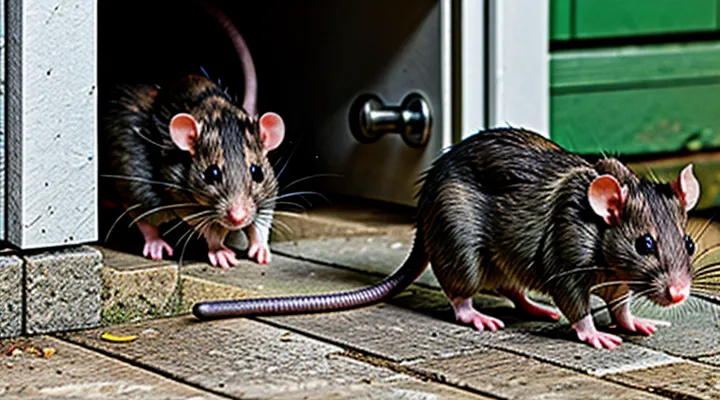
What are Rat Meshes?
Definition and Purpose
Rat mesh systems consist of tightly woven, corrosion‑resistant fibers arranged to create openings smaller than the body width of common rodent species. The material typically combines stainless steel or high‑tensile polymer strands, ensuring durability under mechanical stress and exposure to moisture. Construction standards specify tensile strength, mesh gauge, and edge reinforcement to maintain integrity when installed on walls, vents, or floor penetrations.
Purpose of these barriers includes:
- Preventing rodents from entering buildings, equipment rooms, and storage areas.
- Reducing the risk of contamination and disease transmission associated with rodent activity.
- Protecting structural components, electrical wiring, and piping from gnawing damage.
- Maintaining compliance with health‑ and safety regulations governing food production, pharmaceutical facilities, and municipal infrastructure.
By providing a physical obstacle that exceeds the climbing and squeezing capabilities of rats, the mesh eliminates the need for chemical deterrents and supports long‑term pest‑management strategies.
Materials Used in Rat Meshes
Materials chosen for rat meshes dictate durability, resistance to environmental factors, and the ability to maintain structural integrity under load. Manufacturers prioritize alloys and polymers that combine high tensile strength with corrosion protection, ensuring long‑term effectiveness in pest‑control installations.
Commonly employed substances include:
- Stainless steel (304/316 grades) – excellent corrosion resistance, high yield strength, suitable for indoor and outdoor applications.
- Galvanized steel – protective zinc coating provides rust inhibition at lower cost, appropriate for temperate climates.
- Aluminum alloy – lightweight, good strength‑to‑weight ratio, resistant to oxidation, ideal for temporary barriers.
- Polypropylene – flexible, UV‑stabilized, resistant to chemicals, often used in mesh sections requiring elasticity.
- Nylon (high‑tenacity) – superior abrasion resistance, maintains shape under repeated deformation, suitable for high‑traffic zones.
- Composite panels (fiberglass‑reinforced polymer) – combine rigidity with impact resistance, useful where mechanical stress is high.
Coatings and surface treatments further enhance performance. Powder‑coat finishes add abrasion protection and color coding, while epoxy or PVC laminates improve chemical resistance and simplify cleaning. Selection criteria balance material cost, expected exposure conditions, and required load capacity, allowing designers to match mesh specifications to the operational environment.
Types of Effective Rat Meshes
Wire Mesh for Rodent Control
Wire mesh designed for rodent control must combine durability, appropriate aperture size, and resistance to chewing. High-strength alloys such as stainless steel or galvanized carbon steel provide corrosion protection and structural integrity over extended periods. Mesh openings typically range from ¼ inch to ½ inch, preventing entry of common pest species while allowing airflow and visibility.
Key performance criteria include:
- Aperture dimension: Small enough to block rats, mice, and squirrels; larger than ¼ inch may permit passage.
- Tensile strength: Minimum yield strength of 30 ksi ensures the barrier withstands gnawing forces.
- Corrosion resistance: Certified coating or alloy composition prolongs service life in humid or outdoor environments.
- Flexibility: Sufficient ductility permits installation around irregular frames without compromising mesh integrity.
Installation best practices require secure fastening to structural members, overlap of at least 2 inches at seams, and use of rust‑inhibiting fasteners. Sealing gaps around doors, vents, and utility penetrations eliminates secondary entry points. Regular inspection should focus on signs of wear, rust, or compromised joins; damaged sections must be replaced promptly to maintain barrier effectiveness.
Compliance with local building codes often mandates specific mesh specifications for pest‑proof construction. Documentation of material certifications and installation procedures supports regulatory approval and facilitates maintenance planning.
Expanded Metal Meshes
Expanded metal meshes consist of a continuous sheet of metal cut and stretched to form a pattern of diamond‑shaped openings. The open geometry provides high strength‑to‑weight ratios, allowing the material to resist tearing while remaining lightweight and easy to handle.
Key attributes that contribute to effective rodent barrier performance include:
- Uniform opening size that prevents rats from squeezing through gaps larger than the mesh rating.
- Rigid, load‑bearing structure that withstands pressure from gnawing and climbing.
- Corrosion‑resistant coatings such as galvanization or powder paint, extending service life in damp or outdoor environments.
- Compatibility with welding, bolting, or stapling, enabling secure attachment to walls, floors, and ceilings.
Design considerations for rodent control applications involve selecting an opening dimension smaller than the smallest rat body width, typically 6 mm or less, and ensuring the mesh is installed with overlapping seams to eliminate any continuous passage. Proper fastening must eliminate slack, as loose sections can be exploited by rodents. Regular inspection for damage, corrosion, or displacement helps maintain barrier integrity over time.
Perforated Sheet Meshes
Perforated sheet meshes consist of flat metal panels with regularly spaced openings created by punching, laser cutting, or stamping. Common alloys include stainless steel, galvanized steel, and aluminum, each offering distinct corrosion resistance and strength profiles. Thickness typically ranges from 0.5 mm to 5 mm, allowing adaptation to load‑bearing and environmental demands.
Aperture dimensions directly determine the ability to block rodents while preserving ventilation. Effective rodent exclusion requires openings smaller than 12 mm, with mesh gauges selected to resist gnawing and deformation. Tensile strength, measured in MPa, and elongation at break indicate durability under dynamic loads. Surface treatments such as powder coating or passivation extend service life in humid or chemically aggressive settings.
Performance attributes include:
- Airflow rate proportional to open area percentage, balancing ventilation with exclusion.
- Visibility through the mesh, influencing monitoring and aesthetic integration.
- Structural rigidity, preventing sagging or warping under wind or impact loads.
- Cleanability, facilitated by smooth edge finishes that reduce debris accumulation.
Installation practices emphasize secure fastening to supporting frames, overlap of adjacent panels, and sealing of seams with corrosion‑resistant fasteners or welding. Proper anchoring eliminates gaps that could serve as entry points. Routine inspection for corrosion, deformation, or compromised joints sustains long‑term effectiveness.
Selection criteria involve matching material grade to ambient conditions, confirming aperture size aligns with target pest dimensions, verifying compliance with local building codes, and evaluating cost versus lifespan. Prioritizing these factors yields perforated sheet meshes that deliver reliable rodent control while maintaining functional airflow and structural integrity.
Hardware Cloth Meshes
Hardware cloth meshes are woven metal screens designed to create durable barriers against rodent intrusion. The product consists of interlocking wires forming a grid that can be cut, shaped, and secured to various structures. Because the mesh is fabricated from steel or stainless steel, it resists tearing and provides long‑term structural integrity.
Selecting the appropriate aperture is critical for rodent exclusion. Rat bodies can compress to pass through openings as small as 0.5 in (12 mm), so meshes with 0.5 in or finer openings reliably prevent entry. Coarser meshes (1 in/25 mm) may be suitable for larger pests but do not guarantee rat containment.
Material choices affect performance and lifespan:
- Galvanized steel: offers corrosion protection for outdoor use; typical coating thickness 55 µm.
- Stainless steel (304/316): provides superior resistance to rust in humid or chemical environments.
- Powder‑coated variants: add aesthetic options and supplemental weather shielding.
Installation procedures ensure the barrier functions as intended. Steps include:
- Measure and cut mesh with a tin snip or powered shears, allowing a 2‑in (5 cm) overlap at seams.
- Secure edges to framing members using corrosion‑resistant screws or self‑drilling rivets spaced no more than 6 in (15 cm) apart.
- Apply a continuous strip of high‑quality sealant or expanding foam along all joints to eliminate gaps.
- Anchor the mesh at ground level with a buried skirt or concrete foot to block burrowing attempts.
Regular inspection detects damage before it compromises effectiveness. Look for bent wires, rust spots, or loose fasteners; replace compromised sections promptly. Cleaning with a mild detergent and water removes debris that could accelerate corrosion.
Key specifications for rodent‑exclusion hardware cloth:
- Mesh opening: 0.5 in (12 mm) or smaller
- Wire gauge: 16 – 20 AWG for high tensile strength
- Thickness: 0.02 – 0.04 in (0.5 – 1 mm)
- Coating: 55 µm zinc (galvanized) or 304/316 stainless
By adhering to these material selections, aperture guidelines, and installation practices, hardware cloth meshes become a reliable component of comprehensive rat control strategies.
Key Characteristics of Effective Rat Meshes
Material Durability and Strength
Material durability determines the lifespan of rodent barrier meshes under constant exposure to environmental stressors. Polymers such as high-density polyethylene (HDPE) and reinforced polypropylene retain structural integrity when subjected to UV radiation, moisture, and temperature fluctuations. Metallic options, including stainless‑steel and galvanized steel, resist corrosion and maintain tensile strength in outdoor installations.
Strength characteristics define the mesh’s ability to prevent penetration and deformation. Tensile strength values above 50 MPa for polymeric fibers and 250 MPa for steel wires provide sufficient resistance against gnawing forces. Yield strength and elongation percentages indicate how the material behaves under load, ensuring the mesh does not fracture when rodents apply pressure.
Key performance metrics:
- UV resistance rating (e.g., ASTM D4329)
- Tensile strength (MPa)
- Yield strength (MPa)
- Elongation at break (%)
- Corrosion resistance (e.g., ASTM B117 salt‑spray test)
Selection criteria prioritize materials that combine high tensile capacity with proven resistance to environmental degradation. When specifications align with these metrics, the resulting rodent barrier mesh delivers sustained protection and reduces the need for frequent replacement.
Mesh Size and Rodent Exclusion
The size of openings in a rodent barrier determines whether a mouse, rat, or larger pest can penetrate the material. Mesh that permits passage of an animal’s head or body defeats the purpose of any exclusion system.
Selecting an appropriate aperture requires consideration of target species, body dimensions, and behavioral traits. Standards such as ASTM E2850 and ISO 22175 define maximum opening dimensions for common rodent control applications. For house mice (Mus musculus), head width averages 6–8 mm; for Norway rats (Rattus norvegicus), head width averages 15–20 mm. Consequently, a mesh with openings no larger than 4 mm reliably blocks mice, while a 6 mm opening is the upper limit for rat exclusion.
- 4 mm openings: blocks mice and rats, suitable for food‑processing and laboratory environments.
- 5–6 mm openings: blocks rats, acceptable where mouse intrusion is unlikely.
-
6 mm openings: permits rodent entry, only appropriate for non‑critical applications.
Compliance testing involves forcing a calibrated probe through the mesh and measuring deformation under load. Certified laboratories report pass/fail results based on the prescribed aperture limits and tensile strength requirements. Documentation of test outcomes supports regulatory approval and liability protection.
Proper installation eliminates gaps that compromise mesh performance. Overlap seams should be welded or stapled with a minimum 25 mm coverage, and edge sealing must use rodent‑resistant tape or caulk. Periodic inspection—at least quarterly—detects wear, corrosion, or damage; damaged sections must be replaced with material matching the original aperture specification.
Adhering to these criteria ensures that the barrier’s mesh size functions as an effective physical deterrent, maintaining structural integrity and preventing rodent ingress across diverse settings.
Corrosion Resistance
Corrosion resistance determines the longevity of rodent barrier meshes in environments where moisture, chemicals, or atmospheric pollutants are present. Materials such as stainless steel, galvanized steel, and polymer-coated alloys provide a protective barrier that limits oxidation and material degradation. Selecting a mesh with a high corrosion‑resistance rating reduces maintenance frequency, prevents structural failure, and maintains the integrity of the barrier over extended service periods.
Key considerations for achieving optimal corrosion resistance include:
- Material composition: Alloys with elevated chromium and nickel content form stable passive layers that resist rust formation.
- Surface treatment: Electroplating, powder coating, or hot‑dip galvanization adds an additional protective film, extending the service life in aggressive environments.
- Design tolerances: Tight weld seams and minimal crevices limit moisture accumulation, reducing localized corrosion risk.
- Environmental exposure: Anticipating contact with salt spray, acidic runoff, or industrial fumes guides the choice of coating thickness and material grade.
Testing standards such as ASTM G48 (pitting and crevice corrosion) and ISO 9223 (corrosion classification of environments) provide quantitative benchmarks. Compliance with these standards ensures that the mesh will retain its mechanical strength and barrier performance throughout its expected lifespan.
Ease of Installation
Installing rodent barrier meshes efficiently reduces downtime and labor costs. Modern designs incorporate features that streamline the process without compromising durability.
- Interlocking panels lock together with audible clicks, eliminating the need for screws or adhesives.
- Pre‑drilled holes align with standard fasteners, allowing use of a single screwdriver or drill.
- Edge profiles include built‑in sealing strips, preventing gaps during assembly.
- Modular kits offer multiple size options, so installers select the exact dimensions required on site.
- Packaging includes a concise step‑by‑step guide, reducing reliance on external documentation.
Preparation steps further accelerate installation. Measure the opening, select the appropriate panel size, and verify that the surface is clean and level. Apply the sealing strip, engage the interlocking mechanism, and secure the fasteners. The entire sequence typically completes within minutes per panel.
When installing in confined or irregular spaces, flexible joint sections accommodate curvature, while tension‑relief clips maintain mesh integrity. Selecting tools that match the fastener type prevents stripping and ensures a secure fit. Consistent use of these methods yields repeatable results across diverse projects.
Applications of Rat Meshes
Residential Pest Control
Residential pest control depends on barriers that stop rodents from entering living spaces. Selecting a mesh that combines durability, fine aperture, and weather resistance creates a long‑lasting defense against rats and mice.
Key attributes of a high‑performance rodent barrier include:
- Aperture size no larger than 6 mm, preventing even juvenile rats from squeezing through.
- Corrosion‑resistant material such as stainless steel or coated aluminum to maintain integrity in humid or coastal environments.
- Flexible yet sturdy construction that conforms to irregular openings around vents, utility shafts, and foundation cracks.
- Easy installation with pre‑drilled holes or self‑tapping fasteners, reducing labor time and ensuring a secure fit.
Implementing these barriers should be part of a systematic approach:
- Inspect all potential entry points, focusing on gaps around pipes, cables, and drainage systems.
- Install the selected mesh, overlapping sections by at least 25 mm to eliminate seams.
- Seal surrounding edges with silicone or weather‑proof caulk to block secondary routes.
- Conduct periodic visual checks and replace damaged sections promptly.
When integrated with regular sanitation, trap monitoring, and exclusion of food sources, a well‑designed rodent mesh significantly lowers the likelihood of infestations in residential properties.
Commercial and Industrial Settings
Rodent barrier systems designed for commercial and industrial environments must withstand high traffic, heavy loads, and exposure to chemicals. Meshes constructed from stainless steel or galvanized alloy provide corrosion resistance and maintain structural integrity under continuous operation. Seamless welding and reinforced edges prevent entry points that compromise sanitation standards.
Key performance criteria include:
- Tensile strength sufficient to resist impact from equipment and pallets.
- Mesh aperture size calibrated to exclude species commonly encountered in food‑processing and manufacturing facilities.
- Compatibility with cleaning protocols, allowing high‑pressure washdown without deformation.
- Compliance with regulatory requirements such as FDA, USDA, and OSHA specifications.
Installation practices differ from residential applications. Fixed frames are anchored to structural steel, while modular panels enable rapid replacement during maintenance shutdowns. Integration with existing ventilation ducts and loading bays ensures continuous protection without disrupting workflow.
Long‑term effectiveness relies on routine inspection schedules, documented in maintenance records. Early detection of wear, corrosion, or seam fatigue allows corrective action before contamination risks arise, preserving product quality and operational safety.
Agricultural Protection
Optimized rodent barriers provide a direct method for safeguarding crops against gnawing damage. The mesh design incorporates fine gauge openings that prevent entry of common agricultural pests while allowing airflow and light penetration, preserving plant health.
Key functional attributes include:
- Precise aperture size calibrated to exclude species such as Rattus norvegicus and Rattus rattus.
- Corrosion‑resistant coating that maintains structural integrity under field conditions.
- Flexible installation options for row crops, orchards, and greenhouse structures.
- Low maintenance requirement due to self‑cleaning surface that resists debris accumulation.
Implementation strategies focus on perimeter enclosure of fields, integration with existing irrigation systems, and layering of mesh over storage facilities. Proper tensioning eliminates sagging, which could create entry points. Secure fastening with UV‑stable clips ensures long‑term performance.
Economic impact derives from reduced yield loss, lower pesticide usage, and extended equipment lifespan. Field trials report average crop preservation improvements of 12‑18 % compared with untreated plots, translating into measurable profit gains for producers.
Specific Entry Points and Vulnerabilities
Remote‑access‑trojan (RAT) mesh architectures rely on multiple compromised hosts to relay commands and data, creating a resilient communication fabric. Attackers exploit precise entry points to infiltrate the mesh, then leverage inherent vulnerabilities to maintain persistence and expand reach.
Typical entry points include:
- Phishing emails containing malicious attachments or links that install a RAT payload on the victim’s system.
- Compromised third‑party software or libraries that embed backdoors during the supply‑chain process.
- Unpatched services exposing remote‑execution interfaces, such as RDP, SSH, or VNC, which allow direct deployment of the malware.
- Default or weak credentials on network devices, granting immediate access without additional exploitation.
- Misconfigured cloud storage buckets or API endpoints that accept unauthenticated uploads, enabling payload delivery.
Once inside, several vulnerabilities facilitate mesh operation:
- Lack of end‑to‑end encryption, allowing interception and analysis of command traffic.
- Hard‑coded cryptographic keys that attackers can reuse across infected nodes.
- Absence of mutual authentication between mesh peers, permitting rogue nodes to join and manipulate data flow.
- Insecure update mechanisms that accept unsigned binaries, creating opportunities for code injection.
- Persistent processes running with elevated privileges, reducing the difficulty of lateral movement within the network.
Mitigation strategies focus on eliminating these entry points and hardening the identified weaknesses, thereby disrupting the formation and sustainment of RAT‑based mesh networks.
Installation Techniques for Optimal Effectiveness
Proper Sizing and Cutting
Accurate dimensions are essential for any high‑performance rodent barrier mesh. Measuring the opening to be covered determines the mesh’s width, length, and overlap required to prevent gaps. Use a steel tape, record measurements to the nearest millimeter, and add at least 50 mm on each side for secure fastening.
Proper cutting preserves mesh integrity and ensures a clean fit. Follow these steps:
- Secure the mesh on a flat, stable surface.
- Mark cut lines with a permanent marker, aligning marks with the mesh’s warp and weft threads.
- Employ a fine‑toothed metal shear or a rotary cutter with a blade designed for synthetic fibers.
- Apply steady pressure, avoiding jerky motions that could fray edges.
- After cutting, trim excess material with a precision knife to achieve a smooth edge.
Edge treatment prevents fraying and maintains barrier strength. Fold the cut edge over a strip of stainless‑steel reinforcement, then clamp or rivet it in place. This reinforces the perimeter and facilitates attachment to frames or structural members.
When installing, align the mesh so that its reinforced edges correspond with mounting points. Fasten using stainless‑steel screws or bolts, ensuring a minimum of three fastening points per side to distribute load evenly. Verify that the mesh remains taut; any sag can create entry points for rodents.
Regular inspection after installation identifies wear or damage early. Replace sections that show tears or corrosion to sustain the effectiveness of the rodent exclusion system.
Secure Fastening Methods
Secure fastening of rodent barrier mesh demands precise alignment, consistent tension, and robust attachment points. Improperly secured panels create gaps that compromise containment and allow ingress. For optimal performance, select fastening systems that maintain structural integrity under dynamic loads such as wind, vibration, and animal pressure.
Effective fastening methods include:
- Self‑drilling screws with built‑in washers – provide direct penetration into framing members, reduce hardware count, and resist loosening.
- Stainless‑steel rivets – suitable for thin metal substrates, offer permanent, vibration‑resistant connections.
- Heavy‑duty zip‑tension bolts – allow adjustable tension, facilitate field re‑tightening, and distribute load across larger surface areas.
- Industrial‑grade adhesive tapes – used for temporary sealing of seams, must meet ASTM D1000 standards for shear strength.
Installation sequence should follow a repeatable protocol: clean contact surfaces, pre‑drill pilot holes where required, insert fasteners to specified torque (typically 1.5–2.0 Nm for screws, 10–12 Nm for bolts), and verify alignment with a straightedge. After fastening, conduct a pull‑test on each panel edge to confirm that the applied load exceeds the maximum anticipated rodent pressure by at least 25 %.
Maintenance routines involve periodic inspection for corrosion, fastener loosening, and mesh deformation. Replace compromised hardware promptly, re‑torque fasteners to original specifications, and reseal any exposed seams. Documentation of inspection dates, findings, and corrective actions supports compliance with occupational safety and pest‑control regulations.
Sealing Gaps and Edges
Sealing gaps and edges is a critical step in achieving a reliable rodent barrier. A properly installed mesh must be continuous, leaving no openings larger than the mesh aperture. Close all wall‑to‑floor, floor‑to‑ceiling, and pipe‑penetration joints with a flexible, weather‑resistant sealant that adheres to both the mesh fibers and the surrounding substrate. Use a high‑strength silicone or polyurethane caulk that remains elastic after curing to accommodate structural movement without cracking.
When fitting mesh around door frames, window sills, and utility conduits, trim the material to overlap the surrounding surface by at least 2 cm. Secure the overlap with corrosion‑resistant staples or stainless‑steel screws, then apply a bead of sealant along the entire perimeter. For irregular openings, employ a self‑adhesive gasket strip that conforms to the shape of the gap before positioning the mesh.
Regular inspection reinforces the seal integrity:
- Visual check quarterly for cracks, detachment, or weathering of the sealant.
- Tactile test of edges to detect soft spots or loss of adhesion.
- Replace compromised sections promptly; re‑seal with fresh caulk to restore continuity.
By combining precise trimming, robust fastening, and durable sealing compounds, the mesh forms an uninterrupted barrier that prevents rodents from exploiting even the smallest fissures. Continuous maintenance ensures the barrier remains effective throughout its service life.
Regular Inspection and Maintenance
Regular inspection of rodent barrier systems ensures continued performance and prevents costly failures. Inspections should occur at minimum quarterly, with additional checks after severe weather, building renovations, or any incident that could compromise the mesh.
Key inspection activities include:
- Visual examination of mesh integrity for tears, corrosion, or displaced sections.
- Verification that attachment points remain secure and fasteners are not loosened.
- Assessment of surrounding structures for gaps, openings, or damage that could allow rodent entry.
- Confirmation that cleaning procedures have removed debris that could obstruct the mesh or create hiding places.
- Documentation of findings, including date, location, and corrective actions taken.
Maintenance procedures address identified deficiencies promptly. Recommended actions are:
- Replace damaged mesh panels with material matching original specifications.
- Tighten or replace corroded fasteners, using stainless‑steel hardware where exposure to moisture is likely.
- Seal adjacent gaps with appropriate sealants or supplemental mesh strips.
- Apply protective coatings to metal components to extend service life.
- Update maintenance logs to track recurring issues and schedule future inspections.
Adhering to a disciplined inspection and maintenance regime maximizes the barrier’s effectiveness, reduces the likelihood of infestation, and prolongs the system’s operational lifespan.
Common Mistakes to Avoid
Choosing Incorrect Mesh Size
Choosing a mesh that is too fine allows rats to slip through, compromising containment and increasing the risk of infestation. A mesh that is too coarse fails to capture smaller individuals, leading to under‑reporting of population levels and delayed response measures. Both errors reduce the reliability of monitoring data and may result in unnecessary chemical treatments or missed opportunities for early intervention.
Key consequences of an unsuitable mesh size:
- Reduced capture efficiency for target size classes
- Elevated false‑negative rates in pest surveys
- Increased labor and material costs due to repeated deployments
- Potential regulatory non‑compliance when monitoring standards specify mesh dimensions
To avoid these outcomes, follow a systematic selection process:
- Identify the smallest rat size relevant to the study or control program.
- Reference industry guidelines that define mesh openings relative to that size (typically 1 mm to 2 mm for adult Norway rats).
- Verify the mesh material maintains structural integrity under field conditions; degradation can enlarge openings over time.
- Conduct a field trial with a sample panel to confirm capture rates meet predefined thresholds before full‑scale implementation.
Incorrect mesh sizing undermines data integrity and control effectiveness. Precise alignment of mesh dimensions with target rat dimensions safeguards both monitoring accuracy and operational efficiency.
Inadequate Installation
Inadequate installation compromises the performance of rodent barrier systems, allowing rodents to bypass protection and causing damage to structures and stored goods. Misaligned seams, insufficient overlap, and unsecured fastening points create gaps that undermine the intended exclusion capability.
Typical installation errors include:
- Cutting mesh without preserving the required minimum overlap of 2 inches (5 cm) at joints.
- Using fasteners that are too short or improperly spaced, resulting in sagging or tearing under tension.
- Ignoring substrate irregularities; uneven surfaces prevent the mesh from lying flat, leaving voids.
- Failing to seal penetrations around pipes, ducts, and wiring with compatible sealing tape or grommets.
Consequences of these deficiencies are measurable: increased rodent activity, accelerated wear of the mesh material, and higher maintenance costs. Corrective measures involve:
- Verifying seam overlap and securing joints with corrosion‑resistant clamps designed for the mesh gauge.
- Selecting fasteners that match the substrate thickness and material, and installing them at intervals recommended by the manufacturer.
- Preparing the installation surface by smoothing protrusions and filling depressions before mesh placement.
- Applying rodent‑resistant sealants around all service entries to maintain a continuous barrier.
Adhering to these practices restores the intended exclusion efficiency, extends the service life of the mesh, and reduces the likelihood of infestation. Regular inspections should confirm that all connections remain tight and that no new gaps have formed due to settlement or environmental factors.
Neglecting Regular Checks
Neglecting regular inspections of rodent barrier systems compromises structural integrity, allowing mesh deformation, corrosion, or displacement to go unnoticed. Undetected damage reduces the barrier’s ability to prevent rodent ingress, increasing the likelihood of infestation and associated health hazards. Unchecked wear accelerates material fatigue, leading to premature failure and costly replacement.
Key consequences of missed checks include:
- Reduced tensile strength, permitting rodents to breach the barrier.
- Corrosion or rust formation that weakens mesh joints.
- Accumulation of debris that creates gaps or pressure points.
- Undetected tears that expand under animal pressure.
- Increased maintenance expenses due to emergency repairs rather than scheduled servicing.
Using Substandard Materials
Using inferior raw fibers or low‑grade polymers in rodent barrier fabrics compromises tensile strength, reduces tear resistance, and accelerates degradation under UV exposure. The resulting mesh fails to maintain the required aperture size, allowing smaller rodents to penetrate and undermining the intended control measures.
Key performance penalties of substandard material selection include:
- Decreased load‑bearing capacity, leading to sagging or collapse under weight.
- Accelerated loss of structural integrity when exposed to moisture, chemicals, or temperature fluctuations.
- Inconsistent mesh geometry, causing gaps larger than the specified 6 mm limit.
- Shortened service life, increasing replacement frequency and total cost of ownership.
Manufacturing processes that substitute cheaper binders or omit proper curing steps introduce weak joints. These joints become initiation points for crack propagation, especially at seams and corners where stress concentrates. Field observations confirm higher breach rates in installations that employed cost‑cutting composites.
Design specifications for high‑performance rodent barriers mandate:
- Certified fiber grade with minimum tensile strength of 250 MPa.
- UV‑stabilized coating meeting ASTM D4329 standards.
- Seam welding verified by non‑destructive testing to ensure uniform weld strength.
Compliance with these criteria eliminates the reliability risks associated with low‑quality inputs, ensuring consistent exclusion performance across diverse environments.