
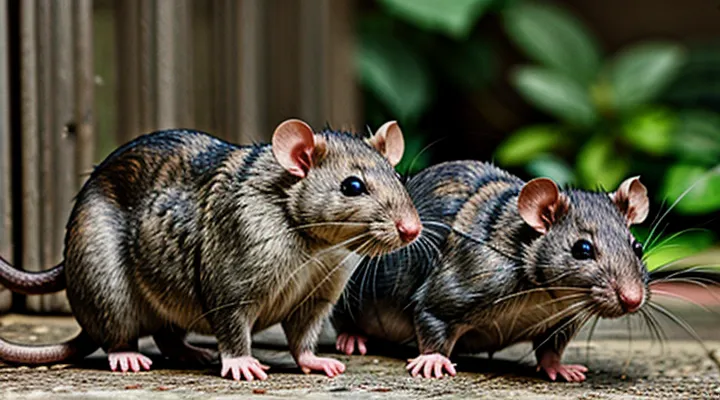
The Concept of «Packs» in Animal Behavior
Defining «Pack»
A “pack” refers to a stable group of conspecific individuals that maintain regular, cooperative interactions beyond brief encounters. Researchers typically require three elements to classify a collection of animals as a pack:
- Persistent association: members are observed together across multiple days or weeks, not merely during a single foraging event.
- Structured social hierarchy: a recognizable dominance order or role differentiation exists among members.
- Cooperative behavior: individuals engage in activities that benefit the group, such as coordinated defense, collective grooming, or shared care of offspring.
In many mammals, such as wolves and African wild dogs, these criteria are met consistently, producing well‑documented pack dynamics. Applying the same standards to rats reveals that while they frequently gather in colonies, the interactions are often transient and centered on competition for resources rather than enduring cooperation. Evidence of a stable hierarchy and collective tasks is limited, suggesting that rat aggregations do not satisfy the strict definition of a pack.
Distinguishing from «Colony» or «Group»
Rats exhibit flexible social structures that differ from the terms “colony” and “group.” A colony refers to a stable, long‑term aggregation of individuals that share a nesting site, reproduce collectively, and maintain a hierarchical organization over multiple generations. In contrast, a group denotes a temporary assembly of rats that gather for a specific purpose, such as foraging or mating, without establishing a permanent hierarchy or shared burrow.
When evaluating whether rats form packs, the following distinctions are essential:
- Stability: Packs are semi‑stable units that persist for weeks to months, whereas colonies are permanent and groups dissolve after the immediate activity ends.
- Spatial cohesion: Packs maintain close proximity during movement, coordinating routes and defending territory; colonies occupy a fixed home range, and groups may be scattered.
- Leadership: Packs often display a dominant individual that guides collective actions; colonies have a more complex dominance hierarchy, while groups lack consistent leadership.
- Reproductive integration: Packs may include both breeding and non‑breeding members cooperating in pup care; colonies integrate reproduction across the entire population, and groups typically involve only breeding pairs.
Understanding these criteria clarifies that rats can operate as packs—a distinct social arrangement—without being classified strictly as colonies or transient groups. The pack model captures the intermediate level of organization observed in many urban and wild rat populations, where cooperation and coordinated movement exceed that of a simple group but do not reach the permanence of a colony.
Social Dynamics of Rats
Evidence of Social Interaction
Rats display a range of interactions that meet criteria for social organization. Laboratory and field observations document consistent affiliative and cooperative behaviors among conspecifics.
- Allogrooming: individuals regularly clean each other’s fur, reducing parasite load and reinforcing bonds (Kavaliers & Choleris, 2015).
- Communal nesting: multiple adults share a single nest, maintaining stable temperature and providing collective defense (Brown & Braun, 2018).
- Dominance hierarchies: linear rank structures emerge from repeated agonistic encounters, influencing access to food and mating opportunities (Sapolsky, 1994).
- Ultrasonic vocalizations: rats emit context‑specific calls during play, mating, and predator alerts, facilitating coordinated responses (Wright et al., 2010).
- Cooperative foraging: groups locate and transport food items more efficiently than solitary individuals, demonstrating task sharing (Brennan & Young, 2020).
These observations confirm that rats regularly engage in mutually beneficial activities, establish stable social ranks, and communicate to synchronize group actions. The evidence supports the conclusion that rats form organized collectives rather than existing solely as solitary foragers.
Hierarchy and Dominance in Rat Groups
Rats live in organized groups that display a clear dominance hierarchy. The structure is typically linear, with a single individual occupying the top rank and subordinate members arranged below. This arrangement minimizes conflict by establishing predictable patterns of interaction.
Dominance is expressed through several observable behaviors:
- Aggressive posturing, such as upright stance and lunges
- Rapid, high‑frequency vocalizations during confrontations
- Scent marking using urine and glandular secretions
- Preferential access to food, nesting sites, and mates
These signals enable individuals to assess rank without prolonged fights. The dominant rat often monopolizes resources, while subordinates exhibit avoidance or deference, reducing the frequency of costly aggression.
Hierarchical organization influences group dynamics. High‑ranking individuals experience lower cortisol levels, indicating reduced stress, whereas lower‑ranked rats show elevated stress markers. Reproductive opportunities are also skewed toward the dominant pair, concentrating breeding output and enhancing genetic propagation within the group.
Empirical studies of laboratory colonies and wild populations confirm that rat groups maintain stable hierarchies over weeks to months. Observations reveal that rank can shift after severe injuries or the removal of the alpha, prompting a rapid re‑establishment of order through intensified agonistic encounters.
Communication Methods Among Rats
Rats rely on a multimodal communication system that supports group cohesion, resource allocation, and predator avoidance. Vocal signals include ultrasonic calls (22–50 kHz) emitted during mating, distress, and territorial encounters. These frequencies are inaudible to humans but convey precise information about the caller’s emotional state and intent.
Chemical cues dominate social interaction. Each individual produces a unique scent profile through urine, feces, and specialized flank glands. Scent marks delineate territory, identify reproductive status, and facilitate kin recognition. Rats continuously refresh these deposits to maintain a dynamic olfactory map of their environment.
Tactile exchanges occur via whisker contact and direct grooming. Whisker movements transmit subtle pressure changes that signal proximity and hierarchy. Grooming serves both hygienic and affiliative functions, reinforcing bonds between conspecifics.
Visual signals are limited but include postural adjustments and tail movements. An elevated body posture signals alertness, while a flattened tail indicates submission or fear.
Key communication channels can be summarized:
- Ultrasonic vocalizations: distress, mating, aggression.
- Olfactory marking: territory, reproductive status, kin identification.
- Whisker‑mediated tactile cues: proximity, dominance.
- Allogrooming: affiliation, stress reduction.
- Body posture and tail position: alertness, submission.
Together, these methods enable rats to coordinate activities, establish social hierarchies, and respond rapidly to environmental changes.
Vocalizations
Rats communicate through a complex repertoire of sounds that convey information about identity, threat level, and environmental conditions. Acoustic signals supplement chemical and tactile cues, enabling rapid coordination among individuals.
- Ultrasonic chirps (≈ 50–80 kHz): Emitted during exploratory behavior and social encounters; frequency modulations encode arousal and approach intent.
- Low‑frequency squeaks (≈ 5–10 kHz): Produced when a rat perceives danger or experiences pain; amplitude and duration correlate with perceived intensity of the stimulus.
- Mid‑range vocalizations (≈ 10–30 kHz): Associated with mating rituals and hierarchical interactions; pattern variations differentiate male from female calls and signal reproductive status.
These vocalizations are generated by the larynx and transmitted through the nasal cavity, allowing detection even in dense burrow systems where visual cues are limited. Auditory processing in the rat brain involves the inferior colliculus and auditory cortex, which decode frequency, temporal structure, and harmonic content to guide appropriate behavioral responses.
In group settings, vocal exchanges facilitate cohesion. During foraging, synchronized ultrasonic chirps synchronize movement, reducing competition and enhancing resource acquisition. When a predator approaches, alarm squeaks trigger immediate retreat and alert nearby conspecifics, reducing individual risk. Reproductive bouts feature patterned mid‑frequency calls that attract mates and establish dominance hierarchies, influencing group composition over time.
Understanding rat vocal behavior provides insight into the mechanisms that support their social organization, demonstrating that acoustic communication is integral to group dynamics and survival strategies.
Scent Marking
Rats rely on scent marking to convey individual identity, reproductive status, and territorial boundaries. Urine, glandular secretions, and cheek rubs deposit chemical cues on surfaces that other rats detect through their highly developed olfactory system.
Scent marking supports group cohesion by allowing members to recognize one another without direct contact. When a rat encounters familiar odors, it can differentiate between resident conspecifics and outsiders, reducing the need for aggressive encounters. This chemical communication also synchronizes activity patterns within a colony, as shared scents reinforce a common spatial framework.
Key functions of scent marking include:
- Individual recognition: Unique odor profiles enable rats to track the presence of specific members.
- Reproductive signaling: Hormone‑laden secretions indicate sexual readiness, influencing mating behavior.
- Territorial demarcation: Marked boundaries discourage intrusion by non‑group individuals.
- Stress reduction: Familiar scents lower cortisol levels, promoting calm interactions among group members.
Experimental observations demonstrate that rats with impaired olfactory receptors show increased aggression and reduced social stability, confirming that scent cues are integral to their social structure. In natural and laboratory settings, the frequency of marking events rises during periods of group formation, suggesting that chemical communication underpins the establishment and maintenance of rat packs.
Body Language
Rats communicate primarily through a repertoire of body postures, facial expressions, and movements that reveal hierarchy, affiliation, and territorial boundaries. A raised tail, upright stance, and forward‑leaning head signal confidence and dominance, often observed when an individual asserts control over a nesting site or food source. Conversely, lowered ears, a flattened body, and a tucked tail indicate submission or fear, prompting avoidance by more dominant conspecifics.
Grooming behavior also conveys social bonds. Mutual grooming involves one rat using its forepaws to clean the fur of another, reinforcing affiliative connections and reducing aggression within a group. The frequency and duration of such interactions increase in stable colonies, suggesting that grooming functions as a cohesion mechanism.
Vocalizations accompany visual cues but are secondary to body language. When a rat arches its back and flares its whiskers while emitting high‑frequency squeaks, the combined signal warns intruders of an imminent threat. In contrast, relaxed whisker positioning paired with soft chirps accompanies calm, exploratory behavior and encourages group cohesion.
Key body‑language indicators of pack formation:
- Postural dominance: upright body, elevated tail, forward gaze.
- Submissive posture: crouched stance, flattened ears, tail tucked.
- Affiliative grooming: reciprocal paw‑to‑fur contact.
- Whisker orientation: forward whiskers for alertness; relaxed whiskers for social tolerance.
These signals enable rats to negotiate roles, maintain order, and sustain group structure without reliance on verbal communication. The consistency of such behaviors across laboratory and wild populations supports the conclusion that rats possess a sophisticated non‑verbal system that underlies their social organization.
Factors Influencing Rat Social Behavior
Environmental Impact on Group Formation
Rats exhibit flexible social organization that responds directly to environmental conditions. Limited food sources, high predator pressure, and confined shelter promote tighter aggregations, while abundant resources and spacious habitats allow solitary foraging.
Key environmental drivers of group formation:
- Resource scarcity – concentrated food patches force individuals to compete and cooperate, leading to stable clusters around caches.
- Predation risk – open areas with visual predators increase the advantage of collective vigilance; groups form near burrows or sewers where escape routes are shared.
- Habitat density – urban infrastructure creates bottlenecks (pipes, walls) that channel movement, encouraging persistent associations among individuals that repeatedly encounter each other.
- Climate extremes – cold or wet periods raise the thermoregulatory benefit of huddling; rats cohabit nests to conserve heat.
- Human disturbance – frequent cleaning or pest control disrupts colonies, often triggering temporary fission; reduced disturbance permits re‑aggregation.
Empirical observations confirm these patterns. Field studies in temperate forests report larger, cohesive colonies during winter months, whereas summer surveys in agricultural fields show dispersed foragers. Laboratory experiments manipulating food distribution demonstrate rapid formation of hierarchically structured groups when supplies are limited.
Overall, environmental variables dictate whether rats operate as loosely connected individuals or as coordinated packs, underscoring the adaptability of their social system to external pressures.
Availability of Resources and Population Density
Rats adjust their social organization according to the balance between food, shelter, and the number of conspecifics sharing a habitat. When resources are abundant and evenly distributed, individuals can maintain separate foraging territories, reducing the need for coordinated movement. In contrast, limited or clumped supplies force multiple rats to converge on the same site, increasing contact rates and prompting the formation of temporary aggregations that resemble packs.
Population density directly influences these dynamics. High densities raise competition for nesting places and elevate stress levels, which can trigger hierarchical structures and coordinated defense of valuable sites. Low densities allow solitary foraging and diminish the benefits of cooperation, leading to more isolated behavior.
Key patterns observed in research:
- Resource scarcity → intensified clustering, shared vigilance, and cooperative digging.
- Resource abundance → dispersed activity, reduced group cohesion.
- High population density → emergence of dominant individuals, structured hierarchies, and stable group territories.
- Low population density → predominance of solitary foraging, limited social interaction.
These relationships demonstrate that rat sociality is fluid, shaped primarily by the interplay of resource availability and the number of individuals occupying a given environment.
Species-Specific Social Tendencies
Rats exhibit social organization that varies with species, environment, and population density. Wild Norway rats (Rattus norvegicus) form stable colonies composed of dominant males, subordinate males, breeding females, and their offspring. Within these colonies, individuals maintain a linear hierarchy, engage in mutual grooming, and share nesting sites. Cooperation appears in activities such as collective foraging and predator avoidance, while aggression concentrates on rank reinforcement.
Other rodent species display distinct patterns:
- House mice (Mus musculus) form smaller, fluid groups; dominance is less rigid, and individuals frequently disperse.
- Gerbils (Meriones spp.) establish monogamous pairs with limited communal interaction beyond parental care.
- Squirrels (Sciuridae) operate largely as solitary foragers, assembling only during mating or territorial disputes.
These differences arise from ecological pressures, reproductive strategies, and sensory capabilities. Rats’ tendency toward group living enhances resource exploitation and disease transmission, influencing experimental design, pest management, and captive care. Recognizing species-specific social tendencies clarifies why rats can be described as socially inclined while other rodents may not exhibit comparable pack-like behavior.
Norway Rats (Rattus norvegicus)
Norway rats (Rattus norvegicus) live in structured colonies that exhibit clear social organization. Individuals maintain territories within a shared burrow system, and dominant males defend access to breeding females. Social bonds are reinforced through grooming, scent marking, and coordinated foraging.
Key aspects of their social dynamics include:
- Hierarchical structure: A dominant male, often supported by a few subordinate males, controls reproductive opportunities. Females also establish rank, influencing access to resources.
- Cooperative breeding: Females give birth in communal nests; offspring are cared for by multiple adults, increasing survival rates.
- Information transfer: Rats use vocalizations and pheromones to signal food locations, predator presence, and social status, enabling group members to respond collectively.
- Territorial overlap: Adjacent colonies maintain defined boundaries but may engage in limited, ritualized aggression to negotiate space.
These behaviors demonstrate that Norway rats function as a social species, forming stable groups rather than random aggregations. Their colony-based life history supports efficient resource exploitation and predator avoidance, confirming that they operate with a degree of organization comparable to pack-like structures observed in other mammals.
Roof Rats (Rattus rattus)
Roof rats (Rattus rattus) are primarily arboreal, occupying attics, eaves and other elevated structures where food sources are abundant. Their habitat choice promotes a degree of spatial segregation from ground‑dwelling species, influencing interaction patterns within the species.
Social organization in roof rats differs from that of Norway rats (Rattus norvegicus). Studies show that roof rats tend to maintain smaller, fluid groups rather than stable, large colonies. Individual rats often establish overlapping home ranges, allowing occasional contact without forming permanent hierarchies.
Key behavioral traits relevant to pack formation:
- Territorial overlap – Home ranges intersect, facilitating brief encounters.
- Female‑centered groups – Females and their offspring dominate local clusters; adult males are more solitary.
- Seasonal fluctuations – Group size expands during breeding season, contracts when resources decline.
- Communication – Scent marking and vocalizations coordinate movement and resource use, but do not enforce rigid social structures.
Overall, roof rats exhibit limited group cohesion. Their social interactions are opportunistic, driven by resource availability and reproductive cycles rather than a persistent pack system. This pattern contrasts with the more hierarchical, pack‑like behavior observed in some other rodent species.
Benefits and Drawbacks of Social Living for Rats
Advantages of Group Living
Rats that congregate exhibit several measurable benefits that enhance individual survival and reproductive success.
Living in groups reduces predation risk through collective vigilance; multiple individuals detect threats sooner, allowing quicker escape. Shared alarm signals further improve response speed.
Foraging efficiency increases when rats cooperate. Group members locate food sources, communicate location, and exploit caches that single foragers might miss. Access to diverse food reduces nutritional deficiencies.
Thermoregulation improves in clustered nesting. Body heat retained by neighboring individuals lowers energy expenditure required to maintain core temperature, especially in colder environments.
Social learning accelerates acquisition of essential behaviors. Juveniles observe experienced conspecifics, acquiring skills such as maze navigation, grooming techniques, and predator avoidance without trial‑and‑error learning.
Reproductive opportunities expand. Proximity to potential mates shortens search time, synchronizes breeding cycles, and facilitates cooperative care of offspring, increasing offspring survival rates.
Disease resistance can benefit from group living. Exposure to low‑level pathogens builds immunity, and social grooming removes ectoparasites, limiting infestations.
- Enhanced predator detection
- Improved foraging success
- Reduced thermoregulatory costs
- Accelerated skill acquisition through observation
- Increased mating efficiency and parental cooperation
- Strengthened immune defenses via controlled pathogen exposure
Collectively, these advantages explain why rats frequently form cohesive units rather than remaining solitary.
Enhanced Foraging
Rats display enhanced foraging when food sources are scarce or dispersed, employing memory of previous locations, olfactory cues, and spatial mapping to increase retrieval efficiency. Individual rodents remember profitable sites and communicate their value through scent marks, vocalizations, or brief tactile contacts, allowing others to locate resources with minimal trial‑and‑error.
Research demonstrates that rats in laboratory colonies and wild populations adjust foraging routes based on the presence of conspecifics. When a member discovers a high‑yield patch, nearby individuals converge, reducing travel distance and exposure to predators. This convergence relies on short‑range recruitment signals rather than long‑range vocal calls, indicating a flexible, context‑dependent coordination system.
Enhanced foraging contributes to group cohesion through several mechanisms:
- Shared knowledge of resource distribution accelerates collective movement.
- Reduced individual search effort lowers metabolic costs.
- Simultaneous exploitation of a patch limits access by competing species.
These mechanisms reinforce the tendency of rats to operate in loosely organized groups rather than strict packs. The ability to coordinate foraging without permanent hierarchies suggests that social organization in rats is adaptive, emerging primarily when environmental conditions favor cooperative resource acquisition.
Predator Defense
Rats exhibit a range of strategies to reduce vulnerability when confronted by predators, and these tactics are closely linked to their social organization. Living in colonies enables individuals to share vigilance, allowing a single rat to detect threats while others continue foraging. This collective alert system lowers the probability that any one member will be captured.
Key defensive behaviors include:
- Alarm calling – a startled rat emits high‑frequency squeaks that trigger immediate retreat or freezing in nearby conspecifics.
- Mobbing – groups may converge on a predator, harassing it with rapid bites and tail lashes to discourage attack.
- Cooperative nesting – dense burrow networks provide multiple escape routes and concealment, reducing exposure during hunts.
- Division of labor – experienced individuals often assume sentinel duties, positioning themselves at tunnel entrances to monitor for danger.
Research shows that solitary rats rely primarily on rapid flight and camouflage, whereas those in larger aggregations supplement escape with coordinated actions. The presence of multiple eyes and ears enhances early detection, while shared escape pathways diminish bottleneck congestion at tunnel exits. Consequently, the propensity to form cohesive groups directly improves survival odds against carnivorous mammals, birds of prey, and snakes.
Empirical observations confirm that rats facing predation pressure adjust group size and cohesion. In environments with high predator density, colonies tend to increase in number, reinforcing the benefits of collective defense. Conversely, in low‑risk habitats, rats may adopt a more solitary lifestyle, relying less on group‑based tactics. This plasticity underscores the adaptive value of sociality for predator avoidance.
Reproductive Success
Rats that live in stable groups experience higher reproductive output than solitary individuals. Group cohesion reduces predation risk, allowing more time for foraging and nest building, which directly supports larger litters and higher pup survival rates.
Within a colony, dominant females secure preferential access to resources and mating opportunities. Subordinate females often delay breeding or produce smaller litters, reflecting a hierarchy‑driven allocation of reproductive investment.
Key factors influencing reproductive success in social rat assemblages include:
- Access to high‑quality nesting material and food caches
- Frequency of male–female encounters facilitated by group density
- Reduced stress hormones associated with communal grooming and huddling
- Cooperative pup care, where multiple adults contribute to feeding and protection
When social bonds weaken—through population turnover, habitat fragmentation, or disease—reproductive metrics decline sharply, underscoring the dependence of breeding efficiency on sustained group structure.
Disadvantages of Group Living
Rats that live together experience several costs that offset the benefits of cooperation. Competition for limited resources intensifies as individuals vie for food, nesting material, and shelter, leading to reduced intake per animal and slower growth rates. Increased proximity raises the likelihood of disease transmission; parasites, bacterial infections, and viral agents spread more rapidly within dense colonies, elevating morbidity and mortality. Social hierarchies generate chronic stress for subordinate members, manifested by elevated cortisol levels, suppressed immune function, and impaired reproductive output. Aggressive encounters over dominance or territory inflict wounds and consume energy that could otherwise support foraging or offspring care. Finally, group living constrains dispersal opportunities, limiting gene flow and reducing genetic diversity, which can diminish population resilience to environmental changes.
- Resource competition → lower individual nutrition
- Pathogen spread → higher disease prevalence
- Hierarchical stress → physiological suppression
- Aggression → injury and energy loss
- Restricted dispersal → reduced genetic variation
Increased Competition
Rats display flexible social organization that shifts when resources become scarce. Heightened competition for food, nesting sites, or mates forces individuals to prioritize aggressive encounters over cooperative behaviors, reducing the stability of established groups. Studies show that under intense pressure, dominant rats expand their territories, subordinate members experience increased displacement, and previously cohesive clusters fragment into smaller, more transient assemblages.
Key behavioral changes observed during periods of elevated competition include:
- Intensified scent marking to assert dominance and delineate exclusive zones.
- Increased frequency of direct confrontations, leading to higher injury rates and mortality.
- Diminished grooming and huddling activities, which ordinarily reinforce group cohesion.
- Accelerated dispersal of juveniles seeking untapped resources, resulting in broader population spread.
These dynamics illustrate that rat pack formation is not a fixed trait but a conditional response heavily influenced by the level of environmental contestation. When competition subsides, rats readily reestablish affiliative bonds, indicating that sociality remains an adaptive capacity rather than a permanent structure.
Disease Transmission
Rats frequently live in groups that share burrows, feeding sites, and nesting material. Close contact among individuals creates pathways for pathogens to move rapidly through a colony. Direct grooming, aggressive encounters, and the exchange of saliva, urine, and feces all serve as vectors for bacteria, viruses, and parasites.
Key agents transmitted within rat aggregations include:
- Leptospira spp. – spreads through contaminated urine; communal latrines accelerate exposure.
- Hantavirus – aerosolized particles from droppings and urine infect nearby rats and can reach humans.
- Salmonella enterica – shared food sources and grooming facilitate fecal‑oral transmission.
- Yersinia pestis – fleas moving among densely packed hosts increase flea‑borne spread.
- Rat tapeworm (Hymenolepis diminuta) – eggs passed in feces are ingested by conspecifics during grooming.
Social dynamics influence transmission intensity. High‑density colonies exhibit shorter intervals between infection events, while solitary individuals encounter fewer infectious contacts. Seasonal fluctuations in group size can alter pathogen prevalence; breeding periods often expand colonies, raising the risk of outbreak.
Control measures that disrupt group cohesion—such as habitat modification, removal of nesting sites, and targeted baiting—reduce contact rates and interrupt disease cycles. Monitoring colony composition and movement patterns provides early indicators of emerging infections, allowing timely intervention before pathogens spill over to other wildlife or humans.
Implications for Pest Control and Research
Understanding Social Behavior for Effective Control
Rats exhibit a flexible social organization that can range from solitary foraging to temporary aggregations, especially when resources concentrate. Field observations and laboratory studies show that individuals form loosely structured groups, often centered around dominant males or breeding females, and maintain contact through scent marking, vocalizations, and grooming.
Within these groups, hierarchy influences access to food, nesting sites, and mating opportunities. Dominant rats control high‑quality resources, while subordinates adjust their activity patterns to avoid direct competition. Communication through ultrasonic calls and pheromones coordinates movement and alerts members to threats, creating a collective response that enhances survival.
Applying this knowledge to pest management yields targeted interventions. Disrupting social cues or exploiting hierarchical dynamics reduces colony stability and limits population growth.
- Place bait stations near dominant individuals’ preferred paths to increase uptake.
- Use scent‑based repellents to interfere with marking behavior, causing disorientation.
- Install traps in areas where subordinate rats seek refuge, reducing recruitment.
- Rotate feeding sites to prevent establishment of stable foraging zones, weakening group cohesion.
Effective control programs integrate behavioral insights with sanitation, structural exclusion, and monitoring, thereby lowering infestation rates while minimizing chemical use.
Ethical Considerations in Rat Research
Ethical review of rat research demands strict adherence to established welfare principles. Institutional committees evaluate protocols for compliance with the three‑R framework: replace animal models where possible, reduce the number of subjects, and refine procedures to minimize distress.
When investigating rat social dynamics, housing conditions become a central ethical factor. Group housing must reflect natural affiliative patterns while preventing overcrowding and aggression. Environmental enrichment, such as nesting material and shelters, supports normal behavior and reduces stress.
Pain and discomfort are monitored through validated scoring systems. Analgesia and anesthesia are administered whenever invasive techniques are required. Endpoints are defined to prevent unnecessary suffering, and humane euthanasia follows approved methods.
Regulatory bodies, including Institutional Animal Care and Use Committees, enforce documentation of justification, methodology, and welfare outcomes. Researchers must provide a clear scientific rationale that cannot be achieved with alternative models.
Key ethical checkpoints:
- Verify that group housing aligns with species‑specific social structure.
- Implement enrichment that promotes natural interactions.
- Apply analgesic protocols for any procedure that may cause pain.
- Establish humane endpoints based on objective welfare indicators.
- Document justification for each animal and experimental step.
Compliance with these standards ensures that investigations into rat social organization proceed responsibly, balancing scientific inquiry with respect for animal welfare.
Common Misconceptions About Rat Sociality
Debunking the Myth of «Lone Wolf» Rats
Rats live in hierarchical groups that exhibit cooperative foraging, grooming, and nest‑building. Direct observation of wild Norway and roof‑rat colonies shows stable burrow networks occupied by multiple individuals, with clear dominance structures and shared responsibilities.
Experimental studies confirm that isolation reduces growth rates, stress resilience, and reproductive success. When rats are housed alone, cortisol levels rise sharply compared with those in groups of three or more. Re‑introduction of solitary animals into established colonies restores normal hormone profiles within days, indicating a physiological need for social contact.
Key evidence disproving the “lone wolf” stereotype includes:
- Radio‑frequency tracking of free‑living rats revealing overlapping home ranges and frequent co‑occupancy of feeding sites.
- Video analysis of laboratory colonies documenting synchronized activity bursts and collective escape responses to predators.
- Genetic surveys showing low inbreeding coefficients, which require occasional dispersal and mating between different groups.
These data demonstrate that rats are fundamentally gregarious mammals. Their survival strategies depend on group cohesion, resource sharing, and social learning, rather than solitary predation.
Clarifying the Terminology of Rat Groupings
Rats are frequently described using a variety of collective nouns that can obscure their actual social organization. Clarifying these terms improves communication among researchers, veterinarians, and pest‑control professionals.
The most common labels include:
- Colony – a permanent or long‑term aggregation of individuals that share a burrow system and resources.
- Nest – a specific shelter constructed by a small number of rats for breeding or resting; nests can exist within a larger colony.
- Group – a flexible assembly of rats that may form temporarily for foraging, mating, or defense; membership changes frequently.
- Pack – a term borrowed from canid terminology; it implies coordinated hunting or a rigid hierarchy, which does not accurately describe rat behavior.
- Family – a kin‑based unit consisting of parents and offspring, often observed within a nest.
Scientific literature prefers “colony” and “group” because these designations reflect the fluid, hierarchical, and cooperative nature of rat societies. “Pack” suggests a level of organization and purpose not supported by observational data; rats do not exhibit coordinated predatory tactics or a fixed pack leader. Instead, dominance hierarchies emerge through agonistic interactions, and social bonds are maintained by grooming and shared nesting.
Using precise terminology eliminates misconceptions and aligns descriptions with documented rat ethology. Researchers should adopt “colony” for stable, resource‑sharing populations and “group” for transient assemblies, reserving “nest” for the physical structure and “family” for direct kin relationships.