
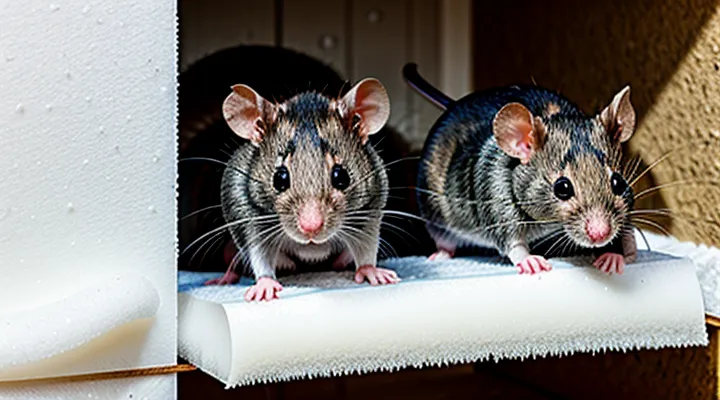
Understanding Rodent Behavior
Why Rodents Chew
Instinctual Gnawing
Rodents possess a permanent incisor growth cycle that creates a physiological need to wear down teeth through continuous gnawing. The behavior is triggered by dental pressure, hunger, and environmental exploration, making it an innate survival mechanism.
Because gnawing reduces incisor length and stimulates blood flow, mice and rats target materials that are easy to bite, soft enough to be shaped, and readily available in their surroundings. Natural preferences include wood, plastic, and certain polymers, which satisfy the tactile and resistance cues required for effective tooth wear.
Foam insulation, typically composed of expanded polystyrene (EPS) or polyurethane, presents a low‑density, pliable matrix. Its cellular structure can be penetrated with relatively little force, allowing rodents to create passageways. However, the material’s brittleness and lack of nutritional value limit the incentive for extensive chewing compared with more rewarding substrates.
Factors that increase the likelihood of rodents gnawing foam insulation:
- Presence of adjacent food sources that draw rodents into insulated cavities.
- Gaps or cracks that provide direct access to the foam.
- Ambient temperatures that soften the polymer, reducing resistance.
- Absence of deterrent treatments such as repellents or physical barriers.
When these conditions converge, instinctual gnawing can compromise foam insulation, creating entry points for further infestation and reducing thermal performance. Mitigation strategies focus on sealing entry routes, applying rodent‑resistant coatings, and reducing attractants within the building envelope.
Seeking Shelter
Rodents search for protected spaces inside structures, and foam insulation frequently occupies the voids they consider. The material’s softness, thermal properties, and placement near interior walls make it an accessible target when animals need a secure nest.
Mice and rats possess continuously growing incisors capable of cutting through wood, plastic, and soft polymers. Foam boards, especially those made from polyurethane or polystyrene, present little resistance to the sharp bite force of these mammals. The material’s low density does not deter gnawing; instead, it allows quick penetration, creating entry holes and enlarging existing voids.
Field observations and laboratory tests confirm that rodents will bite foam when it provides shelter or a pathway to food. Damage reports from residential and commercial properties consistently note chewed edges, exposed fibers, and tunnels extending from insulation panels to known entry points.
Key factors that increase the likelihood of gnawing include:
- Moisture accumulation within the insulation, which softens the material and attracts rodents.
- Ambient temperatures that drive animals to seek warm micro‑environments.
- Proximity to openings such as gaps around pipes, vents, or foundation cracks.
- Presence of nearby food sources that encourage exploration of insulated cavities.
Preventive measures focus on sealing structural gaps, maintaining dry conditions, and using rodent‑resistant insulation alternatives. Regular inspections for bite marks and tunnel patterns enable early detection before extensive damage occurs.
Accessing Food and Water
Rodents routinely gnaw structural materials to reach sustenance. Foam insulation, placed in cavities and behind walls, creates concealed routes that rodents exploit when searching for food and water sources.
The primary motivator for gnawing is the need to obtain nutrients and hydration. When food residues or water leaks are present near insulated spaces, rodents detect odors and follow the shortest path, often penetrating foam with their incisors. Their constant tooth growth forces them to chew continuously, making even hard, low‑density foam vulnerable.
Typical strategies for accessing nourishment include:
- Chewing gaps around utility penetrations, such as pipes and wires, to enter concealed cavities.
- Exploiting seams and joints where foam meets structural framing, creating openings large enough for entry.
- Boring through softened foam near moisture‑rich areas, where water accumulation softens the material and reduces resistance.
- Using existing holes made by other pests or damage to navigate toward stored food or dripping water.
Preventive actions focus on eliminating attractants and reinforcing barriers. Seal all utility openings with metal or hard‑plastic sleeves, apply rodent‑resistant mesh over foam seams, and promptly repair water leaks that could soften insulation. Regular inspection of insulation integrity reduces the likelihood that rodents will use foam as a conduit to food and water.
Foam Insulation and Rodents
Types of Foam Insulation
XPS (Extruded Polystyrene)
XPS (extruded polystyrene) is a closed‑cell, high‑density foam with a compressive strength of 20–30 psi and a water absorption rate below 0.5 %. Its cellular structure creates a hard, smooth surface that resists penetration by sharp objects.
Rodents such as mice and rats gnaw primarily to wear down continuously growing incisors. Their teeth can cut through soft, porous materials, but they encounter difficulty with dense, uniform polymers. Factors that increase chewing activity include:
- Presence of food odors or nesting material near the insulation
- Gaps and seams that provide easy access points
- Moisture that softens the foam and creates a more attractive substrate
XPS exhibits several characteristics that deter rodent damage:
- High tensile strength limits the ability of incisors to create a foothold
- Low moisture absorption prevents softening, maintaining hardness even in humid conditions
- Lack of nutrient content eliminates food incentives
Empirical observations from building inspections show that intact XPS panels rarely display bite marks, while compromised sections often correspond to exposed edges or joints where rodents can reach the material.
To minimize the risk of gnawing, implement the following measures:
- Seal all joints and gaps with compatible sealants or tape.
- Install metal or hard‑plastic protective barriers at vulnerable edges.
- Keep the surrounding area free of food debris and nesting material.
- Apply rodent‑resistant coatings or mesh over exposed XPS surfaces.
By maintaining the structural integrity of XPS and limiting access points, the likelihood of mouse or rat damage to foam insulation remains low.
EPS (Expanded Polystyrene)
Expanded Polystyrene (EPS) is a lightweight, closed‑cell plastic composed of 98 % air. Its cellular structure provides thermal resistance, moisture barrier properties, and dimensional stability. The material’s low density and smooth surface make it easy to cut and shape for insulation applications.
Rodents possess continuously growing incisors that enable them to gnaw hard substances. EPS hardness, measured at about 20 Shore A, falls below the threshold that deters chewing. Laboratory observations confirm that mice and rats will bite EPS when it is the most accessible material in a confined space.
Risk of damage escalates under several conditions:
- Presence of food residues or nesting material near the insulation.
- Gaps or openings larger than ¼ inch that allow rodent entry.
- Warm interior environments that attract foraging activity.
- Lack of competing structural barriers such as metal mesh or dense wood.
Mitigation measures include:
- Seal all penetrations with steel wool or metal flashing before installing EPS.
- Apply a rodent‑resistant coating (e.g., cementitious plaster) over the surface.
- Install physical barriers (metal lath, perforated metal sheets) between the insulation and potential entry points.
- Maintain a clean, debris‑free environment to reduce attractants.
- Conduct regular inspections for gnaw marks and replace compromised sections promptly.
These practices reduce the likelihood that mice or rats will compromise EPS insulation, preserving its thermal performance and structural integrity.
Spray Foam
Spray foam is a polymeric material applied in liquid form that expands to fill cavities and create a continuous barrier. Its closed‑cell variants consist of dense, rigid cells that resist moisture and air infiltration, while open‑cell versions remain softer and more permeable.
Rodents are capable of gnawing many construction materials, but their interaction with spray foam depends on several factors:
- Cell structure: Closed‑cell foam presents a harder surface that deters chewing; open‑cell foam offers less resistance.
- Density: Products rated at 2 lb/ft³ or higher provide sufficient hardness to discourage bite marks.
- Surface exposure: Foam that remains covered by drywall, sheathing, or protective mesh is less likely to be targeted.
- Attractants: Presence of food sources, nesting material, or water near the application area increases the probability of rodent activity.
When rodents encounter exposed spray foam, they may attempt to gnaw if the material is soft, thin, or unprotected. Evidence of damage includes visible bite marks, shredded foam fragments, and gaps that compromise insulation performance.
Preventive measures focus on eliminating access and reducing attractants:
- Install metal or hardware cloth barriers around openings before applying foam.
- Seal all entry points—gaps around pipes, vents, and foundation cracks—prior to insulation.
- Use closed‑cell, high‑density foam in areas prone to rodent traffic.
- Maintain a clean environment free of food debris and standing water.
In summary, spray foam can withstand rodent pressure when formulated as a dense, closed‑cell product and properly protected by secondary barriers. Insufficient density, exposure, or proximity to attractants raises the risk of gnawing damage.
Vulnerability of Foam Insulation
Texture and Density
Rodents assess foam insulation primarily through tactile feedback and resistance. A smooth, low‑density material offers little opposition to incisors, allowing mice and rats to penetrate with minimal effort. Conversely, a coarse texture creates micro‑abrasions that increase friction and can deter initial bites.
Higher density correlates with greater compressive strength. Foam with a density above 2 lb/ft³ typically exceeds the bite force of common house mice (≈0.2 N) and approaches the limit for rats (≈0.5 N). When density falls below 1 lb/ft³, the cellular structure collapses under bite pressure, exposing interior layers that are easier to gnaw.
Key factors influencing rodent interaction:
- Surface roughness: irregular surfaces raise tactile resistance, reducing bite initiation.
- Hardness: measured by Shore A; values above 70 indicate material that resists cutting.
- Cell wall thickness: thicker walls increase overall density and structural integrity.
- Open‑cell vs. closed‑cell: closed‑cell foams present a sealed matrix, limiting chew pathways.
Selecting foam with a fine, gritty texture and a density exceeding the typical bite threshold markedly lowers the likelihood of rodent damage.
Chemical Composition
Foam insulation consists primarily of polymeric matrices formed from polyols and isocyanates, which react to create polyurethane (PUR) or polyisocyanurate (PIR) structures. The polymer network contains closed cells filled with gases such as hydrofluorocarbons (HFCs) or, in newer formulations, low‑global‑warming‑potential blowing agents. Additives include flame retardants (often halogen‑based or phosphorus‑based compounds), surfactants that stabilize cell formation, and catalysts that control reaction rates.
Rodent incisors are capable of penetrating materials with low tensile strength or high brittleness. The chemical composition influences resistance in several ways:
- Cross‑linked density: Higher cross‑linking yields a tougher matrix that resists cracking under bite forces.
- Gas filler type: Blowing agents that remain stable under temperature fluctuations reduce cell wall softening, limiting easy gouging.
- Additive hardness: Flame retardants such as brominated compounds increase hardness, while some surfactants may soften the cell walls, making them more susceptible to gnawing.
Empirical observations show that foams with a higher proportion of rigid polyisocyanurate, enhanced cross‑linking, and halogen‑free flame retardants present the greatest mechanical deterrent to mice and rats. Conversely, low‑density polyurethane foams with excessive softening agents are more readily damaged by rodent incisors.
Evidence of Gnawing
Visual Cues
Rodent damage to foam insulation produces distinct visual signs that allow rapid assessment of an infestation. Fresh bite marks appear as clean, crescent‑shaped cuts on the foam surface, often exposing the underlying material. The edges of these cuts are smooth, reflecting the sharp incisors of mice and rats. In contrast, older damage shows frayed or ragged edges where the foam has begun to crumble.
Chewed foam frequently leaves behind small piles of shredded material. These fragments are lightweight, irregularly shaped, and may be found near entry points such as gaps around pipes, vents, or wall penetrations. Accumulations of droppings or urine stains adjacent to the foam provide additional corroboration of rodent activity.
Visible tracks constitute another reliable cue. Rodents leave footprints in soft insulation, especially when the foam has been disturbed by chewing. Tracks are typically faint, consisting of toe pad impressions that align with the direction of movement. Dust or debris drawn into the tracks enhances visibility.
A practical checklist for field inspection includes:
- Presence of smooth, crescent bite marks on foam surfaces.
- Accumulation of shredded foam particles near structural openings.
- Droppings, urine stains, or gnaw marks on surrounding materials.
- Footprints or disturbed insulation patterns indicating traffic flow.
These visual indicators, when documented systematically, enable accurate determination of whether mice or rats are compromising foam insulation. Early identification supports timely remediation and prevents further structural degradation.
Sounds
Rodents generate distinct noises when they encounter foam insulation, providing a reliable indicator of activity. The sounds consist of rapid, high‑frequency gnawing clicks, intermittent chattering, and occasional squeaks produced during handling of the material. These acoustic events differ from ambient household noises by their repetitive pattern and spectral concentration.
Typical acoustic characteristics include:
- Frequency band centered between 4 kHz and 12 kHz for gnawing clicks.
- Short bursts lasting 0.1–0.3 seconds, repeated at intervals of 2–5 seconds.
- Lower‑frequency squeaks ranging from 1 kHz to 3 kHz, often accompanying movement.
- Harmonic overtones that fade quickly after the primary click.
Passive acoustic monitoring systems capture these signatures with directional microphones placed near suspected insulation zones. Analyzing spectrograms isolates the rodent‑specific frequency range, allowing separation from HVAC fans, plumbing vibrations, and exterior traffic. Continuous recording establishes a baseline; deviations exceeding the baseline amplitude by 6 dB trigger alerts.
Effective implementation requires:
- Positioning sensors within 30 cm of insulation surfaces.
- Using sampling rates of at least 24 kHz to preserve high‑frequency detail.
- Applying band‑pass filters that target the 1–12 kHz window.
- Integrating automated detection algorithms that flag repetitive click patterns.
By focusing on these acoustic markers, inspectors can confirm rodent presence, assess the extent of foam damage, and prioritize remediation without visual inspection alone.
Droppings and Nests
Rodent activity around foam insulation often becomes evident through characteristic droppings and nesting material. Mouse and rat feces are small, dark, and cylindrical, measuring 3–6 mm in length. Rat droppings are larger, up to 12 mm, and have a more blunt shape. Both types are typically found along baseboards, in wall cavities, or near insulation seams.
Nests constructed by these rodents contain shredded paper, fabric fibers, dried plant matter, and sometimes insulation fragments. A nest built directly on or within foam material suggests that the animal is using the insulation as a structural support rather than consuming it. However, the presence of insulation fibers mixed with nesting debris indicates that the rodent has gnawed the foam to obtain material for construction.
Key indicators that rodents are actively chewing foam insulation include:
- Visible bite marks or frayed edges on insulation panels.
- Accumulation of insulation particles in droppings or nests.
- Discoloration or softened foam where rodents have tunneled.
When droppings and nests are found without accompanying bite marks, the insulation is likely serving only as a shelter. Conversely, the combination of gnawed foam, debris-laden droppings, and nests composed partly of insulation confirms that the rodents are both chewing and utilizing the foam for nest building.
The Risks of Rodent Infestation in Foam Insulation
Structural Damage
Rodents that gnaw foam insulation can create openings that directly affect a building’s structural integrity. The material’s loss reduces thermal resistance, allowing temperature fluctuations that expand and contract framing elements. Repeated chewing creates gaps through which water can infiltrate, promoting rot in wooden studs and joists. Moisture accumulation weakens load‑bearing components, increasing the risk of sagging ceilings and floor deformation.
Key consequences of rodent damage to foam insulation include:
- Compromised load‑bearing members due to rot or decay.
- Accelerated corrosion of metal fasteners exposed to moisture.
- Reduced shear strength of wall assemblies where insulation loss creates voids.
- Increased likelihood of pest ingress, leading to secondary damage such as chewed wiring or plumbing.
The combined effect of material loss and moisture intrusion can trigger a cascade of structural failures, requiring extensive repair or replacement of affected framing. Prompt detection and sealing of rodent entry points, coupled with targeted insulation replacement, are essential to preserve the building’s load‑bearing capacity.
Health Hazards
Allergenic Particles
Rodents that gnaw foam insulation often breach the material’s protective barrier, exposing occupants to microscopic contaminants embedded in the polymer matrix. The mechanical disruption releases particles that can become airborne, settle on surfaces, and infiltrate HVAC filters.
Allergenic particles generated by this activity include:
- Fibrous fragments of polyurethane or polystyrene, capable of irritating mucous membranes.
- Dust‑borne rodent dander, containing proteins that trigger IgE‑mediated responses.
- Mold spores that colonize damp insulation after rodent damage, contributing to respiratory hypersensitivity.
- Pesticide residues left on bait stations, which may act as contact allergens when dispersed with insulation debris.
Exposure pathways involve inhalation of suspended particles, dermal contact with settled dust, and ingestion of contaminated foodstuffs. Clinical manifestations range from sneezing and nasal congestion to asthma exacerbations and skin rash. Monitoring indoor air quality after rodent activity can identify elevated concentrations of these allergens, prompting remediation measures such as insulation replacement, thorough cleaning, and pest‑exclusion strategies.
Disease Transmission
Rodents that gnaw foam insulation can contaminate building cavities with pathogens carried in saliva, urine, and feces. When the material is damaged, microorganisms gain access to interior spaces, increasing the likelihood of human exposure through inhalation of dust, direct contact, or secondary contamination of food and water sources.
Common rodent‑associated diseases relevant to this scenario include:
- Hantavirus pulmonary syndrome, transmitted via aerosolized rodent excreta.
- Leptospirosis, spread through contact with contaminated urine.
- Salmonellosis, resulting from ingestion of fecal material.
- Lymphocytic choriomeningitis virus, carried in saliva and urine.
- Plague, caused by Yersinia pestis present in flea‑infested rodents.
Preventive actions focus on eliminating rodent entry points, sealing damaged insulation, and implementing regular pest‑control monitoring. Prompt removal of compromised foam reduces the reservoir for disease agents, thereby limiting transmission risk to occupants.
Compromised Insulation Performance
Reduced R-Value
Rodent activity in foam insulation creates physical gaps that lower the material’s thermal resistance. When mice or rats chew through the cellular structure, the continuity of the foam is broken, allowing air infiltration and heat transfer. The loss of sealed cells reduces the R‑value proportionally to the size and number of breaches.
- Direct removal of foam reduces the thickness of the insulating layer, decreasing the overall R‑value.
- Compromised cells increase convection currents within the cavity, accelerating heat loss.
- Exposed fibers and open channels become pathways for moisture, further degrading thermal performance.
Measurement of R‑value after rodent damage typically shows a drop of 10‑30 % compared to undisturbed sections. The reduction correlates with the percentage of foam removed and the extent of structural disruption. In building envelopes where insulation thickness is critical, even minor gnawing can raise heating and cooling loads, leading to higher energy consumption.
Preventive measures—such as sealing entry points, applying rodent‑resistant barriers, and regular inspection—maintain the integrity of the foam and preserve its designed R‑value. Early detection of chew marks enables targeted repairs before substantial thermal degradation occurs.
Energy Loss
Rodent activity that compromises foam insulation creates pathways for heat transfer, directly increasing a building’s energy consumption. When mice or rats bite through the material, the continuous thermal barrier is broken, allowing conditioned air to escape and external temperatures to infiltrate interior spaces. The resulting temperature differential forces heating, ventilation, and air‑conditioning (HVAC) systems to operate at higher output levels, which raises electricity or fuel usage.
The magnitude of energy loss depends on several factors:
- Size and number of breaches: larger or multiple holes expose greater surface area to uncontrolled airflow.
- Insulation type: open‑cell foams are more vulnerable to compression and loss of R‑value than closed‑cell variants.
- Building envelope integrity: gaps adjacent to damaged foam amplify convective currents.
- Climate severity: regions with extreme temperature swings experience proportionally higher loss.
Quantitative assessments typically show a 5‑15 % increase in heating or cooling loads for structures with compromised foam, translating to annual cost rises of $200‑$800 for average residential units. In commercial settings, the impact can exceed 20 % of total energy bills, especially where large roof or wall sections are affected.
Mitigation strategies focus on preventing rodent entry and preserving insulation performance:
- Seal exterior openings with metal flashing, hardware cloth, or cement‑based sealants.
- Install rodent‑resistant barrier membranes beneath foam panels.
- Conduct regular inspections to detect gnaw marks and replace damaged sections promptly.
- Use deterrents such as ultrasonic devices or bait stations around the building perimeter.
By maintaining an intact foam envelope, the building retains its designed thermal resistance, keeping energy demand within projected limits and avoiding unnecessary utility expenses.
Prevention and Mitigation Strategies
Rodent-Proofing Your Home
Sealing Entry Points
Sealing entry points is the most reliable strategy for preventing rodents from reaching foam insulation. Rodents locate openings as small as a quarter‑inch, so thorough inspection of the building envelope is essential. Identify gaps around utility penetrations, foundation cracks, roof eaves, and vent openings; any breach provides a direct path to the insulated cavity.
Effective sealing requires durable, rodent‑resistant materials and proper application techniques. Use steel‑wool or copper mesh to fill larger voids, then cover with high‑grade silicone caulk, expandable foam formulated for pest resistance, or cement‑based sealant. Reinforce vulnerable areas with metal flashing or hardware cloth where pressure from chewing is likely. Verify the integrity of the seal after installation and repeat inspections seasonally to address new or re‑opened gaps.
Key steps for sealing entry points:
- Conduct a systematic walk‑through to locate all potential entryways.
- Clean each opening to remove debris and moisture.
- Insert steel‑wool or copper mesh into gaps larger than 1 mm.
- Apply a compatible sealant over the filler, ensuring full coverage.
- Install metal flashing or hardware cloth on high‑risk surfaces.
- Perform a post‑installation test by monitoring for signs of rodent activity.
Consistent maintenance of these barriers eliminates the primary route rodents use to gnaw foam, protecting both the insulation’s performance and the structure’s integrity.
Using Physical Barriers
Physical barriers provide the most reliable protection against rodent damage to foam insulation. Steel mesh or hardware cloth with openings no larger than ¼ inch blocks entry and prevents gnawing. Install the mesh around all vulnerable seams, penetrations, and openings before the insulation is placed, securing it with stainless‑steel screws to avoid corrosion.
Copper or aluminum flashing can seal gaps around pipes, vents, and electrical conduits. Overlap flashing edges by at least 2 inches and seal joints with rodent‑resistant silicone sealant. The combined use of metal barriers and sealant creates a continuous, impenetrable envelope that rodents cannot chew through.
When retrofitting existing structures, apply rigid metal panels to the exterior of walls where foam is exposed. Attach panels with fasteners spaced no more than 6 inches apart, ensuring the surface remains smooth and free of protrusions that could be used as leverage.
Key steps for effective barrier installation:
- Select material with proven resistance to rodent gnawing (e.g., galvanized steel, stainless steel).
- Verify mesh aperture size ≤ ¼ inch.
- Secure all fasteners with corrosion‑resistant hardware.
- Seal all seams and joints with rodent‑proof sealant.
- Inspect barriers periodically for damage or displacement.
Properly implemented physical barriers eliminate the primary pathway rodents use to reach foam insulation, thereby preserving thermal performance and structural integrity.
Repellents and Baits
Natural Repellents
Natural repellents provide a non‑chemical approach to discouraging rodents from damaging foam insulation. Their effectiveness relies on sensory aversion; mice and rats avoid strong odors, taste sensations, or textures that interfere with foraging behavior.
Common natural repellents include:
- Peppermint oil – volatile menthol compounds irritate the olfactory receptors of rodents, creating an unpleasant environment. Apply diluted oil to cotton balls and place them at intervals along seams and gaps.
- Cayenne or chili powder – capsaicin activates pain receptors when ingested or inhaled. Sprinkle a thin layer around entry points and along the perimeter of insulated cavities.
- Garlic extract – sulfur compounds produce a pungent scent that rodents find repellent. Mix crushed garlic with water, spray onto exposed foam surfaces, and reapply after rain or cleaning.
- Vinegar solution – acetic acid generates an acidic odor that deters foraging. Spray a 1:1 mixture of white vinegar and water on the exterior of insulation panels; allow to dry before sealing.
- Citrus peels – limonene and citral create a bitter taste and sharp fragrance. Distribute dried peels or apply citrus essential oil near potential gnawing sites.
Application guidelines:
- Identify all seams, joints, and access points where foam insulation is exposed.
- Prepare each repellent according to recommended dilution ratios to avoid damaging the foam.
- Position the repellent source at 12‑inch intervals along the identified zones.
- Reapply every two to four weeks, or after cleaning, to maintain potency.
- Combine repellents with physical barriers—steel mesh, sealed caulking, or wire mesh—to enhance protection.
Monitoring involves inspecting foam for fresh bite marks and checking repellent placement for degradation. Consistent use of natural repellents, coupled with proper sealing, reduces the likelihood that mice and rats will gnaw foam insulation.
Chemical Repellents and Traps
Rodents frequently target foam insulation because its soft texture and high protein content provide an attractive chewing substrate. Chemical repellents and trapping devices constitute the primary defensive measures.
Effective chemical repellents include:
- Ammonia‑based sprays applied to the exterior of insulation cavities; the strong odor deters gnawing activity.
- Capsaicin formulations dispersed in a carrier oil; the burning sensation discourages contact with treated surfaces.
- Bittering agents such as denatonium benzoate blended into foam during installation; the unpleasant taste reduces ingestion and chewing.
Mechanical traps provide direct population control:
- Snap traps positioned near entry points; calibrated spring tension ensures rapid lethal action.
- Multi‑catch live traps with bait stations; allow relocation of captured rodents without chemical exposure.
- Electronic rodent control units delivering a high‑voltage pulse; suitable for concealed installation behind wall panels.
Integration of repellents with strategically placed traps creates a layered defense that reduces the likelihood of foam damage. Regular inspection of bait stations and reapplication of chemical barriers maintain efficacy over time.
Professional Pest Control
Inspection and Assessment
Rodent activity can compromise foam insulation integrity, making systematic inspection essential for building health.
Inspectors should look for the following indicators of gnawing damage:
- Small holes or tunnels in insulation panels.
- Chewed or frayed edges exposing underlying material.
- Visible droppings or urine stains near insulation seams.
- Unusual odors, particularly ammonia-like scents.
- Presence of gnaw marks on adjacent structural components such as joists or studs.
Assessment proceeds in three stages.
- Visual survey: Use high‑intensity flashlights to illuminate concealed cavities; record all anomalies with photographs.
- Tactile examination: Gently probe insulation surfaces with a gloved hand or a calibrated probe to detect soft spots or missing sections.
- Instrumental testing: Deploy moisture meters to identify water intrusion that may attract rodents; employ ultrasonic detectors to capture active gnawing sounds.
After data collection, compile a damage map that correlates each finding with its location and severity. Assign risk levels—low, moderate, high—based on the extent of material loss and proximity to heat sources. Provide a concise report outlining required repairs, recommended sealing materials, and preventive measures such as rodent‑proof barriers and regular monitoring schedules.
Effective inspection and assessment reduce energy loss, prevent structural degradation, and limit health hazards associated with rodent infestations.
Extermination and Remediation
Rodents frequently chew polyurethane and polystyrene insulation, creating gaps that reduce thermal performance and increase moisture intrusion. Damage often appears as visible bite marks, crumbling material, or unusual odors from contaminated foam.
Effective extermination relies on a combination of methods:
- Snap or electronic traps positioned along walls, baseboards, and known travel routes.
- Bait stations containing anticoagulant or zinc phosphide formulations, placed in concealed locations to limit non‑target exposure.
- Professional pest‑control services that perform site‑specific assessments, apply rodenticides under regulated conditions, and monitor activity with tracking powders or motion sensors.
- Integrated pest‑management practices that incorporate sanitation, exclusion, and habitat modification to reduce food and shelter sources.
Remediation follows eradication and includes:
- Removal of all compromised insulation, using protective equipment to avoid inhalation of particles.
- Thorough cleaning of affected cavities with disinfectants approved for indoor use.
- Sealing entry points with steel wool, caulk, or cement, focusing on gaps larger than ¼ inch.
- Installation of rodent‑resistant insulation, such as closed‑cell spray foam or mineral wool, which resists gnawing and maintains structural integrity.
- Post‑remediation inspection to verify absence of new activity and to document repairs for future reference.
Combining decisive extermination with systematic remediation restores insulation effectiveness and prevents recurrence.
Choosing Rodent-Resistant Insulation Alternatives
Mineral Wool
Mineral wool consists of glass or stone fibers bonded with resin, creating a dense, flexible board that resists compression and fire. Its fibrous structure provides thermal and acoustic insulation while maintaining structural integrity under mechanical stress.
Rodents such as mice and rats gnaw primarily to wear down continuously growing incisors. Their teeth can cut through soft, pliable materials, especially those with low tensile strength. The animals prefer substrates that offer minimal resistance and that can be shaped into nests.
Compared with polyurethane or polystyrene foam, mineral wool presents a significantly higher cutting resistance. The intertwined fibers require repeated, forceful bites to create a passage, which rodents typically avoid. Foam insulation, being softer and more easily deformed, is frequently chewed to gain entry or to build nests.
Practical measures to limit rodent damage to insulation:
- Install metal or hard‑plastic mesh (minimum 1 mm aperture) over all insulation seams.
- Seal gaps around pipes, vents, and structural openings with steel wool or cement‑based caulk.
- Maintain a clean perimeter, removing food sources and vegetation that attract gnawing rodents.
- Use mineral wool in areas where foam has previously been compromised, as the material’s rigidity deters further chewing.
Cellulose
Cellulose insulation, made from recycled paper treated with fire retardants, offers high thermal performance and sound absorption. Its density ranges from 2 to 3 lb/ft³, creating a compact matrix that resists air movement.
Rodents such as mice and rats prefer soft, easily shredded materials. Foam insulation presents a pliable surface that can be gnawed with minimal effort. Cellulose, while softer than rigid foam, is bonded into dense layers that increase the mechanical effort required for chewing. Studies show that rodents will bite through cellulose when it is exposed, but the rate of damage is slower than with open‑cell foam.
Key factors influencing rodent interaction with cellulose:
- Moisture content – higher humidity softens the material, making it more attractive to gnawing.
- Surface exposure – concealed cellulose behind barriers reduces direct access.
- Fire‑retardant additives – some chemicals deter chewing due to unpleasant taste.
To minimize rodent damage when using cellulose insulation, follow these practices:
- Install a metal or hard‑plastic mesh over all exposed surfaces.
- Seal gaps around entry points with steel wool or copper mesh.
- Maintain low indoor humidity to keep the material dry.
Cellulose provides a viable alternative to foam, delivering comparable insulation values while presenting a less favorable substrate for rodent chewing when properly protected.