
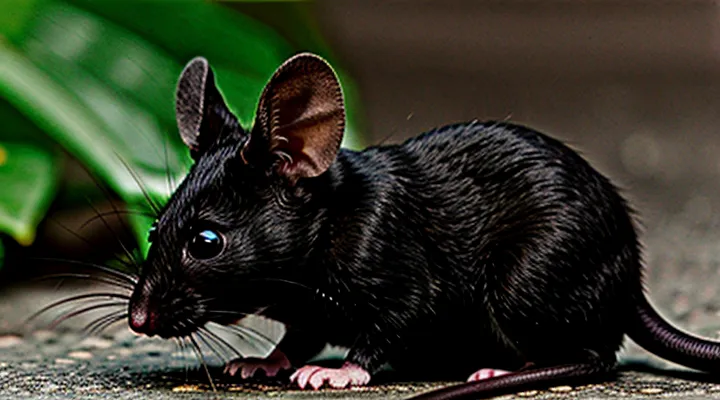
Understanding Mouse Coat Color Genetics
Melanin Production and Pigmentation
Melanin is the primary pigment responsible for dark coloration in mammalian fur. Two forms exist: eumelanin, which produces black and brown hues, and pheomelanin, which yields red and yellow tones. The synthesis pathway begins with the oxidation of the amino acid tyrosine by the enzyme tyrosinase, followed by a series of reactions that convert dopaquinone into either eumelanin or pheomelanin depending on the activity of downstream enzymes and the availability of cysteine.
The balance between eumelanin and pheomelanin is regulated by genetic factors. The melanocortin‑1 receptor (MC1R) influences the switch toward eumelanin production when activated; loss‑of‑function mutations in MC1R shift the pathway toward pheomelanin. Additional genes such as ASIP (agouti signaling protein) and TYRP1 (tyrosinase‑related protein 1) modulate enzyme activity and melanosome maturation, thereby affecting pigment intensity.
In laboratory mice, the black coat phenotype results from high eumelanin levels driven by functional MC1R and associated alleles that enhance tyrosinase activity. Specific strains, including C57BL/6 and Black 6, carry alleles that sustain continuous eumelanin synthesis, producing uniformly dark fur. Mutations that diminish MC1R signaling generate lighter coats, demonstrating the direct link between melanin biochemistry and observable coat color.
Understanding melanin production in mice informs studies of pigmentation disorders, evolutionary adaptation, and genetic engineering. The black coat serves as a readily observable marker for gene‑editing experiments, allowing researchers to track inheritance patterns and assess the functional impact of targeted mutations on pigment pathways.
Genetic Loci Influencing Coat Color
The inquiry into the presence of black‑coated rodents hinges on the genetic mechanisms that determine fur pigmentation. In laboratory and wild populations of the house mouse, several loci govern the synthesis, distribution, and type of melanin, thereby shaping coat color.
Key genetic regions include:
- Mc1r (melanocortin‑1 receptor) – encodes a receptor that promotes eumelanin production; activating mutations increase black pigment.
- Agouti (A) – produces an antagonist of MC1R; loss‑of‑function alleles remove the inhibitory effect, allowing darker coloration.
- Kit – influences melanocyte development; certain alleles reduce melanocyte number, affecting overall pigment intensity.
- Tyrosinase (Tyr) – catalyzes the initial step of melanin synthesis; functional copies are required for any melanin deposition.
- Sox10 – regulates melanocyte differentiation; mutations can lead to pigment dilution or loss.
- Crc (cocoa) – modulates melanin type; recessive variants shift balance toward eumelanin, deepening coat shade.
The interaction among these loci follows a hierarchical pattern: functional MC1R combined with recessive Agouti alleles produces a uniform black coat, whereas dominant Agouti or defective MC1R results in lighter or patterned fur. Epistatic relationships, such as the suppression of Kit‑induced melanocyte deficits by strong MC1R activity, further refine phenotype expression.
Empirical studies in Mus musculus demonstrate that black fur arises when the dominant MC1R allele co‑occurs with recessive Agouti alleles and intact TYR function. Crosses between black‑coated and non‑black strains consistently yield progeny whose coat color predicts the inheritance of these specific alleles, confirming the genetic basis for the existence of black mice.
Common Mouse Species and Their Color Variations
House Mouse («Mus musculus»)
The house mouse (Mus musculus) is a small rodent that inhabits human structures worldwide. Its natural coat color ranges from light brown to gray, but genetic variation can produce darker pigmentation, including black fur.
Melanism in Mus musculus results from mutations in the melanocortin‑1 receptor (MC1R) gene or other pigmentation pathways. These mutations increase melanin production, yielding a uniformly dark or black coat. Such individuals appear sporadically in wild populations and are more common in laboratory strains deliberately bred for dark coloration.
Key characteristics of black‑coated house mice:
- Genetic basis: MC1R gain‑of‑function alleles; occasional involvement of other pigment genes.
- Distribution: Found in urban and rural settings where standard coloration is present; not limited to a specific geographic region.
- Behavior and ecology: No documented differences in diet, reproduction, or habitat preference compared to typical‑colored conspecifics.
- Laboratory relevance: Dark‑fur strains (e.g., C57BL/6) serve as standard models for biomedical research, providing consistent genetic backgrounds.
Observations confirm that black mice are a phenotypic variant of the house mouse rather than a separate species. Their existence answers the inquiry about black coloration within this common rodent.
Wild-Type vs. Domesticated Strains
Black fur appears in both natural populations and inbred laboratory lines, confirming the existence of dark‑colored mice across environments.
In the wild, melanism results from spontaneous mutations that affect pigment production pathways. Populations of the house mouse (Mus musculus) display black individuals at low frequencies, typically below 5 % of local cohorts. These specimens are recorded in agricultural fields, coastal dunes, and urban peripheries where selective pressures such as predation or camouflage may favor darker coats. Genetic analyses identify variants in the melanocortin‑1‑receptor (Mc1r) gene and downstream melanin synthesis enzymes as primary drivers of the phenotype.
Domesticated strains exhibit black coats through intentional selection. Inbred laboratory lines such as C57BL/6J, DBA/2J, and BALB/c‑Black carry fixed alleles that produce uniform eumelanin deposition. The responsible mutations include a loss‑of‑function allele at the agouti locus (a) and a dominant black allele (B) at the coat‑color locus. Breeding programs maintain homozygosity, yielding mice with consistent black fur, predictable genetics, and reduced phenotypic variability.
Key distinctions between wild‑type melanistic mice and laboratory black strains are:
- Genetic origin: spontaneous mutation (wild) vs. fixed, selected allele (domestic).
- Population frequency: sporadic occurrence (wild) vs. 100 % of individuals within a strain (domestic).
- Ecological role: adaptive camouflage or predator avoidance (wild) vs. experimental standardization (domestic).
- Behavioral profile: variable, influenced by local environment (wild) vs. controlled, laboratory‑adapted behavior (domestic).
Both categories demonstrate that black fur is a viable phenotype, but its prevalence, genetic stability, and ecological relevance differ markedly between natural and captive contexts.
Deer Mouse («Peromyscus maniculatus»)
The inquiry about the presence of melanistic rodents often leads to the deer mouse, Peromyscus maniculatus, a widespread North American species. This mammal inhabits forests, grasslands, and alpine zones, demonstrating adaptability to diverse climates.
Peromyscus maniculatus exhibits a typical dorsal coat of brown to gray fur, but genetic variation can produce a markedly dark, almost black pelage. The melanism results from increased melanin production, a trait documented in multiple populations across the continent. While the standard coloration dominates, documented specimens confirm that black individuals occur naturally without selective breeding.
Key points regarding the species and its relevance to the black‑mouse question:
- Taxonomy: Rodentia, family Cricetidae, genus Peromyscus.
- Habitat range: Canada to northern Mexico, from sea level to elevations above 3,000 m.
- Size: Head‑body length 80–110 mm; tail length comparable to body.
- Diet: Omnivorous; seeds, insects, and plant material.
- Melanistic frequency: Low but documented; incidence varies with geographic region and population genetics.
The existence of naturally occurring black fur in Peromyscus maniculatus provides concrete evidence that black mice are not solely a product of laboratory strains or artificial selection. Their presence in the wild confirms that melanism is a legitimate, albeit rare, phenotypic expression within the species.
Other Notable Mouse Species
The question of whether black mice occur prompts examination of the broader diversity within the Muridae family. Various species exhibit distinct coat colors, habitats, and behavioral traits that illustrate the range of mouse morphology.
- House mouse (Mus musculus) – Cosmopolitan rodent, adaptable to human environments, typically gray‑brown but occasional melanistic individuals reported.
- Deer mouse (Peromyscus maniculatus) – North American species, reddish‑brown dorsal fur, white underparts; occupies forests, fields, and suburban areas.
- Wood mouse (Apodemus sylvaticus) – Common in Europe and parts of Asia, brown to gray dorsal coat, notable for its ability to climb and leap.
- Field mouse (Apodemus agrarius) – Found across Eurasia, brownish dorsal fur with a distinct stripe along the spine; prefers grasslands and cultivated fields.
- African pygmy mouse (Mus minutoides) – One of the smallest murids, dark brown to blackish fur, inhabits savannas and scrublands throughout sub‑Saharan Africa.
- Harvest mouse (Micromys minutus) – Tiny European species, reddish‑brown dorsal coloration, specialized for dense vegetation and reed beds.
These species demonstrate that melanism, while uncommon, appears across multiple lineages. The presence of dark‑coated individuals in several taxa confirms that black coloration is a natural, albeit rare, variation within the mouse clade.
The Reality of Black Mice in Nature
Melanism as a Natural Variation
Melanism refers to the overproduction of melanin, the pigment responsible for dark coloration in mammals. In mice, the trait results from mutations in genes such as Mc1r and Agouti, which regulate melanin synthesis. These mutations produce a dominant or recessive phenotype that yields uniformly black fur, eyes, and sometimes skin.
Black coloration appears in wild populations of the common house mouse (Mus musculus) and related species. Field surveys document black individuals in Europe, North America, and parts of Asia, often at frequencies ranging from less than one percent to several percent within local colonies. Laboratory colonies maintain black strains through selective breeding, providing controlled material for genetic analysis.
The persistence of melanistic mice reflects several selective pressures. Dark fur can enhance camouflage in shadowed habitats, reduce heat loss in colder climates, and influence social signaling. Conversely, increased visibility to predators in open environments may limit the trait’s prevalence. Geographic variation in predator communities and climate correlates with observed differences in melanism rates.
Key factors influencing melanism in rodent populations include:
- Genetic mutation: specific alleles at melanin‑regulating loci.
- Environmental temperature: colder regions favor darker coats for thermoregulation.
- Habitat structure: dense vegetation or rocky substrates increase the advantage of cryptic coloration.
- Predator composition: visual predators reduce the fitness of conspicuous individuals.
Scientific literature confirms that black mice are not anomalies but a natural variation maintained by a balance of genetic inheritance and ecological selection.
Adaptive Advantages of Darker Coats
The inquiry into the occurrence of black-furred mice raises a biological question: why do some individuals develop a darker pelage? Darker coats provide several measurable benefits that enhance survival and reproductive success.
- Increased concealment in low‑light environments reduces detection by visual predators such as owls, foxes, and snakes.
- Higher melanin concentration improves heat absorption, allowing more efficient thermoregulation during cool periods.
- Enhanced resistance to ultraviolet radiation protects skin and fur from DNA damage, decreasing mutation rates.
- Melanin offers antimicrobial properties that lower susceptibility to skin‑borne pathogens and ectoparasites.
- Dark pigmentation can signal genetic robustness, influencing mate choice in populations where visual cues are relevant.
Empirical studies on laboratory and wild mouse populations demonstrate that individuals with darker fur exhibit higher survival rates in habitats with dense vegetation, shadowed ground cover, and cooler microclimates. These findings explain the persistence of melanistic variants despite their lower frequency in many regions.
Rarity and Distribution
Black mice are uncommon in most mammalian populations. Their dark coat results from a recessive allele that appears only when two carriers mate, limiting the frequency of the phenotype. In wild rodent communities, the allele’s prevalence typically ranges below 1 % of individuals, and in many ecosystems it is absent altogether.
Geographic occurrence reflects both natural selection and human influence:
- Temperate forests of Europe and North America: sporadic sightings, primarily in isolated valleys where inbreeding raises carrier concentration.
- Urban environments worldwide: higher incidence due to dense populations, accidental transport, and reduced predation pressure.
- Islands with introduced rodent species: occasional presence, often linked to ship cargo or deliberate release.
Overall, black mice constitute a rare variant, concentrated in regions where genetic drift, habitat fragmentation, or anthropogenic factors increase the likelihood of homozygous expression.
Black Mice in Laboratory and Pet Settings
Selective Breeding for Specific Traits
Selective breeding manipulates genetic variation to produce mice with a uniform dark coat. The trait is governed primarily by the melanocortin‑1 receptor (Mc1r) gene; recessive alleles generate eumelanin, the pigment responsible for black coloration. Breeders introduce these alleles by crossing individuals that display the phenotype, then interbreeding offspring that retain the trait across successive generations. Over several cycles, the frequency of the black‑coat allele approaches fixation, yielding a stable line of black mice.
Key considerations for this process include:
- Genetic background: Maintaining overall health requires avoiding excessive inbreeding depression; outcrosses to unrelated stock may be necessary before re‑establishing the black phenotype.
- Phenotypic verification: Regular visual inspection and, when available, molecular genotyping confirm that the target allele remains present.
- Environmental factors: Diet and light exposure can influence melanin expression; consistent conditions reduce variability.
- Regulatory compliance: Documentation of breeding protocols satisfies institutional animal‑care standards.
Historical records show that laboratory strains such as C57BL/6, originally derived from black‑furred wild mice, were established through deliberate selection for coat color. Contemporary programs replicate this approach to create black mouse models for research on pigmentation disorders, neurobiology, and visual studies. The existence of black mice therefore results from intentional, multigenerational selection rather than spontaneous appearance in wild populations.
Common Black Mouse Breeds
Black rodents with uniformly dark pelage occur in several recognized breeds, confirming that true black mice are not merely anecdotal.
The most frequently cited pure‑black varieties include:
- Mus musculus “Black” (Laboratory Black) – a standard laboratory strain selected for melanin dominance; coat appears jet‑black, eyes red due to albinism of ocular pigment; widely used in biomedical research.
- C57BL/6 – a widely documented inbred mouse strain; coat uniformly black, genetics well characterized; serves as reference model for immunology and genetics.
- Black Fancy (Pet) – domestic fancy mouse bred for solid black fur; exhibits typical mouse morphology with dark coat extending to tail and ears; popular among hobbyists.
- Black Wildfield – populations of wild house mice (Mus musculus) displaying melanistic traits; occur in urban and rural settings where the melanin allele reaches fixation.
Each breed shares the melanocortin‑1 receptor mutation that suppresses pheomelanin production, resulting in a fully pigmented coat. Distribution ranges from controlled laboratory environments to pet stores and natural habitats where selective pressures favor darker coloration.
The presence of these breeds resolves the question of black mouse existence with empirical evidence across scientific, commercial, and ecological contexts.
Black Fancy Mice
Black fancy mice with a solid black coat represent a distinct colouration within the domestic mouse (Mus musculus) breeding community. The phenotype results from a recessive allele at the a locus that suppresses pigment production, producing a uniform dark appearance across the body, ears, and tail.
These mice display the standard body size, ear shape, and skeletal structure of laboratory strains, while their coat lacks the typical agouti or albino markings. Eye colour typically remains pink or red due to the lack of melanin, a characteristic shared with other pigment‑deficient varieties.
Breeders achieve the black coat through selective mating of carriers carrying the recessive allele. The process involves:
- Identifying heterozygous individuals by genetic testing or pedigree analysis.
- Pairing two carriers to obtain a 25 % probability of black offspring per litter.
- Maintaining line purity by backcrossing black progeny with each other.
In scientific research, black fancy mice serve as a visual marker for genetic studies, facilitating the tracking of inheritance patterns without the need for external dyes or tags. Their uniform coloration also reduces visual variability in behavioural experiments where colour contrast might influence results.
Overall, the existence of black-coated domestic mice is well documented, supported by genetic evidence, breeding practice, and their application in laboratory settings.
C57BL/6 Mouse Strain
The C57BL/6 mouse, often abbreviated as B6, is a widely used inbred laboratory strain characterized by a uniform black coat. Its pigmentation results from a functional melanocortin‑1 receptor (Mc1r) allele that promotes eumelanin production, giving the fur its dark appearance. The strain originated in the 1920s from the C57 lineage and has been maintained through brother‑sister mating for over a century, ensuring genetic stability.
Key attributes of the C57BL/6 strain include:
- Black fur as a reliable phenotypic marker for genetic studies.
- Well‑documented genome sequence, facilitating gene‑editing and knockout experiments.
- Robust breeding performance and high fecundity.
- Consistent behavioral and physiological baselines, making it a reference model for neuroscience, immunology, and metabolic research.
Because the B6 strain naturally exhibits black pigmentation, it provides definitive evidence that mice with completely black fur exist in a controlled, reproducible form. Researchers exploit this trait to track inheritance patterns, validate pigment‑related gene function, and assess the impact of genetic modifications on coat color. The strain’s prevalence in scientific literature underscores its role as a standard model for studying melanogenesis and related disorders.
Distinguishing Black Mice from Other Dark Rodents
Identifying Features of Mice
Mice can be distinguished through a set of anatomical and physiological traits that remain consistent across most species, regardless of coat color. Body length typically ranges from 6 to 10 cm, with a proportionally long, hair‑covered tail equal to or slightly shorter than the body. Ears are large relative to head size, positioned laterally, and covered with fine fur. Whiskers (vibrissae) extend outward from the snout, providing tactile feedback. Dental formula includes continuously growing incisors with orange enamel, a hallmark of rodent dentition.
When assessing a mouse for dark pigmentation, the following features are decisive:
- Fur coloration: Uniformly black or dark brown coat resulting from elevated melanin deposition throughout the hair shaft.
- Skin tone: Pink or light skin beneath the fur may be visible on the ears, paws, and ventral surface; black mice often retain this underlying coloration.
- Eye iris: Dark brown to black irises, lacking the reddish hue common in lighter‑coated individuals.
- Tail and whisker pigmentation: Tail hair and whiskers exhibit the same dark hue as the body coat, indicating systemic melanin expression.
- Genetic markers: Presence of alleles associated with melanism, such as the dominant K allele in laboratory strains, confirms the genetic basis for black fur.
These criteria enable reliable identification of black‑colored mice without reliance on external context or speculative statements.
Differentiating from Voles and Rats
Black mice are frequently confused with voles and rats because of overlapping coloration, but each genus exhibits distinct anatomical and ecological traits.
The mouse (genus Mus) possesses a proportionally long, hairless tail that equals or exceeds head‑body length, large rounded ears, and a pointed snout. Dental formula includes three upper incisors with a single pair of molars. Fur coloration may appear uniformly black, yet the dorsal pelage lacks the brownish or gray tinge common in many voles.
Voles (family Cricetidae, subfamily Arvicolinae) display a short, hair‑covered tail, compact body, and a blunt nose. Their molar pattern is characterized by high crowns and complex enamel ridges, adapted for herbivorous diets. The skull is broader, and the ears are reduced relative to mice. Even when fur is dark, the tail length and fur coverage remain diagnostic.
Rats (genus Rattus) are larger, with a tail that is thick, scaly, and slightly shorter than head‑body length. Ears are proportionally larger than those of voles but smaller than in mice. The incisors are larger and more robust, and the skull exhibits a pronounced occipital plate. Dark‑coated rats retain a brown or gray hue; true black pigmentation is rare.
Key differentiators:
- Tail: mouse – long, naked; vole – short, furred; rat – thick, scaly.
- Ears: mouse – large, rounded; vole – small, hidden; rat – medium, rounded.
- Nose: mouse – pointed; vole – blunt; rat – moderate, slightly pointed.
- Size: mouse – up to 10 cm body length; vole – 5–12 cm; rat – 15–25 cm.
- Dental pattern: mouse – three upper incisors, simple molars; vole – high‑crowned complex molars; rat – larger incisors, robust molars.
Accurate identification relies on measuring tail length relative to body, examining ear size, and inspecting fur coverage on the tail. These criteria eliminate ambiguity when assessing whether a black rodent is a mouse rather than a vole or rat.