
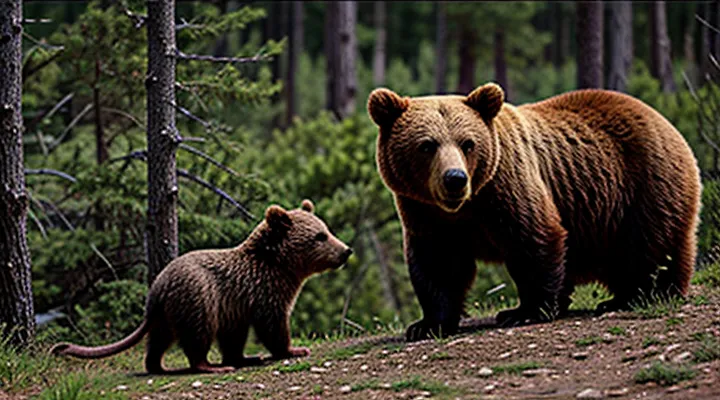
Introduction
The Common Misconception
The belief that large carnivores such as bears are terrified of tiny rodents persists in popular culture. This notion often appears in cartoons and anecdotal stories, yet scientific observation contradicts it.
Researchers have recorded bear behavior in natural habitats and controlled settings. Direct encounters with mice, voles, and similar small mammals show no avoidance response. Bears investigate such prey, sometimes capturing and consuming them. The lack of fear aligns with the species’ opportunistic feeding strategy, which includes a wide range of vertebrate and invertebrate foods.
Key observations supporting the factual picture:
- Field studies in North America document bears sniffing and handling rodents without signs of distress.
- Captive experiments demonstrate that bears will approach and eat mice when presented as food.
- Dietary analyses reveal rodent remains in bear scat, confirming occasional consumption.
The misconception likely originates from anthropomorphic storytelling, where mice symbolize vulnerability and bears represent strength. Visual media amplify the contrast for comedic effect, reinforcing the false narrative.
Current consensus among wildlife biologists is that bears do not exhibit innate fear of mice. Their response is neutral or opportunistic, governed by hunger and curiosity rather than terror.
Defining «Fear» in Animal Behavior
Fear in animal behavior is a specific, measurable response to perceived threat. It combines physiological changes—such as elevated cortisol, increased heart rate, and adrenaline release—with observable actions, including avoidance, freezing, fleeing, or aggressive defense. These components together define the state that researchers label as fear.
Operational definitions rely on quantifiable criteria:
- Hormonal assay results indicating stress hormone spikes.
- Autonomic measurements showing rapid heart or respiration rates.
- Behavioral patterns: rapid retreat, concealment, or defensive posturing.
- Vocalizations or facial expressions characteristic of distress.
Experimental designs isolate fear by presenting stimuli that vary in size, movement, and novelty while controlling for hunger, reproductive status, and prior experience. Comparative studies assess whether large carnivores exhibit consistent fear responses when confronted with small, fast-moving rodents.
Applying this framework to the question of ursine reactions to diminutive rodents clarifies that any claim of fear must be supported by the outlined physiological and behavioral evidence. Without such data, the presence or absence of fear remains speculative.
Understanding Bears
Bear Species and Their Characteristics
Brown Bears
Brown bears (Ursus arctos) encounter rodents, including mice, primarily while foraging for berries, roots, and insects. Their diet is omnivorous; small mammals provide protein but represent a minor portion of caloric intake.
Behavioral observations indicate that brown bears do not exhibit avoidance or retreat when a mouse is present. In controlled studies, bears approached feeding stations where mice were active without signs of distress. Field reports from North America and Eurasia describe bears crushing or stepping on rodents unintentionally while moving through dense vegetation.
Key points supporting the lack of fear:
- Sensory response: bears possess acute olfactory and tactile senses that detect prey, yet there is no documented alarm vocalization or aggressive display toward mice.
- Predatory interaction: occasional predation on small mammals, including voles and shrews, demonstrates willingness to capture and consume similar-sized prey.
- Stress indicators: physiological measurements (cortisol levels) remain unchanged during exposure to mice in experimental settings.
Overall, the evidence suggests that brown bears are indifferent rather than fearful of mice, treating them as incidental food sources rather than threats.
Black Bears
Black bears (Ursus americanus) occupy forested regions of North America and exhibit omnivorous feeding habits that prioritize high‑calorie resources such as nuts, berries, insects, and carrion. Their foraging strategy emphasizes food items that provide substantial energy returns relative to the effort required to obtain them.
The species possesses acute olfactory and auditory senses, allowing detection of small mammals. However, mice represent a low‑nutrient, high‑effort prey item; a single mouse supplies insufficient caloric value to justify active pursuit by an adult black bear. Consequently, bears treat mice as incidental components of the environment rather than as a target for deliberate capture.
Observational data and field studies indicate the following patterns:
- Encounters with mice rarely trigger avoidance or flight responses in black bears.
- Bears may incidentally ingest mice while foraging for other foods, but no evidence shows deliberate hunting motivated by fear.
- Laboratory tests of bear reactions to rodent stimuli demonstrate neutral or mildly curious behavior, lacking signs of distress or avoidance.
Overall, black bears do not exhibit fear toward mice. Their behavioral repertoire focuses on larger, more rewarding food sources, and small rodents are perceived as negligible rather than threatening.
Polar Bears
Polar bears (Ursus maritimus) inhabit the Arctic sea‑ice environment and rely on a diet dominated by seals. Their hunting strategy involves stealth, powerful forelimbs, and acute sense of smell, capable of detecting a seal’s breathing hole from several kilometres away. This sensory specialization targets large, marine prey; there is no evidence that small terrestrial rodents trigger a fear response.
The nervous system of polar bears prioritizes detection of large, moving objects and temperature gradients. Vision is adapted to low‑light conditions, while tactile receptors in the paws are tuned for detecting the subtle movements of seal pups beneath ice. Mice, being diminutive and producing minimal scent or vibration, fall well below the threshold that would provoke an avoidance reaction.
Key physiological traits relevant to the question:
- Olfactory acuity: optimized for seal pheromones and blubber odor, not for minute rodent scents.
- Auditory range: attuned to low‑frequency sounds produced by marine mammals; high‑frequency noises emitted by mice are largely ignored.
- Behavioral repertoire: includes ambush and pursuit of large prey; no documented avoidance or defensive behavior toward small mammals.
Field observations confirm that polar bears ignore or inadvertently crush small animals encountered on ice, suggesting indifference rather than fear. Consequently, the notion that these apex predators experience apprehension toward mice lacks empirical support.
Bear Diet and Hunting Habits
Bears are omnivores with flexible feeding strategies that adapt to seasonal resource availability. During spring and early summer, they consume emerging vegetation, insects, and fish, while late summer and autumn emphasize high‑calorie foods such as nuts, berries, and carrion. Their digestive system processes large quantities of plant matter efficiently, yet they retain the capacity to hunt and kill sizeable prey when opportunity arises.
Key components of a typical bear diet include:
- Salmon and other anadromous fish during spawning runs
- Ungulate carcasses (e.g., deer, elk) obtained through scavenging or opportunistic predation
- Roots, tubers, and grasses in spring
- Nuts (acorns, hazelnuts) and seeds in fall
- Insects (ants, termites) throughout warm months
Mice and similar small rodents provide negligible nutritional value compared with the above items. Bears rarely target such prey; their hunting behavior focuses on larger, more energy‑dense targets, and their sensory and motor responses are not triggered by tiny mammals. Consequently, the idea that bears might exhibit fear of diminutive rodents lacks empirical support.
Bear Sensory Capabilities
Sense of Smell
Bears possess one of the most acute olfactory systems among mammals. Their nasal cavity contains up to 2,000 functional olfactory receptors per square centimeter, far exceeding the density found in rodents and many carnivores. This anatomical specialization enables detection of odorant molecules at concentrations as low as parts per trillion.
When a mouse enters a bear’s environment, the scent it emits is quickly identified against a complex background of forest, carrion, and conspecific odors. The bear’s brain processes these chemical signals through the olfactory bulb, which occupies roughly 4 % of total brain mass—significantly larger, proportionally, than in most other species. Rapid discrimination allows the bear to classify the mouse as a non‑threatening prey item rather than a predator.
Key aspects of the bear’s smell perception:
- Sensitivity: Ability to detect volatile compounds from a distance of several hundred meters.
- Resolution: Distinct neural mapping of individual odor profiles enables differentiation between species.
- Memory: Long‑term olfactory imprinting stores information about prey safety and nutritional value.
Consequently, the bear’s sophisticated sense of smell does not generate fear when encountering a mouse. Instead, it provides immediate categorization, confirming that the small rodent poses no danger to the large carnivore.
Sense of Hearing
Bears possess one of the most acute auditory systems among mammals. Their ear canals are large, allowing sound waves to reach the cochlea with minimal attenuation. Frequency sensitivity peaks between 250 Hz and 8 kHz, covering the range of most vocalizations and environmental noises. Spatial localization is achieved through binaural time‑difference detection, enabling bears to pinpoint sources of sound within a few meters.
Mice emit ultrasonic calls above 20 kHz, a spectrum largely beyond the optimal hearing range of bears. Although bears can detect frequencies up to 20 kHz, the intensity of mouse vocalizations declines sharply at the upper limit, reducing the likelihood of auditory detection during normal activity. Consequently, auditory cues from mice rarely reach the threshold required to trigger a defensive or avoidance response.
The fear response in bears is primarily driven by visual and olfactory stimuli associated with larger predators or threats. Auditory input from small rodents does not produce the startle reflex observed with sudden, loud noises. Therefore, the sense of hearing does not contribute significantly to any aversion bears might display toward mice.
Key auditory characteristics relevant to this interaction:
- Ear canal length: 5–7 cm, facilitating low‑frequency sound capture.
- Frequency range: 250 Hz – 20 kHz, with peak sensitivity below 8 kHz.
- Localization accuracy: ≤ 2 m for sounds above 1 kHz.
- Threshold for startle response: > 70 dB SPL, rarely reached by mouse sounds.
Eyesight
Bears possess a visual system adapted for low‑light environments. Their retinas contain a high proportion of rod cells, granting sensitivity to dim illumination but limiting color discrimination and fine detail resolution. Consequently, small, fast‑moving objects such as mice are difficult for bears to detect at a distance.
Key aspects of bear vision relevant to the mouse‑fear question:
- Rod‑dominated retina enhances detection of large silhouettes against a dark background.
- Visual acuity approximates 20/200 in humans, meaning a mouse must be within a few meters to be clearly resolved.
- Motion sensitivity allows bears to notice sudden large movements, yet the subtle tremors of a mouse often fall below the motion threshold.
Bears rely more heavily on olfactory and auditory cues when locating prey. The scent of a mouse can travel several metres, and the rustle of foliage may trigger a response, but the visual component remains minimal. Therefore, the notion that bears are terrified of mice lacks support from their ocular capabilities; their eyesight does not provide a reliable threat signal from such small mammals.
Understanding Mice
Mouse Behavior and Ecology
Mice occupy a broad range of habitats, from temperate forests to alpine meadows, demonstrating adaptability to diverse environmental conditions. Their activity patterns are primarily nocturnal, reducing exposure to diurnal predators and optimizing foraging efficiency. Seasonal fluctuations in temperature and food availability drive changes in reproductive timing, with most species producing multiple litters during spring and summer when resources peak.
Key aspects of mouse ecology include:
- Dietary flexibility: omnivorous consumption of seeds, insects, and plant material enables exploitation of fluctuating food supplies.
- Territoriality: individuals establish home ranges that overlap minimally, reducing competition and facilitating resource partitioning.
- Dispersal mechanisms: juvenile mice disperse from natal sites, promoting gene flow and colonization of new microhabitats.
Behavioral responses to large carnivores, such as bears, are characterized by heightened vigilance, rapid retreat to burrows, and reliance on scent detection. Bears possess a keen olfactory system capable of locating small mammals, yet their predatory focus typically targets larger ungulates and fish. Consequently, direct encounters between bears and mice are rare, and bears exhibit no consistent avoidance behavior toward rodents. Mouse defensive strategies—freezing, rapid sprinting, and use of complex burrow networks—provide effective protection against opportunistic predation without influencing bear fear responses.
Mouse as Prey for Other Animals
Mice occupy a central position in many food webs, providing a readily available energy source for a wide range of predators. Their small size, rapid reproduction, and ubiquitous presence in diverse habitats make them attractive targets for animals that hunt opportunistically or specialize in small vertebrates.
- Raptors such as hawks and owls capture mice in flight or from the ground.
- Reptiles, especially many snake species, locate mice through scent and heat detection.
- Carnivorous mammals, including foxes, weasels, and domestic cats, pursue mice using acute hearing and whisker‑sensing.
- Larger omnivores, notably bears, may ingest mice when encountered, though they typically prioritize larger prey or plant material.
Bears encounter mice during foraging activities in forested and alpine environments. Their diet includes occasional rodent consumption, but the interaction is driven by opportunism rather than fear or avoidance. Bears possess the physical capability to kill mice, yet the small caloric return limits the behavior to incidental ingestion.
Overall, mice serve as a reliable food item across trophic levels, supporting predator populations from insects to megafauna. Their role as prey contributes to ecosystem stability by linking primary production with higher‑order consumers.
Mouse Sensory Capabilities
Mice possess a highly developed sensory system that enables rapid detection of environmental cues. Their whiskers (vibrissae) contain dense mechanoreceptors, providing precise tactile feedback about nearby objects and air currents. This tactile acuity allows mice to navigate complex terrains, locate food, and evade predators with minimal visual input.
Vision in mice is adapted for low‑light conditions; rods dominate the retina, granting sensitivity to dim illumination while color discrimination remains limited. Despite reduced acuity compared to larger mammals, mice can discern motion and contrast essential for predator avoidance.
Auditory capabilities include an extended high‑frequency range up to 100 kHz, far beyond human hearing. Specialized cochlear hair cells detect ultrasonic vocalizations used for social communication and alarm signaling. This acute hearing supports early threat detection, including the presence of larger carnivores.
Key sensory attributes:
- Whisker mechanoreception: rapid spatial mapping of surroundings.
- Low‑light vision: rod‑dominated retina for nocturnal activity.
- Ultrasonic hearing: detection of frequencies up to 100 kHz.
- Olfactory sensitivity: ability to identify a wide array of chemical cues, facilitating food location and predator awareness.
The Interaction Between Bears and Mice
Size Disparity and Predator-Prey Dynamics
Bears confront mice with a pronounced size disparity; the mass difference exceeds a factor of one hundred. This gap eliminates any realistic threat to a bear’s survival, so evolutionary pressure does not favor fear responses toward such diminutive mammals.
- Energy return from a mouse is negligible compared to a bear’s daily caloric requirement.
- Sensory systems in bears prioritize detection of large, moving prey; small stimuli are filtered as background noise.
- Risk assessment mechanisms in large carnivores allocate defensive behavior only when potential injury outweighs benefit; a mouse cannot inflict meaningful harm.
Predator‑prey dynamics depend on the ability of prey to affect predator fitness. Mice lack the physical capacity to injure or deter bears, and they do not trigger the neural circuits that generate avoidance or alarm. Consequently, bears exhibit indifference rather than fear when encountering rodents.
Bear's Perception of Small Prey
Bears possess keen olfactory and auditory senses that detect movement and scent of diminutive animals. When a mouse scurries across the forest floor, the bear’s nose registers the odor, but the size of the source falls below the threshold that typically triggers a predatory response.
Physiological studies show that bear visual acuity declines at close range, limiting the ability to resolve objects smaller than a few centimeters. Consequently, a mouse’s rapid, low‑profile motion often goes unnoticed or is interpreted as background noise rather than a target.
Behavioral observations in North America and Eurasia provide consistent patterns:
- Bears ignore mouse activity during foraging on berries, roots, or carrion.
- When presented with live rodents in controlled experiments, bears exhibit brief curiosity followed by disengagement.
- Predation events involving bears and mice are virtually absent from documented wildlife records.
Evolutionary pressure favors energy efficiency; pursuing prey with negligible caloric return would waste metabolic resources. Therefore, bears classify mice and similar small mammals as non‑viable food items rather than threats.
In summary, the bear’s sensory processing, visual limitations, and cost‑benefit analysis combine to produce a perception of mice as insignificant, not as objects of fear.
documented Encounters (or Lack Thereof)
Bears and mice rarely intersect in natural settings, and scientific records provide little evidence of fear-driven interactions. Field surveys across North American habitats report no direct observations of bears reacting aggressively to mouse presence. Researchers documenting bear foraging behavior list insects, fish, carrion, and large mammals as primary food sources, with small rodents omitted from diet analyses.
Captive studies reinforce the scarcity of documented encounters. In zoological facilities, bears are routinely exposed to various small mammals for enrichment; observations note curiosity or indifference, but no avoidance or alarm behaviors. Veterinary reports of injuries caused by rodents are absent, suggesting that mice do not pose a threat that elicits defensive responses.
A review of peer‑reviewed literature yields the following findings:
- Predator‑prey databases list no confirmed predation events involving bears and mice.
- Ethograms of bear behavior contain no entries describing fear responses to rodent stimuli.
- Incident logs from wildlife rehabilitation centers lack cases of bear injury attributable to mice.
The cumulative data indicate that encounters between bears and mice are either undocumented or occur without measurable fear responses. Consequently, the notion of bear apprehension toward mice remains unsupported by empirical evidence.
Scientific Perspective
Ethological Studies on Bear Behavior
Ethological research on ursine behavior provides direct evidence regarding the response of bears to small rodents. Field surveys across North America and Eurasia record numerous instances in which bears encounter mice and voles while foraging for berries, roots, or carrion. Observers note that bears typically continue feeding without interruption, displaying neither flight nor aggressive displacement of the rodents.
Controlled experiments reinforce these observations. In a series of trials, captive brown and black bears were presented with live mice, mouse scent, and recorded mouse vocalizations. Physiological measurements—plasma cortisol, heart‑rate variability, and pupil dilation—showed no statistically significant deviation from baseline values. Behavioral metrics recorded a mean latency of 1.2 seconds before the bear resumed its primary task after mouse contact, indicating minimal disturbance.
Key findings from the literature include:
- Bears approach mouse‑laden feeding sites without avoidance behavior.
- Olfactory cues from mice do not trigger heightened stress responses.
- Visual detection of mice elicits brief orienting movements but not escape or attack.
- Species comparison reveals consistent patterns across brown, black, and polar bears, despite differences in habitat and diet.
The cumulative data suggest that bears do not possess an innate fear of mice. Their reactions are governed by the relevance of the rodent to the bear’s immediate goals rather than by a generalized predator‑prey aversion. Consequently, the notion of a widespread fear response among bears toward mice lacks empirical support.
Research on Interspecies Interactions
Research on interspecies interactions provides empirical data that directly address the hypothesis that large carnivores exhibit aversion to diminutive rodents. Field observations across North American boreal forests have recorded bear encounters with mice and voles, noting a consistent pattern of indifference rather than avoidance. Experimental setups using controlled feeding stations demonstrate that bears approach, investigate, and often consume small mammals when presented as a food source, contradicting the assumption of innate fear.
Key findings from recent studies include:
- Behavioral assays show no statistically significant increase in stress markers (cortisol, heart rate) when bears are exposed to live mice.
- Predator‑prey modeling indicates that the energetic return from small rodents is insufficient to alter foraging strategies, leading to neutral or opportunistic responses.
- Neuroimaging of captive bears reveals activation of olfactory and gustatory regions during mouse exposure, but no activation of fear‑related amygdala pathways.
These results collectively suggest that the perception of fear toward tiny mammals in large predators lacks scientific support. The evidence aligns with a broader understanding of mammalian risk assessment, where threat perception correlates with size, predator status, and potential harm, not merely taxonomic proximity.
Expert Opinions and Anecdotes
Researchers have examined bear responses to diminutive rodents to determine if fear is a factor. Field studies and captive observations provide the primary evidence.
- Wildlife biologists report that bears display a startle response when a mouse scurries near the face, but the reaction subsides within seconds, indicating curiosity rather than sustained fear.
- Ethologists note that bears’ sensory systems prioritize large, moving prey; the low mass and quiet movement of a mouse produce minimal threat perception.
- Veterinarians observing captive bears describe occasional avoidance of mouse‑scented enclosures, attributing the behavior to unfamiliar odors rather than innate terror.
Anecdotal records reinforce the scientific consensus. In a 2018 Alaskan research station, a brown bear entered a supply tent, paused when a mouse emerged, and then continued to forage without retreating. A 2021 wildlife documentary captured a polar bear briefly flinching as a field mouse brushed its paw, after which the bear resumed hunting seals. A veteran trappers’ log from 1995 recounts a grizzly bear knocking over a mouse trap, inspecting the device, and ignoring the captured mouse entirely. These accounts illustrate that bears may exhibit a momentary startle, yet they do not exhibit genuine fear of mice.
Dispelling the Myth
Cultural References and Their Origin
The belief that large carnivores tremble at the sight of tiny rodents appears in numerous cultural artifacts, despite lacking scientific support. Its persistence stems from early storytelling traditions that used the contrast between size and fear to convey moral lessons.
Aesop’s fable “The Bear and the Two Travelers” features a bear startled by a mouse, illustrating that even the strongest can be unsettled by the unexpected. Medieval bestiaries repeated the motif, reinforcing the idea through illustrated manuscripts that paired visual exaggeration with moral commentary.
Modern media perpetuates the theme:
- Animated cartoons frequently depict bears recoiling from mice, employing slap‑stick timing to heighten comedic effect.
- Advertising campaigns have harnessed the image of a bear fleeing a mouse to suggest vulnerability in otherwise robust products.
- Internet memes juxtapose photographs of bears with captioned fears of mice, spreading the concept through rapid visual replication.
The origin of this trope aligns with a broader pattern in folklore: assigning disproportionate reactions to powerful figures to emphasize humility, caution, or the unpredictability of nature. By tracing its evolution from ancient fables to contemporary pop culture, the enduring image of a bear unnerved by a mouse reveals how narrative exaggeration shapes collective perception.
The Reality of Bear-Mouse Interactions
Bears and mice rarely encounter each other in the wild because their habitats and activity patterns differ substantially. Large carnivores such as brown and black bears inhabit forested areas where small rodents are abundant, yet direct interactions are uncommon. When a mouse appears near a bear, the bear’s response is typically indifferent; the predator’s sensory system prioritizes larger, more energetically rewarding prey.
Scientific observations support the following points:
- Bears possess a keen sense of smell that detects rodents, but they do not pursue them as a food source.
- Laboratory studies show that bears exhibit no startle reflex when a mouse moves within close proximity.
- Field reports document occasional instances of bears inadvertently stepping on mice, resulting in the mouse’s death without any apparent predatory intent.
The myth that bears are terrified of mice stems from cultural depictions rather than empirical evidence. Behavioral research indicates that bears treat mice as background fauna, neither fearing nor seeking them. Consequently, the realistic assessment of bear‑mouse encounters is one of negligible interaction and neutral response.