
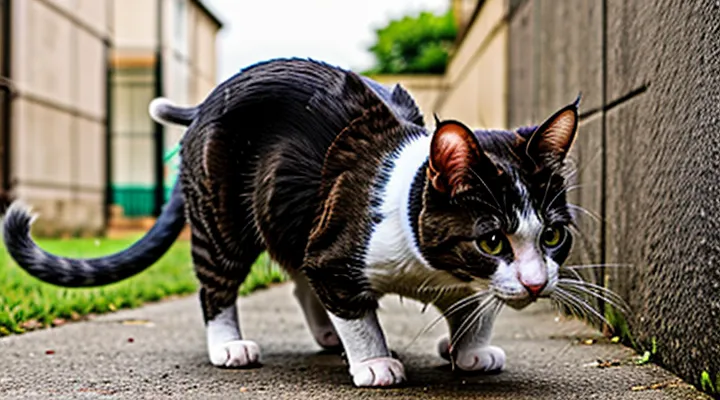
The Ancient Rivalry: Cats and Rats
A Natural Instinct: The Predator-Prey Dynamic
Evolutionary Roots of Hunting Behavior
Cats evolved as obligate carnivores, and the drive to capture small mammals remains a core component of their survival strategy. Early felids relied on swift reflexes, acute night vision, and sharp dentition to subdue prey that could provide sufficient protein and fat. These traits were reinforced by natural selection, favoring individuals that could efficiently locate, stalk, and kill rodents.
The predator‑prey dynamic between domestic cats and common rats reflects ancestral hunting patterns. Evolution shaped several mechanisms:
- Sensory specialization: retinal cells sensitive to low light, whisker vibration detection, and olfactory cues guide pursuit of nocturnal rodents.
- Motor coordination: flexible spine, retractable claws, and precise paw placement enable rapid acceleration and controlled pounce.
- Instinctual sequence: fixed action patterns trigger stalking, crouching, and bite at the neck, reducing struggle time and injury risk.
- Energetic calculus: a single rat supplies enough calories to sustain a cat for several days, making the hunt energetically advantageous.
Domestication introduced abundant human‑provided food, yet the underlying neural circuitry persists. Even well‑fed cats exhibit hunting bursts, indicating that the behavior is hard‑wired rather than solely motivated by hunger. Genetic studies link variations in the AVPR1A and DRD4 genes to heightened predatory drive, suggesting a heritable component retained across generations.
In summary, the pursuit of rats by felines originates from millennia of selective pressures that optimized sensory acuity, muscular performance, and instinctive hunting scripts. These evolutionary foundations explain why contemporary cats continue to hunt rodents despite the availability of alternative nourishment.
The Role of Senses in Detection
Cats rely on a suite of sensory mechanisms to locate and capture rats. Visual acuity, auditory precision, olfactory discrimination, and tactile sensitivity converge to create an effective detection system.
Vision operates under low‑light conditions thanks to a high density of rod cells and a reflective tapetum lucidum. Motion triggers retinal ganglion cells, allowing cats to track rapid, erratic movements typical of rodents. Depth perception, supplied by a wide binocular field, estimates distance for a coordinated pounce.
Auditory perception extends into ultrasonic frequencies beyond human hearing. The pinna can rotate independently, isolating sounds from multiple directions. Acute temporal resolution distinguishes the faint rustle of a rat’s footfalls from ambient noise, guiding the cat toward the source.
Olfaction identifies rat presence through volatile compounds emitted in urine, feces, and skin secretions. Nasal epithelium receptors detect these chemicals at concentrations as low as parts per billion, enabling cats to follow scent trails across complex terrain.
Vibrissae provide tactile feedback about air currents and nearby objects. Deflection of whiskers registers minute pressure changes generated by a rat’s motion, delivering spatial information even when visual cues are obscured.
Key sensory contributions can be summarized:
- Vision: nocturnal acuity, motion detection, depth estimation.
- Hearing: ultrasonic range, directional focus, temporal discrimination.
- Smell: high‑sensitivity chemical detection, trail tracking.
- Whiskers: air‑flow sensing, close‑range obstacle mapping.
Together, these modalities form a coordinated detection network that underpins the feline predatory response to rodent prey.
Feline Predation: More Than Just Food
Pest Control: A Historical Perspective
Human-Cat Alliance Against Rodents
Cats have evolved predatory instincts that target medium‑size rodents, making them natural partners for people seeking to control rat populations. Their acute vision, whisker‑mediated spatial awareness, and rapid reflexes enable efficient detection and capture of rats in cluttered environments such as warehouses, farms, and urban alleys.
Humans can enhance this innate capability through selective breeding, training, and environmental management. Structured programs that pair cats with specific rodent‑infested sites produce measurable reductions in rat activity, lower disease transmission risk, and decreased reliance on chemical poisons. Key practices include:
- Providing safe shelter and regular veterinary care to maintain feline health and hunting motivation.
- Installing escape routes and perches that allow cats to patrol vertically and horizontally.
- Monitoring rodent activity with trap counts or motion sensors to assess the alliance’s effectiveness.
Scientific studies confirm that cat presence alters rat behavior, prompting avoidance of treated zones and reducing breeding success. Integrating feline predation into pest‑management plans therefore offers a biologically based, sustainable alternative to conventional methods, aligning animal welfare with public health objectives.
Effectiveness of Cats in Rodent Management
Cats instinctively pursue rats, providing a biological basis for natural rodent control. Their predatory drive, triggered by movement and scent, translates into frequent encounters with medium‑sized rodents.
Vision adapted to low light, acute hearing, and whisker feedback enable precise targeting. Muscular coordination and retractable claws allow rapid acceleration and silent attacks, reducing escape chances for prey.
Empirical observations demonstrate measurable impact. Farm surveys report a 45‑60 % reduction in rat sightings after introducing a small cohort of hunting‑oriented felines. Warehouse case studies show average capture rates of 3‑5 rats per cat per week, lowering infestation levels without chemical intervention.
Factors influencing performance include:
- Breed characteristics (e.g., Siamese, Bengal, and domestic short‑hair exhibit higher drive)
- Age (prime hunting age 1‑5 years)
- Health status (absence of chronic illness)
- Environmental enrichment (access to hiding spots and climbing structures)
- Prior exposure to rodents (experience improves success)
Limitations arise when cats lack motivation, encounter disease‑carrying rats, or operate in environments with abundant alternative food sources. Sole reliance on felines may leave gaps in coverage, especially in large facilities where individual reach is constrained.
Effective programs combine select cats with traps, sanitation, and monitoring. Choose individuals with documented hunting aptitude, provide safe outdoor access, and record capture data to assess ongoing efficacy.
The Thrill of the Hunt: Behavioral Aspects
Playful Predation in Domestic Cats
Domestic cats exhibit a hunting pattern that blends instinctual predation with play behavior. When a rat appears, a cat’s sensory system—particularly vision attuned to rapid motion and whisker sensitivity to vibration—triggers a chase response. The cat’s body prepares for a pounce: muscles tense, tail flicks, and ears swivel toward the target.
During the encounter, the cat often alternates between serious attack and playful engagement. This duality serves several functions:
- Skill refinement: Repeated mock attacks allow the cat to practice timing, bite precision, and grip strength, which are essential for successful kills.
- Energy expenditure: Playful bouts provide a controlled outlet for the cat’s high metabolic drive, preventing excessive roaming or aggression.
- Learning: Young felines observe adult techniques, copying stalking routes and release timing, thereby acquiring effective hunting tactics.
Physiological data show a surge in adrenaline and dopamine levels during these interactions, reinforcing the behavior through reward pathways. The combination of predatory drive and playful execution ensures that domestic cats retain effective rodent control while satisfying their innate need for stimulation.
The Drive to Catch, Not Always to Consume
Cats chase rats primarily because the act of capture satisfies innate predatory drives, not because the prey always serves as a food source. The pursuit triggers a cascade of neurological responses that reinforce hunting competence and maintain muscular coordination.
- Stalk‑and‑pounce sequences engage visual and auditory processing centers, sharpening reflexes essential for survival.
- Successful captures provide tactile feedback that consolidates motor patterns, ensuring proficiency in future encounters.
- The presence of live, evasive prey stimulates dopamine release, rewarding the effort independent of nutritional gain.
Domestic felines often display this behavior with toys or insects, demonstrating that the motivation extends beyond caloric necessity. In wild environments, rats present a challenging opponent; overcoming their agility validates a cat’s status as an apex predator. Consequently, the desire to seize, restrain, and sometimes release a rat reflects a deeply embedded instinctual program that prioritizes the act of hunting over consumption.
Understanding Rat Behavior
Why Rats Are Desirable Prey
Nutritional Value and Accessibility
Rats provide a dense source of protein, essential amino acids, and fat that meet the dietary requirements of domestic and feral cats. A typical adult rat supplies approximately 20 % of a cat’s daily protein need in a single meal, along with significant amounts of taurine, vitamin A, and B‑complex vitamins. The mineral profile includes calcium, phosphorus, and iron, all of which support bone development and blood health. These nutrients are present in a form that cats can digest efficiently, reducing the metabolic cost of extracting energy compared to larger prey.
Accessibility drives the hunting behavior. Rats inhabit urban alleys, sewers, and agricultural storage facilities, often thriving in close proximity to human habitation. Their nocturnal activity aligns with the crepuscular hunting patterns of cats, increasing encounter rates. The small size of rats enables a single cat to capture multiple individuals without expending excessive energy, allowing rapid replenishment of caloric intake after periods of scarcity.
Key factors influencing the attractiveness of rats to cats:
- High protein density per kilogram of body mass
- Complete amino acid profile, including taurine
- Concentrated supply of fat and readily absorbable vitamins
- Frequent presence in environments shared with cats
- Limited defensive capabilities against swift feline attacks
Together, the nutritional richness and ubiquitous distribution of rats create a reliable food source that reinforces the predatory response observed in felines.
Reproductive Rates of Rodents
Rodents reproduce rapidly, with most species reaching sexual maturity within weeks and producing multiple litters each year. For example, the Norway rat (Rattus norvegicus) can breed from eight weeks of age, yielding up to seven litters annually, each containing 6‑12 offspring. House mice (Mus musculus) mature at six weeks and may produce 5‑10 litters per year, with 4‑8 pups per litter. These high fecundity rates enable rodent populations to expand exponentially under favorable conditions.
The swift reproductive cycle creates dense, localized prey aggregations that attract felid hunters. Cats, as obligate carnivores, respond to the abundance of young, vulnerable rodents, which are easier to capture than larger, more experienced individuals. The constant influx of newborn rats and mice sustains a reliable food source, reinforcing predatory behavior.
Key reproductive parameters influencing predator interest include:
- Age at first breeding (weeks)
- Number of litters per year
- Average litter size
- Inter‑litter interval (days)
Understanding these metrics clarifies why feline hunters focus on rodent communities: the combination of rapid turnover and high juvenile density supplies a steady, accessible prey base, driving the evolutionary advantage of hunting behavior.
Evasion Tactics and Cat Adaptations
Rat Defenses Against Predators
Rats have evolved a suite of defensive mechanisms that reduce vulnerability to feline predators. Their skeletal structure includes a flexible spine and elongated hind limbs, enabling rapid, erratic bursts of speed and high‑angle jumps that complicate a cat’s pursuit. The tail serves as a counterbalance, allowing swift changes in direction while maintaining stability.
Sensory adaptations further deter predation. Large, mobile ears capture low‑frequency sounds generated by a stalking cat, prompting immediate flight. Whiskers detect subtle air currents, alerting the rat to approaching movement before visual contact is established. Night‑vision capability, derived from a high density of rod cells, enhances detection in low‑light conditions typical of cat hunting periods.
Behavioral strategies increase survival odds. Rats commonly employ communal vigilance; individuals emit alarm calls that trigger collective escape responses. Burrowing behavior provides immediate refuge, with tunnel networks offering multiple exit routes and concealment from surface predators. When threatened, rats may release a pungent scent from anal glands, creating a sensory barrier that can dissuade a cat’s approach.
Additional defenses include:
- Aggressive biting when cornered, targeting soft tissue of the predator’s limbs.
- Rapid grooming to remove scent markers that could attract cats.
- Seasonal coat thickening, improving insulation during colder periods when cats are more active hunters.
Feline Agility and Hunting Strategies
Cats pursue rats because their bodies are optimized for rapid, precise capture of small, fast-moving prey. The skeletal structure includes an exceptionally flexible lumbar region, allowing a 180‑degree stretch during a pounce. Muscular composition favors fast‑twitch fibers, delivering bursts of acceleration that exceed 30 mph in short sprints.
- Retractable claws create a secure grip without hindering stealth.
- Shoulder blades are loosely attached, granting a wider range of motion for striking.
- Tail functions as a counterbalance, stabilizing jumps and sudden direction changes.
Sensory systems complement physical agility. Large pupils admit maximal light, enhancing nocturnal vision. Auditory canals detect ultrasonic frequencies emitted by rodent vocalizations. Whiskers map proximity to obstacles, preventing missteps during low‑light pursuits.
Hunting tactics combine stealth and explosive force. Cats typically:
- Observe from a concealed position, minimizing motion to avoid alerting the rat.
- Align body along the prey’s escape route, reducing travel distance.
- Execute a rapid, vertical leap that lands within striking range.
- Clamp jaws on the neck while claws immobilize limbs, ensuring swift termination.
These behaviors reduce energy expenditure while maximizing kill probability. Rats present an ideal target: size matches the cat’s bite force, and their erratic movements trigger the predator’s instinctual chase response. Consequently, feline agility and specialized hunting methods directly account for the predation of rats.
Beyond the Hunt: Other Interactions
Coexistence and Competition
When Cats and Rats Share Territory
When domestic or feral cats occupy areas also inhabited by rats, the two species inevitably encounter one another. Both animals are adaptable, allowing them to exploit overlapping habitats such as warehouses, farms, and urban alleys. The presence of cats introduces a predatory pressure that influences rat behavior, while rats provide a hunting opportunity that shapes feline activity patterns.
Territorial overlap triggers specific responses. Cats rely on acute hearing, night vision, and swift reflexes to detect rodent movement. Rats, aware of feline threat, adopt heightened vigilance, increased use of burrows, and nocturnal foraging routes that minimize exposure. These adaptations create a dynamic equilibrium where each species continually adjusts its strategies to maintain access to resources while avoiding lethal encounters.
Coexistence management requires practical measures:
- Secure food sources: store grain, waste, and pet food in sealed containers to reduce attractants for rats.
- Provide safe shelter: install cat-proof barriers around nesting sites to prevent rats from entering cat habitats.
- Monitor activity: use motion‑activated cameras or tracking devices to assess predator‑prey interactions and identify hotspots of conflict.
- Implement humane control: deploy live traps or exclusion devices for rats, and ensure cats receive regular health checks to prevent disease transmission.
Understanding these interactions assists owners, pest‑control professionals, and wildlife managers in reducing conflict, protecting animal welfare, and maintaining ecological balance in shared environments.
Factors Influencing Interaction Outcomes
Cats confront rats under conditions shaped by biological, environmental, and situational variables. The result of each encounter depends on measurable traits rather than anecdotal assumptions.
- Predator size and agility: Larger, more muscular felines generate greater bite force and can outmaneuver swift rodents.
- Rat body mass and defensive adaptations: Heavier rats with robust fur and strong hind limbs increase resistance to capture.
- Habitat complexity: Dense clutter, such as storage boxes or debris, offers rats escape routes while limiting a cat’s line of sight.
- Prior hunting experience: Cats with documented predatory success display refined stalking techniques; inexperienced individuals often miss critical timing.
- Health status of both parties: Illness or injury reduces pursuit stamina in cats and may impair escape responses in rats.
- Time of day: Nocturnal activity aligns with rat peak movement, enhancing encounter frequency; daylight reduces rat visibility.
- Availability of alternative prey: Abundant small mammals or insects can divert a cat’s focus, lowering the likelihood of rat pursuit.
- Human interference: Presence of humans, traps, or deterrents alters behavior patterns, often causing rats to avoid open areas and cats to hesitate.
Each factor interacts with the others, producing a spectrum of outcomes ranging from swift predation to mutual avoidance. Understanding these parameters enables accurate prediction of cat‑rat dynamics in both domestic and urban settings.
The Modern Dilemma
Domestic Cats and Wildlife Impact
Domestic cats retain the predatory instincts of their wild ancestors, prompting them to attack rodents such as rats whenever opportunity arises. The drive stems from a combination of sensory triggers, muscular coordination, and the nutritional value of small mammals, which collectively satisfy an innate hunting sequence.
The presence of house‑cats in urban and suburban environments produces measurable effects on local fauna. Their activity can suppress rat populations, yet it also generates collateral impacts:
- Decrease in rodent numbers may lower disease vectors linked to rats.
- Capture of birds, amphibians, and small mammals reduces biodiversity in gardens and parks.
- Scavenged carcasses can spread parasites to other domestic animals.
- Interaction with wildlife may alter predator‑prey dynamics, leading to shifts in ecosystem balance.
Management strategies focus on mitigating negative outcomes while preserving the protective benefit against rats. Recommendations include:
- Restrict outdoor access for cats that hunt frequently, using enclosed patios or leash walks.
- Provide enrichment toys that channel predatory behavior toward non‑living targets.
- Encourage adoption of neutered or spayed animals to reduce roaming intensity.
- Monitor local wildlife populations to assess the cumulative impact of feline predation.
Applying these measures allows owners to balance the cat’s natural hunting drive with the preservation of surrounding wildlife.
Ethical Considerations of Feral Cat Colonies
Feral cat colonies often intersect with rodent control, prompting ethical scrutiny. Their presence can reduce rat populations, yet the methods and consequences raise several concerns.
Animal welfare remains central. Cats living without human care face malnutrition, disease, and injury. Interventions such as trap‑neuter‑return (TNR) aim to stabilize numbers while improving health, but critics argue that TNR does not eliminate suffering caused by predation or intra‑colony aggression.
Ecological impact extends beyond pest reduction. Predatory behavior may affect non‑target wildlife, including birds and small mammals, potentially disrupting local biodiversity. Ethical assessment must weigh the benefit of rodent suppression against collateral damage to other species.
Public health considerations include zoonotic risks. Feral cats can carry parasites and pathogens transmissible to humans and domestic pets. Management strategies should incorporate vaccination, deworming, and regular health monitoring to mitigate these hazards.
Human communities experience both advantages and challenges. Reduced rat activity can lower disease vectors and property damage, yet colonies may generate odor, noise, and sanitation issues. Transparent community engagement and clear policies help balance these outcomes.
Key ethical principles for managing feral cat groups:
- Prioritize humane treatment; avoid lethal control unless justified by severe public health threats.
- Implement TNR programs combined with veterinary care to enhance colony stability.
- Conduct ecological surveys to identify and protect vulnerable non‑target species.
- Establish monitoring systems for disease prevalence and environmental impact.
- Involve local residents in decision‑making to align management with community values.