
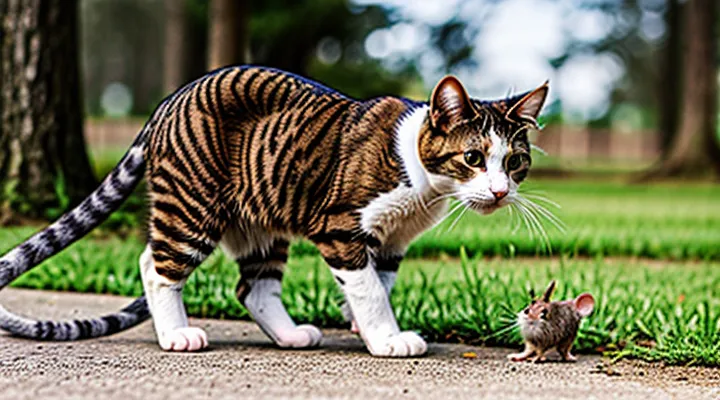
The Feline Predator: An Evolutionary Perspective
Ancestral Hunting Behaviors
Feline ancestors developed a repertoire of hunting strategies that persist in modern domestic cats. These behaviors are encoded in the genome and expressed through instinctual sequences that require minimal learning.
Key ancestral patterns include:
- Stalk‑and‑pounce: gradual reduction of distance while remaining motionless, followed by a rapid leap that maximizes kinetic energy transfer.
- Silent approach: padded footpads and flexible spine allow movement without audible disturbance, reducing prey awareness.
- Target fixation: visual tracking of the prey’s eye line and ear position ensures precise alignment before strike.
- Bite‑and‑hold: grip on the neck vertebrae induces rapid incapacitation, a technique refined over millennia.
Sensory adaptations support these tactics. The tapetum lucidum enhances low‑light vision, while vibrissae detect air currents generated by small mammals. Auditory localization narrows the origin of rustling sounds to within a few centimeters, guiding the final approach.
Neurochemical pathways reinforce successful hunts. Dopamine release during capture strengthens the neural circuitry governing the above sequences, ensuring their retention across generations.
Collectively, these inherited mechanisms shape how cats pursue and subdue rodents, providing a foundation for the sophisticated predatory performance observed today.
The Role of Domesticatiion
Domestication reshapes feline predatory behavior by altering sensory thresholds, motor patterns, and motivation. Selective breeding for companionship reduces reliance on independent hunting, yet retains the neural circuitry that drives pursuit of small prey. Consequently, domestic cats exhibit a blend of instinctual drive and learned restraint when confronting rodents.
Key effects of domestication on mouse‑capture techniques include:
- Diminished urgency in initiating chase, reflected in longer latency before attack.
- Preference for ambush from stationary positions rather than prolonged pursuit.
- Increased reliance on tactile cues over visual tracking when prey is near.
- Modification of bite force and grip, favoring gentle restraint to avoid harming household environments.
Environmental exposure further refines these adaptations. Cats raised in indoor settings encounter fewer live rodents, leading to reduced practice of stalking sequences and a shift toward play‑based simulations. Conversely, outdoor access preserves natural reflexes, allowing the animal to apply inherited hunting sequences with higher precision.
Overall, domestication does not eliminate predatory instinct but calibrates its expression to align with human‑controlled habitats, influencing both the method and intensity of mouse hunting.
Sensory Acuity in the Hunt
Vision: Night Vision and Motion Detection
Feline predators rely on a visual system adapted for low‑light environments and rapid movement detection. The retina contains a high density of rod cells, which amplify light signals and enable clear perception in near darkness. This rod dominance is complemented by a reflective layer behind the retina called the tapetum lucidum; the layer redirects incoming photons, effectively doubling the light available to photoreceptors. As a result, cats can locate prey several meters away even under starlight or indoor dimness.
Motion detection is facilitated by a concentration of specialized retinal ganglion cells that respond preferentially to moving objects. These cells transmit high‑frequency signals to the visual cortex, allowing the brain to distinguish swift, erratic trajectories typical of fleeing rodents. The visual field is wide, extending roughly 200 degrees horizontally, with a pronounced binocular overlap that provides precise depth perception during the final chase.
Key physiological features that support night hunting include:
- Enlarged corneas and pupils that maximize light entry.
- A high proportion of rods (up to 80 % of retinal cells) compared with cones.
- The tapetum lucidum for photon recycling.
- Fast‑conducting retinal pathways tuned to motion cues.
Together, these adaptations give cats a decisive advantage when tracking and capturing mice in low‑light conditions, reducing reliance on other senses and streamlining the predatory sequence from detection to capture.
Hearing: Pinpointing Prey Location
Cats rely on acute auditory perception to locate a mouse hidden behind obstacles. When a rodent moves, it generates high‑frequency rustles that travel through the environment and reach the feline’s ears. The cat’s brain interprets these signals to determine the prey’s position with remarkable speed.
The structure of a cat’s ear enhances sound capture. A mobile pinna can swivel to align with incoming waves, increasing directional sensitivity. Muscles attached to the ear cartilage adjust the angle within milliseconds, allowing continuous scanning of the surroundings. The cochlea contains a dense array of hair cells tuned to frequencies typical of small mammals, while the auditory cortex processes spatial cues.
Sound localization follows two primary acoustic principles:
- Interaural time difference (ITD): The brain measures the minute delay between the arrival of a sound at each ear, providing a horizontal bearing.
- Interaural level difference (ILD): Variations in sound intensity caused by the head’s acoustic shadow indicate the direction of the source, especially for higher frequencies.
By combining ITD and ILD data, a cat constructs a three‑dimensional map of the mouse’s likely location. This map updates continuously as the prey moves, enabling the predator to adjust its trajectory without visual confirmation.
In practice, a cat uses auditory cues to initiate a silent stalk. Upon detecting a rustle, it freezes, reorients its ears toward the source, and calculates the distance based on sound amplitude. The animal then executes a rapid, low‑profile advance, timing its pounce to coincide with the moment the mouse is most vulnerable. This auditory strategy reduces reliance on sight, allowing successful captures in dimly lit or cluttered environments.
Olfaction: Scent Tracking and Identification
Felines rely on a highly developed olfactory system to locate prey. The nasal epithelium contains millions of odorant receptors that bind volatile compounds released by a mouse’s urine, feces, and skin secretions. Signal transduction through the olfactory bulb creates a spatial map of scent intensity, enabling the cat to determine the direction and distance of the source.
During a hunt, a cat samples air currents with each whisker‑assisted sniff, integrating olfactory data with auditory and visual cues. The brain prioritizes fresh, high‑concentration trails, prompting rapid adjustments in locomotion and pounce timing. This multimodal processing reduces search time and increases capture success.
Key aspects of scent tracking and identification:
- Receptor diversity: Over 1,000 functional olfactory receptor genes detect a broad spectrum of mouse‐derived chemicals.
- Temporal resolution: Cats can discriminate changes in odor concentration within fractions of a second, supporting real‑time course correction.
- Memory integration: Previous encounters with specific mouse scents are stored in the piriform cortex, allowing quicker recognition of familiar prey.
- Behavioral output: Elevated olfactory input triggers motor patterns such as low‑crouch stalking and precise fore‑paw positioning for the final strike.
Hunting Phases and Techniques
Stalking: Patience and Camouflage
Low Crawl and Belly Crawl
Cats employ two primary ground‑level approaches when tracking a mouse: the low crawl and the belly crawl. Both methods minimize visual and acoustic signatures, allowing the predator to close the distance without alerting the prey.
The low crawl keeps the body close to the floor, limbs extended in a staggered rhythm. Muscle tension remains low, conserving energy while maintaining tactile feedback from whiskers and forepaws. This posture enables rapid transitions to a sprint once the mouse is within striking range.
The belly crawl positions the cat on its abdomen, forelegs stretched forward and hind legs trailing. This configuration maximizes contact surface with the substrate, reducing vibration transmission. The cat’s ears swivel independently, enhancing auditory detection of subtle rustles.
Key characteristics:
- Body orientation: low crawl – torso elevated slightly; belly crawl – torso flat against ground.
- Speed: low crawl – moderate, steady; belly crawl – slower, more deliberate.
- Energy use: low crawl – balanced; belly crawl – minimal, suited for prolonged stalking.
- Typical trigger: low crawl – open space with clear sightlines; belly crawl – confined areas where concealment is critical.
Effective predation on rodents combines these techniques, selecting the posture that best matches the immediate environment and the mouse’s behavior.
Utilizing Cover and Concealment
Cats rely on environmental features to reduce visibility while closing the distance to a mouse. Dense foliage, low furniture, and shadows serve as barriers that break the line of sight, allowing the predator to remain undetected until the final strike.
The primary functions of cover and concealment include:
- Breaking visual detection by the prey.
- Providing a platform for silent observation.
- Enabling rapid acceleration from a hidden position.
- Reducing exposure to potential threats from other predators.
Typical strategies involve:
- Selecting a route that maximizes overlap with objects that obscure the cat’s outline.
- Positioning the body low to the ground to blend with the substrate.
- Aligning the movement with the direction of ambient light to avoid silhouetting.
- Using whisker feedback to gauge proximity to obstacles while maintaining a concealed posture.
Effective use of concealment demands precise timing. A cat pauses behind cover, gauges the mouse’s movement, then initiates a burst of speed when the prey is within striking range. The combination of visual obstruction and sudden acceleration maximizes capture probability while minimizing the chance of early detection.
The Pounce: Precision and Agility
Body Mechanics of the Strike
A feline’s strike relies on a coordinated sequence of muscular actions that convert stored potential energy into rapid kinetic force. The spine arches, extending the lumbar vertebrae and flexing the thoracic region, which lengthens the hindquarters and positions the pelvis for maximal torque. The hind limbs generate the initial thrust; the gluteal, hamstring, and quadriceps groups contract explosively, propelling the body forward while the pelvic girdle rotates to align the hind paws with the target.
During the forward phase, the forelimbs act as the final accelerators. The triceps brachii and shoulder extensors extend the forearm, while the digit flexors clamp the prey. Simultaneously, the scapular muscles retract the shoulder blades, stabilizing the strike trajectory. The tail functions as a dynamic counterbalance, adjusting lateral deviations and maintaining equilibrium as the cat transitions from a crouched stance to full extension.
Key elements of the strike mechanics include:
- Pre‑strike crouch: Flexed hips, lowered center of gravity, and compressed spinal column store elastic energy.
- Explosive extension: Sequential activation of hind‑limb extensors followed by fore‑limb extensors transfers energy through the spine.
- Paw contact: Rapid digit flexion and claw deployment generate localized pressure, concentrating force on the mouse’s vulnerable regions.
- Recovery: Immediate retraction of the forelimbs and re‑crouching prepare the cat for subsequent attacks or escape.
The timing of each phase is critical; neuromuscular pathways synchronize sensory input from whisker and auditory receptors with motor output, ensuring the strike reaches peak velocity precisely when the prey’s escape window closes. This integration of skeletal leverage, muscular power, and sensory feedback defines the efficiency of a cat’s predatory strike.
The Neck Bite: A Fatal Blow
The neck bite constitutes the decisive strike in feline predation of small rodents. Cats target the cervical region because it houses the trachea, carotid arteries, and spinal cord, structures whose rapid disruption guarantees swift incapacitation.
- Anatomical advantage: Sharp incisors and robust canines concentrate force on a narrow bite surface; jaw muscles generate up to 30 psi, sufficient to crush vertebrae and sever vessels.
- Bite placement: The predator aligns its muzzle behind the prey’s head, clamps the lower jaw against the upper, and squeezes the bite point just below the skull, where the trachea is most exposed.
- Force application: A single, high‑pressure snap delivers instantaneous compression; the cat maintains the grip for 0.2–0.4 seconds, enough to collapse the airway and induce massive hemorrhage.
- Physiological outcome: Airflow interruption causes immediate asphyxiation; simultaneous arterial rupture leads to rapid blood loss, producing shock and death within seconds.
Execution timing depends on prey size and escape speed. Larger cats may employ a two‑stage approach—initial bite to immobilize the neck, followed by a secondary grip to ensure complete severance. Smaller felines often rely on a single, precisely placed bite, exploiting the mouse’s limited defensive capability.
Overall, the neck bite represents a highly efficient lethal mechanism, integrating dental morphology, muscular power, and precise targeting to secure a rapid kill in the pursuit of rodent prey.
Play Behavior: Practicing and Refining Skills
Non-Lethal Engagements
Cats often confront potential prey without delivering a fatal bite, especially when the encounter occurs in a domestic environment where lethal outcomes are undesirable. This behavior reflects a combination of innate predatory drive and learned restraint.
- Stalk and pounce without clamping jaws: the cat approaches silently, accelerates at the last moment, and lands on the mouse’s back, using paws to pin the animal while keeping the mouth open.
- Use of forepaws as “capture tools”: claws are extended to grasp the mouse’s torso, allowing the cat to manipulate the prey without applying crushing pressure.
- Gentle mouth hold: the cat may bite the neck region lightly, applying enough pressure to immobilize the mouse but insufficient to break vertebrae, then releases the animal after a brief period.
- Playful batting: repeated taps with hind paws keep the mouse moving, exhausting it while avoiding lethal force.
These tactics rely on sensory acuity, timing, and motor control. Vision and whisker feedback guide the cat’s approach angle; auditory cues help locate the mouse’s escape routes. Motor patterns, honed through repeated practice, enable precise force modulation.
Research on domestic felines shows that non-lethal engagements reduce stress for both animal and owner, lower the risk of injury, and preserve the cat’s natural hunting instincts. Training interventions, such as rewarding gentle captures with treats, reinforce restraint behaviors. Environmental modifications—providing safe escape tunnels and soft flooring—further support humane interactions.
Developmental Importance
Feline predation of rodents provides a structured framework for the maturation of motor coordination, sensory processing, and problem‑solving abilities. The repeated execution of stalking, pouncing, and capture sequences reinforces neural pathways that govern precise limb movement and timing. Sensory integration improves as visual tracking, auditory detection, and tactile feedback converge during each hunt, sharpening the cat’s ability to interpret rapid environmental changes.
The activity also supports cognitive development. Anticipating prey escape routes requires the cat to evaluate multiple scenarios, fostering flexible thinking and decision‑making. Successful capture reinforces learning through immediate feedback, encouraging the refinement of technique over successive attempts.
Developmental benefits can be grouped as follows:
- Motor refinement: Enhanced balance, agility, and muscle control through repeated pounce cycles.
- Sensory acuity: Improved depth perception, motion detection, and auditory localization.
- Cognitive adaptation: Strengthened pattern recognition, strategic planning, and error correction.
- Social competence: Interaction with littermates during play hunting cultivates communication signals and hierarchal understanding.
Collectively, these elements contribute to a well‑rounded growth trajectory, equipping the animal with the competencies required for independent survival and effective interaction within its ecological niche.
Instinctual Drivers of the Hunt
The Predatory Drive: Innate Programming
The predatory drive in felines originates from a genetically encoded neural circuit that activates automatically when visual, auditory, or tactile cues match the profile of typical prey. Sensory pathways converge on the hypothalamic and midbrain structures that trigger a cascade of motor commands, preparing the animal for a rapid, coordinated attack.
Key elements of this innate programming include:
- Sensory detection – high‑frequency motion detection in the retina, acute hearing of rustling sounds, and whisker‑mediated vibration sensing.
- Motor preparation – activation of spinal interneurons that prime forelimb extension, hind‑leg thrust, and tail balance.
- Behavioral sequencing – a fixed action pattern that proceeds from stalking, low‑crouch, pounce, to bite, each phase encoded as a stereotyped response.
Neurochemical modulators such as dopamine and norepinephrine intensify focus during the chase, while the release of endorphins reinforces successful captures, ensuring the behavior persists across generations without learning. The entire sequence operates with minimal cortical intervention, demonstrating that the hunting instinct is a self‑contained, evolutionarily refined program.
Hormonal Influences on Hunting Behavior
Feline predation on rodents is tightly linked to endocrine activity. Elevated testosterone increases drive to chase and capture prey, amplifying muscular power and risk‑taking behavior. Cortisol spikes during acute stress sharpen visual focus and accelerate reaction time, enabling rapid pounce. Catecholamines such as adrenaline boost heart rate and energy mobilization, supporting short bursts of high‑intensity effort. Oxytocin release after successful captures reinforces reward pathways, encouraging repeat hunting attempts. Vasopressin modulates territorial aggression, directing attention toward intruding mice within a cat’s domain.
Key hormonal effects can be summarized:
- Testosterone: enhances motivation, aggression, and physical exertion during pursuit.
- Cortisol: improves sensory processing and speed of response under threat.
- Adrenaline (epinephrine): supplies immediate energy for explosive movement.
- Oxytocin: strengthens positive association with hunting success.
- Vasopressin: directs territorial focus, increasing likelihood of confronting prey.
Seasonal fluctuations in these hormones correspond with variations in hunting frequency. For example, breeding periods, marked by testosterone peaks, often coincide with increased mouse capture rates. Conversely, prolonged elevated cortisol may lead to heightened vigilance but reduced play hunting, prioritizing actual prey encounters. Understanding these endocrine patterns clarifies why domestic and wild cats exhibit predictable changes in predatory intensity.
The Reward System: Dopamine and Success
Dopamine release signals the achievement of a successful capture, reinforcing the motor patterns that led to the kill. When a feline secures a mouse, sensory input triggers a rapid surge of this neurotransmitter, which strengthens the neural pathways involved in stalking, pouncing, and biting. The brain registers the outcome as valuable, increasing the likelihood that the same sequence will be reproduced in future hunts.
The reward circuit operates on a feedback loop: prediction of prey, execution of the chase, and confirmation of capture generate dopamine spikes that update the animal’s internal model of effective techniques. Repeated exposure to successful hunts sharpens the cat’s instinctual timing, limb coordination, and eye‑hand alignment, because each positive result rewires synaptic connections toward greater efficiency.
Key aspects of the dopamine‑mediated reinforcement process:
- Anticipatory rise in dopamine when the cat detects movement or scent, heightening focus and alertness.
- Immediate peak at the moment of bite, marking the event as a reward.
- Post‑capture decline that consolidates memory of the successful strategy.
- Gradual adaptation of hunting tactics as the system favors actions that consistently produce the strongest neurotransmitter response.
Over time, the reward system creates a self‑optimizing loop: successful techniques become ingrained, failures generate weaker dopamine signals, and the cat adjusts its approach accordingly. This physiological mechanism explains why even solitary predators develop highly refined hunting skills without external instruction.
Environmental Factors and Hunting Success
Habitat Influence on Prey Availability
Habitat determines the number and accessibility of mice that cats can encounter during predation.
- Urban environments concentrate rodents near waste containers, sewer openings, and heated buildings; limited vegetation reduces natural cover, forcing mice to use artificial structures.
- Suburban neighborhoods provide garden beds, compost piles, and hedgerows that create stable micro‑habitats, supporting moderate rodent densities.
- Agricultural settings generate high prey availability around grain stores, field margins, and irrigation channels, especially during planting and harvest periods.
- Wild ecosystems such as forests and grasslands exhibit seasonal fluctuations; dense understory offers shelter, while open areas expose mice to predators.
Micro‑habitat characteristics further modulate prey presence. Ground cover density, burrow complexity, moisture levels, and temperature gradients influence mouse activity cycles and visibility to hunting cats.
Human interventions reshape these patterns. Regular pest control, building designs that limit entry points, and systematic waste management can suppress rodent populations, directly reducing hunting opportunities.
Seasonal dynamics add another layer. Mouse breeding peaks in spring and early summer, expanding the available prey pool; winter cold and reduced food sources contract populations, limiting hunting success.
Recognizing how each habitat component affects mouse abundance enables accurate prediction of feline hunting outcomes and informs strategies for wildlife management and domestic cat care.
Weather Conditions and Hunting Efficiency
Weather directly influences a cat’s ability to locate, stalk, and capture a mouse. Temperature extremes alter a mouse’s activity pattern, while precipitation and wind modify sensory cues that felines depend on.
- Cold conditions: Mice increase burrowing and reduce surface movement, limiting visual detection. Cats rely more on auditory and vibrational signals; whisker sensitivity and ear acuity become decisive factors.
- Heat: Elevated temperatures raise mouse foraging frequency during cooler dawn and dusk periods. Cats experience reduced stamina, prompting shorter pursuit bursts and a preference for ambush positions near shade.
- Rain or high humidity: Moisture dampens scent trails, decreasing olfactory guidance. Wet fur impairs tactile feedback, forcing cats to emphasize sight and sound.
- Wind: Strong gusts disperse scent and mask rustling noises, weakening a cat’s ability to track prey. Calm air preserves auditory and olfactory pathways, enhancing precision.
Light levels also interact with weather. Overcast skies diminish shadows, making a mouse’s silhouette less conspicuous, whereas bright sunlight creates stark contrast that aids visual tracking. Conversely, low-light conditions during fog or drizzle shift reliance to night vision and whisker detection.
Overall, optimal hunting efficiency occurs under moderate temperatures, low wind, and clear visibility. Deviations compel felines to adjust technique—favoring ambush over chase, emphasizing non‑visual senses, and modifying energy expenditure to match environmental constraints.
The Ethics of Cat Predation
Impact on Local Ecosystems
Cats that hunt mice affect local ecosystems through several direct and indirect mechanisms. Their predation reduces rodent numbers, which lowers the incidence of rodent‑borne diseases and diminishes seed predation pressure. Fewer rodents can lead to increased seed survival and altered plant community composition.
Predatory pressure from domestic or feral cats also influences native predator populations. In areas where cats compete with indigenous carnivores, such as owls or foxes, the latter may experience reduced hunting success, potentially reshaping trophic relationships. Conversely, cat predation can relieve pressure on vulnerable prey species that would otherwise be over‑exploited by abundant rodents.
The presence of hunting cats can trigger cascading effects:
- Decreased rodent activity reduces soil disturbance and burrow density.
- Lowered herbivory on seedlings enhances forest regeneration.
- Shifts in insect populations occur as fewer rodents consume insects and their eggs.
- Changes in scavenger dynamics arise because cat kills provide carrion resources for opportunistic species.
In urban and suburban settings, cat hunting contributes to the control of invasive rodent species, limiting their spread into adjacent natural habitats. However, excessive cat predation may threaten endangered small mammals and ground‑nesting birds, prompting the need for balanced management strategies that consider both pest control benefits and biodiversity preservation.
Responsible Pet Ownership and Mitigation Strategies
Cats possess innate predatory drives that can lead to the capture of small animals. Owners who recognize this instinct bear responsibility for protecting wildlife while ensuring the cat’s welfare. Effective management begins with environmental control, limiting opportunities for unsupervised hunting.
- Keep cats indoors during peak activity periods for rodents, typically dawn and dusk.
- Provide enriched indoor environments with interactive toys, puzzle feeders, and climbing structures to satisfy hunting urges.
- Use bell-equipped collars or lightweight harnesses for outdoor excursions, reducing stealth and increasing prey detection.
- Implement regular play sessions that mimic chase behavior, channeling energy into controlled activities.
- Schedule routine veterinary check‑ups to monitor health, as illness can intensify predatory urges.
Training reinforces boundaries. Positive reinforcement when a cat responds to recall commands or refrains from stalking wildlife builds reliable behavior. Gradual exposure to controlled outdoor spaces, such as enclosed “catios,” offers safe exploration without endangering local fauna.
Ultimately, responsible stewardship integrates knowledge of feline instincts with proactive measures. By combining habitat modification, structured play, and protective equipment, owners can curtail unintended predation while preserving the natural drive that defines feline behavior.