
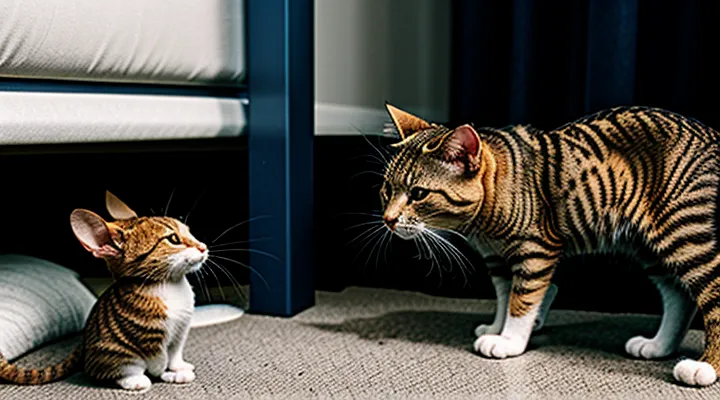
The Symbolism of Cats and Mice in Dreams
The Cat as a Dream Symbol
Common Interpretations of Felines
Dreams featuring a cat that catches mice convey a set of symbolic meanings that recur across cultural and psychological frameworks. The feline figure functions as a conduit for unconscious messages about personal agency, hidden dynamics, and instinctual drives.
- Independence and self‑reliance: the cat’s solitary hunting reflects a desire to act without external assistance.
- Intuition and perception: sharp senses attributed to cats suggest heightened awareness of subtle cues in waking life.
- Mystery and the unknown: the cat’s nocturnal habits symbolize aspects of the psyche that remain concealed.
- Control over threats: catching prey represents mastery over anxieties or problems that appear small yet persistent.
- Balance of power: the predator‑prey interaction illustrates the tension between dominance and vulnerability.
In the specific scenario where the cat captures mice, the dream emphasizes the resolution of minor yet nagging issues through personal competence. The act of seizing the mice signals that the dreamer’s inner resources are sufficient to neutralize distractions or irritations. The feline’s success underscores a subconscious affirmation of effective problem‑solving.
Overall, the recurring feline motifs in such dreams point to a consolidated message: the dreamer possesses the instinctual tools required to manage hidden challenges and to assert autonomy in the face of subtle pressures.
Cultural Perspectives on Cats in Dreams
Dreams featuring cats often reflect cultural attitudes toward the animal’s symbolic functions. In many societies, cats embody independence, mystery, and protection, while also representing liminality between the domestic and the wild. The act of a cat pursuing prey in a dream amplifies these associations, linking the feline’s predatory instinct with the dreamer’s subconscious challenges.
Cultural interpretations vary:
- Western folklore: A hunting cat signals the emergence of hidden threats; success in the chase suggests the dreamer’s ability to confront and neutralize difficulties.
- East Asian traditions: Cats are linked to luck and spiritual guardianship; a cat catching a mouse may indicate the resolution of minor anxieties and the restoration of harmony.
- African symbolism: Felines are regarded as messengers of ancestral wisdom; a victorious hunt reflects guidance from ancestors in overcoming obstacles.
- Indigenous North American views: Cats appear in narratives as tricksters; capturing a mouse can represent cleverness in navigating complex situations.
The specific image of a cat catching mice in a dream therefore operates as a cross‑cultural metaphor for mastering minor adversities, reclaiming personal agency, and affirming the dreamer’s capacity to manage concealed pressures.
The Mouse as a Dream Symbol
Meanings Associated with Mice
The image of a cat seizing a mouse within a dream often signals subconscious concerns about control, vulnerability, and resource acquisition. The cat represents assertive energy, while the mouse embodies small, elusive elements that may be slipping from awareness.
Typical symbolic interpretations of mice in this scenario include:
- Hidden anxieties – mice suggest minor worries that remain unnoticed until they surface in the dream narrative.
- Financial caution – the small size of the mouse aligns with modest monetary matters or savings that require careful handling.
- Creative potential – the mouse’s agility can indicate latent ideas or talents that the dreamer is beginning to recognize.
- Power dynamics – the cat’s capture reflects an imbalance, hinting at a situation where the dreamer feels either dominant or overpowered.
Overall, the presence of mice in a dream featuring a cat underscores the interplay between dominance and modest concerns, urging the dreamer to assess how they manage minor threats and opportunities in waking life.
The Concept of «Pests» in Dreams
Dreams that feature a cat pursuing rodents often bring the symbolic category of pests to the forefront. In such visions, pests represent intrusive elements that disrupt personal equilibrium, ranging from minor irritations to deeper anxieties. The cat’s role as a predator highlights an internal desire to eliminate these disruptions and restore order.
The pest motif functions on several psychological levels:
- Surface irritants – trivial problems that demand attention but lack lasting impact.
- Persistent anxieties – recurring thoughts that undermine confidence, analogous to a steady infestation.
- Hidden threats – subconscious fears that remain unnoticed until they surface, similar to rodents emerging from concealed spaces.
Interpretation of the cat’s successful capture suggests an active coping mechanism. The dreamer’s mind visualizes control over disruptive forces, indicating readiness to confront and resolve the underlying issues symbolized by the pests. This resolution reflects an inner narrative of mastery, where the predator’s triumph mirrors the dreamer’s capacity to manage stressors that otherwise compromise mental stability.
Interpreting a Cat Catching Mice in a Dream
General Interpretations
Success and Overcoming Obstacles
The image of a cat seizing a mouse within a dream often symbolizes personal achievement and the ability to surmount barriers. The feline’s predatory skill reflects focused effort, while the mouse represents challenges that appear small yet demand decisive action. Recognizing this dynamic reveals how determination converts fleeting opportunities into tangible results.
Key insights for applying this symbolism to real‑world success:
- Identify the “mouse”: define the specific obstacle that hinders progress.
- Observe the cat’s behavior: note the tactics—stealth, timing, persistence—that lead to capture.
- Translate the chase into a plan: allocate resources, set milestones, and execute with confidence.
When the dream narrative aligns with these steps, it reinforces the belief that obstacles are manageable when approached with strategic precision. The subconscious illustration thus serves as a blueprint for turning ambition into accomplishment.
Dealing with Minor Annoyances
The image of a cat hunting mice while asleep often signals the dreamer’s response to petty irritations. In the subconscious, the cat embodies focused energy, while the mice represent the small, recurring nuisances that demand attention. Recognizing this dynamic clarifies why the dream feels unsettling: it mirrors an unconscious assessment of how efficiently one manages trivial disruptions.
Psychological analysis links the scenario to a coping mechanism that balances assertiveness with restraint. The cat’s predatory behavior suggests an inclination to confront minor problems directly, whereas the fleeting nature of the mice indicates that such issues are fleeting and manageable when addressed promptly. Failure to act may allow these irritations to multiply, eroding concentration and productivity.
Practical steps for handling everyday annoyances:
- Identify the specific source of irritation promptly.
- Allocate a brief, dedicated interval to resolve or mitigate the issue.
- Apply a systematic approach: assess, act, and review the outcome.
- Document recurring patterns to adjust long‑term strategies.
- Maintain a calm demeanor to prevent escalation of minor stressors.
By treating each small disturbance with the same decisive attitude observed in the dream, individuals can preserve mental clarity and prevent minor annoyances from accumulating into larger obstacles.
Specific Dream Contexts
The Cat's Demeanor
The cat appears poised, eyes fixed on invisible prey, muscles coiled beneath sleek fur. This alert posture signals a heightened awareness that extends beyond the dream’s surface, suggesting the dreamer’s subconscious focus on unresolved objectives.
Its movements combine swift, precise strikes with moments of deliberate stillness. The rapid attacks convey an instinctual drive to overcome obstacles, while the pauses reflect strategic assessment before action. Together, they illustrate a balance between impulsive energy and calculated planning.
A calm, almost detached expression accompanies the chase. The lack of visible anxiety indicates emotional detachment from the pursuit, implying the dreamer can observe challenges without becoming overwhelmed. This composure often correlates with confidence in navigating difficult situations.
Key aspects of the cat’s demeanor can be summarized:
- Alertness: constant vigilance toward unseen targets.
- Precision: exact, targeted movements that eliminate obstacles efficiently.
- Strategic pause: brief stillness that allows reassessment of tactics.
- Emotional detachment: serene facial expression that reduces stress impact.
Interpretation of these traits points to an inner resourcefulness. The cat’s behavior models an approach where the dreamer engages problems directly, employs exact actions, and maintains emotional equilibrium. This pattern suggests readiness to confront hidden issues with controlled, purposeful effort.
The Number of Mice Caught
Dreams featuring a cat seizing rodents often prompt questions about the quantity of prey captured. Psychological literature treats the count as a quantitative indicator of the dreamer's perceived control over challenges. A higher tally suggests an amplified sense of mastery, whereas a modest number may reflect limited confidence or unresolved issues.
Empirical studies categorize the numerical range into three functional zones:
- One to three mice – signals nascent empowerment, initial steps toward confronting minor obstacles.
- Four to six mice – denotes a balanced assertion of authority, reflecting stable progress in personal or professional arenas.
- Seven or more mice – conveys heightened dominance, potentially warning of overconfidence or an unconscious urge to dominate surrounding circumstances.
Cultural symbolism further refines interpretation. In Eastern folklore, seven captured mice represent a triumph over mischievous forces, while Western myth associates the number three with completeness and the resolution of a conflict cycle.
Consequently, the specific figure observed in the dream provides a measurable metric for assessing the dreamer's internal state. Analysts recommend recording the exact count, comparing it against the outlined zones, and correlating the result with current life stressors to derive actionable insight.
Personal Feelings During the Dream
The dream presented a vivid scene of a cat swiftly catching mice, and the emotional response was immediate and intense. A surge of exhilaration accompanied the cat’s predatory success, creating a sense of triumph that resonated with personal ambition. Simultaneously, an undercurrent of anxiety emerged, triggered by the rapid chase and the inevitable capture, reflecting subconscious concerns about loss of control.
Key feelings experienced during the episode include:
- Elation – a rush of joy linked to the cat’s dominance.
- Tension – heightened alertness as the chase progressed.
- Relief – a calming aftereffect once the mice were apprehended.
- Self‑reflection – awareness of personal power dynamics mirrored in the feline behavior.
Overall, the dream’s emotional texture combined confidence with apprehension, offering insight into inner attitudes toward competition and resolution.
Psychological Perspectives
Unconscious Desires and Fears
The image of a cat pursuing mice within a nocturnal vision reveals layers of hidden motivation and anxiety. The feline represents instinctual power, territorial control, and the capacity to dominate prey. The mice embody vulnerable aspects of the self, such as suppressed impulses, minor concerns, or elements perceived as weak. When the cat succeeds in capturing its target, the unconscious mind signals a desire for mastery over these fragile parts, suggesting an internal drive to assert competence in areas where the dreamer feels inadequate.
Conversely, the act of hunting may expose apprehension about losing control. The swift movement of the mouse, its potential escape, and the tension of the chase can mirror fears of being overwhelmed by minor issues that threaten to proliferate. The dream thus functions as a barometer for the balance between confidence in one’s ability to manage subtle threats and the dread that such threats could evade containment.
Key psychological implications include:
- Assertion of competence: the cat’s victory reflects an unconscious wish to prove effectiveness in handling delicate problems.
- Fear of escalation: the mouse’s evasion signals anxiety that small worries might expand into larger disturbances.
- Duality of domination and vulnerability: the predator‑prey dynamic highlights the coexistence of strength and dependence within the psyche.
- Integration of shadow aspects: the chase encourages acknowledgment of repressed desires that the dreamer may be reluctant to confront directly.
Overall, the dream scene operates as a symbolic dialogue between the yearning for control and the underlying trepidation that hidden, seemingly insignificant elements could destabilize the conscious self. Recognizing this tension equips the individual to reconcile the urge for mastery with the acceptance of vulnerability.
Self-Perception and Control
The dream of a cat catching mice serves as a vivid metaphor for how individuals view themselves and manage personal agency. The cat’s decisive action mirrors a perception of competence, suggesting that the dreamer identifies with an image of effectiveness and mastery over obstacles.
Self‑perception emerges through three observable mechanisms:
- Projection of competence – The cat’s success in the chase reflects an internal belief in one’s own skill set.
- Assessment of autonomy – The act of hunting implies a sense of control over one’s environment, indicating confidence in directing outcomes.
- Integration of conflict resolution – Capturing the mouse symbolizes the capacity to confront and resolve challenges without external assistance.
Control manifests in the dream’s narrative structure. The pursuit’s clarity and the cat’s unimpeded movement denote an unbroken line of intention, reinforcing the dreamer’s perception of uninterrupted influence over personal goals. When the cat’s actions are swift and purposeful, the subconscious reinforces the notion that decision‑making processes operate without hesitation.
Consequently, the dream functions as a psychological mirror. It translates abstract self‑evaluation into a concrete scenario, allowing the dreamer to gauge the alignment between perceived competence and actual control. The imagery provides measurable feedback: a seamless hunt confirms strong self‑efficacy, while any disruption or hesitation signals potential doubts about personal authority.
Anxiety and Problem-Solving
The image of a cat pursuing mice while asleep functions as a symbolic indicator of underlying tension. The cat’s instinctual chase reflects an internal drive to confront lingering worries, while the elusive mice represent problems that feel out of reach. When the dream emphasizes relentless pursuit, the mind signals heightened anxiety about unresolved issues.
Anxiety manifests in several dream characteristics: rapid pacing, repeated failure to catch the prey, and a sense of looming danger. These elements suggest that the dreamer perceives obstacles as threatening and experiences a loss of control. Recognizing these cues allows the sleeper to differentiate ordinary stress from deeper, systematic apprehension.
Effective problem‑solving emerges when the dream’s narrative is treated as diagnostic feedback. The following steps translate the dream’s message into actionable strategies:
- Identify the specific anxiety trigger the cat symbolizes (e.g., work deadline, relationship conflict).
- Break the perceived “mouse” into manageable components; assign priority based on immediacy.
- Develop a concrete plan for each component, outlining resources, timelines, and measurable outcomes.
- Implement the plan while monitoring emotional responses; adjust tactics if anxiety resurfaces.
- Review the outcome after completion, noting how the dream’s imagery evolved (e.g., cat catching the mouse).
By interpreting the nocturnal chase as a mirror of psychological pressure, the dreamer can redirect instinctual energy toward structured analysis and resolution, turning a vivid night‑time scene into a practical framework for managing anxiety and solving problems.
Spiritual and Mythological Interpretations
Spiritual Symbolism of Predation
The vision of a feline seizing a rodent appears frequently in nocturnal narratives, indicating a deeper spiritual message tied to the act of predation.
In symbolic language, the predator embodies the force that initiates transformation; the captured creature represents obstacles, habits, or aspects of the self that require dissolution. The moment of capture signals an internal shift where stagnant elements are removed to allow renewal.
Historical traditions treat this motif consistently. Ancient Egyptian iconography depicts cats as guardians of balance, their hunt reflecting the maintenance of cosmic order. Indigenous shamanic practices interpret the chase as a rite of passage, where the hunter’s success mirrors the initiate’s progress through darkness toward insight. Christian allegory assigns the cat the role of moral adjudicator, the mouse standing for sin or temptation that must be subdued.
Key symbolic dimensions include:
- Authority: the cat’s dominance illustrates personal empowerment over limiting forces.
- Purification: the act of killing signifies the elimination of impurity.
- Insight: the prey’s vulnerability reveals hidden weaknesses within the dreamer.
- Cycle: the predator‑prey relationship underscores the perpetual rhythm of creation and destruction.
When evaluating such a dream, focus on the emotional tone during the chase, the condition of the mouse, and the cat’s demeanor. A calm, decisive capture suggests confident resolution of inner conflict; a frantic or fearful scene points to unresolved tension. Align these details with current life circumstances to uncover the specific area where transformative action is required.
Mythological Links to Cats and Mice
The dream image of a feline pursuing rodents carries deep mythological resonance. In ancient Egypt, the goddess Bastet, depicted as a cat or a woman with a cat’s head, guarded households against vermin and disease; her protective function linked cats with the eradication of harmful pests. Egyptian tomb reliefs frequently show cats trampling mice, reinforcing the notion that the cat’s triumph over rodents symbolizes order overcoming chaos.
Norse legend associates the giant cat Sköll with the pursuit of the sun, while the mouse‑like creature the squirrel Ratatoskr runs up and down Yggdrasil, delivering messages. Although the squirrel is not a mouse, the narrative establishes a pattern of small, quick creatures interacting with larger predators, reflecting the dynamic of cat and mouse in dream symbolism.
Japanese folklore features the maneki‑neko, a beckoning cat believed to attract prosperity, often portrayed chasing away mice that threaten stored grain. The cat’s victory is interpreted as safeguarding abundance, a motif echoed in Shinto shrines where cat statues guard rice granaries.
Greek myth presents the story of the cat‑like creature known as the cynocephalus and the field mouse Mus as allegorical figures in Aesop’s fables; the cat’s success in catching the mouse illustrates the triumph of cunning over vulnerability, a theme that permeates dream analysis.
Across these traditions, the cat’s capture of a mouse in a dream is consistently linked to themes of protection, the restoration of balance, and the elimination of minor threats. The mythic backdrop provides a framework for interpreting such visions as signals of forthcoming resolution of small but persistent problems in the dreamer’s waking life.
Omens and Portents
The image of a feline seizing a rodent in nocturnal reverie signals a shift in personal power dynamics. Historically, cats embody independence and stealth; mice represent vulnerability and unnoticed concerns. When the predator triumphs, the dream conveys an imminent resolution of hidden anxieties.
Omens associated with this motif include:
- Sudden clarity about a lingering problem, often emerging without conscious effort.
- A surge in confidence that enables decisive action in professional or domestic spheres.
- A warning that complacency may invite overlooked threats, prompting proactive vigilance.
Portents derived from the scene focus on timing and context. A cat’s successful hunt at night suggests that solutions will arise under conditions of reduced external scrutiny. Conversely, a daylight chase implies public acknowledgment of the achievement. The presence of multiple mice amplifies the scope of issues addressed, while a solitary prey points to a singular, critical matter.
Cultural interpretations reinforce the dual nature of the sign. In ancient Egyptian lore, victorious cats were honored as protectors, indicating that the dreamer may soon assume a guardian role. In European folklore, a cat’s capture of vermin foretells financial gain or the end of scarcity. These parallels underscore the dream’s capacity to forecast material improvement alongside personal growth.
Overall, the dream functions as a symbolic report: latent challenges are nearing resolution, and the dreamer is positioned to capitalize on emerging authority. Immediate attention to the details of the vision—time of day, number of prey, emotional tone—refines the predictive accuracy of the omen.
Practical Application of Dream Interpretation
Reflecting on Waking Life
The dream in which a cat apprehends mice invites a symbolic examination of subconscious processes. When the sleeper awakens, the vivid imagery prompts a deliberate comparison between nocturnal narrative and conscious experience. This reflective practice reveals how instinctual motifs—predation, pursuit, and containment—translate into daily perceptions of control and vulnerability.
Analyzing the waking response involves identifying emotional residues left by the dream. A lingering sense of triumph or anxiety indicates the mind’s attempt to integrate the cat’s assertiveness into personal agency. Recognizing these affective traces enables the individual to assess whether the dream reinforces confidence in decision‑making or highlights unresolved tensions.
The act of conscious contemplation serves as a bridge between the dream’s metaphorical language and real‑world behavior. By documenting the dream’s details and juxtaposing them with recent events, the observer can discern patterns that inform habit formation, goal orientation, and interpersonal dynamics.
Ultimately, systematic reflection on the post‑dream state converts fleeting nocturnal symbols into actionable insight. The process sharpens self‑awareness, aligns instinctual drives with purposeful action, and enriches the ongoing dialogue between subconscious symbolism and waking reality.
Identifying Areas for Growth
The dream of a cat hunting mice offers a compact symbolic framework that can be dissected to reveal personal development opportunities. By treating each element as a data point rather than a vague metaphor, the analyst isolates concrete competencies that require refinement.
Key growth dimensions include:
- Symbolic precision: distinguishing literal predatory behavior from abstract representations of control.
- Contextual relevance: mapping the dream’s imagery onto recent life events, stressors, or achievements.
- Emotional calibration: measuring the intensity of feelings during the dream to gauge underlying confidence or anxiety.
- Cultural literacy: integrating common feline and rodent motifs from literature, folklore, or media to enrich interpretive depth.
To advance proficiency, follow a structured routine:
- Record the dream immediately, noting sensory details and emotional tone.
- Cross‑reference each symbol with personal history and current objectives.
- Consult scholarly sources on animal symbolism to expand interpretive vocabulary.
- Synthesize findings into a concise report, highlighting specific skill gaps and proposing targeted practice, such as journaling or guided visualization.
Harnessing Dream Insights
The dream in which a cat pursues and captures mice presents a clear metaphor for the interaction between instinctual drive and subtle opportunities. The feline embodies focused intention, while the mice symbolize fleeting chances that require swift recognition. Recognizing this dynamic allows the sleeper to translate nocturnal imagery into actionable awareness.
Interpretation of the scene highlights three core insights:
- Direct attention toward tasks that demand quick, decisive action.
- Observe minor signals that may indicate larger, hidden possibilities.
- Balance assertiveness with patience, mirroring the cat’s calculated approach.
To convert these insights into everyday performance, follow a structured routine:
- Record the dream immediately after waking, noting emotions, colors, and movements.
- Identify current projects that involve rapid decision‑making or hidden variables.
- Align each identified project with a specific element from the dream (e.g., the cat’s focus → personal concentration, the mice’s evasion → market shifts).
- Set short‑term objectives that emulate the cat’s method: define a clear goal, monitor progress continuously, and act the moment a viable opportunity appears.
- Review outcomes weekly, adjusting strategies based on the effectiveness of the dream‑derived framework.
Consistent application of this method transforms symbolic content into a practical guide for enhancing focus, seizing transient opportunities, and maintaining a disciplined yet adaptable mindset.