
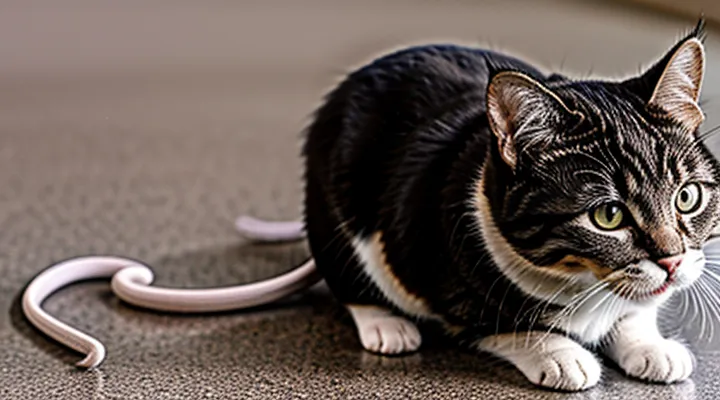
Why Do Cats Bring Prey Indoors?
Instinctual Behavior and Hunting Drive
Cats retrieve captured rodents because the act fulfills a deeply embedded hunting program. The program originates from ancestral felids that relied on precise sensory coordination, rapid motor execution, and strategic concealment to secure food. When a domestic cat secures a mouse, the brain’s predatory circuitry—centered in the hypothalamus and amygdala—generates a surge of dopamine that reinforces the behavior, regardless of the animal’s immediate nutritional need.
Key elements of the instinctual drive include:
- Sensory activation: whisker vibration, auditory detection of rustling, and visual focus on erratic movement trigger the predatory response.
- Motor sequencing: stalking, pouncing, and immobilizing follow a fixed pattern encoded in spinal and brainstem pathways.
- Reward feedback: successful capture produces neurochemical reward, strengthening future attempts.
- Social signaling: bringing prey to a human caretaker may serve as a display of competence, echoing communal hunting displays observed in wild relatives.
Variations arise from breed, early socialization, and environmental enrichment. Cats raised in stimulus‑rich settings exhibit refined stalking techniques and higher capture rates, while those with limited exposure may show reduced engagement or redirect the behavior toward play objects. The consistent presence of these mechanisms explains why the phenomenon of felines presenting mice persists across domestic environments, offering a clear illustration of inherited hunting drive in action.
Sharing the «Spoils» with Their Human Family
Cats occasionally present captured rodents to their owners, treating the offering as a tangible token of their hunting instinct. The behavior reflects a natural drive to involve the human companion in the predator‑prey cycle, reinforcing the bond through shared experience.
Typical responses from humans include:
- Accepting the mouse, then disposing of it safely to prevent disease.
- Photographing the offering as evidence of the cat’s prowess.
- Using the event as a training moment, reinforcing desired hunting limits.
- Providing a reward, such as a treat or extra affection, to acknowledge the effort.
Owners who understand the underlying motivation can manage the situation responsibly, ensuring both pet welfare and household hygiene.
Seeking a Safe Eating Spot
When a cat presents a captured mouse, the predator must locate a location where it can consume the prey without exposing itself to threats. The chosen spot should minimize the risk of interruption from other animals, humans, or environmental hazards.
Key criteria for a safe eating spot include:
- Elevation or concealment that blocks visual detection.
- Proximity to escape routes, such as trees or narrow passages.
- Stable surface that prevents the prey from rolling away.
- Low likelihood of external disturbances, like foot traffic or wind‑blown debris.
Applying these criteria enables the cat to complete the feeding process efficiently, reducing the chance of losing the mouse or sustaining injury.
Interesting Cases and Anecdotes
The «Gift» That Keeps on Giving
Cats that deliver captured rodents to their owners create a recurring dynamic that extends beyond the initial act. The offered animal serves as a tangible reminder of the predator’s instinct, prompting immediate and long‑term responses.
The immediate impact includes:
- Owner’s need to intervene to prevent injury or disease.
- Quick disposal or humane handling of the prey.
- Immediate assessment of the cat’s health and hunting proficiency.
Long‑term considerations involve:
- Reinforcement of hunting behavior through positive or neutral reactions.
- Potential habituation of the cat to view the household as a venue for presenting trophies.
- Ongoing risk management, such as regular parasite checks and secure food storage.
Behavioral analysis indicates that the “gift” functions as a communication tool. The cat signals successful hunting, while the owner’s reaction shapes future hunting frequency. Consistent, measured responses—neutral acknowledgment without reward—tend to reduce repeated deliveries.
Practical guidelines for owners:
- Secure the mouse promptly to limit exposure to pathogens.
- Provide alternative enrichment (interactive toys, puzzle feeders) to satisfy predatory drive without live prey.
- Conduct routine veterinary examinations to monitor health risks associated with hunting.
Understanding this cycle enables owners to manage the phenomenon responsibly, preserving household safety while respecting the cat’s natural instincts.
Unusual Prey: Beyond the Mouse
Cats occasionally deliver prey that deviates from the typical mouse, revealing adaptive hunting strategies and ecological opportunism. Such captures demonstrate flexibility in diet, impact on local biodiversity, and potential health considerations for owners.
- Small birds, including sparrows and finches, illustrate aerial predation and risk of feather ingestion.
- Reptiles such as geckos or small snakes indicate proficiency in low‑visibility environments and exposure to venomous species.
- Amphibians, notably frogs and toads, reflect nocturnal foraging and introduce toxins that may affect feline physiology.
- Insects, ranging from beetles to moths, showcase opportunistic feeding but carry negligible nutritional value.
- Rodent relatives, like voles or shrews, expand the size range of captured mammals and may transmit distinct parasites.
These examples underscore the breadth of unconventional prey a cat may present, emphasizing the need for owner awareness of dietary implications, disease transmission, and appropriate handling of captured organisms.
Owner Reactions and Interpretations
Owners often react to a cat presenting a captured mouse with a mix of surprise, concern, and curiosity. Immediate responses include verbal reprimand, physical removal of the prey, and observation of the cat’s behavior for signs of aggression or playfulness.
Typical interpretations fall into three categories:
- Instinctual display: The cat demonstrates natural hunting competence, confirming its predatory drive.
- Communication attempt: The offering is viewed as a gesture meant to share resources or seek approval from the human.
- Health indicator: Repeated deliveries may signal dietary deficiencies, boredom, or an unfulfilled need for stimulation.
Long‑term owner strategies involve adjusting feeding schedules, providing enrichment toys, and, when necessary, consulting a veterinarian to rule out medical issues. Consistent documentation of each incident helps refine the owner’s understanding of the cat’s motivations and supports appropriate interventions.
Managing Your Cat's Hunting Habits
Deterrents and Prevention Strategies
Cats that bring captured rodents into living spaces pose hygiene risks and can trigger anxiety for occupants. Effective deterrence and prevention rely on modifying the cat’s environment, reinforcing desired behaviors, and limiting access to prey.
- Secure windows and doors with fine mesh to block entry points for small animals.
- Install motion‑activated deterrents (ultrasonic emitters or air‑burst devices) near entry zones.
- Provide ample play stimulation through interactive toys and scheduled hunting‑mimic games to satisfy predatory instincts indoors.
- Apply safe, bitter‑tasting sprays on surfaces where cats are likely to place captured prey, creating an aversive association.
- Use scent barriers such as citrus or eucalyptus oils around doorways; felines typically avoid these odors.
- Implement a consistent feeding schedule, ensuring the cat receives sufficient nutrition to reduce the drive to hunt.
- Train the cat with positive reinforcement when it refrains from bringing external prey, rewarding calm behavior with treats or verbal praise.
Monitoring outdoor access, maintaining a clean indoor environment, and combining physical barriers with behavioral conditioning constitute a comprehensive strategy to minimize rodent deliveries by domestic cats.
Understanding Your Cat's Needs
Cats that bring prey illustrate basic motivations: hunger, instinct, and the desire to share. Recognizing these drives helps owners meet essential requirements and prevent undesirable behavior.
Key needs include:
- Balanced nutrition tailored to age, activity level, and health status.
- Constant access to fresh water.
- Regular veterinary examinations and vaccinations.
- Safe, stimulating environment with climbing structures, scratching posts, and interactive toys.
- Predictable routine for feeding, play, and rest.
- Opportunities for social interaction, whether with humans or compatible companions.
Meeting these elements reduces stress, supports natural hunting instincts, and encourages well‑adjusted behavior. Owners who provide clear resources observe fewer instances of prey presentation and greater overall feline welfare.
Safe Release of Live Prey
When a cat presents a captured mouse, the owner must prioritize the animal’s welfare while preventing injury to the pet. Direct contact should be avoided; use thick gloves or a sturdy container to isolate the prey. Secure the mouse in a ventilated box with a soft lining, then transport it to a suitable release site promptly.
Key considerations for a humane release include:
- Selecting an area distant from residential structures, traffic, and other predators.
- Ensuring the habitat provides shelter, food sources, and natural cover.
- Releasing the mouse during daylight to reduce predation risk.
- Observing the animal from a safe distance to confirm successful escape.
After release, monitor the cat for signs of stress or lingering prey drive. Provide alternative enrichment, such as puzzle feeders, to redirect hunting instincts toward safe play. Regular veterinary checks confirm that the cat’s behavior remains healthy and that no injuries were sustained during the capture event.