
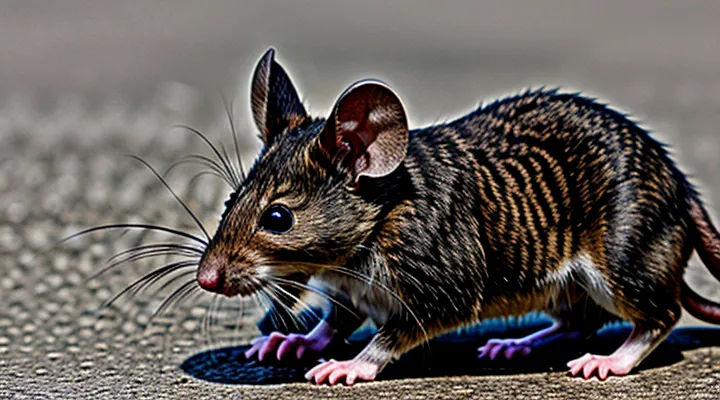
Understanding Rabies Transmission
What is Rabies?
The Rabies Virus
The rabies virus is a neurotropic, single‑stranded RNA virus belonging to the genus Lyssavirus. It replicates in peripheral nerve endings, travels retrogradely toward the central nervous system, and ultimately causes fatal encephalitis. Transmission requires the introduction of infectious saliva into a breach of skin or mucous membranes; the virus does not survive long outside a host and cannot be inhaled or ingested in a viable form.
Rodents, including mice, are rarely competent reservoirs for rabies. Surveillance data show that less than one percent of documented rabies cases involve rodent species, and most positive findings result from spillover infections after contact with a primary reservoir such as raccoons, skunks, or foxes. Laboratory studies indicate that mice develop subclinical infection or die quickly without shedding virus in saliva, which limits their capacity to transmit the disease.
Key points relevant to the risk of acquiring rabies from a mouse:
- Natural infection in mice is uncommon; most cases are incidental.
- Infected mice rarely produce saliva containing viable virus.
- The virus does not persist in mouse tissues long enough to pose a transmission threat.
- Public health guidelines consider rodents low‑risk vectors; post‑exposure prophylaxis is generally unnecessary after a mouse bite unless the animal is known to have been exposed to a confirmed rabid predator.
Consequently, the probability of contracting rabies from a mouse bite or scratch is exceedingly low, and preventive measures focus on avoiding bites from recognized wildlife reservoirs rather than on rodent control.
How Rabies Spreads in Wildlife
Rabies persists in wildlife through a cycle of infection among susceptible mammals, primarily carnivores and certain bat species. Reservoir hosts—raccoons, skunks, foxes, coyotes, and insectivorous and frugivorous bats—maintain the virus without external input. Infected animals shed virus in saliva, creating a direct transmission pathway when they bite or scratch a conspecific or a different species. Indirect exposure occurs when saliva contaminates wounds, mucous membranes, or broken skin, and when aerosolized virus contacts the respiratory tract in confined environments such as caves or dens.
Key mechanisms of spread include:
- Bite wounds delivering virus‑laden saliva directly into tissue
- Scratches or licks that introduce saliva to compromised skin
- Contact of saliva with open lesions or mucous membranes
- Inhalation of aerosolized virus in high‑density roosts or carcass sites
Small rodents, including mice, are rarely infected because they seldom develop sufficient viral loads to transmit the disease. When a mouse contracts rabies—typically after predation by an infected carnivore—it may die quickly without showing aggressive behavior that would facilitate further spread. Consequently, the likelihood of a mouse serving as a source of infection for humans or other mammals is extremely low.
Control measures focus on reducing contact between humans and primary reservoir species, vaccinating domestic animals, and monitoring wildlife populations for rabies prevalence. Surveillance data consistently show that the majority of human rabies cases arise from bites by large carnivores or bats, not from rodents such as mice.
Common Rabies Vectors
Animals Most Susceptible to Rabies
The possibility of rabies transmission from a mouse raises concerns about which species serve as primary reservoirs and are most prone to infection. Understanding susceptibility helps assess risk to humans and domestic animals.
- Canids (dogs, wolves, foxes) – maintain the highest prevalence worldwide; virus replication occurs efficiently in salivary glands, facilitating spread.
- Mustelids (skunks, weasels, ferrets) – frequently reported in North America; skunks rank second after canids in documented cases.
- Procyonids (raccoons, coatis) – major vectors in eastern United States; virus persists in neural tissue and is shed in saliva.
- Chiropterans (bats) – diverse carriers across continents; some species harbor asymptomatic infections, enabling silent transmission.
- Herbivores (cattle, horses, goats) – rarely act as reservoirs but are highly vulnerable when exposed to infected carnivores; disease outcome is typically fatal.
Rodents, including mice, are rarely infected and seldom transmit the virus. Their low susceptibility limits their role in rabies epidemiology.
Geographic Distribution of Rabies
Rabies persists in distinct geographic zones where specific animal reservoirs maintain the virus. In North America, the virus circulates primarily among raccoons, skunks, foxes, and bats; cases in domestic dogs are rare, and infections in rodents, including mice, are exceptionally uncommon. Europe reports sporadic incidents, mainly linked to bats and, in some eastern countries, red foxes; rodent involvement remains negligible.
Asia exhibits the broadest endemic area, with high incidence in South‑East and South Asian nations where stray dogs serve as the principal source; bat‑associated cases also occur in China and Japan. Africa shows widespread rabies activity, especially in sub‑Saharan regions, where domestic dogs dominate transmission; wildlife reservoirs such as jackals and mongooses contribute in certain locales. Latin America experiences decreasing human cases due to vaccination campaigns, yet canine rabies persists in rural zones, and vampire bats act as vectors in parts of Central and South America.
Australia, New Zealand, and most Pacific islands are free of endemic rabies, and any occurrence would stem from imported animals.
Key points about the global pattern:
- Highest human risk zones: sub‑Saharan Africa, South‑East Asia, parts of Latin America.
- Primary wildlife reservoirs: bats (global), foxes (Europe, North America), raccoons and skunks (North America), jackals (Africa).
- Domestic dogs remain the main source of human exposure in most endemic regions.
- Rodent species, including mice, are rarely infected and seldom implicated in transmission chains, regardless of regional prevalence.
Rabies and Small Rodents
Why Mice are Unlikely Rabies Carriers
Low Incidence of Rabies in Rodents
Rabies transmission from rodents is exceptionally rare. Surveillance data from the United States, Canada, and Europe show that fewer than one percent of laboratory‑confirmed rabies cases involve mice, rats, or other small mammals. The virus prefers carnivorous hosts such as raccoons, foxes, bats, and skunks, which maintain the primary transmission cycles.
Key factors limiting rabies in rodents include:
- Low susceptibility: Laboratory studies demonstrate that rodents often clear the virus without developing clinical disease.
- Short lifespan: Rapid turnover reduces the opportunity for prolonged viral replication.
- Limited interaction with primary reservoirs: Rodents rarely encounter infected carnivores in a manner that facilitates virus transfer.
When a rodent does test positive, it is almost always linked to a bite from an infected predator rather than independent infection. Consequently, public‑health guidelines treat rodent bites as low‑risk for rabies, focusing instead on bacterial wound management. Nonetheless, any bite from a wild animal should be evaluated by a medical professional to rule out atypical exposure.
Survival Rate of Rabies in Small Animals
Rabies is a neurotropic virus that causes fatal encephalitis in mammals. In small rodents and lagomorphs, the virus often fails to establish a productive infection, resulting in a high mortality rate for the pathogen rather than the host.
Survival outcomes for rabies in small animals are documented as follows:
- Mice: infection typically leads to viral clearance within 3–5 days; surviving animals exhibit no clinical signs.
- Rats: 70‑80 % of experimentally infected individuals die within 7–10 days; the remainder clear the virus without disease.
- Hamsters: 60 % mortality observed in laboratory studies; survivors recover fully.
- Guinea pigs: 50‑65 % mortality; survivors show transient neurological signs that resolve.
These figures reflect the virus’s limited ability to persist in hosts with high metabolic rates and robust innate immunity. Consequently, the probability that a mouse serves as a viable source of rabies transmission to humans or larger mammals is exceedingly low. The short viral replication window and rapid host clearance diminish the chance of virus shedding in saliva, the primary route of rabies spread.
Documented Cases and Research Findings
Scientific Studies on Rodent Rabies
Scientific investigations have consistently shown that rodents, including mice, are rarely competent hosts for rabies virus. Experimental inoculation of laboratory mice with fixed rabies strains results in high mortality, yet the virus fails to reach salivary glands, preventing onward transmission. Wild‑caught mice rarely test positive for rabies antigens, and serological surveys of rodent populations reveal infection rates below 0.1 %.
Field surveillance across North America and Europe reports the following observations:
- Over 12 000 rodent specimens examined in the United States between 1990 and 2020 showed zero confirmed rabies cases.
- In the United Kingdom, a five‑year passive monitoring program detected a single rabid rodent, identified as a squirrel, with no mouse involvement.
- Experimental studies in Canada demonstrated that, after intracerebral inoculation, mice shed virus in brain tissue but not in oral secretions.
These data imply negligible risk of acquiring rabies from mouse bites or scratches. Public health guidelines therefore classify mice as low‑risk species, recommending post‑exposure prophylaxis only when a confirmed rabid animal is involved or when the bite originates from a known high‑risk reservoir.
In summary, peer‑reviewed research and extensive wildlife testing confirm that mice do not serve as effective vectors for rabies transmission to humans.
Official Health Organization Stances
Official health agencies consistently state that rabies transmission from rodents, including mice, is exceedingly rare. The World Health Organization (WHO) classifies rodents as low‑risk species for rabies carriers, noting that documented cases of rabies in mice are absent from the scientific record. The Centers for Disease Control and Prevention (CDC) echoes this assessment, advising that bite exposures from mice do not trigger the same post‑exposure protocols required after bites from known rabies reservoirs such as bats, raccoons, skunks, and foxes. The European Centre for Disease Prevention and Control (ECDC) includes rodents in its list of animals for which routine rabies testing is not recommended unless unusual circumstances arise. The American Veterinary Medical Association (AVMA) reinforces that, while any mammal can theoretically harbor the virus, practical surveillance has not identified mice as vectors, and standard rabies prophylaxis is not indicated for mouse bites under normal conditions.
Key points from the agencies:
- WHO: rodents are low‑risk; no confirmed rabies cases in mice.
- CDC: mouse bites do not require rabies post‑exposure treatment.
- ECDC: testing rodents for rabies is not standard practice.
- AVMA: prophylaxis not advised for typical mouse exposures.
All agencies stress that thorough wound cleaning and medical evaluation remain essential, but they do not consider mice a credible source of rabies infection.
If Bitten by a Mouse
Assessing the Risk
When to Be Concerned
Rabies transmission from small rodents is rare, yet exposure can occur when a mouse carries the virus and breaches the skin barrier. Concern is justified only under specific conditions that increase the likelihood of infection.
- Direct bite or puncture wound caused by a mouse.
- Deep scratch that contacts the animal’s saliva.
- Contact of mucous membranes (eyes, nose, mouth) with mouse saliva or brain tissue.
- Handling a mouse found dead or exhibiting neurological signs without protective gloves.
Symptoms in the animal that may indicate rabies include abnormal aggression, excessive drooling, paralysis, or erratic movement. Human indicators after exposure appear within weeks and consist of fever, headache, malaise, followed by neurological signs such as confusion, agitation, or hydrophobia.
If any of the listed exposure scenarios occur, immediate medical evaluation is required. A healthcare professional should assess the wound, consider rabies post‑exposure prophylaxis, and document the incident. Wound cleansing with soap and water for at least fifteen minutes reduces viral load and should be performed without delay.
Factors to Consider After a Bite
After a mouse bite, several critical factors determine whether rabies exposure requires medical intervention.
- Species identification: Confirm that the animal was a rodent, not a bat or other wildlife known to carry rabies more frequently.
- Vaccination status of the animal: Domestic mice bred for research or pets are rarely vaccinated; wild-caught specimens have no protection.
- Geographic prevalence: Regions with documented rabies cases in wildlife increase the likelihood of infection, even in atypical hosts.
- Bite severity: Deep punctures that breach muscle tissue create a higher risk of virus transmission than superficial scratches.
- Time elapsed since exposure: Rabies virus progresses toward the central nervous system within weeks; prompt assessment is essential.
- Owner’s health history: Immunocompromised individuals or those lacking prior rabies immunization are more vulnerable to severe outcomes.
Professional evaluation should include a thorough wound cleaning, documentation of the incident, and consultation with local public health authorities. If the mouse’s rabies status cannot be verified, post‑exposure prophylaxis—consisting of rabies vaccine series and, when indicated, rabies immune globulin—should be administered according to established guidelines.
Post-Exposure Protocol
Immediate First Aid
A mouse bite or scratch can expose a person to rabies, a viral disease that affects the nervous system and is fatal once symptoms appear. Prompt first‑aid measures reduce the chance of virus entry and are essential before professional medical treatment.
- Immediately rinse the wound with running water for at least 15 minutes.
- Apply mild soap while washing; avoid harsh chemicals that may damage tissue.
- After cleaning, pat the area dry with a sterile gauze.
- Cover the wound with a clean, non‑adhesive dressing to control bleeding.
- Seek medical evaluation without delay; a physician will decide on rabies post‑exposure prophylaxis and tetanus immunization.
- Provide details of the incident to healthcare providers, including the animal’s condition and environment.
If the bite is deep, bleeding heavily, or the mouse shows signs of illness, elevate the affected limb to slow blood flow while awaiting help. Keep the victim calm; stress can increase heart rate and potentially spread any pathogen more quickly. Document the exposure in a written record for future reference.
These actions constitute the standard immediate response to a potential rabies exposure from a rodent bite. Timely execution of each step is critical for effective disease prevention.
When to Seek Medical Attention
A bite, scratch, or saliva contact from a mouse that may have been infected with rabies warrants prompt evaluation. The virus can be transmitted through mucous membranes or broken skin, and the incubation period may be short enough to require early intervention.
- The wound is deep, bleeding, or shows signs of infection.
- The mouse was found dead, exhibited abnormal behavior, or originated from an area with documented rabies cases.
- The bite occurred on the face, hands, or feet, where viral entry is more likely to affect the nervous system quickly.
- The individual has not received a rabies vaccine in the past five years, or their vaccination status is unknown.
- Immunocompromised persons, pregnant women, or children are exposed.
Immediate medical attention includes thorough wound cleansing, assessment of rabies risk, and, if indicated, initiation of post‑exposure prophylaxis (rabies immunoglobulin and vaccine series). Delaying care can reduce the effectiveness of prophylaxis and increase the chance of fatal disease.
Preventing Rabies
Vaccinating Pets
Importance of Pet Vaccinations
Rabies spreads through the saliva of infected mammals; rodents such as mice are uncommon carriers, yet a bite from any animal can introduce the virus into a domestic pet. Vaccinating dogs and cats creates a physiological barrier that stops the pathogen before it reaches the nervous system, eliminating the possibility of onward transmission to humans.
Legal frameworks in most jurisdictions require rabies immunization for pets that roam outdoors or contact wildlife. Compliance reduces the incidence of human exposure, eases veterinary public‑health burdens, and avoids costly quarantine or euthanasia procedures mandated after a suspected exposure.
Key benefits of maintaining up‑to‑date pet vaccinations:
- Direct protection of the animal against fatal disease.
- Indirect protection of household members and community residents.
- Elimination of legal penalties and associated fines.
- Decrease in veterinary clinic workload related to emergency rabies testing.
- Preservation of animal welfare by preventing suffering from preventable illness.
Types of Rabies Vaccines for Animals
Rabies transmission from small rodents such as mice is exceedingly rare, yet preventive vaccination of domestic and wildlife animals remains the primary barrier against spill‑over infections. Understanding the vaccine categories available for animal use clarifies how veterinary professionals mitigate this risk.
-
Inactivated (killed) vaccines – Whole‑virus preparations treated with chemicals or heat to eliminate infectivity. Formulated for dogs, cats, ferrets, and livestock; administered subcutaneously or intramuscularly in a primary series followed by annual boosters.
-
Recombinant vector vaccines – Non‑rabies viruses engineered to express the rabies glycoprotein. Examples include vaccinia‑based (V-RG) and adenovirus‑based products used in oral bait for raccoons, foxes, and skunks. Provide a single dose that induces durable immunity without live rabies virus exposure.
-
Oral wildlife vaccines – Bait‑delivered formulations containing either inactivated virus or recombinant vectors, designed for mass distribution to control rabies in free‑living populations. Specific strains target species such as raccoons, coyotes, and bats, reducing the overall environmental viral load.
-
Monoclonal antibody preparations – Passive immunization agents administered to high‑risk or immunocompromised animals. Offer immediate protection but require repeat dosing and do not replace active vaccination schedules.
Selection of a vaccine type depends on species, regulatory approval, and the epidemiological context. Routine administration of the appropriate product ensures that companion and wild animals maintain protective antibody titers, thereby limiting the probability of rabies transmission from any potential rodent source.
Avoiding Wildlife Encounters
Safe Practices Around Wild Animals
Rabies infection from small rodents is exceptionally rare; documented cases involve laboratory‑exposed animals rather than free‑living mice. The virus is primarily maintained in carnivores such as foxes, raccoons, and bats, which serve as the main reservoirs for transmission to humans.
When interacting with wild mammals, adopt the following precautions:
- Avoid direct contact with any wild animal, including capture, handling, or feeding.
- Wear thick‑walled gloves and protective clothing if removal of an animal from a dwelling is necessary.
- Use traps that limit exposure, such as live‑capture cages, and release captured animals at a safe distance from human habitation.
- Disinfect surfaces and tools with a 10% bleach solution or an EPA‑approved virucidal disinfectant after each encounter.
- Seek medical evaluation promptly if bitten, scratched, or exposed to saliva from a wild animal; post‑exposure prophylaxis may be required.
Educate household members, especially children, about the risks associated with wildlife. Secure garbage, seal entry points, and maintain landscaping to discourage rodent habitation near structures. Regular veterinary vaccination of domestic pets reduces the likelihood of spillover from wildlife to humans.
Reporting Suspicious Animal Behavior
Reporting unusual activity in small mammals is a critical component of rabies surveillance. Health agencies rely on public observations to identify potential reservoirs, assess exposure risk, and allocate resources for testing and vaccination.
Signs that a mouse or similar rodent may be exhibiting abnormal behavior include:
- Aggressive biting or unprovoked attacks on humans or other animals.
- Excessive salivation, frothing at the mouth, or difficulty swallowing.
- Disorientation, aimless wandering, or inability to navigate familiar surroundings.
- Paralysis of the hind limbs or unsteady gait.
- Presence of visible wounds that fail to heal, suggesting immune compromise.
When any of these indicators are observed, follow a standardized reporting protocol:
- Isolate the animal if safe to do so; avoid direct contact.
- Record the date, time, and precise location of the sighting.
- Note the animal’s appearance, behavior, and any interactions with people or pets.
- Contact the local public health department, animal control agency, or designated rabies hotline. Provide the documented details and request guidance on specimen collection or quarantine measures.
- Preserve any physical evidence (e.g., the animal itself, photographs) according to the authority’s instructions for laboratory analysis.
Accurate, prompt communication enables authorities to conduct diagnostic testing, issue targeted advisories, and implement control measures that protect both human and animal populations from rabies transmission.