
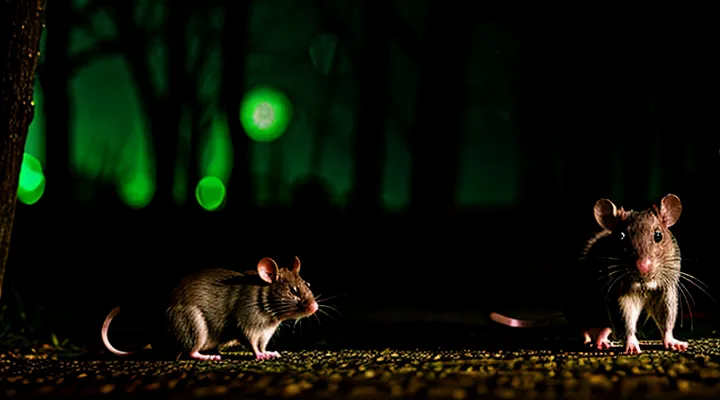
Understanding Rat Vision
The Rodent Eye: Structure and Function
Photoreceptors: Rods and Cones
Rats possess a retina dominated by rod photoreceptors, which detect single photons and operate efficiently under minimal illumination. Rods generate neural signals without mediating color perception, providing high sensitivity at the expense of spatial resolution.
Cones are fewer in the rat eye, respond to higher light levels, and enable discrimination of wavelength differences. Their rapid response supports detailed vision when ambient light is sufficient, but they contribute little to vision in darkness.
Key distinctions between the two cell types are:
- Sensitivity: rods detect low-intensity light; cones require brighter conditions.
- Spatial acuity: cones deliver fine detail; rods offer coarse resolution.
- Color processing: cones mediate chromatic information; rods do not.
- Temporal response: cones react faster; rods have slower recovery.
The rat retina contains roughly 95 % rods and 5 % cones, a ratio that favors scotopic performance. This composition allows rats to perceive movement and outline shapes in near‑dark environments, though they cannot resolve fine detail or perceive colors under such conditions.
Consequently, rats are capable of vision in dim settings, relying primarily on rod-mediated detection, while cone-mediated color vision remains restricted to well‑lit scenarios.
Tapetum Lucidum and its Role
Rats possess a highly developed visual system adapted for dim conditions, yet they lack the reflective layer known as the tapetum lucidum. This structure, present in many nocturnal mammals, consists of a sheet of cells behind the retina that scatters incoming photons back through photoreceptors, effectively doubling the chance of photon absorption. Its absence in rats means that light that passes through the retina is not redirected, limiting the amplification of weak illumination.
Key functions of the tapetum lucidum in species that have it include:
- Increased photon capture, extending the functional range of scotopic vision.
- Enhancement of visual sensitivity without requiring larger pupils.
- Contribution to the characteristic eye shine observed when light reflects off the eyes of certain animals.
Because rats rely on alternative adaptations—large pupils, a high density of rod cells, and a retinal architecture optimized for low-light contrast—they compensate for the missing reflective layer. The rod‑dominated retina, combined with a relatively wide visual field, provides sufficient performance for nocturnal foraging and predator avoidance.
In summary, the tapetum lucidum serves as a light‑recycling mechanism that boosts visual acuity in very low light. Rats achieve comparable nocturnal capability through retinal and ocular modifications, rendering the reflective tissue unnecessary for their ecological niche.
Specialized Adaptations for Low Light
Pupillary Dilation Capabilities
Rats depend on rapid adjustment of pupil diameter to maintain vision during low‑light activity. The iris contains well‑developed smooth‑muscle fibers that enable pupils to expand from roughly 2 mm in bright conditions to over 6 mm in darkness, a three‑fold increase in area that dramatically boosts light entry.
Maximum dilation occurs within 200–300 ms after a sudden reduction in ambient illumination, a speed that exceeds the typical human response by a factor of two. The dilation range is supported by a high density of rod photoreceptors in the retina, allowing the enlarged pupil to deliver sufficient photons for image formation even at scotopic levels.
Key aspects of rat pupillary dilation:
- Expansion from 2 mm to >6 mm diameter (≈9‑fold increase in light‑gathering area).
- Onset latency ≈ 200 ms; peak dilation reached within 300 ms.
- Iris musculature composed of both sphincter and dilator fibers, providing fine control.
- Integration with rod‑rich retina enhances visual sensitivity below 1 cd/m².
These physiological traits enable rats to detect objects and navigate environments where human vision would be ineffective, confirming that pupil dynamics are a primary mechanism supporting their nocturnal visual capability.
Peripheral Vision vs. Central Acuity
Rats rely on a visual system optimized for low‑light conditions. Their retinas contain a dense layer of rods, especially in the peripheral region, which grants high sensitivity to dim illumination but sacrifices fine detail.
- Peripheral vision: dominated by rod photoreceptors, detects motion and contrast across a wide field; enables navigation and predator avoidance when light is scarce.
- Central acuity: limited cone population provides modest spatial resolution; supports tasks that require precise object discrimination, such as locating food items at close range.
The disparity arises from retinal topography. The ventral retina, which receives light from the upper visual field, contains the greatest rod density, extending the animal’s ability to sense silhouettes against a faint horizon. In contrast, the dorsal retina, aligned with the central visual axis, houses fewer rods and a modest cone mosaic, resulting in reduced sharpness but sufficient detail for short‑range foraging.
Consequently, rats perceive darkness primarily through a broad, motion‑sensitive peripheral field, while their central vision contributes only limited high‑resolution information. This arrangement explains why rats can navigate effectively in near‑total darkness yet display poor performance on tasks that demand fine visual discrimination.
How Rats Perceive Light
The Spectrum of Rat Vision
Ultraviolet Light Sensitivity
Rats possess a visual system adapted to dim environments, yet their sensitivity extends into the ultraviolet (UV) spectrum. The retina contains a high density of rods, which dominate low‑light vision, and a modest population of cones that include UV‑sensitive photopigments. These UV‑responsive cones enable detection of wavelengths below 400 nm, a range invisible to humans.
Experimental studies using UV‑transparent lighting demonstrate that rats can discriminate patterns presented in UV light when rod activation is minimal. Behavioral assays show increased accuracy in maze navigation when UV cues are available, indicating functional integration of UV signals into spatial perception.
Key aspects of rat UV sensitivity:
- UV‑sensitive cones express the S‑opsin photopigment, tuned to ~360 nm.
- Rods maintain peak sensitivity around 500 nm but contribute to overall luminance detection.
- The superior colliculus processes UV input, influencing orienting responses.
- UV perception assists in foraging, predator avoidance, and social signaling under twilight conditions.
Overall, ultraviolet light detection supplements the rat’s capacity to operate in low‑light habitats, augmenting the conventional rod‑driven scotopic vision.
Limited Color Perception
Rats possess a visual system optimized for low‑light environments rather than for rich color discrimination. Their retinas contain two cone photopigments, one maximally sensitive to ultraviolet wavelengths and another to middle‑range (green) light. This dichromatic arrangement allows limited color perception, but the spectral range is narrow compared to trichromatic mammals.
In scotopic (dim) conditions, rod photoreceptors dominate retinal activity. Rods are highly sensitive to photons but do not convey color information. Consequently, when illumination falls below the photopic threshold, rats rely almost exclusively on achromatic signals. Their ability to differentiate hues diminishes sharply, and visual processing becomes effectively monochromatic.
The restricted color palette influences nocturnal behavior in several ways:
- Enhanced motion detection and contrast sensitivity under low illumination.
- Reduced reliance on color cues for foraging or predator avoidance at night.
- Greater dependence on whisker tactile input and olfactory cues when visual detail is limited.
Overall, limited color perception does not impede rats’ capacity to navigate darkness; instead, it reflects an evolutionary trade‑off that favors rod‑mediated sensitivity over chromatic resolution. This adaptation enables effective night vision despite the absence of a broad color spectrum.
Detecting Movement in Darkness
Sensitivity to Changes in Illumination
Rats possess a visual system adapted to detect rapid fluctuations in ambient light. Their retinas contain a high proportion of rod photoreceptors, which dominate under scotopic conditions and enable detection of minute luminance changes. Rod-mediated signaling provides a threshold sensitivity approximately 100 times lower than that of human cones, allowing rats to perceive subtle variations in darkness.
Key characteristics of rat illumination sensitivity include:
- Temporal resolution: Rats respond to light intensity shifts within 30–50 ms, supporting navigation in dim environments.
- Contrast detection: Minimum detectable contrast under low-light levels reaches 5 % of background illumination, facilitating object discrimination.
- Adaptation speed: Dark adaptation completes in roughly 5 minutes, while light adaptation occurs within 1 minute, reflecting efficient photopigment regeneration.
- Neural integration: Superior colliculus and visual cortex neurons exhibit enhanced firing rates when luminance deviates from baseline, indicating central processing of illumination changes.
These physiological traits explain rats’ ability to maintain functional vision when ambient light is scarce, confirming that their visual apparatus is finely tuned to monitor and react to alterations in illumination.
Navigating by Contrast
Rats possess a visual system adapted to dim environments. Their retinas contain a high proportion of rod photoreceptors, which are sensitive to low photon levels but provide limited spatial resolution. Consequently, rats rely on cues other than fine detail when illumination is scarce.
Contrast detection compensates for reduced acuity. Rod‑driven pathways transmit differences in luminance across the visual field, allowing rats to distinguish objects from background based on relative brightness. This ability enables several behaviors:
- Locomotion along walls or obstacles that appear darker or lighter than surrounding surfaces.
- Identification of food items that contrast with substrate coloration.
- Navigation toward exit openings that differ in illumination from the interior.
Neural processing of contrast occurs primarily in the superior colliculus and visual cortex, where signals from rods are integrated with whisker and auditory inputs. The combined sensory information creates a map of relative light intensity, guiding movement without reliance on sharp images.
Ecologically, contrast‑based navigation supports nocturnal foraging and predator avoidance. By responding to silhouette edges and shadow boundaries, rats maintain orientation in burrows, tunnels, and open spaces where ambient light is minimal.
In summary, rats compensate for limited low‑light acuity by exploiting luminance differences. Contrast sensitivity constitutes the core mechanism that permits effective movement and survival in near‑dark conditions.
Beyond Sight: Other Senses
Olfactory Prowess in Darkness
Scent Trails and Navigation
Rats compensate for limited visual input in dim environments by constructing and following chemical maps. Their nasal epithelium detects volatile compounds at concentrations as low as parts per trillion, allowing the detection of conspecific urine, feces, and glandular secretions left along preferred routes. These odor signatures persist for hours, creating stable pathways that guide individuals toward food sources, nesting sites, and escape tunnels.
Key aspects of olfactory navigation include:
- Trail deposition: As rats move, they excrete minute amounts of scent from specialized flank glands, reinforcing familiar corridors.
- Pattern recognition: The brain integrates spatial distribution of odors with proprioceptive feedback, forming a mental representation of the route.
- Dynamic updating: When a trail is disrupted, rats increase sniffing frequency, sample ambient air, and adjust direction toward the strongest gradient.
Laboratory experiments demonstrate that rats deprived of scent cues lose efficiency in maze tasks, even when ambient light is increased. Conversely, enhancing odor trails restores performance, confirming that olfactory information outweighs visual input for spatial orientation in low‑light conditions.
Detecting Predators and Prey
Rats navigate nocturnal environments by relying on a combination of sensory systems optimized for low‑light conditions. Their retinas contain a high density of rod photoreceptors, which amplify weak photons and permit image formation at illumination levels far below human perception. Although visual acuity remains limited, the enhanced scotopic vision enables rats to detect movement and contrast of predators or conspecifics silhouetted against dim backgrounds.
In addition to vision, rats employ tactile and auditory cues to locate threats and food sources. The whisker array (vibrissae) provides precise spatial mapping of nearby objects, while the auditory pathway processes ultrasonic frequencies emitted by insects and the vocalizations of predators. Olfactory receptors detect volatile compounds associated with prey and danger, further refining behavioral responses.
Key sensory contributions to predator and prey detection:
- Rod‑dominated vision: sensitivity to low luminance, motion detection, limited detail.
- Vibrissal system: real‑time surface profiling, obstacle avoidance, threat identification.
- Ultrasonic hearing: detection of high‑frequency sounds produced by insects and predators.
- Olfaction: recognition of chemical signatures of food and predator scent marks.
The integration of these modalities forms a robust detection network, allowing rats to survive and forage efficiently in darkness.
Auditory Acuity and Echolocation
High-Frequency Sound Detection
Rats compensate for limited visual acuity in dim conditions by relying on an exceptionally sensitive auditory system. Their cochlea contains hair cells tuned to frequencies well above the human hearing range, allowing detection of ultrasonic calls between 70 kHz and 80 kHz. This high‑frequency capability enables precise localization of conspecific vocalizations, insect prey, and environmental echoes that are invisible to the eye.
Neural pathways from the cochlear nucleus to the inferior colliculus preserve fine temporal and spectral information, supporting rapid discrimination of microsecond‑scale echo delays. Behavioral tests show that rats can orient toward ultrasonic sources with latency under 200 ms, even when ambient light is insufficient for visual tracking.
Key characteristics of rat ultrasonic hearing:
- Frequency range: 20 kHz – 100 kHz, peak sensitivity around 75 kHz.
- Threshold: approximately 10 dB SPL at peak frequencies, surpassing human thresholds by 30 dB.
- Spatial resolution: interaural time differences as low as 10 µs provide angular accuracy within 5°.
- Integration with whisker input: concurrent tactile and auditory cues enhance obstacle avoidance.
The auditory system thus functions as a primary sensory modality for navigation and foraging in low‑light settings, supplementing the modest visual input available to rats. By exploiting ultrasonic cues, rats maintain effective environmental awareness when visual information is scarce.
Spatial Awareness Through Sound
Rats compensate for limited visual input by relying heavily on auditory cues to maintain orientation and avoid obstacles. Their large, mobile pinnae capture a broad frequency range, including ultrasonic emissions that other species cannot detect. The auditory cortex processes interaural time and intensity differences, enabling precise localization of sound sources within centimeters.
Sound‑driven spatial mapping operates alongside whisker‑mediated tactile feedback. When a rat moves, vibrations travel through the substrate and are detected by the somatosensory system, while airborne sounds are analyzed by the auditory pathway. Integration of these modalities creates a three‑dimensional representation of the environment that supports navigation in near‑total darkness.
Key mechanisms of auditory spatial awareness in rats:
- Interaural time difference (ITD) detection – measures microsecond disparities between ears to infer direction.
- Interaural level difference (ILD) detection – compares sound pressure levels for lateral positioning.
- Frequency‑specific filtering – isolates ultrasonic vocalizations and environmental noises for rapid processing.
- Auditory scene analysis – separates overlapping sounds, allowing focus on relevant cues such as predator footsteps or conspecific calls.
- Cross‑modal integration – combines auditory data with whisker‑derived tactile information to refine spatial maps.
Tactile Exploration: Whiskers and Vibrissae
Environmental Mapping and Obstacle Avoidance
Rats navigate dim environments by constructing internal representations of their surroundings. Tactile receptors on the mystacial vibrissae detect surface contours, allowing the animal to generate a spatial map without reliance on bright illumination. This map updates continuously as whisker signals integrate with proprioceptive feedback, producing a dynamic model of nearby obstacles.
Obstacle avoidance emerges from the interaction of multiple sensory channels. When a whisker contacts an object, neural circuits in the barrel cortex trigger rapid motor adjustments that redirect the head and body away from the barrier. Simultaneously, auditory cues from footfalls and low‑intensity ultrasonic emissions supplement the tactile map, refining the animal’s perception of distance and shape.
Key mechanisms supporting navigation in low‑light conditions include:
- Whisker‑driven spatial mapping – high‑resolution detection of texture and geometry.
- Multisensory integration – combination of tactile, auditory, and olfactory inputs.
- Fast sensorimotor loops – sub‑100 ms response times for corrective movements.
- Neural plasticity – adaptation of cortical representations based on experience.
The resulting system enables rats to traverse cluttered habitats, locate food sources, and evade predators despite minimal visual information. By relying on precise environmental mapping and rapid obstacle avoidance, they maintain functional mobility in darkness.
Social Interaction and Communication
Rats possess a visual system adapted to scotopic conditions, allowing detection of movement and contrast at very low illumination. This capability supports social behaviors that occur during nocturnal activity periods, when ambient light is minimal.
In addition to tactile whisker input and ultrasonic vocalizations, visual cues contribute to the identification of conspecifics, assessment of distance, and coordination of group movements. Low‑light vision enables rats to recognize the silhouette and gait of familiar individuals, reducing reliance on chemical signals alone.
Dominance encounters, mating rituals, and collective foraging benefit from rapid visual appraisal of opponents or partners. The ability to discern subtle body postures under dim light accelerates the resolution of hierarchical disputes and facilitates synchronized locomotion within a colony.
Experimental investigations using infrared‑recorded dark arenas demonstrate that rats with impaired rod function display delayed response times in social approach tests and reduced accuracy in locating vocalizing peers. Quantitative analysis links visual acuity thresholds to the frequency and timing of ultrasonic calls exchanged during interactions.
Key observations:
- Dim‑light vision supplements tactile and auditory channels for conspecific recognition.
- Visual perception under low illumination shortens decision latency in dominance and mating contexts.
- Disruption of scotopic vision correlates with diminished social coordination and communication efficiency.
Implications for Rat Behavior
Nocturnal Lifestyle Explained
Foraging and Hunting Strategies
Rats rely on a highly developed visual system that functions in dim illumination, allowing them to locate food and avoid predators when ambient light is minimal. Their retinas contain a dense layer of rod cells, which amplify weak photon signals, and a reflective tapetum lucidum that redirects light onto photoreceptors, enhancing sensitivity. This physiological adaptation enables effective navigation and foraging in near‑dark conditions.
Foraging strategies exploit both tactile and olfactory cues, supplemented by limited vision. Rats:
- Use whisker‑mediated exploration to detect objects and texture while moving through narrow passages.
- Follow scent trails left by conspecifics or prey, employing a keen olfactory apparatus to discriminate food sources.
- Perform short, rapid saccades to scan the immediate environment, integrating visual input with whisker and nose data.
When hunting small arthropods or competing with other rodents, rats employ predatory tactics that combine stealth and opportunism. They:
- Approach prey silently, relying on reduced visual detection by the target.
- Use rapid, precise bites guided by tactile feedback from whiskers and mouth receptors.
- Consume captured prey immediately, minimizing exposure to larger predators.
Overall, the synergy of low‑light vision, whisker sensing, and smell equips rats with versatile foraging and hunting capabilities that function efficiently in conditions where most other mammals would be impaired.
Avoiding Diurnal Predators
Rats are primarily active during twilight and night, which reduces exposure to visual hunters that hunt by sight in daylight. Their ability to detect limited illumination allows them to move while most diurnal predators are still active but less effective.
The retina of a rat contains a high proportion of rods, providing sensitivity to low light levels. A reflective layer behind the retina, the tapetum lucidum, redirects photons, enhancing visual input when ambient light is scarce. These adaptations permit navigation and foraging in conditions that render most daytime predators blind or uncertain.
Behavioral tactics complement visual adaptations. Rats emerge from burrows shortly after dusk, limiting the window during which they are visible. They favor concealed routes, such as narrow passages and dense vegetation, that obstruct a predator’s line of sight. Auditory and olfactory cues further guide movement away from areas where predators are detected.
- Emergence timed to low-light periods
- Preference for covered pathways and underground tunnels
- Rapid retreat to burrows at the first sign of daylight
- Use of scent trails to avoid territories of known predators
- Coordination of group movements to reduce individual exposure
These combined visual and behavioral strategies enable rats to minimize encounters with predators that rely on daylight vision.
Interaction with Human Environments
Impact of Artificial Light on Rats
Artificial lighting profoundly alters the visual and physiological environment of laboratory and urban rats. Continuous exposure to bright, broadband sources suppresses melatonin secretion, disrupting circadian rhythms and impairing sleep architecture. Reduced melatonin levels correlate with altered activity patterns, decreased exploratory behavior, and heightened stress hormone concentrations.
Artificial illumination also modifies retinal adaptation. Rats possess a high density of rod photoreceptors, enabling low‑light vision. Persistent light exposure diminishes rod sensitivity, prolonging dark‑adaptation time and decreasing visual acuity during brief periods of darkness. Consequently, rats tested under variable lighting conditions may exhibit compromised performance in navigation and foraging assays.
Metabolic consequences accompany light‑induced circadian disruption. Studies report increased food intake, weight gain, and altered glucose tolerance in rats maintained under 24‑hour light cycles. These metabolic shifts amplify susceptibility to obesity‑related pathologies and interfere with experimental outcomes that rely on stable physiological baselines.
Key impacts of artificial light on rats:
- Suppression of melatonin → circadian misalignment
- Reduced rod responsiveness → impaired scotopic vision
- Elevated corticosterone → heightened stress response
- Altered feeding behavior → metabolic dysregulation
Mitigation strategies include implementing dim‑light phases, using light spectra that minimize melanopsin activation, and adhering to consistent light‑dark cycles (e.g., 12 h light/12 h dark). Such measures preserve natural visual function and maintain physiological stability, ensuring reliable experimental data.
Designing Effective Pest Control
Rats possess a highly sensitive visual system that functions in dim illumination, enabling them to navigate and forage during nighttime hours. This physiological trait reduces the effectiveness of conventional visual deterrents that rely on bright lights, necessitating control strategies that target other sensory modalities and behavioral patterns.
- Deploy bait stations with rodent‑specific attractants; place them along established runways identified through droppings or gnaw marks.
- Integrate ultrasonic emitters calibrated to frequencies that disrupt rodent auditory perception without affecting non‑target species.
- Employ scent‑based repellents containing predator‑derived compounds; apply them to entry points and nesting zones.
- Install motion‑activated traps that trigger upon detection of heat signatures, ensuring activation only when rodents are present.
Design programs should incorporate regular monitoring to assess population trends, adjust bait placement, and replace depleted devices. Documentation of trap captures and bait consumption provides data for refining dosage levels and determining optimal deployment intervals. Combining sensory‑targeted tools with systematic surveillance yields a robust framework for reducing rodent activity in environments where low‑light vision confers an advantage.