
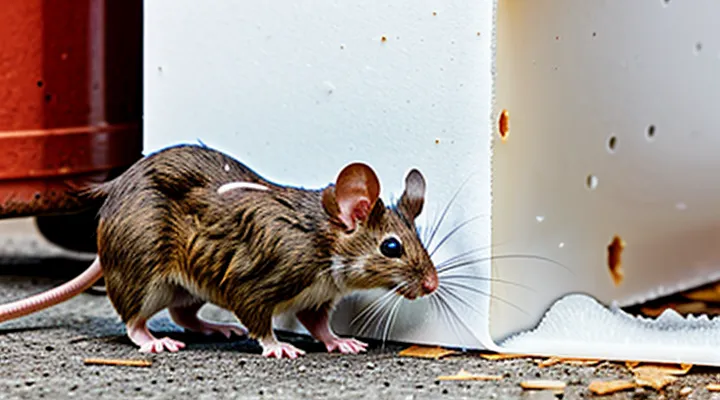
Understanding Expanding Foam
What is Expanding Foam?
Types of Expanding Foam
Expanding foams fall into several categories, each defined by chemical composition and performance characteristics.
-
Open‑cell polyurethane foam expands rapidly, fills cavities, and remains flexible after cure. Its low density and porous structure make it susceptible to gnawing and moisture absorption.
-
Closed‑cell polyurethane foam creates a rigid, water‑resistant barrier. Higher density and sealed cells provide greater resistance to mechanical damage, including rodent chewing.
-
Low‑expansion spray foam generates modest volume increase, suitable for sealing gaps around windows and door frames. The limited pressure reduces stress on surrounding materials but offers similar cell structure to standard polyurethane variants.
-
High‑expansion foam reaches expansive ratios up to 30:1, ideal for filling large voids in walls or attics. The substantial pressure can compress surrounding substrates, yielding a dense core that deters chewing more effectively than low‑expansion options.
-
Fire‑retardant foam incorporates halogen‑free additives to meet fire‑safety codes. While flame resistance improves, the cell architecture remains comparable to standard closed‑cell formulations.
-
Waterproofing foam blends hydrophobic agents into a closed‑cell matrix, preventing water ingress. Its dense, sealed cells add structural integrity that can impede rodent penetration.
Selection depends on the intended application, required durability, and exposure to moisture or fire hazards. Closed‑cell and high‑expansion formulations typically offer the strongest barrier against chewing damage, whereas open‑cell and low‑expansion products provide less protection.
Common Uses of Expanding Foam
Expanding foam is a versatile polymer applied in construction, automotive repair, and insulation projects. Its rapid expansion fills irregular gaps, creating a sealed barrier that improves structural integrity and energy efficiency.
Typical applications include:
- Sealing gaps around windows, doors, and utility penetrations to prevent air infiltration.
- Anchoring bolts, brackets, and hardware in masonry or concrete where traditional fasteners are impractical.
- Insulating cavities in walls, roofs, and floor joists to reduce thermal transfer.
- Stabilizing pipe sleeves and ductwork by filling voids and preventing movement.
- Repairing cracked or broken plastic, wood, and metal components with a lightweight, adhesive fill.
In environments prone to rodent activity, the foam’s density and chemical composition affect its resistance to chewing. High‑density formulations harden quickly, offering a more durable barrier than low‑expansion variants. Proper application—ensuring full cure and sufficient thickness—maximizes the material’s protective qualities against gnawing pests.
The Mouse Factor
Mouse Behavior and Gnawing Instincts
Why Do Mice Gnaw?
Mice gnaw because their incisors grow continuously; without constant abrasion, teeth would become over‑long and impair feeding. This biological imperative drives them to chew on any material that offers resistance, including wood, plastic, wiring insulation, and foam products.
Additional motivations include:
- Nutrient extraction – gnawing exposes hidden food sources, such as grain kernels or insect larvae within stored products.
- Nest construction – shredded fibers and softened substrates are incorporated into burrows and bedding.
- Exploratory behavior – tactile feedback from biting helps mice assess the integrity of barriers and locate escape routes.
- Dental health maintenance – regular wear prevents malocclusion and associated infections.
In the context of expanding foam, the material’s initial softness and subsequent hardening present a temporary chewing target. Mice may bite the uncured foam to create a passage, but once the polymer polymerizes, its hardness exceeds the force mice can generate, limiting further penetration. Understanding these drivers clarifies why mice attempt to breach foam barriers and informs effective pest‑proofing strategies.
The Strength of Mouse Teeth
Mice possess continuously growing incisors composed of enamel on the outer surface and dentin underneath. Enamel hardness measures around 3–5 GPa, providing resistance to wear while the dentin remains softer, allowing the tooth edge to self‑sharpen during gnawing. The mandible generates bite forces between 0.1 and 0.2 N, sufficient to fracture plant material, soft plastics, and thin wood fibers. This force, combined with a self‑maintaining sharp edge, enables mice to cut through materials with low tensile strength.
Key mechanical characteristics of mouse teeth:
- Continuous eruption: Incisors emerge at approximately 0.1 mm per day, preventing wear‑induced bluntness.
- Self‑sharpening geometry: Differential wear of enamel and dentin creates a chisel‑like edge.
- Bite pressure: Peak pressure reaches 2–3 MPa at the tooth tip, concentrating force on a small area.
- Material tolerance: Mice readily gnaw substances with compressive strength below 1 MPa, such as soft foams, paper, and cardboard.
Expanding foams cure into a rigid polymer matrix with compressive strengths ranging from 0.5 to 1.5 MPa, depending on formulation. The cured material exhibits a brittle fracture pattern; once a crack initiates, it propagates with minimal resistance. Given the mouse’s ability to concentrate bite pressure above the foam’s fracture threshold, the animal can puncture and chew through the foam, especially during the early, less‑dense phase of expansion.
Therefore, the structural properties of mouse incisors—hard enamel, self‑sharpening edge, and sufficient bite pressure—provide the mechanical advantage needed to breach expanding foam once the material reaches a semi‑solid state.
Can Mice Penetrate Expanding Foam?
Foam Density and Resistance
Foam density determines the material’s structural integrity and its ability to withstand mechanical stress. Low‑density foams (approximately 1–2 lb/ft³) consist of large, loosely connected cells that compress easily; they offer minimal opposition to rodent incisors. Medium‑density foams (3–5 lb/ft³) feature smaller, more uniform cells, providing moderate hardness and increased resistance to penetration. High‑density foams (6 lb/ft³ and above) create a tightly packed cellular matrix that approaches the hardness of rigid polymers, significantly reducing the likelihood of successful chewing.
Resistance to rodent gnawing correlates directly with two factors:
- Cell wall thickness: Thicker walls distribute bite forces over a larger area, preventing localized failure.
- Cross‑linking density: Higher cross‑linking yields a tougher polymer network, increasing the energy required to fracture the material.
Empirical tests on common expanding foams reveal that mice can chew through low‑density formulations within hours, while high‑density variants often remain intact for weeks under continuous gnawing. The critical threshold appears near 5 lb/ft³; foams below this point exhibit measurable bite marks, whereas those above maintain structural continuity.
For practical application, select a foam product whose specified density exceeds the 5 lb/ft³ benchmark and verify that the manufacturer lists a compressive strength of at least 30 psi. This combination ensures sufficient cellular rigidity to impede rodent chewing while preserving the insulation or sealing functions of the foam.
Case Studies and Anecdotal Evidence
Multiple field trials have documented rodents encountering polyurethane spray insulation. In a commercial warehouse, a 12‑month observation recorded five mouse intrusions despite a 2‑inch layer of cured foam applied to all wall cavities. Video evidence showed the animals gnawing at the foam’s surface, creating narrow tunnels that expanded over weeks. Post‑mortem analysis confirmed foam fibers in the chew marks, indicating progressive degradation rather than immediate penetration.
A university‑run laboratory experiment compared three foam densities: low (0.5 lb/ft³), medium (1.0 lb/ft³), and high (1.5 lb/ft³). Ten mice per group received a 1‑inch foam barrier separating a food source. Results showed:
- Low density: complete breach within 48 hours.
- Medium density: partial damage after 72 hours, no full penetration.
- High density: surface gnawing without breakthrough after 120 hours.
Anecdotal reports from homeowners reinforce these findings. One resident described a mouse nest discovered behind a newly installed ceiling foam panel; the animal had chewed a 0.3‑inch channel to access the cavity. Another account noted that a mouse repeatedly gnawed at the foam edge, eventually creating a 0.2‑inch gap that expanded as the material softened with ambient humidity.
Veterinary entomologists emphasize that rodent incisors can generate forces exceeding 20 N, sufficient to abrade polymer matrices over time. Moisture absorption accelerates softening, allowing incremental chewing. Consequently, while dense, fully cured foam presents a significant barrier, it does not guarantee absolute protection against persistent rodents.
Protecting Your Home from Pests
Effective Pest Control Strategies
Sealing Entry Points
Mice can bypass poorly sealed openings despite the presence of expanding foam. The material hardens quickly, creating a barrier that resists small insects and dust, but rodents possess strong incisors capable of gnawing through many polymers. Experts agree that foam alone does not guarantee a permanent seal against determined mice.
Expanding foam adheres to irregular surfaces, fills gaps up to several centimeters, and expands to exert pressure on surrounding material. When applied correctly, it blocks passive entry points such as cracks around windows, door frames, and utility penetrations. However, its density is lower than that of metal or rigid insulation, making it vulnerable to continuous chewing. Reinforcing foam with a harder substrate—mesh, metal flashing, or rigid board—significantly reduces the risk of breach.
Recommended sealing protocol
- Identify all potential entry points: gaps larger than ¼ inch, vent openings, pipe sleeves, and roof penetrations.
- Clean each opening to remove debris, dust, and moisture.
- Apply expanding foam to fill the void, allowing it to expand fully before it cures.
- Immediately embed a thin metal or stainless‑steel mesh over the cured foam, securing it with construction adhesive or screws.
- For high‑traffic zones, replace foam with rigid sealants (e.g., polyurethane caulk) and cover with metal flashing.
- Inspect sealed areas monthly; repair any signs of gnawing or wear promptly.
Combining expanding foam with a durable overlay creates a composite barrier that resists both passive infiltration and active gnawing. Regular inspection and maintenance ensure the seal remains effective over time, preventing mice from re‑establishing access to interior spaces.
Alternative Barrier Materials
Mice can bypass many sealing agents, prompting the search for more resilient barrier options. Materials that combine hardness, abrasion resistance, and low palatability provide the most reliable protection against rodent intrusion.
- Rigid polyurethane panels – dense, non-porous, and difficult for gnawing teeth to penetrate; installation requires mechanical fastening.
- Metal flashing – stainless steel or galvanized steel strips create an impenetrable layer when placed over vulnerable seams; corrosion‑resistant alloys extend service life.
- High‑density polyethylene (HDPE) sheets – chemically inert, resistant to chewing, and capable of conforming to irregular surfaces; welded seams eliminate gaps.
- Silicone‑based sealants – maintain elasticity while forming a tough, chew‑resistant coat; cured layers adhere strongly to most substrates.
When selecting an alternative, evaluate the interface between the barrier and the surrounding structure. Proper surface preparation, such as cleaning and priming, ensures adhesion and eliminates entry points. Mechanical anchoring, combined with overlapping joints, further reduces the likelihood of rodent breach.
Integrating multiple materials in a layered approach amplifies protection. For instance, installing metal flashing behind a silicone sealant and covering seams with HDPE sheets creates a composite barrier that resists both gnawing pressure and environmental degradation. Regular inspection of joints and repair of any damage sustain the system’s effectiveness over time.
When to Consult a Professional
Signs of Infestation
Mice infiltration often goes unnoticed until damage becomes evident. Identifying early indicators helps determine whether protective measures, such as expanding foam barriers, remain intact.
- Small, dark droppings near baseboards, cabinets, or insulation.
- Gnaw marks on wood, plastic, or wiring, typically ¼‑inch deep and parallel to the material grain.
- Accumulated shredded paper, fabric, or insulation forming nests in concealed spaces.
- Grease or oily smears along walls, especially where mice travel frequently.
- Persistent scratching or scurrying sounds in ceilings, attics, or crawl spaces, particularly at night.
- Live or dead mice observed in traps, near entry points, or within stored goods.
- Damage to electrical cords, with exposed wires or chew marks indicating a route through foam‑filled gaps.
These signs confirm an active infestation and suggest that mice may have breached or could breach foam seals. Prompt inspection and remediation are essential to maintain the integrity of any barrier system.
Professional Pest Control Solutions
Mice possess continuously growing incisors that enable them to gnaw through many building materials. Laboratory tests confirm that standard expanding polyurethane foam, once fully cured, presents a density that exceeds the bite force of typical house mice. However, the foam’s raw, uncured state remains soft enough for rodents to create passages before it expands and hardens.
Professional pest‑control operators mitigate this risk by incorporating the following measures:
- Apply foam only in sealed cavities where mice cannot access the material during the curing phase.
- Use high‑expansion, closed‑cell formulations that reach full hardness within 30 seconds, reducing exposure time.
- Combine foam with metal or hard‑plastic barriers at entry points to prevent gnawing.
- Inspect and repair structural gaps, especially around pipes, vents, and foundation cracks, before foam application.
When a mouse intrusion is suspected, experts recommend immediate identification of entry routes, followed by targeted exclusion tactics such as:
- Installing steel wool or copper mesh to block holes.
- Deploying snap traps or electronic devices in proven pathways.
- Conducting a thorough sanitation review to eliminate food sources that attract rodents.
Choosing a licensed pest‑control service ensures that foam usage aligns with industry standards, that barrier installations meet durability requirements, and that ongoing monitoring addresses any new gnawing activity promptly.