
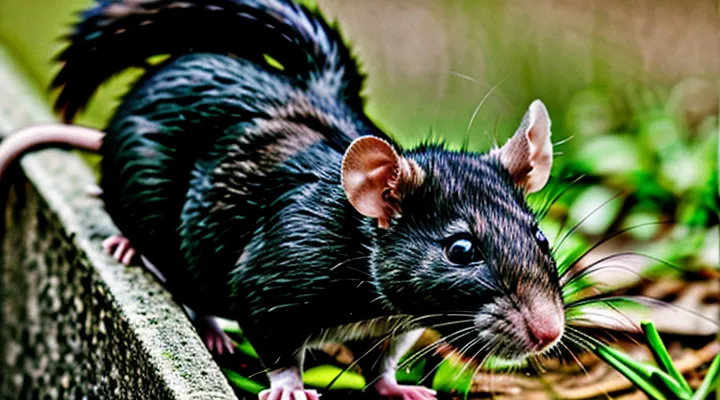
Understanding Rabies Transmission
What is Rabies?
Rabies is an acute, progressive encephalitis caused by a neurotropic virus of the genus Lyssavirus. The virus infects the central nervous system, leading to fatal disease once clinical signs appear.
The etiological agent is a single‑stranded RNA virus belonging to the family Rhabdoviridae. It replicates in peripheral nerves before traveling centripetally to the brain. The virus is highly conserved across mammalian hosts.
Transmission occurs primarily through the saliva of infected animals. Common routes include:
- Bites that breach the skin
- Licks on mucous membranes or open wounds
- Contamination of scratches with infected saliva
Rodents, including rats, can become infected, but documented cases of direct transmission to humans are extremely rare.
Clinical progression in humans follows three stages: prodromal symptoms (fever, malaise), acute neurological signs (hydrophobia, aerophobia, hyperactivity), and coma leading to death. Diagnosis relies on detection of viral RNA in saliva, cerebrospinal fluid, or skin biopsies.
Prevention strategies focus on vaccination and post‑exposure management:
- Pre‑exposure immunization for high‑risk personnel
- Immediate wound cleansing with soap and water
- Administration of rabies immunoglobulin and a series of rabies vaccines within the recommended timeframe
Effective control of rabies hinges on animal vaccination programs and public awareness of exposure risks. The disease remains preventable when timely prophylaxis is applied.
How Rabies Spreads
Transmission Routes
Rabies spreads primarily through the exchange of infected saliva with a host’s nervous tissue. In rodents, the virus is present in the salivary glands after incubation, making direct exposure the principal risk factor for human infection.
- Bite from a rabid rat, delivering saliva into muscle or subcutaneous tissue.
- Contact of contaminated saliva with open wounds, abrasions, or mucous membranes (eyes, nose, mouth).
- Inoculation through scratches that become contaminated with infected saliva.
- Rare exposure during handling of infected carcasses, where aerosols of saliva or neural tissue may be inhaled.
Indirect routes such as environmental contamination, vector-borne transmission, or foodborne exposure lack documented evidence for rats. Effective prevention relies on avoiding direct contact with the saliva of potentially infected rodents and seeking immediate post‑exposure prophylaxis after any bite or saliva‑related injury.
Factors Affecting Transmission
Rats are uncommon carriers of the rabies virus, yet several variables determine whether transmission to a person can occur. The likelihood hinges on the presence of infectious virus in the rodent’s salivary glands, the severity of the wound inflicted, and the amount of virus introduced during the bite or scratch. Environmental temperature influences viral stability; cooler conditions prolong virus viability outside the host, increasing exposure risk.
Key determinants include:
- Species susceptibility – certain rodent species exhibit lower viral replication rates, reducing transmissibility.
- Viral load – high concentrations of rabies particles in oral secretions elevate infection probability.
- Exposure route – direct inoculation through a deep puncture wound presents greater danger than superficial contact.
- Human factors – lack of post‑exposure prophylaxis, unvaccinated status, and delayed medical attention raise the risk of disease development.
- Seasonality – periods of increased rodent activity and breeding may amplify encounters with infected individuals.
Effective risk mitigation requires prompt wound cleansing, immediate assessment by health professionals, and administration of rabies immunoglobulin and vaccine when indicated. «Prompt intervention dramatically reduces the chance of rabies onset after rodent exposure».
Rodents and Rabies: The Scientific Perspective
Rabies in Rodent Populations
Prevalence in Wild Rodents
Rats belong to the order Rodentia, a group in which natural rabies infection is exceptionally rare. Surveillance data from North America, Europe, and Asia consistently show that wild rodents account for less than 0.1 % of all confirmed rabies cases in wildlife. The few documented instances involve:
- squirrels, chipmunks, or groundhogs that acquired the virus from a primary reservoir such as raccoons, foxes, or skunks;
- isolated reports of laboratory‑raised rodents infected experimentally, not reflecting natural conditions.
Field studies in the United States (CDC, 2023) recorded 0 % rabies positivity among 2 500 captured wild rats, mice, and voles. Similar surveys in the United Kingdom (Public Health England, 2022) found no rabid specimens among 1 800 rodents examined. In regions where canine rabies persists, rodent testing remains negative, with the virus confined to carnivorous and chiropteran hosts.
The low prevalence is attributable to several factors:
- rodents possess high metabolic rates and short lifespans, limiting the period for viral replication;
- the rabies virus requires neural tissue invasion, which is inefficient in small rodent species;
- ecological niches place rodents downstream of typical rabies reservoirs, reducing exposure opportunities.
Consequently, the risk of a wild rat transmitting rabies to a human is negligible. Public health guidance emphasizes bite management for mammals known to sustain natural rabies cycles, while rodents are generally excluded from routine post‑exposure prophylaxis considerations.
Susceptibility of Rodents to Rabies
Rodents, including rats, exhibit a markedly lower natural susceptibility to rabies virus than carnivorous mammals. Laboratory studies demonstrate that infection can be induced under artificial conditions, yet clinical disease rarely develops in wild populations. The limited incidence reflects both reduced exposure to infected vectors and inherent resistance of rodent species.
Key observations regarding rodent susceptibility:
- Experimental inoculation of rats often results in subclinical infection or rapid clearance of the virus.
- Field surveillance reports detect rabies in rodents at frequencies below 0.1 % of all confirmed cases.
- Transmission potential from a rodent to a human requires a bite or significant saliva contact; documented human cases linked to rodents are exceedingly rare.
The primary barrier to transmission lies in the low viral replication within rodent neural tissue, which diminishes viral shedding in saliva. Consequently, the risk of a rat serving as a source of rabies for humans is minimal compared with known reservoirs such as raccoons, skunks, foxes, and bats.
Documented Cases of Rodent-to-Human Transmission
Rarity of Transmission Events
Rats are infrequently identified as vectors for rabies infection in humans. Epidemiological records show only isolated cases where laboratory‑confirmed rabies originated from rodent species, and these incidents are typically associated with experimental exposure or severe bite injuries.
- Documented human rabies cases linked to rats number fewer than ten worldwide over the past century.
- Most reports involve captive or laboratory rats rather than wild populations.
- Transmission requires direct inoculation of saliva containing the virus into a wound; casual contact or indirect exposure rarely results in infection.
The low incidence reflects several biological factors. Rats possess a relatively short incubation period for the virus, limiting the time they can shed infectious saliva before succumbing to disease. Additionally, rat bite wounds are often shallow, reducing the volume of viral load introduced. Consequently, the probability of a rat‑to‑human rabies event remains exceptionally low compared to established reservoirs such as bats, foxes, or raccoons.
Specific Rodent Species Involved (If Any)
Rats are rarely implicated in rabies transmission. Surveillance data from North America and Europe show that confirmed rabid rodents are almost exclusively ground squirrels, chipmunks, and prairie dogs, which belong to the Sciuridae family. Laboratory experiments demonstrate that laboratory rats can become infected after direct inoculation, but natural infection is extremely uncommon because rodents typically die before the virus reaches salivary glands.
Key points regarding rodent involvement:
- Ground squirrels (genus Callosciurus and related species) – documented cases of rabid individuals and occasional human exposure.
- Chipmunks (genus Tamias) – occasional reports of rabies in wild populations.
- Prairie dogs (genus Cynomys) – recognized reservoirs in certain endemic areas, linked to human cases via bites.
- Other rodents, including common house rats (Rattus norvegicus and Rattus rattus) – experimental susceptibility confirmed, but field evidence of transmission to humans is absent.
The low prevalence of rabies in rats reflects their rapid disease progression, which limits viral shedding in saliva. Consequently, the risk of a rat transmitting rabies to a person is considered negligible compared to identified rodent reservoirs.
The Risk of Rabies from Rats
The Low Risk Assessment
Biological Reasons for Low Risk
Rats are infrequently involved in rabies transmission to people because several biological factors limit the virus’s ability to proliferate in this host. The virus requires specific neural pathways and receptor compatibility that are poorly matched in rodents. Consequently, infection often results in abortive replication, preventing the development of high viral loads necessary for onward transmission.
Key factors reducing risk include:
- Limited salivary gland infection; the virus rarely reaches the glands that produce infectious saliva.
- Low viral titers in brain tissue; when infection occurs, replication remains minimal compared with typical reservoir species.
- Strong innate immune response; interferon‑mediated mechanisms in rats suppress viral spread more efficiently than in carnivorous mammals.
- Short infectious period; clinical signs appear briefly, reducing opportunities for bites that could convey the pathogen.
These biological constraints collectively produce a low probability that a rat can serve as a source of rabies for humans.
Epidemiological Data and Observations
Rats are rarely identified as primary reservoirs of rabies; surveillance systems in North America and Europe report fewer than ten confirmed cases of rabid rats per decade. Laboratory testing of wild-caught Rattus spp. shows seroprevalence rates below 0.1 %, indicating minimal exposure to the virus in natural populations.
Epidemiological investigations of human exposures reveal:
- Most documented incidents involve rats that have been bitten by confirmed rabid carnivores (e.g., foxes, raccoons) rather than acquiring infection independently.
- In the United States, the CDC records zero human rabies deaths attributable to direct rat bites, despite isolated reports of suspected exposure.
- Studies in Asia report occasional detections of rabies antigen in urban rat colonies, yet no subsequent human cases have been linked to these findings.
Comparative risk assessment places rats below other rodent species such as squirrels and groundhogs, which have documented instances of transmitting rabies to humans. The low incidence of rabies-positive rats, combined with the absence of documented human fatalities, supports the conclusion that rat-to-human transmission is exceedingly uncommon.
When to Be Concerned About a Rat Bite
Identifying a Potentially Rabid Rat
When a rat is suspected of carrying the rabies virus, immediate visual assessment and behavioral observation become essential. Physical indicators include a ragged coat, unexplained weight loss, and visible lesions near the mouth or nose. Neurological signs often precede fatal outcomes: uncoordinated movement, tremors, or paralysis of the hind limbs. Aggressive or unusually fearful responses to human presence also merit attention; typical rats avoid contact, whereas a rabid individual may bite or display erratic attacks.
Key observations for identification:
- Disorientation or circling behavior
- Excessive salivation or foaming at the mouth
- Sudden changes in activity level, ranging from hyperactivity to lethargy
- Unprovoked aggression toward handlers or other animals
- Unusual vocalizations, such as high‑pitched squeals
Laboratory confirmation requires brain tissue analysis, usually through direct fluorescent antibody testing. Until diagnostic results are obtained, the animal should be considered potentially infectious, and appropriate personal protective equipment must be worn during handling or necropsy. Post‑exposure prophylaxis for any person bitten or scratched by a suspect rat should follow established medical guidelines without delay.
Scenarios Requiring Medical Attention
Rats can serve as carriers of the rabies virus; direct contact with infected saliva or nervous‑system tissue poses a genuine health threat. Prompt medical evaluation is essential when exposure occurs, because once clinical signs appear, the disease is almost invariably fatal.
- Bite or puncture wound caused by a rat, especially if the animal shows abnormal behavior or appears sick.
- Scratch that breaks the skin and is contaminated with rat saliva.
- Contact of mucous membranes or an open wound with rat saliva, brain tissue, or other bodily fluids.
- Exposure in regions where rabies is known to circulate among rodent populations and where the animal’s vaccination status is unknown.
- Unexplained neurological symptoms (e.g., confusion, agitation, hydrophobia) following any of the above exposures.
In each scenario, immediate wound cleansing, administration of rabies immunoglobulin, and initiation of the vaccine schedule are recommended by health authorities. Delays increase the risk of disease progression and reduce the likelihood of successful prophylaxis.
Prevention and Management
Post-Exposure Prophylaxis (PEP)
When PEP is Recommended
Rats are infrequently identified as rabies reservoirs, yet a bite or scratch from a potentially infected animal warrants careful evaluation. Post‑exposure prophylaxis (PEP) serves as a preventive measure to halt viral replication after a credible exposure.
PEP is recommended when any of the following conditions are met:
- The rat was confirmed or highly suspected to be rabid, based on laboratory testing or clinical signs.
- The animal displayed abnormal behavior, aggression, or neurological symptoms at the time of the incident.
- The bite or scratch penetrated the skin, producing an open wound or mucosal exposure.
- The incident occurred in a region where rabies is endemic in wildlife, and the animal could have been exposed to rabid vectors.
- The victim has not been previously immunized against rabies, or the immunization status is uncertain.
In such scenarios, the recommended regimen includes immediate wound cleansing with soap and water, administration of rabies immunoglobulin (for previously unvaccinated individuals), and a series of rabies vaccinations on days 0, 3, 7, and 14 (or 28) after exposure. Prompt medical consultation is essential to assess risk and initiate treatment without delay.
The PEP Protocol
A rat bite or scratch that may involve a rabid animal requires immediate implementation of the post‑exposure prophylaxis (PEP) protocol. Prompt wound cleansing reduces viral load and is the first critical action.
The protocol consists of three components:
- Thorough irrigation of the wound with soap and running water for at least 15 minutes, followed by application of an antiseptic solution.
- Administration of rabies‑specific immunoglobulin (RIG) infiltrated around the wound site, with any remaining volume given intramuscularly at a distant site. The dose is calculated at 20 IU per kilogram of body weight.
- Initiation of the rabies vaccine series on day 0, with subsequent doses on days 3, 7, and 14 (or day 28 for immunocompromised patients). Each dose is delivered intramuscularly into the deltoid muscle.
Monitoring includes verification of RIG infiltration, observation for adverse reactions, and completion of the vaccine schedule. Serological testing may be performed in high‑risk cases to confirm adequate immune response. Documentation of the exposure event, animal identification, and treatment timeline is essential for public‑health tracking.
General Rabies Prevention Strategies
Vaccinating Pets
Rabies is a viral disease transmitted through the saliva of infected mammals. Rodents such as rats are rarely carriers, while domestic dogs and cats represent the primary source of human exposure in many regions. Immunizing these common household animals creates a barrier that prevents the virus from reaching people.
Key reasons for vaccinating pets against rabies include:
- Elimination of a major source of human infection
- Compliance with public‑health regulations that mandate vaccination for dogs and cats in most jurisdictions
- Reduction of animal suffering caused by a fatal disease
- Facilitation of safe interaction between pets and wildlife, limiting cross‑species transmission
Vaccination programs are supported by veterinary authorities and are required by law in many countries. Failure to maintain up‑to‑date immunity in pets increases the risk of accidental bites from an infected animal, which could lead to exposure for humans. Regular booster shots sustain protective antibody levels and ensure that the pet population remains resistant to the virus.
Overall, protecting pets through routine rabies immunization directly safeguards human health by removing the most common conduit for the disease, even though rats themselves pose minimal direct threat.
Avoiding Wild Animals
Rats are wild rodents capable of harboring the rabies virus; transmission to humans can occur through bites, scratches, or contact with infected saliva. Direct interaction with free‑living rats therefore represents a measurable health risk.
Avoidance measures:
- Eliminate food sources that attract rodents; store waste in sealed containers.
- Seal entry points to buildings; install screens on vents and doors.
- Refrain from feeding or handling wild rats; use gloves and protective clothing if contact is unavoidable.
- Maintain a clean environment; remove debris, overgrown vegetation, and standing water.
- Implement professional pest‑control programs; employ traps or rodenticides according to local regulations.
If exposure to a rat suspected of carrying rabies occurs, immediate cleansing of the wound with soap and water, followed by prompt medical evaluation, is essential. Vaccination of domestic animals and awareness of local wildlife disease reports further reduce the likelihood of human infection.