
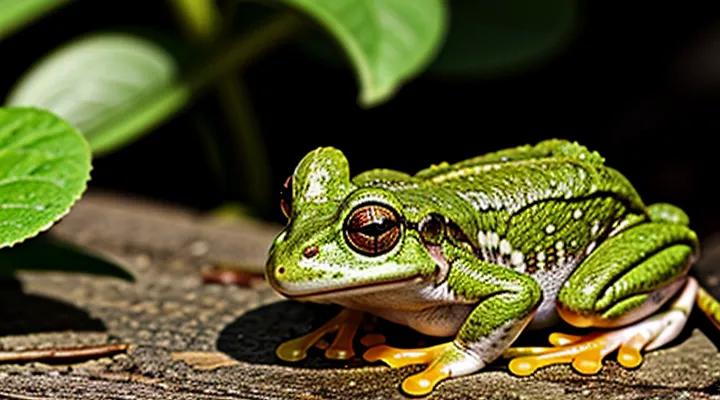
Generalist vs. Specialist Feeders
Insectivores
Frogs are primarily insectivores, consuming a range of arthropods such as flies, beetles, and moths. Their digestive systems are adapted for processing soft-bodied prey, with short intestines and acidic gastric juices that break down chitin efficiently.
Key characteristics of insectivorous amphibians:
- Jaw morphology designed for rapid closure, enabling capture of fast-moving insects.
- Tongue elasticity that allows projection up to twice the body length, ensuring contact with airborne or surface-dwelling prey.
- Metabolic rates that align with the high protein content of insects, supporting growth and reproduction.
Occasionally, larger frog species capture vertebrate animals, including small rodents. This behavior does not redefine their classification; it reflects opportunistic feeding when prey size matches the frog’s gape and handling capacity. The transition from strict insect consumption to occasional mouse predation involves:
- Increased body size, providing a wider mouth opening.
- Enhanced muscular strength to subdue larger prey.
- Environmental factors that bring rodents within reach, such as low vegetation near water sources.
Even when a frog consumes a mouse, the majority of its diet remains insect-dominated. Studies of stomach contents across multiple habitats confirm that insects constitute over 80 % of total biomass ingested by most frog populations. Therefore, the insectivorous label accurately describes the predominant feeding strategy, while acknowledging that size and opportunity can expand dietary scope to include small mammals.
Opportunistic Predators
Frogs exemplify opportunistic predators, consuming prey that is readily available rather than adhering to a strict species list. Their diet adapts to seasonal fluctuations, habitat changes, and individual size, allowing them to target organisms ranging from insects to small vertebrates.
Mice represent a potential food source for larger amphibians when circumstances align. A frog must exceed a specific body mass to subdue a mouse, possess sufficient jaw strength, and execute a rapid strike that immobilizes the rodent. Successful ingestion depends on the frog’s ability to swallow the prey whole or to dismember it before consumption.
Key factors influencing a frog’s capacity to consume a mouse include:
- Body length exceeding 10 cm, which correlates with stronger musculature.
- Presence of robust, keratinized tongue and jaw structures.
- Environmental conditions that reduce escape opportunities for the mouse (e.g., low light, confined spaces).
- Prior experience with vertebrate prey, which improves hunting technique.
When these criteria converge, a frog can capture and digest a mouse, demonstrating the flexibility inherent in opportunistic predation.
The Anatomy of a Frog's Mouth and Digestive System
Jaw Structure
Frogs possess a cranial architecture specialized for rapid mouth opening and suction capture. The lower jaw is a single, elongated bone (the mandible) that hinges on a flexible joint called the quadratojugal‑articular complex. This joint allows the mouth to open to angles exceeding 150°, creating a large oral cavity essential for engulfing prey.
Key anatomical elements that enable a frog to ingest large items include:
- Hyobranchial apparatus – a bony and cartilaginous structure that expands the throat, increasing volume during swallowing.
- Adductor muscles – powerful muscles that close the jaws quickly, generating the force needed to secure struggling prey.
- Elastic skin – highly stretchable tissue that accommodates objects larger than the resting mouth size.
Despite these adaptations, the size and rigidity of a mouse exceed the functional limits of most frog species. The mandible’s length and the maximum expansion of the hyobranchial system restrict the diameter of ingestible prey to roughly one‑third of the frog’s head width. Consequently, even the most robust jaw mechanisms cannot reliably capture or process a mouse without risking injury or incomplete ingestion.
Tongue Mechanics
Frogs rely on a specialized tongue to capture prey larger than typical insects, including small mammals such as mice. The tongue’s architecture combines a skeletal support of elastic cartilage with a muscular sling that stores elastic energy. When a frog initiates a strike, the hyoglossus and genioglossus muscles contract, releasing the stored energy and propelling the tongue forward at velocities exceeding 3 m s⁻¹. The projection can reach distances of 1.5–2 times the frog’s snout‑vent length, allowing contact with prey located beyond the immediate reach of the jaws.
During extension, a thin mucus layer coats the dorsal surface, creating a high‑adhesion interface. Surface tension and viscous forces enable the tongue to adhere to smooth or furred surfaces without slipping. After contact, the retracting muscles generate a rapid retraction force of up to 0.5 N, pulling the prey toward the mouth while maintaining grip through continuous mucus secretion.
Key mechanical parameters:
- Projection speed: 3–5 m s⁻¹
- Maximum reach: 1.5–2 × snout‑vent length
- Retraction force: up to 0.5 N
- Mucus viscosity: optimized for adhesion on wet and dry substrates
A mouse typically weighs 15–30 g, far exceeding the average mass of insects that most frogs consume. The tongue’s force output and adhesive capacity are sufficient to secure a mouse’s body, but the frog must compensate for the increased inertia. Successful ingestion requires a coordinated bite after tongue retraction, as the jaws close to immobilize the prey before swallowing.
In summary, the frog’s tongue combines high‑speed projection, elastic energy storage, and a specialized adhesive mucus to capture and transport vertebrate prey. These mechanical adaptations make the consumption of a mouse biomechanically feasible, provided the frog’s size and muscular strength match the prey’s mass.
Stomach and Digestion
Frogs possess a simple, muscular stomach that functions as a temporary storage chamber before chyme moves to the small intestine. The gastric lining secretes hydrochloric acid and pepsin, creating an environment capable of denaturing protein structures found in vertebrate tissue. Unlike mammals, the frog stomach lacks extensive folding; its capacity is limited by the overall size of the animal, typically accommodating prey no larger than the width of the mouth.
Digestive sequence begins with rapid swallowing, followed by muscular contractions that mix the ingested mouse with gastric secretions. Proteolytic activity breaks down muscle fibers, while acidic conditions inhibit bacterial growth. After several hours, partially digested material passes through the pyloric sphincter into the intestine, where pancreatic enzymes and bile further decompose nutrients for absorption.
Constraints on mouse consumption stem from mechanical and physiological limits:
- Mouth opening must exceed the widest part of the mouse’s torso.
- Stomach volume must be sufficient to hold the entire prey without excessive stretching.
- Digestive enzymes act slower on mammalian tissue than on insect exoskeletons, extending the processing period.
Large amphibians, such as the African bullfrog (Pyxicephalus adspersus) and the American bullfrog (Lithobates catesbeianus), regularly ingest small rodents. Their stomachs expand to accommodate the prey, and the acidic, proteolytic environment efficiently reduces the mouse to absorbable nutrients within 12–24 hours. Smaller species lack the mouth gape and gastric capacity required for whole-mouse ingestion and therefore restrict their diet to insects and other invertebrates.
What Frogs Typically Eat
Common Prey Items
Frogs exhibit a carnivorous diet that centers on readily available, small, soft‑bodied organisms. Their hunting strategy relies on rapid tongue projection, visual cues, and a digestive system adapted to process arthropods and other invertebrates. Consequently, the majority of their meals consist of the following prey types:
- Insects (flies, beetles, moths, mosquitoes)
- Arachnids (spiders, harvestmen)
- Worms (earthworms, nematodes)
- Small crustaceans (crayfish juveniles, aquatic shrimp)
- Tadpoles and fish larvae
- Occasionally, amphibian eggs and newly hatched tadpoles
Larger vertebrates, such as tiny rodents, fall outside the typical prey spectrum. While a particularly large frog may capture a mouse under exceptional circumstances, the physiological limits of tongue length, gape size, and digestive capacity make such events rare and non‑representative of normal feeding behavior. The prevailing prey profile remains dominated by insects and other small invertebrates, reflecting both ecological availability and the anatomical constraints of most frog species.
Size Limitations
Frogs can swallow vertebrate prey only when the animal fits within the physical limits of the predator’s mouth, body cavity, and digestive system. The primary constraints are mouth aperture, tongue extension, and stomach capacity, each scaling with the frog’s overall size.
The mouth opening of most anurans expands to roughly 30–40 % of head width. Consequently, prey must be narrow enough to pass through this opening. Tongue projection length, which determines the distance a frog can capture prey, rarely exceeds 1.5 times the frog’s snout‑vent length. Stomach distensibility allows temporary expansion, but the volume generally accommodates a maximum of 15–20 % of the frog’s body mass.
Typical size ratios observed across species:
- Small tree frogs (≤5 cm SVL): prey ≤1 cm length, ≤0.2 g weight.
- Medium pond frogs (10–12 cm SVL): prey up to 2–3 cm length, ≤1 g weight.
- Large terrestrial frogs (≥15 cm SVL, e.g., African bullfrog): prey up to 5 cm length, ≤5 g weight, occasionally a juvenile mouse.
Exceptions arise when a frog’s morphology deviates from the norm. Species with unusually wide mouths and highly elastic stomachs can ingest prey approaching 30 % of their own mass, but such events remain rare and typically involve very young rodents.
In summary, the ability of a frog to consume a mouse hinges on the proportional relationship between frog size and prey dimensions; only the largest, most robust species can meet the necessary size thresholds.
Can a Frog Physically Eat a Mouse?
Size Discrepancy
Frogs vary from a few centimeters to nearly thirty centimeters in length, while house mice average five to ten centimeters and weigh up to thirty grams. This size gap means many common frogs lack the physical capacity to engulf a mouse whole.
Mouth aperture determines the maximum prey diameter. Species with a gape exceeding fifteen millimeters can accommodate a mouse’s torso, but the stomach must also expand to hold the additional mass. Muscular, elastic skin permits temporary distension, yet digestive enzymes are optimized for soft, amphibian prey rather than furred mammals.
The African bullfrog (Pyxicephalus adspersus) and the South American horned frog (Ceratophrys spp.) regularly capture rodents. Their robust jaws generate sufficient bite force to subdue a mouse, and their digestive tracts process the protein-rich meal without adverse effects.
Key factors influencing a frog’s ability to consume a mouse:
- Mouth gape relative to prey width
- Body mass ratio (prey should not exceed 30 % of frog’s weight)
- Jaw strength and strike speed
- Environmental temperature affecting metabolism
When these parameters align, a frog can successfully ingest a mouse despite the apparent size discrepancy.
Swallowing Challenges
Frogs capable of preying on vertebrates face distinct mechanical obstacles when attempting to ingest a mouse. The prey’s length often exceeds the frog’s mouth opening, requiring the animal to stretch its buccal cavity beyond typical limits. The mouse’s rigid spine resists deformation, creating points of resistance that can impede smooth passage through the esophagus.
Key challenges include:
- Mouth‑to‑esophagus transition: The frog must align the mouse’s body with the relatively narrow glottis, a process complicated by the mouse’s wider torso.
- Muscular coordination: Rapid, synchronized contraction of the jaw, tongue, and throat muscles is necessary to generate sufficient thrust without causing tissue damage.
- Ventilation interference: Swallowing large prey temporarily obstructs the airway, demanding precise timing to prevent hypoxia.
- Digestive load: The frog’s stomach must accommodate a mass that can represent a substantial proportion of its body weight, stressing enzymatic capacity and gastric wall elasticity.
Anatomical adaptations mitigate these issues. The skin and connective tissues of the mouth and throat exhibit remarkable elasticity, allowing temporary expansion. Vomerine teeth secure the prey, preventing slippage during transport. A highly distensible stomach can expand up to several times its resting volume, storing the mouse until enzymatic breakdown proceeds.
Failure to manage these factors often results in choking or regurgitation. Improper alignment can cause the mouse’s spine to lodge in the esophagus, leading to tissue trauma. In extreme cases, the frog may abort the attempt, releasing the prey before completing ingestion.
Extreme Cases and Anecdotal Evidence
Large Frog Species
Large frog species exceed 10 cm in snout‑vent length, with some individuals reaching over 30 cm. Their robust bodies, powerful hind limbs, and wide mouths enable the capture of sizable prey compared to typical anurans.
The digestive tract of these amphibians tolerates vertebrate tissue. Stomach acidity, enzymatic secretions, and a flexible gut accommodate mammals up to the size of a small rodent. Muscular jaws and a strong bite force allow a frog to subdue a mouse, though the act requires rapid immobilization to prevent escape.
Species documented to consume mice include:
- African bullfrog (Pyxicephalus adspersus): regularly ingests rodents up to 150 g.
- Goliath frog (Conraua goliath): opportunistically feeds on small mammals when available.
- South American horned frog (Ceratophrys spp.): captures and swallows mice and small birds.
- Pacific giant salamander (Dicamptodon spp.) – often grouped with large frogs in dietary studies, also preys on rodents.
Constraints arise from prey mass relative to mouth opening; a mouse exceeding the frog’s gape may cause choking or injury. Additionally, handling live mammals demands precise strike timing; failure can result in prey injury and possible disease transmission.
Overall, large frogs possess the anatomical and physiological adaptations necessary to eat mice, but successful predation depends on species‑specific size limits and hunting proficiency.
Unusual Prey Observations
Frogs are traditionally classified as insectivores, yet documented instances reveal a capacity to subdue vertebrate prey larger than typical insects. Field reports from tropical wetlands describe adult bullfrogs (Lithobates catesbeianus) capturing and ingesting small rodents, including juvenile mice, after ambushing them near water edges. Laboratory observations confirm that these amphibians can generate sufficient bite force to immobilize a mouse, then employ rapid swallowing motions to accommodate the prey within their expansive esophagus.
Key factors influencing such behavior include:
- Size disparity: Frogs exceeding 10 cm in snout‑vent length possess mouth openings large enough to accept a mouse of up to 15 g.
- Habitat overlap: Areas where amphibians and rodent populations intersect increase encounter rates.
- Nutritional incentive: Vertebrate tissue offers higher protein and fat content than insects, providing a substantial energy boost during breeding seasons.
Reports from North American herpetologists note that captured mice often exhibit signs of stress, such as trembling, before being seized. In some cases, frogs have been observed storing the prey temporarily in the buccal cavity, allowing digestion to commence while the animal remains partially exposed. This behavior suggests an adaptive response to occasional scarcity of traditional insect prey.
Overall, the evidence demonstrates that frogs can, under specific ecological conditions, expand their diet to include small mammals. These atypical feeding events contribute to a broader understanding of amphibian trophic flexibility and underscore the importance of considering vertebrate prey in ecological assessments of frog populations.
The Role of Habitat and Environment
Prey Availability
Frogs that target vertebrate prey rely on the presence of suitably sized animals within their hunting range. The likelihood of a frog encountering a mouse depends on habitat overlap, seasonal activity patterns, and population density of small mammals.
Key factors influencing mouse availability include:
- Habitat proximity: Wetland edges, forest streams, and agricultural margins provide environments where rodents frequently forage, increasing encounter rates for opportunistic amphibians.
- Temporal activity: Mice are most active during dusk and night, aligning with the peak foraging period of many nocturnal frog species.
- Population fluctuations: Mast seeding events or crop harvests can cause rodent surges, temporarily raising the pool of potential prey.
- Predator competition: Presence of birds, snakes, and larger mammals can reduce mouse numbers, limiting access for frogs.
When mouse abundance is high, larger frog species such as the African bullfrog (Pyxicephalus adspersus) and the South American horned frog (Ceratophrys spp.) have documented instances of capturing and ingesting rodents. In ecosystems where rodent populations remain low, these frogs shift to more reliable invertebrate prey, reflecting adaptive foraging strategies driven by prey availability.
Predation Pressure
Predation pressure describes the intensity of predator–prey interactions that shape survival rates, foraging strategies, and morphological traits. In amphibians, the pressure exerted by larger vertebrate predators limits the size range of prey that a frog can safely capture, while competition among frogs influences opportunistic attacks on unusually large prey such as rodents.
Frogs occasionally consume mice when the amphibian’s body size exceeds the typical insect prey spectrum and when environmental conditions concentrate rodents near water bodies. Such events are recorded primarily in large species (e.g., African bullfrogs, American bullfrogs) that possess strong jaws, expandable stomachs, and ambush hunting tactics. The predation pressure exerted by these frogs on small mammal populations remains low relative to their impact on invertebrates, but the occasional capture of a mouse demonstrates adaptive flexibility under high‑competition scenarios.
Key factors that modulate predation pressure in frog–mouse interactions include:
- Body mass of the frog relative to the mouse; larger frogs achieve higher capture success.
- Habitat overlap; shared aquatic or semi‑aquatic environments increase encounter rates.
- Availability of conventional prey; scarcity of insects drives frogs toward alternative prey.
- Presence of higher‑order predators; risk of being detected while handling a large prey item reduces willingness to attack.
- Seasonal temperature; warmer periods enhance metabolic demand, prompting riskier foraging.
These elements collectively determine the frequency and ecological significance of frogs preying on mice, illustrating how predation pressure drives occasional dietary expansion beyond typical amphibian feeding patterns.
Conservation and Ecological Implications
Food Web Dynamics
Frogs that capture vertebrate prey such as mice occupy a higher trophic level than the typical insect‑based diet associated with most amphibians. This shift alters energy flow within the pond‑forest interface, moving biomass from primary consumers to secondary or tertiary predators. When a frog consumes a mouse, the transferred nutrients include larger quantities of protein, fat, and micronutrients, which can accelerate growth and reproductive output compared to an insect diet.
The inclusion of rodents in a frog’s diet creates several measurable effects on the surrounding food web:
- Reduced mouse population density in riparian zones, decreasing pressure on seed‑predating insects and small mammals.
- Increased predation pressure on insects as frogs grow larger and require more prey to sustain higher metabolic rates.
- Enhanced nutrient deposition through frog excretion, enriching aquatic habitats with nitrogen and phosphorus derived from vertebrate digestion.
These dynamics generate feedback loops. Higher frog biomass can elevate predation on both invertebrates and small vertebrates, potentially stabilizing or destabilizing local community structure depending on resource availability. Conversely, a decline in mouse numbers may limit an alternative energy source for frogs, forcing a return to insect consumption and reshaping the trophic cascade.
Understanding the role of amphibian vertebrate predation clarifies how a single dietary option can reverberate through multiple trophic connections, influencing species abundance, nutrient cycling, and ecosystem resilience.
Impact of Invasive Species
Frogs have been recorded capturing and swallowing small mammals, including mice, a behavior that becomes significant when non‑native species enter an ecosystem. Invasive amphibians or rodents can shift predator‑prey relationships, forcing native frogs to expand or alter their diet.
When an alien frog species establishes itself, it often competes with indigenous amphibians for insects and other invertebrates. Simultaneously, introduced rodents provide a new, larger prey item that some frog species exploit. This dual pressure can lead to:
- Reduced availability of traditional insect prey for native frogs.
- Increased predation on introduced mice, potentially limiting rodent populations.
- Elevated risk of pathogen transfer between invasive and native amphibians.
- Habitat modification caused by invasive species that changes shelter and foraging sites.
Management strategies focus on preventing introductions, early detection of invasive frog populations, and controlling rodent numbers in sensitive habitats. Monitoring dietary shifts through stomach‑content analysis or DNA metabarcoding provides data to assess ecological impact and guide mitigation efforts.