
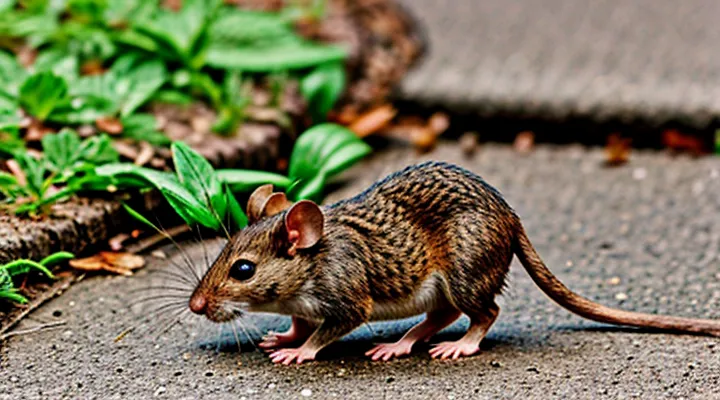
Understanding Mouse Identification
General Mouse Characteristics
Size and Shape
The striped brown mouse typically measures 7–10 cm in head‑body length, with a tail nearly equal to or slightly longer than the body, ranging from 8 to 12 cm. Adult weight usually falls between 12 and 20 g.
Body proportions are compact; the torso is rounded, and the hindquarters are slightly broader than the forequarters. Ears are proportionally large, extending about one‑third of the head length. The dorsal stripe runs centrally from the nape to the base of the tail, contrasting with the overall brown coloration. The tail is slender, covered with fine scales, and often exhibits a lighter ventral surface.
Key size and shape indicators:
- Head‑body length: 7–10 cm
- Tail length: 8–12 cm, often longer than the body
- Weight: 12–20 g
- Ear length: roughly 1 cm (≈ ⅓ head length)
- Body shape: rounded torso, broader hindquarters, central dorsal stripe
These measurements and morphological traits distinguish the striped brown mouse from other small rodent species in the same habitat.
Fur Texture and Color Variations
The fur of the striped brown mouse exhibits a consistent, fine texture that feels soft to the touch. Individual hairs lie flat against the skin, creating a sleek appearance that distinguishes the species from coarser‑textured rodents. Seasonal shedding may slightly alter the surface smoothness, yet the underlying softness remains a reliable identifier.
Coloration presents several distinct elements. The dorsal coat ranges from medium to dark brown, with a sharply defined stripe running longitudinally along the spine. This stripe typically displays a lighter, sometimes reddish hue that contrasts with the surrounding fur. The ventral side is markedly paler, often approaching a creamy or light gray shade. Variations in hue may occur due to age, habitat lighting, or regional genetic differences, but the combination of a brown base, a contrasting dorsal stripe, and a lighter belly remains characteristic.
Key visual cues for identification:
- Uniformly fine, soft fur across the body
- Dorsal stripe of lighter color, clearly separated from the surrounding brown
- Ventral coloration noticeably lighter than the dorsal region
- Minimal presence of mottling or irregular patches
Recognizing these texture and color patterns enables accurate identification of the mouse species without reliance on additional morphological features.
The Distinctive Stripe Feature
Dorsal Stripe Location
The dorsal stripe of a brown mouse with a back marking typically runs longitudinally along the midline of the spine. Its upper edge aligns with the vertebral column, while the lower edge extends to the lateral side of the flank, creating a clearly defined band that contrasts with the surrounding pelage.
Key characteristics of the stripe’s placement:
- Originates near the nape of the neck, often just posterior to the occipital region.
- Extends caudally to the base of the tail, frequently terminating before the tail’s first vertebrae.
- Width varies between 2 mm and 5 mm, widening slightly over the lumbar region before tapering toward the tail.
- Color intensity may fade toward the posterior end, resulting in a lighter hue near the tail base.
Recognition of these positional features enables reliable differentiation of the striped brown mouse from sympatric species lacking a comparable dorsal band.
Stripe Coloration and Width
The dorsal stripe of a brown mouse typically appears as a dark brown to black band, contrasting with the lighter brown of the surrounding fur. Pigmentation results from increased melanin concentration along the vertebral line, producing a uniform hue that may fade slightly toward the tail tip.
Width of the stripe varies among individuals but remains within a narrow range. Adult specimens commonly exhibit a stripe width of 3–5 mm measured at the mid‑back, while juveniles display narrower bands of 2–3 mm. Geographic populations can differ by up to 0.5 mm, reflecting local adaptation.
Key diagnostic features of stripe coloration and width:
- Color: deep brown to black, consistent along the length of the back.
- Width: 3–5 mm in mature individuals; 2–3 mm in juveniles.
- Uniformity: minimal variation across the dorsal surface, with occasional slight tapering near the tail.
- Comparison: species lacking a dorsal stripe or possessing a lighter, irregular band are readily distinguished.
Accurate measurement of stripe dimensions, combined with color assessment, provides a reliable criterion for separating this brown mouse from sympatric rodents that lack a similarly defined dorsal marking.
Stripe Consistency Across Species
Stripe consistency provides a reliable metric for distinguishing the brown mouse with a dorsal stripe from sympatric rodents. The term refers to the uniformity of stripe attributes—width, hue, placement, and continuity—across individuals of a species.
In murid rodents, the stripe typically appears as a narrow, dark band running longitudinally from the nape to the mid‑back. The band maintains a constant width of approximately 2–3 mm and exhibits a uniform brown‑black coloration that contrasts with the surrounding pelage. Deviations from this pattern, such as broken or widened markings, usually indicate a different taxon.
Comparable patterns occur in several related species:
- Meadow vole (Microtus pennsylvanicus): faint, irregular dorsal streak, width variable, often fragmented.
- Wood mouse (Apodemus sylvaticus): broader, lighter‑gray stripe, may extend to the tail base.
- Harvest mouse (Micromys minutus): absent dorsal stripe; coloration uniform.
The persistence of a narrow, continuous stripe among diverse taxa suggests convergent adaptation for camouflage in leaf‑litter environments. Consistency across individuals within a species reinforces its diagnostic value.
For practical identification, observers should verify the following criteria:
- Stripe width remains within a narrow range (2–3 mm).
- Coloration stays uniformly dark without patches of lighter fur.
- Continuity extends from the neck to the mid‑back without interruption.
Meeting all three conditions strongly supports identification of the striped brown mouse, while failure to meet any indicates a likely misidentification.
Identifying Specific Species
Common Striped Mouse Species
The Striped Field Mouse (Apodemus agrarius)
The Striped Field Mouse (Apodemus agrarius) is a small rodent distinguished by a dark, longitudinal stripe extending from the shoulders to the rump. Adults measure 9–12 cm in head‑body length, with a tail roughly equal to the body length. The dorsal pelage is brownish‑gray, while the ventral side is pale gray‑white.
Key identification features include:
- A sharply defined black or dark brown stripe on the back, bordered by lighter fur;
- Large, rounded ears without prominent tufts;
- Dark eyes set forward on the skull;
- A tail covered with sparse hair, often darker on the dorsal surface;
- Hind feet with a well‑developed plantar pad, aiding in climbing.
Habitat preferences encompass open fields, meadows, and agricultural lands, where dense vegetation provides cover. The species thrives in temperate regions of Europe and northern Asia, frequently occupying the edges of forests and wetlands. Seasonal activity peaks in spring and autumn, coinciding with breeding periods.
Diet consists mainly of seeds, grains, and insects, reflecting an omnivorous feeding strategy. Reproductive output averages three to five litters per year, each containing four to six offspring. Juveniles attain independence within three weeks, after which they disperse to establish individual territories.
Distinguishing the Striped Field Mouse from similar rodents, such as the Wood Mouse (Apodemus sylvaticus), relies on the presence of the dorsal stripe and the proportionally longer tail. The Wood Mouse lacks a continuous stripe and exhibits a more uniform gray dorsal coat.
For reliable field identification, observers should:
- Scan the animal’s back for the characteristic stripe;
- Note ear size and absence of ear tufts;
- Compare tail coloration and hair density;
- Record habitat type to correlate with typical range.
These criteria enable accurate recognition of the Striped Field Mouse across its extensive geographic distribution.
Geographical Distribution
The striped brown mouse occupies a distinct range across temperate and subtropical zones of the Northern Hemisphere. Core populations reside in the following regions:
- Eastern Europe, extending from the Baltic states through Poland and into western Russia
- Central and southern China, particularly in the provinces of Sichuan, Yunnan, and Hubei
- The Korean Peninsula, with higher densities in forested foothills
- Northern Japan, especially on the islands of Honshu and Hokkaido
- Northwestern United States, concentrated in the Pacific Northwest and the Rocky Mountain foothills
Peripheral occurrences have been documented in the western Himalayas and in isolated pockets of the Caucasus Mountains. Habitat preference includes deciduous woodlands, mixed forest edges, and riparian corridors where ground cover provides concealment. Altitudinal distribution ranges from sea level up to approximately 2 500 m, with population density typically decreasing at higher elevations.
Seasonal migrations are minimal; individuals remain within their established territories year‑round, although juvenile dispersal may extend the range by several kilometers. Climatic tolerance spans moderate humidity to semi‑arid conditions, allowing the species to adapt to a variety of microclimates within its overall geographic envelope.
Habitat and Behavior
The «striped brown mouse» is a small murid characterized by a distinct dark stripe running longitudinally along the dorsal surface. Adult weight ranges from 15 to 25 g; body length averages 70–90 mm, with a proportionally long tail.
Habitat preferences include:
- Deciduous and mixed woodlands with dense leaf litter.
- Shrub‑dominated edges and hedgerows providing cover.
- Grassland patches featuring abundant seed heads.
- Moist soils near streams or seasonal ponds.
- Agricultural margins where grain stores are accessible.
Behavioral patterns are well documented. The species is primarily nocturnal, emerging at dusk to forage for seeds, insects, and soft plant material. Foraging occurs both on the ground and within low vegetation, employing agile climbing when necessary. Social organization consists of solitary individuals defending overlapping home ranges; occasional pairings occur during the breeding season. Breeding peaks in spring, with litters of three to six pups born after a gestation of approximately 21 days. Offspring are weaned within three weeks and reach sexual maturity by the second month.
Predation pressure originates from owls, foxes, and terrestrial snakes, positioning the mouse as a key prey item in its ecosystems. Seed consumption and dispersal contribute to vegetation regeneration, while insect predation aids in regulating invertebrate populations.
Other Distinguishing Marks
The brown mouse featuring a dorsal stripe can be distinguished by several additional characteristics that aid reliable identification.
Key external markers include:
- Tail: uniformly brown with a slightly lighter ventral surface, lacking the darker tip common in related species.
- Ears: proportionally large, covered with fine hair, and exhibit a pinkish hue on the inner surface.
- Whiskers: long, reaching beyond the nose tip, and display a dark tip contrasting with a lighter base.
- Foot pads: pink to light brown, lacking the dark pigmentation observed in some sympatric rodents.
- Fur texture: soft, dense undercoat with a glossy sheen on the back, while the sides appear matte.
These features, when evaluated together with the central stripe, provide a comprehensive profile for accurate field recognition.
The African Striped Mouse (Rhabdomys pumilio)
The African striped mouse (Rhabdomys pumilio) is a small rodent native to sub‑Saharan savannas, grasslands and rocky outcrops. Adults measure 80–110 mm in head‑body length, with a tail of comparable length. The dorsal pelage presents a distinctive pattern of dark longitudinal stripes alternating with lighter bands, a feature that differentiates it from other brownish mice lacking regular striping.
Key identification characteristics:
- Coat: dark brown to grayish dorsal fur crossed by 2–3 narrow black stripes extending from the shoulders to the rump; ventral side pale gray‑white.
- Ears: relatively large, rounded, with sparse hair.
- Tail: scaly, hairless, often bearing a dark tip.
- Feet: robust, with well‑developed pads and clawed toes adapted for climbing among rocks.
- Size: body mass 20–35 g; head‑body length 8–11 cm.
Habitat preferences include open woodland, semi‑arid scrub and areas with abundant ground cover. The species is primarily diurnal, foraging on seeds, insects and green vegetation. Its burrows are shallow, often situated under rocks or within dense grass.
Distribution ranges from southern Kenya through Tanzania, Zambia, Zimbabwe and into South Africa. Overlap with other small murids, such as the multimammate mouse (Mastomys sp.), is limited by the striped mouse’s reliance on rocky microhabitats and its distinctive pelage pattern.
When encountering a brown mouse with a stripe on the back, verification of the stripe count, tail condition and habitat type confirms identification as Rhabdomys pumilio, distinguishing it from sympatric species lacking these combined traits.
Range and Ecology
The striped‑back brown mouse (Apodemus sylvaticus var. striatus) occupies a broad distribution across temperate zones of Europe and western Asia. Its range extends from the Iberian Peninsula through central France, the British Isles, the Benelux countries, Germany, Poland, the Baltic states, and into the Balkans, reaching as far east as the Caucasus and northern Iran. In the British Isles the subspecies is most common in lowland woodlands and hedgerow networks, while in central Europe it predominates in mixed deciduous forests and agricultural margins.
Habitat selection favors areas with dense ground cover, abundant leaf litter, and moderate humidity. The mouse thrives in mature deciduous stands where understory shrubs provide nesting material and protection from predators. Adjacent field edges and scrub corridors serve as dispersal pathways, linking isolated woodland patches.
Diet consists primarily of seeds, nuts, and insects. Seasonal shifts see increased consumption of arthropods during spring, supporting reproductive output. Predation pressure derives mainly from raptors, small carnivorous mammals, and forced entry by domestic cats in peri‑urban settings.
Population density correlates with habitat connectivity; fragmented landscapes exhibit lower numbers and reduced genetic diversity. Conservation assessments list the subspecies as of least concern, yet local declines occur where intensive agriculture eliminates hedgerows and woodland corridors. Preservation of continuous vegetative cover and maintenance of buffer zones around fields are essential for sustaining viable populations.
Social Structure and Diet
The striped-backed brown mouse exhibits a predominantly solitary social organization. Individuals maintain exclusive home ranges that overlap only minimally with those of conspecifics, reducing direct interaction. Aggressive encounters are limited to breeding periods, during which males defend peripheral zones to secure mating opportunities. Females exhibit maternal care confined to nest sites, where offspring remain until weaning.
Dietary habits focus on opportunistic foraging within temperate woodland and grassland habitats. Food selection reflects seasonal availability and includes:
- Seeds of grasses and herbaceous plants
- Fallen nuts and acorns
- Invertebrates such as beetles, larvae, and earthworms
- Fruit fragments and berries
- Plant material, including buds and young shoots
Nutrient intake balances carbohydrate-rich seeds with protein-dense insects, supporting rapid growth and reproductive cycles. Foraging activity peaks during crepuscular hours, minimizing exposure to predators while maximizing resource acquisition.
Variations in Stripe Pattern
The stripe on a brown mouse’s dorsal surface exhibits several distinct variations that aid precise identification.
Variations in stripe width range from a thin, barely perceptible line to a broad band covering up to 30 % of the back’s surface area. Narrow stripes often indicate juvenile or subspecies A, while broader bands are typical of mature individuals of subspecies B.
Differences in coloration are observable along a spectrum from light tan to deep chocolate. A lighter stripe frequently merges with the surrounding fur, creating a subtle contrast, whereas a darker stripe stands out sharply against the brown background.
Pattern continuity can be classified as continuous, segmented, or intermittent. Continuous stripes extend unbroken from the neck to the tail base. Segmented stripes consist of multiple short sections separated by gaps of the base coat. Intermittent patterns display irregular breaks, sometimes forming a series of spots rather than a line.
The stripe’s position varies along the vertebral column. In some populations, the stripe aligns precisely with the spine; in others, it shifts laterally, appearing closer to the skin’s lateral edges. This lateral displacement often correlates with habitat type, such as dense underbrush versus open fields.
Number of stripes is another diagnostic feature. While a single dorsal stripe is most common, certain regional variants present dual parallel stripes or a central stripe accompanied by lateral flank markings.
Key identification points:
- Measure stripe width relative to total back length.
- Assess color contrast against surrounding fur.
- Determine continuity: continuous, segmented, or intermittent.
- Note stripe alignment: medial versus lateral.
- Count distinct dorsal markings.
Understanding these variations enables reliable differentiation between closely related brown mouse forms, supporting accurate field reporting and ecological studies.
Differentiating from Similar-Looking Rodents
Voles vs. Mice
Identifying a striped brown rodent requires separating true mice from voles, as both groups can display similar coloration. Accurate classification prevents misinterpretation of ecological data and guides appropriate management actions.
Key morphological distinctions:
- Size: voles generally measure 10‑15 cm in total length, while mice range from 12‑20 cm.
- Tail: voles possess short, hair‑covered tails (often less than half the body length); mice have longer, sparsely haired tails approaching body length.
- Skull shape: voles exhibit a broader, more rounded skull with a blunt snout; mice have a narrower skull and pointed snout.
- Feet: voles feature larger hind feet with noticeable pads; mice display smaller, more delicate hind feet.
Habitat and behavior differences clarify field observations:
- Voles favor dense ground cover such as tall grass, leaf litter, and underground burrow systems; they remain close to the soil surface.
- Mice prefer open fields, edge habitats, and structures offering vertical escape routes, often nesting in shallow nests above ground.
- Activity pattern: voles are primarily crepuscular to nocturnal, maintaining high population densities year‑round; mice show peak activity at night with seasonal fluctuations.
Practical identification steps:
- Observe tail length relative to body; a short, furry tail signals a vole.
- Examine head profile; a blunt snout indicates a vole, while a pointed snout suggests a mouse.
- Note habitat context; dense ground cover points to voles, whereas open or edge environments favor mice.
- Record foot size and pad development; larger, padded feet align with voles.
Applying these criteria enables reliable differentiation between «vole» and «mouse» specimens, ensuring correct identification of the brown rodent with a dorsal stripe.
Shrews vs. Mice
A brown, stripe‑backed small mammal may be either a mouse or a shrew; accurate identification relies on distinct physical and ecological traits.
Key morphological differences include:
- Tail length: mice possess a long, hairless tail often exceeding body length; shrews have a short, sparsely haired tail.
- Snout shape: mice display a rounded, blunt snout; shrews exhibit a pointed, elongated snout adapted for probing soil.
- Dentition: mouse incisors are continuously growing and chisel‑shaped; shrew teeth are sharp, uniform, and lack the prominent incisors of rodents.
- Ear size: mouse ears are relatively large and mobile; shrew ears are reduced, often hidden in fur.
Behavioral and habitat cues further separate the groups. Mice are primarily seed and grain eaters, frequenting fields, barns, and human structures. Shrews are active predators of insects and worms, inhabiting moist leaf litter, under logs, and near water sources. Activity patterns differ: mice are mainly nocturnal, while many shrews display crepuscular or diurnal foraging.
Practical steps for field identification:
- Observe tail proportion and hair coverage.
- Examine snout length and shape from a lateral view.
- Note ear visibility and size.
- Assess surrounding habitat and feeding signs.
- If possible, capture a quick photograph for later comparison with reference images of «Sorex» species and common mouse genera such as «Peromyscus» or «Mus».
Applying these criteria eliminates confusion between shrews and mice, ensuring reliable recognition of the striped brown mouse in its natural environment.
Juvenile Rodents with Developing Stripes
Juvenile rodents that exhibit emerging dorsal stripes often display coloration patterns distinct from adult individuals. In the early growth stages, the brown fur on the back may be intersected by a faint, linear pigment band that becomes more pronounced as the animal matures. This developmental feature assists field researchers in distinguishing young specimens from fully grown counterparts within the same species.
Key identification points for young mice with forming stripes include:
- Overall body length of 5–7 cm, indicating a sub‑adult size class.
- Dorsal coat primarily brown, with a lighter, narrow stripe extending longitudinally along the spine.
- Ventral surface uniformly pale, lacking the contrasting markings typical of older individuals.
- Tail length proportionate to body size, generally 80–90 % of the head‑to‑base measurement.
- Ear size modest, ears not yet fully erect, reflecting ongoing skeletal development.
Observing these characteristics in combination with habitat context—such as leaf litter, low vegetation, and moist microenvironments—provides reliable criteria for recognizing juveniles undergoing stripe formation. Accurate identification supports population monitoring and informs conservation strategies targeting early life stages.
Observation Techniques for Identification
Field Guide Usage
A field guide provides concise visual references, measurement ranges, and habitat notes essential for distinguishing a striped brown mouse from similar rodent species. Accurate identification relies on matching observed characteristics with the guide’s standardized entries.
Key steps for effective use:
- Locate the section covering small mammals of the region; focus on the subgroup of murine rodents.
- Compare dorsal coloration, noting the presence of a single, longitudinal stripe that contrasts with the surrounding brown fur.
- Measure body length and tail proportion; the guide lists typical dimensions for the target species.
- Examine ear size and whisker length; these metrics are detailed in the accompanying diagrams.
- Verify habitat description; the guide specifies environments where the striped form is most frequently encountered.
When discrepancies arise, consult the guide’s range map to confirm geographic overlap with the specimen’s collection site. Cross‑reference any behavioral notes, such as nocturnal activity patterns, to reinforce identification confidence.
Photographic Documentation
Photographic documentation of the brown mouse bearing a dorsal stripe provides the most reliable basis for field identification. High‑resolution images capture the distinct coloration pattern, enabling comparison with reference material and facilitating verification by specialists.
Optimal image quality depends on several technical factors. Use a macro lens with a focal length of 90–105 mm to achieve sharp focus at close range while maintaining a comfortable working distance. Set aperture between f/5.6 and f/8 to balance depth of field and sharpness across the animal’s body, ensuring the stripe remains clearly defined. Employ a shutter speed of at least 1/250 s to freeze any rapid movements, and increase ISO only as needed to preserve low‑noise output.
Lighting conditions influence color accuracy. Prefer natural daylight diffused by overcast skies or a portable softbox to minimize harsh shadows and prevent color distortion. When artificial lighting is necessary, use a daylight‑balanced flash set to a low power output, positioning it at a 45° angle to the mouse’s back to illuminate the stripe without causing glare.
Consistent scale reference is essential for size assessment. Place a calibrated ruler or a gridded card adjacent to the subject in each frame, ensuring the reference lies in the same plane as the mouse. Capture multiple angles: dorsal view to display the stripe, lateral view to show body shape, and close‑up of the head to record facial markings.
Metadata recording supports future analysis. Embed location coordinates, date, time, camera settings, and photographer contact information directly into the image file. Store raw files alongside JPEG versions to preserve original data while facilitating quick sharing.
A structured workflow enhances reliability:
- Prepare equipment: clean lens, charge batteries, format memory card.
- Locate specimen: identify active periods, use gentle traps or observation.
- Position subject: minimize stress, keep background neutral for contrast.
- Capture series: obtain at least three images per angle with varying exposure.
- Verify images on site: check focus, stripe visibility, and scale inclusion.
- Archive files: rename using a standardized convention (e.g., species_date_location).
Adhering to these practices yields a comprehensive photographic record that accurately reflects the striped dorsal pattern, supporting precise identification and contributing valuable data to mammalian surveys.
Behavioral Cues
Behavioral cues provide reliable indicators for distinguishing the striped brown mouse from other sympatric rodents. The species exhibits distinct activity patterns, social interactions, and foraging habits that aid field identification.
Key behavioral characteristics include:
- Primarily nocturnal activity; peak foraging occurs during the first three hours after sunset.
- Preference for ground-level movement along low vegetation, avoiding elevated perches.
- Territorial marking with scent glands located near the flank, resulting in frequent rubbing against substrate.
- Consistent use of a single, well-worn burrow system; entrances are often concealed by leaf litter.
- Social structure dominated by solitary individuals, with brief mating encounters limited to the breeding season.
Observations of these behaviors, combined with visual confirmation of the dorsal stripe, enable accurate identification in diverse habitats.