
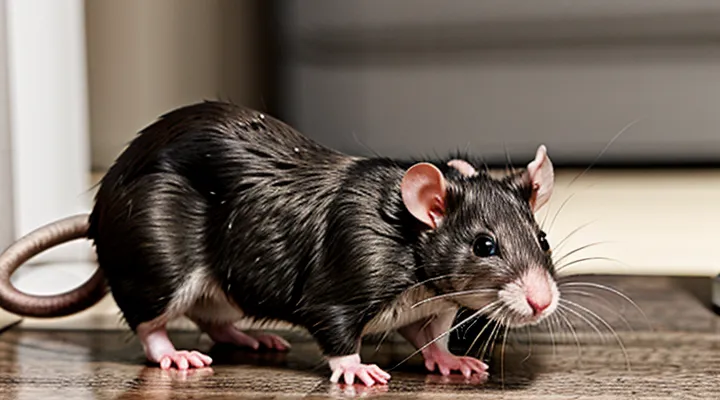
Understanding Rat Weight
What is Considered «Average»?
The term “average” refers to a statistical measure that summarizes a set of values with a single representative number. In the context of rodent size, three common metrics are employed:
- Arithmetic mean – sum of all recorded weights divided by the number of individuals. It reflects the overall mass tendency but can be skewed by extreme values.
- Median – the middle value when measurements are ordered from lowest to highest. It indicates the central point of the distribution and is less affected by outliers.
- Mode – the most frequently occurring weight. It highlights the most common size class within a population.
When evaluating typical mass for laboratory or wild specimens, researchers first define the population scope (species, age range, sex, and housing conditions). Data are then collected from a sufficiently large sample—usually dozens to hundreds of individuals—to ensure statistical reliability. The resulting mean weight for adult laboratory rats of the Rattus norvegicus species typically falls between 250 g and 350 g, while wild brown rats often range from 200 g to 300 g, reflecting differences in diet and activity levels.
To determine what qualifies as “average,” the following steps are standard practice:
- Select a homogeneous cohort – restrict the dataset to comparable age groups and sexes.
- Record individual weights – use calibrated scales with precision of at least 0.1 g.
- Calculate the three metrics – mean, median, and mode.
- Report the central tendency – most publications present the arithmetic mean accompanied by the standard deviation, which quantifies variability around the average value.
The choice of metric depends on the research goal. For dosing calculations, the mean provides a straightforward basis. For ecological surveys, the median may better represent typical wild individuals. In all cases, “average” denotes a mathematically derived central value that summarizes the weight distribution of the defined rat population.
Factors Influencing Rat Weight
Age and Development
The relationship between a rat’s age and its body mass follows a predictable pattern. Neonatal individuals weigh less than one gram, while juveniles reach approximately 30–50 g by the third week. Adult specimens stabilize near 250–300 g, with slight variations depending on strain and sex. Growth decelerates sharply after the fifth week, and weight fluctuations thereafter reflect primarily fat accumulation rather than skeletal expansion.
Key developmental milestones and associated weight ranges:
- Birth to 7 days: 0.8–1.2 g; rapid tissue differentiation, minimal fat stores.
- 7–21 days: 15–45 g; accelerated muscle growth, organ maturation, onset of weaning.
- 21–35 days: 70–120 g; continued skeletal elongation, increased metabolic rate, preparation for sexual maturity.
- 35 days onward: 150–300 g; weight plateaus, physiological systems reach adult capacity, minor seasonal or dietary effects emerge.
Monitoring these weight benchmarks provides a reliable indicator of normal growth progression and assists in detecting developmental abnormalities. Deviations from the expected mass at a given age often signal health issues, nutritional deficiencies, or genetic factors affecting growth trajectories.
Sex Differences
Male rats typically exhibit greater mean body mass than females across most laboratory strains. In standard housing conditions, adult males of the Sprague‑Dawley line average 300‑350 g, whereas adult females range from 220‑260 g. The disparity arises from physiological factors such as higher muscle development and larger organ size in males, as well as hormonal influences on growth trajectories.
Key considerations for researchers measuring rat mass by sex:
- Record weight at consistent ages (e.g., 8 weeks) to control for developmental stage.
- Use calibrated scales with precision of at least 0.1 g.
- Report separate means and standard deviations for each sex.
- Apply statistical tests that account for unequal variances when comparing groups.
- Adjust dosing calculations for pharmacological studies based on sex‑specific averages.
Understanding these differences improves experimental design, enhances reproducibility, and reduces bias in studies that rely on body weight as a variable.
Breed and Genetics
Rat size varies markedly among different strains, making breed a primary determinant of mean body mass.
- Laboratory strains such as Sprague‑Dawley typically reach 300–350 g.
- Long‑Evans rats average 250–300 g.
- Wistar rats commonly weigh 250–300 g.
- Smaller dwarf strains remain below 200 g.
Genetic composition controls growth rate, skeletal development, and adipose deposition. Heritability estimates for body weight range from 0.30 to 0.60, indicating that a substantial proportion of variance derives from inherited alleles. Specific loci on chromosomes 1, 3, and 12 have been linked to increased mass through quantitative trait‑mapping studies.
Selective breeding amplifies these genetic effects. Repeated pairings of high‑weight individuals raise the population average within a few generations, whereas outcrossing with lighter strains reduces it. Maintaining genetic diversity prevents inbreeding depression, which can distort weight measurements and compromise experimental reproducibility.
Researchers must account for breed‑specific weight profiles when designing dosing regimens, interpreting metabolic data, or comparing outcomes across laboratories. Accurate classification of strain and documentation of genetic background ensure that observed differences reflect experimental variables rather than underlying genetic disparity.
Diet and Nutrition
Dietary composition directly determines the typical body mass of laboratory rats. Energy density, protein proportion, and micronutrient balance shape growth trajectories and stabilize adult weight ranges.
High‑energy feeds (≈ 4.0 kcal g⁻¹) with 20 % protein produce mean adult masses between 300 g and 350 g in Sprague‑Dawley strains. Low‑energy diets (≈ 3.0 kcal g⁻¹) with 15 % protein limit growth, resulting in averages near 250 g. Micronutrient deficiencies, especially of calcium, vitamin D, and B‑complex vitamins, reduce skeletal development and lower overall weight by 5–10 %.
- Standard chow: 320 g average, balanced macro‑ and micronutrients.
- High‑fat formula: 340 g average, 45 % calories from fat, elevated adiposity.
- Protein‑restricted diet: 260 g average, 10 % protein, reduced lean mass.
- Vitamin‑deficient regimen: 240 g average, signs of stunted growth.
Accurate weight assessment requires consistent fasting periods (4 h), calibrated scales (± 0.1 g), and repeated measurements across a 12‑week growth window. Data should be expressed as mean ± standard deviation to reflect population variability.
Optimizing rat nutrition aligns experimental outcomes with expected body mass parameters, ensuring reproducibility and physiological relevance.
Environment and Activity Level
Environment exerts a measurable influence on the typical rodent weight. Temperature extremes trigger metabolic adjustments; cold conditions increase caloric demand, resulting in higher body mass, while heat stress reduces appetite and promotes weight loss. Humidity levels affect water balance and can indirectly modify food intake, thereby altering mass.
Activity level directly correlates with energy expenditure. Rats housed in spacious cages with enrichment objects display elevated locomotion, leading to lower body mass compared to individuals confined to limited space. Structured exercise, such as wheel running, produces a consistent reduction in mean weight, whereas sedentary conditions maintain or increase mass.
Key environmental and behavioral factors include:
- Cage size: larger enclosures encourage movement, reducing weight.
- Enrichment: objects that stimulate exploration increase activity and lower mass.
- Temperature: cooler environments raise metabolic rate, increasing weight; warmer settings have the opposite effect.
- Exercise provision: access to running wheels or tunnels elevates energy output, decreasing weight.
- Population density: overcrowding elevates stress hormones, potentially suppressing appetite and reducing weight.
Research data indicate that a combination of moderate ambient temperature (20‑22 °C) and daily voluntary exercise yields the most stable mean rat weight across laboratory strains. Adjusting housing conditions and activity provisions allows precise control of body mass for experimental consistency.
Health Status
Understanding the health condition of laboratory rats is essential for interpreting variations in their typical body mass. Disease states—such as respiratory infections, gastrointestinal disturbances, or metabolic disorders—often manifest as measurable deviations from the species’ normal weight range. Weight loss of 10 % or more within a 48‑hour period frequently signals acute illness, while persistent overweight (>20 % above the species mean) may indicate endocrine dysfunction or excessive caloric intake.
Key health indicators that correlate with weight metrics include:
- Body condition scoring based on palpable fat deposits and muscle tone.
- Hematological parameters (e.g., white‑blood‑cell count, hemoglobin levels) that reflect inflammatory or anemic processes.
- Serum biochemistry (glucose, liver enzymes, electrolytes) providing insight into metabolic balance.
Monitoring these variables alongside regular weight measurements enables precise assessment of a rat’s physiological status, supports early detection of pathology, and ensures experimental data remain reliable.
Practical Implications of Rat Weight
For Pet Owners
Monitoring Health and Well-being
Monitoring the health and well‑being of laboratory rats provides reliable input for calculating population‑level weight metrics. Consistent physiological and behavioral data reduce variability in mean mass estimates and support reproducible research outcomes.
Key health indicators include body condition score, coat quality, activity level, and incidence of disease. Each parameter correlates with weight fluctuations; deviations from baseline often precede measurable changes in average mass.
Effective data acquisition relies on standardized procedures:
- Weekly weighing on calibrated scales, performed at the same time of day to limit circadian effects.
- Visual assessments using a five‑point body condition scale, recorded by trained personnel.
- Automated activity monitoring via motion sensors, generating quantitative movement profiles.
- Health screenings that document clinical signs, pathogen presence, and treatment interventions.
Analysis integrates these metrics into statistical models that adjust raw weight data for health status. By controlling for morbidity, stress, and nutritional factors, the resulting average weight reflects the true physiological state of the cohort rather than transient anomalies.
Identifying Underweight or Overweight Rats
Accurate assessment of a rat’s condition requires comparison with the species‑specific mean body mass. Laboratory strains typically range from 250 g to 350 g for adult males and 200 g to 300 g for adult females; values outside these intervals suggest nutritional imbalance.
To determine whether an individual is underweight or overweight, follow these steps:
- Measure body weight with a calibrated scale; record to the nearest gram.
- Verify the animal’s age, sex, and strain to select the appropriate reference range.
- Calculate the deviation percentage:
[ \text{Deviation (\%)} = \frac{\text{Observed weight} - \text{Reference median}}{\text{Reference median}} \times 100 ] - Classify the result:
• Deviation < ‑15 % → underweight.
• Deviation between ‑15 % and +15 % → normal.
• Deviation > +15 % → overweight.
Additional indicators reinforce the classification:
- Body condition scoring (BCS) on a 1–5 scale; scores 1–2 correspond to underweight, 4–5 to overweight.
- Visual inspection of rib prominence, abdominal contour, and subcutaneous fat deposits.
- Monitoring of food intake and growth curves over consecutive weeks.
Consistent documentation of weight, BCS, and visual observations enables early intervention, whether through dietary adjustment, health screening, or environmental modification.
Adjusting Diet and Exercise
Optimizing the mass of laboratory rodents requires precise manipulation of nutritional intake and physical activity. Caloric density directly determines weight gain; reducing energy content by 10–15 % lowers average body mass without compromising health. Protein levels should remain at 18–20 % of the diet to preserve lean tissue, while increasing fiber to 5 % improves gastrointestinal function and modestly reduces weight. Feeding frequency influences metabolic rate: providing two measured meals per day stabilizes intake and prevents binge consumption.
Physical exercise modulates energy expenditure. Continuous access to a running wheel yields an average daily activity of 3–5 km, resulting in a 5–8 % reduction in body mass over four weeks. Structured treadmill sessions—20 minutes at 10 m/min, five times weekly—produce comparable effects and allow controlled intensity. Combining voluntary wheel use with scheduled treadmill bouts maximizes variability in movement patterns, enhancing overall energy output.
Monitoring protocols are essential. Record body mass weekly, calculate percent change relative to baseline, and adjust diet composition accordingly. Maintain a log of wheel rotations and treadmill distance to correlate activity levels with weight fluctuations. Consistent data collection enables fine‑tuning of both diet and exercise regimens, ensuring target rodent mass is achieved reliably.
In Scientific Research
Standardizing Experimental Conditions
Consistent measurement of laboratory rat body mass requires strict control of experimental variables. Variability in diet composition, feeding schedule, and caloric intake directly alters weight outcomes; therefore, a uniform chow formulation and fixed feeding times must be applied to all subjects.
- Genetic strain: select a single breed and maintain breeding records to prevent inter‑strain differences.
- Age and developmental stage: use animals within a narrow age window (e.g., 8 ± 0.5 weeks) to eliminate growth‑related fluctuations.
- Housing conditions: standardize cage size, bedding material, ambient temperature (22 ± 1 °C), humidity (55 ± 5 %), and light cycle (12 h light/12 h dark).
- Handling protocol: train personnel to handle rats identically, minimizing stress‑induced weight changes.
Measurement procedures must be reproducible. Calibrate analytical balances before each weighing session, record weight to the nearest 0.01 g, and perform measurements at the same circadian point (e.g., 0900 h) after a brief acclimation period. Duplicate readings for each animal reduce random error; average the two values for the final dataset.
Documenting all controlled parameters in a laboratory notebook enables cross‑study comparisons and meta‑analysis. When experimental conditions are uniform, observed differences in rat body mass reflect true biological effects rather than methodological artifacts, enhancing statistical power and reproducibility.
Assessing Treatment Efficacy
Assessing the effectiveness of a therapeutic intervention frequently relies on changes in the mean body mass of laboratory rats. Baseline measurements establish a reference point for each cohort; subsequent weight recordings indicate physiological response to the treatment. A statistically significant deviation from control values, calculated with appropriate parametric or non‑parametric tests, confirms efficacy.
Key considerations include:
- Consistent weighing schedule (e.g., daily or weekly) to capture temporal trends.
- Uniform handling procedures to minimize stress‑induced weight fluctuations.
- Adequate sample size determined by power analysis to detect expected effect magnitude.
- Use of blinded observers to prevent measurement bias.
Data interpretation follows a structured workflow:
- Compute the average weight for each group at every time point.
- Apply repeated‑measures ANOVA or mixed‑effects modeling to evaluate interaction between time and treatment.
- Verify assumptions of normality and homoscedasticity; employ transformations or robust methods when violations occur.
- Report effect size (Cohen’s d or partial η²) alongside p‑values to convey practical significance.
When weight gain or loss aligns with the hypothesized direction of therapeutic impact, the treatment is deemed effective. Conversely, lack of measurable change, despite adequate dosing and exposure, suggests insufficient efficacy and warrants protocol revision.
Understanding Disease Models
Accurate measurement of typical rat mass provides a quantitative baseline for constructing and evaluating experimental disease models. Researchers use this baseline to calibrate dosing regimens, adjust metabolic calculations, and align physiological parameters across study groups.
Weight data directly affect pharmacokinetic simulations, as drug distribution volumes scale with body mass. In models of metabolic disorders, deviations from the baseline mass indicate disease onset or progression. Neurological injury models rely on weight‑matched cohorts to isolate treatment effects from confounding growth variables.
Key applications of rodent weight metrics in disease modeling:
- Dose normalization: calculate mg/kg doses to ensure comparable exposure.
- Statistical power: stratify subjects by weight quartiles to reduce variance.
- Longitudinal monitoring: track weight trends to detect early pathological changes.
- Model validation: compare observed weight trajectories with expected patterns for specific diseases.
Integrating precise mass measurements enhances reproducibility, improves translational relevance, and supports rigorous interpretation of experimental outcomes.