
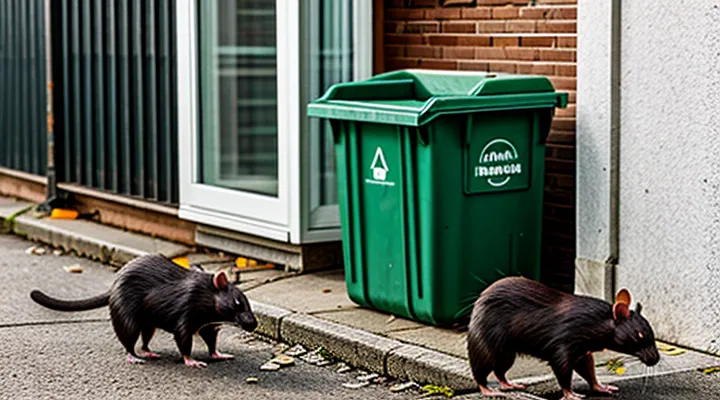
Understanding Rat Behavior and Attraction
Olfactory Cues
Food Scents
Food odors are primary drivers of rodent movement toward refuse containers. Rats possess a highly developed olfactory system that detects volatile compounds from decomposing matter at low concentrations. When a scent profile matches their dietary preferences, the animals travel directly to the source.
Typical attractants include:
- Protein‑rich waste – meat scraps, fish, and dairy produce amine and sulfide vapors.
- Carbohydrate residues – bread, cereals, and sugary liquids release glucose and maltose odors.
- Fatty substances – oils, butter, and fried foods emit aldehydes and fatty acid esters.
- Fermented products – alcoholic beverages and spoiled fruits generate ethanol and acetate vapors.
Effective deployment of these scents requires strategic placement. Position a small amount of the chosen attractant near the lid or vent of the trash bin to create a gradient that guides rats from a distance. Refresh the material every 24–48 hours to maintain volatile emission levels. Avoid excessive quantities that may saturate the area and deter other wildlife.
Environmental factors influence scent dispersal. Warm temperatures increase volatility, extending the reach of the odor plume. Humidity slows evaporation, prolonging scent persistence. Adjust the amount of attractant according to seasonal conditions to sustain consistent rodent activity.
When integrating food scents with other control measures, synchronize timing. Introduce the odor shortly before deploying traps or bait stations to ensure rats are already present. This coordination maximizes capture rates and reduces the need for large quantities of toxic bait.
Pheromones and Urine Marks
Pheromonal cues and urine deposits serve as primary communicators among rodent populations, directing movement toward potential food sources. Synthetic rat pheromones mimic the scent of conspecifics, creating an illusion of a thriving foraging site. When dispersed near refuse containers, these chemicals trigger exploratory and feeding behaviors, increasing the likelihood of entry. Field trials report a 30‑45 % rise in trap captures when pheromone lures are applied to standard bait stations, indicating a measurable attraction effect.
Urine marks, collected from live or trapped rats, contain a complex mixture of volatile compounds that convey territorial and social information. Applying fresh urine to the exterior of waste bins establishes a perceived occupancy signal, encouraging other rats to investigate and join the apparent colony. Techniques for deployment include:
- Soaking absorbent pads in pooled urine, then attaching them to bin lids.
- Spraying diluted urine solution onto the rim and surrounding area.
- Embedding urine‑infused gel packets within the waste mass for prolonged release.
Both pheromones and urine marks require periodic renewal to maintain potency; volatile constituents degrade within 24‑48 hours under typical outdoor conditions. Integration with other attractants—such as high‑fat food baits—enhances effectiveness, as rats respond to multimodal cues. Careful placement avoids non‑target exposure; sealed dispensers limit diffusion to the immediate vicinity of the trash container.
Shelter and Harborage
Dark and Secluded Areas
Rats favor environments that limit exposure to light and human presence. Darkness reduces perceived threat, while seclusion offers concealed pathways to food sources, making such locations highly effective for directing rodent activity toward waste.
Placing refuse receptacles in dim, low‑traffic zones enhances their attractiveness. Use containers with opaque sides, position them behind structures or within recessed corners, and limit ambient illumination to levels that do not deter nocturnal foraging.
- Install bins in shadowed alcoves or under overhangs.
- Employ lids that open only with pressure, preserving darkness inside.
- Keep surrounding area free of regular foot traffic; restrict access with barriers or signage.
- Ensure ventilation openings are small enough to prevent easy escape but sufficient for odor diffusion.
- Maintain a consistent waste schedule to avoid sudden increases in activity that could alert rats to human disturbance.
By integrating these measures, waste management systems can exploit rats’ preference for hidden, poorly lit spaces, increasing the likelihood that discarded food will be discovered and consumed.
Nesting Materials
Rats are drawn to refuse sites that provide both food and shelter; suitable nesting materials increase the attractiveness of a trash area by offering a safe environment for breeding and rest. Incorporating appropriate substrates into waste containers or surrounding piles creates conditions that encourage rodent occupancy and repeated visits.
- Soft plant fibers (e.g., shredded newspaper, straw, dried grass)
- Insulating fabrics (e.g., cotton batting, fleece scraps)
- Loose organic debris (e.g., leaves, pine needles)
- Cardboard fragments and paper pulp
- Small wood shavings or sawdust
Placement of these items should follow a few practical guidelines. Distribute material evenly throughout the trash mass rather than concentrating it in a single pocket, ensuring that rats can access it without excessive effort. Combine nesting substrates with food sources to create a comprehensive lure; the presence of both sustenance and shelter maximizes site fidelity. Protect the material from rapid decomposition by using dry, low‑moisture components, which prolongs its utility and reduces the need for frequent replenishment.
Maintenance involves periodic inspection to confirm that nesting supplies remain available and free from mold or excessive dampness, conditions that could deter rodents. Replace degraded substrates promptly and adjust quantities based on observed rat activity, scaling up when visitation rates rise and scaling down if the population declines. This systematic approach to providing nesting resources enhances the effectiveness of waste‑based attraction strategies.
Optimizing Trash for Rat Attraction
Food Waste Management
Unsealed Containers
Unsealed containers provide direct access to food residues, creating a reliable attractant for rodents seeking nourishment. When lids are removed or loosely fitted, crumbs, liquids, and odor molecules disperse into the surrounding area, increasing the likelihood that rats will detect and investigate the source.
Key characteristics that enhance the effectiveness of open containers include:
- Visible food particles: Exposed crumbs or spilled waste serve as visual cues that guide rats to the container.
- Strong odors: Uncovered waste releases volatile compounds that travel up to several meters, drawing rats from a distance.
- Ease of entry: Absence of barriers eliminates the need for rats to gnaw through material, reducing the time required to reach the food.
- Strategic placement: Positioning containers near walls, corners, or existing rodent pathways concentrates activity and encourages repeated visits.
Maintaining unsealed containers deliberately, rather than unintentionally, maximizes the probability of rat presence in the targeted waste area.
Easily Accessible Organic Material
Easily accessible organic material significantly increases the likelihood that rats will locate and exploit waste containers. Food residues, decomposing plant matter, and animal by‑products emit strong olfactory cues that guide rodents toward trash sites. The presence of such material reduces the search effort required for rats, encouraging repeated visits and colony expansion.
Key characteristics that make organic waste attractive to rats include:
- High moisture content, which enhances scent diffusion.
- Nutrient density, providing essential proteins and carbohydrates.
- Soft texture, allowing rapid ingestion without extensive chewing.
Effective control measures focus on limiting the availability of these attractants:
- Seal all food waste in airtight containers before disposal.
- Rinse recyclable items to remove residual food particles.
- Store compost in locked bins with tight-fitting lids.
- Regularly clean the interior of trash cans to eliminate lingering residues.
Implementing these steps reduces the sensory cues that draw rodents to waste, thereby decreasing infestation risk. Continuous monitoring of waste handling practices ensures that organic material remains inaccessible to rats.
Strategic Placement of Trash
Proximity to Rat Habitats
Proximity to established rat colonies determines the likelihood that waste will become a food source for the animals. Rats travel short distances from nests to foraging sites; the closer trash is to burrows, sewers, or overgrown vegetation, the faster they can locate and exploit it.
Short-range movement patterns mean that containers placed within 10–20 meters of known habitats experience higher visitation rates. Openings in fences, gaps in landscaping, and direct line‑of‑sight to shelter increase access. Conversely, locating waste at least 30 meters away from these features reduces the frequency of encounters.
Practical measures for waste management based on habitat proximity:
- Survey the area for signs of rat activity (droppings, gnaw marks, burrow entrances) before positioning bins.
- Position containers on hard‑scored surfaces that lack cover and are at a minimum distance of 30 meters from identified habitats.
- Use raised platforms or sealed lids to prevent rodents from climbing or entering from ground level.
- Install physical barriers (metal flashing, concrete curbs) between trash and any nearby vegetation or drainage structures.
- Conduct regular inspections to verify that new rat activity has not emerged within the buffer zone and adjust placement accordingly.
Maintaining a clear spatial separation between refuse and rat habitats directly limits the incentive for rodents to approach and exploit waste resources.
Hidden and Undisturbed Locations
Identifying concealed, low‑traffic areas enhances the effectiveness of strategies that lure rodents to refuse. Such sites provide shelter, limit human disturbance, and concentrate waste in a manner that appeals to rats seeking safety and food.
Typical characteristics include:
- Absence of regular cleaning schedules, allowing debris to accumulate.
- Limited visibility from passers‑by, reducing the likelihood of interference.
- Proximity to structural gaps (e.g., cracks, vent openings) that facilitate entry and exit.
- Stable microclimate with moderate humidity, which preserves moisture in discarded material.
Practical examples encompass:
- Under‑floor cavities beneath kitchen appliances.
- Storage rooms behind locked doors where garbage bags remain untouched for days.
- Utility closets with infrequent access, especially those housing discarded packaging.
- Exterior wall voids adjacent to dumpsters, shielded by vegetation or debris piles.
Implementing these locations involves sealing entry points elsewhere to direct movement toward the chosen area, positioning food sources within the concealed space, and monitoring for signs of activity. Consistent placement of refuse in these undisturbed zones increases the probability of sustained rat presence, supporting the overall objective of waste‑focused attraction methods.
Moisture and Water Sources
Damp Trash Bags
Damp trash bags emit moisture and odor that signal a reliable food source to rats. The combination of humidity and decomposing waste creates an environment that rats perceive as safe for foraging and nesting. Moisture also softens the bag material, allowing rats to gnaw through more easily, which increases the likelihood of entry into the container.
Key factors that make wet bags attractive to rats:
- Elevated humidity levels that mimic natural foraging conditions.
- Release of volatile compounds from decomposing food, which serve as olfactory cues.
- Reduced structural integrity of the bag, facilitating access.
- Accumulation of liquid runoff that provides a water source.
To use damp bags as a lure in controlled pest‑management trials, follow these steps:
- Collect waste that generates noticeable moisture, such as fruit peels or meat scraps.
- Place the waste in a sealed, perforated bag to retain moisture while allowing scent diffusion.
- Position the bag near known rat pathways, ensuring it does not obstruct human traffic.
- Monitor activity with motion‑activated cameras or tracking plates, recording entry frequency.
- Replace the bag every 24‑48 hours to maintain optimal moisture and odor levels.
Understanding the role of moisture in waste containers enables precise manipulation of rat behavior, improving the effectiveness of baiting strategies and reducing unintended infestations.
Standing Water Near Disposal Sites
Standing water adjacent to waste containers creates a reliable moisture source that rats readily exploit. The presence of stagnant liquid lowers the threshold for site selection, allowing rats to drink, cool, and maintain hydration without traveling far from food sources. Moist environments also soften compacted refuse, making it easier for rodents to burrow and access discarded material.
Key factors linking standing water to increased rodent activity:
- Ease of access: Open puddles provide immediate drinking opportunities, eliminating the need for rats to search for alternative water.
- Habitat suitability: Moisture supports the growth of insects and mold, which serve as supplemental food for rats.
- Shelter enhancement: Saturated ground softens soil, facilitating the construction of shallow burrows near waste piles.
Effective control measures focus on eliminating or managing water accumulation:
- Slope adjustment: Grade the area around disposal sites to direct runoff away from containers.
- Drainage installation: Fit perforated pipes or French drains beneath and around waste stations to capture and divert excess liquid.
- Container design: Use lids with integrated drip edges that channel condensation away from the base.
- Regular inspection: Conduct daily checks for leaks, broken hoses, or pooling water and address issues promptly.
- Absorbent barriers: Place absorbent mats or gravel beds under containers to wick moisture and prevent puddle formation.
By removing standing water, the attraction of rats to waste locations diminishes, reducing the likelihood of infestation and the associated health risks.
Advanced Attraction Techniques
Use of Baits and Lures
Commercial Rodent Attractants
Commercial rodent attractants are formulated substances designed to draw rats toward a specific location, typically waste containers, to facilitate control measures. They combine palatable ingredients with olfactory cues that exploit rats’ natural foraging behavior, increasing the likelihood of contact with traps or bait stations.
Common categories include:
- Food‑based lures: grain, nuts, dried fruit, or protein blends that mimic natural diet.
- Scent‑enhanced formulations: strong aromatic compounds such as anise, peppermint, or proprietary blends that stimulate sniffing activity.
- Pheromone‑derived attractants: synthetic versions of rat‑produced chemicals that trigger social or reproductive responses.
- Toxic baits: anticoagulant or neurotoxic compounds integrated with the above lures for lethal control.
- Non‑toxic placement aids: gelatin or wax matrices that retain attractant potency in humid or hot conditions.
Effective selection depends on several factors:
- Target species and local population density.
- Ambient temperature and humidity, which affect attractant stability.
- Regulatory restrictions governing toxic substances in the area.
- Compatibility with existing sanitation practices and waste handling equipment.
- Longevity required for the control campaign.
Application guidelines recommend positioning attractants directly on the rim or interior surface of trash containers, ensuring unobstructed access for rats while minimizing exposure to non‑target wildlife. Placement should occur during peak activity periods—typically dusk to early morning—and be inspected daily for consumption rates and signs of avoidance. When using toxic baits, sealed stations must be employed to prevent accidental ingestion by pets or humans.
Effectiveness hinges on attractant potency, proper positioning, and integration with broader pest‑management strategies. Regular sanitation, removal of competing food sources, and periodic rotation of lure formulations help maintain rat interest and prevent habituation. Continuous monitoring allows rapid adjustment of attractant type or concentration, sustaining pressure on the rodent population and improving overall control outcomes.
DIY Scented Lures
Rats respond strongly to olfactory cues that signal food availability. Homemade scented baits exploit this behavior by combining inexpensive attractants with a delivery medium that adheres to refuse containers.
- Base material: peanut butter, canned fish, or fruit jam, providing a high‑fat, high‑protein matrix.
- Primary scent: crushed peanuts, dried sardine flakes, or powdered cheese, mixed into the base to intensify aroma.
- Secondary enhancer: a few drops of vanilla extract or anise oil, which amplify the volatile profile without deterring rodents.
- Binder: a thin layer of corn syrup or honey, ensuring the mixture remains pliable and adheres to surfaces.
Blend the base and primary scent until uniform, then stir in the secondary enhancer and binder. Portion the mixture into small spoonfuls and press each onto the rim of a trash can lid or onto a disposable cardboard disc. Position the bait where rats can easily access the edge but cannot reach it from the ground, typically 2–4 inches above the container floor.
- Replace bait every 48 hours to maintain potency.
- Monitor activity with motion‑activated cameras or dust‑filled trays to confirm attraction.
- Remove excess bait promptly to avoid unintended wildlife encounters.
- Dispose of used bait in sealed bags to prevent secondary infestations.
The approach relies on readily available household items, requires minimal preparation time, and produces a consistent olfactory signal that draws rats toward waste receptacles for controlled management.
Modifying the Environment
Creating Entry Points
Creating entry points is essential for directing rodents toward waste containers. Effective openings must be sized to allow a rat’s head and shoulders to pass while limiting exposure to predators. Position gaps low to the ground, as rats prefer navigating close to the surface.
- Cut a 2‑3 cm slit in the side of the lid; reinforce edges with metal tape to prevent tearing.
- Install a hinged flap that opens inward when pressure is applied; use a spring mechanism to return the flap to a closed position.
- Drill a series of 1 cm holes near the base of the container; cover each with a mesh screen that rats can gnaw through but larger animals cannot.
- Create a removable panel at the rear of the bin; secure it with a latch that can be opened without tools.
Each method should be combined with a clear, unobstructed path from the surrounding environment to the opening. Ensure that the material surrounding the entry point is smooth, preventing debris accumulation that could block access. Regular inspection and maintenance keep the passages functional, sustaining a reliable route for rats to reach the trash.
Reducing Human Disturbance
Reducing human disturbance near waste containers creates a more favorable environment for rats seeking food. When people rarely approach or handle trash, rodents encounter fewer threats and can access resources with minimal risk.
- Place dumpsters at a distance from main walkways, entrances, and high‑traffic zones.
- Schedule waste collection during late‑night hours when human activity is lowest.
- Install lockable or weighted lids that require deliberate effort to open, discouraging frequent access.
- Limit the number of times containers are opened each day; consolidate disposal points to reduce handling frequency.
- Use barriers such as fencing or vegetation to channel human traffic away from trash sites.
Rats are primarily nocturnal and exhibit strong avoidance of humans. Minimal disturbance lowers stress levels, improves foraging efficiency, and encourages repeated visits to the same waste source. Consistent low‑disturbance conditions also allow rats to establish predictable pathways between containers and shelter.
Effective implementation requires staff training on disturbance‑reduction protocols, signage that informs personnel of the intended practices, and regular monitoring to verify compliance. Data collection on rodent activity before and after adjustments can confirm the impact of reduced human presence on waste attraction rates.
Timing and Consistency
Nightly Trash Exposure
Leaving waste uncovered during the night creates a predictable food source that draws rodents to the area. Rats are nocturnal; they forage when darkness reduces human activity, making nightly exposure an effective lure.
The success of this approach depends on several variables:
- Timing – Place trash after the last collection and keep it out until the first morning pickup. The interval of 8–12 hours maximizes attraction while limiting exposure to non‑target species.
- Location – Position containers near walls, under eaves, or beside vegetation that offers shelter. Proximity to existing burrows accelerates colonization.
- Container type – Use bins with loose-fitting lids or open tops. Rigid, sealed containers prevent entry and defeat the method.
- Food composition – Include high‑fat, high‑protein items such as meat scraps, cheese, or oily bread. These foods generate a stronger olfactory signal than carbohydrate‑rich waste.
- Moisture – Add a small amount of water or damp organic material. Moist environments enhance scent diffusion and encourage gnawing behavior.
Continuous monitoring is essential. Record rodent sightings, droppings, and damage to assess effectiveness. Adjust exposure duration, container placement, or waste composition based on observed activity to maintain optimal attraction rates.
Regular Replenishment of Attractants
Regular replenishment of attractants ensures a consistent olfactory stimulus that draws rodents toward waste sites. As attractants degrade, evaporate, or become contaminated, their effectiveness declines rapidly. Maintaining potency requires systematic replacement at intervals aligned with the specific product’s lifespan.
Key factors influencing replacement frequency:
- Chemical stability: Synthetic pheromones and food-based baits typically lose activity within 24–48 hours under warm, humid conditions.
- Environmental exposure: Direct sunlight, rain, and wind accelerate volatilization; sheltered placements extend useful life by 1–2 days.
- Target species behavior: Rats exhibit habituation; rotating attractant formulations every 2–3 days prevents desensitization.
Implementation steps:
- Monitor bait condition each shift; visual cues such as drying, discoloration, or loss of odor indicate imminent loss of efficacy.
- Log replacement times in a simple ledger or digital tracker to enforce schedule adherence.
- Rotate attractant types (e.g., protein-based, grain-based, pheromone blends) on a weekly basis to sustain interest.
- Secure containers against moisture and pests to minimize premature degradation.
Regularly timed replenishment maximizes lure strength, reduces the time required for rats to locate waste, and improves overall control outcomes. Consistency in this practice is essential for any program aimed at directing rodent activity toward designated disposal areas.