
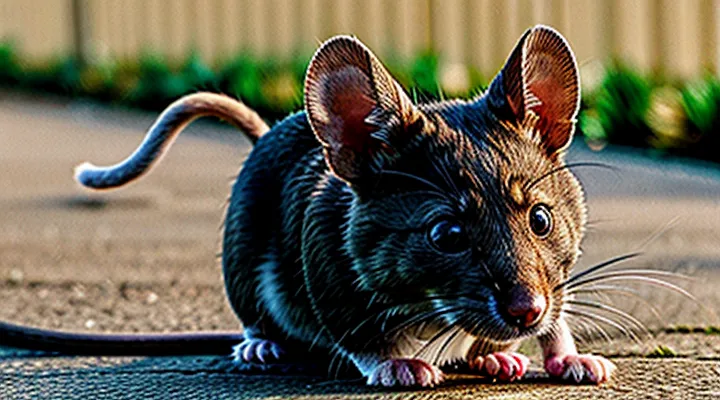
The Natural Instinct of Fear
Olfactory Cues and Their Impact
Mice detect the presence of dogs primarily through volatile compounds released in canine urine, saliva, and skin secretions. These chemicals bind to high‑affinity receptors in the mouse olfactory epithelium, triggering neural pathways that signal potential danger.
Research shows that exposure to dog‑derived odorants induces measurable changes in mouse behavior:
- Immediate cessation of foraging activity
- Increased thigmotaxis (preference for walls)
- Elevated corticosterone levels within minutes
The intensity of the response correlates with the concentration of specific kairomones, such as 2‑methyl‑2‑butanol and indole, known to be abundant in dog scent marks. Laboratory trials using controlled odor delivery demonstrate that mice can discriminate between dog odor and neutral or conspecific odors with a detection threshold of approximately 10 ppb.
Neurophysiological recordings reveal that dog‑related olfactory cues activate the mouse amygdala and periaqueductal gray, regions implicated in fear processing. Pharmacological blockade of the olfactory bulb markedly reduces avoidance behavior, confirming the central role of scent perception.
Consequently, olfactory information constitutes a rapid, non‑visual alarm system for mice, shaping their spatial choices and stress physiology when canine predators are nearby.
Auditory Signals and Mouse Behavior
Mice possess acute auditory systems that detect a broad spectrum of sounds, including those produced by canines. Dog vocalizations such as barks, growls, and whines contain frequency components that fall within the mouse hearing range of 1–100 kHz, with peak sensitivity around 15–20 kHz. High‑frequency elements of these calls convey immediate danger and trigger rapid defensive actions.
When exposed to recorded dog sounds, mice exhibit a stereotyped set of behaviors:
- Immediate cessation of locomotion (freezing) lasting several seconds.
- Sudden sprint toward the nearest shelter or tunnel entrance.
- Emission of ultrasonic distress calls (approximately 30–50 kHz) that may recruit conspecifics.
- Elevation of physiological stress markers, including corticosterone levels and heart rate.
Laboratory experiments using playback of dog barks in controlled arenas have quantified these responses. Mice subjected to a 5‑second bark segment reduced movement speed by up to 80 % compared with silent controls and showed a 2‑fold increase in cortisol concentrations within 10 minutes. Similar patterns emerge in field studies where wild mice retreat from the proximity of free‑roaming dogs, confirming the ecological relevance of auditory threat cues.
The link between canine acoustic signals and mouse fear informs both pest‑control strategies and experimental design. Devices that emit realistic dog noises can deter rodent intrusion without chemical agents, while researchers must account for inadvertent stress when dogs are present in laboratory environments. Understanding the auditory pathway from sound reception to behavioral output enables precise manipulation of mouse responses in both applied and scientific contexts.
Scientific Evidence and Expert Opinions
Research on Mouse Stress Responses
Recent laboratory investigations have quantified physiological and behavioral markers that indicate mouse anxiety when exposed to canine cues. Researchers typically present recorded dog barks, scent samples, or live dogs behind a barrier, then measure corticosterone levels, heart rate, and escape latency. Elevated corticosterone, increased thigmotaxis, and prolonged freezing constitute a reproducible stress profile.
Key observations from multiple studies include:
- Corticosterone spikes of 150‑200 % above baseline within five minutes of auditory dog signals.
- Heart rate rises of 30‑45 bpm accompanying scent exposure, persisting for up to ten minutes after removal of the odor.
- Escape routes redirected toward shelter zones in open‑field tests, with latency extending from 2 s (control) to 7‑10 s under canine stimuli.
Neuroimaging data reveal heightened activity in the amygdala and hypothalamic‑pituitary‑adrenal axis during dog‑related trials, confirming that mice process canine threats similarly to predator cues. Comparative experiments with non‑predatory species (e.g., cats) produce lower hormonal responses, underscoring the specificity of the mouse‑dog interaction.
These findings substantiate the premise that mice exhibit measurable fear responses to dogs, supporting expert conclusions that canine presence constitutes a significant stressor for laboratory rodents.
Veterinary and Animal Behaviorist Perspectives
Mice display measurable stress responses when they detect canine presence. Elevated cortisol levels, rapid heart rate, and escape‑oriented locomotion are consistently recorded in laboratory assays that present dog scent or vocalizations.
Veterinary insight emphasizes physiological markers.
- Cortisol surge within minutes of exposure to predator odor.
- Tachycardia accompanied by increased respiratory rate.
- Pupil dilation and heightened startle reflexes.
Animal behaviorists focus on innate avoidance behaviors. Studies show that mice freeze, flee, or seek shelter the moment a dog’s bark or scent is introduced. Experiments using a two‑chamber apparatus reveal a strong preference for the chamber lacking canine cues, confirming an instinctual aversion. Repeated exposure without threat does not extinguish the response, indicating a hard‑wired fear circuit rather than learned avoidance.
Comparisons between wild and laboratory strains demonstrate similar patterns. Wild mice exhibit more pronounced flight responses, yet captive populations retain the same physiological stress signatures when confronted with dog stimuli. Habituation protocols that involve gradual, non‑threatening exposure produce only modest reductions in fear intensity, underscoring the resilience of the predator‑prey instinct.
The combined veterinary and ethological evidence informs practical measures. Pest‑management strategies that exploit canine odor can enhance trap effectiveness. Conversely, cohabitation of pet dogs with laboratory rodents requires strict separation to prevent chronic stress, which can compromise experimental validity and animal welfare.
Factors Influencing Mouse Fear Levels
Dog Breed and Size Considerations
Mice detect canine presence through sound, scent, and movement, triggering an innate avoidance response. The intensity of this response varies with the dog’s physical characteristics.
Larger dogs generate louder vocalizations and produce a broader scent plume, both of which amplify the perceived threat. Small dogs emit quieter barks and a less extensive odor trail, often failing to elicit a strong flight reaction in rodents.
Breeds developed for hunting or tracking possess heightened predatory instincts and a focused scent drive. These traits increase their effectiveness at startling mice, regardless of size. Companion breeds typically exhibit lower chase motivation, reducing the likelihood of provoking a fear response.
- Labrador Retriever – strong scent focus, medium‑large size
- German Shepherd – high drive, large stature
- Beagle – keen nose, medium size, persistent tracking
- Jack Russell Terrier – compact, high prey drive
- Border Collie – agile, intelligent, strong chase instinct
When selecting a dog for mouse deterrence, prioritize breeds with pronounced hunting instincts and sufficient size to produce audible and olfactory cues that mice recognize as danger. Ensure the animal’s temperament aligns with household safety standards to prevent unintended aggression toward other pets.
Individual Dog Temperament and Training
Mice react to dogs based on each dog’s innate disposition and learned behavior. A calm, well‑socialized dog typically displays low predatory drive, reducing the likelihood that a mouse will perceive the animal as a threat. Conversely, a dog with high prey instinct and limited training may trigger an instinctive flight response in rodents.
Key elements that shape a dog’s impact on mouse fear include:
- Genetic temperament – breeds selected for guarding or hunting often possess stronger chase instincts.
- Early socialization – exposure to small animals during puppyhood teaches tolerance and reduces aggression.
- Obedience training – commands such as “leave it” and “stay” give owners control over spontaneous pursuit.
- Reward‑based reinforcement – rewarding calm behavior around rodents reinforces non‑reactive attitudes.
- Environment – consistent routines and limited chaotic stimuli help maintain steady behavior.
Experts agree that assessing a dog’s individual temperament before introducing it to a mouse‑populated area prevents unnecessary stress for the rodent. Adjusting training methods to lower prey drive, while monitoring body language, provides a reliable strategy for coexistence.
Environmental Context and Mouse Exposure
Mice encounter dogs primarily where human activity creates overlapping habitats. In residential neighborhoods, indoor rodents share space with pet dogs, while outdoor populations face stray or working dogs that patrol yards, alleys, and parks. The likelihood of a mouse detecting canine presence depends on three environmental variables:
- Spatial proximity: Buildings with open doors, pet doors, or gaps in foundations allow dogs to sniff or see mice directly. Closed structures reduce contact to scent trails alone.
- Temporal overlap: Dogs that are active during night hours increase exposure for nocturnal mice, whereas daytime‑only dogs limit interactions.
- Sensory cues: Canine urine, feces, and fur carry odor molecules that trigger innate avoidance responses in rodents. Visual sighting of a moving dog also elicits flight behavior.
Field studies show that mouse density declines in areas with sustained canine activity, especially where dogs are trained for hunting or have a strong territorial presence. Conversely, environments lacking dogs—such as high‑rise apartments without pets or agricultural fields with fenced livestock—maintain higher rodent populations.
Laboratory experiments simulate these conditions by exposing mice to recorded dog barks, synthetic scent markers, and visual models. Results consistently demonstrate heightened stress markers (corticosterone elevation) and increased thigmotaxis when any of the three cues are present. The magnitude of the response correlates with cue intensity and prior experience; mice raised in dog‑free colonies react less strongly than those from mixed‑species households.
Management implications are straightforward: reducing dog exposure through barrier improvements, limiting outdoor access during peak mouse activity, and controlling stray dog populations can lower predation pressure on rodents. Conversely, intentional use of trained dogs in barns or warehouses can serve as a biological control method, provided that environmental conditions allow reliable detection of canine cues by the target mouse species.
How Mice React to Dog Presence
Evasion and Hiding Strategies
Mice rely on rapid, instinctive responses when a canine predator approaches. Their survival hinges on three primary mechanisms: swift locomotion, environmental concealment, and sensory suppression.
- Burst speed: Muscular hind limbs generate acceleration that can exceed 8 m s⁻¹, allowing a mouse to cross a typical household gap before a dog can close the distance.
- Use of vertical space: Small openings, wall cracks, and ceiling cavities provide routes inaccessible to larger animals. Mice memorize these pathways and prioritize them during escape.
- Tactile and olfactory masking: By reducing movement noise and emitting minimal scent, mice decrease detection probability. Grooming behaviors and the secretion of neutralizing compounds further limit olfactory cues.
When a dog detects a mouse, the latter initiates a sequence of actions: immediate darting toward the nearest refuge, followed by rapid entry into a concealed space. Once inside, mice adopt a still posture, lowering heart rate to minimize vibrations that could alert the predator. This combination of speed, spatial awareness, and sensory restraint constitutes the core of their evasion repertoire.
Physiological Stress Indicators
Mice exposed to canine presence exhibit measurable changes in several biological systems. Researchers quantify these changes to determine whether a rodent perceives a dog as a threat.
Physiological stress in rodents is reflected by alterations in hormone levels, autonomic function, and observable physical responses. The most reliable markers include:
- Elevated plasma corticosterone or cortisol concentrations.
- Increased heart rate and blood pressure recorded via implanted telemetry devices.
- Pupil dilation detected with infrared imaging.
- Enhanced ultrasonic vocalizations in the 22‑kHz range.
- Shifts in locomotor activity patterns, such as prolonged freezing or rapid escape attempts.
- Core body temperature fluctuations captured by subcutaneous temperature loggers.
- Enlargement of adrenal glands observed during post‑mortem examination.
Data collection typically involves minimally invasive blood draws for hormone assays, continuous telemetry for cardiovascular metrics, high‑speed video for pupil and movement analysis, and specialized microphones for ultrasonic calls. Combining these techniques yields a comprehensive profile of the mouse’s stress response.
When the physiological profile aligns with the indicators listed above, the evidence supports the conclusion that mice experience fear when confronted with dogs. Conversely, the absence of such changes suggests a lower perceived threat level. This objective framework allows experts to answer the question of mouse fear of canine predators with scientific precision.
Managing Interactions Between Dogs and Mice
Deterrent Strategies for Homes
Mice instinctively avoid canine scent, making trained or resident dogs a practical component of a broader prevention plan. Combining animal deterrence with environmental controls maximizes protection for indoor spaces.
- Install airtight food storage containers; eliminate accessible nutrition sources.
- Seal entry points larger than one‑quarter inch with steel wool, caulk, or metal flashing.
- Maintain a regular cleaning schedule that removes crumbs, spills, and droppings.
- Deploy ultrasonic repellers calibrated to frequencies that disrupt rodent hearing while remaining inaudible to humans.
- Place strategically spaced snap traps or live‑capture devices along known travel routes, such as walls and baseboards.
- Use peppermint oil or ammonia-soaked cotton balls in concealed areas; refresh every two weeks to sustain potency.
- Encourage a resident dog with a strong prey drive to patrol perimeter zones, monitoring for signs of activity.
- Schedule quarterly professional inspections to identify hidden infestations and assess structural vulnerabilities.
Integrating these measures creates multiple barriers that discourage mouse intrusion, leveraging natural predator cues alongside physical and chemical deterrents for sustained household safety.
Promoting Coexistence in Controlled Environments
Mice exhibit a rapid stress response when exposed to canine scent or movement, as physiological measurements reveal elevated cortisol levels and increased heart rate. This reaction limits their natural foraging and nesting behaviors, reducing overall welfare in laboratory or pet‑store settings.
Controlled environments—such as research vivariums, breeding colonies, and educational exhibits—can mitigate conflict through physical separation, sensory masking, and behavioral conditioning. Effective measures include:
- Installing airtight barriers that prevent odor transmission while allowing visual contact for monitoring purposes.
- Employing automated scent‑diffusion systems that release neutralizing compounds (e.g., ferret‑derived pheromones) to diminish canine odor perception.
- Scheduling dog presence during periods when mice are in deep rest phases, based on circadian activity charts, to avoid acute stress spikes.
- Training dogs with desensitization protocols that gradually introduce low‑intensity mouse cues, thereby reducing predatory drive.
Monitoring protocols must record stress biomarkers before and after each intervention, ensuring that adjustments maintain baseline physiological parameters for both species. Continuous data analysis enables refinement of barrier designs and timing schedules, fostering a stable coexistence that supports scientific integrity and animal well‑being.