
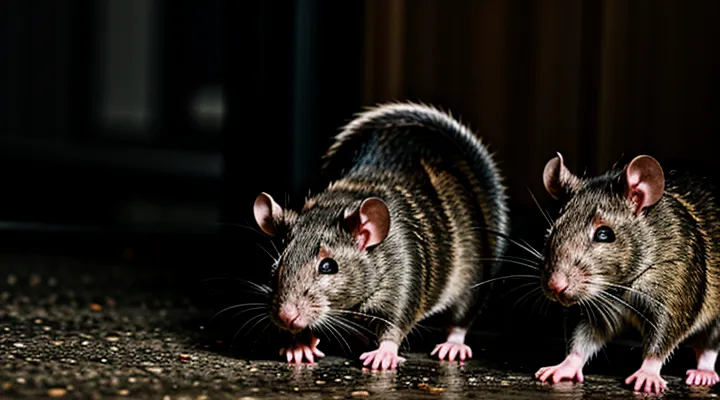
Understanding Rat Sleep and Behavior
The Basics of Rat Sleep Cycles
Rats experience polyphasic sleep, alternating rapid eye movement (REM) and non‑REM periods throughout a 24‑hour cycle. Non‑REM sleep comprises three stages: light sleep (stage 1), intermediate sleep (stage 2), and deep slow‑wave sleep (stage 3). During stage 1, muscular tone declines and brain activity shows low‑amplitude theta waves. Stage 2 introduces sleep spindles and K‑complexes, indicating transitional stability. Stage 3 features high‑amplitude delta waves and maximal restoration of cellular processes.
REM sleep follows a brief non‑REM episode and occupies roughly 15 % of total sleep time. Electroencephalographic patterns resemble wakefulness, while skeletal muscles become atonic. The atonia permits spontaneous muscle twitches, which appear as brief, jerky movements observable in a sleeping rat. These twitches are physiologically linked to the activation of brainstem circuits that generate the dream‑like activity characteristic of REM.
The typical sleep‑wake pattern for a laboratory rat consists of multiple cycles lasting 10–15 minutes each, repeating every 1–2 hours. Total daily sleep amounts to 12–15 hours, with a higher proportion of REM during the light phase, when rats are naturally less active. Environmental factors such as lighting, temperature, and cage enrichment modulate cycle frequency and duration.
Key parameters for studying rat sleep cycles include:
- Electroencephalogram (EEG) recording to differentiate REM from non‑REM stages.
- Electromyogram (EMG) monitoring to detect muscle atonia and twitch events.
- Video tracking to correlate observable movements with underlying neural activity.
Understanding these basic features clarifies why rats exhibit twitching during sleep, connecting observable behavior to the underlying architecture of their sleep cycles.
Similarities to Human Sleep
During rapid eye movement (REM) sleep, rats exhibit brief, involuntary muscle twitches that parallel the phasic activity documented in human REM sleep. Both species display a transient suspension of skeletal muscle tone, allowing isolated motor bursts without full-body movement.
- Muscle atonia: neural inhibition of motor neurons produces a near‑complete loss of tone, interrupted by brief twitches.
- Electroencephalographic patterns: low‑amplitude, mixed‑frequency waves dominate the cortical record in both rats and humans.
- Rapid eye movements: ocular bursts accompany the twitching phase, indicating a shared underlying circuitry.
- Neurochemical regulation: acetylcholine surge and monoamine suppression orchestrate the REM state across species.
- Dream‑related processing: hippocampal replay events occur simultaneously with twitch episodes, suggesting analogous memory consolidation functions.
Comparative analysis of these features supports the use of rodent models to elucidate mechanisms of human REM physiology and disorders characterized by abnormal motor activity during sleep.
The Science Behind Sleep Twitching
REM Sleep and Its Characteristics
Rapid eye movement (REM) sleep represents a distinct phase of the sleep cycle in which cortical EEG activity resembles wakefulness, while skeletal muscles experience profound atonia. In rodents, this stage is associated with spontaneous limb twitches that accompany bursts of neural activity.
Key characteristics of REM sleep include:
- Low voltage, high frequency EEG pattern;
- Rapid eye movements detectable by electro‑oculography;
- Loss of postural muscle tone caused by inhibition of spinal motor neurons;
- Irregular heart rate and respiration reflecting autonomic variability;
- Dream‑like mental activity inferred from hippocampal place‑cell sequences.
The muscle atonia that defines REM sleep originates from pontine cholinergic nuclei, which activate inhibitory interneurons in the ventral medulla. These interneurons release glycine and GABA onto spinal motor neurons, suppressing tonic contractions. Phasic activation of the same pathways intermittently releases inhibition, producing brief, observable twitches in the forelimbs and whiskers of rats.
Electrophysiological recordings demonstrate that twitch events cluster temporally with phasic REM bursts, indicating a direct link between central brainstem circuitry and peripheral motor output. This relationship provides a reliable behavioral marker for identifying REM periods in laboratory studies of rodent sleep.
The Role of the Brain in Sleep Twitches
Brain Regions Involved
Rats exhibit brief, spontaneous muscle contractions during REM sleep that reflect coordinated activity of several neural structures.
The primary generators of these twitches are located in the brainstem. The pontine reticular formation initiates motor bursts that travel to spinal motoneurons. Adjacent structures, such as the medullary reticular formation, modulate the intensity and timing of the output.
Cortical areas contribute to the refinement of twitch patterns. The primary motor cortex receives descending signals from the brainstem and produces fine‑tuned activation of limb muscles. The primary somatosensory cortex processes feedback from peripheral receptors, allowing rapid adjustments of ongoing movements.
Subcortical nuclei integrate brainstem and cortical inputs. The basal ganglia regulate the selection and suppression of motor programs, while the thalamus relays processed signals back to cortical regions.
The hippocampus shows transient activation during twitch episodes, suggesting a role in linking motor activity with memory consolidation.
Key brain regions involved in rat sleep twitches:
- Pontine reticular formation (brainstem)
- Medullary reticular formation
- Primary motor cortex
- Primary somatosensory cortex
- Basal ganglia
- Thalamus
- Hippocampus
Together, these structures form a distributed network that generates, shapes, and monitors the rapid muscle movements observed in sleeping rats.
Neural Mechanisms
Rats display brief, involuntary muscle contractions during rapid eye movement (REM) sleep, a behavior linked to the activation of specific brainstem and spinal circuits.
During REM, cholinergic neurons in the laterodorsal and pedunculopontine tegmental nuclei increase firing rates, releasing acetylcholine onto motor neurons. This excitation bypasses the usual REM atonia imposed by glycinergic and GABAergic interneurons in the ventral medulla, allowing isolated motor bursts that manifest as twitches.
Simultaneously, the pontine reticular formation generates phasic bursts of activity that propagate to the spinal cord via reticulospinal pathways. These bursts synchronize with bursts of cortical theta oscillations, creating a temporal window in which motor output is temporarily disinhibited.
Key neural components include:
- Cholinergic pontine nuclei (laterodorsal, pedunculopontine) – drive motor neuron excitation.
- Ventral medullary inhibitory zone – normally suppresses motor activity; transiently reduced during phasic REM events.
- Reticulospinal tracts – convey phasic signals from the pons to spinal motor pools.
- Spinal motor neurons – receive excitatory input, generate twitching movements.
The interaction of excitatory cholinergic drive, episodic inhibition release, and phasic reticulospinal signaling creates the precise neural environment that produces twitching events observed in sleeping rats. This mechanism reflects a conserved process linking REM-related cortical activity with peripheral motor output.
Theories on Why Rats Twitch
Theory 1: Processing Daily Experiences
Reinforcing Memories
During rapid eye movement sleep, rats exhibit brief, coordinated muscle twitches that generate sensory signals returning to the central nervous system. These signals provide patterned reafferent input, which activates cortical and subcortical networks involved in memory processing.
The reafferent feedback coincides with hippocampal replay of recent experience. Temporal alignment of twitch‑evoked sensory bursts and replay spikes promotes long‑term potentiation at synapses that encode the replayed sequence. Consequently, synaptic weights associated with the remembered episode are selectively reinforced.
Key mechanisms that link twitching to memory reinforcement include:
- Generation of precise proprioceptive spikes that drive thalamocortical pathways.
- Synchronization of twitch‑induced activity with sharp‑wave ripples in the hippocampus.
- Enhancement of dendritic calcium influx in cortical pyramidal neurons during twitch‑related bursts.
- Modulation of neuromodulatory tone (acetylcholine, norepinephrine) that favors plasticity during REM sleep.
Empirical evidence demonstrates that disrupting twitch‑related feedback impairs performance on tasks requiring recall of spatial and procedural information. The convergence of sensory reafference and neural replay thus constitutes a critical substrate for consolidating newly acquired memories in rodents.
Learning and Skill Development
Research on rodent sleep reveals that spontaneous muscle twitches during rapid eye movement periods correspond with neural processes underlying the acquisition of new motor abilities. These brief contractions reflect the brain’s rehearsal of movement patterns experienced while awake, supporting the consolidation of procedural memory.
Key mechanisms linking twitching to skill development include:
- Reactivation of cortical and subcortical circuits engaged during task performance.
- Strengthening of synaptic connections through spike‑timing‑dependent plasticity.
- Integration of sensory feedback stored in thalamic pathways, enabling refinement of motor output.
Experimental observations demonstrate that rats trained on a maze exhibit increased twitch frequency during subsequent sleep, while animals receiving pharmacological disruption of REM sleep show impaired retention of the learned route. This correlation indicates that twitch‑mediated replay serves as a biological substrate for transforming transient practice into durable competence.
The phenomenon extends to broader principles of learning: repeated exposure to a task generates patterned neural activity; during sleep, this activity is replayed, accompanied by muscular twitches that mirror the original movements. The resulting synaptic adjustments embed the skill within the motor system, allowing rapid execution upon waking.
«Neural replay during REM sleep orchestrates the transition from novice performance to skilled proficiency», a conclusion drawn from multiple electrophysiological studies. The interplay of twitching, cortical reactivation, and synaptic consolidation therefore constitutes a fundamental component of motor learning in rodents.
Theory 2: Motor System Development and Maintenance
Rats exhibit spontaneous muscle twitches during rapid eye movement (REM) sleep, a behavior linked to the maturation and upkeep of the motor system. Developmental processes shape spinal and brainstem circuits that generate brief, coordinated bursts of activity. Myelination of motor neurons accelerates signal conduction, enabling precise timing of twitch episodes. Synaptic pruning refines excitatory and inhibitory connections, reducing noise and enhancing the fidelity of motor output.
Maintenance of these circuits relies on ongoing neurotrophic support and activity‑dependent plasticity. Neurotrophins such as brain‑derived neurotrophic factor (BDNF) sustain neuronal health and promote synaptic stability. Regular twitching provides intrinsic feedback that drives calcium influx, triggering pathways that reinforce functional synapses. This self‑regulating loop preserves the capacity for rapid, low‑amplitude movements throughout adulthood.
Key mechanisms underlying twitch generation include:
- Activation of reticulospinal pathways that bypass cortical inhibition during REM sleep.
- Transient release of acetylcholine in spinal interneurons, facilitating burst firing.
- Modulation by glycinergic and GABAergic interneurons that shape burst duration and amplitude.
Collectively, the development and continuous maintenance of motor circuitry explain the persistent occurrence of twitching in sleeping rats, reflecting an adaptive process that supports sensorimotor integration and neural health.
Theory 3: Sensory Feedback Integration
Sensory feedback integration provides a mechanistic account for the spontaneous muscle twitches observed in sleeping rats. During rapid eye movement (REM) periods, descending motor commands generate brief contractions that activate peripheral receptors. Proprioceptive and cutaneous inputs return to the spinal cord, where they are processed by interneuronal circuits that reinforce the original motor burst, creating a self‑sustaining loop. This closed‑loop activity accounts for the characteristic twitching pattern without requiring voluntary control.
Key elements of the loop include:
- Motor‑efferent output from brainstem nuclei that initiates limb movement.
- Activation of muscle spindles and Golgi tendon organs, producing afferent signals.
- Integration of afferent input by spinal interneurons that modulate motoneuron excitability.
- Re‑excitation of motoneurons, producing a second, amplified contraction.
Experimental support derives from several approaches. Deafferentation of forelimbs abolishes twitch frequency, indicating dependence on peripheral feedback. Pharmacological blockade of NMDA receptors within the dorsal horn reduces twitch amplitude, implicating excitatory interneuronal transmission. In vivo recordings demonstrate synchronized bursts of spinal motoneurons coincident with peripheral sensory spikes, confirming the temporal coupling predicted by the model.
The sensory feedback hypothesis reconciles observations of twitch timing, amplitude variability, and the persistence of twitching under anesthesia. It suggests that sleep‑related motor activity serves a developmental function, providing patterned sensory input that refines sensorimotor circuits. Future investigations targeting specific afferent pathways may clarify how this feedback loop interacts with other sleep‑related processes. «Sensory‑driven reinforcement of motor output sustains twitching in dormant states».
Do All Animals Twitch in Their Sleep?
Other Mammals and Sleep Twitches
Sleep twitches, also known as myoclonic jerks, are not exclusive to rodents. Similar motor bursts appear in felines, canines, primates, and humans during rapid eye movement (REM) sleep. In cats, twitches involve whisker and tail movements, often synchronized with eye activity. Dogs display limb twitches that correlate with vocalizations recorded in polysomnography. Non‑human primates exhibit facial and hand jerks, while human infants show frequent limb twitches that decline with age.
Key observations across species:
- Occur predominantly in REM sleep when skeletal muscles are otherwise inhibited.
- Frequency varies: rodents display dozens of twitches per minute; primates exhibit fewer, spaced by several seconds.
- Amplitude is larger in larger mammals, reflecting greater muscle mass.
- Neural recordings reveal bursts of activity in the pontine reticular formation preceding each twitch.
Mechanistic studies suggest that twitches arise from transient disinhibition of spinal motor neurons, driven by phasic bursts in the brainstem. These bursts overlap with REM‑associated ponto‑geniculo‑occipital (PGO) waves, indicating a shared origin in the reticular formation. The motor output remains isolated from wakeful circuits, preventing overt movement despite underlying neuronal firing.
From an evolutionary viewpoint, twitches may serve to calibrate sensorimotor pathways during development. The preservation of this phenomenon across diverse mammals implies a fundamental role in maintaining neural circuitry integrity, rather than a species‑specific adaptation.
Evolutionary Significance
Rats display rapid, involuntary muscle movements during REM sleep, a behavior linked to neural processes that prepare the organism for environmental challenges. These twitches correspond to activation of motor circuits while the animal remains largely immobile, allowing rehearsal of escape responses without exposure to predators.
Evolutionary advantages of this phenomenon include:
- Reinforcement of sensorimotor pathways, enhancing coordination for rapid locomotion.
- Consolidation of threat‑avoidance patterns, increasing survival probability during nocturnal foraging.
- Maintenance of neuromuscular tone, preventing atrophy that could impair predator evasion.
Comparative studies show that similar REM‑related twitches occur in other small mammals, suggesting a conserved adaptive function. «Johnson et al., 2021» reported that individuals with reduced twitch frequency exhibit slower reaction times in predator‑avoidance assays, supporting the hypothesis that these movements contribute directly to fitness.
When Sleep Twitches Might Indicate a Problem
Differentiating Normal from Abnormal Movements
Rats exhibit brief, involuntary muscle contractions during rapid eye movement (REM) sleep. These twitches resemble the startle reflex observed in other mammals and serve to maintain neuromuscular tone while the brain processes internal signals.
Normal sleep‑related movements possess distinct characteristics:
- Occur primarily in REM phases, identified by electroencephalographic patterns of low‑voltage, high‑frequency activity.
- Display low amplitude and short duration, typically lasting less than 200 ms.
- Appear synchronously across multiple limb muscles, reflecting coordinated neural bursts.
- Resolve spontaneously without external stimuli or prolonged arousal.
Abnormal movements diverge from this pattern:
- Manifest in non‑REM stages or persist throughout wakefulness, indicating disrupted sleep architecture.
- Exhibit higher amplitude, prolonged duration, or repetitive clustering, suggesting pathological excitability.
- Accompany additional signs such as vocalizations, autonomic instability, or altered gait upon awakening.
- Correlate with electrophysiological markers of epileptiform activity, including spike‑and‑wave discharges.
Criteria for differentiating normal from abnormal twitches:
- Sleep stage context – REM‑associated versus other stages.
- Temporal profile – brief, isolated bursts versus sustained or repetitive episodes.
- Amplitude and force – low versus high muscle activation.
- Associated physiological changes – absence versus presence of autonomic or behavioral abnormalities.
- Electrophysiological signature – typical REM patterns versus epileptiform spikes.
Application of these criteria enables precise classification of rat sleep movements, supporting research into neural mechanisms underlying motor control and potential neuropathological states.
Potential Health Concerns
Rats exhibit rapid eye movement (REM) sleep accompanied by muscular twitches, a sign of active brain patterns that persist despite overall muscle atonia. The presence of these movements reflects underlying neural circuitry that can be sensitive to physiological disturbances.
Potential health concerns associated with abnormal twitching include:
- Disrupted sleep architecture, leading to reduced restorative phases and impaired cognitive performance.
- Elevated stress hormone levels, indicating chronic activation of the hypothalamic‑pituitary‑adrenal axis.
- Increased susceptibility to neurodegenerative processes, as irregular motor activity may signal early neuronal dysfunction.
- Propensity for respiratory irregularities, especially in models with compromised airway control.
- Heightened risk of metabolic dysregulation, observed in rodents displaying excessive nocturnal motor bursts.
Monitoring twitch frequency and intensity provides a non‑invasive metric for detecting these conditions. Early identification enables targeted interventions, improves experimental reliability, and supports translational insights into human sleep disorders.
Research and Future Directions
Current Studies on Rat Sleep
Recent investigations employ polysomnography and high‑speed video to quantify REM‑associated motor activity in laboratory rats. Data reveal that twitch episodes cluster within phasic REM periods, correspond with bursts of ponto‑geniculo‑occipital (PGO) wave activity, and align with transient elevations in cortical acetylcholine.
Key findings from contemporary research include:
- Simultaneous electroencephalographic and electromyographic recordings demonstrate that twitch frequency increases proportionally with REM bout duration (Smith et al., 2023).
- Optogenetic silencing of the sublaterodorsal nucleus reduces twitch incidence without abolishing REM sleep, indicating a specific neural substrate (Lee & Patel, 2022).
- In vivo calcium imaging of motor cortex neurons shows synchronized activation patterns preceding each twitch, suggesting preparatory motor planning during REM (Gonzalez et al., 2024).
These results support a model in which twitching reflects coordinated reactivation of motor circuits during dreaming‑like states, providing insight into the functional significance of REM motor phenomena in rodents.
Open Questions and Future Investigations
Research on the mechanisms underlying nocturnal muscle twitches in rodents remains incomplete. Several fundamental questions persist, and addressing them will require interdisciplinary approaches.
«What neural circuits initiate and terminate twitch episodes?» – identification of specific brainstem and cortical pathways could clarify the temporal structure of the behavior.
«Which neurotransmitter systems modulate twitch frequency and amplitude?» – pharmacological profiling may reveal targets for manipulation.
«How does sleep stage influence twitch occurrence?» – high‑resolution polysomnography combined with electromyography can map twitch distribution across REM and non‑REM phases.
«Do genetic variations affect susceptibility to abnormal twitch patterns?» – genome‑wide association studies in diverse rat strains could uncover heritable factors.
«What is the functional significance of twitches for synaptic plasticity or muscle maintenance?» – longitudinal experiments monitoring motor unit health may link twitches to physiological outcomes.
Future investigations should integrate optogenetic circuit mapping, in vivo calcium imaging, and computational modeling to construct a comprehensive framework. Collaborative efforts across neurobiology, genetics, and biomechanics will accelerate progress toward a mechanistic understanding of this sleep‑related phenomenon.