
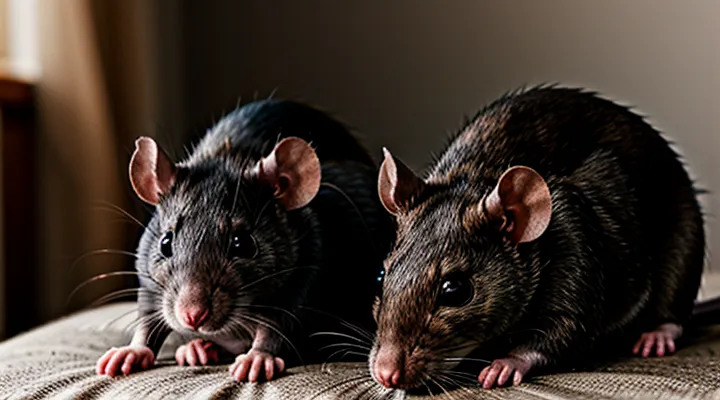
Understanding Rat Sleep Patterns
The Peculiarities of Rat Ocular Anatomy
Rats possess several anatomical adaptations that enable them to rest while keeping their eyes uncovered. Their upper and lower eyelids are thin and lack the dense muscular closure seen in many mammals, limiting the ability to achieve full eyelid closure. A well‑developed nictitating membrane covers the eye laterally, providing protection without requiring the primary lids to seal.
The cornea of a rat is relatively transparent and thick, allowing sufficient diffusion of oxygen and moisture even when the lids remain partially open. Tear film production is continuous, maintaining surface hydration and preventing desiccation during periods of reduced visual activity.
Retinal organization supports this behavior. A high concentration of rod photoreceptors dominates the peripheral retina, enhancing sensitivity to low‑light conditions. The central retina contains fewer cones, reducing the need for precise focus when the animal is idle. Consequently, visual acuity is lower than in predators that rely on sharp sight, making prolonged eye opening less detrimental.
Key ocular features facilitating open‑eye rest:
- Thin, incompletely sealing eyelids
- Prominent nictitating membrane for lateral protection
- Thick cornea with efficient oxygen diffusion
- Continuous tear secretion maintaining moisture
- Rod‑rich peripheral retina optimized for dim illumination
These structural characteristics collectively allow rats to maintain a state of reduced vigilance without the physiological costs associated with full eyelid closure.
Sensory Perception During Rest
Rats often keep their eyelids partially open while sleeping, a behavior that allows continuous monitoring of the environment. The open eyes do not indicate wakefulness; instead, they reflect a specific adaptation of sensory processing during rest.
During the sleeping state, the visual system remains partially active. Rat retinas contain a high proportion of rod cells, providing sensitivity to dim light. The partially open eyelids permit enough illumination for the retina to detect movement, enabling rapid response to visual cues that signal danger.
Auditory perception persists unchanged. Ears stay erect, and the cochlear nuclei continue to relay low‑frequency sounds to the brainstem. This arrangement maintains a baseline level of sound detection, allowing rats to hear approaching predators or conspecifics even while immobile.
Tactile input from the whisker pad is sustained throughout rest. Whisker follicles are innervated by mechanoreceptors that send constant feedback to the somatosensory cortex. The ongoing stream of tactile information helps the animal gauge nearby objects and maintain spatial awareness.
Neural circuits integrate these sensory streams without fully disengaging from sleep. The thalamus modulates signal flow, permitting selective gating of relevant stimuli while preserving the restorative aspects of sleep. This balance between vigilance and rest supports survival in predator‑rich habitats.
- Visual monitoring through partially open eyelids and rod‑rich retinas
- Continuous auditory detection via erect ears and active cochlear pathways
- Ongoing tactile feedback from whisker mechanoreceptors
- Thalamic gating that filters salient inputs while maintaining sleep architecture
The combination of these mechanisms explains why rats can rest with eyes open without compromising their ability to perceive critical environmental cues.
The Biological Reasons Behind Open-Eyed Sleep
Evolutionary Adaptations for Survival
Predation Avoidance Mechanisms
Rats often remain alert while resting because their survival depends on detecting predators at the earliest possible moment. Keeping the eyelids partially open preserves visual contact with the environment, allowing rapid response to looming threats. This behavior integrates several predation‑avoidance strategies.
- Continuous visual monitoring – the thin, translucent membrane over the eyes transmits light, enabling the animal to perceive movement without fully opening the eyes.
- Rapid muscle activation – neural pathways linking the retina to the brainstem trigger swift muscle contraction, facilitating immediate escape.
- Reduced vulnerability during sleep cycles – by avoiding deep, unconscious states, rats limit the duration of periods when they cannot react to danger.
- Enhanced peripheral awareness – the eye’s limited field of view expands through head movements, compensating for the reduced visual acuity of a partially closed eye.
Together, these mechanisms allow rats to balance the physiological need for rest with the constant pressure of predator detection, explaining why they often appear to sleep with their eyes partially open.
Constant Vigilance Hypothesis
Rats often rest with their eyelids partially or fully open, a behavior that aligns with the Constant Vigilance Hypothesis. The hypothesis proposes that nocturnal rodents maintain a baseline level of sensory alertness even during sleep, minimizing the time needed to detect predators or environmental threats.
Key elements of the hypothesis include:
- Retention of visual input through partially open eyes, allowing rapid assessment of sudden light changes.
- Continuous processing of auditory and tactile cues, supported by a brainstem circuitry that remains partially active during REM and non‑REM phases.
- Reduced latency in initiating escape responses, which correlates with higher survival rates in predator‑rich habitats.
Empirical studies demonstrate that rats exhibit heightened cortical activity in the visual and somatosensory areas while their eyes remain open, confirming that sleep does not entail complete sensory shutdown. Comparative data show that species facing greater predation pressure display more pronounced eye‑opening during rest, reinforcing the adaptive value of constant vigilance.
The Constant Vigilance Hypothesis therefore explains the open‑eye sleeping pattern as an evolutionary compromise: it preserves essential sensory monitoring while still permitting restorative processes associated with sleep.
Physiological Explanations
Eyelid Structure and Function
Rats possess a reduced eyelid apparatus that enables them to rest while keeping the ocular surface exposed. The anatomy of the mammalian eyelid consists of several distinct layers, each contributing to protection, lubrication, and reflexive closure.
- Skin and Subcutaneous Tissue: Thin, pigmented epithelium that shields the underlying structures.
- Orbicularis Oculi Muscle: Circular muscle fibers that contract to produce blinking and complete closure in species with full lids.
- Tarsal Plates: Dense connective tissue providing structural support; in rodents, these plates are abbreviated, limiting the range of motion.
- Meibomian Glands: Embedded within the tarsal plates, they secrete lipids that retard tear evaporation.
- Lacrimal Gland Ducts: Deliver aqueous tears to the ocular surface, maintaining hydration.
- Conjunctiva: Mucous membrane lining the inner surface, contributing to tear film stability.
- Eyelashes: Guard against particulate intrusion.
In rats, the upper eyelid lacks a fully functional palpebral margin, and the lower lid is similarly reduced. Instead, a thin nictitating membrane covers the eye laterally, offering limited protection while preserving visual awareness. The orbicularis oculi remains capable of rapid, brief blinks but does not achieve sustained closure. Consequently, rats can enter a quiescent state with eyes open, relying on the nictitating membrane and continuous tear secretion to prevent desiccation. This anatomical configuration explains their ability to sleep without full eyelid closure.
Neurological Control of Sleep Stages
Rats often appear to sleep with their eyes open because the neural mechanisms that govern sleep stages do not fully activate the motor circuits responsible for eyelid closure. During non‑REM sleep, hypothalamic ventrolateral preoptic (VLPO) neurons release GABA and galanin, suppressing arousal systems in the brainstem and thalamus. This inhibition produces the characteristic slow‑wave activity of deep sleep. In REM sleep, cholinergic neurons in the laterodorsal and pedunculopontine tegmental nuclei generate cortical desynchronization while a separate set of brainstem neurons inhibits spinal motor neurons, creating muscle atonia.
The motor pathway that closes the eyelids originates in the facial nucleus, which innervates the orbicularis oculi muscle via the facial nerve (CN VII). In many mammals, REM‑related inhibition of spinal motor neurons extends to the facial nucleus, resulting in complete eyelid closure. Rats, however, retain partial activity in this nucleus during REM, allowing the orbicularis oculi to remain insufficiently activated. Consequently, the eyelids stay partially open while the animal experiences the cortical patterns of REM sleep.
Key neural structures involved in this pattern include:
- VLPO neurons (non‑REM initiation)
- Orexin/hypocretin cells in the lateral hypothalamus (arousal modulation)
- Laterodorsal and pedunculopontine tegmental nuclei (REM generation)
- Facial nucleus and orbicularis oculi motor neurons (eyelid control)
- Inhibitory interneurons in the pontine reticular formation (muscle atonia)
The combination of robust sleep‑stage regulation and incomplete suppression of facial motor output explains why rodents can maintain an open‑eye posture while undergoing normal sleep cycles.
Comparing Rat Sleep to Other Species
Nocturnal Animals and Open-Eyed Sleep
Rats belong to a group of nocturnal mammals whose visual systems remain partially active during sleep. Unlike many diurnal species, they retain a degree of eyelid openness, allowing limited light entry and rapid visual assessment of the environment. This adaptation supports predator avoidance and social signaling while the animal rests.
Open‑eyed sleep in nocturnal rodents serves several functional purposes:
- Enhanced vigilance: Partial eyelid closure permits detection of sudden movements or changes in illumination, reducing response latency to threats.
- Thermoregulation: Maintaining a thin eyelid barrier conserves heat without the full metabolic cost of a closed eye, beneficial during the cooler nighttime period.
- Neurological synchronization: Certain brain regions responsible for processing visual information stay partially engaged, facilitating smoother transitions between wakefulness and deep sleep phases.
The phenomenon extends to other night‑active species such as hedgehogs, some shrews, and certain bat families. In these animals, the eyelids either lack a complete closure mechanism or are structurally adapted to remain partially open. The shared trait reflects convergent evolution toward a balance between restorative sleep and the necessity for continuous environmental monitoring.
Research indicates that the degree of eyelid openness correlates with ambient light levels and predation pressure. In low‑light habitats, rodents exhibit wider eye apertures, whereas individuals in darker burrows tend to close their eyes more fully. This plastic response underscores the adaptive value of open‑eyed sleep for nocturnal mammals.
Diurnal Animals and Their Sleep Habits
Diurnal species are active during daylight and rest when darkness falls. Their circadian rhythm aligns with the solar cycle, driving hormone release, body temperature, and alertness. Vision dominates during waking hours, so eyes close fully during sleep to protect the retina and reduce light exposure.
Typical sleep architecture in day‑active mammals includes a prolonged period of non‑rapid eye movement (NREM) sleep followed by brief episodes of rapid eye movement (REM) sleep. NREM phases feature reduced muscle tone and lowered metabolic rate, while REM stages involve vivid dreaming and heightened brain activity despite muscle atonia. Birds follow a comparable pattern, often consolidating sleep into short bouts throughout the night to maintain vigilance against predators.
Physiological mechanisms ensure eyelid closure in diurnal animals:
- Strong orbicularis oculi muscles contract to seal the eyelids securely.
- Lacrimal glands produce a tear film that lubricates the cornea while the eyes are shut.
- The suprachiasmatic nucleus regulates melatonin secretion, promoting sleep onset in low‑light conditions.
Rats, primarily nocturnal rodents, sometimes exhibit sleep with their eyes partially open. This behavior reflects their evolutionary adaptation to remain alert to predators even while resting. The contrast underscores why day‑active creatures maintain complete eyelid closure: their survival strategy depends on a clear separation between wakefulness and sleep, eliminating visual input during rest to protect ocular health and conserve energy.
Implications for Rat Behavior and Well-being
Stress Indicators and Open Eyes
Rats often remain partially or fully awake while their eyelids are retracted, a behavior linked to physiological stress. Elevated cortisol, increased heart rate, and rapid breathing accompany this state, indicating activation of the hypothalamic‑pituitary‑adrenal axis. Pupil dilation, heightened vigilance, and reduced grooming further reveal stress levels. When environmental threats, overcrowding, or sudden light changes occur, rats exhibit these markers alongside open‑eye sleep.
Key stress indicators observable during open‑eye sleep:
- Cortisol spikes measurable in blood or saliva
- Tachycardia detected by telemetry
- Respiratory rate exceeding baseline by 30 %
- Mydriasis (dilated pupils) evident under infrared imaging
- Decreased grooming frequency recorded in video analysis
The correlation between stress markers and ocular posture suggests that open‑eye sleep serves as a rapid alert mechanism. By maintaining visual input, rats can detect predators or disturbances without fully awakening, thereby balancing rest with immediate threat assessment. This adaptive response underscores the importance of monitoring stress physiology when evaluating rodent welfare in laboratory and captive settings.
Environmental Factors Affecting Sleep
Light and Darkness Cycles
Rats keep their eyes partially open during sleep because their visual system remains responsive to ambient illumination. Light entering the retina during the dark‑phase triggers the suprachiasmatic nucleus, which synchronizes the circadian clock and regulates melatonin release. This hormonal rhythm determines the depth and duration of sleep bouts but does not require complete eyelid closure.
During the night, when rats are most active, the lack of bright light reduces the need for visual shielding. Their thin, movable nictitating membrane provides limited protection while allowing rapid detection of sudden changes in illumination that could signal predators. Consequently, the open‑eyed posture conserves vigilance without interrupting the restorative phases of sleep.
Key physiological components linking light cycles to open‑eyed sleep:
- Retinal photoreceptors detect low‑level light, transmitting signals to the SCN.
- SCN outputs modulate pineal melatonin synthesis, shaping the sleep‑wake cycle.
- Nictitating membrane movement is controlled by autonomic nerves that respond to circadian cues.
- Elevated sympathetic tone during the dark phase maintains a partially dilated pupil, preserving visual readiness.
Understanding these mechanisms clarifies why rats, unlike many mammals, do not fully close their eyes while asleep, especially under natural light‑dark conditions.
Shelter and Security
Rats often sleep with their eyes partially open, a behavior linked to the quality of their shelter and the level of security it provides. A well‑constructed nest offers stable temperature, moisture control, and concealment from predators, allowing the animal to relax without fully closing its eyelids. The presence of dense bedding, insulated corners, and limited exposure to drafts creates an environment where visual vigilance can be reduced while still maintaining a degree of awareness.
Open‑eye sleep serves a security function. By keeping the eyes partially open, rats can monitor movement and light changes, detecting threats without fully awakening. This partial vigilance conserves energy compared to full alertness yet remains sufficient to trigger an immediate escape response.
Key shelter features that facilitate this sleeping pattern:
- Thick layers of shredded paper, cloth, or soft material that block drafts and hide the nest.
- Low‑lying, enclosed spaces that limit line‑of‑sight exposure to predators.
- Consistent ambient temperature that reduces the need for frequent micro‑adjustments.
Security advantages of maintaining open eyes while resting:
- Continuous detection of sudden visual cues such as shadows or rapid movements.
- Immediate activation of escape pathways without the delay of fully opening the eyes.
- Preservation of alertness while conserving metabolic resources.
Together, shelter quality and the need for ongoing threat assessment shape the distinctive open‑eye sleep observed in rats.
Myths Versus Facts About Rat Sleep
Common Misconceptions Explored
Rats often appear to rest with their eyes open, a behavior that triggers numerous myths. The misconception that open‑eyed sleep indicates constant vigilance is unfounded; rodents experience rapid eye movement (REM) and non‑REM phases while their eyelids remain partially or fully retracted.
- Myth: Open eyes mean rats never truly sleep.
- Myth: Visual perception remains active during sleep.
- Myth: The behavior signals a pathological condition.
- Myth: All rodent species exhibit the same eye‑opening pattern.
In reality, REM sleep in rats includes brief periods of ocular muscle relaxation, yet the thin eyelid tissue does not close completely. Sensory processing is reduced, as evidenced by lowered cortical activity and diminished responsiveness to external stimuli. The condition is normal, not indicative of disease, and varies among species; some laboratory strains display more pronounced eye opening than wild counterparts due to genetic selection. Understanding these facts dispels the false belief that visible eyes equal perpetual alertness.
Scientific Findings on Rat Rest
Rats exhibit a distinct sleep pattern in which the eyelids remain partially or fully open. This behavior aligns with their classification as nocturnal rodents possessing a thin nictitating membrane that provides limited ocular coverage while allowing visual monitoring of the environment.
Neurophysiological recordings reveal that open‑eye sleep occurs primarily during non‑rapid eye movement (NREM) stages. Electroencephalogram (EEG) traces show high‑amplitude, low‑frequency waves comparable to those observed in closed‑eye mammals, while electromyogram (EMG) activity indicates reduced muscle tone. The ocular muscles retain tonic contraction, preventing full eyelid closure without disrupting cortical sleep signatures.
Evolutionary pressures favor vigilance during rest. Open eyes enable rapid detection of predators and conspecific movement, reducing the latency between stimulus perception and escape response. The limited eyelid structure also conserves moisture and protects the cornea without compromising environmental awareness.
Key findings from recent studies:
- EEG/EMG patterns during open‑eye sleep match conventional NREM signatures.
- Pupil dilation fluctuates with ambient light, confirming functional visual processing.
- Pharmacological suppression of the cholinergic system eliminates REM-associated eye movements but does not affect the open‑eye NREM state.
- Stress‑induced corticosterone elevation correlates with increased frequency of brief eye‑opening episodes during sleep.
Implications for laboratory practice include the need to monitor ocular status when assessing sleep quality, as open eyes do not signify wakefulness. Accurate interpretation of rat sleep data requires distinguishing between eye‑open NREM and genuine arousal, thereby improving the reliability of behavioral and neuropharmacological experiments.