
Beyond Aesthetics: Primary Functions
Thermoregulation: The Built-in Radiator
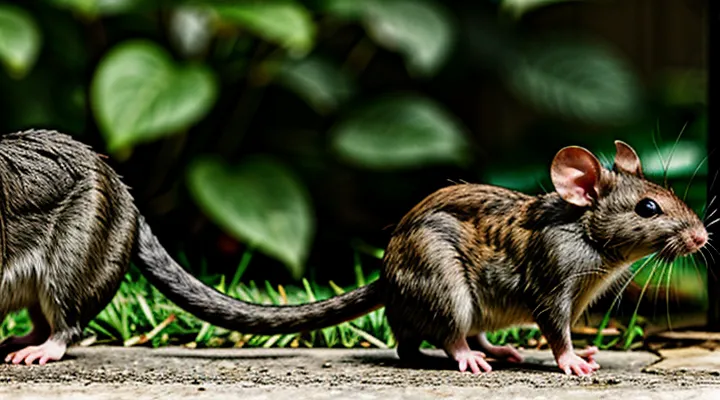
Rats possess unusually long tails that serve as an efficient thermoregulatory organ. The tail’s high surface‑area‑to‑volume ratio enables rapid heat exchange with the environment. Blood vessels beneath the skin can dilate to release excess body heat or constrict to conserve warmth, providing a dynamic temperature‑control system without muscular effort.
Key physiological mechanisms:
- Vasomotor control: Sympathetic nerves adjust arterial and venous tone, altering blood flow through the tail.
- Counter‑current heat exchange: Arteries and veins run in close proximity, allowing heat to be transferred from warm arterial blood to cooler venous blood returning from the tail surface.
- Evaporative cooling: Moisture on the tail’s skin accelerates heat loss through evaporation, especially in humid conditions.
These processes allow rats to maintain core temperature across a wide range of ambient conditions while minimizing metabolic cost. The tail’s function extends beyond balance and communication; it operates as a built‑in radiator that directly supports the animal’s survival in varied climates.
Balance and Agility: A Primate-like Grip
Rats possess unusually long tails that function as a dynamic stabilizer during locomotion. The extended appendage extends the animal’s center of mass rearward, allowing rapid shifts in direction without loss of equilibrium.
The tail operates similarly to a primate’s prehensile grip, though it lacks muscular wrapping. By exerting pressure against surfaces, the tail creates a counterforce that counters inertia generated by sudden accelerations. This mechanical interaction enables rats to navigate narrow ledges and vertical structures with precision.
- Counterbalance during high‑speed sprints prevents tipping.
- Contact with substrates supplies tactile feedback for course correction.
- Adjustable curvature permits fine‑tuned pressure on irregular surfaces.
- Integration with hind‑limb propulsion enhances vertical climbs.
Evolutionary pressure favored individuals capable of exploiting three‑dimensional environments. The elongated tail therefore represents an adaptation that augments balance and agility, allowing rats to exploit niches that demand swift, coordinated movement.
Communication and Social Cues
Rats use their elongated tails as a primary channel for visual and tactile communication within colonies. The tail’s movement conveys emotional states, hierarchy, and territorial boundaries, allowing individuals to coordinate activities without vocalization.
- Rapid, high‑frequency flicks signal agitation or readiness to flee, prompting nearby conspecifics to adopt defensive postures.
- Slow, rhythmic sweeping indicates calm or exploratory behavior, encouraging group cohesion during foraging.
- Tail positioning against the body serves as a submissive cue; lowered or curled tails are recognized by dominant members as an invitation to avoid confrontation.
In addition to visual signals, the tail functions as a mechanosensory organ. Vibrations transmitted through the tail surface are detected by whisker‑adjacent receptors, providing real‑time feedback on the proximity and movement of neighboring rats. This tactile information complements visual cues, enhancing group synchronization during navigation through complex burrow systems.
Overall, the length of the rat’s tail amplifies signal range and resolution, facilitating efficient social interaction and collective decision‑making in dense, low‑light environments.
Evolutionary Perspectives
Ancestral Adaptations
Rats possess unusually long tails because ancestral rodents evolved this feature to meet multiple survival demands. Early species that inhabited complex arboreal and terrestrial habitats required a versatile appendage capable of supporting rapid, agile movement across varied substrates.
- Dynamic balance – elongated, muscular tail acted as a counter‑weight during vertical climbs and swift directional changes, reducing the risk of falls.
- Thermal regulation – extensive surface area allowed efficient heat dissipation in warm environments and heat conservation when curled around the body in colder conditions.
- Signal transmission – tail movements conveyed alarm or social cues within colonies, facilitating coordinated responses to predators.
- Predator evasion – detachable or highly flexible tail enabled rapid distraction, allowing the animal to escape while the predator focused on the trailing limb.
- Locomotive versatility – increased length provided leverage for swimming and burrowing, expanding ecological niches accessible to early rodents.
Fossil evidence shows progressive elongation of caudal vertebrae among Miocene rodent lineages, correlating with diversification into arboreal and semi‑aquatic niches. Comparative anatomy reveals that species retaining long tails share these adaptive functions, while taxa that abandoned the trait exhibit alternative locomotor strategies.
Consequently, the persistence of an extended tail in contemporary rats reflects a suite of ancestral adaptations that collectively enhanced balance, temperature control, communication, and predator avoidance, securing evolutionary success across diverse habitats.
Divergence Across Species
Rats possess unusually long tails compared with many other mammals, a trait that illustrates divergent evolutionary pathways among vertebrates. Tail elongation in rats serves multiple functions that differ from those of related species, reflecting adaptations to distinct ecological pressures.
In rodents, tail length varies widely:
- Norway rats (Rattus norvegicus): tails exceed body length, providing balance during agile climbing and rapid terrestrial movement.
- House mice (Mus musculus): shorter tails aid maneuverability in confined spaces and reduce heat loss in temperate habitats.
- Prairie dogs (Cynomys spp.): moderate tails act as visual signals within social colonies rather than as locomotor aids.
- Squirrels (Sciuridae): long, bushy tails contribute to aerial stability and thermoregulation, yet differ in musculature and flexibility from rat tails.
Across non‑rodent mammals, tail morphology diverges further:
- Cats (Felis catus): flexible tails function primarily for communication and balance, lacking the extensive vascular networks seen in rat tails.
- Kangaroos (Macropus spp.): robust, muscular tails serve as a propulsive limb during locomotion, a function absent in rats.
The divergence arises from selective pressures such as habitat complexity, predator avoidance, and thermoregulatory demands. Rats evolved elongated, highly vascularized tails to dissipate heat efficiently while maintaining agility in urban and subterranean environments. Other species modified tail length or structure to suit their specific niches, demonstrating how a single anatomical feature can follow multiple evolutionary trajectories.
Environmental Pressures and Tail Morphology
Rats possess elongated tails as a direct response to several ecological demands. The tail functions as a stabilizing organ during rapid locomotion on vertical or uneven substrates, allowing precise maneuvering in cluttered environments such as burrows, sewers, and dense vegetation. Its length enhances the rat’s ability to maintain equilibrium while traversing narrow ledges or climbing structures that are inaccessible to larger mammals.
Key environmental pressures shaping tail morphology include:
- Arboreal and semi‑arboreal habitats – selection favors increased surface area for balance on branches and pipes.
- Thermal regulation in variable climates – a long, vascularized tail dissipates excess heat in warm conditions and conserves warmth when wrapped around the body in cold settings.
- Predation pressure – extended tails provide a decoy that can be autotomized or distracted, allowing escape from predators.
- Social interaction within dense colonies – tail length conveys information about individual health and status, influencing hierarchical dynamics.
Morphologically, rat tails exhibit a high proportion of vertebrae, reduced musculature, and a dense network of blood vessels. The skeletal structure maximizes flexibility while maintaining sufficient rigidity to support balance. Vascular adaptations enable rapid heat exchange, and the epidermis contains specialized hair patterns that reduce drag during swift movements. Collectively, these traits represent an evolutionary convergence toward a multifunctional appendage optimized for the challenges of urban and natural ecosystems.
Anatomical Marvels
Bone Structure and Flexibility
Rats possess tails composed of up to 50‑60 caudal vertebrae. Each vertebra is small, cylindrical, and connected by flexible intervertebral discs. The discs contain fibrocartilage that permits bending while maintaining structural integrity. Muscular sheaths envelop the vertebral column, allowing precise adjustments of curvature during locomotion.
The high vertebral count creates a long lever arm that enhances balance. Flexibility arises from:
- Overlapping processes of adjacent vertebrae that slide past one another.
- Elastic ligaments that limit extreme angles yet allow smooth articulation.
- Dense, yet lightweight, cortical bone that resists fracture without adding excessive mass.
These anatomical features enable rats to maneuver through narrow openings, maintain stability on precarious surfaces, and use the tail as a tactile organ. The combination of numerous, slender vertebrae and resilient connective tissue directly accounts for the pronounced length of the rodent’s tail.
Vascular Network: A Thermoregulatory Highway
Rats possess unusually long tails because the appendage functions as a highly efficient thermoregulatory conduit. A dense network of arteries, veins, and capillaries runs parallel to the tail’s surface, forming a counter‑current heat exchange system. Warm arterial blood transfers heat to cooler venous blood returning from the extremities, allowing precise control of temperature without excessive energy loss.
When ambient temperature rises, vasodilation expands the vascular lumen, increasing blood flow to the tail’s skin. Heat dissipates through convection and radiation, rapidly lowering core temperature. Conversely, cold conditions trigger vasoconstriction, reducing peripheral blood flow and conserving warmth within the body core. This bidirectional regulation occurs within seconds, enabling rats to maintain homeostasis across diverse microclimates.
Key physiological features of the tail’s vascular highway include:
- A high ratio of surface area to volume, maximizing exposure to ambient air.
- Thin, highly perfused skin layers that facilitate rapid heat exchange.
- A structured arrangement of arterial and venous bundles that minimizes thermal gradients.
Evolutionary pressure favored elongated tails because the vascular system provides a low‑cost mechanism for temperature management, freeing metabolic resources for other functions such as foraging and reproduction. The tail’s design exemplifies an adaptation where circulatory architecture directly supports environmental resilience.
Sensory Receptors: More Than Just Touch
Rats possess exceptionally long tails that function as extensions of their somatosensory system. The tail’s skin is densely populated with a variety of receptors that provide continuous feedback about the environment, allowing precise adjustments during locomotion, balance, and thermoregulation.
The tail’s sensory array includes:
- Mechanoreceptors – rapidly adapting units that detect skin stretch, vibration, and airflow; they inform the animal about surface texture and obstacles.
- Thermoreceptors – cold and warm receptors that monitor ambient temperature, enabling the rat to dissipate heat or conserve warmth through tail positioning.
- Nociceptors – high‑threshold fibers that signal potentially damaging stimuli, prompting immediate withdrawal or protective posturing.
- Chemoreceptors – cells sensitive to chemical cues such as pheromones or environmental toxins, contributing to social communication and hazard avoidance.
- Proprioceptors – stretch receptors within tail musculature that relay joint angle and muscular tension, supporting equilibrium and coordinated movement.
These receptors transmit signals to the spinal cord and brainstem, where integration with vestibular and visual inputs refines motor commands. The tail’s length amplifies spatial sampling; each centimeter adds a distinct point of contact, expanding the rat’s perceptual field without increasing head or body size. Consequently, the tail acts as a distributed sensor platform, supplementing the animal’s ability to navigate narrow passages, detect predators, and regulate body temperature efficiently.
Misconceptions and Curiosities
The «Hairless» Illusion
Rats’ tails look smooth and hair‑free, yet the surface is covered with fine, often invisible, filaments. These microscopic hairs, called vibrissae, are sparse and lie flat against the skin, creating the “hairless” illusion.
The illusion serves several functions linked to tail length:
- Heat exchange: Sparse hairs reduce insulation, allowing rapid dissipation of excess body heat through the long, thin appendage.
- Sensory detection: Minute hairs detect airflow and subtle vibrations, providing spatial awareness without adding bulk that could hinder balance.
- Water repellency: A near‑smooth surface limits water adhesion, preventing the tail from becoming a drag during swimming or when navigating damp environments.
The apparent lack of fur also minimizes parasite colonization. Fewer visible hairs reduce attachment sites for ectoparasites, which could otherwise exploit the tail’s extensive surface area.
Overall, the “hairless” appearance is a physiological adaptation that enhances thermoregulation, sensory input, and hygiene, explaining why rats have evolved exceptionally long, seemingly smooth tails.
Tail Regeneration: Myth or Reality?
Rats possess elongated tails that function as balance aids, thermoregulatory surfaces, and communication tools. The notion that a rat can regrow a lost tail in its original form is widespread, yet empirical data contradict this belief.
When a rat’s tail is severed, the wound closes through rapid hemostasis and epithelial migration. Fibroblasts deposit collagen, forming a scar that restores structural continuity but lacks vertebrae, nerves, and musculature. Consequently, the regenerated segment does not regain the flexibility, sensory capacity, or length of the original tail.
Research on rodent tail injury consistently reports:
- Immediate wound contraction and scar formation within 24‑48 hours.
- Absence of blastema formation, the cellular mass required for true limb regeneration in amphibians.
- No re‑establishment of spinal cord continuity; neural pathways remain interrupted.
- Restoration limited to a fibrous stubble, typically 10‑30 % of the original length, depending on injury severity.
Mythic accounts often stem from observations of partial regrowth in younger specimens, where the scar tissue may appear elongated. However, histological analyses reveal that this tissue lacks the organized, segmented architecture of a functional tail.
In summary, rats can heal tail injuries and produce a scarred extension, but they cannot regenerate a fully functional, anatomically correct tail. The belief in complete tail regeneration remains unsupported by scientific evidence.
Cultural Significance and Symbolism
Rats’ elongated tails have appeared repeatedly in myth, literature, and popular culture, where they serve as visual shorthand for specific ideas. In East Asian folklore, the tail often marks a creature’s supernatural nature; stories about shape‑shifting rats or mouse spirits describe the tail as a conduit for magical energy, distinguishing them from ordinary vermin. European medieval bestiaries portray the long tail as a symbol of cunning and agility, emphasizing the animal’s capacity to navigate tight spaces and escape predators.
In literature, authors use the tail to convey character traits. For example:
- In a classic fable, the rat’s tail represents resourcefulness, allowing the protagonist to pull hidden objects from narrow crevices.
- In a modern graphic novel, an exaggerated tail signals the character’s connection to the underworld, reinforcing themes of marginalization.
- In a children's story, a bright, swaying tail illustrates joy and playfulness, contrasting with the mouse’s shorter tail that suggests timidity.
Visual media exploit the tail’s distinctive shape for immediate recognition. Animation studios often exaggerate the length to accentuate comedic timing, while horror films emphasize the tail’s movement to create unsettling tension. In branding, the silhouette of a rat with a prominent tail appears on logos for pest‑control companies, leveraging the tail’s association with detection and reach.
Overall, the tail functions as a cultural signifier that conveys supernatural power, cleverness, and distinct identity across diverse narrative traditions.
Other Rodent Tails: A Comparative Look
Mice: Shorter, Thicker
Rats possess elongated, slender tails that serve as balance aids, thermoregulatory surfaces, and storage sites for fat. In contrast, mice exhibit tails that are noticeably shorter and more robust. This morphological divergence reflects distinct ecological pressures and locomotive strategies.
- Balance and agility: Rats navigate complex burrow networks and open terrains, requiring a flexible lever for rapid directional changes. Mice, confined to tighter spaces, rely on body musculature rather than tail length for maneuverability.
- Heat dissipation: The rat’s extensive tail surface facilitates efficient heat loss in warm environments. The mouse’s reduced tail area minimizes heat loss, advantageous for species inhabiting cooler microhabitats.
- Energy reserves: A thicker mouse tail stores greater fat deposits per unit length, providing a compact energy reserve during periods of scarcity.
The anatomical contrast underscores adaptive specialization: rats prioritize extended reach and temperature regulation, while mice emphasize compact strength and energy storage.
Squirrels: The Bushy Counterpart
Rats possess elongated, hair‑sparse tails that serve primarily for balance, heat dissipation, and tactile communication. Squirrels, by contrast, display a compact, heavily furred tail that fulfills a distinct set of adaptive roles.
The squirrel tail reaches approximately 30 % of total body length, covered with dense, often multicolored fur. Muscular control allows rapid shaping and positioning of the tail during arboreal maneuvers.
Key functions of the bushy tail include:
- Stabilization: Acts as a counter‑weight when leaping between branches, reducing rotational inertia.
- Thermal regulation: Traps a layer of air, providing insulation against cold and shielding against heat loss during winter.
- Visual signaling: Displays varied postures to convey alarm, territorial claims, or social status to conspecifics.
- Camouflage: When curled around the body, the tail breaks the outline of the animal, blending with surrounding foliage.
Unlike the slender rat tail, the squirrel’s tail prioritizes insulation and visual communication over pure length. This divergence reflects differing ecological pressures: rats navigate ground‑level burrows and open spaces, while squirrels exploit vertical forest strata where balance and temperature control are critical.
Evolutionary pressures have shaped each species’ tail morphology to match its primary habitat and lifestyle, illustrating how similar structures can diverge dramatically to meet distinct functional demands.
Beavers: The Paddle-like Adaption
Rats possess elongated tails to aid balance while navigating narrow surfaces and to dissipate heat. A contrasting example of tail specialization appears in beavers, whose tails have evolved into broad, flattened structures that function as paddles.
The beaver tail is composed of dense bone, thickened skin, and a large surface area covered by stiff fur. This morphology enables rapid propulsion in water, steering during swimming, and the generation of loud slaps that signal danger to conspecifics. The tail also serves as a stable platform for standing on water, supporting the animal’s weight while it cuts trees or builds dams.
Key functions of the beaver’s paddle‑like tail include:
- Propulsion: simultaneous strokes produce thrust, allowing speeds of up to 8 km/h.
- Steering: asymmetrical movements adjust direction without altering body orientation.
- Communication: rapid slaps create audible warnings over distances of 30 m.
- Thermoregulation: extensive vascular networks release excess heat during prolonged activity.
Compared with the slender, prehensile tail of a rat, the beaver’s flat tail illustrates how tail shape reflects ecological demands. While rats rely on tail length for arboreal agility and temperature control, beavers exploit breadth for aquatic locomotion and social signaling. Both adaptations demonstrate the role of selective pressures in shaping tail morphology across rodent‑related species.