
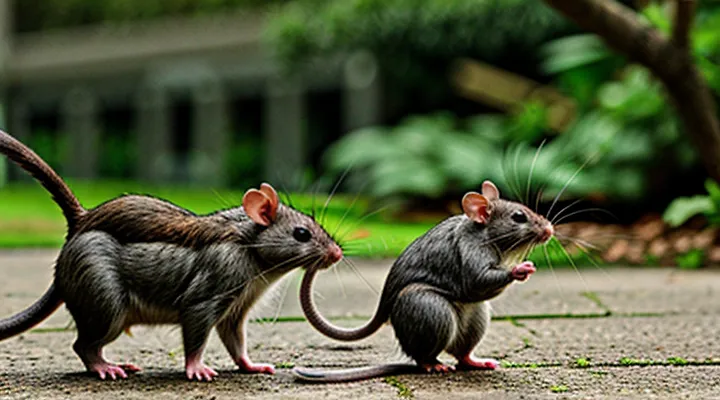
The Versatile Appendage: Understanding the Rat's Tail
General Anatomy and Composition
Bones and Muscles
Rats possess an elongated caudal skeleton composed of numerous vertebrae, each linked by intervertebral joints that allow flexible yet controlled motion. The high vertebral count increases overall tail length without compromising structural integrity, enabling the tail to act as a lever for balance during rapid locomotion and vertical climbing.
Muscular arrangement follows the vertebral column, with paired epaxial and hypaxial muscle groups extending the entire length of the tail. These muscles generate torque for precise tail positioning, assist in counterbalancing body shifts, and contribute to subtle adjustments that maintain stability on narrow surfaces. The distribution of muscle fibers is graded, providing greater force near the base for support and finer control toward the tip for maneuverability.
Key functional outcomes of this skeletal‑muscular architecture include:
- Enhanced agility: rapid tail adjustments counteract inertia during sudden direction changes.
- Improved arboreal performance: tail acts as a fifth limb, distributing weight while navigating branches.
- Thermoregulatory benefit: extensive surface area and vascularization allow heat dissipation, especially important for small mammals with high metabolic rates.
- Predator evasion: flexible tail facilitates erratic escape trajectories, reducing capture success.
Evolutionary pressure favored individuals with longer, more dexterous tails because these traits increased foraging efficiency, habitat exploitation, and survival rates. Over successive generations, natural selection amplified vertebral number and muscle development, resulting in the characteristic long tail observed in modern rats.
Nerve Endings and Blood Vessels
Rats possess unusually long tails that serve specific physiological functions. The extended length increases the surface area available for specialized sensory structures and vascular networks, directly influencing survival and reproductive success.
The distal portion of the tail contains a dense array of mechanoreceptors and thermoreceptors. These nerve endings detect subtle air currents, temperature gradients, and tactile contact, allowing rapid orientation and predator avoidance. The heightened sensory resolution along a longer tail enables rats to maintain balance while climbing, navigating narrow passages, and executing swift directional changes.
An extensive vascular plexus lines the tail’s musculature and skin. Arterioles and venules spread across the entire length, facilitating efficient heat exchange with the environment. When ambient temperatures rise, blood flow to the tail accelerates, dissipating excess body heat. Conversely, vasoconstriction conserves heat during cold periods. The elongated tail also stores a modest volume of blood, providing a reserve that can be mobilized during intense activity or injury.
Together, the sensory and circulatory adaptations create a multifunctional organ whose length offers measurable evolutionary advantages.
- Enhanced detection of environmental cues through abundant nerve endings.
- Improved thermoregulation via a widespread vascular network.
- Additional blood storage capacity for emergency demands.
These factors collectively explain why natural selection favors rats with proportionally long tails.
Evolutionary Adaptations: Why the Length Matters
Thermoregulation: A Built-in Cooling System
Heat Dissipation
Rats possess elongated tails that serve as efficient radiators for excess body heat. The tail’s thin, hair‑less skin, dense network of blood vessels, and high surface‑to‑volume ratio allow rapid heat loss, especially in warm environments where core temperature must be maintained.
Key physiological features that facilitate heat dissipation:
- Arterial and venous counter‑current exchange – warm arterial blood transfers heat to cooler venous blood returning from the tail, reducing heat load before it reaches the brain.
- Vasodilation control – sympathetic nervous system expands tail blood vessels during heat stress, increasing blood flow and surface exposure.
- Minimal insulation – lack of fur and a thin epidermis lower thermal resistance, permitting direct convection and radiation.
Evolutionary pressure favored individuals capable of sustaining activity during high ambient temperatures. Those with longer, more vascularized tails could forage longer, escape predators, and reproduce more successfully, leading to the prevalence of this trait in modern rat populations.
Surface Area to Volume Ratio
Rats possess elongated, slender tails that distinguish them from many other rodents. Evolutionary analysis links this morphology to the relationship between surface area and volume, a geometric principle that influences heat exchange, balance, and energy storage.
The surface‑area‑to‑volume (SA:V) ratio describes how an organism’s exterior area changes relative to its internal mass as size varies. When an appendage becomes longer without a proportional increase in thickness, its SA:V ratio rises. A high ratio allows more rapid transfer of heat between the body and the environment.
A rat tail exemplifies this effect. Its length provides extensive surface area while maintaining a narrow cross‑section, creating a structure that can release heat efficiently. Vasodilatory control of tail blood vessels further enhances this capacity, enabling rapid cooling during periods of elevated metabolic activity.
Selective pressure in habitats with fluctuating temperatures favors individuals that can regulate body temperature without expending additional energy. Rats with longer tails dissipate excess heat more effectively, maintain optimal core temperature during intense foraging, and avoid thermal stress that could impair survival and reproduction.
Empirical observations support the SA:V explanation:
- Tail skin temperature rises markedly when ambient heat increases, demonstrating active heat loss.
- Blood flow measurements show reversible vasodilation, confirming physiological control of thermal exchange.
- Comparative studies reveal that species inhabiting hotter climates possess proportionally longer tails than those in cooler regions.
The elevated SA:V ratio of the rat tail offers a mechanistic basis for its evolutionary persistence, linking morphological adaptation directly to thermoregulatory efficiency.
Balance and Agility: Aiding Locomotion
Counterbalance During Movement
Rats rely on their elongated tails to maintain stability while navigating complex environments. The tail’s mass positioned behind the body creates a pendulum effect that offsets shifts in the center of gravity during rapid accelerations, sudden stops, and sharp turns. This mechanical advantage enables precise adjustments without sacrificing speed.
When a rat climbs vertical surfaces, the tail extends upward, generating a counteracting torque that balances the forward thrust of the forelimbs. The resulting equilibrium reduces the risk of tipping backward and allows the animal to grip narrow ledges with confidence.
During horizontal locomotion, especially on uneven terrain, the tail swings laterally in response to changes in foot placement. This lateral motion dampens lateral wobble, ensuring a straight trajectory. The tail’s flexibility also permits fine‑tuned corrections when the rat negotiates obstacles such as debris or gaps.
Key aspects of the counterbalancing function include:
- Mass distribution behind the torso, providing a rearward shift of the center of mass.
- Ability to generate torque opposite to body movements, stabilizing pitch and yaw.
- Rapid, autonomous adjustments that operate without conscious control.
These characteristics collectively enhance maneuverability, reduce energetic costs associated with corrective movements, and contribute to the rat’s overall agility in both natural and urban habitats.
Navigating Uneven Terrain
Rats rely on their elongated tails to maintain stability while moving across irregular surfaces. The tail acts as a dynamic counterweight, shifting its mass in response to changes in body orientation. This rapid adjustment reduces the risk of tipping when the animal encounters sloped or uneven ground.
The tail also functions as a tactile organ. Vibrissae along the dorsal surface detect contact with obstacles, allowing the rat to gauge the texture and angle of the terrain without visual input. This sensory feedback informs immediate postural corrections.
Key advantages of a long tail for navigating rough terrain include:
- Enhanced balance through continuous torque modulation.
- Immediate detection of surface irregularities via mechanoreceptors.
- Improved maneuverability during rapid directional changes.
- Ability to brace against narrow ledges, extending reach and preventing falls.
Evolutionary pressure favored individuals with longer tails because they achieved higher foraging success in cluttered habitats. Increased survival rates translated into greater reproductive output, reinforcing the trait across generations. Consequently, the tail length observed in modern rats directly reflects adaptation to complex, uneven environments.
Arboreal Locomotion
Rats that habitually climb trees or dense shrubbery rely on a tail that extends well beyond the body’s length. In arboreal environments, the tail functions as a movable counter‑balance, allowing the animal to maintain equilibrium while traversing narrow branches or leaping between supports. The elongated appendage also serves as a tactile probe, detecting gaps and surface irregularities before the fore‑limbs engage.
- Shifts the centre of mass during rapid directional changes.
- Provides a stabilizing moment that reduces the risk of overturning.
- Acts as a sensory antenna, delivering continuous feedback about branch geometry.
- Enhances maneuverability during vertical ascent and descent.
Comparative studies show that arboreal rat species possess tails up to 30 % longer relative to body size than their terrestrial counterparts. This disparity correlates with selective pressures such as predation from aerial hunters and the need to exploit food resources located high in the canopy. Individuals with longer, more flexible tails achieve higher foraging efficiency and lower escape latency, increasing reproductive success.
Natural selection therefore favours extended tails in rat lineages that occupy three‑dimensional habitats. The tail’s multifunctional role in balance, sensory perception, and locomotor agility constitutes the primary evolutionary driver behind the pronounced length observed in arboreal rats.
Sensory Perception: An Extension of Touch
Tactile Exploration
Rats rely on their tails for continuous tactile feedback while navigating complex environments. The tail’s length extends the sensory field beyond the body, allowing detection of obstacles, surface textures, and air currents before the forelimbs or whiskers encounter them. This early warning system reduces the risk of falls and collisions, especially in narrow burrows or elevated pathways.
Sensory receptors embedded in the tail’s skin transmit mechanical information to the central nervous system. The distribution of Merkel cells, Ruffini endings, and free nerve endings creates a gradient of pressure and stretch sensitivity along the entire length. This gradient enables rats to discern subtle variations in substrate firmness and to adjust locomotor patterns in real time.
Key evolutionary advantages of an elongated tail for tactile exploration include:
- Expanded detection zone that compensates for limited visual acuity in low‑light habitats.
- Immediate feedback during rapid movements, supporting agile climbing and swift retreats.
- Integration with balance mechanisms, whereby tail‑derived tactile cues complement vestibular input to maintain stability.
By extending the rat’s sensory reach, a long tail improves foraging efficiency, predator avoidance, and habitat exploitation, reinforcing its persistence across diverse rodent lineages.
Environmental Awareness
Rats possess elongated tails that function as thermoregulatory and balance organs, allowing efficient movement across diverse microhabitats. The tail’s extensive surface area dissipates heat in warm environments, while its muscular control aids navigation on vertical surfaces and narrow passages. These traits emerged through selective pressures that favored individuals capable of exploiting complex, fragmented ecosystems, such as urban sewage systems, agricultural fields, and forest underbrush.
Understanding this adaptation underscores the importance of environmental awareness. Recognizing how morphological features reflect habitat conditions informs conservation strategies that preserve the structural complexity essential for species survival. Key considerations include:
- Maintaining vegetative cover that supports arboreal and ground movement.
- Protecting temperature gradients within habitats to sustain physiological regulation.
- Reducing habitat fragmentation to prevent loss of ecological niches that favor specialized traits.
By linking anatomical evolution to habitat quality, stakeholders can assess ecosystem health and implement measures that safeguard both biodiversity and the functional attributes that enable species resilience.
Communication and Social Signaling
Tail Postures and Meanings
Rats employ a variety of tail positions that convey physiological state, environmental awareness, and social intent. The elongated appendage functions as a mobile sensor, balance aid, and communication tool, each posture reflecting a specific adaptive purpose.
- Elevated, stiff tail – indicates heightened alertness; the animal monitors predators or navigates complex terrain, using the tail as a stabilizing counterweight.
- Whipping or flicking motions – serve as rapid warning signals to conspecifics, transmitting urgency without vocalization.
- Coiled or tucked tail – appears when the rat is stationary, resting, or submitting; the reduced exposure minimizes heat loss and signals non‑aggressive status.
- Horizontal, relaxed tail – accompanies exploratory locomotion, allowing fine‑tuned adjustments to maintain center of gravity on narrow surfaces.
These postures arise from selective pressures that favored individuals capable of exploiting diverse habitats. A long, flexible tail enhances arboreal and terrestrial maneuverability, while its visibility enables non‑verbal interaction that reduces costly confrontations. Consequently, tail posture patterns constitute an integrated behavioral repertoire directly linked to the evolutionary advantages conferred by an extended tail.
Intraspecies Interactions
Rats rely on their elongated tails for a range of social functions that influence group dynamics, hierarchy, and reproductive success. The tail provides a flexible extension that enhances communication and coordination among conspecifics, directly affecting fitness.
- Tactile signaling: Tail movement generates vibrations that other rats detect through whisker and skin receptors, allowing individuals to convey alertness, agitation, or readiness to engage in social interaction without vocalizing.
- Visual displays: Tail posture and flicking serve as visual cues during dominance contests; elevated or rapidly swishing tails are interpreted as assertions of higher rank, while subdued tail positions indicate submission.
- Balance during social climbing: When rats navigate complex burrow systems or climb communal structures, the tail acts as a counterbalance, enabling stable ascent and descent that facilitate access to nesting sites and resources shared within the colony.
- Mating rituals: Males exhibit tail flicks and rhythmic tail movements during courtship, providing females with kinetic and visual information that influences mate selection. Tail length correlates with perceived vigor, affecting reproductive opportunities.
- Grooming coordination: The tail’s reach permits self‑grooming of hard‑to‑access areas and mutual grooming among partners, reinforcing social bonds and reducing parasite load, which in turn supports group health.
These interactions create feedback loops: individuals with longer, more maneuverable tails can more effectively assert dominance, secure mates, and maintain alliances, thereby increasing their reproductive output. Over evolutionary time, selective pressures favored tail elongation because it amplified intraspecific communication and cooperation, contributing to the persistence of this trait across rat populations.
Unraveling the Evolutionary Trajectory
Ancestral Traits and Divergence
Rats inherited a long, flexible tail from early rodent ancestors that used it for balance, thermoregulation, and communication. The tail’s musculature and vertebral structure show little deviation from the pattern observed in Miocene murids, indicating that the trait was established before the diversification of modern genera.
During the Miocene‑Pliocene radiation, several murid lineages adapted to distinct ecological niches. In arboreal species, the tail elongated further to enhance aerial stability, while burrowing forms reduced tail length to minimize obstruction in tunnels. Divergence in tail morphology correlates with habitat specialization:
- Arboreal rodents: extended tail, increased vertebral count, enhanced prehensile ability.
- Terrestrial omnivores (including Rattus spp.): moderate length, balanced flexibility for rapid locomotion and thermoregulatory surface area.
- Fossorial rodents: shortened tail, reduced musculature, streamlined body plan.
Genomic analyses reveal conserved regulatory genes (e.g., Hox clusters) governing vertebral development, with minor mutations influencing tail proportion among descendant species. The persistence of a long tail in rats reflects retention of the ancestral design, modified only where selective pressures demanded functional adjustments.
Environmental Pressures and Selection
Rats possess elongated tails because natural selection repeatedly favored individuals whose tails conferred survival advantages under specific environmental pressures. In habitats where climbing, balance, and thermoregulation are critical, a long, flexible tail enhances maneuverability on narrow surfaces, reduces the risk of falls, and facilitates rapid directional changes. Predatory threats intensify this pressure; individuals able to escape through arboreal routes or tight crevices survive more often, passing the tail‑length trait to offspring.
Key selective forces shaping tail length include:
- Spatial complexity – dense vegetation, cluttered ground litter, and vertical structures demand precise balance; a longer tail acts as a counter‑weight.
- Temperature fluctuation – exposed environments with variable heat loss benefit from a tail that can dissipate excess body heat or retain warmth when curled against the body.
- Predation dynamics – aerial or terrestrial predators force rats to exploit three‑dimensional escape routes; a longer tail improves grip and traction during rapid retreats.
Over successive generations, alleles coding for increased tail growth accumulated in populations inhabiting such niches, while populations in open, flat terrains exhibit comparatively shorter tails due to reduced selective pressure. The pattern illustrates how environmental constraints direct morphological evolution through differential reproductive success.
Comparative Biology: Other Tail-Bearing Species
Rats possess elongated tails that enhance arboreal stability, assist in thermoregulation, and serve as a sensory organ. Comparative analysis of other tailed vertebrates reveals convergent evolutionary pressures that shape similar morphological adaptations.
Mammals such as squirrels, opossums, and tree shrews exhibit long, prehensile tails. In squirrels, the tail functions as a counter‑balance during rapid leaps, while opossums use their tails for grasping branches and stabilizing locomotion. Tree shrews employ the tail to maintain equilibrium while navigating narrow perches.
Reptiles display diverse tail morphologies linked to ecological demands. Iguanas and monitor lizards possess muscular tails that act as propulsive tools for swimming and as defensive structures capable of autotomy. In many snakes, the tail contributes to locomotor thrust and, in some species, stores venom‑delivery apparatus.
Birds with prominent tail feathers, such as pheasants and peacocks, utilize the tail for aerodynamic control and sexual signaling. The elongated tail of the lyrebird aids in maneuverability within dense understory, mirroring the balance function observed in rodents.
Aquatic vertebrates illustrate additional tail functions. Otters and beavers feature flattened tails that generate thrust for swimming and provide surface area for heat exchange. In cetaceans, the fluke serves as the primary locomotive organ, demonstrating the tail’s capacity for powerful propulsion.
Key comparative points:
- Balance and locomotion: Arboreal mammals and certain reptiles rely on tail mass distribution to stabilize movement.
- Thermoregulation: Vascularized tails in rodents, otters, and some lizards dissipate excess heat.
- Communication and display: Avian tail plumage and reptilian coloration convey social signals.
- Energy storage: Fat deposits in the tails of some marsupials and rodents offer metabolic reserves during scarcity.
These examples illustrate that long tails evolve repeatedly across taxa when they confer advantages in stability, locomotion, temperature regulation, or communication, reinforcing the functional rationale behind the rat’s elongated tail.