
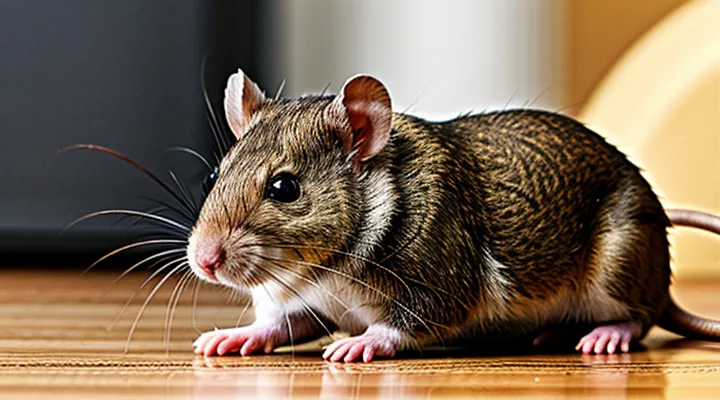
Intelligence in Animals: A General Overview
Animal cognition is assessed through experimental tasks that measure problem‑solving, spatial learning, memory retention, and social interaction. Standardized mazes, operant conditioning chambers, and object‑recognition tests provide quantitative data that allow comparison across species.
Rodents exhibit a broad spectrum of cognitive abilities. Rats demonstrate rapid acquisition of complex tasks, flexible adaptation to changing rules, and robust long‑term memory. Hamsters display competent navigation of simple mazes and reliable habituation to repetitive stimuli, but their performance declines when tasks require abstract reasoning or extended planning.
Key cognitive dimensions relevant to the comparison:
- Learning speed – rats typically reach criterion performance in fewer trials than hamsters.
- Memory duration – rats retain spatial information for weeks; hamster retention is shorter.
- Problem‑solving flexibility – rats modify strategies when obstacles appear; hamsters often repeat initial approaches.
- Social cognition – rats engage in cooperative behaviors and recognize conspecifics; hamster social interactions are limited and largely territorial.
Overall, the evidence positions rats at a higher level of cognitive complexity than hamsters, especially in tasks demanding flexible learning, sustained memory, and social processing. This general overview of animal intelligence provides the framework for evaluating the specific question of relative smartness between the two species.
Understanding Rat Intelligence
Cognitive Abilities of Rats
Problem-Solving Skills
Rats demonstrate advanced problem‑solving abilities. Laboratory tests show they can navigate mazes, open latches, and manipulate objects to obtain food. Their whisker‑driven tactile perception and highly developed hippocampus enable rapid learning of spatial patterns and flexible adaptation to new obstacles.
Hamsters display limited problem‑solving performance. Experiments reveal they can solve simple tasks such as pushing a wheel to release a treat but struggle with multi‑step challenges. Their reliance on instinctual foraging behavior restricts capacity for abstract reasoning.
Key distinctions:
- Learning speed – Rats acquire maze solutions after a few trials; hamsters require many repetitions.
- Tool use – Rats manipulate levers and doors; hamsters rarely interact with mechanisms beyond basic wheel rotation.
- Memory retention – Rats retain spatial maps for weeks; hamsters show rapid decay of learned routes.
- Behavioral flexibility – Rats adjust strategies when conditions change; hamsters tend to repeat initial attempts despite failure.
Memory and Learning
Rats exhibit superior spatial memory, demonstrated by rapid acquisition and retention in maze tests. Their hippocampal formation is proportionally larger, supporting enhanced navigation and pattern separation. Hamsters show limited maze performance, often requiring repeated trials to reach criteria comparable to rats.
Learning speed differs markedly. In operant conditioning, rats achieve stable response rates after fewer sessions, reflecting efficient associative processing. Hamsters display slower reinforcement curves, with greater variability in response latency.
Neurochemical profiles reinforce these behavioral patterns. Rats maintain higher basal levels of acetylcholine in the cortex, a neurotransmitter linked to attention and memory consolidation. Hamsters possess lower concentrations, correlating with reduced learning efficiency.
Key comparative points:
- Spatial navigation: rats > hamsters
- Operant conditioning acquisition: rats > hamsters
- Hippocampal volume relative to body size: rats > hamsters
- Cortical acetylcholine levels: rats > hamsters
Overall, empirical data indicate that rats possess more robust memory systems and faster learning capabilities than hamsters.
Social Intelligence
Rats display complex social structures that include hierarchical ordering, cooperative foraging, and vocal communication. Their ability to recognize conspecifics, remember social interactions, and adjust behavior based on group dynamics evidences advanced social cognition. Laboratory observations show rats can learn tasks through observation of peers and exhibit empathy‑like responses to distressed cage‑mates.
Hamsters, by contrast, are predominantly solitary. They establish temporary territories but rarely engage in cooperative activities. Social encounters are limited to brief mating or aggressive interactions. Studies report minimal observational learning and negligible affiliative behavior, indicating lower capacity for social information processing.
Key distinctions in social intelligence:
- Group organization: Rats maintain stable colonies; hamsters remain solitary.
- Observational learning: Rats acquire tasks by watching others; hamsters show limited imitation.
- Empathy indicators: Rats respond to distress signals; hamsters lack measurable empathetic responses.
- Communication: Rats use ultrasonic vocalizations for social cues; hamsters rely mainly on scent marking with minimal vocal exchange.
Brain Structure and Function in Rats
Brain-to-Body Ratio
The brain‑to‑body mass ratio provides a quantifiable basis for assessing the cognitive capacity of small rodents. A typical laboratory rat (Rattus norvegicus) weighs 250–300 g and possesses a brain weighing approximately 2.0 g, yielding a ratio of 0.8 % (0.008). In contrast, a common hamster (Mesocricetus auratus) averages 120 g in body mass with a brain mass of about 0.9 g, resulting in a ratio of 0.75 % (0.0075).
The slight numerical advantage in rats reflects a proportionally larger neural substrate relative to overall size. This difference aligns with observed variations in learning speed, maze navigation, and problem‑solving performance, where rats consistently outperform hamsters.
Key implications of the ratio:
- Higher ratio correlates with increased neuronal density and cortical surface area.
- Enhanced sensory integration and memory consolidation are associated with the larger proportion of brain tissue.
- Behavioral experiments confirm that animals with a greater ratio adapt more rapidly to novel tasks.
Therefore, when evaluating the relative intelligence of these two species, the brain‑to‑body mass ratio supports the conclusion that rats possess a modest but measurable advantage over hamsters.
Neural Plasticity
Neural plasticity—the brain’s ability to reorganize synaptic connections in response to experience—offers a direct measure of learning capacity in rodents. Rats possess a larger hippocampal volume relative to body size, a higher density of dendritic spines, and more robust long‑term potentiation (LTP) pathways than hamsters. These features enable faster acquisition of spatial tasks, stronger memory consolidation, and greater adaptability to novel environments.
Key physiological distinctions:
- Hippocampal architecture – Rats exhibit extensive mossy fiber branching, supporting rapid formation of new place fields; hamsters display more limited branching, restricting spatial map complexity.
- Synaptic turnover – Rat cortical neurons show elevated rates of spine formation and elimination during enrichment, indicating heightened structural remodeling; hamster neurons maintain lower turnover, suggesting reduced flexibility.
- Neurotrophic signaling – Brain‑derived neurotrophic factor (BDNF) expression rises markedly in rats after maze training, enhancing synaptic strength; hamster BDNF response remains modest under comparable conditions.
Experimental evidence reinforces these differences. In classic Morris water‑maze trials, rats reduce escape latency by 40 % after five sessions, whereas hamsters achieve only a 15 % reduction. Electrophysiological recordings reveal that rat LTP magnitude reaches 150 % of baseline after high‑frequency stimulation, while hamster LTP peaks near 110 %.
Consequently, the superior neural plasticity observed in rats provides a biological foundation for more efficient problem solving and adaptive behavior, supporting the conclusion that rats demonstrate higher cognitive performance than hamsters.
Understanding Hamster Intelligence
Cognitive Abilities of Hamsters
Basic Learning Capacity
Rats demonstrate a higher basic learning capacity than hamsters when evaluated with standard laboratory tasks. In maze navigation, rats reach the goal after an average of 4–6 trials, whereas hamsters require 10–12 trials to achieve comparable accuracy. Operant conditioning experiments show rats acquiring lever‑press responses within 2–3 sessions, while hamsters typically need 5–7 sessions to reach the same reinforcement rate.
Memory retention further distinguishes the species. After a 24‑hour delay, rats retain 85 % of learned maze routes, whereas hamsters retain approximately 60 %. In reversal learning, rats adapt to changed maze configurations after 1–2 additional trials; hamsters often need 4–5 trials to modify their strategy.
Key comparative data:
- Acquisition speed: rats ≈ 4–6 trials; hamsters ≈ 10–12 trials.
- Operant response learning: rats ≈ 2–3 sessions; hamsters ≈ 5–7 sessions.
- Retention after 24 h: rats ≈ 85 % correct; hamsters ≈ 60 % correct.
- Reversal adaptation: rats ≈ 1–2 trials; hamsters ≈ 4–5 trials.
These metrics indicate that rats possess a more efficient basic learning system, reflected in faster acquisition, stronger retention, and quicker behavioral flexibility compared with hamsters.
Instinctual Behaviors
Rats exhibit complex instinctual patterns that support survival in diverse environments. They construct elaborate burrow systems, display territorial marking through scent glands, and perform nocturnal foraging with precise spatial memory. Their grooming routine includes self‑cleaning and social grooming, reinforcing group cohesion. Predatory avoidance is evident in rapid escape responses triggered by auditory and vibrissal cues.
Hamsters rely on instinctual behaviors suited to solitary desert habitats. They create extensive tunnel networks, store food in cheek pouches, and engage in hoarding to buffer against scarcity. Nest‑building involves arranging bedding material into insulated chambers. Seasonal torpor is regulated by innate circadian rhythms, reducing metabolic demand during cold periods.
Key distinctions emerge:
- Social interaction: rats maintain group structures; hamsters operate primarily alone.
- Spatial strategies: rats navigate large, variable territories; hamsters focus on confined burrow systems.
- Resource management: rats exhibit opportunistic foraging; hamsters prioritize hoarding and cache retrieval.
These innate actions reflect adaptive intelligence tailored to each species’ ecological niche.
Spatial Awareness
Spatial awareness refers to an animal’s ability to perceive its position, orientation, and movement within a three‑dimensional environment. It underlies tasks such as navigation, obstacle avoidance, and memory of spatial cues.
Rats demonstrate high proficiency in spatial tasks. In laboratory mazes, they locate hidden platforms after a single exposure, adjust routes when barriers shift, and retain map-like representations for weeks. Their hippocampal structure supports rapid encoding of environmental geometry and distal cues.
Hamsters exhibit moderate spatial competence. They navigate simple tunnels and circular wheels efficiently, yet performance declines in complex mazes with multiple choice points. Spatial memory persists for a few days, and adjustments to altered pathways occur less consistently than in rats.
Key comparative observations:
- Maze complexity handling: rats > hamsters
- Speed of learning new routes: rats ≈ 2‑3 times faster
- Retention of spatial maps: rats > hamsters (weeks vs. days)
- Flexibility after environmental changes: rats > hamsters
Overall, spatial awareness metrics favor rats, indicating superior navigation and map‑based memory relative to hamsters.
Brain Structure and Function in Hamsters
Brain Size Comparisons
Rats typically weigh 250–300 g and possess brains averaging 2.0 g; hamsters range from 80–150 g with brains around 0.8 g. The disparity in absolute brain mass reflects the larger body size of rats.
The brain‑to‑body ratio provides a more meaningful comparison. Rats exhibit a ratio of approximately 0.8 % (brain mass ÷ body mass), whereas hamsters show about 0.6 %. This metric suggests a modest advantage for rats in relative neural resources.
Key neuroanatomical differences include:
- Neuron count: rats contain roughly 200 million cortical neurons; hamsters hold about 80 million.
- Hippocampal volume: rat hippocampus occupies ~0.12 cm³; hamster hippocampus measures ~0.05 cm³.
- Prefrontal cortex development: rat prefrontal regions display denser dendritic arborization, indicating greater capacity for complex processing.
Higher neuron density and larger hippocampal structures correlate with enhanced spatial learning, problem‑solving, and memory consolidation. Consequently, the brain size metrics favor rats as the species with superior cognitive potential.
Sensory Perception
Rats and hamsters rely on distinct sensory systems that shape their interaction with the environment. Both species possess highly developed olfactory epithelium, yet the density of odorant receptors differs markedly. Rats exhibit approximately 1,200 functional olfactory receptor genes, enabling detection of volatile compounds at concentrations as low as 10 ppb. Hamsters possess around 800 functional genes, resulting in a higher detection threshold, typically 50–100 ppb.
Visual perception varies with retinal architecture. Rats have a rod-dominated retina, providing superior scotopic (low‑light) vision but limited acuity; the estimated visual acuity is 1 cycle/degree. Hamsters display a more balanced rod‑cone ratio, granting better photopic (daylight) vision and an acuity of roughly 2 cycles/degree. Both species lack a fovea, limiting fine detail resolution.
Auditory capabilities align with ecological niches. Rats detect frequencies from 200 Hz to 80 kHz, with peak sensitivity near 20 kHz. Hamsters respond to a narrower band, 500 Hz to 50 kHz, and show reduced sensitivity above 30 kHz. These ranges support communication and predator avoidance.
Tactile input is mediated by facial whiskers (vibrissae). Rats possess a dense array of macrovibrissae, each innervated by thousands of mechanoreceptors, allowing precise texture discrimination and spatial mapping. Hamsters feature fewer and shorter macrovibrissae, providing coarser tactile resolution.
Key comparative points:
- Olfactory receptor count: rats ≈ 1,200; hamsters ≈ 800
- Detection threshold (odor): rats ≈ 10 ppb; hamsters ≈ 50–100 ppb
- Visual acuity: rats ≈ 1 cycle/°; hamsters ≈ 2 cycles/°
- Auditory range: rats 200 Hz–80 kHz; hamsters 500 Hz–50 kHz
- Whisker density: rats high; hamsters moderate
These sensory profiles reflect evolutionary adaptations to distinct habitats and foraging strategies, providing measurable parameters for assessing perceptual proficiency in each species.
Direct Comparison of Cognitive Traits
Learning Speed and Adaptability
Maze Navigation
Rats consistently outperform hamsters in maze navigation tasks that require spatial learning and memory. Laboratory studies using T‑mazes, radial arm mazes, and Morris water mazes report shorter latency, fewer errors, and higher retention scores for rats across multiple trials.
Key observations:
- Rats acquire the correct route after 2–3 exposures; hamsters typically need 5–7 repetitions.
- In reversal learning, rats adjust to altered reward locations within one session, whereas hamsters often require two or more sessions.
- Neural imaging shows stronger hippocampal activation in rats during navigation, correlating with superior performance.
These findings indicate that rats possess more efficient spatial cognition mechanisms, making them the more adept navigators in experimental mazes.
Operant Conditioning
Operant conditioning provides a direct measure of problem‑solving capacity by linking specific actions to consequences such as food rewards or avoidance of mild aversive stimuli. In laboratory settings, rats typically acquire lever‑press or nose‑poke responses within fewer trials than hamsters, indicating faster associative learning. This efficiency is reflected in shorter latency to reach criterion performance and higher response rates under variable‑ratio schedules.
Key observations from comparative studies:
- Rats achieve stable reinforcement patterns after 20–30 trials; hamsters often require 40–60 trials.
- Under extinction, rats reduce responding more gradually, suggesting stronger persistence of learned behavior.
- In reversal learning tasks, rats adjust to new contingencies within 5–7 sessions, whereas hamsters need 10–12 sessions.
These results imply that rats possess superior operant learning speed and flexibility, traits commonly associated with higher cognitive processing. Hamsters, while capable of basic operant tasks, display slower acquisition and less adaptability when conditions change.
Social Behavior and Problem Solving
Group Dynamics in Rats
Rats live in hierarchically organized groups where dominance relationships are established through repeated agonistic encounters. The highest‑ranking individual gains priority access to food, nesting sites, and mating opportunities, while subordinate members adjust their activity patterns to avoid conflict.
Communication within a rat colony relies on ultrasonic vocalizations, scent marking, and tactile signals. Ultrasonic calls convey alarm, territorial, or affiliative information, whereas pheromonal deposits on bedding and urine provide a persistent record of individual identity and reproductive status.
Cooperative behavior appears in foraging and nest construction. Rats coordinate movements to locate food sources, share discovered caches, and collectively arrange nesting material to improve thermal regulation. Observational learning allows inexperienced rats to acquire efficient search strategies by watching proficient conspecifics.
Key aspects of rat group dynamics relevant to comparative cognition:
- Stable dominance hierarchy reduces intra‑group aggression and stabilizes resource distribution.
- Multimodal signaling supports rapid information transfer about threats and opportunities.
- Social learning accelerates acquisition of novel problem‑solving techniques.
- Collective nest building demonstrates coordinated planning and material manipulation.
These characteristics illustrate a sophisticated social system that enhances individual performance through shared knowledge and coordinated action, providing a strong argument for advanced cognitive capacities in rats relative to solitary or less socially complex rodents.
Solitary Nature of Hamsters
Hamsters are inherently solitary mammals. In the wild, they occupy individual burrows and defend territories against conspecifics. This isolation reduces opportunities for social learning, a factor that can limit problem‑solving development compared with more gregarious rodents.
Physiological adaptations support the solitary lifestyle. Elevated cortisol levels appear when hamsters are forced into group housing, indicating stress that can impair memory formation. Their neural circuitry emphasizes individual foraging strategies rather than cooperative problem solving.
Behavioral evidence reinforces the solitary disposition:
- Preference for exclusive nesting chambers.
- Aggressive responses to intruders, even of the same species.
- Limited vocal communication; reliance on scent marking for territory delineation.
The combination of territorial aggression, stress‑induced hormonal responses, and a neural focus on self‑directed tasks suggests that hamsters’ solitary nature constrains the breadth of cognitive challenges they encounter. Consequently, when evaluating intelligence across rodent species, the lack of social interaction in hamsters represents a significant disadvantage relative to more socially inclined counterparts.
Factors Influencing Perceived Intelligence
Environmental Enrichment
Environmental enrichment provides the stimuli necessary for rodents to express their full behavioral repertoire, thereby influencing performance on cognitive assessments. In comparative studies of rodent cognition, enriched cages typically include nesting material, tunnels, chewable objects, and opportunities for social interaction. These elements reduce stress, promote neurogenesis, and improve learning speed, which can affect the outcome of problem‑solving tasks.
Key components of enrichment:
- Structural complexity (e.g., PVC tubes, climbing platforms) encourages exploration and spatial navigation.
- Manipulable objects (e.g., wooden blocks, chew sticks) stimulate fine motor skills and tactile learning.
- Social housing (pair or group) supports communication and hierarchy formation, enhancing social cognition.
- Variable feeding schedules with hidden food rewards foster foraging strategies and memory formation.
When evaluating the cognitive abilities of rats versus hamsters, the presence or absence of enrichment can create divergent results. Rats, known for robust exploratory behavior, benefit markedly from complex environments, showing accelerated acquisition of maze tasks and superior performance in operant conditioning. Hamsters, which display more limited natural foraging ranges, may exhibit modest gains under enrichment but often retain lower baseline performance on the same tasks.
Consequently, any claim about relative intelligence must control for enrichment conditions. Studies that standardize housing, provide identical enrichment across species, and report detailed environmental parameters produce the most reliable comparisons. Without such control, differences in problem‑solving speed or error rates may reflect environmental disparity rather than innate cognitive capacity.
Training and Interaction
Rats and hamsters respond differently to training because of distinct learning capacities and social behaviors. Rats quickly form associations between cues and rewards, enabling them to master complex tasks such as maze navigation, lever pressing, and operant conditioning. Hamsters display slower acquisition rates, often requiring repeated exposure to simple stimulus‑response patterns before showing consistent performance.
Training protocols that exploit natural tendencies yield the most reliable results.
- Positive reinforcement: Food pellets delivered immediately after a correct response accelerate learning in rats; hamsters benefit from the same approach but need larger intervals between trials to avoid stress.
- Shaping: Gradual reinforcement of successive approximations works efficiently with rats, allowing them to perform multi‑step sequences. Hamsters respond best when each step is isolated and practiced in short, repetitive sessions.
- Social interaction: Rats thrive in group settings where peer observation facilitates imitation. Hamsters are solitary; interaction with humans rather than conspecifics drives motivation.
Interaction quality influences cognitive performance. Rats readily engage in handling, grooming, and play, which reduces anxiety and improves task focus. Hamsters exhibit limited tolerance for handling; gentle, brief contact minimizes fear and supports willingness to participate in training exercises.
Overall, training outcomes reflect the higher adaptability and problem‑solving aptitude of rats compared with the more cautious, less socially driven learning style of hamsters.
Species-Specific Needs
Rats and hamsters have distinct physiological and behavioral requirements that shape the design and interpretation of cognitive assessments. Understanding these needs prevents misattribution of performance differences to intelligence alone.
Rats require complex social environments. They thrive in groups, develop hierarchies, and rely on tactile and olfactory cues for communication. Isolation can induce stress, impair learning, and distort test outcomes. Enrichment devices such as tunnels, nesting material, and chewable objects support natural foraging behavior and promote neural plasticity.
Hamsters exhibit solitary tendencies. They establish individual territories and display heightened aggression toward conspecifics. Overcrowding leads to chronic stress, reducing motivation for tasks that involve exploration. Providing a spacious cage, a deep bedding substrate, and a running wheel satisfies their nocturnal activity patterns and encourages voluntary engagement with experimental apparatus.
Nutritional demands differ markedly. Rats need a balanced diet rich in protein and fiber to sustain high metabolic rates associated with active exploration. Deficiencies can compromise memory formation. Hamsters, adapted to store fat, benefit from occasional high‑energy treats but require limited protein to avoid renal strain. Diet formulation influences reward sensitivity during problem‑solving trials.
Sensory preferences affect stimulus selection. Rats possess acute whisker sensation and excel in tactile mazes; auditory cues also guide navigation. Hamsters rely more on visual and vestibular input, responding better to bright contrast patterns and rotating platforms. Aligning test modalities with each species’ dominant senses yields more accurate measures of learning capacity.
Key considerations for comparative studies:
- Maintain social housing for rats; isolate hamsters.
- Provide species‑appropriate enrichment (e.g., chew toys for rats, wheels for hamsters).
- Tailor diet to metabolic needs to ensure consistent motivation.
- Choose sensory cues that match natural proclivities.
- Monitor stress indicators (e.g., cortisol levels, grooming behavior) throughout testing.
By honoring these species‑specific requirements, researchers can isolate cognitive performance from extraneous variables, leading to a more reliable evaluation of problem‑solving abilities in each rodent.