
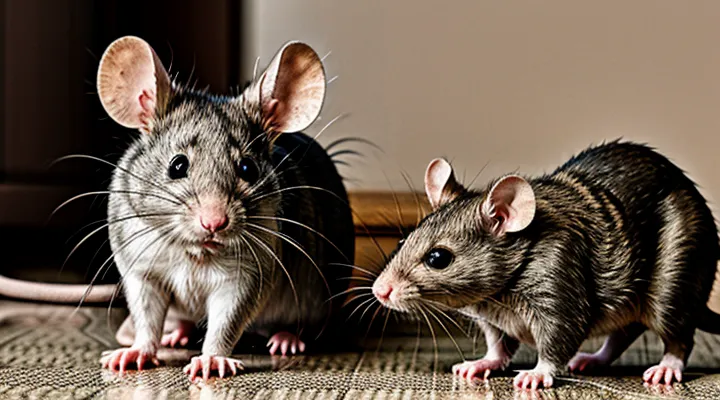
The Broad Biological Groupings
Kingdom: Animalia
The rat belongs to the kingdom Animalia, a group of multicellular eukaryotic organisms that obtain nutrients by ingestion and exhibit specialized tissues. Members of this kingdom possess cells without cell walls, develop from a blastula during embryogenesis, and display motility at some life stage.
Within Animalia, the rat’s classification proceeds as follows:
- Domain: Eukarya
- Kingdom: Animalia
- Phylum: Chordata
- Class: Mammalia
- Order: Rodentia
- Family: Muridae
The family Muridae comprises the “true mice and rats,” characterized by a single pair of continuously growing incisors, a robust skull, and a high reproductive rate. Species in this family share a common ancestor and display similar dental and skeletal adaptations that facilitate gnawing and omnivorous feeding habits.
Phylum: Chordata
Rats are vertebrate mammals that belong to the order Rodentia and the family Muridae. Their placement in the biological hierarchy begins at the phylum level, where they are classified as members of Chordata.
Chordata comprises organisms that, at some stage of development, possess a notochord, a dorsal nerve cord, pharyngeal slits, an endostyle, and a post‑anal tail. These features are present in the embryonic development of rats and persist as a vertebral column and central nervous system in the adult.
Key characteristics of the phylum Chordata relevant to rats include:
- Notochord transformed into a flexible vertebral column that supports the body.
- Dorsal hollow nerve cord that develops into the spinal cord and brain.
- Paired pharyngeal slits that, in mammals, give rise to structures of the ear and throat.
- Endostyle derivatives forming the thyroid gland, regulating metabolism.
- Post‑anal tail reduced to a short, vestigial structure in adult rats.
By satisfying these criteria, rats are unequivocally placed within Chordata, establishing the foundational taxonomic tier that precedes their family assignment in Muridae. This classification links the rat’s anatomical and developmental traits to the broader evolutionary framework of chordates.
Class: Mammalia
Rats are members of the class Mammalia, a group defined by the presence of mammary glands, hair, three middle ear bones, and a neocortex. These traits distinguish mammals from other vertebrates and support complex sensory and cognitive functions.
Within Mammalia, rats belong to the order Rodentia, characterized by continuously growing incisors that require gnawing to prevent overgrowth. Rodents represent the most diverse mammalian order, occupying a wide range of habitats and exhibiting varied diets.
The specific family that includes most rat species is Muridae. This family is the largest within Rodentia and comprises over 700 species, including typical rats, mice, and related genera. Muridae members share the following features:
- Robust, ever‑growing incisors with a distinct enamel‑dentin pattern.
- A short, hairless tail that may be longer than the body.
- Highly adaptable reproductive strategies, often producing multiple litters per year.
- Omnivorous feeding habits, allowing exploitation of diverse food sources.
In summary, rats are mammals that fall under the order Rodentia and the family Muridae, reflecting their anatomical specializations and ecological versatility.
Order: Rodentia
Rats are members of the order Rodentia, the largest mammalian order, characterized by a single pair of continuously growing incisors in each jaw. Rodents exhibit gnawing adaptations, including robust jaw muscles and enamel‑reinforced teeth that require constant wear.
Within Rodentia, rats are placed in the family Muridae. This family comprises true mice, rats, and their close relatives. Muridae is distinguished by:
- Skull morphology with a short rostrum and well‑developed auditory bullae.
- Dental formula 1.0.0.3 / 1.0.0.3, reflecting the hallmark incisors and lack of premolars.
- Presence of a scrotal or non‑scrotal pouch for the testes, varying among subfamilies.
- Broad ecological distribution, ranging from temperate forests to urban environments.
The rat’s scientific classification follows:
Kingdom Animalia → Phylum Chordata → Class Mammalia → Order Rodentia → Family Muridae → Genus Rattus.
Muridae’s taxonomic position links rats to other murine rodents, providing a framework for comparative studies in genetics, disease modeling, and pest management.
Delving into the Muridae Family
Characteristics of Murids
Rats belong to the family Muridae, the largest rodent family and one of the most diverse mammalian groups. Murids share a set of anatomical and biological traits that distinguish them from other rodents.
- Dental formula: 1/1 incisors, no canines, 0/0 premolars, 3/3 molars; incisors grow continuously and are self‑sharpening.
- Skull structure: elongated rostrum, robust zygomatic arches, auditory bullae that are relatively large.
- Size range: body length from 5 cm in small mouse species to over 30 cm in large rat species; tail length often equals or exceeds body length.
- Fur: dense, soft pelage; coloration varies from brown to gray, sometimes with dorsal stripes.
- Reproduction: short gestation (≈ 20–23 days), high litter sizes (4–12 offspring), rapid sexual maturity.
- Habitat: adaptable to forests, grasslands, deserts, and human‑dominated environments; many species are commensal with humans.
- Social organization: generally form colonies or family groups; exhibit territorial marking and vocal communication.
These characteristics provide a cohesive framework for identifying any member of Muridae and clarifying the taxonomic placement of the common rat.
Genera within Muridae Relevant to Rats
The family Muridae comprises the subfamily Murinae, which contains the tribe Rattini. Members of Rattini are the taxonomic group most frequently identified as rats.
Relevant genera within Muridae include:
- Rattus – the type genus of true rats; species such as R. norvegicus (brown rat) and R. rattus (black rat) are globally distributed.
- Bandicota – large, ground‑dwelling rats found in South and Southeast Asia; notable species include B. indica and B. savilei.
- Niviventer – forest‑dwelling rats of East Asia; species such as N. confucianus and N. fulvescens.
- Maxomys – arboreal rats of the Indo‑Australian region; includes M. surifer and M. musschenbroekii.
- Cremnomys – Indian rats adapted to dry habitats; species include C. crassus and C. cutchicus.
- Rattus-like genera – Tarsomys, Papagomys, and Lenothrix contain species with rat‑like morphology, though they are less widespread.
These genera represent the principal taxonomic units within Muridae that encompass species commonly referred to as rats.
Distinguishing True Rats (Rattus)
Key Features of the Genus Rattus
The genus Rattus belongs to the family Muridae, which includes the true mice and rats. Members of this genus are medium‑sized rodents characterized by a set of distinctive anatomical and biological traits.
Key characteristics of Rattus:
- Dental formula I 3/1, C 0/0, P 1/1, M 3/3 = 16 teeth; incisors continuously grow and are coated with orange‑tinged enamel.
- Tail length typically equals or exceeds head‑body length; tail is scaly, hairless, and highly flexible.
- Fur dense, coarse, and varies in color from brown to black, often with a lighter ventral side.
- Skull robust, with a pronounced zygomatic arch and a well‑developed auditory bulla.
- Reproductive cycle rapid: females reach sexual maturity at 5–6 weeks, can produce up to 10 litters per year, each containing 5–12 offspring.
Geographically, Rattus species are native to Asia but have achieved a worldwide distribution through human‑mediated dispersal. The genus comprises over 60 recognized species, the most widespread being Rattus norvegicus (brown rat) and Rattus rattus (black rat). Genetic studies reveal high adaptability, with genomic plasticity supporting survival in diverse habitats ranging from urban environments to agricultural fields.
Ecologically, members of this genus are omnivorous, displaying opportunistic feeding behavior that includes seeds, insects, carrion, and human waste. Their high reproductive output and ecological flexibility make them effective colonizers and significant vectors of zoonotic diseases.
Common Rat Species and Their Classification
Rats are members of the order Rodentia and are placed in the family Muridae, subfamily Murinae. Within Murinae the genus Rattus contains the majority of species commonly encountered by humans. The taxonomic hierarchy for typical rats is:
- Kingdom: Animalia
- Phylum: Chordata
- Class: Mammalia
- Order: Rodentia
- Family: Muridae
- Subfamily: Murinae
- Genus: Rattus
Common species in the genus Rattus include:
- Rattus norvegicus – brown rat, also known as the Norway rat.
- Rattus rattus – black rat, frequently called the ship rat.
- Rattus exulans – Polynesian rat, the smallest widespread Rattus species.
- Rattus argentiventer – ricefield rat, prevalent in Southeast Asian paddy fields.
- Rattus tanezumi – Asian house rat, found in tropical urban environments.
Several rodents termed “rats” fall outside the genus Rattus but remain within Muridae. Notable examples are:
- Bandicota bengalensis – bandicoot rat, a large murine species native to South Asia.
- Cricetomys gambianus – African giant pouched rat, distinguished by its oversized cheek pouches and use in scent‑detection work.
All listed taxa share the defining murine characteristics of elongated incisors, a robust skull, and a high reproductive rate, which underpin their ecological success across diverse habitats.
The Significance of Scientific Classification
Evolutionary Relationships and Ancestry
Rats belong to the family Muridae, the largest family within the order Rodentia. Within Muridae, they are placed in the subfamily Murinae, which also includes mice, gerbils and many other Old World rodents. Molecular analyses of mitochondrial and nuclear DNA confirm that the genus Rattus shares a most recent common ancestor with other murine genera such as Mus (the house mouse) and Apodemus (the field mouse). This ancestor diverged from the lineage leading to the squirrel‑related family Sciuridae approximately 20–25 million years ago.
Fossil evidence shows that early murine forms appeared in Asia during the late Miocene, around 10 million years ago. The earliest known Rattus fossils date to the Pleistocene, indicating a rapid expansion into diverse habitats across Eurasia and subsequently into Africa, Oceania and the Americas. Phylogenetic trees based on whole‑genome sequencing place Rattus rattus (the black rat) and Rattus norvegicus (the brown rat) as sister species that split roughly 1–2 million years ago.
Key morphological traits linking rats to other murines include continuously growing incisors, a distinctive molar pattern (three longitudinal rows of cusps), and a relatively high reproductive rate. Comparative studies of cranial and dental morphology reinforce the genetic findings, demonstrating convergent adaptations to omnivorous diets and burrowing lifestyles.
The evolutionary trajectory of rats reflects a combination of geographic dispersal, ecological flexibility and genetic diversification. Their placement within Muridae underscores a shared heritage with a broad array of rodent taxa, while genomic data clarify the precise branching order among closely related species.
Implications for Pest Control and Research
Rats belong to the Muridae family, a taxonomic grouping that determines many biological characteristics relevant to management and scientific investigation. Recognizing this affiliation clarifies the physiological and behavioral traits that distinguish them from other rodents, thereby shaping control methodologies and research designs.
In pest control, family classification informs selection of baits, traps, and environmental modifications. Species within Muridae share similar feeding preferences, reproductive cycles, and habitat use, allowing practitioners to predict population dynamics and devise targeted interventions. For example, the rapid breeding pattern common to Muridae necessitates frequent monitoring and early‑season treatment to prevent exponential growth.
Key implications for pest control include:
- Use of anticoagulant rodenticides calibrated to the metabolic rate typical of Muridae species.
- Deployment of snap traps sized for the average body mass of Muridae rodents.
- Habitat alteration that disrupts nesting sites favored by this family, such as reducing clutter and sealing entry points.
Research programs benefit from the taxonomic clarity by selecting appropriate model organisms. Muridae rats serve as standard subjects for studies on zoonotic disease transmission, neurobiology, and toxicology because their genetic makeup and physiological responses are well documented. Consistent family identification ensures comparability across experiments, facilitates meta‑analyses, and supports the development of vaccines and therapeutics that target rodent‑borne pathogens.
Regulatory frameworks also rely on family classification to define legal definitions of pest species, establish permissible control measures, and set safety standards for pesticide application. Accurate taxonomic labeling reduces ambiguity in legislation and promotes uniform enforcement across jurisdictions.