
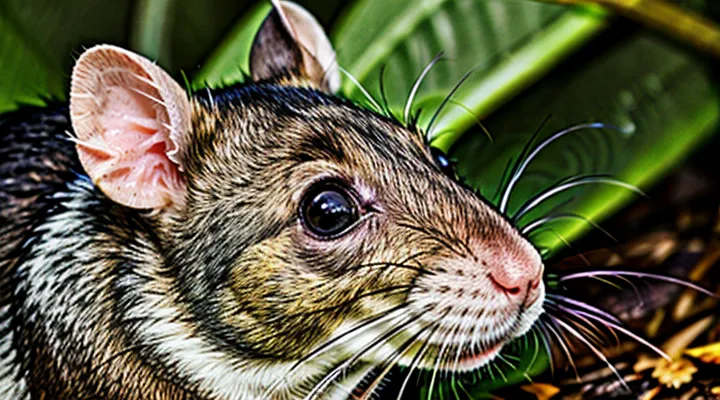
Understanding Rat Dentition
General Characteristics
Number and Types of Teeth
Rats possess a total of sixteen teeth, organized into two distinct categories. The dental formula is 1.0.0.3/1.0.0.3, indicating one pair of incisors and three pairs of molars in each quadrant of the upper and lower jaws.
- Incisors – four in total (two upper, two lower). They are open‑rooted, continuously growing, and feature sharp, chisel‑shaped crowns adapted for gnawing.
- Molars – twelve in total (six upper, six lower). These are closed‑rooted, flat‑crowned teeth designed for grinding and chewing. Rats lack canines and premolars entirely.
The incisors’ perpetual growth compensates for constant wear from gnawing, while the molars remain static in length, providing a stable grinding surface throughout the animal’s life.
Continuous Growth: A Defining Feature
Rat incisors exhibit perpetual elongation, a physiological adaptation that dictates their distinctive form. Growth occurs at the apical root, pushing the tooth outward as enamel wears down from gnawing. The resulting shape combines a sharp, chisel‑like edge with a slightly curved profile, optimized for cutting fibrous material.
Key aspects of this continuous development:
- Enamel–dentin junction: Hard enamel caps the anterior surface, while softer dentin forms the posterior side, creating a self‑sharpening edge as the softer material erodes faster.
- Wear‑balanced length: Daily gnawing removes enamel at a rate that matches the growth speed, preventing overgrowth that could impair oral function.
- Alignment with jaw mechanics: The forward‑leaning orientation of the incisors aligns with the rat’s powerful masseter muscles, enhancing bite force.
These characteristics produce a consistently sharp, ever‑renewing dental apparatus, distinguishing rat teeth from those of species with static dentition.
Anatomy of Rat Teeth
Incisors: The Prominent Front Teeth
Rat incisors dominate the facial profile, extending forward from the upper and lower jaws. Each pair is elongated, chisel‑shaped, and continuously growing, allowing the animal to gnaw without exposing the pulp. The enamel coats only the outer surface, creating a sharp, amber‑tinged edge, while the interior dentin is softer and wears down during chewing, maintaining a self‑sharpening profile.
Key characteristics of the front teeth include:
- Length: 3–5 mm in adult rats, proportionally larger than the cheek teeth.
- Curvature: Slightly convex outward, forming a pronounced arc.
- Color: Pale yellow to light brown enamel; dentin appears white‑gray.
- Growth rate: Approximately 0.3 mm per day, regulated by the dental pulp.
- Wear pattern: Opposing surfaces grind against each other, producing a beveled tip.
The incisors serve as the primary tool for material manipulation. Their open root canals contain a rich blood supply, supporting relentless eruption. The enamel–dentin junction creates a differential hardness that ensures the cutting edge remains sharp while the interior recedes, preventing over‑growth. This design enables rats to process a wide range of textures, from soft seeds to hard wood, without dental fatigue.
Coloration and Composition
Rat incisors exhibit a uniform, ivory hue across the exposed enamel, while the underlying dentin appears slightly amber. The enamel’s translucency may reveal a faint pinkish tint near the root where dentin shows through. Variation in shade can result from dietary staining or age‑related wear, but the overall coloration remains consistent among healthy specimens.
- Enamel: >96 % mineral (hydroxyapatite), <4 % organic matrix, negligible water; provides extreme hardness and resistance to abrasion.
- Dentin: ~70 % mineral, ~20 % organic collagen fibers, ~10 % water; softer than enamel, supplies structural support and flexibility.
- Pulp: vascularized soft tissue containing nerves and blood vessels; occupies the central canal and sustains growth.
Continuous eruption forces the enamel to be deposited at the tip, maintaining the characteristic white surface, while dentin formation follows behind, preserving the tooth’s length and functional integrity.
Function and Wear
Rats possess a single pair of continuously growing incisors and a set of cheek teeth that together form a highly efficient chewing apparatus. The incisors are chisel‑shaped, with a sharp enamel crown on the outer surface and softer dentin on the inner side, creating a self‑sharpening edge as the softer material wears away during use. The cheek teeth are broad and ridged, suited for grinding plant material and animal tissue.
The primary functions of this dentition include:
- Cutting and gnawing hard objects with the incisors, enabling access to food, shelter, and nesting material.
- Crushing and grinding food particles with the cheek teeth, facilitating digestion.
- Maintaining tooth length through constant eruption that compensates for material loss during chewing.
Wear results from repeated mechanical contact and varies with diet and environment. The enamel of the incisors erodes preferentially on the inner surface, preserving a sharp edge, while the outer enamel remains relatively intact. Cheek teeth exhibit flat wear facets that develop into crescent‑shaped surfaces, reflecting the lateral grinding motion of the mandible. Excessive abrasive particles can accelerate dentine exposure, potentially leading to malocclusion if the natural balance between growth and wear is disrupted.
Molars: The Chewing Teeth
Rat molars are broad, multi‑cusped teeth positioned behind the incisors. Their enamel surface displays a matte, slightly ridged texture that contrasts with the glossy incisors. The crown height is low, allowing the cheek teeth to lie close to the jawbone, which facilitates efficient grinding of food.
Key visual features of rat molars include:
- Flat occlusal surface with several rounded cusps arranged in a triangular pattern.
- Prominent enamel ridges that form shallow grooves between cusps.
- Dark brown to black coloration due to heavy mineralization.
- Slightly rounded edges that wear evenly with repeated mastication.
Functionally, molars process seeds, grains, and fibrous plant material. The cusps crush and break down particles, while the ridges guide food toward the back of the mouth. Wear patterns appear as smooth, flattened areas where the cusps have been abraded, providing a clear indication of the animal’s diet and age.
Comparatively, rat molars differ from incisors in shape, position, and enamel exposure. Incisors are long, sharp, and continuously growing, whereas molars are static, broader, and designed for grinding rather than cutting. This distinction creates a recognizable contrast when observing a rat’s dentition.
Location and Structure
Rats possess a single pair of incisors in each jaw, positioned at the front of the oral cavity. The maxillary incisors emerge from the upper jaw, while the mandibular incisors arise from the lower jaw, creating a continuous biting edge when the mouth closes. These teeth are continuously growing, a characteristic that prevents wear from the animal’s gnawing behavior.
- Root and crown: Each incisor consists of a short root embedded in the alveolar bone and a long, exposed crown that extends beyond the gum line.
- Enamel distribution: Enamel coats only the front surface of the crown, leaving the back surface composed of softer dentin. This differential hardness sharpens the tooth as the rat gnaws, with dentin wearing faster than enamel.
- Cross‑sectional shape: The teeth exhibit a chisel‑like, flattened cross‑section, providing a broad cutting surface.
- Dental arcade: The incisors are spaced apart by a diastema, an empty gap that accommodates the cheek teeth without interference.
The structural arrangement enables rats to apply precise pressure on objects, facilitating efficient gnawing and food processing.
Purpose in Digestion
Rat dentition is specialized for processing solid food. The incisors are continuously growing, chisel‑shaped, and self‑sharpening as the upper and lower rows grind against each other. This morphology enables rats to gnaw hard materials, break down seeds, and reduce plant fibers to manageable pieces before ingestion.
The primary digestive function of these teeth is mechanical breakdown. By cutting and crushing food, the incisors increase surface area, facilitating enzyme action in the stomach and small intestine. The resulting particles are small enough for gastric juices to penetrate efficiently, accelerating nutrient extraction.
Key aspects of the dental contribution to digestion:
- Continuous eruption prevents wear from constant gnawing, maintaining cutting efficiency.
- The enamel on the front surface is hard, while the dentin behind is softer, allowing a self‑sharpening edge.
- The curvature of the incisors creates a scissor‑like motion, producing uniform fragments.
Together, these features ensure that rats can exploit a wide range of food sources, from tough grains to fibrous vegetation, by delivering adequately processed material to the digestive tract.
Common Dental Issues in Rats
Malocclusion
Causes and Consequences
Rat incisors are long, continuously growing, and display a sharp orange‑brown enamel on the front edge with a softer, white dentin behind. The enamel is limited to the outer 2‑3 mm, creating a distinct contrast that is visible when the animal gnaws. Molars are flatter, with multiple cusps arranged in rows, and their surfaces appear pale and matte.
Causes of altered rat tooth appearance include:
- Nutritional deficiencies, especially lack of hard, abrasive foods that wear down enamel evenly.
- Genetic mutations affecting enamel formation or tooth growth regulation.
- Chronic dental disease, such as periodontitis or abscesses, which can discolor or deform teeth.
- Exposure to toxins or heavy metals that interfere with mineralization.
- Improper grooming or trauma resulting in broken or misaligned incisors.
Consequences of abnormal tooth morphology are:
- Reduced ability to gnaw, leading to weight loss and malnutrition.
- Painful inflammation that may progress to systemic infection.
- Overgrowth of incisors that can obstruct the oral cavity, impair breathing, or cause facial deformities.
- Secondary injuries from sharp, uneven edges damaging oral soft tissues.
- Compromised research data when rats are used as laboratory models, because dental health influences behavior and physiology.
Symptoms to Observe
When evaluating a rodent’s oral condition, observable signs provide the most reliable indication of dental abnormalities. Practitioners rely on direct visual assessment and behavioral cues to determine whether the incisors are healthy or compromised.
- Excessive gnawing on soft objects, indicating dull or overgrown teeth.
- Visible discoloration or chalky residue on the enamel surface.
- Persistent drooling or wet fur around the mouth.
- Reluctance to eat, especially hard foods, leading to reduced food intake.
- Swelling or palpable masses in the jaw region.
- Audible grinding or clicking noises during chewing.
- Unusual facial posture, such as a lowered head or tilted snout.
- Presence of ulcerations or lesions on the lips and gums.
Each symptom should be documented promptly. Correlating multiple signs increases diagnostic confidence and guides timely intervention to prevent further complications.
Overgrown Teeth
Impact on Feeding
Rats possess chisel‑shaped incisors that grow continuously and are covered with enamel only on the front surface, creating a self‑sharpening edge. This morphology directly determines how rats acquire and process food.
- The sharp edge slices through hard seeds, nuts, and wood, allowing rapid access to interior nutrients.
- Continuous growth compensates for wear, ensuring the teeth remain functional despite frequent gnawing.
- The narrow, elongated shape fits into tight spaces, facilitating extraction of insects and small prey.
- The combination of enamel and dentin layers creates a differential hardness that produces a self‑maintaining bevel, supporting consistent bite force across diverse textures.
These dental characteristics enable rats to exploit a wide range of food sources, from tough plant material to soft animal tissue, without requiring frequent replacement of teeth.
Corrective Measures
Rat incisors are continuously growing, curved, and sharp, protruding slightly beyond the molars. The enamel on the front edge is hard and orange‑tinged, while the inner dentin is softer and yellow. When the teeth become overgrown, they can curl inward, impair chewing and cause mouth injuries.
Corrective actions focus on preventing overgrowth and restoring normal alignment:
- Regular trimming: Professional dental filing every 4–6 weeks removes excess enamel and re‑establishes proper length.
- Hard‑object diet: Provide chewable items such as untreated wood blocks, mineral rods, or sisal toys to stimulate natural wear.
- Nutritional balance: Include sufficient calcium and phosphorus to support enamel strength and dentin health.
- Environmental enrichment: Rotate gnawing materials to encourage varied chewing motions, reducing uneven wear.
- Veterinary assessment: Conduct periodic oral examinations, radiographs if needed, and address infections or abscesses promptly.
Implementing these measures maintains functional dentition, prevents pain, and ensures the animal’s ability to process food efficiently.
Abscesses and Infections
Signs of Dental Disease
Rats possess continuously growing incisors that are chisel‑shaped, orange‑tinged, and extend beyond the lips when the animal opens its mouth. Healthy enamel appears smooth and glossy; the gum margin is pink and tightly adheres to the tooth base.
Dental disease manifests through observable changes:
- Overgrown incisors: teeth lengthen past the lips, become curved, or develop sharp points that impede normal chewing.
- Discoloration: enamel turns dull, brown, or black, indicating plaque accumulation or decay.
- Gum recession: pink tissue recedes, exposing the root surface and creating a pale or white margin.
- Excessive drooling: saliva pools around the mouth, often accompanied by a foul odor.
- Weight loss or reduced food intake: difficulty processing food leads to diminished body condition.
- Behavioral signs: rats may avoid using the affected side of the mouth, exhibit head tilting, or display signs of pain when the face is touched.
Prompt veterinary assessment is essential when any of these indicators appear, as untreated dental pathology can progress to abscess formation, systemic infection, and severe malnutrition. Early intervention typically involves trimming overgrown teeth, cleaning plaque, and addressing underlying infections.
Prevention and Treatment
Rat incisors are continuously growing, chisel‑shaped, and covered with orange‑pigmented enamel. The enamel’s hardness contrasts with softer dentin, creating a visible dark‑light edge that indicates normal wear patterns.
Prevention focuses on maintaining natural wear and avoiding overgrowth:
- Provide a high‑fiber diet rich in hay, fresh vegetables, and chewable pellets.
- Offer safe wooden blocks, mineral chews, or untreated cardboard to encourage gnawing.
- Conduct weekly visual inspections of the front teeth for uneven length or cracks.
- Keep the cage clean to prevent dental infections caused by debris or mold.
Treatment requires veterinary intervention when preventive measures fail:
- Professional trimming of overgrown incisors using a rotary cutter or specialized dental drill.
- Application of antibiotics if bacterial infection is present.
- Extraction of severely damaged teeth under anesthesia, followed by post‑operative pain management.
- Radiographic evaluation to detect root abscesses or periodontal disease, guiding further surgical or medical care.
Consistent dietary management and routine checks reduce the likelihood of dental emergencies, while prompt professional treatment restores proper occlusion and prevents systemic complications.