
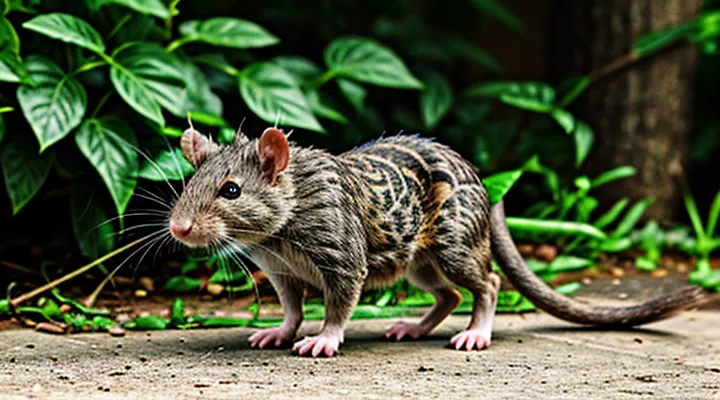
General Appearance and Body Shape
Overall Build
Body Size and Length
Wild rats exhibit a compact body structure adapted for urban and rural habitats. Adult individuals typically measure between 15 cm and 30 cm from the tip of the nose to the base of the tail, with the tail adding an additional 12 cm to 25 cm, often surpassing the head‑body length. Body mass ranges from 150 g to 350 g, reflecting variations in species, age, and food availability.
Key dimensional data:
- Head‑to‑base length: 15 cm – 30 cm
- Tail length: 12 cm – 25 cm (often equal to or longer than head‑to‑base length)
- Body weight: 150 g – 350 g
Measurements are obtained using calibrated calipers for length and electronic scales for weight, ensuring repeatable accuracy across field studies. Size differences among species, such as the smaller Norway rat (Rattus norvegicus) versus the larger black rat (Rattus rufus), influence ecological roles and predator‑prey dynamics.
Weight Range
Wild rats exhibit a broad spectrum of body mass, reflecting species diversity, developmental stage, sex, and environmental conditions. Adult individuals of the most common species fall within the following limits:
- Norway rat (Rattus norvegicus): 300 – 500 g, occasional specimens reaching 600 g.
- Black rat (Rattus rattus): 150 – 250 g, with larger males approaching 300 g.
- Roof rat (Rattus rattus frugivorous form): 120 – 200 g, rarely exceeding 250 g.
- Polynesian rat (Rattus exulans): 40 – 80 g, the smallest among widespread wild rats.
Juvenile rats weigh considerably less, typically under 100 g, and gain weight rapidly during the first two months of life. Seasonal fluctuations affect body condition; individuals captured in winter often carry additional fat reserves, adding up to 20 % of their baseline mass. Geographic variation also influences size, with populations in temperate zones tending toward the upper end of the ranges listed.
Musculature and Agility
The musculature of a wild rat is compact and highly developed, supporting rapid bursts of speed and precise maneuvering. Primary muscle groups include the deltoids, which power forelimb elevation for climbing; the pectoral muscles, driving forward thrust during sprints; and the hind‑leg quadriceps, generating powerful pushes that enable jumps up to three times the body length. The spinal flexors and abdominal muscles maintain torso stability, allowing swift changes in direction without loss of balance.
Agility derives from the integration of muscular strength with a flexible skeletal framework. Key features include:
- Long, slender forelimbs with extended rotator cuffs, facilitating grip on irregular surfaces.
- Highly articulated ankle joints, providing a wide range of motion for quick foot placement.
- Elastic tendons in the hind limbs, storing kinetic energy during each stride and releasing it to amplify propulsion.
These adaptations collectively produce a predator‑evading locomotion pattern characterized by rapid acceleration, tight cornering, and the ability to navigate complex underground tunnels and above‑ground obstacles with minimal effort.
Fur and Coat
Coloration Patterns
Wild rats exhibit a range of coloration patterns that aid in camouflage and species identification. The dorsal surface typically displays shades from dark brown to black, often interspersed with lighter speckles or streaks. Ventral fur is lighter, ranging from gray‑white to pale brown, providing contrast that reduces silhouette visibility from below. Tail coloration mirrors dorsal tones but may feature a distinct darker tip, which can serve as a visual cue during social interactions.
Key coloration features include:
- Dorsal mottling – irregular patches of darker pigment on a lighter background, common in urban populations.
- Countershading – a gradient from darker upperparts to lighter underparts, enhancing three‑dimensional concealment.
- Seasonal coat change – thicker, darker fur in colder months, lighter pelage during warmer periods.
- Regional variation – coastal rats often display grayer tones, while inland specimens tend toward richer brown hues.
Pigment distribution results from melanin concentration, with eumelanin producing black or brown shades and pheomelanin yielding reddish tones. Genetic factors, habitat lighting, and exposure to pollutants influence the expression of these patterns, creating observable diversity across wild rat populations.
Texture and Density
The exterior of a wild rat exhibits a coarse, bristly coat that varies in length across body regions. Short, stiff hairs dominate the dorsal surface, while softer, finer fibers cover the ventral area, providing a subtle contrast in tactile quality. Skin beneath the fur feels firm and slightly pliable, reflecting the animal’s resilient musculature.
- Dorsal fur: dense, rough, resistant to abrasion.
- Ventral fur: thinner, smoother, enhances flexibility.
- Tail skin: thin, leathery, covered with sparse, short hairs.
- Hindquarters: a blend of coarse and fine hairs, adapting to varied terrain.
Fur density reaches its peak along the back, where overlapping hairs create a compact layer that insulates against temperature fluctuations. Tail density remains low, allowing for efficient heat dissipation. Overall body mass, combined with a relatively compact skeletal frame, yields a solid, robust feel when handled, distinguishing the wild specimen from domesticated counterparts.
Seasonal Changes
Seasonal variation influences the external appearance of wild rats, producing observable adjustments that correspond to environmental demands. During colder months, fur density increases, forming a thicker undercoat that insulates against low temperatures. The outer hair often darkens, providing additional camouflage among leaf litter and snow‑covered ground. Body mass typically rises as individuals accumulate fat reserves, resulting in a fuller silhouette and more pronounced musculature.
In warmer periods, the same species exhibits a reduction in fur thickness, revealing a lighter, shorter coat that facilitates heat dissipation. The coloration may shift toward a paler hue, matching dry grasses and sun‑baked soil. Tail length remains constant, but the surface appears less furred, exposing a smoother skin texture. These physical adaptations are reversible and align closely with seasonal temperature cycles.
Key seasonal changes include:
- Increased fur density and darker coat in winter
- Elevated body weight and fat deposition during cold seasons
- Thinner, lighter-colored fur in summer
- Reduced subcutaneous insulation and smoother tail surface in warm months
Head and Facial Features
Snout and Nose
The snout of a wild rat extends forward from the skull, forming a tapered, elongated muzzle that supports the nasal cavity and sensory structures. Its length typically measures 2–3 cm in adult individuals, proportionate to overall body size, and the bone structure exhibits a slight curvature that aids in digging and foraging.
Key features of the rat’s nose include:
- Nostrils positioned at the tip of the snout, each surrounded by a rim of soft tissue that can flare to increase airflow during intense activity.
- A moist, pinkish‑to‑gray skin surface that facilitates scent detection and thermoregulation.
- A dense array of olfactory receptors within the nasal epithelium, providing acute smell sensitivity essential for locating food and recognizing conspecifics.
- Vibrissae (whiskers) emerging from the rostral region, arranged in multiple rows that convey tactile information about the environment.
The coloration of the snout and nose varies with habitat and genetics, ranging from pale pink in lighter‑fured individuals to darker shades in those with melanic coats. The skin remains relatively hairless, exposing the underlying vasculature, which contributes to rapid heat exchange.
Eyes: Size and Placement
Eyes of a wild rat are proportionally large relative to the skull, providing acute visual capability in low‑light environments. The ocular globes occupy roughly one‑third of the head’s width, extending forward to a position just behind the nasal bones. This anterior placement creates a wide field of view, estimated at about 200 degrees, allowing simultaneous monitoring of predators and prey.
Key dimensions and arrangement:
- Diameter: 7–9 mm in adult specimens, varying with body size.
- Position: Centered on the frontal bone, slightly offset laterally to maximize binocular overlap.
- Eyelid structure: Thin, translucent lids that close rapidly; the nictitating membrane offers additional protection without obstructing vision.
The placement of the eyes near the front of the skull enhances depth perception, crucial for navigating complex burrow systems and for precise foraging movements. The combination of sizeable lenses and forward orientation distinguishes the visual system of wild rats from that of many other rodents.
Ears: Shape and Mobility
Wild rats possess relatively large, thin‑skinned ears situated on the sides of the head, directly above the eyes. The external pinna is covered by sparse hair, allowing the underlying cartilage to remain flexible and visible.
Typical ear shape includes:
- Broad base narrowing toward a rounded tip
- Slightly pointed apex in some individuals
- Length ranging from 1.5 cm to 2.5 cm, proportionate to overall head size
- Thin, translucent skin that reveals a network of blood vessels
Mobility of the rat’s ears is facilitated by a well‑developed musculature attached to the auricular cartilage. This structure enables:
- Rotation of up to 180 degrees, allowing precise directional hearing
- Independent movement of each ear, improving sound localization
- Rapid adjustments in response to low‑frequency vibrations and high‑frequency noises
- Protective reflexes that orient the ears away from intense sound sources
These characteristics contribute to the rat’s acute auditory perception, essential for detecting predators and communicating within colonies.
Whiskers: Function and Length
Whiskers, known scientifically as vibrissae, are highly specialized tactile hairs extending from the snout, cheeks, and above the eyes of wild rats. Each whisker is anchored in a deep follicle rich in nerve endings, enabling the animal to detect minute changes in air currents and surface textures. This sensory system provides spatial awareness in low‑light environments, assists in navigating complex burrow networks, and facilitates prey detection.
Typical length of whiskers varies by body region and individual size:
- Nasal whiskers: 2–3 cm, longest pair, essential for forward probing.
- Cheek whiskers: 1.5–2.5 cm, arranged in multiple rows to create a three‑dimensional detection field.
- Supra‑orbital whiskers: 1–1.5 cm, positioned above the eyes to monitor overhead obstacles.
Growth cycles are continuous; each whisker is shed and replaced approximately every 30 days, ensuring sustained sensitivity throughout the rat’s lifespan.
Distinctive Appendages
Tail Characteristics
Length Relative to Body
Wild rats display a distinct proportion between body and tail that differentiates them from many other rodents. The head‑to‑body segment, measured from snout to the base of the tail, usually ranges from 15 cm to 25 cm in adult specimens, depending on species and habitat conditions. This core length provides the structural foundation for locomotion, foraging and burrowing activities.
Tail length consistently exceeds the body length, often by a margin of 10 % to 50 %. The following points summarize typical ratios:
- Tail length ≈ 1.1 × body length in smaller species (e.g., Rattus norvegicus juveniles).
- Tail length ≈ 1.3 × body length in medium‑sized adults.
- Tail length ≈ 1.5 × body length in larger, alpine variants.
These proportions enhance balance during agile movements and support thermoregulation by exposing a larger surface area to ambient air. The elongated tail also serves as a tactile organ, conveying environmental cues essential for navigation in complex terrains.
Scaly Texture
The wild rat exhibits a distinct «scaly texture» on its skin, observable where fur density thins and the epidermis becomes more rigid. This texture results from overlapping keratinized plates that form a subtle scale pattern across the dorsal and ventral surfaces.
Key characteristics of the scale-like skin include:
- Small, flat plates measuring 0.2–0.5 mm in length, arranged in parallel rows.
- A semi‑transparent appearance that blends with the animal’s fur coloration.
- Enhanced resistance to abrasions caused by navigating rough substrates such as debris, soil, and vegetation.
Functional implications of the scale pattern are:
- Protection against minor injuries and parasites by providing a physical barrier.
- Reduction of water loss through a tighter epidermal seal, supporting hydration in arid environments.
- Contribution to camouflage, as the matte surface diffuses light and minimizes reflective glare.
Scale dimensions and density vary among rat populations, reflecting adaptations to local habitats. Larger, more pronounced plates occur in specimens inhabiting rocky terrains, while individuals in dense undergrowth display finer scales that preserve flexibility for rapid movement.
Hair Distribution
Hair on wild rats is unevenly distributed, reflecting adaptation to diverse habitats. The coat exhibits distinct zones of density and length, each serving specific functional purposes.
- Dorsal region: dense, coarse hairs form a protective layer against abrasion and weather. Length averages 8–12 mm, with occasional longer guard hairs.
- Lateral sides: medium‑length pelage, slightly softer, provides insulation while allowing flexibility for movement through narrow passages.
- Ventral surface: sparse, fine hairs, typically 4–6 mm, reduce drag and facilitate heat loss during thermoregulation.
- Tail: short, stiff hairs cover the proximal two‑thirds, diminishing toward the tip where the skin is largely hairless; this pattern aids in balance and tactile sensing.
- Whiskers (vibrissae): long, rigid, highly innervated; positioned above the eyes, on the snout, and along the body, these structures detect environmental obstacles and prey.
Color variation corresponds to regional hair density. Dorsal hairs range from dark brown to black, occasionally interspersed with gray tones. Ventral hairs are lighter, often pale gray or whitish, creating a contrast that enhances camouflage in low‑light environments.
Overall, the distribution pattern combines protection, thermoregulation, and sensory function, contributing to the rat’s survival across a broad spectrum of ecological niches.
Functionality of the Tail
The tail of a wild rat serves several essential physiological and behavioral functions. Its elongated, hair‑covered structure provides balance during rapid locomotion, allowing the animal to navigate narrow ledges, vertical surfaces, and irregular terrain without loss of stability. Muscular control of the tail enables fine adjustments that counteract shifts in body weight, especially when the rat makes sudden turns or leaps.
Thermoregulation is another critical role. Blood vessels within the tail’s skin can dilate or constrict, facilitating heat dissipation in warm environments and conserving warmth when temperatures drop. This vascular flexibility reduces the metabolic cost of maintaining body temperature.
Communication and social signaling also rely on tail movements. Specific gestures—such as rapid flicking, elevated positioning, or gentle waving—convey warnings, territorial claims, or submissive signals to conspecifics. These visual cues complement vocalizations and scent marking, enhancing group cohesion and hierarchy maintenance.
Additional benefits include:
- Storage of fat reserves during periods of abundant food, contributing to energy availability.
- Assistance in grooming, as the rat can use its tail to reach otherwise inaccessible body parts.
- Support for climbing by acting as a brace against vertical substrates, increasing grip strength.
Collectively, these functions make the tail an integral component of the rat’s adaptability to diverse habitats and survival strategies.
Paws and Feet
Number of Toes
Rats possess a consistent digit arrangement that aids in species identification and ecological assessment.
- Each forelimb bears five toes, all of comparable size and equipped with sharp, curved claws.
- Each hindlimb also carries five toes; the fifth toe is reduced, positioned higher on the foot, and often concealed beneath the other digits.
The five‑toe configuration supports locomotion across varied substrates, enhances grip during climbing, and facilitates precise manipulation of food items.
Among wild rat taxa, minor variations occur in toe length and claw curvature, reflecting adaptations to specific habitats such as arboreal environments or burrow systems. Nonetheless, the presence of five toes on both fore‑ and hind‑limbs remains a defining morphological trait.
Claws: Sharpness and Length
Wild rats possess forelimb and hindlimb claws composed of hardened keratin, forming a tapered, pointed structure that facilitates penetration of substrates. The cutting edge maintains a fine angle, typically between 20° and 30°, allowing the animal to slice through vegetation, soil, and prey items with minimal resistance.
Claw length varies according to species, age, and ecological niche. Adult urban rats commonly exhibit claw lengths of 2–4 mm, while larger field species may reach 5–7 mm. Length correlates with locomotor demands: shorter claws enhance traction on smooth surfaces, whereas elongated claws improve digging efficiency in loose earth.
Key dimensions:
- Edge angle: 20°–30°
- Forelimb claw length: 2–5 mm (average)
- Hindlimb claw length: 2–7 mm (average)
- Keratin thickness: approximately 0.1 mm
These measurements reflect evolutionary adaptations that optimize grip, burrowing, and foraging capabilities across diverse environments.
Pads and Grip
Pads on a wild rat’s feet consist of thick, keratinized skin that protects against rough surfaces and assists in climbing. The pads are slightly concave, creating a natural suction effect that enhances grip on vertical or slippery substrates. Their surface texture includes microscopic ridges, increasing friction when the animal pushes against irregular terrain.
Key characteristics of rat foot pads:
- Thickness: 0.5–1 mm, varying with age and habitat exposure.
- Shape: Oval to rounded, with a central depression that channels moisture away.
- Composition: Dense layers of epidermal cells overlain by a waxy lipid coating, reducing wear.
- Sensory innervation: High density of mechanoreceptors, providing precise feedback for balance.
The combination of pad morphology and the animal’s claw curvature enables rapid, agile movement across diverse environments, from sewers to forest canopies. Grip performance declines when pads become overly saturated, but the waxy coating repels excess water, preserving traction.
Teeth and Dentition
Incisors: Color and Growth
Incisors of wild rats exhibit a distinctive orange‑yellow hue caused by iron‑rich enamel that overlays a slightly darker dentine. The coloration serves as a reliable indicator of tooth health and is visible even in low‑light conditions.
- Continuous growth: open apical meristem maintains perpetual elongation.
- Eruption rate: approximately 0.1 mm per day, compensating for constant gnawing wear.
- Wear pattern: front edges develop a chisel‑like profile, while lateral surfaces retain a smoother finish.
- Replacement: no secondary set; the primary incisors persist throughout the animal’s life.
Root structure remains incompletely closed, allowing dentine to extend beyond the jawbone and sustain growth. Nutrition influences enamel pigmentation; diets rich in iron enhance the characteristic coloration, whereas mineral deficiencies may produce a paler appearance.
Molars and Diet Adaptation
Molars constitute the primary dental apparatus enabling wild rats to process a diverse range of foods. Their size, crown height, and enamel arrangement reflect a direct response to dietary demands.
The molar crown exhibits a moderately high, hypsodont profile, allowing continuous eruption that compensates for rapid wear. Enamel is organized into alternating ridges and valleys, creating a complex occlusal surface capable of crushing hard seeds while retaining enough precision for softer items. Wear patterns reveal a progressive flattening of the valleys, indicating regular consumption of abrasive materials.
Dietary adaptation manifests in several observable traits:
- High‑fiber plant matter (grains, seeds) – requires robust crushing surfaces.
- Hard‑shelled insects – demands sharp enamel ridges for penetration.
- Soft organic debris (fruit pulp, carrion) – benefits from smoother occlusal zones.
- Urban refuse (processed foods) – promotes accelerated enamel wear, stimulating continuous molar growth.
Continuous growth of the molars ensures functional dentition despite the abrasive nature of the diet. Wear‑induced remodeling maintains occlusal efficiency, supporting the rat’s opportunistic foraging strategy across varied habitats.