
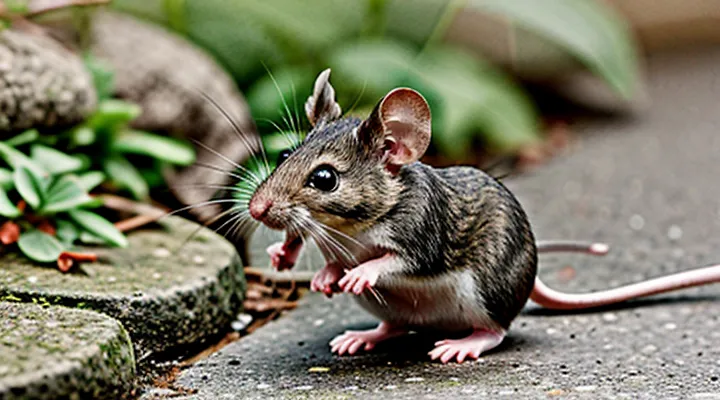
The Range of Mouse Sounds
Distinguishing Squeaks from Chirps
The distinction between a rodent’s squeak and a bird’s chirp rests on measurable acoustic parameters and typical behavioral contexts.
Rodent vocalizations occupy a higher frequency band, often exceeding 20 kHz, with brief, sharp pulses lasting 5–30 ms. The waveform shows rapid onset and abrupt termination, producing a tinny, high‑pitched tone. Bird chirps generally fall between 2 kHz and 8 kHz, display longer syllables of 50–200 ms, and feature smooth, modulated contours that create melodic patterns.
Mice emit squeaks primarily in response to threat, pain, or social aggression; the sound signals distress or dominance. Birds produce chirps during courtship, territorial defense, or flock communication, using tonal variation to convey species‑specific information.
Practical identification:
- Frequency: >20 kHz → mouse; 2–8 kHz → bird.
- Duration: <30 ms → mouse; >50 ms → bird.
- Waveform shape: abrupt, unmodulated → mouse; gradual rise/fall with modulation → bird.
- Context clues: presence of predator or handling → mouse; sunrise, mating season, or flock activity → bird.
Applying these criteria enables reliable separation of squeaks from chirps in field recordings and laboratory analyses.
The Frequency Spectrum of Mouse Calls
Mouse vocalizations occupy a narrow band within the ultrasonic range, typically extending from 20 kHz to 100 kHz. The fundamental frequency of a single squeak usually peaks between 45 kHz and 70 kHz, with harmonics that can reach the upper limits of the mouse’s auditory sensitivity.
Key spectral features include:
- Fundamental peak: 45–70 kHz, representing the primary energy of the call.
- First harmonic: approximately double the fundamental, 90–140 kHz, often present in aggressive or alarm calls.
- Bandwidth: 10–30 kHz around the peak, indicating the degree of frequency modulation during the syllable.
- Duration: 10–150 ms, with shorter bursts correlating with higher frequencies.
Spectral analysis reveals that mouse squeaks are not pure tones but exhibit rapid frequency sweeps. In distress calls, the sweep rate can exceed 1 kHz per millisecond, producing a characteristic upward glide. Social grooming sounds display flatter spectra, with reduced modulation and a dominant peak near 55 kHz.
Environmental factors modulate the spectrum. Ambient temperature influences the speed of sound in air, shifting peak frequencies by up to 2 kHz across a 10 °C range. Acoustic attenuation in laboratory cages preferentially dampens frequencies above 80 kHz, altering the observable harmonic structure.
Recording equipment must capture ultrasonic components; microphones with sensitivity up to 100 kHz and sampling rates of at least 250 kHz are standard. Post‑processing typically involves Fast Fourier Transform (FFT) windows of 256–512 points to resolve fine spectral details without sacrificing temporal precision.
Understanding the frequency composition of mouse calls enables discrimination between communicative contexts, supports behavioral phenotyping, and informs the design of auditory playback experiments.
Factors Influencing Mouse Squeaks
Age and Development
Mouse vocalizations evolve markedly from birth through adulthood, reflecting anatomical growth and neurological maturation. Newborn pups emit high‑frequency, short‑duration squeaks that serve immediate distress signaling. These calls typically range from 70 to 90 kHz, with a steep upward frequency sweep and minimal harmonic structure. The laryngeal muscles and vocal folds are underdeveloped, limiting amplitude and tonal complexity.
During the juvenile phase (approximately post‑natal days 10–21), the squeak frequency band narrows to 50–70 kHz. Harmonic content increases as the vocal tract elongates and the diaphragm gains strength. Temporal patterns become more varied; pups begin to produce series of rapid pulses interspersed with longer pauses, indicating emerging motor control.
Adult mice produce a broader repertoire, including ultrasonic vocalizations (USVs) that extend down to 30 kHz and up to 110 kHz depending on social context. The fundamental frequency stabilizes around 40–60 kHz, while modulation depth and syllable complexity reach peak levels. Mature laryngeal cartilage and fully myelinated neural pathways enable precise pitch control and sustained emissions lasting several hundred milliseconds.
Key developmental trends:
- Frequency decline from neonatal to adult stages.
- Increase in harmonic richness and modulation complexity.
- Expansion of temporal patterns, from simple bursts to intricate sequences.
- Growth‑related enhancement of sound amplitude and duration.
These acoustic shifts correlate with measurable physiological changes: vocal fold lengthening, increased muscle fiber density, and refinement of brainstem nuclei governing respiration and phonation. Consequently, age serves as a primary determinant of mouse squeak characteristics, providing a reliable indicator for developmental assessments in laboratory research.
Environmental Context
The acoustic characteristics of a mouse’s squeak vary noticeably with surrounding conditions. In open spaces, the high‑frequency component travels farther, producing a sharper, more piercing tone. Confined areas, such as burrows or cluttered surfaces, dampen the sound, lowering its intensity and adding resonant echoes that alter the perceived pitch.
Key environmental influences include:
- Ambient temperature – warmer air reduces sound attenuation, allowing higher frequencies to retain clarity; cooler temperatures increase absorption, softening the squeak.
- Humidity levels – elevated moisture enhances low‑frequency transmission, subtly deepening the tone, while dry air favors the preservation of high frequencies.
- Surface material – hard substrates (metal, tile) reflect sound waves, creating brief reverberations; soft materials (soil, fabric) absorb energy, resulting in a muted signal.
- Background noise – the presence of competing sounds (ventilation, predator calls) can mask the squeak’s higher frequencies, forcing the mouse to emit louder, lower‑pitched calls to be heard.
These factors interact to shape the acoustic signature that observers detect, providing insight into the mouse’s immediate habitat and its adaptive communication strategies.
Emotional State and Communication
A mouse’s squeak conveys information about its internal condition. High‑frequency, rapid pulses typically accompany agitation or fear, while lower‑frequency, sustained tones indicate calm or contentment. Researchers have correlated specific acoustic patterns with physiological markers such as heart rate and cortisol levels, confirming that vocal output reflects emotional status.
When a mouse perceives a threat, the vocalization becomes sharper, louder, and more irregular. This pattern serves as an alarm signal to conspecifics, prompting evasive behavior. In contrast, brief, soft chirps occur during grooming or feeding, functioning as reassurance that the environment is safe.
Key acoustic features and their associated states:
- Sharp, high‑pitched bursts – acute stress, imminent danger
- Rapid, repetitive clicks – heightened alertness, territorial claim
- Soft, steady tones – relaxation, social bonding
- Muted, low‑frequency hums – fatigue, submission
The mouse’s squeak also acts as a feedback mechanism. Listeners adjust their own behavior based on the perceived tone, reinforcing group cohesion or prompting collective flight. Consequently, vocal expression constitutes a primary channel for emotional communication among rodents.
Human Perception Versus Reality
The Audibility Threshold
The audibility threshold marks the minimum sound pressure level (SPL) that the average human ear can detect, typically around 0 dB SPL at 1 kHz under quiet conditions. Sensitivity varies with frequency; thresholds rise sharply below 200 Hz and above 8 kHz, reflecting the ear’s reduced efficiency at extreme pitches.
A mouse’s squeak occupies a high‑frequency band, usually between 8 kHz and 30 kHz, with peak energy often near 12 kHz. Measured SPL values for spontaneous squeaks range from 40 dB to 70 dB SPL at a distance of 10 cm. Because the fundamental frequency lies near the upper limit of human hearing, the squeak becomes audible only when its SPL exceeds the frequency‑specific threshold, which can be as high as 55 dB SPL at 12 kHz for a quiet listener.
Accurate determination of the threshold for mouse vocalizations requires calibrated microphones, a sound‑proof chamber, and a reference tone to establish baseline hearing levels. Measurements should account for:
- Ambient noise floor (typically <30 dB SPL)
- Distance from source to microphone
- Directionality of the squeak relative to the sensor
- Individual variability in listener hearing sensitivity
When these conditions are controlled, the point at which a mouse’s squeak transitions from inaudible to audible aligns with the ear’s frequency‑dependent threshold, confirming that only the louder, higher‑frequency components are perceptible to most people.
Tools for Analyzing High-Frequency Sounds
Capturing a mouse’s ultrasonic squeak requires equipment that reliably records frequencies above 20 kHz. Specialized condenser microphones with a flat response up to 100 kHz provide the necessary sensitivity. Pairing the microphone with a low‑noise preamplifier preserves signal integrity, while an anechoic chamber or sound‑attenuating enclosure reduces ambient interference.
Digital acquisition systems must sample at least twice the highest expected frequency; a 250 kHz sampling rate is common for rodent vocalizations. High‑resolution analog‑to‑digital converters (24‑bit) minimize quantization error, enabling precise waveform reconstruction.
Analysis of the recorded data relies on spectral tools:
- Fast Fourier Transform (FFT) modules generate frequency spectra, revealing dominant peaks and harmonic structure.
- Spectrogram generators display time‑frequency evolution, useful for identifying rapid modulations.
- Pitch‑tracking algorithms calculate instantaneous frequency, supporting comparisons across individuals or experimental conditions.
Software platforms such as Raven Pro, Avisoft‑SASLab Pro, and MATLAB toolboxes offer integrated workflows. They provide batch processing, automated detection thresholds, and export options for statistical analysis. Calibration routines using known ultrasonic tones ensure measurement accuracy across sessions.
Key parameters for interpretation include peak frequency, bandwidth, call duration, and signal‑to‑noise ratio. Consistent reporting of these metrics facilitates reproducibility and enables cross‑study comparisons of mouse vocal behavior.
The Evolutionary Significance of Squeaks
Predator Evasion
The high‑pitched, broadband squeak produced by a mouse typically falls between 8 kHz and 30 kHz, with peak energy concentrated near 15 kHz. Its rapid rise time (≈ 5 ms) and short duration (≈ 30 ms) create a distinctive acoustic fingerprint that exceeds the hearing thresholds of many small mammalian and avian predators.
Predators detect the squeak through specialized auditory pathways tuned to ultrasonic frequencies. The signal’s intensity diminishes sharply with distance (≈ 6 dB per doubling of range), limiting exposure to distant hunters while remaining audible to nearby threats. Immediate neural processing triggers a reflexive orienting response, allowing the predator to locate the source within a fraction of a second.
Mouse evasion relies on several acoustic mechanisms:
- Temporal masking: The squeak is emitted during rapid locomotion, overlapping with footfall noise that obscures precise localization.
- Frequency shifting: Slight variations in pitch across successive squeaks prevent pattern recognition by predators accustomed to static frequencies.
- Startle effect: The abrupt onset of a high‑frequency burst can momentarily disrupt the predator’s attack sequence, buying the mouse critical milliseconds.
- Directional emission: Vocal cords are positioned to project sound forward, directing the acoustic cue away from the predator’s line of sight when fleeing backward.
These strategies integrate the mouse’s vocal output with locomotor behavior, reducing predation risk through precise acoustic control.
Social Bonding and Mating Calls
Mouse vocalizations consist of high‑frequency squeaks that convey information about the emitter’s emotional state and intentions. Researchers have identified distinct acoustic patterns that separate affiliative signals from reproductive ones, allowing listeners to discriminate between social bonding and mating contexts.
During affiliative encounters, mice emit short, broadband squeaks with a dominant frequency around 50–70 kHz and a duration of 5–15 ms. These calls occur during grooming, nest building, and play, reinforcing group cohesion. The low amplitude and rapid repetition rate minimize detection by predators while sustaining intra‑group communication.
Mating calls differ markedly. Adult males produce longer, modulated squeaks that rise in pitch to 80–100 kHz, lasting 20–30 ms, often accompanied by ultrasonic trill components. Females respond with reciprocal calls that exhibit a slower rise and a distinct harmonic structure. These acoustic signatures signal male fitness and stimulate female receptivity, directly influencing pair formation and copulation success.
Key acoustic distinctions:
- Frequency range: bonding ≈ 50–70 kHz; mating ≈ 80–100 kHz.
- Duration: bonding ≈ 5–15 ms; mating ≈ 20–30 ms.
- Modulation: bonding ≈ minimal; mating ≈ pronounced pitch sweeps and harmonics.
- Contextual triggers: grooming, nest maintenance vs. courtship displays.
Understanding these vocal parameters clarifies how mice coordinate social bonds and reproductive behavior through precise acoustic signaling.