
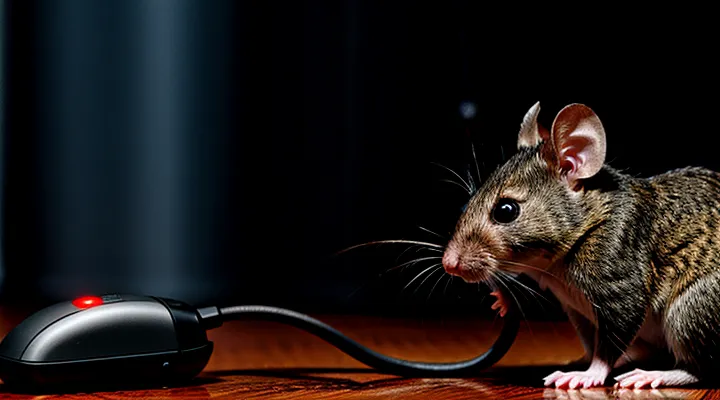
The Enigmatic World of Rodent Ultrasonics
Why Ultrasonic Signals Matter
Communication and Behavior
Rodent ultrasonic vocalizations serve as primary channels for social interaction, territorial disputes, and predator avoidance. Mice emit brief, high‑frequency calls that vary with mating status, while rats produce longer, complex sequences during play and aggression. These sounds convey identity, emotional state, and intent, enabling rapid coordination within colonies.
Experimental protocols convert ultrasonic energy into audible ranges using specialized microphones and software. Researchers calibrate recording equipment to capture frequencies between 20 kHz and 100 kHz, then apply frequency‑shifting algorithms for human‑compatible playback. Data analysis extracts call duration, peak frequency, and modulation patterns, linking acoustic features to specific behaviors.
Online resources provide immediate access to curated libraries of rodent ultrasonic recordings:
- Open‑source database (e.g., Mouse Ultrasonic Vocalization Archive) offering downloadable WAV files and metadata.
- Interactive web‑player (e.g., BioAcoustics Portal) with real‑time spectrogram visualization.
- Cloud‑based analysis suite (e.g., VocalTrac) that processes uploaded recordings and generates behavioral annotations.
Effective use of these platforms requires a compatible sound card, a frequency‑conversion plugin, and basic knowledge of spectrographic interpretation. By integrating acoustic monitoring with behavioral observation, investigators can decode the nuanced communication system that governs rodent social dynamics.
Research Applications
Ultrasonic vocalizations emitted by laboratory rodents serve as a non‑invasive indicator of physiological and behavioral states. Researchers exploit these signals to quantify stress, social interaction, and neural circuit function across a range of experimental paradigms.
Key research applications include:
- Neuroscience: Correlation of specific call patterns with activity in brain regions such as the amygdala and prefrontal cortex, enabling real‑time mapping of affective processes.
- Pharmacology: Assessment of drug efficacy by measuring changes in call frequency, duration, and repertoire following administration of anxiolytic or antipsychotic agents.
- Genetics: Phenotypic screening of mutant lines for alterations in vocal communication, providing insight into genes governing social behavior.
- Disease modeling: Early detection of neurodegenerative or psychiatric disorder phenotypes through deviations in ultrasonic emission profiles.
- Auditory physiology: Investigation of peripheral and central hearing mechanisms by presenting controlled ultrasonic stimuli and recording reflexive vocal responses.
Online platforms now host continuous streams and downloadable datasets of rodent ultrasonic recordings. Researchers access these resources via web browsers or specialized software that decodes high‑frequency audio into spectrograms, facilitating remote analysis without onsite equipment. Integration with cloud‑based analysis pipelines allows batch processing of large collections, supporting meta‑studies and cross‑laboratory validation.
Decoding Rodent Ultrasonic Vocalizations
Understanding the Physics of Sound
Frequency and Pitch
Rodent vocalizations occupy the ultrasonic spectrum, typically between 20 kHz and 100 kHz. Mice emit most calls around 40–70 kHz, while rats concentrate their emissions near 20–50 kHz. The precise frequency determines the perceived pitch: higher frequencies correspond to higher pitch, lower frequencies to lower pitch. Because human hearing caps at roughly 20 kHz, these sounds are inaudible without specialized equipment.
- Mouse ultrasonic calls: 40 kHz – 70 kHz (high pitch)
- Rat ultrasonic calls: 20 kHz – 50 kHz (moderate pitch)
- Overlap region (30 kHz – 45 kHz) shared by both species, useful for comparative studies
Digital platforms that provide live streams of rodent vocalizations convert ultrasonic waves into audible formats by down‑shifting frequencies or using broadband microphones capable of capturing the full ultrasonic range. The conversion preserves the original pitch relationships, allowing researchers to analyze call structure, syllable duration, and frequency modulation directly from the online feed. Accurate frequency representation ensures that pitch‑related characteristics remain intact, facilitating reliable behavioral and neurophysiological interpretations.
Amplitude and Intensity
Ultrasonic vocalizations emitted by laboratory rodents contain information encoded in the strength of the sound wave. Researchers quantify this strength using two related but distinct parameters: amplitude and intensity.
Amplitude describes the instantaneous pressure deviation from ambient air pressure and is expressed in decibels relative to a reference pressure (dB SPL). It reflects the peak excursion of the acoustic wave at a specific moment and is useful for comparing the loudness of individual syllables within a recording.
Intensity represents the average acoustic power transmitted through a unit area and is measured in watts per square meter (W/m²) or, more commonly for bioacoustic work, in decibels referenced to a standard intensity (dB re 1 µW/cm²). Intensity integrates amplitude over time, providing a measure of the overall energy emitted by a vocalization.
When accessing online streams of rodent ultrasonic recordings, accurate interpretation of amplitude and intensity requires calibrated equipment and proper signal processing:
- Use a broadband microphone with a flat frequency response up to at least 100 kHz.
- Apply a calibrated preamplifier to maintain a known gain factor.
- Record at a sampling rate of 250 kHz or higher to avoid aliasing.
- Convert raw voltage traces to pressure units using the microphone’s sensitivity specification.
- Calculate intensity by squaring the pressure waveform, averaging over the syllable duration, and applying the appropriate reference conversion.
Online repositories typically provide raw waveform files alongside metadata that include peak amplitude values and estimated intensity levels. By adhering to the calibration steps above, listeners can reliably assess the acoustic power of mouse and rat ultrasonic calls and compare results across studies.
Tools for Capturing Ultrasonic Signals
Specialized Microphones and Transducers
Specialized microphones designed for ultrasonic rodent vocalizations must capture frequencies up to 120 kHz with minimal distortion. Piezoelectric transducers convert pressure variations into voltage with a flat response across the ultrasonic band, making them ideal for detecting mouse and rat squeaks. Condenser microphones equipped with ultra‑wide‑band diaphragms provide higher sensitivity but require low‑noise preamplifiers to preserve signal integrity.
Effective transducer selection depends on three parameters:
- Frequency response: ensure 20 kHz – 120 kHz coverage.
- Signal‑to‑noise ratio: aim for ≥ 60 dB at ultrasonic levels.
- Impedance matching: pair with preamplifiers that maintain bandwidth without attenuation.
Digital acquisition systems must support sampling rates of at least 250 kHz to satisfy the Nyquist criterion for the highest expected frequencies. High‑resolution analog‑to‑digital converters (≥ 24 bit) reduce quantization error, while anti‑aliasing filters prevent spectral folding.
When streaming recordings online, hardware should include:
- USB or Ethernet interfaces that deliver real‑time data with sub‑millisecond latency.
- Buffering mechanisms to handle network jitter without dropping samples.
- Secure, encrypted channels to protect sensitive research data.
Calibration procedures involve generating known ultrasonic tones with a reference speaker, measuring output levels, and adjusting gain settings accordingly. Regular verification ensures that microphone sensitivity remains consistent across experiments.
Data Acquisition Systems
Data acquisition systems designed for ultrasonic recordings from small mammals must meet stringent performance criteria. Sensors capture frequencies up to 100 kHz, requiring transducers with flat response in the 20–100 kHz band and low self‑noise. Amplification stages include low‑noise preamplifiers with gain adjustable from 10 dB to 60 dB, followed by anti‑aliasing filters set just below half the sampling rate.
The analog‑to‑digital conversion stage determines temporal resolution and fidelity. High‑speed converters operating at 250 kS/s or greater provide at least 12‑bit depth, ensuring accurate representation of rapid acoustic transients. Buffer memory on the acquisition board stores data during transfer to the host computer, preventing loss during network latency.
Software modules perform real‑time processing and streaming. Core functions include:
- Continuous buffering and packetization for TCP/UDP transmission.
- Spectral analysis using short‑time Fourier transform with 1 ms windows.
- Automatic gain control to compensate for signal amplitude variability.
- Metadata tagging (species, age, experimental condition) for downstream annotation.
Network infrastructure must support sustained bandwidth of several megabits per second per channel. Ethernet gigabit links or Wi‑Fi 6 access points deliver reliable connectivity to remote monitoring stations. Encryption layers protect sensitive data during transmission.
Calibration procedures involve generating reference tones at known frequencies and amplitudes, then adjusting gain and filter settings until measured values match specifications within ±0.5 dB. Routine verification ensures consistency across multiple recording sessions and across different laboratory sites.
Processing and Analysis Techniques
Software for Spectrogram Generation
Spectrogram software converts ultrasonic recordings of rodent vocalizations into visual representations that reveal frequency, duration, and intensity patterns. Accurate analysis hinges on tools capable of handling frequencies up to 100 kHz, providing high temporal resolution, and supporting common audio formats such as WAV and FLAC.
Key capabilities for effective spectrogram generation include:
- Real‑time rendering of streaming data from USB microphones or specialized ultrasonic recorders.
- Adjustable window size, overlap, and windowing functions (Hann, Hamming, Blackman) to balance frequency precision and temporal clarity.
- Frequency axis scaling in kilohertz, with optional logarithmic display for low‑frequency background noise separation.
- Automatic noise floor estimation and adaptive thresholding to isolate discrete calls from ambient sounds.
- Batch processing scripts (Python, MATLAB, R) for large datasets, enabling consistent parameter application across multiple recordings.
- Export options for image files (PNG, SVG) and data tables (CSV, JSON) to facilitate downstream statistical analysis.
Open‑source packages such as Praat, Audacity with spectrogram plugins, and Raven Pro deliver robust visualization without licensing costs. Commercial solutions like Sonogram Pro and Acoustic Explorer offer advanced real‑time monitoring, multi‑track overlay, and integrated annotation tools that streamline the workflow for researchers tracking live streams of rodent ultrasonic activity.
When selecting software, verify compatibility with the acquisition hardware’s sampling rate, confirm that the frequency ceiling exceeds the target ultrasonic band, and test the latency of real‑time display if live monitoring is required. Proper configuration of spectrogram parameters, combined with reliable export mechanisms, ensures that ultrasonic recordings of mice and rats become actionable data for behavioral and neurophysiological investigations.
Interpreting Vocalization Patterns
Rodent ultrasonic vocalizations provide a reliable window into social communication, stress responses, and developmental stages. Modern web platforms stream these high‑frequency sounds in real time, allowing researchers to capture data without invasive equipment.
Interpretation hinges on three primary acoustic features: frequency, temporal structure, and modulation pattern. Frequency bands typically cluster around 30–110 kHz for mice and 20–80 kHz for rats, with distinct peaks indicating specific behavioral contexts such as mating, aggression, or pup distress. Temporal structure includes syllable duration, inter‑syllable intervals, and call sequences, each reflecting the animal’s internal state. Modulation patterns—linear sweeps, jumps, or complex contours—differentiate call types and can be linked to genetically encoded traits.
Effective analysis follows a systematic workflow:
- Acquire raw audio through an online streaming interface; ensure sampling rate exceeds 250 kHz to preserve ultrasonic detail.
- Generate spectrograms using open‑source software (e.g., Raven, Avisoft).
- Extract quantitative metrics: peak frequency, bandwidth, duration, interval, and contour slope.
- Apply clustering algorithms or supervised classifiers to assign calls to predefined categories.
Common pitfalls include aliasing caused by insufficient sampling, background noise from equipment, and misclassification of overlapping calls. Mitigation strategies involve high‑quality microphones, real‑time noise filtering, and manual verification of automated labels.
Accurate interpretation of rodent vocalization patterns enhances experimental reproducibility, supports phenotypic screening, and informs cross‑species comparisons of communication mechanisms.
Online Resources for Ultrasonic Listening
Publicly Available Datasets
Repositories of Rodent Vocalizations
Repositories of rodent vocalizations provide researchers, educators, and hobbyists with direct access to high‑frequency recordings essential for studying communication, behavior, and neurophysiology. Each repository typically includes metadata such as species, age, recording equipment, and experimental conditions, ensuring reproducibility and facilitating comparative analyses.
Key online collections include:
- Mouse Ultrasonic Archive (MUA) – curated by a university laboratory, offering over 10 000 files from Mus musculus strains, searchable by call type and developmental stage.
- Rat Vocalization Database (RVD) – hosted by a neuroscience institute, containing recordings from Rattus norvegicus across social contexts, with annotated spectrograms.
- Open Acoustic Repository for Rodents (OARR) – a community‑driven platform aggregating contributions from multiple labs, providing open‑access data in standardized WAV format.
- BioAcoustics Lab’s Ultrasonic Repository – integrated with a cloud‑based analysis toolkit, enabling batch download and automated feature extraction.
These databases employ common file formats (WAV, FLAC) and provide spectrogram visualizations, facilitating immediate playback through web browsers equipped with ultrasonic up‑conversion plugins. API endpoints allow programmatic retrieval, supporting large‑scale signal processing pipelines. Regular updates and peer‑reviewed curation maintain data quality and relevance for ongoing research into rodent acoustic communication.
Collaborative Research Platforms
Collaborative research platforms provide a unified environment for scientists studying rodent ultrasonic emissions. They host shared repositories of recorded audio files, metadata, and analysis scripts, allowing multiple investigators to access identical datasets without geographic constraints.
Key functionalities include:
- Centralized storage of high‑frequency recordings captured with specialized microphones.
- Version‑controlled codebases for signal processing, noise reduction, and spectral analysis.
- Integrated discussion forums and issue‑tracking systems that facilitate real‑time problem solving.
- Automated pipelines that convert raw recordings into downloadable, web‑streamable formats for immediate listening.
By consolidating data and tools, these platforms reduce duplication of effort and accelerate validation of findings across laboratories. Researchers can contribute new recordings directly from their field setups, ensuring that the collective database reflects the latest experimental conditions.
Security features such as role‑based access control and encrypted data transfer protect sensitive animal‑research protocols while maintaining openness for peer review. Documentation standards enforced by the platform guarantee that each dataset includes essential information—species, age, recording parameters, and environmental context—enabling reproducibility.
The integration of collaborative platforms with online streaming services allows investigators to monitor live ultrasonic activity from mice and rats housed in remote facilities. Viewers can select specific time windows, apply real‑time spectrogram filters, and download segments for offline analysis. This seamless workflow bridges the gap between data acquisition and dissemination, supporting a global community focused on high‑frequency rodent communication research.
Software for Real-time Monitoring
Open-source Solutions
Open‑source software enables researchers and hobbyists to capture and analyze ultrasonic vocalizations of rodents without proprietary constraints. Projects hosted on public repositories provide source code, documentation, and community‑driven updates, ensuring transparency and reproducibility.
Key open‑source tools include:
- Praat with ultrasonic extensions – free acoustic analysis platform; plugins add support for frequencies up to 200 kHz, allowing real‑time spectrogram visualization and batch processing.
- Raven Lite – lightweight version of the Raven software; source code available on GitHub, supports high‑frequency recordings and integrates with Python scripts for automated detection.
- USVSEG (MATLAB/Octave) – segmentation algorithm for mouse and rat calls; compatible with Octave, offering a cost‑free alternative to MATLAB licenses.
- DeepSqueak (Python) – neural‑network‑based detector; open repository includes pretrained models, training scripts, and a web interface for remote listening.
- Audacity with high‑frequency plugins – general‑purpose audio editor; plugins extend frequency response, enabling playback of ultrasonic recordings on standard hardware.
Implementation steps are consistent across these solutions:
- Acquire a suitable ultrasonic microphone (e.g., condenser or piezoelectric sensor) and connect it to a sound card capable of sampling at ≥ 500 kHz.
- Install the chosen software package following the repository’s README; dependencies are typically managed via
pip,conda, or package managers for Octave. - Configure the sampling rate and filter settings to match the microphone’s specifications.
- Record or stream audio; most tools provide command‑line options for continuous capture, which can be directed to network storage for remote access.
- Apply built‑in detection algorithms or custom scripts to isolate vocalizations; output formats include WAV, CSV, and JSON for downstream statistical analysis.
Community resources enhance usability: issue trackers on GitHub host troubleshooting discussions; wikis contain step‑by‑step tutorials; and mailing lists disseminate updates on algorithm improvements. Because the code is openly licensed, users may modify detection thresholds, integrate machine‑learning models, or embed the tools in web services for collaborative listening sessions.
Commercial Applications
Ultrasonic recordings of laboratory rodents have become a valuable resource for companies developing acoustic monitoring systems. By streaming these high‑frequency sounds through web platforms, firms can evaluate sensor performance, calibrate microphones, and refine algorithms for detecting biologically relevant events.
Key commercial uses include:
- Hardware testing – manufacturers of ultrasonic microphones and bat detectors verify frequency response and sensitivity using rodent vocalizations available online.
- Software development – developers of bio‑acoustic analysis tools train machine‑learning models on real‑world mouse and rat calls, improving classification accuracy for pest‑control applications.
- Pest‑management services – firms integrate live rodent sound feeds into smart traps, enabling automated detection and targeted response without human observation.
- Pharmaceutical research – drug companies monitor changes in ultrasonic communication patterns to assess the efficacy of compounds affecting nervous‑system function.
- Educational products – companies producing scientific kits for schools incorporate streaming rodent sounds to illustrate high‑frequency animal communication in classroom demonstrations.
The accessibility of online ultrasonic streams reduces the need for on‑site animal colonies, lowers operational costs, and accelerates product development cycles across these sectors.
Ethical Considerations and Best Practices
Animal Welfare in Research
Non-invasive Monitoring
Non‑invasive monitoring captures the ultrasonic vocalizations of rodents without physical contact, preserving natural behavior while providing high‑quality acoustic data. Specialized microphones sensitive to frequencies above 20 kHz detect squeaks produced during social interaction, stress, or mating. The signals are digitized in real time and streamed to web platforms, allowing researchers to observe and analyze recordings remotely.
Key advantages of remote, contact‑free observation include:
- Elimination of stress artifacts caused by handling or implanted devices.
- Continuous data collection across day‑night cycles, supporting longitudinal studies.
- Immediate access for multiple collaborators through secure online portals.
Implementation typically involves a sound‑proof enclosure equipped with a broadband ultrasonic transducer, a low‑noise preamplifier, and a network‑enabled acquisition board. Software converts raw waveforms into spectrograms, annotates events, and uploads files to cloud storage where they can be streamed via standard web browsers or dedicated viewers.
Data integrity relies on calibrated gain settings, temperature‑compensated microphones, and synchronized timestamps. Quality control procedures flag clipping, background noise, or frequency drift, ensuring that only reliable vocalizations contribute to downstream analyses such as species‑specific call classification or behavioral inference.
By integrating these elements, laboratories can monitor mouse and rat communication continuously, share findings instantly, and reduce the logistical burden associated with traditional, invasive recording methods.
Minimizing Stress and Disturbance
When researchers capture ultrasonic vocalizations of laboratory rodents through web streams, the primary objective is to obtain high‑quality recordings without influencing the animals’ natural behavior. The presence of recording devices, lighting, and human activity can elevate stress hormones, alter call structure, and compromise data integrity. Therefore, protocols that limit environmental intrusion are essential.
Effective measures include:
- Position microphones and cameras at least 30 cm away from cages, using directional transducers to focus on the target chamber while reducing ambient noise.
- Employ sound‑attenuating enclosures around recording setups; materials such as acoustic foam or dense fabric prevent external vibrations from reaching the animals.
- Maintain a constant temperature (22 ± 1 °C) and humidity (50 ± 5 %) to avoid physiological stress that could modify vocal output.
- Automate data acquisition with scheduled recordings, eliminating the need for personnel to enter the animal room during active monitoring periods.
- Allow a habituation period of 48 hours after equipment installation before initiating data collection; rodents typically adapt to stationary objects within this timeframe.
Monitoring software should display real‑time spectrograms without requiring manual adjustments, thereby reducing operator interaction. Remote access via secure internet connections enables researchers to observe sessions from separate locations, further decreasing on‑site disturbances.
By integrating these practices, online observation of rodent ultrasonic communication proceeds with minimal impact on animal welfare, ensuring that the captured signals reflect authentic social and physiological states.
Data Privacy and Sharing
Anonymization of Recordings
Anonymization of rodent ultrasonic recordings is essential for protecting the identity of research facilities, researchers, and any associated metadata that could reveal sensitive information. By stripping identifiable details, data repositories can share recordings publicly while complying with institutional review boards and data‑sharing policies.
Effective anonymization procedures include:
- Removal of file‑level metadata (e.g., creator name, acquisition device, timestamps).
- Replacement of location tags with generic region codes or omitting them entirely.
- Application of reversible encryption for any remaining identifiers, ensuring only authorized parties can restore original context.
- Generation of synthetic identifiers for each recording, linking to a separate, secure index that holds the true provenance.
Compliance frameworks such as the GDPR, NIH data‑sharing guidelines, and institutional animal‑research protocols require documented anonymization steps. Researchers should maintain audit logs that record each anonymization action, verify that no residual identifiers remain after processing, and periodically review procedures against emerging standards. Continuous validation guarantees that publicly accessible ultrasonic datasets remain ethically sound and legally compliant.
Responsible Data Management
Online platforms that provide high‑frequency rodent recordings demand rigorous data stewardship. Improper handling can compromise scientific reproducibility, breach institutional policies, and expose researchers to legal risk. Effective management begins with clear documentation of acquisition parameters, equipment calibration, and recording conditions. Each dataset should carry metadata that identifies source, date, experimental setup, and processing steps, enabling traceability throughout the research lifecycle.
Responsibility extends to storage solutions that protect file integrity and prevent unauthorized alteration. Redundant backups on secure servers, combined with checksum verification, guarantee that original recordings remain unchanged. Access controls must differentiate between public streaming interfaces and internal repositories, ensuring that raw data are shared only under approved licenses or data‑use agreements.
Key practices include:
- Assigning persistent identifiers (e.g., DOIs) to each recording bundle.
- Maintaining immutable audit logs of any modification or redistribution.
- Encrypting data transfers and employing secure authentication for privileged users.
- Regularly reviewing compliance with relevant regulations, such as GDPR when personal identifiers appear in ancillary information.
- Publishing detailed data‑management plans alongside research articles to demonstrate accountability.
Adherence to these standards preserves the scientific value of ultrasonic rodent signals, facilitates collaborative analysis, and upholds ethical obligations to the research community.