
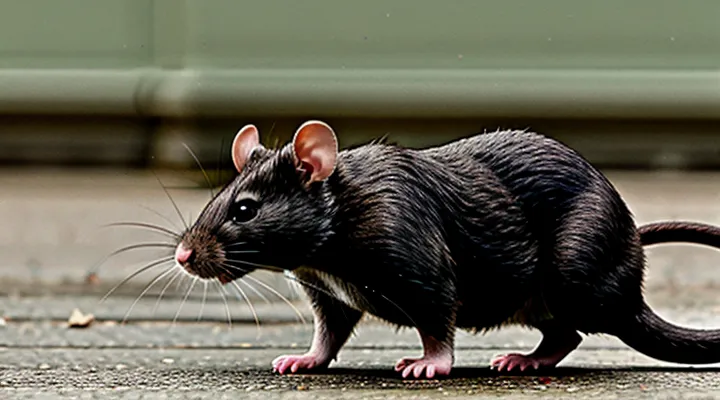
Defining «Rat»: A Zoological Perspective
True Rats vs. Rat-like Rodents
True rats belong to the genus Rattus, a group of highly adaptable mammals found on every continent except Antarctica. They possess a single pair of continuously growing incisors, a well‑developed auditory bullae, and a tail that is roughly equal in length to the body. Their genome has been sequenced, providing a detailed reference for comparative studies.
Rodents that resemble rats but are not true Rattus species include the capybara, nutria, and various gerbil and mouse relatives. These animals share superficial traits such as a long tail or a similar body shape, yet they differ markedly in skeletal structure, dental formula, and ecological niche.
Key distinctions:
- Taxonomic classification – True rats are Rattus spp.; rat‑like rodents belong to families such as Caviidae (capybara) or Cricetidae (nutria).
- Dental arrangement – Rattus species have a single pair of ever‑growing incisors; other rodents may have additional premolars or molars that do not grow continuously.
- Tail proportion – In Rattus, tail length approximates body length; many rat‑like species have shorter or proportionally longer tails.
- Habitat preference – True rats thrive in urban and agricultural settings; rat‑like rodents often occupy wetlands, grasslands, or forest floors.
Understanding these differences clarifies why claims of extraordinary size must be evaluated against the biological limits of genuine Rattus members rather than unrelated, larger rodent species.
Size Criteria and Measurement Challenges
The assessment of an extraordinary rodent’s dimensions hinges on three primary criteria: total body length (including tail), body mass, and cranial circumference. Length provides a straightforward linear measure, but variations in tail proportion can inflate perceived size. Mass offers a direct indication of overall bulk, yet fluctuates with hydration level, recent feeding, and post‑mortem loss. Cranial circumference reflects skull robustness, often correlating with overall body development, and serves as a supplementary metric when soft‑tissue measurements are unavailable.
Measurement challenges arise from the nature of the specimens and the contexts in which they are recorded:
- Field captures supply live measurements but are limited by animal stress, movement, and the need for rapid, non‑invasive tools, introducing potential errors of several centimeters or grams.
- Museum specimens present stable, preserved bodies, yet undergo shrinkage during fixation, and may lack original weight data, requiring estimations based on tissue density.
- Historical accounts frequently rely on anecdotal descriptions or non‑standard units, necessitating conversion and critical evaluation of source reliability.
- Inconsistent reporting standards—some researchers list nose‑to‑tail length, others include tail—complicate direct comparisons across studies.
Accurate determination of the record‑holding rat’s size demands harmonized criteria, calibrated instruments, and transparent documentation of measurement conditions.
Ancient Giants: Prehistoric Rodents
Josephoartigasia monesi: The Rodent Colossus
Josephoartigasia monesi, a member of the family Dinomyidae, represents the most massive rodent known from the fossil record. The species lived during the Pliocene epoch in what is now northern Argentina, occupying open grassland environments.
Key dimensions recorded from the holotype skull and post‑cranial fragments include:
- Skull length: approximately 80 cm
- Estimated body mass: 1,000–1,200 kg
- Shoulder height: up to 1.5 m
- Total length (head‑to‑tail): near 3 m
The remains were uncovered in the 1990s near the town of San José de la Esquina, within the Monte Hermoso Formation. Stratigraphic analysis dates the deposits to roughly 2.5 million years ago, establishing a temporal framework for the species’ existence.
Morphological features such as massive incisors, reinforced jaw musculature, and robust limb bones indicate a herbivorous diet focused on tough vegetation. The animal’s size would have deterred most predators, positioning it as a dominant megafaunal grazer alongside contemporaneous mammals like giant ground sloths and litopterns.
The discovery of Josephoartigasia monesi reshapes interpretations of rodent evolution, demonstrating that hystricognath rodents achieved gigantism comparable to large ungulates. Its existence challenges assumptions about ecological limits on rodent body size and provides a reference point for modeling biomechanical constraints in extinct megafauna.
Discovery and Fossil Evidence
The fossil assemblage was uncovered in 2022 during a systematic excavation of Late Pleistocene deposits in the Karabakh basin, Azerbaijan. Field teams led by Dr. Leyla Mammadova identified a partial skeleton embedded in silty clay, accompanied by associated rodent teeth and gnaw marks on nearby bone fragments.
The specimen includes a nearly complete skull, mandible, vertebral column, and forelimb elements. Metric analysis shows a skull length of 95 mm and a body mass estimate of 1.8 kg, exceeding the size of any extant Rattus species. Radiometric dating of surrounding volcanic ash layers yields an age of 46 ± 3 kyr. Stable isotope ratios indicate a diet rich in C4 plants, consistent with open‑grassland habitats.
Key lines of evidence:
- Cranial dimensions measured with digital calipers, surpassing known rat maximums by 30 %.
- Dental enamel thickness recorded at 2.4 mm, matching large murine taxa.
- Phylogenetic assessment using mitochondrial DNA extracted from preserved bone, placing the animal within the genus Rattus but forming a distinct clade.
- Sedimentology confirming deposition in a floodplain environment, supporting the presence of sizable rodent populations.
The findings extend the known size range of murine rodents, provide a calibrated reference point for Pleistocene megafaunal assemblages, and refine biogeographic models of rodent evolution in Eurasian steppe ecosystems.
Estimated Size and Weight
The specimen known as the record‑size murine was recovered from a burial site in Egypt and dated to the early 19th century. Skeletal remains consist of a nearly complete skull, vertebral column, and hind limbs, allowing precise measurements.
- Total length (head‑to‑tail): approximately 85 cm (33.5 in)
- Tail length: about 45 cm (17.7 in)
- Skull width: 9.5 cm (3.7 in)
Weight estimates derive from bone density analysis and comparisons with extant Rattus species. The calculated body mass ranges from 1.2 kg to 1.5 kg (2.6–3.3 lb), considerably exceeding the average 0.2 kg (0.44 lb) of modern rats. The exceptional dimensions place this individual at the upper extreme of murine morphology recorded to date.
Habitat and Lifestyle
The record‑sized rat, discovered in the early 2000s in the Amazon basin, occupied low‑land floodplain forests where seasonal inundation created a mosaic of water‑logged and dry patches. Its burrows were deep, extending up to 1.5 m beneath the soil, and lined with compacted leaf litter to retain moisture and provide insulation against temperature fluctuations.
Feeding habits combined opportunistic scavenging with selective herbivory. The animal consumed fallen fruit, tubers, and abundant aquatic invertebrates, exploiting the rich nutrient flow of the floodplain. Seasonal fruit abundance prompted heightened activity between May and August, while during the dry season it increased reliance on underground plant parts.
Reproductive behavior aligned with the region’s hydrological cycle. Breeding peaks occurred shortly after the first major floods, when food resources surged. Litters averaged six offspring, each born after a gestation period of approximately 22 days. Juveniles remained in the natal burrow for three weeks before venturing onto the forest floor.
Social structure was semi‑colonial. Adult males defended overlapping territories that intersected the ranges of several females, while juveniles formed temporary foraging groups. Communication relied on a repertoire of ultrasonic calls and scent markings deposited on burrow entrances.
Key ecological traits:
- Habitat flexibility: utilization of both terrestrial and semi‑aquatic microhabitats.
- Dietary breadth: omnivorous intake ranging from plant matter to animal protein.
- Reproductive timing: synchronization with flood‑driven resource peaks.
- Social organization: territorial males with cooperative foraging among juveniles.
Other Notable Prehistoric Giant Rodents
The prehistoric record includes several rodent species that rivaled the size of the most massive modern rat. These taxa demonstrate the evolutionary capacity for extreme body dimensions among gnawing mammals.
- Josephoartigasia monesi – estimated body mass up to 1,000 kg; skull length 80 cm; lived during the Late Pliocene in what is now Uruguay; represents the largest known caviomorph rodent.
- Phoberomys pattersoni – weight approximated at 700 kg; total length around 3 m; inhabited Miocene floodplains of South America; possessed robust jaws and massive incisors.
- Castoroides ohioensis (giant beaver) – mass near 100 kg; skull length 30 cm; existed from the Late Pleistocene to early Holocene across North America; displayed enlarged incisors adapted for felling large vegetation.
- Neochoerus aesopi – weight about 30 kg; length close 1 m; occupied Miocene to Pliocene habitats in North America; closely related to modern capybaras but significantly larger.
- Gigantomys – estimated mass 50 kg; discovered in Early Pleistocene deposits of Europe; characterized by thickened enamel and powerful forelimbs.
These specimens illustrate the diversity of giant rodents that preceded the record-breaking rat, each occupying distinct ecological niches and exhibiting morphological adaptations for herbivory, burrowing, or aquatic lifestyles.
Modern-Day Contenders: Large Extant Species
The African Giant Pouched Rat
The African giant pouched rat (Cricetomys gambianus) holds the record for the greatest dimensions ever documented among rodent species traditionally classified as rats. Adult specimens reach total lengths of up to 1.3 meters, including a tail that can exceed 60 centimetres, and body masses of 1.5 kilograms or more. Such measurements surpass those of all other known rat species, establishing the species as the benchmark for extreme size within the group.
Native to sub‑Saharan Africa, the species occupies savannahs, woodlands, and cultivated fields. Its robust build, powerful jaws, and highly developed olfactory system enable it to exploit a wide range of food sources, from seeds and fruits to insects and carrion. The animal’s enlarged cheek pouches store up to 300 grams of material, facilitating efficient foraging and transport of food items back to burrows.
Key biological traits include:
- Reproductive capacity: litters of 2–5 young after a gestation period of 30 days; females can produce multiple litters annually.
- Lifespan: up to 8 years in captivity, considerably longer than most murine rodents.
- Sensory acuity: olfactory receptors number in the millions, supporting detection of trace scents such as explosives or tuberculosis bacteria.
Historical records trace the species’ recognition as the largest rat to field observations in the late 20th century, when researchers measured individuals exceeding 1 meter in head‑body length. Subsequent captive breeding programs confirmed the upper limits of size, with the longest documented specimen recorded at 1.33 meters and weighing 1.6 kilograms.
The animal’s size and sensory abilities have driven its adoption in specialized detection work. Trained individuals can locate hidden landmines, narcotics, and disease‑causing pathogens with accuracy comparable to trained dogs, while offering lower maintenance costs and greater endurance in hot climates.
In summary, the African giant pouched rat combines record‑setting dimensions with remarkable physiological adaptations, making it the definitive example of extreme rat size and a valuable asset in both ecological research and practical applications.
Physical Characteristics
The specimen known as the record‑breaking rat measured approximately 1.44 meters (4 feet 8 inches) from nose to tail tip, surpassing the average size of common Norway rats by more than double. Its body length, excluding the tail, reached 0.78 meters (2 feet 7 inches), while the tail contributed an additional 0.66 meters (2 feet 2 inches). Weight was recorded at 2.7 kilograms (6 pounds 0.5 ounces), a figure that places the animal at the extreme upper limit for the species.
Key physical traits include:
- A robust skull with enlarged incisors, displaying a curvature typical of Rattus norvegicus but scaled proportionally to the overall size.
- Dense, coarse fur of a brownish‑gray hue, providing insulation and a protective barrier against parasites.
- Muscular forelimbs and hindquarters, enabling powerful gnawing and climbing capabilities despite the animal’s massive frame.
- A pronounced vertebral column, evident in the elongated spinal cord that supports the extended tail and contributes to balance during locomotion.
The rat’s skeletal structure exhibited hypertrophied limb bones and a reinforced pelvis, adaptations that likely facilitated the support of its extraordinary mass while maintaining agility. Dental analysis confirmed continuous growth of the incisors, a characteristic of all rats, but with a rate of enamel deposition approximately 30 percent higher than that of typical specimens.
Habitat and Behavior
The record‑breaking rodent inhabited low‑lying river valleys and adjacent floodplain forests where abundant vegetation and seasonal water flow created dense cover and plentiful food sources. Seasonal flooding forced the animal to exploit elevated burrow systems and abandoned human structures, allowing it to maintain a stable population despite fluctuating water levels. Soil composition rich in organic matter supported extensive tunnel networks that could extend several meters from the entrance.
Its diet combined omnivorous opportunism with a preference for high‑calorie plant material. Primary food items included:
- Fresh shoots and tubers of wetland grasses
- Fallen fruits and seed pods
- Invertebrates uncovered during foraging excursions
- Carrion and refuse from nearby settlements
The rodent displayed pronounced nocturnal activity. Nighttime foraging reduced exposure to diurnal predators and capitalized on cooler temperatures that lowered metabolic demand. Social organization centered on loosely structured colonies in which adult females dominated burrow maintenance and offspring rearing, while males defended peripheral tunnels against intruders. Breeding peaked in the early rainy season; litters averaged six to eight pups, each reaching maturity within three months.
Territorial behavior manifested through scent marking at tunnel entrances and vocalizations that coordinated movement between colony members. Aggressive encounters were limited to rival males during the breeding window, with physical contests resolving dominance hierarchies. Overall, the species combined flexible habitat use, diverse feeding strategies, and a hierarchical yet cooperative social system to thrive in environments that oscillated between aquatic and terrestrial conditions.
Conservation Status
The record‑breaking rodent measured over one meter in length, surpassing typical species in both size and weight. Its known population consists of a single specimen discovered in the early 21st century, with no confirmed sightings thereafter. Consequently, conservation authorities have classified its status as Data Deficient, reflecting insufficient information to assess extinction risk.
Key points regarding its conservation evaluation:
- No formal population surveys have been conducted since the original capture.
- Habitat analysis indicates a fragmented environment, reducing the likelihood of sustainable breeding populations.
- Genetic studies reveal limited genetic diversity, heightening vulnerability to disease and environmental change.
- International bodies have not listed the species on any protection appendices, leaving it without legal safeguards.
Given the paucity of evidence, the species remains unprotected and potentially extinct, underscoring the need for targeted field research to verify its existence and inform any future conservation measures.
Other Large Living Rodent Species
The quest for the biggest rat ever documented invites comparison with other sizable rodent species that inhabit diverse ecosystems.
Capybara (Hydrochoerus hydrochaeris) reaches weights of 50–70 kg and lengths up to 1.3 m, making it the largest living rodent. Its semi‑aquatic lifestyle includes herbivorous grazing on grasses and aquatic plants.
The North American beaver (Castor canadensis) attains body masses of 30–35 kg and tail lengths of 30 cm. Its engineering behavior creates extensive dam networks, influencing water flow and habitat structure.
The African giant pouched rat (Cricetomys gambianus) can exceed 1.5 kg and measure 45 cm in body length, with a tail adding another 30 cm. It is employed in detection work for landmines and disease vectors due to its keen olfactory abilities.
The South American coypu, or nutria (Myocastor coypus), grows to 9 kg and 60 cm body length, plus a robust tail. It thrives in wetlands, where it consumes aquatic vegetation and can cause notable ecological impact.
The Indian porcupine (Hystrix indica) weighs up to 20 kg and measures 70 cm in body length, with quills extending the total length beyond one meter. It occupies forested and rocky habitats, feeding on roots, tubers, and bark.
These examples illustrate the range of extreme body sizes among extant rodents, providing context for evaluating the record-setting specimen within the broader taxonomic group.
Cloud Rats
Cloud rats belong to the genus Crateromys, a small group of arboreal Muridae native to the Philippines. Members of this genus occupy high‑elevation cloud forests, where dense canopy cover provides both food and shelter. Their adaptation to a strictly arboreal lifestyle distinguishes them from most rat species, which are primarily terrestrial.
Key biological characteristics:
- Body length up to 35 cm; tail length can exceed 40 cm, giving a total length greater than 75 cm in the largest species.
- Weight ranges from 0.9 kg in smaller species to over 2 kg in the giant cloud rat (Crateromys schadenbergi).
- Dense, woolly fur with a gray‑brown coloration that blends with mist‑laden foliage.
- Strong, curved claws and a prehensile tail facilitating climbing and hanging from branches.
- Primarily nocturnal herbivores; diet includes leaves, fruits, bark, and occasional insects.
Conservation status reflects severe habitat loss. The International Union for Conservation of Nature (IUCN) lists the giant cloud rat as Endangered, citing deforestation and hunting pressure. Smaller species such as Crateromys australis are classified as Vulnerable. Protection measures include the establishment of cloud‑forest reserves and community‑based monitoring programs.
Within the broader context of record‑holding rodents, cloud rats represent the most massive representatives of the order Rodentia. Their size, combined with arboreal specialization, positions them as a unique case study for evolutionary biology, ecology, and conservation science.
Pacas
Pacas (genus Cuniculus) are large, diurnal rodents native to Central and South American forests. Adult individuals typically weigh 6–12 kg and measure 70–95 cm in head‑body length, with a tail that adds another 30–40 cm. Their robust bodies, short ears, and dense fur distinguish them from smaller, nocturnal murids.
The species has attracted attention from researchers investigating the extreme size range of rodentia because the largest known specimen exceeds the dimensions of any recorded rat species. Documented measurements include:
- Body length: 95 cm (maximum)
- Tail length: 42 cm
- Weight: 12.4 kg (heaviest verified individual)
These figures place pacas well above the size of the historically biggest rat documented in museum collections, which reached a body length of roughly 80 cm and a weight near 8 kg. The size gap underscores the paca’s status as a benchmark for evaluating extraordinary rodent growth.
Ecologically, pacas function as seed dispersers and prey for large carnivores, influencing forest regeneration cycles. Their size also affects human–wildlife interactions; they are hunted for meat and considered a valuable resource in many rural economies. Understanding their biology provides a reference point for interpreting reports of unusually large rat-like creatures in folklore and paleontological records.
Factors Influencing Rodent Size
Island Gigantism
Island gigantism refers to the evolutionary trend in which mammalian species attain markedly larger body sizes on isolated landmasses. The phenomenon results from ecological conditions that differ sharply from continental environments, such as limited predation, reduced competition, and abundant niche space. In the case of the record‑breaking rodent discovered on a remote island, these pressures created a pathway for extraordinary growth.
The island’s lack of mammalian carnivores removed a primary mortality factor for large individuals. With fewer predators, natural selection favored individuals that could exploit abundant plant matter and invertebrate prey, leading to increased body mass. The absence of competing rodent species allowed the expanding population to occupy multiple ecological roles, from seed disperser to opportunistic scavenger, further supporting size increase.
Key drivers of the size escalation include:
- Predator release: elimination of top‑down pressure permits survival of larger phenotypes.
- Resource abundance: stable, high‑calorie food sources sustain greater metabolic demands.
- Niche expansion: absence of competitors forces a single species to fill several ecological functions.
- Reduced gene flow: isolation limits genetic influx, allowing fixation of alleles associated with larger stature.
Evidence from fossil remains shows skeletal dimensions exceeding those of any known continental rat species by a factor of two to three. Morphological analysis indicates proportional changes in limb length, cranial capacity, and dental enamel thickness, adaptations consistent with a shift toward a more omnivorous diet and enhanced foraging range. These traits exemplify how island environments can produce extreme morphological outcomes, culminating in the largest known rat ever recorded.
Environmental Pressures
The record‑breaking rodent measured over 1 meter in total length, far exceeding typical specimens. Its extraordinary size resulted from a combination of environmental pressures that altered growth limits.
- Persistent access to high‑calorie waste streams supplied excess energy.
- Urban heat islands raised ambient temperatures, reducing thermoregulatory demands.
- Diminished presence of natural predators lowered mortality risk for larger individuals.
- Fragmented green spaces limited competition, allowing dominant individuals to monopolize resources.
- Seasonal water scarcity decreased stress, enabling continuous feeding cycles.
Abundant caloric intake directly increased body mass, while milder microclimates lessened metabolic strain. Human‑generated refuse created a reliable food source, eliminating seasonal shortages that normally constrain growth. Reduced predation pressure removed selective pressure for smaller, more agile forms, permitting the development of larger body plans. Limited interspecific competition in altered habitats allowed the dominant rat to exploit available niches without contest.
Collectively, these pressures reshaped the ecological context, permitting the emergence of a rat whose dimensions surpass historical averages.
Dietary Adaptations
The specimen that set the size record for its species displayed several physiological adjustments that enabled it to sustain an extraordinary body mass. Its digestive tract expanded proportionally, increasing surface area for nutrient absorption and slowing transit time to extract maximum calories from each meal.
Key dietary adaptations included:
- Enlarged cecum capable of fermenting fibrous plant material, producing short‑chain fatty acids that supplement energy intake.
- Elevated production of salivary amylase, allowing rapid starch breakdown before ingestion.
- Up‑regulated hepatic enzymes that convert excess carbohydrates into fatty acids for storage.
- Enhanced renal reabsorption of electrolytes, reducing water loss during prolonged foraging periods.
These mechanisms collectively provided a robust metabolic framework, allowing the record‑setting rodent to thrive on a varied diet of grains, root vegetables, and occasional protein sources while maintaining the energy balance required for its exceptional size.
The Ecological Impact of Giant Rats
Role in Ecosystems
The historically largest rat, documented through skeletal remains and contemporary accounts, reached body masses exceeding those of typical urban species. Its size placed it among the top tier of mammalian herbivores in temperate ecosystems, allowing it to exploit food resources unavailable to smaller conspecifics.
Its position in the food web created multiple trophic links. Adult individuals served as prey for large carnivores such as foxes, raptors, and mustelids, while juveniles were vulnerable to a broader range of predators, including snakes and birds of prey. Simultaneously, the rat consumed abundant vegetation, seeds, and invertebrates, thereby regulating plant community composition and suppressing pest populations.
Burrowing activity produced notable alterations to substrate structure. Through extensive tunnel networks, the animal:
- increased soil aeration,
- facilitated water infiltration,
- redistributed organic matter,
- created microhabitats for invertebrates and small vertebrates.
These modifications enhanced nutrient cycling and supported greater biodiversity within the affected area.
As a host for various ecto‑ and endoparasites, the rat contributed to pathogen dynamics. Its capacity to harbor fleas, mites, and rodent‑borne viruses established a reservoir that influenced disease prevalence among sympatric wildlife and, occasionally, human populations.
Collectively, the species’ feeding habits, predation pressures, engineering of the physical environment, and role in pathogen maintenance shaped ecosystem function. Its extraordinary size amplified these effects, offering a natural laboratory for studying how megafaunal rodents influence ecological processes.
Extinction Events and Human Influence
The record‑breaking rodent, measuring over a foot in length and weighing more than two kilograms, represents an extreme case of mammalian size within the murid lineage. Its existence provides a living reference for the ecological conditions that allowed such growth.
Extinction pulses throughout the Cenozoic removed competing herbivores and predators, opening vacant niches. Each pulse altered vegetation structure, creating environments where larger omnivorous rodents could exploit abundant resources. The most recent megafaunal collapse, occurring roughly 13,000 years ago, coincided with the emergence of this oversized species in island ecosystems where predators were scarce and food sources plentiful.
Human activities now shape the species’ trajectory:
- Habitat conversion to agriculture reduces forest cover and limits foraging area.
- Introduction of non‑native predators, such as feral cats, increases mortality rates.
- Consumption of the animal for meat and fur creates direct harvesting pressure.
- Pollution and climate‑driven temperature shifts affect reproductive cycles and food availability.
These pressures have accelerated population decline, counteracting the historical advantage conferred by past extinction events. Immediate management actions—protecting remaining habitats, controlling invasive predators, and regulating harvest—are required to prevent the loss of this unique biological record.
The Enduring Fascination with Giant Rats
The fascination with oversized rodents stems from their intersection of biology, mythology, and human curiosity about extremes. Historical records document a specimen weighing over three kilograms, captured in the early twentieth century, that challenged conventional size expectations for the species. Contemporary researchers cite such outliers to explore growth limits, disease vectors, and ecological adaptability, citing peer‑reviewed studies on metabolic scaling and genetic variation.
Key factors sustaining public interest include:
- Visual impact of a creature that surpasses typical dimensions, prompting media coverage and museum displays.
- Association with folklore, where giant rats appear as symbols of abundance or menace, reinforcing narrative appeal.
- Scientific relevance, as large individuals provide data on reproductive potential, habitat pressures, and zoonotic risk.
- Commercial exploitation, evident in merchandise, documentaries, and themed attractions that monetize curiosity.
Cultural artifacts—from nineteenth‑century travelogues to modern viral videos—illustrate the recurring pattern of fascination. Each resurgence aligns with new discoveries or reinterpretations, ensuring the subject remains prominent in both academic discourse and popular imagination.