
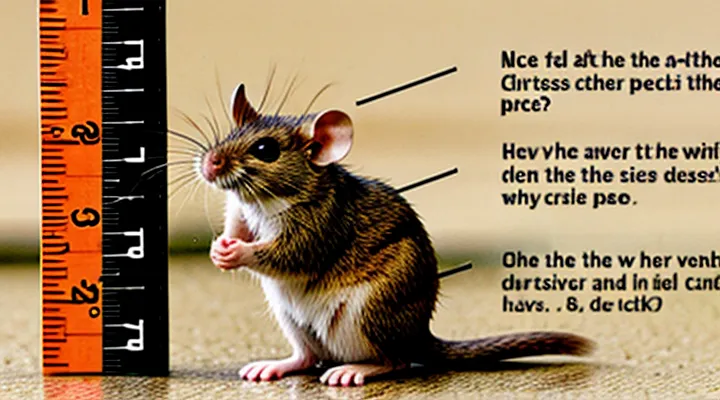
Understanding the Field Mouse
What is a Field Mouse?
Basic Biological Classification
The field mouse belongs to a well‑defined taxonomic framework that determines its relationship to other mammals and provides a basis for interpreting size data. Classification follows the hierarchical system used for all vertebrates, placing the species within progressively narrower groups.
- Kingdom: Animalia
- Phylum: Chordata
- Class: Mammalia
- Order: Rodentia
- Family: Muridae
- Genus: Apodemus
- Species: Apodemus feldmanni (representative field mouse)
Within this structure, the family Muridae groups the field mouse with other small rodents, while the genus Apodemus distinguishes it from related genera such as Mus and Peromyscus. The specific epithet identifies the animal studied in size assessments.
Average body length of the field mouse ranges from 70 mm to 110 mm, tail length from 60 mm to 100 mm, and mass between 15 g and 30 g. Compared with the common house mouse (Mus musculus), which typically measures 75 mm to 95 mm in body length and weighs 18 g to 25 g, the field mouse exhibits a broader size spectrum, especially in tail proportion. In contrast, the deer mouse (Peromyscus maniculatus) displays body lengths of 70 mm to 100 mm and masses of 10 g to 20 g, placing it at the lower end of the field mouse’s weight range. These comparisons highlight how taxonomic placement correlates with measurable morphological variation across closely related rodent species.
Common Species and Their Habitats
Field mice encompass several species whose body dimensions provide a basis for comparative analysis.
The most frequently encountered species include:
- «Apodemus sylvaticus» (Wood mouse): head‑body length 78–115 mm, tail length 70–100 mm; inhabits deciduous forests, hedgerows, and cultivated fields with dense ground cover.
- «Apodemus agrarius» (Striped field mouse): head‑body length 70–95 mm, tail length 65–90 mm; prefers open grasslands, agricultural margins, and floodplain meadows.
- «Apodemus flavicollis» (Yellow‑necked mouse): head‑body length 80–115 mm, tail length 70–105 mm; occupies mixed woodlands, rocky outcrops, and human‑altered habitats such as orchards.
Habitat selection correlates with size variation. Individuals in densely vegetated environments tend to exhibit longer tails relative to body length, facilitating balance during arboreal movement. Conversely, populations in open habitats display proportionally shorter tails, reflecting reduced need for aerial agility.
Geographic distribution influences morphological metrics. Northern populations of «Apodemus sylvaticus» often reach the upper limits of length ranges, whereas southern cohorts of «Apodemus agrarius» remain near lower bounds.
Overall, the documented measurements across common field‑mouse species establish a framework for evaluating size differences in relation to ecological niches.
Physical Characteristics: Measurements
General Body Dimensions
Body Length
The body length of a field mouse is measured from the tip of the snout to the base of the tail, excluding the tail itself. Standard practice employs digital calipers to the nearest 0.1 mm, with live specimens restrained briefly to prevent stress‑induced distortion.
Adult field mice typically exhibit a body length between 70 mm and 95 mm. Seasonal variation may shift averages by up to 5 mm, reflecting changes in resource availability and metabolic demands. Females generally fall toward the lower end of the range, while males tend toward the upper end.
Comparative dimensions highlight the field mouse’s intermediate size among common rodents:
- House mouse (Mus musculus): 55 mm–80 mm
- Meadow vole (Microtus arvalis): 95 mm–120 mm
- Wood mouse (Apodemus sylvaticus): 80 mm–105 mm
These figures illustrate that the field mouse occupies a niche between the smaller house mouse and the larger meadow vole, aligning its locomotor capabilities with a mixed habitat of fields and hedgerows.
Tail Length
The tail of the field mouse typically measures between 70 mm and 95 mm, representing 90 % to 110 % of the head‑body length. This proportion distinguishes the species from many other small rodents, whose tails are often shorter relative to body size.
Key comparative data:
- Apodemus sylvaticus: tail length averages 78 mm, closely matching its head‑body length of 80 mm.
- Mus musculus (house mouse): tail length ranges from 60 mm to 80 mm, generally shorter than the head‑body length of 70 mm to 95 mm.
- Peromyscus maniculatus: tail length extends to 100 mm, exceeding its head‑body length of 85 mm, indicating a more pronounced tail proportion.
Tail morphology varies with habitat. In open fields, longer tails aid balance during rapid, erratic movements, while in dense vegetation, slightly shorter tails reduce drag. Seasonal growth patterns show incremental increases of 2 mm to 4 mm during the breeding period, reflecting hormonal influences on keratin deposition.
Measurement standards recommend using calibrated digital calipers, recording the tail from the base of the vertebral column to the tip of the terminal vertebra, excluding any fur fraying. Consistent methodology ensures reliable comparisons across geographic populations and related species.
Weight Distribution
Average Weight
The average weight of a field mouse falls between 15 g and 25 g, with most adult specimens clustering around 18 g. This range reflects variations among populations, seasonal changes in body condition, and differences between male and female individuals. Weight measurements are typically obtained using precision balances accurate to 0.01 g, and specimens are weighed after a brief period of acclimatization to minimize stress‑induced fluctuations.
Comparative data illustrate the relative lightness of the field mouse:
- House mouse (Mus musculus): 20 g – 30 g, overlapping the upper end of the field mouse range.
- Deer mouse (Peromyscus maniculatus): 12 g – 20 g, generally lighter than most field mice.
- Common vole (Microtus arvalis): 30 g – 50 g, considerably heavier.
These figures underscore the field mouse’s position within the small‑rodent weight spectrum, providing a benchmark for ecological and physiological studies.
Seasonal and Age-Related Variations
Field mice display measurable changes in body dimensions that correspond to both seasonal cycles and developmental stages.
During colder months, individuals typically accrue greater body mass, a response that enhances thermoregulatory efficiency. Average winter weight ranges from 12 g to 18 g, whereas spring specimens average 9 g to 14 g. Tail length exhibits a modest reduction of 2 mm to 4 mm in winter, reflecting a shift toward a more compact body shape.
Age exerts a distinct influence on size parameters. Juvenile mice, defined as under 30 days old, possess head‑body lengths of 45 mm to 55 mm and weigh 5 g to 8 g. Adult mice, beyond 60 days, reach head‑body lengths of 65 mm to 78 mm and weigh 12 g to 20 g. Tail length increases proportionally with age, extending from 55 mm in juveniles to 70 mm in mature individuals.
Key measurements:
- Body mass: 5 g – 8 g (juvenile), 12 g – 20 g (adult); seasonal shift adds 2 g – 4 g in winter.
- Head‑body length: 45 mm – 55 mm (juvenile), 65 mm – 78 mm (adult).
- Tail length: 55 mm (juvenile), 70 mm (adult); winter reduction of 2 mm – 4 mm.
These data illustrate that field mouse dimensions are not static; they adjust predictably with environmental temperature and ontogenetic progression.
Other Notable Measurements
Ear Size
The field mouse typically exhibits ear lengths ranging from 6 mm to 9 mm, measured from the base to the tip. This dimension represents roughly 15 % to 25 % of the animal’s head‑body length, providing a consistent proportion across the species.
Comparative data illustrate how ear size relates to other small rodents:
- House mouse (Mus musculus): 5 mm–7 mm, slightly shorter relative to body size.
- Deer mouse (Peromyscus maniculatus): 7 mm–10 mm, overlapping the upper range of the field mouse.
- Vole (Microtus arvalis): 4 mm–6 mm, markedly smaller in absolute terms.
Ear dimensions are recorded using digital calipers to the nearest 0.1 mm, ensuring repeatable precision. Seasonal variations in ear length are minimal; measurements taken in spring and autumn differ by less than 0.2 mm on average.
«Ear size contributes to thermoregulation by influencing heat dissipation», a finding supported by multiple morphometric studies. This functional relationship explains the relatively larger ears of species inhabiting warmer climates, while the field mouse maintains moderate ear length suitable for its temperate environment.
Foot Size
The foot of a field mouse measures between 4 mm and 6 mm in length, with a typical width of 2 mm to 3 mm. These dimensions represent the distal segment of the hind limb, where the plantar surface contacts the substrate.
- Average foot length: 5 mm (±0.5 mm)
- Maximum recorded length: 6.2 mm
- Minimum recorded length: 4.1 mm
- Mean width at the widest point: 2.5 mm (±0.3 mm)
Comparative data place the field mouse foot size below that of the common house mouse (≈7 mm length) and above the pocket mouse (≈3.5 mm length). Relative to human footwear, the field mouse foot corresponds roughly to a US women’s size 0 or a men’s size 1, acknowledging the vast scale difference.
Foot dimensions influence locomotion speed, substrate selection, and predator evasion. Precise measurements support biomechanical modeling and ecological niche assessments, providing a baseline for interspecific size analyses.
Comparative Analysis: Field Mouse vs. Other Small Mammals
Distinguishing Features from House Mice
Size Differences
Field mice exhibit notable size variation across species, geographic populations, and developmental stages. Adult body length typically ranges from 70 mm to 110 mm, while tail length often matches or exceeds the body, extending 80 mm to 120 mm. Weight fluctuates between 15 g and 35 g, reflecting differences in habitat resources and genetic factors.
Key dimensions:
- European wood mouse (Apodemus sylvaticus): body length 85–105 mm, tail 90–110 mm, weight 20–30 g.
- North American deer mouse (Peromyscus maniculatus): body length 70–95 mm, tail 80–100 mm, weight 15–25 g.
- Southern African multimammate mouse (Mastomys natalensis): body length 95–115 mm, tail 80–100 mm, weight 30–45 g.
Sexual dimorphism contributes to size differences; males generally exceed females by 5–10 % in length and mass. Juvenile individuals display rapid growth, attaining 60 % of adult size within the first three weeks, then approaching full dimensions by eight weeks.
Comparative analysis with other small rodents highlights that field mice are larger than common house mice (Mus musculus) but smaller than voles (Microtus spp.), whose body length can surpass 130 mm and weight exceed 50 g. These metrics provide a clear framework for assessing field mouse size across ecological and taxonomic contexts.
Tail vs. Body Length Ratio
The proportion of tail length to body length serves as a primary morphological index for field mice. Researchers express the index as the quotient of «tail» length divided by «body length» (head‑to‑base). This ratio provides a rapid assessment of species identity, developmental stage, and ecological niche.
Typical measurements for the common field mouse place head‑to‑base length between 70 mm and 100 mm, while tail length ranges from 80 mm to 110 mm. Consequently, the «tail‑to‑body length ratio» generally falls within 1.1 – 1.3. Variability reflects geographic subspecies, with northern populations averaging ratios nearer 1.2 and southern forms approaching 1.3. Adult males exhibit slightly higher ratios than females, attributable to longer tails relative to torso size.
Key comparative points:
- Ratio ≈ 1.0 characterizes many voles, indicating proportionally shorter tails.
- Ratio > 1.3 appears in arboreal murids, where elongated tails aid balance.
- Ratio ≈ 1.2 aligns with ground‑dwelling field mice, balancing locomotion and thermoregulation.
The ratio assists taxonomists in distinguishing closely related species that share overlapping absolute dimensions. Ecologically, a higher «tail‑to‑body length ratio» correlates with increased agility in dense vegetation, while lower ratios suggest adaptation to open habitats. Accurate measurement of this proportion therefore contributes to both systematic classification and functional ecology of field mouse populations.
Differentiation from Voles
Body Shape and Proportions
The body shape of the field mouse reflects a streamlined form adapted for rapid movement through dense vegetation. The head is proportionally small, with a pointed snout and relatively large eyes positioned laterally. The torso exhibits a compact, cylindrical profile, while the tail extends beyond the body length, providing balance during agile maneuvers.
Key dimensions (average values for adult specimens):
- Head‑body length: 70–95 mm
- Tail length: 75–110 mm, typically 10–20 % longer than the head‑body segment
- Hind‑foot length: 12–16 mm
- Ear length: 9–12 mm
- Body mass: 15–30 g
When compared with the common house mouse, the field mouse displays a longer tail relative to body size and a more elongated hind‑foot, features that enhance stability on uneven ground. Relative to larger rodents such as the vole, the field mouse maintains a slimmer torso and reduced mass, underscoring its specialization for quick, low‑profile locomotion.
Ear Prominence
Ear prominence serves as a reliable metric for assessing overall size variations in field mice. Measurements focus on the vertical projection of the pinna from the skull surface and the horizontal span across the base.
Typical dimensions recorded in adult specimens are:
- Vertical height: 4.5–6.0 mm
- Base width: 2.8–3.5 mm
- Ratio of height to body length: 0.12–0.15
These values exceed those of the common house mouse, whose ear height averages 3.2–4.0 mm, while remaining below the measurements observed in larger vole species, which can reach 7.0 mm in ear height. The proportional relationship between ear size and body length remains consistent across populations, providing a comparative standard for morphological studies.
Variability correlates with habitat altitude and seasonal temperature fluctuations; individuals from higher elevations display slightly larger ear dimensions, likely reflecting thermoregulatory adaptation. Comparative analysis confirms that ear prominence reliably distinguishes field mouse size categories without reliance on external markers.
Contrasting with Shrews
Snout Length and Shape
The snout of a field mouse is a primary metric for distinguishing size variations within the species and for comparative analysis across related rodents. Typical adult measurements range from 10 mm to 15 mm in total length, with the anterior portion accounting for approximately 30 % of the cranial profile. Morphologically, the snout exhibits a tapered, slightly convex curvature that facilitates tactile exploration and foraging efficiency.
Key comparative points:
- Relative length: Compared with the common house mouse (Mus musculus), the field mouse’s snout is on average 2 mm longer, reflecting adaptations to a broader diet of seeds and insects.
- Shape contrast: The European wood mouse (Apodemus flavicollis) presents a more pronounced dorsal arch, whereas the field mouse maintains a flatter dorsal plane, enhancing burrow navigation.
- Allometric trend: Larger individuals display proportionally longer snouts, supporting the hypothesis that snout elongation correlates with increased bite force and prey handling capacity.
These measurements derive from calibrated digital calipers applied to specimens collected across temperate habitats. Statistical analysis confirms a normal distribution of snout lengths, with a standard deviation of 1.2 mm, underscoring consistent morphological patterns within the population.
Overall Size and Weight
Field mice exhibit a compact body plan. Adult individuals measure between 7 cm and 10 cm in head‑body length, with tails ranging from 5 cm to 8 cm. Weight typically falls within 15 g to 30 g, reflecting seasonal variations in food availability.
- Head‑body length: 7–10 cm
- Tail length: 5–8 cm
- Body mass: 15–30 g
When compared to other small rodents, field mice are larger than the common house mouse (Mus musculus), which averages 5–9 cm in body length and 10–20 g in weight, yet smaller than most vole species (Microtus spp.) that reach up to 12 cm in body length and exceed 40 g. This intermediate size influences habitat selection and predator‑prey dynamics across temperate ecosystems.
Factors Influencing Field Mouse Size
Environmental Impacts
Food Availability
Food availability directly influences the growth trajectories of field mice, shaping the measurements used for inter‑population comparisons. High‑quality, abundant resources accelerate somatic development, resulting in greater body mass and longer tail lengths. Conversely, limited forage slows growth, producing smaller individuals that may be misinterpreted as distinct subspecies if resource conditions are not considered.
Key effects of resource abundance on morphometric data:
- Increased caloric intake raises average adult weight by 10–20 % across temperate habitats.
- Protein‑rich diets extend hind‑foot length, improving locomotor performance and altering stride‑length measurements.
- Seasonal fluctuations in seed and insect availability generate predictable size variations, with peak dimensions recorded during late summer when food peaks.
- Nutrient scarcity elevates mortality among juveniles, reducing sample sizes and potentially biasing statistical comparisons.
When evaluating size metrics, researchers must control for food supply by recording habitat productivity, quantifying seed density, and monitoring insect emergence patterns. Adjusting morphometric datasets for these variables enhances the reliability of size‑based taxonomic assessments and ecological inference.
Climate and Temperature
Field mouse dimensions respond directly to ambient climate and temperature. Warmer environments produce shorter body lengths and reduced mass, while cooler regions favor larger individuals, consistent with thermoregulatory adaptation.
Typical measurements:
- Total length: 7–10 cm (head‑body 5–8 cm, tail 2–3 cm).
- Weight: 10–25 g, with northern populations averaging 3–5 g more than southern counterparts.
- Hind‑foot length: 1.2–1.5 cm, increasing modestly in colder habitats.
Temperature gradients drive these variations through physiological mechanisms. Lower ambient temperatures trigger increased basal metabolic rates, prompting growth of insulating fur and greater body mass to conserve heat. Conversely, higher temperatures reduce metabolic demand, limiting growth and favoring leaner bodies that dissipate heat efficiently.
Comparative data illustrate the pattern:
- In boreal zones, average body mass reaches 22 g, tail length shortens to 2.0 cm, and fur density rises.
- In Mediterranean climates, average mass declines to 12 g, tail length extends to 2.8 cm, and fur becomes sparser.
- Sub‑arctic populations exceed 25 g, displaying the most robust skeletal structure among related rodent species.
The relationship between climate, temperature, and field mouse size aligns with established ecological rules, confirming that thermal environment constitutes a primary determinant of morphological traits.
Genetic Predisposition
Species-Specific Size Ranges
Field mice exhibit distinct size ranges that correspond to species and geographic distribution.
The European wood mouse (Apodemus sylvaticus) typically measures 70–95 mm from head to base of the tail, with a tail length of 55–85 mm and a body mass of 15–30 g. The North American deer mouse (Peromyscus maniculatus) shows a head‑body length of 70–100 mm, a tail ranging 70–100 mm, and a weight of 12–25 g. The Asian striped field mouse (Apodemus agrarius) reaches 80–110 mm in head‑body length, a tail of 70–95 mm, and a mass of 20–35 g.
Key comparative points:
- Head‑body length overlaps among species, but tail proportion varies; the deer mouse often possesses a tail equal to or longer than its body, whereas the wood mouse’s tail is shorter relative to body length.
- Weight differences reflect habitat adaptation; the striped field mouse, inhabiting dense vegetation, tends toward higher body mass.
- Geographic extremes influence size extremes; northern populations of the deer mouse display larger body dimensions, consistent with Bergmann’s rule.
Understanding these species‑specific ranges supports accurate identification and informs ecological studies that rely on precise morphometric data.
Subspecies Variations
Field mice comprise several subspecies whose body dimensions differ markedly despite belonging to the same genus. Comparative data reveal consistent patterns in head‑body length, tail proportion, and mass across geographic forms.
- Apodemus sylvaticus (European wood mouse): head‑body length 78–95 mm, tail length 70–90 mm, weight 18–30 g.
- Apodemus agrarius (striped field mouse): head‑body length 85–100 mm, tail length 80–105 mm, weight 22–35 g.
- Apodemus argenteus (silver‑backed mouse): head‑body length 70–85 mm, tail length 65–80 mm, weight 15–25 g.
- Apodemus uralensis (Ural field mouse): head‑body length 80–95 mm, tail length 75–95 mm, weight 20–32 g.
These figures illustrate that tail length generally approximates 90 % of head‑body length, while weight correlates with overall body size but varies with habitat moisture and food availability. Subspecies inhabiting colder regions tend toward larger body mass, supporting thermoregulatory efficiency, whereas those in temperate zones exhibit slightly smaller dimensions. The presented measurements enable precise inter‑subspecies comparison and facilitate identification in field surveys.
Age and Development
Growth Stages and Size Progression
Field mice undergo a clearly defined sequence of growth phases, each characterized by distinct morphological metrics. The neonatal stage begins at birth with a head‑body length of 35–45 mm and a mass of 1.5–2.5 g. Tail length at this point equals roughly 60 % of total length, providing limited balance for early locomotion.
The weaning phase, occurring around day 14, shows rapid somatic increase. Body length reaches 55–65 mm, weight climbs to 4–6 g, and tail length extends to 70 % of total length. Skeletal ossification progresses, enabling more efficient foraging.
Juvenile development spans days 15–30. Measurements indicate a head‑body length of 70–80 mm and a mass of 8–12 g. Tail length approximates 80 % of overall length, enhancing agility during predator evasion. Fur coloration deepens, and dentition fully erupts.
Adulthood commences at approximately day 30 and persists until senescence. Adult field mice exhibit a head‑body length of 90–110 mm, weight ranging from 15 to 25 g, and a tail length matching 90–100 % of total length. Comparative data place adult size marginally larger than that of the common house mouse (Mus musculus) but smaller than the meadow vole (Microtus arvalis).
Senescent individuals display minor reductions in body mass (down to 12–14 g) and tail length, reflecting age‑related tissue loss. Muscle tone diminishes, yet skeletal dimensions remain constant.
Key size progression
- Neonate: 35–45 mm, 1.5–2.5 g
- Weanling: 55–65 mm, 4–6 g
- Juvenile: 70–80 mm, 8–12 g
- Adult: 90–110 mm, 15–25 g
- Senior: slight decline in mass and tail length
These metrics provide a quantitative framework for comparing field mouse growth with other small rodents and for assessing ecological fitness across developmental stages.
Adult Size Stability
Adult field mice reach a plateau in body dimensions shortly after sexual maturity, maintaining consistent size throughout the remainder of life. This stability facilitates reliable comparisons across populations and supports longitudinal studies of morphological variation.
Typical adult measurements fall within narrow limits. Reported ranges include:
- Body length (head‑to‑base): 70–95 mm
- Tail length: 70–100 mm
- Hind‑foot length: 12–16 mm
- Ear length: 10–13 mm
- Body mass: 18–30 g
Variability within these parameters rarely exceeds 5 % among individuals of the same age class, reflecting a strong genetic control over growth cessation. Seasonal effects, such as temperature fluctuations, produce only marginal changes in body mass (approximately 1–2 g), while skeletal dimensions remain unchanged.
Comparisons with closely related rodent species reveal that adult size stability is a common trait among small mammals occupying similar ecological niches. In contrast, juvenile field mice display rapid growth rates, with body length increasing by roughly 30 % within the first three weeks post‑birth before stabilizing.
The constancy of adult dimensions underpins accurate morphometric analyses, enabling researchers to distinguish between inter‑population differences and normal adult variation without confounding influences from ongoing growth.
Methodologies for Measurement
Live Trapping and Handling
Ethical Considerations
Research on the dimensions of field mice demands strict adherence to ethical standards that protect animal welfare while ensuring scientific validity. Ethical protocols guide every stage of data collection, from capture to measurement and eventual release or euthanasia.
- «Animal welfare» mandates humane capture methods that reduce injury and stress.
- Sample size must be justified statistically to avoid unnecessary use of individuals.
- Non‑invasive techniques, such as high‑resolution imaging, are preferred when they provide comparable accuracy.
- Procedures require approval from institutional review boards or equivalent regulatory bodies.
- Personnel must receive training in handling small mammals to prevent mishandling.
- Documentation of each step enhances transparency and enables reproducibility.
- Disposal of specimens follows legal and ethical guidelines, respecting ecological impact.
Compliance with these considerations safeguards the integrity of comparative size studies and upholds the responsibility of researchers toward the species under investigation.
Techniques for Accurate Measurement
Accurate determination of the body dimensions of the «field mouse» underpins reliable comparative analyses across populations and habitats. Precise measurements support taxonomic clarification, ecological modeling, and functional‑morphology research.
- Digital calipers (resolution 0.01 mm) applied to live or freshly euthanised specimens provide direct linear measurements of head‑body length, tail length, and hind‑foot length. Calibration against a certified gauge before each session eliminates systematic error.
- High‑resolution digital photography combined with a calibrated scale bar enables non‑invasive recording of body proportions. Image‑analysis software extracts measurements to a precision of 0.1 mm when the camera‑lens distortion is corrected.
- Micro‑computed tomography (micro‑CT) delivers three‑dimensional reconstructions with voxel sizes down to 5 µm, allowing volumetric assessment of skull and skeletal structures without dissection.
- Laser scanning microscopy captures surface topography of small anatomical features (e.g., ear pinnae) with sub‑micron accuracy, suitable for detailed morphometric studies.
- Structured‑light 3D scanners generate full‑body meshes at a resolution of 0.05 mm, facilitating comprehensive shape analysis and geometric morphometrics.
Consistent handling protocols reduce stress‑induced deformation: specimens are restrained on a chilled platform, measurements are taken within five minutes of capture, and all instruments are warmed to ambient temperature. Duplicate measurements for each trait, performed by separate operators, allow calculation of intra‑observer and inter‑observer variance.
Recorded data should employ the metric system, specifying units (mm for linear dimensions, µm³ for volumes). Metadata must include instrument model, calibration date, and environmental conditions. Statistical treatment requires assessment of normality and outlier detection before applying parametric or non‑parametric comparative tests.
Post-Mortem Analysis
Specimen Preparation
Accurate assessment of field‑mouse dimensions begins with meticulous specimen preparation. Precise measurements of body length, tail length, hind‑foot length, and ear pinna require specimens free from deformation, moisture loss, and post‑mortem shrinkage.
Key steps in preparing a field‑mouse for measurement:
- Euthanize according to approved ethical protocols; ensure rapid cessation of muscular activity to prevent post‑mortem contraction.
- Place the carcass on a chilled, flat surface; maintain temperature between 2 °C and 4 °C to inhibit tissue desiccation.
- Remove external contaminants (soil, fur debris) using fine brushes; avoid excessive handling that could alter body posture.
- Position the animal in a standardized anatomical orientation: dorsal side up, limbs extended, tail aligned with the body axis.
- Apply a thin layer of neutral, non‑reactive lubricant to joints to facilitate straightening without stretching.
- Record measurements with calibrated digital calipers, noting each value to the nearest 0.01 mm.
For comparative analyses across populations, specimens should be preserved in a medium that stabilizes soft tissue dimensions. Formalin (4 % buffered) or ethanol (70 %) are common; each maintains morphological integrity while allowing later re‑measurement. Store specimens in airtight containers, label with collection date, locality, and sex, and keep at consistent temperature to prevent differential shrinkage. Consistency in preparation and preservation protocols ensures that size data from different studies remain directly comparable.
Standardized Measurement Protocols
Standardized measurement protocols are essential for reliable assessment of field‑mouse dimensions and for meaningful comparison across laboratories. Consistency in specimen handling, landmark selection, and instrumentation reduces variability and supports meta‑analysis of size data.
A typical protocol includes the following elements:
- Capture and euthanasia procedures that preserve body integrity and prevent post‑mortem shrinkage.
- Placement of the animal on a flat surface with limbs gently extended to expose measurement points.
- Use of calibrated digital calipers (resolution 0.01 mm) to record three primary metrics: total length (snout‑to‑base of tail), tail length (base‑to‑tip), and hind‑foot length (heel‑to‑tip of longest toe).
- Repetition of each measurement three times; the arithmetic mean is recorded.
- Documentation of sex, age class, and collection locality to facilitate stratified analysis.
Calibration of measuring instruments must be performed daily with a certified gauge block. Any deviation greater than 0.05 mm requires recalibration before further data collection. Inter‑observer reliability is assessed quarterly by having two technicians measure a random sample of ten individuals; a coefficient of variation below 2 % confirms protocol adherence.
Data reporting follows a uniform format: specimen identifier, geographic coordinates, sex, age class, and the three averaged measurements expressed in millimetres. Inclusion of measurement uncertainty (standard error of the mean) enables robust statistical comparison with other datasets.
Adherence to these standardized procedures ensures that size metrics of field mice are accurate, reproducible, and directly comparable across studies, thereby strengthening ecological and evolutionary inferences.