
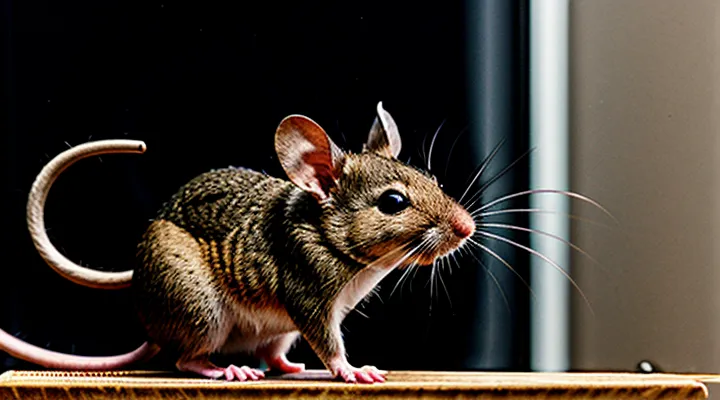
The Nature of Rodent Vocalizations
Types of Squeaks
Ultrasonic Frequencies
Ultrasonic frequencies refer to sound waves with wavelengths shorter than the upper limit of human hearing, typically above 20 kHz. Rodents, including mice, emit vocalizations that frequently occupy this range, allowing communication that remains largely inaudible to people.
Mice produce a series of brief, high‑frequency calls during social interactions, predator avoidance, and mating. These calls often peak between 40 kHz and 100 kHz, with some components extending beyond 120 kHz. The acoustic structure includes:
- Fundamental frequency that defines the pitch of the squeak.
- Harmonic overtones that enrich the signal and convey additional information.
- Temporal patterns such as burst duration and inter‑call intervals, which modulate the message content.
The physiological basis for this ultrasonic perception lies in the cochlear hair cells of rodents, which are tuned to respond efficiently to frequencies up to 100 kHz. The basilar membrane’s stiffness gradient and the specialized inner hair cell arrangement enable rapid transduction of high‑frequency vibrations into neural signals.
Capturing mouse ultrasonic vocalizations requires equipment that surpasses the limits of standard audio gear. Broadband microphones with a flat response up to at least 150 kHz, preamplifiers with low noise floors, and digitizers sampling at 250 kHz or higher are essential. Signal processing often involves:
- High‑pass filtering to eliminate low‑frequency noise.
- Spectrogram analysis for visualizing frequency‑time patterns.
- Automated detection algorithms that isolate call events based on amplitude and frequency thresholds.
Understanding ultrasonic frequencies in rodent communication informs research on neurobiology, behavior, and disease models. Precise measurement of these sounds provides quantitative metrics for assessing social deficits, pharmacological effects, and genetic manipulations in laboratory mice.
Audible Squeaks and Chirps
Audible squeaks and chirps produced by rodents are brief, high‑frequency pulses that dominate the acoustic spectrum of mouse recordings. These vocalizations typically range from 4 kHz to 100 kHz, with most energy concentrated between 10 kHz and 30 kHz for adult mice and extending into ultrasonic bands for juveniles. The waveform shows rapid rise and fall times, producing a sharp attack and a brief decay that facilitates detection by both human‑scale microphones and specialized ultrasonic transducers.
The generation mechanism involves sudden airflow through the laryngeal apparatus, modulated by vocal fold tension and subglottal pressure. Variations in these physiological parameters create distinct acoustic signatures:
- Frequency modulation: gradual or abrupt shifts in pitch within a single call.
- Harmonic structure: presence or absence of overtones that influence timbre.
- Temporal pattern: single pulses, doublets, or rapid series that convey different behavioral contexts.
Rodents possess an auditory system tuned to these frequencies, with cochlear hair cells responding most efficiently between 10 kHz and 40 kHz. Consequently, audible squeaks and chirps serve as primary communication channels for alarm, mating, and social hierarchy. In audio analysis, spectral analysis and waveform segmentation isolate these calls, enabling quantitative assessment of call rate, duration, and intensity, which correlate with stress levels, developmental stage, and environmental conditions.
Accurate characterization of squeaks and chirps enhances experimental reproducibility and informs the design of acoustic monitoring systems. By aligning recording equipment specifications with the known frequency and amplitude ranges, researchers capture high‑fidelity data that reflect the natural acoustic environment experienced by rodents.
Biological Purpose
Communication within Colonies
Rodent colonies rely on high‑frequency vocalizations to coordinate behavior. The acoustic signal emitted by a mouse during social interaction carries distinct parameters—frequency, duration, amplitude—that encode specific messages. Researchers have identified consistent patterns linking these acoustic features to particular functions within the group.
The primary functions of these vocalizations include:
- Territorial negotiation – brief, sharp squeaks signal presence and deter intruders.
- Alarm broadcasting – elongated, high‑pitch calls trigger rapid escape responses among nearby individuals.
- Maternal‑offspring bonding – low‑frequency, rhythmic chirps facilitate nursing and reduce pup distress.
- Social hierarchy reinforcement – repetitive, moderate‑tone squeaks accompany dominant displays and reinforce rank.
Neural processing of these sounds occurs in the auditory cortex, where frequency discrimination enables receivers to differentiate between call types. Auditory sensitivity thresholds in mice are tuned to the frequency range of conspecific squeaks, allowing detection even amidst ambient environmental noise. This specialization supports real‑time decision making, such as immediate retreat upon hearing an alarm call or approach when a nurturing chirp is perceived.
Temporal synchronization among colony members enhances group cohesion. When a single individual initiates a call, surrounding mice often respond within milliseconds, creating a cascade that amplifies the original signal. This rapid feedback loop sustains collective vigilance and streamlines resource allocation during foraging excursions.
Overall, the acoustic communication system functions as an efficient information network, minimizing the need for visual cues and enabling colonies to maintain stability, respond to threats, and coordinate reproductive activities.
Warning Signals
Rodent vocalizations include distinct warning signals that alert conspecifics to potential threats. These sounds are characterized by high‑frequency, brief bursts that differ from regular communication calls in pitch, duration, and modulation pattern. Laboratory recordings reveal that the warning squeak typically exceeds 20 kHz, persists for less than 100 ms, and exhibits a rapid rise‑time envelope, allowing immediate detection by nearby individuals.
The acoustic profile serves several functions:
- Immediate threat indication, prompting escape or freeze behavior.
- Rapid propagation through dense substrates, ensuring signal reach in cluttered environments.
- Species‑specific encoding, reducing false alarms from non‑conspecific noises.
Neurophysiological studies show that the auditory pathway of rodents is tuned to these frequencies, with enhanced sensitivity in the cochlear region corresponding to the warning band. Behavioral assays demonstrate that playback of the warning squeak elicits heightened vigilance and accelerated locomotor responses, confirming its efficacy as an alarm cue.
Field observations confirm that warning signals are emitted when predators approach, when territorial intrusions occur, or when environmental disturbances arise. The consistency of the signal across individuals suggests an innate component, while slight variations encode contextual information such as predator type or urgency level.
Mating Calls
Mice emit brief ultrasonic vocalizations during courtship that serve as primary signals for mate attraction. These calls typically occupy the 30–110 kHz range, last 10–150 ms, and consist of frequency-modulated sweeps or simple tonal pulses. Peak amplitudes rarely exceed 70 dB SPL at the source, ensuring effective transmission without excessive energy expenditure.
Conspecific receivers possess highly sensitive cochlear hair cells tuned to the same frequency band, allowing detection of calls at distances of up to 30 cm in typical laboratory environments. Auditory brainstem responses confirm that the neural circuitry processes these signals with millisecond precision, facilitating rapid behavioral responses.
The functional objectives of mating vocalizations include:
- Signaling reproductive readiness
- Conveying individual fitness through call complexity
- Enabling species-specific discrimination to avoid hybridization
Experimental protocols for studying these calls rely on ultrasonic microphones coupled with high‑resolution spectrographs. Playback trials employ calibrated speakers that reproduce the original frequency and temporal structure, allowing assessment of behavioral preferences and neurophysiological activation patterns.
Auditory Perception in Rodents
Range of Hearing
Comparison to Human Hearing
Rodent vocalizations recorded for acoustic analysis occupy a frequency range that extends well beyond the upper limit of typical human auditory perception. Laboratory measurements show that mouse squeaks commonly contain spectral components between 20 kHz and 100 kHz, whereas the average adult human ear reliably detects sounds up to approximately 20 kHz and loses sensitivity above 15 kHz. Consequently, the high‑frequency content that defines a mouse’s alarm call remains inaudible to most listeners without specialized equipment.
The disparity influences both experimental design and playback methodology. Researchers must employ ultrasonic microphones and transducers capable of capturing and reproducing frequencies above the human hearing threshold. When presenting recorded squeaks to human subjects, the signal is often down‑shifted or filtered to fall within the audible band, which alters the acoustic structure and may affect behavioral responses.
Key acoustic differences:
- Peak frequency: mouse squeaks ≈ 40–80 kHz; human speech ≈ 0.2–4 kHz.
- Harmonic density: rodent calls contain densely spaced harmonics above 20 kHz; human vocalizations feature fewer, lower‑frequency harmonics.
- Temporal envelope: mouse squeaks exhibit rapid rise times (< 1 ms) and brief durations (5–30 ms); human phonemes last tens to hundreds of milliseconds.
Understanding these contrasts ensures accurate interpretation of rodent communication data and informs the selection of recording and playback hardware.
Sensitivity to High Frequencies
Rodents detect ultrasonic components of their vocalizations far beyond the range of human hearing. The cochlear hair cells responsible for transduction are tuned to frequencies between 20 kHz and 100 kHz, with peak sensitivity typically around 40–60 kHz. Thresholds drop to as low as 10 dB SPL in this band, allowing detection of faint squeaks produced during social interactions or stress responses.
Key physiological factors influencing high‑frequency perception include:
- Basilar membrane stiffness that preserves tonotopic organization at ultrasonic frequencies.
- Short, densely packed outer hair cells that amplify weak signals without compromising temporal precision.
- Neural pathways with rapid firing rates, enabling accurate encoding of brief, high‑frequency bursts.
Audio capture of these sounds requires microphones with flat response up to at least 80 kHz and preamplifiers that maintain low self‑noise. Calibration against calibrated ultrasonic tone generators ensures that measured SPL values reflect true rodent hearing thresholds. Spectral analysis using FFT windows of 1–2 ms provides sufficient resolution to resolve individual squeak elements without smearing.
Understanding rodent sensitivity to high frequencies informs both experimental design and equipment selection, ensuring that recorded acoustic data faithfully represent the signals perceived by the animals themselves.
Mechanisms of Sound Perception
Inner Ear Structure
The inner ear of rodents is composed of three functional regions: the cochlea, the vestibular apparatus, and the auditory nerve fibers that transmit signals to the brain. The cochlea contains a spiral organ of Corti lined with hair cells tuned to specific frequencies. In mice, hair cells respond most efficiently to ultrasonic frequencies between 30 kHz and 100 kHz, the range typical for squeaks produced during social interactions. The basilar membrane’s stiffness gradient creates a tonotopic map that separates low‑frequency components from the high‑frequency squeak harmonics, allowing precise spectral analysis.
Supporting structures maintain fluid dynamics essential for transduction. The scala vestibuli and scala tympani are filled with perilymph, while the scala media holds endolymph with a high potassium concentration. The endolymphatic potential amplifies hair‑cell deflection, generating receptor potentials that are converted into neural spikes. The vestibular system, although primarily responsible for balance, contributes to the detection of rapid pressure changes associated with sudden squeaks, enhancing reflexive responses.
Neural pathways originate at the spiral ganglion, where type I fibers convey high‑fidelity acoustic information to the cochlear nucleus. Subsequent projections ascend through the superior olivary complex and inferior colliculus, reaching the auditory cortex for pattern recognition and behavioral interpretation. This circuitry enables rodents to discriminate conspecific squeaks from environmental noise and to localize sound sources with sub‑millimeter precision.
Key anatomical features relevant to mouse squeak perception:
- Hair‑cell distribution: High density of outer hair cells in the basal turn of the cochlea, optimized for ultrasonic detection.
- Basilar membrane gradient: Rapid stiffness decrease from base to apex, producing a high‑frequency tonotopic region.
- Endolymphatic potential: Approximately +80 mV, providing the electrochemical drive for mechanoelectrical transduction.
- Auditory nerve fiber tuning: Narrowband fibers with characteristic frequencies matching typical squeak spectra.
Understanding these components clarifies how rodents convert brief, high‑frequency vocalizations into neural representations, enabling rapid communication and predator avoidance.
Brain Processing of Sound
Rodent ultrasonic vocalizations, such as the high‑frequency squeaks produced by mice, are processed by a specialized auditory system adapted to frequencies up to 100 kHz. Sound waves enter the ear canal, vibrate the tympanic membrane, and are transmitted through the ossicles to the cochlea, where inner‑hair cells convert mechanical energy into neural signals. Hair‑cell bundles are tuned to ultrasonic frequencies, allowing precise detection of the brief, broadband squeak.
Neural signals travel along the auditory nerve to brainstem nuclei that extract temporal and spectral features. Key structures include:
- Cochlear nucleus: performs initial frequency decomposition and preserves phase information.
- Superior olivary complex: computes interaural timing differences, essential for sound localization even at ultrasonic ranges.
- Inferior colliculus: integrates inputs, enhances signal‑to‑noise ratio, and generates latency‑coded representations of squeak onset.
- Medial geniculate body: relays processed information to cortical areas.
- Auditory cortex: maintains tonotopic maps extending into the ultrasonic domain, supports pattern recognition, and drives behavioral responses.
Cortical neurons exhibit phase‑locked firing to the rapid oscillations of mouse squeaks, enabling millisecond‑scale temporal precision. Synaptic plasticity within the auditory pathway adjusts receptive fields based on experience, refining discrimination of conspecific calls versus environmental noises. Spike timing and rate codes together encode the squeak’s frequency sweep, duration, and amplitude envelope, providing the brain with a comprehensive acoustic signature.
The resulting neural representation informs downstream circuits that control escape, social interaction, and mating behaviors. Rapid processing ensures that rodents can react to the squeak in real time, translating acoustic information into motor actions essential for survival.
Environmental Influences on Hearing
Habitat and Predation Pressure
Rodents inhabit a range of environments, from dense underbrush to urban structures. Each setting imposes distinct acoustic constraints that shape the spectral and temporal features of mouse vocalizations. In cluttered leaf litter, low‑frequency components attenuate quickly, prompting mice to emphasize higher frequencies that travel farther without distortion. Inside confined spaces such as burrows or building cavities, reverberation amplifies certain harmonics, leading to narrower bandwidths that reduce signal overlap with ambient noise.
Predation pressure directly influences vocal behavior. Species facing aerial predators, such as owls, produce brief, high‑pitched squeaks that minimize detection time while remaining audible to conspecifics. Ground‑based predators, including snakes, elicit longer, lower‑frequency calls that exploit substrate vibrations less perceptible to visual hunters. The following factors illustrate this adaptive modulation:
- Signal duration: shortened bursts under high aerial threat; extended notes when ground predators dominate.
- Frequency range: upward shift toward ultrasonic bands in open habitats; retention of mid‑frequency tones in enclosed burrows.
- Amplitude variability: reduced loudness to avoid attracting predators; occasional escalation during territorial encounters.
These habitat‑specific and predator‑driven adjustments ensure that mouse acoustic signals remain effective for communication while limiting exposure to threats.
Age-Related Hearing Changes
Rodent vocalizations captured in recordings provide a direct window into auditory perception, yet the condition of the listener’s hearing system alters the acoustic signal that reaches the ear.
Age‑related degeneration of the cochlear apparatus underlies measurable shifts in auditory performance. Primary changes include loss of outer hair cells, reduced synaptic density at inner hair cell ribbons, and diminished myelination of the auditory nerve. These alterations produce a systematic decline in sensitivity, particularly at high frequencies, and prolong neural response latencies.
When older mice emit squeaks, the recorded waveform often shows lower peak amplitude, a downward shift in dominant frequency, and elongated rise times. The same acoustic event may be perceived as quieter and less sharp by an aged listener, affecting behavioral responses and neurophysiological recordings.
Researchers must incorporate age as a variable in experimental design and data interpretation. Strategies include:
- Grouping subjects by defined age brackets before acoustic analysis.
- Adjusting recording gain to compensate for reduced output levels in older animals.
- Applying frequency‑dependent correction factors derived from auditory brainstem response thresholds.
Failing to control for these factors can confound conclusions about communication patterns, neural coding, and the efficacy of auditory interventions. Accurate assessment of age‑related hearing changes ensures that the sound environment recorded from rodents reflects the true perceptual experience of the animals.
The «Mouse Squeak» in Human Audio
Misconceptions and Distortions
Cultural Interpretations of Squeaks
Rodent squeaks have been woven into myth, art, and ritual across societies. In East Asian folklore, the high‑pitched call of a mouse symbolizes alertness and hidden danger; stories describe the sound as a warning of imminent intrusion. Indigenous North American narratives often portray the squeak as a messenger of the earth, linking the animal’s movement to seasonal cycles and harvest timing. European medieval bestiaries assign moral weight to the squeak, interpreting it as a sign of greed or secrecy, while contemporary urban music producers sample the timbre to evoke urban decay or tension.
Key cultural patterns emerge:
- Symbolic warning – recurring motif in Asian tales where the squeak precedes conflict.
- Spiritual conduit – Native traditions view the sound as a bridge between physical and spiritual realms.
- Moral allegory – European texts use the squeak to illustrate vice or hidden truth.
- Aesthetic device – modern sound designers manipulate the squeak for atmospheric effect.
Anthropological records show that the auditory characteristic of mouse vocalizations serves as a versatile signifier, adaptable to each culture’s narrative framework and artistic intent.
The Impact of Media Portrayals
Media depictions of rodent vocalizations shape public perception of the acoustic environment that mice experience. Film soundtracks, video game effects, and advertising jingles frequently exaggerate the pitch, duration, and emotional context of mouse squeaks. Such exaggerations create a stereotype of rodents as constantly distressed or comedic, obscuring scientific observations that mouse vocalizations serve nuanced social functions, including mating calls, territorial signals, and infant‑parent communication.
Research citations reveal three primary consequences of these portrayals:
- Misinterpretation of behavioral relevance: Audiences associate high‑frequency squeaks with panic, leading to underappreciation of softer, affiliative calls documented in ethological studies.
- Influence on policy and welfare standards: Legislators referencing popular media may endorse overly restrictive handling protocols, assuming that any audible squeak indicates severe stress.
- Impact on educational content: Textbooks and documentaries that adopt cinematic sound designs propagate inaccurate acoustic parameters, hindering student comprehension of murine communication systems.
To mitigate distortion, creators should consult acoustic datasets from laboratory recordings, align sound design with measured frequency ranges (typically 10–100 kHz, often beyond human hearing), and provide contextual narration that distinguishes distress calls from neutral social exchanges. Accurate representation supports informed public discourse and promotes responsible animal welfare practices.
Technical Aspects of Recording Rodent Sounds
Specialized Microphones for Ultrasonics
Specialized microphones designed for ultrasonic recording capture frequencies well beyond the human hearing range, enabling detailed analysis of rodent vocalizations.
Piezoelectric transducers convert rapid pressure changes into electrical signals with minimal latency. Their thin ceramic elements resonate above 20 kHz, providing flat response up to 150 kHz. Typical specifications include sensitivity of –30 dBV/Pa and self‑noise below 30 dB SPL, sufficient for detecting faint squeaks emitted at 70–90 kHz.
Capacitor (condensor) microphones equipped with miniature diaphragms and low‑mass backplates achieve broader bandwidth (10 kHz–200 kHz) and higher SPL handling. Integrated preamplifiers with 80 dB gain maintain signal integrity when placed close to the animal chamber.
Micro‑electromechanical systems (MEMS) arrays offer directional selectivity and compact form factor. Each element can be individually addressed, allowing beamforming techniques that isolate vocal sources within crowded enclosures.
Key design considerations:
- Frequency response: Target 20–150 kHz, flat within ±3 dB.
- Sensitivity: > –30 dBV/Pa to capture low‑amplitude emissions.
- Noise floor: < 30 dB SPL to preserve signal‑to‑noise ratio.
- Impedance matching: 50 Ω output for compatibility with high‑speed ADCs.
- Mounting: Vibration‑isolated brackets or acoustic foam to reduce mechanical artifacts.
Modern recording chains pair these microphones with analog‑to‑digital converters sampling at 500 kHz or higher, ensuring at least four points per cycle for the highest frequencies. Software tools apply digital filtering and spectrographic analysis, extracting parameters such as call duration, peak frequency, and harmonic structure.
Recent advances include:
- Hybrid piezo‑condensor designs that combine low‑noise front ends with extended bandwidth.
- Wireless MEMS packs delivering real‑time data without cable‑induced interference.
- 3‑D printed acoustic housings that tailor resonance characteristics to specific rodent species.
Selecting the appropriate ultrasonic microphone hinges on the experimental frequency range, required spatial resolution, and integration with existing acquisition hardware. Proper calibration against a known ultrasonic source guarantees reproducibility across studies.
Challenges in Capturing Natural Sounds
Capturing the high‑frequency squeaks produced by rodents presents several technical obstacles. The acoustic energy of these vocalizations often lies above 20 kHz, a range where many commercial microphones lose sensitivity. Selecting transducers with flat response well beyond the audible spectrum is essential, yet such devices are costly and may require specialized preamplifiers to maintain signal‑to‑noise ratios.
Environmental interference further complicates acquisition. Laboratory chambers and field habitats generate broadband noise from ventilation, equipment, and human activity. Isolating the target sound demands acoustic treatment, directional pickup patterns, or time‑gated recording synchronized with animal behavior. Even minor vibrations can mask the brief, low‑amplitude bursts characteristic of mouse vocalizations.
Biological variability introduces additional uncertainty. Individual rodents differ in call duration, frequency modulation, and intensity, while social context can alter vocal patterns within milliseconds. Designing recording protocols that accommodate this dynamism often involves continuous monitoring, high‑speed sampling (≥ 192 kHz), and automated detection algorithms to segment relevant events.
Ethical constraints limit intrusive placement of sensors. Non‑contact methods such as laser vibrometry reduce stress but require line‑of‑sight and precise alignment, which may be impractical in cluttered environments. Balancing animal welfare with data quality remains a persistent trade‑off.
Practical considerations can be summarized:
- Use ultrasonic microphones with flat response up to 100 kHz.
- Employ sound‑proof enclosures or acoustic baffles to suppress ambient noise.
- Implement high‑resolution analog‑to‑digital conversion (≥ 24‑bit).
- Apply real‑time spectral filtering to isolate rodent frequencies.
- Validate equipment calibration regularly to prevent drift.
Addressing these challenges enables reliable documentation of rodent acoustic signals, supporting research into communication, behavior, and auditory perception.
Applications in Research and Pest Control
Bioacoustics for Population Monitoring
Bioacoustic monitoring leverages the ultrasonic vocalizations emitted by small rodents to estimate population density without direct capture. Recordings obtained with calibrated microphones capture the characteristic squeaks, which serve as proxies for individual presence and activity levels across habitats.
Automated pipelines process raw audio through the following stages:
- Band‑pass filtering to isolate frequencies typical of mouse vocalizations.
- Spectrotemporal feature extraction (e.g., peak frequency, call duration, modulation patterns).
- Machine‑learning classifiers trained on labeled datasets to differentiate species and call types.
- Calibration curves derived from simultaneous live‑trapping surveys that translate call rates into absolute abundance estimates.
Key benefits include continuous, non‑invasive sampling; coverage of cryptic or nocturnal populations; and the ability to detect temporal trends linked to environmental variables. Limitations involve acoustic attenuation in dense vegetation, overlapping frequencies with sympatric species, and the need for extensive labeled data to maintain classifier accuracy. Ongoing research focuses on integrating multi‑sensor networks, improving source localization algorithms, and standardizing protocols for cross‑regional comparisons.
Auditory Deterrents and Repellents
Auditory deterrents aim to exploit the frequency range that rodents can perceive, disrupting their natural communication and foraging behavior. Devices emit sounds typically above 20 kHz, a band audible to mice but inaudible to most humans, creating an environment that rodents avoid.
Key categories include:
- Ultrasonic emitters: generate continuous or pulsed tones within 20–70 kHz; effectiveness varies with species, age, and habituation.
- Predator vocalizations: broadcast recorded calls of natural enemies (e.g., owls, feral cats); provoke innate avoidance responses.
- Broadband noise generators: produce irregular high‑frequency noise that masks conspecific squeaks, reducing territory marking and mating signals.
Implementation considerations:
- Placement near entry points, nesting sites, or food storage areas maximizes exposure.
- Power source selection (battery vs. mains) influences operational continuity and maintenance frequency.
- Frequency modulation prevents acclimation; devices that vary pitch and pattern retain deterrent effect longer.
Empirical studies report mixed outcomes. Controlled experiments show significant reduction in activity when ultrasonic emitters operate continuously at calibrated intensities. Field trials reveal diminished impact after several weeks, indicating rodents can adapt to static sound profiles. Combining auditory methods with physical barriers or chemical repellents improves overall control success.
Limitations encompass:
- Sound attenuation by walls, insulation, and furniture, reducing reach to hidden chambers.
- Potential interference with other pets sensitive to high frequencies.
- Regulatory constraints on emissions in certain jurisdictions.
Optimal deployment integrates regular monitoring, periodic adjustment of sound parameters, and complementary non‑acoustic measures to sustain deterrent efficacy.
Evolution of Rodent Communication
Ancestral Vocalizations
Early Mammalian Sound Production
Early mammals possessed a simple laryngeal architecture that enabled rapid, high‑frequency vocalizations. Fossilized hyoid bones and reconstructed soft‑tissue models indicate a mobile laryngeal cartilaginous framework, allowing modulation of airflow through thin vocal folds.
The primary anatomical components involved in primitive sound production include:
- Paired laryngeal cartilages providing structural support;
- Thin, elastic vocal folds capable of vibrating at rates exceeding 20 kHz;
- Intrinsic laryngeal muscles that adjust tension and aperture with millisecond precision;
- A relatively short trachea that reduces acoustic dampening.
Comparative studies of extant rodents reveal that modern squeaks retain these ancestral features. Recordings of mouse vocalizations exhibit harmonic structures centered around 10–30 kHz, matching the predicted resonant frequencies of early mammalian laryngeal dimensions. The temporal pattern—brief bursts lasting 5–30 ms—mirrors the rapid onset‑offset dynamics inferred from the fossil record.
Research methodologies combine high‑speed videography of laryngeal motion, laser Doppler vibrometry of vocal fold vibration, and phylogenetic signal analysis. These techniques quantify the relationship between anatomical constraints and acoustic output, establishing a direct lineage from early mammalian sound mechanisms to the high‑frequency squeaks heard in contemporary rodent audio studies.
Adaptation to Nocturnal Lifestyles
Mice rely on high‑frequency vocalizations that travel efficiently in the dark, allowing communication without visual cues. The acoustic structure of these squeaks matches the limited hearing range of conspecifics, reducing detection by predators that are less sensitive to ultrasonic frequencies.
Adaptations supporting nocturnal activity include:
- Enlarged cochlear hair cells tuned to ultrasonic bands, enhancing signal reception.
- Muscular control of the larynx that produces brief, high‑pitch bursts, conserving energy during prolonged activity.
- Behavioral synchronization of calls with low‑light foraging, minimizing exposure while maintaining group cohesion.
Metabolic adjustments accompany these auditory traits. Elevated mitochondrial density in auditory nuclei supplies the rapid neural firing required for processing brief ultrasonic pulses. Simultaneously, circadian regulation suppresses visual processing pathways, reallocating neural resources to auditory and somatosensory systems.
The combined sensory, physiological, and behavioral modifications create a specialized niche where rodents can navigate, locate food, and avoid threats under conditions of minimal illumination.
Diversification of Squeak Patterns
Species-Specific Dialects
Mouse vocalizations exhibit distinct dialects that correspond to species, subspecies, and even geographically isolated populations. Acoustic recordings reveal systematic variations in frequency range, temporal pattern, and harmonic structure. These variations enable conspecifics to recognize group membership and maintain social cohesion.
Comparative spectrographic analyses identify the following species‑specific characteristics:
- House mouse (Mus musculus): dominant squeak frequency between 10–12 kHz, rapid rise‑time envelopes, repeated bursts at intervals of 150–250 ms.
- Deer mouse (Peromyscus maniculatus): broader bandwidth extending to 20 kHz, slower modulation cycles, occasional ultrasonic components above 30 kHz.
- Field mouse (Apodemus sylvaticus): lower fundamental around 8 kHz, pronounced harmonic series, elongated syllable duration up to 120 ms.
Field studies confirm that individuals preferentially respond to the dialect of their own species while showing reduced phonotactic activity toward heterospecific calls. Playback experiments demonstrate that cross‑species exposure does not elicit the same approach behavior, indicating that dialect discrimination operates at the neural processing level.
Genetic analyses correlate vocal dialects with mitochondrial haplotypes, suggesting evolutionary divergence of acoustic traits alongside lineage separation. Environmental factors such as habitat density and ambient noise further modulate dialect expression, leading to micro‑dialects within a single species across different ecological niches.
Environmental Pressures on Vocal Evolution
Mice emit brief, high‑frequency squeaks that appear prominently in acoustic recordings of rodent activity. These vocalizations provide a tractable system for examining how ecological constraints shape signal design.
Environmental variables impose selective pressures on the acoustic structure of mouse calls. Dense underbrush attenuates low‑frequency energy, favoring upward shifts in pitch to maintain transmission distance. Ambient sound from wind, water flow, or conspecific activity raises the background noise floor, driving increases in amplitude and temporal precision. Temperature and humidity influence sound speed and absorption, thereby modulating optimal frequency ranges for efficient propagation.
Predation risk creates divergent pressures. Species that rely on auditory predators benefit from frequencies beyond the predator’s hearing range, while those vulnerable to echolocating predators may evolve lower‑frequency components to reduce detectability. Social organization adds another layer: larger colonies require distinct call signatures to prevent overlap, encouraging diversification of temporal patterns and harmonic content.
Key environmental pressures affecting vocal evolution in mice:
- Habitat density (vegetation, burrow complexity) → frequency elevation, call brevity
- Ambient acoustic clutter → higher amplitude, sharper onset/offset
- Climatic conditions (temperature, humidity) → adjustments in frequency bandwidth
- Predator auditory capabilities → frequency displacement outside predator sensitivity
- Group size and social hierarchy → increased repertoire complexity, temporal modulation
These pressures interact, producing a mosaic of acoustic adaptations observable in recorded mouse squeaks. Understanding this interplay informs broader theories of signal evolution across taxa and enhances the interpretation of bioacoustic data collected in natural and laboratory settings.