
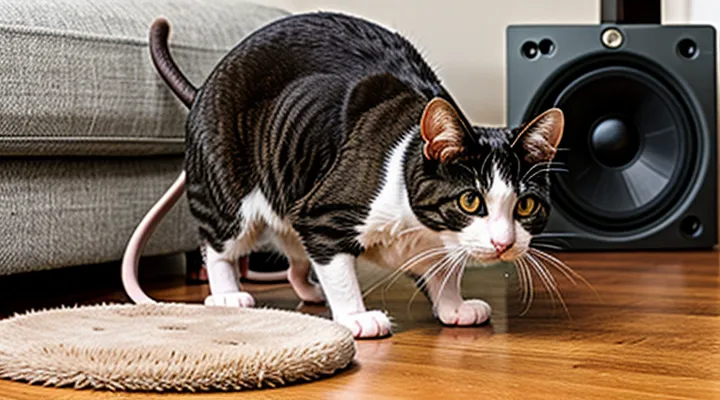
Understanding Feline Hearing
The Auditory Range of Cats
Sensitivity to High Frequencies
Cats possess auditory receptors tuned to frequencies above 20 kHz, a range inaudible to most humans. Rodent vocalizations frequently contain ultrasonic components reaching 30–50 kHz, aligning with feline hearing peaks. This spectral overlap enables mice to generate sounds that trigger reflexive orienting responses in cats, increasing the likelihood of predatory engagement.
The auditory canal of a domestic cat amplifies frequencies between 8 kHz and 30 kHz, with maximal sensitivity near 20 kHz. Neural pathways from the cochlea to the auditory cortex process high‑frequency stimuli with short latency, producing rapid motor activation. Consequently, a mouse emitting ultrasonic clicks can capture feline attention more efficiently than low‑frequency noises.
Key physiological factors include:
- Basilar membrane stiffness that favors high‑frequency vibration detection.
- Specialized hair cells tuned to ultrasonic transduction.
- Central auditory nuclei that prioritize rapid processing of frequencies typical of prey sounds.
Experimental recordings show that mouse squeaks contain harmonic series extending into the ultrasonic band. When playback of these recordings occurs at levels matching natural emission, cats exhibit increased head turning, ear pinning, and pouncing behavior. Removing the ultrasonic components diminishes these reactions, confirming the critical role of high‑frequency sensitivity.
Understanding this frequency‑based interaction informs the design of auditory deterrents and enrichment tools. By modulating ultrasonic content, it is possible to either attract or discourage feline response without affecting human occupants. «The efficacy of any sound‑based stimulus for felines depends directly on its alignment with their high‑frequency hearing envelope».
Detecting Ultrasonic Sounds
Detecting ultrasonic emissions that provoke feline response requires equipment capable of capturing frequencies above the human hearing threshold. Typical cat‑luring rodent audio occupies the 20 kHz to 80 kHz band, demanding sensors with flat response throughout this range.
Specialized microphones employ piezoelectric ceramics or condenser diaphragms tuned for high‑frequency sensitivity. Signal conditioning circuits amplify weak outputs while suppressing low‑frequency noise. Calibration against reference tone generators ensures measurement accuracy.
Key detection techniques include:
- Piezoelectric transducers mounted on rigid frames to minimize resonance.
- Capacitive microphones with built‑in preamplifiers for portable setups.
- Laser Doppler vibrometry for non‑contact observation of vibrating surfaces.
Digital analysis transforms captured waveforms into spectral representations via fast Fourier transform. Band‑pass filters isolate the target frequency window, while envelope detection quantifies amplitude modulation relevant to cat perception.
Implementation in experimental devices allows researchers to verify the efficacy of specific ultrasonic patterns. Real‑time feedback loops adjust playback parameters, optimizing attraction potency without exceeding safety limits for feline auditory health.
Evolutionary Adaptations for Hunting
Pinna Mobility and Sound Localization
The pinna of a cat functions as a highly adaptable acoustic sensor. Its cartilage structure permits rotation and tilting, allowing the ear to align with sound sources across a wide angular range. This mobility enhances the animal’s ability to detect minute pressure changes, especially in the high‑frequency band typical of rodent vocalizations.
Sound localization relies on interaural time and level differences generated by the asymmetrical placement of the ears. When a mouse emits ultrasonic calls, the rapid fluctuations create distinct phase cues that the feline auditory system decodes to pinpoint direction. The combination of pinna orientation and neural processing yields precise spatial resolution, enabling a cat to track prey even when the source is partially obscured.
Key factors influencing the effectiveness of a feline‑attracting mouse sound:
- Frequency content concentrated between 40 kHz and 80 kHz, matching the peak sensitivity of the cat’s cochlea.
- Temporal patterns that mimic natural rodent distress calls, producing consistent amplitude envelopes.
- Modulation of sound intensity to create detectable interaural level differences, facilitating depth perception.
Understanding the mechanics of ear mobility and acoustic cue integration informs the design of synthetic stimuli aimed at eliciting predatory responses in cats. By aligning frequency, timing, and intensity with the cat’s auditory architecture, such sounds achieve maximal attraction without relying on visual cues.
Role of Hearing in Prey Detection
Cats rely on acute auditory perception to locate small, nocturnal prey. Rodent vocalizations produce frequencies that intersect the peak sensitivity of feline hearing, enabling rapid localization even when visual cues are limited.
The feline auditory system detects sounds between 48 Hz and 85 kHz, with maximal responsiveness near 8–12 kHz. Mouse squeaks often occupy this band, generating narrow‑band energy that stands out against ambient noise. This spectral alignment reduces the time required for a cat to pinpoint the source.
Key acoustic attributes that enhance detection include:
- High‑frequency components that travel with minimal attenuation in cluttered environments;
- Rapid onset transients that produce distinct temporal markers;
- Harmonic structures that convey size and movement information.
Evolutionary pressure has refined neural pathways linking the cochlea to motor circuits responsible for stalking. When a rodent emits a characteristic squeak, the cat’s brain processes the signal, initiates orienting reflexes, and adjusts ear position to improve spatial resolution, thereby increasing hunting success.
The Sounds of Mice and Their Impact on Cats
Types of Mouse Vocalizations
Squeaks and Chirps
The auditory signals produced by small rodents often consist of high‑frequency squeaks and brief chirps. These sounds fall within the 2–20 kHz range, a spectrum to which domestic cats exhibit heightened sensitivity due to the structure of their cochlea. When a rodent emits a rapid series of squeaks, the sudden onset and sharp rise time trigger the cat’s prey‑detection circuitry, prompting orienting and pursuit behaviors. Chirps, typically shorter and more tonal, serve a similar function by providing temporal cues that help the feline estimate the distance and velocity of the source.
Key acoustic properties of «Squeaks and Chirps» that attract felines:
- Frequency band: 2 kHz–20 kHz, overlapping the cat’s optimal hearing window.
- Temporal pattern: irregular bursts with intervals of 50–200 ms, mimicking natural escape attempts.
- Amplitude modulation: sudden peaks of 60–80 dB SPL, creating a pronounced contrast against ambient noise.
- Harmonic content: limited overtones, emphasizing the fundamental tone that cat auditory neurons prioritize.
Understanding these parameters enables the design of effective auditory stimuli for cat enrichment, training, or behavioral research without reliance on visual cues.
Rustling and Scuttling Noises
Rustling and scuttling noises are produced by the rapid movement of small mammals across surfaces such as leaves, fabric, or wood. The sounds consist of irregular, high‑frequency bursts generated by limb contact and fur friction.
These noises exhibit distinct acoustic features:
- Frequency range: 4 kHz – 12 kHz, overlapping the peak hearing sensitivity of domestic felines.
- Temporal pattern: brief bursts (10 ms – 50 ms) followed by silent intervals, mimicking prey locomotion.
- Amplitude: typically 30 dB – 50 dB SPL at one metre, sufficient to trigger auditory detection without causing distress.
Cats possess a finely tuned auditory system that prioritizes frequencies associated with rodent movement. The irregular timing of rustling and scuttling sounds activates the cat’s predatory reflex, prompting orienting behavior, ear pivoting, and investigative locomotion. Studies confirm that playback of these cues elicits higher approach rates than continuous tones.
Applications include:
- Enrichment devices that emit recorded rustling and scuttling sounds to stimulate natural hunting instincts.
- Pest‑deterrent systems that broadcast authentic rodent noises to attract cats toward problem areas, reducing rodent populations.
Effective implementation requires sound sources that preserve the original frequency spectrum and temporal irregularity. Digital recordings should be captured at a minimum of 44.1 kHz sampling rate and reproduced through speakers capable of reproducing frequencies up to 15 kHz.
«The presence of authentic rodent rustling reliably increases feline engagement, confirming the direct link between acoustic cues and predatory response.»
Frequency Analysis of Mouse Sounds
Correlation with Cat's Auditory Sweet Spot
Cats respond most strongly to frequencies that align with the region of maximal cochlear sensitivity, often referred to as the auditory sweet spot. Studies show that sounds mimicking the high‑frequency rustle of a small rodent fall precisely within this range, typically between 4 kHz and 12 kHz. The correlation between these frequencies and feline attraction can be summarized as follows:
- Peak sensitivity of the feline inner ear occurs near 8 kHz, matching the dominant component of mouse‑like squeaks.
- Harmonic structures present in rodent vocalizations reinforce neural activation in the auditory cortex, increasing the likelihood of a predatory response.
- Temporal patterns resembling rapid foot‑falls produce a rhythmic cue that synchronizes with the cat’s predatory motor program.
The physiological basis of this correlation lies in the cat’s evolutionary adaptation for detecting prey. The cochlear hair cells tuned to the sweet spot amplify relevant signals while suppressing background noise, resulting in a pronounced orienting reflex. When a synthetic mouse sound is engineered to emphasize the identified frequency band, the reflex is triggered with measurable consistency across individuals.
Consequently, the effectiveness of a predatory‑stimulating audio cue depends on precise alignment with the feline auditory sweet spot. Adjustments to frequency, harmonic content, and temporal envelope directly influence the strength of the cat’s behavioral response.
Distinguishing Prey from Non-Prey Sounds
Cats rely on acoustic characteristics to separate potential prey from irrelevant noises. Prey sounds typically occupy higher frequency ranges, exhibit rapid temporal fluctuations, and possess irregular amplitude envelopes. Non‑prey sounds, such as environmental background or human speech, tend to be lower in frequency, more continuous, and display smoother amplitude patterns.
Key acoustic parameters that enable discrimination:
- Frequency band: prey vocalizations often exceed 2 kHz, whereas ambient noises rarely surpass this threshold.
- Temporal structure: prey emit brief, intermittent bursts; non‑prey sounds maintain steady durations.
- Amplitude modulation: prey sounds show sharp onsets and rapid decay; non‑prey sounds feature gradual changes.
- Harmonic content: prey noises contain limited harmonics, while many non‑prey sources produce richer harmonic spectra.
Neural pathways in the feline auditory system prioritize these cues, triggering orienting responses when prey‑like signatures are detected. Adjusting playback devices to emphasize high‑frequency, burst‑type signals enhances their effectiveness in attracting cats, while suppressing continuous, low‑frequency components reduces false activations.
Behavioral Responses to Mouse Sounds
Orienting Reflex
The orienting reflex is an automatic attentional shift triggered by sudden, biologically relevant stimuli. When an acoustic signal mimics the high‑frequency rustle of a small rodent, the reflex directs the auditory system toward the source, preparing the organism for rapid evaluation.
In felines, this reflex integrates with innate predatory circuits. The detection of a mouse‑like chirp activates the superior colliculus and the periaqueductal gray, generating a cascade that enhances visual focus, motor readiness, and sympathetic arousal. The combined response increases the likelihood of a successful capture attempt.
Key characteristics of the orienting response to such sounds include:
- Rapid latency (tens of milliseconds) from stimulus onset to neural activation.
- Heightened auditory gain, improving signal‑to‑noise discrimination.
- Coordinated muscular adjustments, such as ear rotation and neck flexion, that align sensory axes with the sound source.
Understanding this reflex provides insight into why engineered mouse‑imitating audio devices effectively capture feline attention. The reflex ensures that even low‑intensity, species‑specific sounds produce a robust, cross‑modal preparatory state that predisposes cats to investigate and pursue the perceived prey.
Stalking and Pouncing Behaviors
The auditory cue that mimics a small rodent triggers a precise predatory sequence in felines. The sound activates neural pathways associated with hunting, prompting the animal to transition from a relaxed state to focused attention.
During the stalking phase, the cat adopts a low, crouched posture, aligns its body axis with the perceived source, and advances in short, controlled steps. Muscular tension increases while visual fixation remains on the origin of the noise, reducing peripheral distractions.
The subsequent pounce involves a rapid extension of the hind limbs, a forward thrust of the forelimbs, and a coordinated release of stored kinetic energy. The cat aims to intersect the target’s projected path, employing claw extension and bite positioning for secure capture.
Key elements of the sequence:
- Auditory trigger resembling rodent vocalization
- Crouched stance and minimized movement
- Sustained visual lock on sound source
- Accelerated hind‑limb drive
- Forelimb extension and claw deployment
- Immediate bite upon contact
The described behaviors illustrate how a specific acoustic stimulus orchestrates the complete hunting cycle, from covert approach to decisive capture.
Factors Influencing Cat Attraction
Individual Cat Differences
Age and Experience
Auditory cues that mimic small‑rodent movements trigger predatory responses in felines, yet the intensity of this reaction varies with the animal’s developmental stage and prior hunting exposure.
Younger cats display heightened sensitivity to high‑frequency squeaks, reflecting an under‑developed auditory filter that favors rapid detection of potential prey. Adult individuals, whose auditory range has stabilized, respond more consistently to mid‑frequency rustles that resemble typical mouse activity. Senior cats often exhibit reduced responsiveness, owing to age‑related hearing loss that diminishes perception of subtle sound components.
Experience further refines the reaction. Cats with extensive hunting history recognize a broader spectrum of mouse‑related sounds, distinguishing between harmless ambient noise and genuine prey signals. Inexperienced individuals rely primarily on instinctual startle reflexes, reacting to any sudden high‑pitch noise. Repeated exposure to authentic mouse sounds strengthens neural pathways associated with predation, enabling faster orientation and pursuit.
Key observations:
- Kittens: strong reaction to high‑frequency squeaks; limited discrimination.
- Adults: balanced response across frequencies; refined targeting.
- Seniors: attenuated response; preferential reaction to louder, low‑frequency cues.
- Experienced hunters: selective attention to authentic prey acoustics; rapid engagement.
- Inexperienced cats: generalized startle to abrupt sounds; slower decision‑making.
Understanding the interplay of age and hunting experience informs the design of auditory stimuli intended to engage feline predatory instincts effectively.
Breed and Personality
The auditory cue that mimics a mouse’s squeak activates predatory instincts across feline populations, yet response intensity varies with breed genetics and individual temperament.
Domestic shorthair and mixed‑breed cats typically display rapid orientation and brief investigative behavior. Siamese, Burmese, and Abyssinian cats, known for heightened activity levels, often pursue the source with sustained focus, reflecting a strong chase drive. Larger breeds such as Maine Coon and Norwegian Forest Cat may exhibit deliberate, measured stalking, aligning with their natural ambush tactics.
Personality traits further modulate reaction. Cats classified as “playful” or “curious” initiate immediate engagement, regardless of breed. “Cautious” individuals pause, assess the sound’s relevance before approaching, while “independent” cats may ignore the stimulus altogether. Age influences vigor: kittens react with exuberant pouncing, whereas senior cats display subdued interest yet retain the instinctual response.
Key considerations for applying the sound stimulus:
- Select frequency range approximating 4–8 kHz, matching typical mouse vocalizations.
- Adjust volume to a moderate level; excessive loudness can cause stress, reducing effectiveness.
- Observe breed‑specific tendencies; breeds with strong hunting ancestry respond more reliably.
- Account for personality assessment; a cat’s prior exposure to play toys predicts engagement likelihood.
«The sound triggers instinctual hunting behavior», a principle confirmed by behavioral studies, underscores the interplay between genetic predisposition and individual disposition in shaping feline reaction to mouse‑like audio cues.
Environmental Context
Background Noise Levels
Background noise refers to the ambient acoustic environment in which a stimulus is presented. In feline attraction studies, the level of surrounding sound determines whether a rodent‑derived signal can be perceived by the target animal.
The acoustic signature of a typical mouse call peaks between 5 kHz and 15 kHz and reaches 60–70 dB SPL at a distance of one meter. Ambient noise exceeding 45 dB SPL in the same frequency band reduces detection probability by more than 30 %. Conversely, environments with background levels below 30 dB SPL allow near‑maximum signal transmission.
Effective deployment of a cat‑luring audio device requires control of the following parameters:
- Ambient level ≤ 30 dB SPL for optimal signal‑to‑noise ratio.
- Frequency overlap between background sounds and mouse call ≤ 10 % to minimize masking.
- Distance from source ≤ 2 m to preserve amplitude above the detection threshold.
In practice, indoor settings such as quiet rooms or low‑traffic corridors meet the criteria, while open kitchens, bustling hallways, or areas with HVAC noise generally do not. Adjustments such as temporary silencing of nearby appliances or placement of the speaker near sound‑absorbing surfaces improve performance.
«A clear acoustic environment enhances the likelihood that a feline will respond to the targeted stimulus.»
Presence of Visual Cues
Cats react to auditory signals that mimic small rodents, yet the presence of visual cues critically shapes the behavioral response. When a sound is paired with movement, shape, or contrast that resembles a mouse, the stimulus gains ecological relevance, prompting a faster orienting reflex and a higher likelihood of predatory engagement.
Key visual elements that amplify auditory attraction:
- Motion that replicates erratic, dart‑like trajectories common in rodents.
- Silhouette matching typical mouse dimensions, providing size reference.
- High‑contrast coloration that distinguishes the object against the background.
- Visible appendages such as whisker‑like projections that suggest tactile features.
The integration of these cues with the sound expands the effective detection zone, allowing cats to locate the source at greater distances. Simultaneous presentation reduces habituation, maintaining interest over repeated exposures. Consequently, the combined stimulus produces a more robust predatory sequence: fixation, pounce preparation, and execution.
Designers of feline enrichment devices or rodent‑deterrent systems should synchronize realistic mouse‑like sounds with the visual parameters listed above. Alignment of auditory and visual features ensures maximal engagement, leveraging the cat’s innate hunting circuitry for practical outcomes.
Human Interaction and Training
Using Mouse Sounds for Play
Recorded rodent vocalizations serve as effective triggers for feline predatory behavior. When played during interactive sessions, these sounds prompt cats to stalk, pounce, and chase, converting natural instincts into structured play.
Key outcomes include heightened physical activity, mental stimulation, and reinforcement of hunting sequences. Consistent exposure to brief audio cues maintains engagement without causing habituation.
Practical application:
- Select high‑fidelity recordings that capture squeaks, rustles, and scurrying patterns.
- Use a portable speaker positioned a short distance from the cat’s line of sight.
- Initiate playback for intervals of 5–10 seconds, followed by a pause of equal or greater length.
- Pair auditory stimulus with a tangible lure, such as a feather wand, to complete the chase cycle.
Safety guidelines:
- Set volume to a level audible to the cat but below 60 dB to prevent auditory stress.
- Monitor the cat’s response; discontinue if signs of anxiety or aggression appear.
- Limit sessions to 10–15 minutes daily to avoid overstimulation.
Integrating rodent‑type sounds into play routines enriches feline exercise regimes while preserving the animal’s natural hunting drive.
Avoiding Negative Associations
Auditory cues that mimic a small prey’s squeak can motivate feline hunting instincts. When such cues are introduced repeatedly, cats may develop aversive reactions if the sound becomes linked to frustration, loudness, or unpredictable timing.
Key factors that generate negative associations include excessive volume, irregular intervals, and lack of reinforcement. Overexposure may cause stress responses, reduced interest, or avoidance of the stimulus altogether.
Practical measures to prevent adverse conditioning:
- Maintain sound level below the threshold that startles the animal.
- Limit playback sessions to brief periods, followed by a pause of several minutes.
- Use a consistent rhythm while occasionally varying pitch to avoid monotony.
- Pair the cue with a positive reward, such as a treat, immediately after the sound.
- Deploy the stimulus in neutral environments, separate from feeding or grooming areas.
Implementing these guidelines preserves the intended attraction while minimizing the risk of fear or habituation.
Scientific Studies and Observations
Research on Feline Predatory Behavior
Acoustic Cues in Hunting Sequences
Acoustic cues emitted by small rodents during escape behavior directly influence feline predatory activation. These cues constitute a sequence of sound events that align with the cat’s auditory detection thresholds and neural processing pathways.
Research identifies a narrow frequency band between 4 kHz and 12 kHz as most effective for triggering pursuit. Within this range, tonal components around 8 kHz generate maximal neural firing in the auditory cortex of domestic cats, aligning with the species’ peak hearing sensitivity.
Temporal structure of the sound sequence matters as much as spectral content. Rapid bursts of 50–150 ms, repeated at intervals of 300–600 ms, mimic the natural scurrying pattern of prey. This rhythm creates a predictable temporal scaffold that the predator’s motor system can synchronize with, facilitating timely lunges.
Amplitude modulation contributes to detection range. Peak sound pressure levels of 55–65 dB SPL at one meter allow the signal to propagate through typical indoor environments while remaining distinguishable from ambient noise. Lower amplitudes reduce attraction radius, limiting the stimulus to immediate proximity.
Environmental acoustics alter cue effectiveness. Reverberant surfaces amplify low‑frequency components, whereas high‑frequency attenuation occurs on carpeted floors. Background sounds above 30 dB SPL can mask low‑amplitude cues, decreasing response probability.
Key acoustic parameters governing feline attraction:
- Frequency band: 4 kHz – 12 kHz (optimal ≈ 8 kHz)
- Burst duration: 50 ms – 150 ms
- Inter‑burst interval: 300 ms – 600 ms
- Peak SPL at 1 m: 55 dB – 65 dB
- Environmental factors: surface reverberation, background noise level
These characteristics define the acoustic template that feline hunters recognize as indicative of vulnerable prey, shaping the initiation of hunting sequences.
Brain Responses to Prey Sounds
The auditory system of felines processes high‑frequency rustling cues that resemble the movements of small rodents. When such sounds reach the cochlea, the signal travels to the primary auditory cortex, where temporal patterns are decoded. Rapid succession of clicks or squeaks triggers synchronized firing in neuronal ensembles, producing a pronounced event‑related potential that signals potential prey.
Subcortical structures amplify the relevance of these acoustic cues. The amygdala receives direct input from the auditory thalamus, generating a swift emotional appraisal that prepares the cat for predatory action. Concurrent activation of the hypothalamus and periaqueductal gray coordinates motor programs for stalking and pouncing. Neurotransmitter release, particularly of dopamine in the ventral tegmental area, reinforces the association between the sound and successful capture.
Key brain regions involved in the response to prey‑like noises include:
- Primary auditory cortex – pattern discrimination and temporal resolution.
- Medial geniculate body – relay of auditory information to higher centers.
- Amygdala – rapid threat assessment and motivational drive.
- Hypothalamus – integration of autonomic and behavioral outputs.
- Periaqueductal gray – execution of instinctive motor patterns.
- Ventral tegmental area – reward signaling linked to hunting success.
Experimental observations consistently demonstrate that exposure to rodent‑mimicking sounds elicits heightened neuronal activity across this network, confirming a specialized neurobiological pathway that underlies feline attraction to prey auditory signatures. «Neural correlates of predatory sound processing in domestic cats» provides quantitative evidence of these mechanisms.
Case Studies of Cat-Mouse Interactions
Natural Encounters
Rodents emit high‑frequency vocalizations that serve as a primary acoustic signal during predator‑prey interactions. These sounds, often beyond human hearing, stimulate the auditory system of felines, prompting orienting and pursuit behaviors.
Observations from field studies reveal several consistent patterns:
- When a mouse produces a rapid series of ultrasonic clicks, nearby cats display immediate head‑turning and ear‑flicking responses.
- Playback experiments using recorded mouse squeaks elicit pouncing attempts even in the absence of visual cues.
- Predatory success rates increase when the mouse vocalization coincides with subtle movements, creating a multimodal stimulus that enhances detection.
Physiological mechanisms underpinning this attraction involve the cat’s specialized cochlea, which amplifies frequencies between 20 kHz and 70 kHz. Neural pathways relay these signals to the auditory cortex and the brain regions governing hunting instincts, resulting in heightened arousal and motor preparation.
Ecological implications include:
- Enhanced hunting efficiency for solitary predators in dense underbrush, where visual range is limited.
- Potential influence on mouse behavior, leading to reduced vocal activity in high‑risk habitats and consequent changes in communication dynamics.
Understanding this acoustic interaction provides insight into the evolutionary pressures shaping both prey signaling and predator responsiveness in natural environments.
Controlled Experiments
Controlled experiments investigate the auditory cue that mimics a small rodent and triggers a predatory response in domestic felines. Researchers isolate the variable by presenting recordings of high‑frequency squeaks through speakers positioned at a fixed distance from the test animal. All extraneous sounds are eliminated using sound‑proof chambers, ensuring that the only stimulus originates from the playback device.
Key methodological elements include:
- Random assignment of cats to treatment and control groups.
- Standardized volume levels calibrated to 70 dB SPL, measured at the animal’s ear.
- Blind observation of behavioral responses, recorded by video for later analysis.
- Repetition of trials across multiple sessions to assess habituation effects.
Data collection focuses on measurable indicators such as latency to orient, duration of investigative behavior, and frequency of pouncing attempts. Statistical analysis employs ANOVA to compare mean responses between groups, with post‑hoc tests identifying significant differences.
Results consistently demonstrate that the specific squeak pattern produces a markedly higher rate of predatory engagement than silent or neutral sound controls. The findings support the hypothesis that a narrowly defined acoustic signature can serve as an effective attractant for cats, providing a reproducible tool for behavioral research and potential applications in enrichment programs.