
Introduction to Rodents
Common Misconceptions
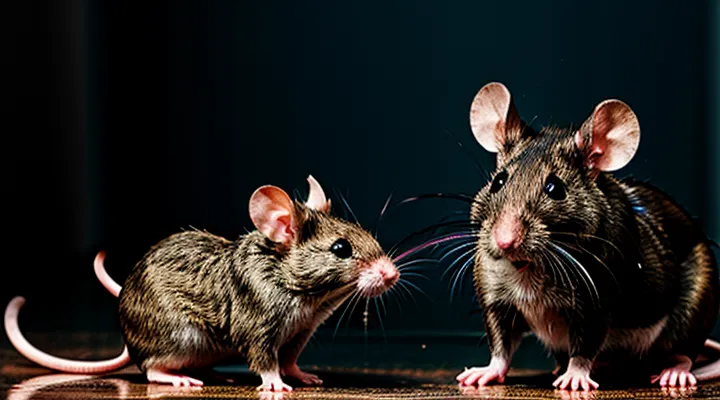
Mice and rats are frequently confused, yet several visual traits distinguish them. Misconception 1: size alone identifies the animal. While rats are generally larger, some mouse breeds approach the weight of small rats, making size an unreliable sole criterion. Misconception 2: tail length differentiates species. Both groups possess long tails; rats often have thicker, hair‑less tails, but certain mouse strains exhibit similar characteristics, so tail texture, not just length, matters. Misconception 3: ear size signals identity. Large, rounded ears are typical of mice, but laboratory rat strains can display proportionally large ears, rendering ear dimensions ambiguous without additional context. Misconception 4: facial shape is exclusive. Mice usually have a pointed snout; however, some rat varieties possess a relatively pointed muzzle, overlapping with mouse morphology. Misconception 5: fur color provides a clear marker. Both mice and rats exhibit a broad palette, including brown, gray, black, and white, eliminating color as a definitive identifier. Accurate identification requires evaluating a combination of traits—body proportion, tail texture, ear placement, and facial structure—rather than relying on any single characteristic.
Importance of Distinction
Distinguishing between mice and rats is essential for accurate scientific research, effective pest management, and reliable public health monitoring. Misidentification can lead to erroneous data, inappropriate control measures, and compromised safety protocols.
- Laboratory studies rely on species‑specific physiology; using a rat instead of a mouse invalidates experimental results and wastes resources.
- Disease surveillance depends on correct carrier identification; rodents transmit different pathogens, and treatment strategies vary accordingly.
- Regulatory compliance often requires precise reporting of rodent species; fines and legal actions may follow inaccurate documentation.
- Commercial pest control products are formulated for particular rodent traits; applying a mouse‑targeted bait to a rat population reduces efficacy and increases non‑target exposure.
In forensic investigations, species identification informs the interpretation of trace evidence, such as hair or DNA, influencing case outcomes. Veterinary care also benefits from correct classification, as dosage calculations and therapeutic approaches differ between the two groups.
Overall, precise differentiation supports scientific integrity, public health safety, legal accountability, and effective rodent control.
Size and Body Proportions
Overall Body Length
Tail Length Relative to Body
Tail length relative to body size serves as a reliable metric for distinguishing the two rodent groups. In mice, the tail typically matches or slightly exceeds the combined head‑body length, with a proportion ranging from 100 % to 110 % of the body measurement. In rats, the tail is consistently shorter, averaging 70 % to 80 % of the head‑body length.
Key comparative figures:
- Mouse: tail length ≈ 1.0–1.1 × body length; overall tail length 7–10 cm for an adult of comparable size.
- Rat: tail length ≈ 0.7–0.8 × body length; overall tail length 12–20 cm for an adult of similar mass.
The proportional difference remains consistent across common species, providing a practical field identifier without reliance on coloration or cranial features.
Head Shape and Size
Mice and rats can be distinguished by the overall configuration of the cranium. A mouse head is typically narrow, with a triangular outline when viewed from above; the snout is short and the ears are proportionally small. In contrast, a rat head presents a broader, more rectangular silhouette, a longer muzzle, and noticeably larger ears that extend beyond the skull margin.
Key dimensional contrasts:
- Skull length: mouse ≈ 1.5 cm, rat ≈ 2.5 cm.
- Skull width: mouse ≈ 0.8 cm, rat ≈ 1.3 cm.
- Muzzle length: mouse ≈ 0.4 cm, rat ≈ 0.9 cm.
- Ear size relative to head: mouse ears cover ≈ 30 % of head width, rat ears cover ≈ 45 %.
These measurements provide reliable criteria for separating the two species in field observations and laboratory settings.
Ear Size and Shape
Mice and rats can be separated by ear morphology, which provides reliable visual cues for identification.
Mice possess ears that are proportionally smaller than the head, typically 6–9 mm in length and 4–6 mm in width. The pinna is thin, sharply tapered, and often covered with sparse hair. Rat ears exceed 10 mm in length and 8 mm in width, presenting a broader, more rounded silhouette. The pinna is thicker, with dense fur extending to the edge.
Key shape characteristics:
- Mice: triangular outline, pointed apex, minimal curvature, limited cartilage reinforcement.
- Rats: oval to circular outline, rounded apex, pronounced curvature, robust cartilage framework.
These dimensions and contours remain consistent across common laboratory strains and wild populations, allowing rapid discrimination without auxiliary equipment.
Eye Prominence
Mice and rats can be distinguished by the relative prominence of their eyes. In mice, the eyes are positioned slightly higher on the skull and occupy a larger fraction of the head’s width, giving the appearance of a more pronounced ocular region. The ocular bulge in mice is visible even when the animal is viewed from a side angle, and the surrounding fur is thin, enhancing visual contrast.
Rats display a different configuration. Their eyes are set lower on the skull and are proportionally smaller relative to head size. The orbital region is recessed, and thicker fur often obscures the eye outline, reducing apparent prominence. Consequently, rat eyes are less conspicuous in lateral and dorsal views.
Key comparative points:
- Relative size: mouse eyes ≈ 30 % of head width; rat eyes ≈ 20 % of head width.
- Position on skull: mouse eyes higher; rat eyes lower.
- Fur coverage: mouse facial fur sparse, exposing eye margin; rat facial fur dense, masking eye contour.
- Visibility in profile: mouse eye bulge evident; rat eye recessed.
These anatomical differences provide reliable external criteria for separating the two species in field identification and laboratory settings.
Fur and Tail Characteristics
Fur Texture and Color
Fur texture and color provide reliable visual cues for separating mice from rats.
Mice possess a fine, soft pelage that lies close to the body, allowing flexibility and rapid heat dissipation. Rat fur is coarser, denser, and often forms a protective outer layer that resists abrasion.
Coloration varies between the two groups. Typical mouse coats include shades of gray, brown, black, and white, with occasional spotting or mottling on the dorsal surface. Rats usually display uniform brown‑gray or black fur, a lighter pink or white ventral area, and limited pattern variation.
Key distinctions:
- Texture: mouse – silky, thin; rat – thick, coarse.
- Dorsal color range: mouse – multiple hues, possible patterns; rat – predominantly solid, darker tones.
- Ventral coloration: mouse – may match dorsal shade or be lighter; rat – consistently pinkish or pale.
These characteristics enable quick identification in field observations, laboratory settings, and pest‑management contexts.
Tail Covering
Scaly Appearance
Mice and rats exhibit distinct scaly characteristics that aid identification. The tail of a mouse typically displays a fine, smooth surface with sparse, soft scales, while a rat’s tail is covered by coarse, overlapping scales that give a rough texture. On the ventral side of the hind feet, mice possess small, smooth scales that are barely perceptible, whereas rats have larger, more pronounced scales that can be felt when the foot is examined.
Key external scaly differences:
- Tail scale density: mouse – low; rat – high.
- Scale texture: mouse – silky; rat – gritty.
- Footpad scaling: mouse – minimal; rat – prominent.
These traits provide reliable visual and tactile cues for separating the two rodent species in field observations and laboratory settings.
Hairiness
Hair density and texture provide reliable criteria for separating mice from rats in field and laboratory observations.
Mice possess a uniform coat of fine, soft hairs that cover the entire body, including the dorsal surface, ventrum, and limbs. Guard hairs are short and sparse, giving the animal a sleek appearance. The tail is almost hairless, revealing a smooth, pinkish skin surface that contrasts with the fur-covered torso. Coloration ranges from light brown to gray, but the fur remains consistently thin across the species.
Rats display a coarser pelage characterized by longer guard hairs interspersed with a denser undercoat. The fur is thicker on the back and sides, while the ventral region may appear lighter and less dense. The tail typically exhibits sparse, short hairs, but the degree of hair coverage varies among species; some rats retain a faint, bristly layer on the tail. Overall body hair appears more robust, contributing to a bulkier silhouette.
Key distinguishing points:
- Mouse fur: fine, uniformly short, covers entire body, tail nearly hairless.
- Rat fur: coarse, longer guard hairs, denser undercoat, tail with sparse hairs.
- Texture: mouse coat smooth; rat coat rougher and more insulating.
These hair characteristics enable rapid visual identification without specialized equipment.
Other Distinguishing Features
Muzzle Shape
Muzzle shape provides a reliable indicator for separating mice from rats.
Mice possess a narrow, sharply pointed muzzle that tapers to a fine tip. The snout appears triangular when viewed from above, and the length of the nose is proportionally short relative to the skull. Whisker placement clusters close to the tip, giving the face a delicate profile.
Rats exhibit a broader, more blunt muzzle. The nose widens near the base, forming a rounded silhouette rather than a triangle. The snout extends farther forward, creating a sturdier appearance, and whiskers spread over a larger area of the face.
Key visual cues:
- Pointed vs. rounded tip
- Narrow, triangular outline vs. wide, rounded outline
- Short, delicate snout vs. long, robust snout
These characteristics allow quick visual discrimination when handling or observing small rodents.
Hind Foot Size
The hind foot provides a reliable metric for separating mice from rats in field and laboratory identification. In mice, the combined length of the foot and claw typically measures between 4 mm and 6 mm, with the pad area covering roughly 1.5 mm². The metatarsal bones are slender, and the toe spread is relatively narrow, producing a compact silhouette.
In rats, the hind foot is substantially larger. Measurements usually fall between 7 mm and 10 mm, and the pad area expands to about 3 mm². The metatarsals are robust, and the toes fan out more widely, giving the foot a broader appearance.
Key comparative points:
- Length: mouse ≈ 4‑6 mm; rat ≈ 7‑10 mm
- Pad surface: mouse ≈ 1.5 mm²; rat ≈ 3 mm²
- Bone robustness: mouse slender; rat robust
- Toe spread: mouse narrow; rat wide
These dimensions remain consistent across common laboratory strains and wild populations, making hind foot size an effective external criterion for species differentiation.
Droppings Analysis (External Sign)
Droppings provide a reliable external indicator for distinguishing mice from rats in pest assessments.
Key characteristics:
- Length: Mouse feces typically measure 4–6 mm; rat feces range from 12–20 mm.
- Diameter: Mouse pellets are about 1–2 mm wide; rat pellets are 2–3 mm.
- Shape: Mouse droppings are uniformly cylindrical with rounded ends; rat droppings often exhibit a slightly tapered tip.
- Color: Fresh mouse feces appear dark brown to black; rat feces are generally lighter brown to reddish‑brown.
- Texture: Mouse pellets are dry, crumbly, and break easily; rat pellets are firmer, retain shape longer, and may feel slightly moist when fresh.
These metrics enable field technicians to identify the species present without trapping, supporting targeted control measures.
Behavioral Clues (Observational Differences)
Movement Patterns
Mice and rats display distinct locomotor characteristics that facilitate identification in field and laboratory settings.
Mice typically employ a rapid, short‑stride gait. Their small body mass allows swift acceleration and frequent direction changes, enabling effective navigation through narrow openings and dense vegetation. Tail flicks often accompany movement, providing balance during rapid turns.
Rats exhibit a longer stride and greater ground coverage per step. Their muscular hind limbs generate higher propulsion, resulting in faster straight‑line speeds on open surfaces. The robust tail functions as a counterbalance during climbing, allowing sustained vertical ascent on rough substrates.
Key comparative points:
- Speed: Mice reach peak velocities of 5–7 m s⁻¹ over short distances; rats achieve 7–9 m s⁻¹ with sustained momentum.
- Agility: Mice excel in tight, irregular spaces; rats dominate in open arenas and can maintain stability on uneven terrain.
- Climbing: Rats possess stronger forelimb grip and tail support for vertical movement; mice rely on lightweight bodies and rapid foot placement.
- Burrowing: Mice construct shallow, extensive tunnel networks; rats dig deeper, more structured burrows with reinforced walls.
- Swimming: Both species can swim, but rats display longer endurance and stronger paddling strokes.
Understanding these locomotor distinctions supports accurate species classification and informs experimental design where movement behavior influences outcomes.
Nesting Habits
Mice and rats construct nests that reflect distinct external characteristics. Both species select materials such as shredded paper, fabric, plant fibers, and soft insulation, yet the quantity and organization differ markedly.
- Mice: create compact, dome‑shaped nests measuring 5–10 cm in diameter; use minimal material; often positioned in concealed corners of cabinets, behind appliances, or within wall voids.
- Rats: build larger, irregularly shaped nests up to 30 cm across; incorporate abundant material; locate nests in basements, attics, or beneath floorboards where space permits extensive construction.
Nesting sites also diverge. Mice favor elevated, narrow spaces that limit predator access, while rats prefer low‑lying, spacious areas that accommodate multiple individuals. Seasonal adjustments occur: mice add extra insulation during winter, whereas rats expand existing structures to house growing colonies. These habits provide reliable criteria for distinguishing the two rodents in field observations.
Diet Indicators
Mice and rats exhibit distinct dietary signatures that can be observed without dissection. These external cues aid rapid identification in field and laboratory settings.
- Incisor wear pattern – Mice show finer, more evenly worn incisors due to a diet rich in soft seeds and grains; rats display broader, irregular wear from larger food items and occasional gnawing of tougher material.
- Cheek pouch fullness – Rats possess expandable cheek pouches; a visibly distended pouch after feeding indicates a rat, whereas mice lack this feature and retain a compact facial profile.
- Fecal pellet size and shape – Mouse pellets are small (1–2 mm), cylindrical, and uniform; rat pellets are larger (3–5 mm), oval, and may show varied textures reflecting a more omnivorous intake.
- Body condition – Rats often develop a more pronounced abdominal girth from higher caloric consumption, while mice maintain a slender torso consistent with lower energy demands.
- Nose and whisker coloration – Dietary pigments from insect or fruit consumption can tint rat whiskers and nasal fur darker; mouse whiskers remain lighter, reflecting a grain‑dominant diet.
Observing these indicators provides reliable, non‑invasive differentiation between the two rodent groups.