
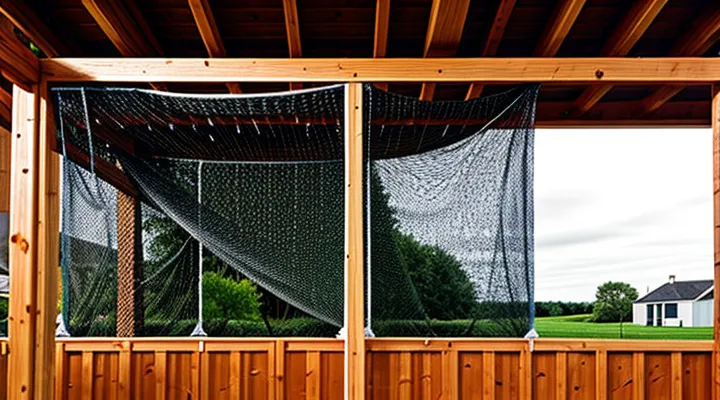
Understanding the Problem: Why Mouse Netting for a Frame House?
The Threat of Rodents in Frame Houses
Entry Points and Vulnerabilities
Rodent intrusion in timber‑framed dwellings originates from specific structural gaps and service penetrations. Identifying these vulnerabilities is essential before applying any barrier system.
Typical entry points include:
- Gaps around window and door frames exceeding ¼ inch.
- Openings at roof eaves, soffits and fascia where siding terminates.
- Unsealed junctions between wall sheathing and foundation.
- Holes left by utility conduits, plumbing stacks and electrical wiring.
- Openings around ventilation ducts, chimney flues and exhaust fans.
- Gaps around garage doors, sliding doors and pet entrances.
- Cracks in brick or stone veneer that abut the wooden frame.
Each aperture permits a mouse to squeeze through, exploiting its flexible skeleton. Failure to seal these sites renders any netting ineffective, as rodents will bypass the barrier entirely. Moreover, damaged or poorly installed netting creates secondary weaknesses, such as tears at fastener points or loose mesh at corners.
Mitigation strategy:
- Conduct a systematic visual inspection, measuring all openings against the ¼‑inch threshold.
- Apply durable, fine‑mesh netting (≤ ¼ inch opening) to cover larger gaps, securing it with corrosion‑resistant staples or screws.
- Use expanding foam, caulk or metal flashing to seal irregular cracks before installing the mesh.
- Reinforce netting at high‑traffic zones—ventilation shafts, utility penetrations—by overlapping material and fastening it to rigid frames.
- Perform a final walk‑through to verify that no residual openings remain, paying special attention to moving components such as doors and windows.
Addressing these entry points eliminates the primary pathways for infestation, ensuring that the installed barrier provides continuous protection for the wooden frame structure.
Health Risks and Damage Potential
Rodent exclusion screens installed on timber‑framed dwellings prevent mice from entering living spaces, yet the materials and methods used can create health hazards and structural damage if chosen or applied incorrectly.
Health risks associated with inadequate netting include:
- Accumulation of rodent droppings and urine, fostering pathogens such as hantavirus, leptospirosis, and salmonella; exposure occurs through inhalation of dust or direct contact with contaminated surfaces.
- Allergic reactions to dust, fibers, or chemical treatments applied to the mesh; sensitised individuals may experience respiratory irritation or skin dermatitis.
- Contamination of food storage areas when gaps allow entry, leading to spoilage and bacterial growth.
Damage potential arising from poor selection or faulty installation encompasses:
- Chewed or torn mesh creating entry points, allowing rodents to gnaw on insulation, wiring, and structural members; this can degrade thermal performance and increase fire risk.
- Sharp edges or rigid frames that puncture drywall, plaster, or roofing, compromising envelope integrity and permitting moisture ingress.
- Chemical leaching from treated fabrics into indoor air, especially when UV‑exposed or in contact with humidity, potentially corroding metal fasteners and accelerating decay of wooden components.
Mitigation strategies require:
- Use of corrosion‑resistant, fine‑mesh (≤1 mm) nylon or polypropylene with low‑VOC coatings verified by third‑party testing.
- Secure attachment with stainless‑steel staples or screws, ensuring continuous overlap of at least 10 cm at seams.
- Periodic visual inspection of joints, edges, and interior surfaces for signs of wear, rodent activity, or material degradation; replace compromised sections promptly.
Adhering to these guidelines limits pathogen exposure, prevents allergen buildup, and preserves the structural soundness of the building envelope.
Choosing the Right Mouse Netting
Types of Mouse Netting Materials
Galvanized Steel Mesh
Galvanized steel mesh provides a durable, corrosion‑resistant barrier that can be securely attached to timber frames to prevent rodent intrusion. The zinc coating protects the steel against moisture and soil chemicals, extending service life to 20 years or more under typical residential conditions.
When choosing a mesh for a wooden house, consider the following factors:
- Wire gauge: 14–16 gauge balances strength and flexibility.
- Opening size: ¼‑inch (6 mm) openings block mice while allowing airflow.
- Coating thickness: Minimum 5 oz per square foot of zinc ensures long‑term protection.
- Length of roll: Select lengths that minimize seams on large wall sections.
- Compatibility with fasteners: Verify that nails or screws are compatible with the coating to avoid premature wear.
Before installation, measure each wall cavity and cut the mesh with tin snips, leaving a 2‑inch excess on all sides for overlap. Wear gloves and safety glasses to prevent cuts from sharp edges.
- Position the mesh against the frame, ensuring the coated side faces outward.
- Secure the bottom edge with corrosion‑resistant staples or self‑drilling screws spaced no more than 12 inches apart.
- Overlap adjacent sheets by at least 4 inches; fasten the overlap with staples or screws on both sheets.
- Seal seams with a high‑quality exterior‑grade silicone caulk to eliminate gaps.
- Attach the top edge to the roof sheathing or top plate using the same fastening pattern, checking for tautness to avoid sagging.
Regular inspection for rust spots, loose fasteners, or torn sections prolongs effectiveness. Promptly replace damaged sections and reapply sealant to maintain a continuous barrier against rodents.
Stainless Steel Mesh
Stainless steel mesh provides a durable, corrosion‑resistant barrier against rodents in timber‑frame dwellings. Its high tensile strength prevents tearing, while the fine aperture size (typically 1 mm to 6 mm) excludes mice without impeding airflow.
Key factors for selecting the appropriate mesh:
- Gauge: 18–20 gauge balances flexibility and strength.
- Aperture: 1–3 mm for mouse exclusion; larger openings allow ventilation but may admit smaller pests.
- Coating: 304 or 316 stainless steel resists rust in humid or coastal environments.
- Width: 1–2 m rolls simplify coverage of wall studs and roof eaves.
Installation proceeds as follows:
- Measure openings around windows, vents, and gaps in the frame.
- Cut mesh with tin snips, allowing a 2‑cm overlap on each side.
- Secure mesh to studs using stainless steel staples or self‑drilling screws, maintaining tension to avoid sagging.
- Seal seams with metal tape or silicone caulk to eliminate entry points.
- Inspect joints and fasteners periodically; replace damaged sections promptly.
Properly chosen and installed stainless steel mesh creates a long‑lasting, maintenance‑free shield that protects the structural envelope from mouse intrusion while preserving the building’s breathability.
Hardware Cloth
Hardware cloth is a welded wire mesh used to create a barrier against rodents in timber-framed dwellings. Its strength, corrosion resistance, and tight openings make it an effective choice for mouse exclusion.
Selection criteria include:
- Material: galvanised steel for outdoor exposure, stainless steel for high‑moisture areas.
- Mesh size: ¼‑inch openings prevent entry while allowing airflow.
- Gauge: 16‑ to 18‑gauge wire balances flexibility with durability.
- Coating: powder‑coated or epoxy finishes extend service life.
Installation procedure:
- Measure openings around vents, gaps, and crawl‑space access points. Add a margin of 1–2 inches for trimming.
- Cut hardware cloth with tin snips or a powered shear, keeping edges smooth to avoid injury.
- Position the mesh over the opening and secure it with corrosion‑resistant screws or staples spaced no more than 6 inches apart.
- Overlap adjacent sheets by at least 2 inches; fasten the overlap with staples or rivets to maintain a continuous barrier.
- Seal seams and screw heads with a high‑quality silicone or polyurethane caulk to eliminate micro‑gaps.
- Inspect the installed netting for sharp protrusions; file or bend any hazardous edges.
Maintenance recommendations:
- Check fasteners quarterly; tighten loose screws and replace corroded staples.
- Clean debris that may accumulate on the mesh to preserve airflow.
- Reapply protective coating every 5–7 years in harsh climates.
By adhering to these specifications and steps, hardware cloth provides a reliable, long‑lasting solution for rodent control in frame houses.
Mesh Size and Gauge Considerations
Optimal Mesh Opening for Rodent Exclusion
The size of the openings in a rodent barrier determines whether mice can penetrate the envelope of a timber frame building. Mesh openings larger than 6 mm allow most mouse species to squeeze through, while openings of 4 mm or less effectively block entry. A 4 mm aperture also prevents juvenile rodents, which can be as small as 2 mm in body width, from exploiting gaps.
Material choice influences the durability of the selected opening. Galvanized steel and stainless‑steel mesh maintain structural integrity under weather exposure and resist corrosion that could enlarge apertures over time. Fiberglass mesh offers flexibility for irregular surfaces but must be supported with a rigid frame to prevent deformation that would increase opening size.
Installation considerations:
- Align mesh edges with structural members; secure with stainless‑steel staples or self‑drilling screws spaced no more than 50 mm apart.
- Overlap adjacent sheets by at least 100 mm; seal the overlap with a high‑quality, rodent‑proof caulk.
- Apply a protective coating or weather‑resistant tape to corners and seams to inhibit moisture ingress, which can weaken the mesh.
- Inspect the barrier after completion; verify that no gaps exceed 4 mm using a calibrated gauge.
Regular maintenance includes visual checks for corrosion, damage from vegetation, or displacement caused by wind loads. Prompt repair of any breach restores the exclusion performance to the designed standard.
Material Thickness and Durability
Choosing an appropriate thickness for mouse netting in a timber‑frame residence directly influences its ability to resist tearing and to maintain structural integrity under environmental stress.
Typical thickness specifications include:
- 0.15 mm (approximately 30 microns) for lightweight polyethylene mesh; suitable for interior installations where exposure to weather is minimal.
- 0.20–0.25 mm (40–50 microns) for polypropylene or high‑density polyethylene mesh; recommended for exterior applications, providing a balance between flexibility and resistance to puncture.
- 0.30 mm (60 microns) or greater for reinforced polyester or woven nylon mesh; reserved for areas with high rodent activity or severe wind loads.
Durability depends on material composition and protective additives. UV‑stabilized polymers retain tensile strength longer when exposed to sunlight, while anti‑microbial treatments inhibit fungal growth that can weaken fibers. Tensile strength ratings of 150 N m‑1 or higher ensure the netting withstands forces generated by wind pressure and rodent gnawing. Meshes with a minimum tear‑propagation resistance of 30 mm prevent small cuts from expanding into larger breaches.
Regular inspection of the installed netting identifies wear, edge fraying, or damage from rodents. Replacement intervals of 3–5 years apply to standard polyethylene products, whereas UV‑stabilized or reinforced fabrics extend service life to 7–10 years. Cleaning with mild detergent removes debris that can accelerate degradation without compromising material strength.
Assessing Your Frame House's Needs
Climate and Environmental Factors
Selecting appropriate rodent screening for a timber‑framed building requires evaluation of local climate conditions. Temperature fluctuations affect material expansion and contraction; extreme heat can weaken polymer coatings, while severe cold may embrittle metal components. Moisture levels influence corrosion rates and promote fungal growth on organic netting, necessitating corrosion‑resistant alloys or treated synthetic fibers. High precipitation demands drainage‑compatible installation to prevent water pooling behind the mesh. Wind pressure, especially in exposed sites, imposes additional tensile loads on the screening, requiring reinforced attachment points.
Key climate factors to consider:
- Seasonal temperature range (minimum and maximum)
- Relative humidity and dew point
- Annual precipitation and snowfall
- Wind speed and prevailing direction
- Ultraviolet radiation intensity
Environmental context shapes durability and effectiveness of the barrier. Dense vegetation adjacent to the structure provides pathways for rodents and increases the likelihood of mesh contact with branches, causing abrasion. Proximity to water bodies raises the risk of moisture ingress and attracts wildlife that may damage or bypass the screening. Soil type influences foundation moisture, potentially leading to capillary rise that reaches the lower edge of the netting. Presence of non‑target species, such as birds or beneficial insects, calls for mesh sizes that restrict entry while allowing passage of desired fauna.
Recommendations based on these factors:
- Use galvanized or stainless‑steel mesh in high‑humidity or coastal zones to resist rust.
- Opt for UV‑stabilized polyethylene or polypropylene nets in regions with intense sunlight.
- Install a secondary water‑shedding flashing beneath the screening where roof runoff is significant.
- Secure mesh with stainless‑steel fasteners and corrosion‑inhibiting sealants at all attachment points.
- Position the lower edge of the barrier at least 15 cm above ground level and incorporate a removable skirt to accommodate ground movement without creating gaps.
Specific Rodent Pressures
Rodents impose several direct stresses on timber‑framed dwellings that compromise structural integrity and habitability.
- Chewing of wooden studs, joists, and rafters creates openings that weaken load‑bearing elements.
- Gnawing of insulation and vapor barriers reduces thermal performance and encourages moisture accumulation, leading to rot and mold.
- Burrowing in foundation gaps and sill plates shifts load distribution, causing uneven settling and potential cracks.
- Accumulation of droppings and urine contaminates interior air, increasing health risks and accelerating corrosion of metal connectors.
Effective barrier selection addresses these pressures by providing a continuous, mesh‑sized filter that resists gnawing, seals entry points, and maintains airflow while preventing material loss. Installation must ensure overlap at seams, secure attachment to framing members, and integration with existing weather‑resistant barriers to eliminate gaps. Properly applied, the netting mitigates structural degradation, preserves insulation efficiency, and safeguards indoor air quality.
Installation Guide for Mouse Netting
Preparing for Installation
Necessary Tools and Equipment
The installation of rodent barrier mesh on a timber frame requires a specific set of instruments to achieve a secure, long‑lasting seal.
- Measuring tape or laser distance meter for accurate perimeter assessment.
- Chalk line or marker to indicate cutting lines on the mesh.
- Utility knife with replaceable blades for clean cuts.
- Heavy‑duty scissors for trimming finer sections.
- Straightedge or level to verify alignment of the material.
Power tools and supporting equipment streamline the process.
- Cordless drill with assorted drill bits for pre‑drilling framing members.
- Impact driver for driving screws quickly.
- Screw gun or screwdriver set, preferably with torque control, to fasten the mesh without damaging it.
- Staple gun with corrosion‑resistant staples for attaching mesh to wooden surfaces.
- Circular saw or oscillating multi‑tool, equipped with a fine‑tooth blade, for cutting larger sections of netting.
Protective gear safeguards the operator and the work area.
- Safety glasses to prevent debris injury.
- Cut‑resistant gloves for handling sharp edges.
- Ear protection when using power equipment.
- Dust mask or respirator if cutting in dusty environments.
Having these tools on hand ensures precise fitting, reliable attachment, and efficient completion of the barrier installation.
Safety Precautions
When installing a rodent barrier on a timber‑frame dwelling, observe strict safety measures to protect personnel and preserve the structure.
- Wear durable gloves, safety glasses, and a dust‑mask to prevent cuts, eye injury, and inhalation of fibers.
- Use a stable ladder or scaffolding with a secured footing; never stand on the netting while it is tensioned.
- Secure all tools—cutters, staple guns, and drills—before beginning work; keep hands away from moving parts.
- Inspect the netting material for sharp edges or frayed sections; trim or cover hazards before handling.
- Verify that the work area is free of electrical wires or live circuits; de‑energize any nearby power sources when using metal fasteners.
- Ensure adequate ventilation if cutting synthetic mesh, as fumes can accumulate in enclosed spaces.
- Confirm that the frame’s load‑bearing members can support the additional tension without deformation; reinforce weak points prior to attachment.
- Keep a first‑aid kit accessible and know the location of emergency exits in case of accidents.
Follow these precautions consistently to reduce risk of injury and maintain the integrity of the building during barrier installation.
Key Areas for Netting Application
Foundation and Sill Plates
The foundation and sill plates create the first physical barrier between the ground and the framed structure, making them critical points for integrating rodent protection. Properly chosen components prevent gaps where mice can enter and support the attachment of mesh or netting systems.
Key factors for selecting foundation and sill plates:
- Material resistant to decay and insect damage (e.g., pressure‑treated lumber, steel, or composite)
- Minimum thickness that matches local building codes and load requirements
- Surface that accepts sealants and fasteners without cracking
- Compatibility with the chosen rodent barrier (mesh size, attachment method)
Preparation begins with clearing debris, verifying levelness, and applying a waterproof sealant to all joints. Where concrete footings meet the sill, install a moisture barrier and backfill with gravel to discourage burrowing. All seams should be filled with rodent‑proof caulk before netting placement.
Attach the mouse netting directly to the sill plates using corrosion‑resistant staples or screws spaced no more than 6 in (150 mm) apart. Overlap sections by at least 12 in (300 mm) and seal the overlap with a flexible, non‑shrink sealant. Secure the lower edge of the mesh to the foundation using stainless‑steel anchors, ensuring a continuous envelope from floor to wall. Verify that no openings larger than ¼ in (6 mm) remain at junctions, penetrations, or around utility entries.
After installation, inspect the perimeter for loose fasteners, damaged sections, or signs of gnawing. Conduct a quarterly review, tightening any slack and replacing compromised mesh. Maintaining the integrity of the foundation and sill plates preserves the effectiveness of the rodent barrier throughout the building’s service life.
Vents and Openings
Effective mouse exclusion in a timber‑framed dwelling depends on proper treatment of all vents and openings. These points provide the only routes for rodents to enter, so each must be sealed with a mesh that balances airflow with pest protection.
Mesh selection for vents should meet three criteria: durability, appropriate aperture size, and compatibility with the existing frame. Stainless‑steel or galvanized steel screens with openings no larger than 6 mm prevent mice while allowing adequate ventilation. For larger roof or wall vents, consider reinforced panels that can be bolted or screwed into the framing to maintain structural integrity.
Installation steps:
- Identify every air intake, exhaust, utility penetration, and gap around windows, doors, and roof eaves.
- Clean the surrounding area to remove debris that could compromise mesh adhesion.
- Cut the selected screen to fit each opening, leaving a 10‑mm overlap on all sides.
- Secure the mesh with corrosion‑resistant fasteners, sealing joints with silicone or expanding foam to eliminate residual gaps.
- Verify that airflow remains within design specifications by measuring pressure differentials before and after installation.
Special cases include chimney flues and HVAC ducts. For these, install a removable metal collar with a built‑in mesh sleeve, allowing routine maintenance without compromising the barrier. Where passive vents are required for moisture control, use vent covers that incorporate a fine mesh frame, ensuring continuous protection while preserving draft.
Regular inspection is essential. Check for mesh tears, corrosion, or displacement after severe weather, and replace compromised sections promptly to maintain an uninterrupted mouse‑proof envelope.
Eaves and Soffits
Eaves and soffits are primary entry points for rodents in timber‑framed dwellings. Effective barrier installation requires material that resists chewing, fits tight, and withstands weather exposure.
Select a mesh with a minimum opening of 1 mm, corrosion‑resistant coating, and UV‑stabilized fibers. The mesh should be pre‑cut to the length of the eave overhang and the soffit cavity, allowing a slight overlap of 5–10 cm at seams. Use stainless‑steel staples or corrosion‑protected nails to secure the material, ensuring no gaps larger than 5 mm remain.
Installation steps:
- Clean the eave and soffit surfaces, removing debris and old sealing.
- Lay the mesh flat, align it with the edge of the eave, and fasten at 30‑cm intervals.
- Overlap adjacent sheets, then seal the joint with a rodent‑proof tape.
- Insert the mesh into the soffit vent openings, securing it with screws that include washers to prevent pull‑through.
- Inspect the completed barrier for any exposed edges or punctures, and repair immediately.
Regular inspection after seasonal changes confirms the integrity of the barrier and prevents re‑infestation.
Wall Cavities and Corners
When installing rodent barrier mesh in a timber‑frame dwelling, wall cavities and corner junctions require special attention. The voids between studs create pathways that can bypass continuous netting if gaps are left unsealed. Insert mesh panels that extend fully across each cavity, securing the edges to the interior side of the studs with corrosion‑resistant staples or screws. Overlap adjacent panels by at least 50 mm and fasten the overlap to maintain an uninterrupted barrier.
Corners present a convergence of multiple cavity planes, increasing the risk of mesh distortion. Apply the following steps to ensure reliable coverage:
- Cut mesh to fit the exact dimensions of the corner, allowing a 10‑mm excess on each side.
- Fold the excess material around the inner corner, creating a double‑layer seal that bridges both adjoining walls.
- Anchor the folded edge to the framing members with a staggered pattern of fasteners, preventing slack that could be exploited by rodents.
- Seal any remaining gaps with expanding foam or silicone caulk, focusing on nail holes, wiring penetrations, and service openings.
By treating wall cavities as continuous channels and reinforcing corner seams with overlapping, double‑layered mesh, the barrier remains intact under pressure, eliminating the primary routes through which mice infiltrate a framed structure.
Step-by-Step Installation Process
Measuring and Cutting the Netting
Accurate measurement of openings determines the effectiveness of rodent barrier installation in a timber frame building. Begin by inspecting each gap—doorways, windows, vents, and utility penetrations—and recording width, height, and diagonal dimensions. Use a steel tape for stability; note irregularities such as tapered frames or protruding brackets. Add a 5‑10 mm allowance to each dimension to accommodate stretching and fastener placement.
Cutting the mesh follows a sequential process:
- Lay the netting on a flat, clean surface; align the marked measurement with the edge of the material.
- Secure the netting with clamps or heavy objects to prevent movement.
- Score the mesh with a sharp utility knife, applying steady pressure to achieve a clean edge.
- Complete the cut by pulling the knife through the material, maintaining a perpendicular angle to avoid fraying.
- Trim excess using scissors for fine adjustments around curved or angled sections.
After cutting, inspect edges for loose fibers; remove any protruding strands with a pair of needle‑nosed pliers. Fold the excess allowance inward and fasten with corrosion‑resistant staples or masonry screws, ensuring the barrier remains taut. Verify that the fitted piece covers the opening completely, leaving no gaps larger than 6 mm, the maximum rodent passage size. Repeat the procedure for each aperture, maintaining consistent tolerances to achieve a continuous, reliable protective envelope.
Securing the Netting Properly
Securing the netting correctly prevents gaps that rodents can exploit and ensures long‑term durability of the barrier.
Begin by inspecting the frame for protruding nails, loose sheathing, or damaged cladding. Remove any sharp edges that could tear the material. Clean the surface to allow a firm grip of fasteners.
Attach the netting using corrosion‑resistant staples, screws with washers, or heavy‑duty nails. Space fasteners no more than 150 mm apart along the perimeter and 300 mm across the field. Overlap adjacent sheets by at least 100 mm and fasten the overlap with the same spacing to eliminate seams.
Tension the netting while fastening. Pull the material taut, then secure the first fastener. Continue along the line, maintaining consistent tension to avoid sagging. For large openings, employ a temporary winch or tensioning bar to achieve uniform stretch before final fixation.
Seal all corners and joints with a flexible, rodent‑proof sealant. Apply a continuous bead along the edges where the netting meets doors, windows, and utility penetrations. Verify that the sealant adheres to both the netting and the underlying structure.
Conduct a final inspection: walk the perimeter, press the netting to confirm it is immobile, and check that no gaps exceed 2 mm. Document the installation and schedule a visual check after the first winter season, as temperature fluctuations can affect tension.
Regular maintenance includes:
- Removing debris that may accumulate on the netting surface.
- Re‑tightening fasteners that have loosened due to wood movement.
- Replacing sections showing wear or tears promptly.
Following these steps guarantees a secure, continuous barrier that effectively excludes mice from a timber‑framed residence.
Overlapping and Sealing Joints
Overlapping and sealing joints are critical for creating a continuous barrier that prevents rodents from penetrating the netting system. The net must be installed with each panel overlapping the adjacent one by at least 10 cm, ensuring that no gaps remain at the seam. Overlap width should be measured and marked before fastening to maintain uniformity across the structure.
Sealing the overlapped area involves the following steps:
- Apply a flexible, weather‑resistant sealant along the entire length of the overlap.
- Press a self‑adhesive tape, compatible with the net material, over the sealant to reinforce the joint.
- Inspect the joint for any pinholes or tears; repair immediately with additional sealant and tape.
- Allow the sealant to cure according to the manufacturer’s specifications before exposing the joint to external conditions.
Properly sealed joints eliminate entry points for mice, maintain the structural integrity of the net, and extend the service life of the installation. Regular inspection of seams, especially after severe weather, ensures that the barrier remains intact and effective.
Post-Installation Inspection and Maintenance
Checking for Gaps and Weak Points
Before sealing a rodent barrier on a timber‑framed house, verify that the enclosure is continuous and free of openings. A compromised netting system allows mice to bypass protection and re‑enter the structure.
Inspect the perimeter methodically. Begin at the foundation and work upward, scanning each joint where the netting meets walls, windows, doors, and roof eaves. Pay special attention to:
- Gaps around pipe and cable penetrations
- Openings at soffits and fascia boards
- Spaces behind external cladding or siding
- Overlaps at corners and seams
Use a bright flashlight to illuminate hidden seams and a small mirror to view recesses behind fixtures. For hard‑to‑see leaks, conduct a smoke test: release a thin stream of non‑flammable smoke near suspected areas and observe its movement. Smoke escaping indicates a breach.
When a gap is identified, measure its width. Gaps larger than 1 cm (approximately ⅜ inch) require reinforcement. Apply appropriate sealants:
- Expandable foam for large irregular openings
- Silicone or acrylic caulk for narrow joints
- Steel wool or copper mesh for gaps surrounding utilities, then cover with netting
After sealing, re‑examine the treated area to confirm that no residual openings remain. Repeat the verification process after any structural modifications or seasonal weather changes to maintain a fully intact barrier.
Regular Monitoring and Repairs
Regular monitoring of rodent barriers on timber‑frame homes prevents small gaps, tears, or sagging that allow mice to re‑enter. Inspections should occur at least twice a year—once in spring after construction finishes and once in autumn before heating season begins. Additional checks after severe weather, such as heavy rain or high winds, are advisable because wind pressure can pull netting away from its anchorage.
During each inspection, verify the following:
- Fasteners remain tight; any loosened screws or nails must be re‑driven or replaced.
- Netting edges are securely sealed to the frame; gaps wider than 5 mm indicate a breach.
- Mesh integrity is intact; frayed or punctured sections require immediate patching.
- Support struts or battens are free of rot or warping that could compromise tension.
When defects are identified, repair actions must be performed promptly to maintain the barrier’s effectiveness. Replace damaged mesh sections with the same gauge and weave pattern to preserve durability. Use corrosion‑resistant staples or stainless‑steel screws to re‑attach netting, ensuring a consistent tension that matches the original installation. If a fastener fails repeatedly, consider installing a reinforcement plate to distribute load.
Document each inspection and repair in a log, noting date, observed issues, corrective measures, and material specifications. This record supports scheduled maintenance, enables trend analysis, and provides evidence of compliance with building standards.