
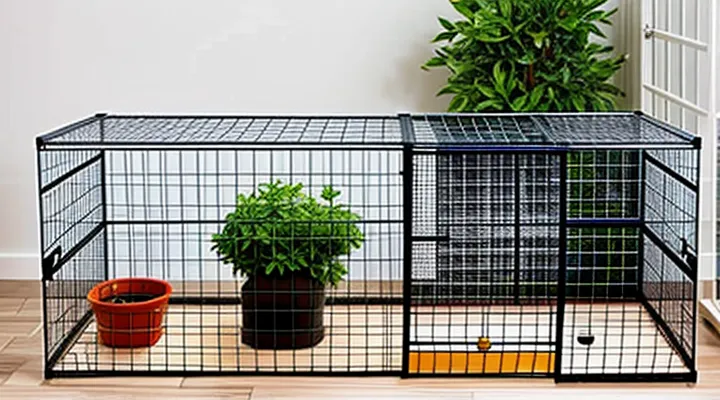
Why Cage Dimensions Matter: The 60×40×60 cm Standard
Understanding Rat Welfare and Space Requirements
Behavioral Needs of Rats
Rats require environments that satisfy instinctual activities such as foraging, climbing, nesting, and social interaction. A cage measuring 60 × 40 × 60 cm can accommodate these behaviors when arranged thoughtfully.
- Climbing structures: vertical space enables the placement of ladders, ropes, or branches; height up to 60 cm supports multiple levels.
- Nesting area: a secluded corner filled with soft material provides a safe retreat for rest and reproduction.
- Foraging enrichment: scattered chew toys, tunnels, and puzzle feeders stimulate natural search behavior.
- Social zones: open floor space allows groups to move freely, reducing stress and promoting hierarchy formation.
- Exercise floor: a solid, non‑slippery surface encourages running and burrowing without injury.
The specified dimensions exceed the minimum recommended floor area for a pair of adult rats, offering sufficient room for the listed elements. Proper placement of enrichment items utilizes the vertical dimension, preventing overcrowding while preserving ample ground space. Maintaining a clean, well‑ventilated environment within these limits supports health and reduces the likelihood of behavioral problems.
Health Implications of Inadequate Space
Adequate living area is essential for the physical and psychological well‑being of laboratory and pet rats. A cage with internal dimensions of 60 × 40 × 60 cm provides a baseline volume that meets minimum space recommendations for a small group of adult rats. Reducing this volume below the recommended threshold triggers a cascade of health complications.
- Chronic stress resulting from confinement elevates cortisol levels, suppresses immune function, and predisposes rats to infections.
- Limited floor space restricts natural foraging and locomotor behavior, leading to weight gain, obesity, and associated metabolic disorders.
- Constrained vertical space impairs climbing and nesting activities, causing musculoskeletal strain, joint degeneration, and reduced bone density.
- Overcrowding in a restricted cage increases aggression, causing bite wounds, skin infections, and heightened mortality risk.
- Poor ventilation in a cramped enclosure promotes ammonia accumulation, damaging respiratory epithelium and precipitating chronic bronchitis.
Ensuring each rat has unrestricted access to the full interior volume mitigates these risks. Providing enrichment items that encourage climbing, burrowing, and exploration maximizes use of the available space and supports normal development. Regular health monitoring, combined with cage dimensions that exceed the minimum, sustains optimal physiological function and reduces disease incidence.
Key Considerations for a 60×40×60 cm Rat Cage
Material and Construction
Wire Spacing: Safety and Escape Prevention
Wire spacing directly influences both the physical safety of pet rodents and the likelihood of cage breaches. Gaps that are too wide allow paws or bodies to become trapped, leading to injuries such as sprains or cuts. Conversely, gaps that are excessively narrow can impede ventilation, increasing humidity and the risk of respiratory problems. Selecting an appropriate mesh size balances these concerns while preventing escape through small openings.
Key considerations for mesh selection:
- Maximum opening: 0.5 cm (approximately 1/4 inch) prevents head or tail passage while maintaining adequate airflow.
- Minimum opening: 0.3 cm (about 1/8 inch) ensures sufficient ventilation without compromising structural integrity.
- Material thickness: 1 mm wire provides durability without excessive weight, reducing cage deformation under the animal’s activity.
- Welded joints: Continuous welding eliminates weak points where a rodent could pry the bars apart.
When evaluating a cage of 60 × 40 × 60 cm, verify that the entire interior surface adheres to the recommended spacing parameters. Inspect for any irregularities, such as uneven gaps at corners or damaged sections, before introducing the animal. Consistent monitoring of the mesh condition prolongs safety and maintains a secure environment.
Bar Orientation: Horizontal vs. Vertical
When selecting a cage of 60 × 40 × 60 cm for rats, the direction of the wire bars directly influences safety, ventilation, and ease of cleaning.
Horizontal bars create a continuous surface that prevents rats from slipping through gaps. The flat orientation supports the weight of nesting material and food dishes, reducing the risk of collapse. However, horizontal layouts can limit airflow at the cage’s lower level, potentially increasing humidity in confined corners.
Vertical bars provide unobstructed vertical space, facilitating climbing behavior and improving air circulation throughout the enclosure. The vertical arrangement also simplifies the attachment of accessories such as hammocks or ladders. On the downside, vertical spacing must be narrow enough to prevent escape, and the open design may allow bedding to fall through if the gap exceeds a few millimeters.
Key considerations for a cage of the specified dimensions:
- Bar orientation must match the intended use: horizontal for stability, vertical for enrichment and ventilation.
- Spacing tolerance should not exceed 1 cm to ensure containment.
- Compatibility with accessories: horizontal bars support shelves, while vertical bars accommodate climbing structures.
- Cleaning efficiency improves when bars allow easy access to all cage surfaces.
Choosing between horizontal and vertical bar configurations depends on prioritizing structural stability versus enhanced airflow and climbing opportunities within the limited space of a 60 × 40 × 60 cm enclosure.
Durability and Rust Resistance
Durability and rust resistance are critical factors when selecting a cage that measures 60 × 40 × 60 cm. The cage must withstand constant chewing, climbing, and cleaning without structural degradation.
Metal cages provide superior strength, but only when the metal is treated to prevent corrosion. Stainless‑steel frames resist oxidation even after repeated exposure to water and cleaning agents. Powder‑coated steel offers a protective barrier; the coating should be at least 30 µm thick to avoid chips that expose raw metal. Plastic cages avoid rust entirely, yet they require impact‑resistant polymers such as polycarbonate or high‑density polyethylene to maintain shape under the animal’s activity.
Key criteria for evaluating durability and rust resistance:
- Material composition: stainless steel, powder‑coated steel, or high‑impact plastic.
- Surface treatment: powder coating thickness, anodized finish, or UV‑stabilized polymer.
- Structural reinforcement: welded joints, reinforced corners, and thick bar stock (minimum 2 mm).
- Maintenance requirements: ease of cleaning without abrasive tools that could damage protective layers.
Selecting a cage that meets these specifications ensures a long‑lasting enclosure, reduces the risk of rust‑related health hazards, and minimizes the need for premature replacement.
Cage Features and Accessories
Door Placement and Size
When evaluating a rat enclosure measuring 60 × 40 × 60 cm, door placement and size directly affect ventilation, cleaning efficiency, and animal welfare. The opening should be positioned on the longer side of the cage to allow unobstructed access to the interior while preserving structural integrity. Locating the door at a height of 20–30 cm from the base provides easy reach for handlers and prevents the animals from climbing onto the latch mechanism.
Key dimensions for the door include:
- Width: 12–15 cm, sufficient for a hand‑sized gloved insertion and for transporting bedding or food containers without excessive strain.
- Height: 15–18 cm, allowing comfortable entry for adult rats while limiting escape risk.
- Clearance: at least 2 cm of free space around the frame to accommodate hinges and locks without compromising the cage walls.
A sliding or hinged door fitted with a lockable latch ensures a secure seal when closed and a quick release for routine maintenance. The latch should be positioned opposite the hinge, at a height of 25 cm, to enable operation without bending excessively.
Ventilation slots or mesh inserts adjacent to the door maintain airflow while preventing drafts. Incorporating a small, reinforced lip around the door frame prevents damage from gnawing and extends the lifespan of the enclosure.
Overall, optimal door placement on the side wall, combined with a width of 12–15 cm and a height of 15–18 cm, balances accessibility, safety, and durability for a 60 × 40 × 60 cm rat cage.
Levels and Platforms: Maximizing Vertical Space
When a cage measures roughly 60 × 40 × 60 cm, floor area is limited but height offers valuable expansion. Adding levels and platforms converts unused vertical space into functional zones, allowing separate areas for nesting, foraging, and exercise without increasing the cage’s footprint.
Multiple tiers create distinct habitats that cater to natural climbing behavior. Each platform should be securely anchored to the cage walls, preventing wobble and ensuring safety. Materials such as untreated wood, chew‑resistant plastic, or metal mesh provide durability while allowing easy cleaning. Platform dimensions must accommodate the animal’s body length plus a margin for movement; a minimum surface of 15 × 20 cm per level is advisable.
Key considerations for effective vertical design:
- Spacing between levels: maintain at least 10 cm clearance to allow comfortable ascent and descent.
- Attachment method: use stainless‑steel brackets or reinforced wire to avoid breakage under weight.
- Surface texture: incorporate rough surfaces or rope ladders to enhance grip and stimulate activity.
- Accessibility: include removable panels or hinged doors for routine cleaning and health checks.
- Stability: ensure the cage’s base remains low‑centered to counterbalance the added height and prevent tipping.
By integrating well‑planned platforms, the cage’s height becomes an asset, promoting enrichment, exercise, and territorial variety within the confined dimensions. This approach maximizes usable space while preserving a safe, hygienic environment.
Litter Pans and Cleaning Accessibility
When evaluating a rat enclosure measuring roughly 60 × 40 × 60 cm, litter pan placement directly influences hygiene and animal welfare. Position the pan near the corner opposite the food dispenser to encourage natural digging behavior while keeping waste separate from feeding areas. Ensure the pan’s rim does not exceed the cage’s internal height, allowing easy insertion and removal without disturbing the structure.
Key factors for cleaning accessibility:
- Pan size – select a tray that fits snugly within the cage interior, leaving a margin of at least 2 cm on each side for maneuverability.
- Material – choose a non‑porous, dishwasher‑safe plastic or stainless‑steel pan to prevent odor absorption and facilitate thorough sanitation.
- Removal mechanism – incorporate a hinged or sliding lid that opens without requiring cage disassembly; a simple latch or magnetic closure provides swift access.
- Drainage – a shallow groove at the bottom of the pan channels excess liquid toward a designated drain hole, reducing spillage during cleaning.
- Compatibility with cleaning tools – ensure the pan’s dimensions accommodate standard brush heads and scrub pads, minimizing effort and time.
Integrating these considerations yields a setup where litter management remains efficient, and routine cleaning can be performed quickly, preserving a healthy environment for the rodents.
Ventilation and Airflow
Openness of Design
When evaluating a cage that measures approximately 60 × 40 × 60 cm, the openness of the design determines visibility, ventilation, and ease of interaction. An open‑concept structure eliminates unnecessary barriers, allowing natural light to enter and facilitating observation without disturbing the animal.
Key aspects of an open design include:
- Transparent or mesh walls that provide a clear line of sight from all angles.
- Wide openings on the top and sides that enable quick access for cleaning and handling.
- Minimal internal partitions, preserving a spacious interior that encourages exploratory behavior.
- Adjustable panels that can be removed or repositioned to modify the enclosure layout as needed.
Benefits derived from this approach are measurable:
- Enhanced airflow reduces humidity and odor accumulation, contributing to a healthier environment.
- Unobstructed views support accurate monitoring of health indicators, allowing timely intervention.
- Simplified maintenance procedures lower labor time and decrease stress for both caretaker and rodent.
Choosing a cage with these open‑design characteristics aligns with best practices for small‑animal housing, ensuring that the limited footprint is maximized for welfare and practicality.
Avoiding Enclosed Spaces
When selecting a cage that measures 60 × 40 × 60 cm, the interior layout must prevent the formation of fully enclosed compartments. Rats require visual contact with the surrounding environment to reduce stress and maintain natural exploratory behavior.
Key considerations for avoiding enclosed spaces:
- Provide multiple openings on each wall; at least two access points per side allow continuous line of sight.
- Install a clear, sturdy lid with ventilation slots rather than a solid cover that creates a sealed upper chamber.
- Arrange feeding and water stations near the cage’s periphery, ensuring that no area is completely surrounded by barriers.
- Use wire mesh or acrylic dividers that include cut‑out windows, preserving airflow while preventing total isolation.
- Position enrichment items (tunnels, wheels, chew toys) so they do not block sightlines across the cage’s length.
By integrating these design elements, the cage supports unobstructed visual fields, promotes social interaction, and aligns with the spatial dimensions recommended for healthy rat habitation.
Optimizing the 60×40×60 cm Cage Setup
Enrichment and Play
Hammocks and Tunnels
Hammocks and tunnels add vertical and horizontal complexity to a cage measuring 60×40×60 cm, enhancing natural climbing and burrowing behavior. Proper selection ensures safety, durability, and ease of maintenance.
Key considerations for hammocks:
- Size compatible with cage height; platform should not exceed 40 cm from the floor to preserve climbing space.
- Material resistant to chewing, such as reinforced nylon or stainless‑steel mesh.
- Secure attachment points that prevent sagging or detachment under the animal’s weight.
Key considerations for tunnels:
- Length sufficient to span the cage’s width without obstructing food and water stations.
- Interior diameter allowing comfortable passage; 5–7 cm suits most adult rats.
- Construction from chew‑proof plastic or metal to avoid ingestion of fragments.
- Rounded edges to prevent injury during rapid movement.
Placement strategy:
- Position the hammock near the upper third of the cage, anchored on opposite walls to create a stable bridge.
- Arrange tunnels in a network that connects the hammock, nesting area, and feeding zone, encouraging exploration while maintaining clear pathways for cleaning.
By matching hammock dimensions and tunnel specifications to the 60×40×60 cm enclosure, owners provide a stimulating environment that supports muscular development and mental enrichment without compromising safety or hygiene.
Chewing Toys and Foraging Opportunities
Chewing toys and foraging opportunities are essential considerations when selecting a rat enclosure measuring 60×40×60 cm. Properly chosen items satisfy natural gnawing behavior, prevent dental problems, and provide mental stimulation.
Effective chewing toys include:
- Untreated wood blocks (e.g., maple, birch) that resist splintering.
- Solid mineral chews such as calcium-rich limestone sticks.
- Natural fiber ropes or twine, securely attached to cage bars.
Foraging enrichment can be integrated without sacrificing space:
- Hide small food items in cardboard tubes or paper rolls, encouraging exploration.
- Place seed mixes inside shallow plastic dishes covered with a thin layer of shredded paper.
- Use reusable foraging balls that release treats when rolled.
When arranging these elements, position chewable objects near the cage’s upper tier to accommodate climbing, and distribute foraging stations across all three levels to promote movement throughout the enclosure. This layout maximizes the use of the 60×40×60 cm volume while meeting the species‑specific needs of rats.
Exercise Wheels: Safe Options
When selecting an exercise wheel for a rat housed in a cage measuring roughly 60 × 40 × 60 cm, safety and suitability are paramount. A wheel of 20–25 cm diameter provides ample space for a rat to run without excessive curvature that could strain the spine. Materials such as solid hardwood or reinforced plastic prevent splintering; avoid wheels with metal mesh or thin wire that can cause injuries.
Key safety features include:
- A solid running surface that eliminates gaps where paws can become trapped.
- A secure attachment mechanism that distributes load evenly across the cage walls, reducing the risk of collapse.
- A silent or low‑noise design to prevent stress from excessive sound.
Spacing considerations are critical. The wheel should not obstruct the cage’s ventilation openings or interfere with feeding stations. Position the wheel on a side wall, leaving at least 5 cm clearance from the floor to allow the rat to enter and exit smoothly.
Maintenance requirements involve regular inspection for wear, cleaning of the running surface, and tightening of mounting hardware. Replacing a wheel that shows signs of cracking or rust prevents potential harm.
Choosing a wheel that meets these criteria ensures a durable, hygienic, and comfortable enrichment tool for rats in a compact cage environment.
Placement of Food and Water
Secure Bowls and Bottles
When choosing feeding accessories for a rat enclosure measuring 60 × 40 × 60 cm, security and durability are primary considerations. Unstable or easily tipped containers can lead to spillage, contamination, and increased cleaning workload.
Key criteria for bowls and water bottles include:
- Weight: Heavy base or built‑in anchoring prevents overturning.
- Material: Food‑grade plastic, stainless steel, or acrylic resist chewing and rust.
- Seal integrity: Snap‑fit lids or screw‑on caps eliminate leaks.
- Size: Volume sufficient for a small colony without overcrowding the cage floor.
Sturdy bowls often feature a low‑profile rim and a recessed interior to discourage climbing. Bottles with stainless‑steel spouts and reinforced tubing reduce breakage and maintain a consistent flow rate. Designs that attach to the cage walls with metal brackets or lock‑in clips enhance stability.
Regular inspection focuses on wear of seals, cracks in the container walls, and rust on metal components. Cleaning with mild detergent and thorough rinsing removes residue without compromising material integrity. Replacing worn parts promptly maintains hygiene and prevents accidental ingestion of fragments.
Avoiding Contamination
A cage sized 60 × 40 × 60 cm provides sufficient space for a rat colony, yet the compact volume increases the likelihood of microbial buildup. Preventing «contamination» requires strict control of bedding, feed, and water sources, as well as regular sanitation of all interior surfaces.
- Use paper‑based or aspen bedding; avoid wood shavings that release aromatic oils and dust.
- Store feed in sealed containers; discard any material that becomes moist or cracked.
- Install a stainless‑steel water bottle with a detachable nozzle; replace the nozzle weekly and sterilize the bottle with a mild bleach solution (1 % concentration) before rinsing.
- Line the cage floor with a removable, washable tray; clean the tray after each cage change.
Daily inspection should include visual checks for droppings, urine stains, and mold growth. If any signs appear, perform a full cleaning cycle: remove all accessories, scrub surfaces with a detergent, rinse thoroughly, and apply a diluted disinfectant (e.g., quaternary ammonium compound) for the manufacturer‑recommended contact time. Allow the cage to dry completely before re‑adding bedding and supplies.
Weekly deep cleaning involves dismantling the cage, soaking removable parts in a hot‑water bath (≥ 60 °C) for 15 minutes, and air‑drying in a contamination‑free environment. Record cleaning dates to maintain a consistent schedule and reduce the risk of pathogen accumulation.
Location within the Home
Temperature and Humidity
When selecting a cage with external dimensions of 60 × 40 × 60 cm, maintaining stable «temperature» and «humidity» is essential for rodent health. Excessive heat can accelerate metabolism, leading to dehydration, while low temperatures increase energy expenditure and stress. Ideal ambient conditions fall within 18‑24 °C (64‑75 °F); temperatures below 15 °C (59 °F) or above 27 °C (81 °F) require supplemental heating or cooling devices.
Humidity influences respiratory comfort and skin integrity. Relative humidity should be kept between 40 % and 60 %. Levels under 30 % cause mucosal drying; levels above 70 % encourage mold growth and bacterial proliferation. Regular monitoring with a digital hygrometer ensures values remain within the target range.
Key practices for environmental control:
- Position the cage away from direct sunlight, drafts, and heating vents.
- Use a ventilated cage design that permits airflow without creating drafts.
- Install a thermostatically regulated heating pad or ceramic heater for colder periods.
- Employ a small humidifier or moisture‑absorbing material (e.g., silica gel) to adjust humidity as needed.
- Check temperature and humidity readings at least twice daily; adjust equipment promptly.
Consistent environmental parameters reduce the risk of respiratory infections, skin lesions, and behavioral disturbances, supporting overall well‑being in a compact living space.
Noise Levels and Activity
When evaluating an enclosure measuring 60 × 40 × 60 cm, two performance indicators demand attention: ambient sound produced by the occupants and the range of movement they require.
Rats generate audible chirps, squeaks, and occasional foot‑stomps. Sound intensity rises with limited space, as confined animals tend to vocalize more frequently. A cage of the specified size typically yields a background level of 35–45 dB, comparable to a quiet office. Placement near sleeping areas should consider this baseline to avoid disturbance.
Physical activity correlates directly with the floor area and vertical clearance. The 60‑cm height permits climbing structures, while the 60 × 40 cm footprint supports wheel use and exploratory tunnels. Adequate space reduces stress‑related agitation, which in turn lowers vocalization frequency.
Practical considerations:
- Position the cage on a solid, vibration‑dampening surface to prevent transmission of foot‑stomps.
- Install a silent‑running exercise wheel; models rated below 20 dB maintain overall noise within acceptable limits.
- Provide multiple climbing platforms to exploit the vertical dimension, encouraging natural behavior without overcrowding the floor area.
- Monitor sound levels after initial setup; adjust enrichment placement if measurements exceed comfort thresholds.
Balancing acoustic output with activity space ensures a harmonious environment for both rodents and owners.
Safety from Other Pets and Hazards
When a rat enclosure measures 60 × 40 × 60 cm, protection from other household animals and environmental risks becomes a primary concern. The cage must be positioned on a stable surface away from doors, windows, and areas where cats, dogs, or other predators can reach it. A solid, lockable lid prevents accidental entry and secures the interior against climbing attempts.
Key safety measures include:
- Using a metal or reinforced plastic cage material that resists gnawing and scratching.
- Installing a latch system that requires two simultaneous actions to open, reducing the chance of accidental release.
- Placing the cage on a non‑slip mat to avoid tipping if a larger pet bumps the enclosure.
- Ensuring all wiring, cords, and small objects are concealed or removed from the cage vicinity to eliminate choking hazards.
- Providing a separate feeding area that is inaccessible to other animals, preventing contamination of food and water.
Regular inspection of the cage structure identifies wear, loose hinges, or gaps that could be exploited by other pets. Prompt repair or replacement maintains the barrier integrity and safeguards the rat’s environment.