
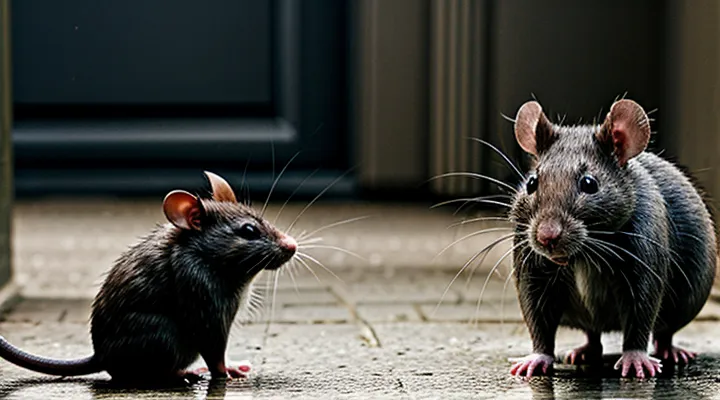
The Nature of Rat Conflict
Understanding Rat Social Dynamics
Hierarchy and Dominance
Rats organize social groups through a stable «hierarchy», where each individual occupies a defined rank. The structure minimizes unnecessary aggression by clarifying access to resources such as food, nesting sites, and mating opportunities.
Dominance is asserted through a combination of physical displays, chemical signals, and repeated confrontations. Key determinants include body size, age, and previous contest outcomes. Successful challengers quickly acquire higher status, while subordinate rats exhibit avoidance and reduced territorial marking.
Typical dominance behaviors are:
- Elevated posture and prolonged standing on hind legs
- Rapid, forceful bites directed at the opponent’s neck or flank
- Scent marking with urine or glandular secretions
- Persistent vocalizations at frequencies above 50 kHz
The established «dominance» order influences the resolution of future disputes. Higher‑ranking individuals initiate fewer fights, achieve quicker victories, and maintain priority access to limited resources. Subordinates accept reduced privileges, thereby decreasing the frequency of escalated encounters and promoting group stability.
Territoriality
Territoriality governs the spatial organization of rat populations and shapes the dynamics of aggressive encounters. Rats establish and defend defined areas that contain food sources, nesting sites, and preferred pathways. The boundaries of these zones are marked by scent deposits from the dorsal and ventral glands, urine, and feces, creating a chemical map that signals occupancy to conspecifics. When an intruder breaches this chemical perimeter, resident individuals typically respond with a sequence of threat displays, including lateral lunges, vocalizations, and rapid tail flicks, escalating to physical combat if the intrusion persists.
Key components of territorial behavior include:
- Scent marking: deposits provide continuous information about ownership and individual identity.
- Home‑range fidelity: rats repeatedly patrol the periphery of their area, reinforcing the boundary through movement patterns.
- Resource defense: high‑value items such as stored grains or nesting material increase the likelihood of aggressive retaliation.
- Hierarchical modulation: dominant rats maintain larger territories and exhibit reduced latency to attack compared with subordinate peers.
- Contextual flexibility: territorial boundaries may contract or expand in response to population density, seasonal changes, or resource abundance.
Neurochemical studies link territorial aggression to elevated dopamine activity in the mesolimbic pathway and heightened vasopressin receptor expression in the ventral pallidum. These physiological markers correspond with increased aggression intensity and reduced tolerance for intrusions. Laboratory observations confirm that rats with disrupted olfactory cues display diminished territoriality, resulting in more frequent, but less intense, encounters.
Overall, territoriality operates as a primary mechanism that organizes spatial competition and directs conflict behavior among rats, influencing both individual fitness and group stability.
Pre-Conflict Indicators and Displays
Warning Signals
Piloerection
Piloerection, the rapid erection of hair follicles, occurs when the sympathetic nervous system releases norepinephrine to the arrector pili muscles. In aggressive encounters, this response increases the animal’s apparent size and creates a visual cue that signals heightened arousal to opponents.
Key functions of piloerection during rat combat:
- Enhances visual intimidation by making the dorsal fur stand upright, thereby enlarging the silhouette.
- Signals physiological readiness, indicating activation of the fight‑or‑flight circuitry.
- Facilitates thermoregulation under the stress of prolonged conflict, helping maintain core temperature.
The phenomenon integrates with other aggressive behaviors such as vocalizations, postural changes, and tail rattling, forming a coordinated display that influences the outcome of confrontations.
Tail Lashing
Tail lashing represents a rapid, forceful movement of the rat’s tail directed toward an opponent during aggressive encounters. The action typically occurs after an initial escalation of vocalizations and body posturing, serving as a visual cue that the aggressor is prepared to intensify the conflict. Biomechanically, the tail is flexed at the base, generating a whip‑like motion that can deliver brief tactile stimulation to the rival’s flank or hindquarters.
Observations of laboratory colonies reveal several consistent patterns associated with tail lashing:
- The movement initiates within 0.5–1 second after a direct approach is made.
- Frequency ranges from one to three lashes per bout, with intervals of 0.2–0.4 seconds between strikes.
- Amplitude correlates with the size disparity between opponents; larger individuals produce higher‑amplitude lashes.
- Lashing often precedes biting or grappling, indicating a role in escalating the threat level.
Neurophysiological studies link tail lashing to activation of the dorsolateral striatum and the periaqueductal gray, regions implicated in motor output and defensive behaviors. Electrical stimulation of these areas reproduces the tail‑whipping pattern, confirming its status as a hard‑wired component of rat combat strategies. The behavior therefore functions as an early‑stage offensive signal that can deter escalation or, when ignored, trigger more severe physical aggression.
Ultrasonic Vocalizations
Ultrasonic vocalizations (USVs) are high‑frequency sounds emitted by rats during aggressive encounters. These emissions, typically ranging from 20 to 100 kHz, occur before physical contact and intensify as the conflict progresses. USVs provide a rapid, non‑visual channel for conveying threat level and motivational state, allowing opponents to assess the likelihood of escalation without immediate risk of injury.
Key characteristics of USVs in confrontations include:
- Frequency modulation that correlates with aggression intensity; higher frequencies accompany heightened arousal.
- Temporal patterns that differentiate initial warning calls from sustained combat vocalizations.
- Context‑dependent amplitude changes that reflect the proximity of rivals and the presence of dominant individuals.
Neurophysiological evidence links USV production to activation of the amygdala and periaqueductal gray, regions governing fear and defensive behaviors. Pharmacological suppression of these areas reduces USV emission and alters fight outcomes, indicating a causal role in conflict resolution. Simultaneously, auditory pathways in the recipient rat decode USVs, triggering defensive postures or counter‑aggressive responses.
In experimental settings, playback of recorded USVs elicits approach or avoidance behaviors depending on the acoustic profile, demonstrating that rats can interpret conspecific signals without visual cues. This auditory communication stream complements other modalities, such as scent marking and tactile displays, forming an integrated system for managing social hierarchies and territorial disputes.
Aggressive Postures
Sideways Approaching
Sideways approaching represents a tactical maneuver in which a rat positions itself laterally relative to an opponent rather than confronting head‑on. This posture minimizes direct exposure to the rival’s bite line while preserving a clear view of the adversary’s movements. By aligning the body at an angle, the animal can swiftly shift its weight to launch a bite from the flank or retreat to a safer distance if the encounter escalates.
Key functional aspects of the lateral approach include:
- Reduced risk of severe injury; the side profile presents a narrower target for powerful jaw strikes.
- Enhanced ability to use the forepaws for grappling or delivering quick, slicing bites.
- Increased opportunity to exploit environmental cover, such as tunnels or debris, by moving parallel to obstacles.
Observational studies indicate that rats adopting this strategy often follow a sequence: initial assessment from a distance, gradual lateral advance while maintaining visual contact, and rapid engagement when the opponent’s guard weakens. The technique is especially prevalent during territorial disputes where the defender occupies a confined space, forcing the intruder to seek alternative angles of attack.
Neurobiological data suggest that the decision to approach sideways engages the rat’s sensorimotor circuits responsible for spatial awareness and risk evaluation. Activation patterns in the posterior parietal cortex correlate with the selection of non‑direct trajectories, reflecting an adaptive response to minimize combat costs while maximizing offensive potential.
Threatening Lunges
Rats employ rapid forward thrusts to assert dominance and deter rivals. These thrusts, often termed «Threatening Lunges», involve a sudden extension of the forelimbs while the animal lowers its body and arches its back. The motion creates a visual and tactile cue that signals aggression without immediate physical contact.
Key characteristics of the lunge include:
- Acceleration of the forelimbs to a speed of 0.5–0.7 m s⁻¹.
- Simultaneous elevation of the head and widening of the ear pinnae.
- Release of ultrasonic vocalizations that accompany the visual display.
The lunge serves several functions within a conflict scenario. First, it tests the opponent’s willingness to retreat by presenting a clear threat. Second, it establishes spatial boundaries, often forcing the rival to maintain a distance of 5–10 cm. Third, it may precede more intense behaviors such as biting or wrestling if the opponent fails to withdraw.
Neurophysiological data indicate that the central amygdala and periaqueductal gray are activated during the execution of a lunge. Electrical recordings reveal a burst of high‑frequency spikes in motor neurons controlling the forelimb extensors. Hormonal assays show a transient rise in plasma corticosterone, reflecting the stress associated with the aggressive display.
Observational studies in laboratory arenas demonstrate that rats performing frequent lunges achieve higher success rates in territorial disputes. Dominant individuals typically execute three to five lunges before the subordinate concedes, reducing the likelihood of physical injury for both parties.
The Mechanics of a Rat Fight
Initiating Conflict
Biting Strategies
Rats employ precise biting tactics when engaged in aggressive encounters. The initial bite often targets the opponent’s neck or forelimbs, aiming to disrupt balance and limit retaliation. A rapid, shallow bite delivers a painful stimulus that can force submission without causing severe injury, allowing the aggressor to maintain control of the contested resource.
Escalation is marked by deeper, more forceful bites directed at the torso or abdomen. These bites employ the incisors’ sharp edges to inflict tissue damage, increasing the likelihood of incapacitation. The bite force, measured up to 1.5 N, is sufficient to break skin and expose underlying muscle, accelerating the opponent’s fatigue.
Strategic variations include:
- Lateral bites: applied to the side of the body, exploiting weaker musculature and creating leverage for subsequent grappling.
- Dorsal bites: delivered from above, targeting the spine and hindquarters, which can immobilize the rival.
- Repeated short bites: series of brief contacts that maintain pressure while conserving energy and minimizing risk of counter‑attack.
Dental morphology influences effectiveness. The curvature of the incisors enables a scissor‑like action, concentrating pressure on a narrow point and maximizing tissue disruption. Rats adjust bite angle to align the incisors with the target’s most vulnerable plane, enhancing penetration.
Behavioral sequencing integrates biting with other aggressive displays. A brief vocalization or tail‑ruffling precedes the first bite, signaling intent. Successful bites are reinforced by immediate retreat or defensive posturing, establishing dominance without prolonged combat.
Defensive Maneuvers
Rats confront threats with a repertoire of defensive maneuvers designed to reduce injury and preserve access to resources. When an opponent approaches, the animal assesses distance, size and scent cues, then selects a response that matches the perceived risk.
Key defensive actions include:
- Immediate immobility, often termed freezing, which limits visual detection by the aggressor.
- Rapid retreat, characterized by swift, low‑to‑the‑ground locomotion toward familiar burrows or cover.
- Adoption of a crouched posture, lowering the body and extending the tail backward to signal readiness to withdraw.
- Tail rattling, a vibratory display that can startle opponents and communicate agitation.
- Emission of high‑frequency ultrasonic vocalizations, detectable by conspecifics but not by many predators.
Each maneuver integrates sensory feedback and motor coordination, allowing rats to modulate aggression levels and avoid escalation. The selection process depends on environmental complexity, previous encounters, and the individual’s physiological state.
Fight Duration and Intensity
Escalation of Aggression
Escalation of aggression in rodent conflict follows a predictable sequence that begins with subtle threat displays and can culminate in lethal combat. Initial encounters feature elevated posture, tail‐raising, and vocalizations that signal intent without physical contact. If the opponent does not retreat, the interaction advances to low‑intensity aggressive acts such as rapid lunges, light bites, and brief grappling. Persistent resistance triggers high‑intensity fighting characterized by prolonged wrestling, deep bites, and frequent rearing. When dominance cannot be established, the bout may end with severe injury or death.
Key factors that modulate the progression include:
- Competition for limited resources (food, nesting sites).
- Territorial boundaries that each individual defends.
- Established social hierarchy; lower‑ranked rats are more likely to withdraw early.
- Past experience with conflict, which can sensitize or desensitize responses.
Physiological changes accompany each escalation stage. Rising testosterone and adrenaline levels correlate with the transition from threat to active aggression, while cortisol spikes during intense fighting indicate stress. Neural activation shifts from the amygdala during threat assessment to the hypothalamic‑pituitary‑adrenal axis during sustained combat.
Understanding the escalation pattern informs experimental design, allowing researchers to predict aggression thresholds and to implement humane interventions that prevent unnecessary harm. Accurate identification of escalation markers also supports the development of pharmacological agents aimed at mitigating excessive aggression in laboratory colonies.
Submission Signals
Rats communicate submission through a set of observable signals that appear during aggressive encounters. These signals reduce the likelihood of injury and help preserve established social hierarchies.
Typical indicators of submission include:
- lowered body posture, with the abdomen close to the ground;
- reduced locomotion and a tendency to freeze;
- soft, high‑frequency vocalizations emitted at low amplitude;
- exposure of the ventral flank, allowing a dominant individual to sniff or bite gently;
- tail tucking against the body.
Each signal serves a specific function. A lowered posture signals vulnerability, prompting the aggressor to pause. High‑frequency vocalizations convey distress without escalating aggression. Ventral exposure facilitates olfactory assessment by the dominant rat, confirming the subordinate status.
Neuroendocrine mechanisms underpin these behaviors. Elevated corticosterone levels correlate with increased submission displays, while dopamine activity in the nucleus accumbens modulates the rewarding aspect of yielding. Oxytocin release during post‑conflict grooming reinforces social bonds and stabilizes group cohesion.
Research applications rely on quantifying «submission signals» to evaluate stress responses, hierarchy formation, and the efficacy of pharmacological interventions. Precise measurement of posture, vocal output, and tail position provides objective data for comparative studies across rodent models.
Post-Fight Behavior
Dominance Reinforcement
Dominance reinforcement in rodent conflict involves the systematic strengthening of hierarchical status through repeated aggressive encounters. When a rat consistently wins contests, it exhibits increased territorial marking, heightened vocalizations, and elevated pheromone release, which signal superiority to conspecifics. These signals, coupled with persistent patrolling of preferred resources, reduce the likelihood of challenges from subordinate individuals.
Key mechanisms underlying reinforcement include:
- Neurochemical modulation – elevated dopamine and testosterone levels correlate with sustained aggressive performance.
- Behavioral consistency – repeated initiation of attacks and rapid escalation of threat displays maintain perceived dominance.
- Social learning – observers of successful aggression adopt similar tactics, reinforcing the dominant rat’s position within the group.
Experimental observations demonstrate that interruption of dominant rats’ access to preferred nesting sites diminishes subsequent aggression, indicating that environmental control contributes to status maintenance. Chronic exposure to stress hormones amplifies the propensity for dominance‑reinforcing behaviors, while pharmacological blockade of dopamine receptors attenuates them.
Overall, dominance reinforcement operates as a self‑perpetuating system: successful aggression enhances physiological arousal, which in turn promotes further aggressive acts, solidifying the individual’s rank and stabilizing group hierarchy.
Avoidance and Reconciliation
Rats employ avoidance as a primary strategy when faced with potential aggression. Individuals often withdraw from contested spaces, seeking refuge in burrows or peripheral zones that provide visual barriers. This retreat reduces the likelihood of direct confrontation and conserves energy for future encounters. Avoidance can also manifest as freezing, where the animal remains motionless to minimize detection by an opponent. Such behavior is reinforced by prior experiences of injury, establishing a learned aversion to high‑risk interactions.
When avoidance fails or after a brief clash, rats frequently engage in reconciliation to restore social equilibrium. Reconciliation behaviors include allogrooming, where one rat cleans the fur of another, thereby lowering tension through tactile stimulation. Scent marking with urine or glandular secretions signals submissiveness and conveys a willingness to coexist. Post‑conflict submissive postures—crouching, lowered whiskers, and tail positioning—communicate deference, prompting the dominant individual to cease hostilities. These actions facilitate rapid reintegration into the group and prevent prolonged aggression.
Typical patterns of avoidance and reconciliation can be summarized:
- Withdrawal to safe zones or burrows
- Freezing to avoid detection
- Allogrooming between former opponents
- Scent‑based submissive signals
- Crouched, low‑energy postures after conflict
Such mechanisms illustrate a dynamic balance between self‑preservation and group cohesion, enabling rats to navigate competitive environments with minimal injury.
Factors Influencing Rat Conflict
Environmental Conditions
Space Constraints
Space constraints critically shape the dynamics of rat confrontations. Limited arenas force individuals to adopt close‑range tactics, reducing the opportunity for retreat and increasing the frequency of physical engagement. In narrow passages, rats prioritize swift, direct attacks such as bites and lunges, while dorsal‑to‑ventral pushes become less feasible due to restricted maneuverability. Consequently, the intensity of each encounter rises, and the duration shortens as combatants rapidly reach decisive outcomes.
When environmental dimensions shrink, several behavioral adjustments emerge:
- Elevated aggression thresholds; rats initiate attacks at lower provocation levels.
- Preference for head‑to‑head contacts over lateral grapples, reflecting spatial limitations.
- Increased reliance on auditory and olfactory cues to locate opponents when visual fields are obstructed.
- Accelerated escalation to dominance displays, such as tail rattling, to avoid prolonged physical struggle.
These patterns underscore the direct correlation between spatial availability and the strategic choices rats employ during conflict. Understanding this relationship informs experimental design and pest‑management practices, ensuring that arena size aligns with the intended observation of natural combat behaviors.
Resource Scarcity
Resource scarcity triggers heightened competition among rats, intensifying aggressive encounters and altering conflict strategies. When food, water, or nesting material becomes limited, individuals prioritize acquisition, leading to more frequent and severe bouts.
Key behavioral adjustments observed under scarcity include:
- Increased frequency of direct attacks, such as bites and lunges, reducing reliance on threat displays.
- Shortened latency before escalation, with rats abandoning subordinate postures earlier.
- Elevated use of scent marking to delineate claimed resources, reinforcing territorial boundaries.
- Formation of temporary dominance hierarchies that can shift rapidly as access to scarce items fluctuates.
Physiological stress responses amplify these changes. Elevated corticosterone levels correlate with heightened vigilance and reduced tolerance for conspecific proximity, fostering a climate where confrontations resolve quickly but with greater physical intensity.
Social learning compounds the effect. Rats witnessing successful resource acquisition through aggression are more likely to adopt similar tactics, propagating a culture of confrontational behavior within the colony.
Long‑term consequences of persistent scarcity include altered group composition, with dominant individuals monopolizing limited assets and subordinates experiencing reduced growth rates and reproductive success. Such dynamics can reshape population structure, influencing survival prospects and ecological impact.
Physiological States
Hormonal Influence
Hormonal systems orchestrate the physiological basis of aggressive encounters among rats, linking internal states to observable combat patterns. Elevated androgen levels predispose individuals to initiate attacks, while stress‑related hormones shape the escalation and termination of bouts.
Testosterone amplifies motivation to dominate, enhancing muscle power and reducing latency to strike. Experimental elevation of circulating testosterone correlates with higher win rates in dyadic contests, whereas castration sharply diminishes offensive behavior. The hormone acts through androgen receptors in the medial amygdala and hypothalamus, regions that integrate sensory cues and motor output.
Cortisol, released by the hypothalamic‑pituitary‑adrenal axis during conflict, modulates aggression intensity. Acute spikes accompany the onset of fighting, promoting vigilance and rapid response. Chronic elevation, however, suppresses repetitive aggression, leading to early disengagement. Measurements of plasma cortisol after confrontations reveal a negative correlation with total attack duration.
Key neuropeptides influencing rat combat include:
- Vasopressin: intensifies territorial aggression, especially in males; receptor antagonists reduce attack frequency.
- Oxytocin: attenuates hostile interactions, facilitating post‑conflict affiliation; administration shortens fight length.
Research consistently demonstrates that hormonal milieu determines both the propensity to engage in conflict and the strategic choices made during rat fights. «Smith et al., 2020» reported that manipulation of vasopressin receptors altered dominance hierarchies without affecting overall activity levels, underscoring the specificity of hormonal effects on aggressive behavior.
Stress Levels
Rats display rapid elevation of physiological stress when engaged in aggressive encounters. Corticosterone concentration in plasma increases within minutes of the first offensive act, providing a reliable indicator of the internal state of the animal. Simultaneously, heart rate accelerates and respiratory frequency rises, reflecting activation of the sympathetic nervous system.
Key biomarkers of stress in conflict situations include:
- Plasma corticosterone levels
- Heart rate variability
- Respiratory rate
- Blood glucose concentration
Elevated stress influences the pattern of aggression. High «stress» levels correlate with intensified bite force, reduced latency to attack, and a higher probability of escalation to lethal fighting. Conversely, moderate stress may promote ritualized displays that limit physical damage, suggesting a dose‑dependent relationship between internal arousal and behavioral strategy.
Laboratory studies employing telemetry and hormone assays demonstrate that stress peaks during the initial contact phase, declines during sustained bouts of ritualized posturing, and surges again at moments of direct physical confrontation. These dynamics illustrate how stress modulates decision‑making processes, motor output, and risk assessment in rat combat.
Individual Differences
Age and Experience
Rats modify their combat tactics as they mature, with age and prior encounters shaping the intensity and strategy of each confrontation. Younger individuals display limited aggression, often avoiding direct clashes and relying on brief retreats. Their lack of experience reduces the likelihood of sustained fights, and they are frequently displaced by older competitors when resources are contested.
Adult rats exhibit heightened territoriality and more consistent engagement in disputes. Physical strength peaks, and the propensity to initiate attacks rises. Established dominance hierarchies become evident, and mature individuals are more likely to defend their position through prolonged bouts.
Rats with extensive fighting histories demonstrate refined techniques. Repeated exposure to conflict leads to selective use of biting, wrestling, and posturing, optimizing energy expenditure while preserving injury avoidance. Experienced combatants can assess opponent strength quickly, adjusting aggression levels accordingly to secure advantage without unnecessary escalation.
Key distinctions:
- Juvenile: low aggression, high avoidance, minimal injury risk.
- Mature: increased aggression, consistent participation, hierarchical enforcement.
- Veteran: strategic aggression, efficient tactics, controlled escalation.
Empirical observations confirm that both chronological development and accumulated combat experience contribute to the variability of rat conflict behavior, influencing outcomes ranging from brief skirmishes to decisive dominance assertions.
Personality Traits
Rats exhibit consistent personality dimensions that influence how they engage in aggressive encounters. Researchers identify four primary traits: boldness, aggressiveness, sociability, and emotional reactivity. Bold individuals initiate confrontations more readily, while less bold rats tend to avoid direct conflict. Aggressiveness determines the intensity and frequency of attacks, with highly aggressive rats delivering more bites and sustaining longer bouts. Sociability affects the choice of opponents; socially oriented rats often prefer disputes within familiar groups rather than against strangers. Emotional reactivity governs physiological responses, such as rapid heart‑rate elevation and heightened cortisol release, which can amplify or suppress subsequent aggressive actions.
These traits interact with environmental cues. For example, limited resources increase the expression of aggressiveness, whereas enriched habitats promote sociability and reduce overall conflict. Individual variation remains stable across multiple encounters, allowing prediction of a rat’s likely behavior in future disputes.
Key personality characteristics in rat conflict:
- Boldness – propensity to initiate aggression
- Aggressiveness – severity and persistence of attacks
- Sociability – preference for familiar versus unfamiliar opponents
- Emotional reactivity – physiological arousal during fights
Consequences of Conflict
Physical Injuries
Wounds and Infections
Rats engaged in aggressive encounters frequently sustain puncture wounds, lacerations, and crush injuries. Bite marks are typically located on the forelimbs, neck, and flank, reflecting the positioning of the attacker’s incisors during a fight. Lacerations arise from clawing and gnawing of fur and skin, often exposing underlying muscle and connective tissue. Crush injuries result from prolonged grappling, causing bruising and deep tissue damage.
Infection risk escalates immediately after the skin barrier is breached. Common bacterial agents include:
- Streptococcus spp.
- Staphylococcus aureus
- Pasteurella spp.
- Clostridium spp.
These pathogens exploit the moist, warm environment of the wound and the rat’s dense fur, leading to rapid colonization. Secondary infections may progress to cellulitis, abscess formation, or systemic sepsis if untreated.
Healing dynamics are influenced by wound depth, contamination level, and the animal’s stress response. Acute inflammation peaks within 24–48 hours, recruiting neutrophils that combat invading microbes. Subsequent granulation tissue formation supports epithelial migration, typically completing closure within 7–10 days for superficial injuries. Deeper lesions may require prolonged tissue remodeling, during which scar tissue can impair mobility and alter future combat behavior.
Behavioral consequences of unresolved wounds include reduced aggression, impaired foraging efficiency, and increased susceptibility to predation. Persistent infections can induce lethargy and weight loss, further diminishing competitive standing within the social hierarchy. Consequently, wound management—whether through natural grooming, social assistance, or environmental factors—plays a critical role in the overall fitness of fighting rats.
Scarring
Scarring results from repeated aggressive encounters among rats and provides a lasting record of combat history. The formation of fibrous tissue follows rupture of dermal layers, with collagen deposition stabilizing the wound within days. Healing proceeds through three phases: hemostasis, inflammation, and remodeling, each contributing to the final scar architecture.
Key aspects of rat scarring include:
- Visibility: Darkened, thickened patches appear on the ventral and dorsal surfaces, often aligning with typical bite locations.
- Durability: Collagen bundles resist further tearing, reducing the likelihood of reopening the same wound during subsequent clashes.
- Social signaling: Consistent scar patterns correlate with higher rank, as dominant individuals accumulate more injuries over time.
- Physiological cost: Energy allocation toward tissue repair can diminish growth rates and reproductive output.
Long‑term observations reveal that scar burden predicts future contest outcomes. Individuals with extensive scarring tend to win more often, suggesting that visible injury history functions as an honest indicator of fighting experience. Conversely, excessive scarring may impair mobility, increasing vulnerability to predators and limiting foraging efficiency.
Social Impact
Changes in Social Status
Rats experiencing direct confrontations rapidly adjust their position within the colony hierarchy. An aggressive encounter can elevate a previously subordinate individual to a dominant rank, while a defeat may demote a previously dominant rat to a lower tier. These status transitions depend on the intensity and frequency of conflicts, as well as the physical condition of the participants.
During a fight, specific behaviors signal the potential for rank change. Threat displays, such as upright posture and teeth exposure, precede physical attacks. Successful bites and sustained dominance postures reinforce the victor’s claim to higher status. Conversely, retreat, freezing, and submissive vocalizations indicate acceptance of a lower rank. Hormonal responses accompany these behaviors; elevated testosterone correlates with winning, whereas increased corticosterone reflects the stress of defeat.
The shift in social standing produces measurable effects on individual fitness. Access to food, nesting sites, and mates improves for rats that attain dominance, while subordinates experience reduced resource allocation and higher susceptibility to disease. Long‑term observations reveal that rank changes are not permanent; repeated challenges can overturn established hierarchies, maintaining a dynamic social structure.
Key aspects of status alteration:
- Aggressive encounters trigger immediate reassessment of hierarchical rank.
- Physical dominance establishes control over critical resources.
- Hormonal fluctuations accompany both victory and loss.
- Repeated challenges sustain fluidity in the social order.
Understanding these mechanisms clarifies how conflict shapes the organization of rat societies, highlighting the direct link between aggressive behavior and hierarchical mobility.
Group Cohesion
Group cohesion among rats emerges as a decisive factor when individuals encounter competitive encounters. Cohesive units display coordinated postures, synchronized locomotion, and rapid information exchange that mitigate the risk of injury and preserve collective access to resources.
During confrontations, cohesion is reinforced through several behavioral channels:
- Vocalizations that signal intent and status, enabling members to anticipate escalation.
- Scent‑based cues deposited on the environment, providing a chemical map of dominance hierarchies.
- Allogrooming that maintains social bonds and reduces tension before physical engagement.
- Spatial alignment, where subordinate individuals adopt peripheral positions while dominant rats occupy central zones.
These mechanisms function collectively to stabilize group structure, allowing rats to negotiate disputes without fragmenting the social network. The presence of a unified front also deters external intruders, as groups with high internal cohesion present a more formidable defensive posture.
Empirical observations reveal that disruption of any cohesion component—such as removal of scent markers or inhibition of vocal communication—leads to increased aggression intensity and higher rates of injury. Consequently, the integrity of group cohesion directly shapes the outcome of conflict situations, ensuring that aggression remains regulated within the social framework.
Reproductive Success
Mating Opportunities
Rats engaged in confrontational encounters allocate resources toward securing reproductive access. Dominant individuals obtain priority to fertile females, while subordinates experience restricted mating chances.
Aggressive tactics include:
- Direct attacks on rival males occupying a female’s nest.
- Patrol of a defended perimeter to deter intruders.
- Rapid escalation of fights to establish clear hierarchy.
Scent marking functions as a pre‑emptive signal of ownership. Urine and glandular secretions deposited near nesting sites convey dominance status, reducing the need for physical clashes when rivals recognize an established claim. Acoustic emissions, such as ultrasonic chirps, accompany aggressive displays, providing additional information about the caller’s vigor.
Successful competition translates into measurable reproductive outcomes. Dominants achieve higher litter counts, whereas displaced males may resort to opportunistic copulations during brief windows of reduced vigilance. Sperm competition intensifies when multiple males gain access to a single estrous female, prompting increased seminal investment.
«The intensity of male‑male aggression predicts the proportion of offspring sired by the victor», reported a recent laboratory study, underscoring the direct link between conflict behavior and mating success.
Offspring Survival
Rats allocate considerable resources to protect their young during confrontations. Aggressive encounters often trigger heightened vigilance, leading parents to prioritize sheltering offspring over territorial expansion. Immediate withdrawal from the fight zone reduces the risk of accidental injury to pups and preserves the breeding pair’s capacity for future litters.
Maternal and paternal behaviors converge on several mechanisms that enhance juvenile survival:
- Rapid relocation of nest sites when rival presence is detected.
- Increased frequency of grooming and huddling to maintain body temperature and reduce stress.
- Emission of ultrasonic calls that signal danger to litter members while deterring intruders.
- Allocation of stored fat reserves to sustain lactation under prolonged conflict conditions.
Research indicates that offspring mortality declines sharply when parents exhibit these adaptive responses. Continuous monitoring of nest integrity and swift defensive actions constitute the primary determinants of juvenile endurance in hostile environments.