
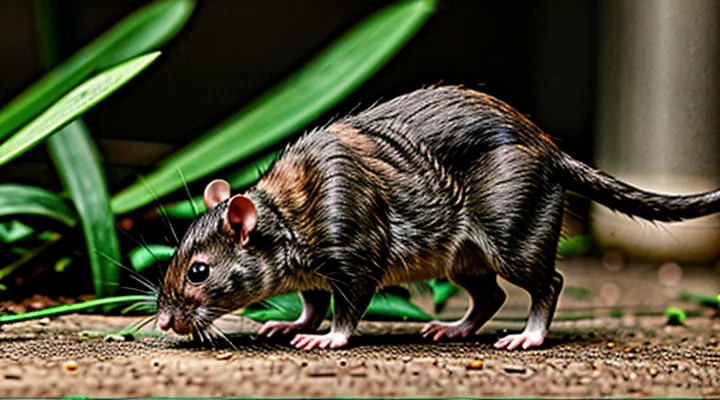
The Ecological Niche of Rats
Role as Prey Animals
Food Source for Predators
Rats serve as a substantial prey item for a wide range of carnivorous and omnivorous species, linking primary production to higher trophic levels. Their abundance and reproductive capacity provide consistent energy sources that sustain predator populations, particularly in habitats where alternative prey are scarce.
Key predator groups that rely on rats include:
- Birds of prey such as hawks, owls, and eagles, which capture rats during daylight or nocturnal hunts.
- Mammalian hunters like foxes, coyotes, and weasels, which locate rat burrows or chase individuals across open ground.
- Reptilian predators, notably certain snake species, that exploit rats as a primary food source during breeding seasons.
- Semi-aquatic carnivores, including otters and some mustelids, which retrieve rats from water margins and flooded burrows.
The presence of rats influences predator reproductive success and territorial dynamics. Increased rat availability often correlates with higher litter sizes, earlier breeding onset, and expanded hunting ranges. Conversely, declines in rat populations can trigger predator displacement, reduced survival rates, and shifts toward alternative, sometimes less abundant, prey.
Through these interactions, rats contribute to the regulation of predator numbers, the stability of food webs, and the overall resilience of ecosystems. Their role as a food source underpins energy transfer from plants and insects to apex consumers, reinforcing ecological balance.
Population Dynamics and Predator Support
Rats exhibit rapid reproductive cycles, producing multiple litters each year. High fecundity allows populations to expand swiftly after favorable conditions, such as abundant food or mild weather. Conversely, density‑dependent factors—predation pressure, disease, and competition for limited resources—trigger declines, creating oscillations that stabilize community structure over time.
These fluctuations sustain a diverse array of carnivores and raptors. Predators that rely on small mammals, including foxes, owls, hawks, and some snakes, track rat abundance as a primary food source. When rat numbers surge, predator reproductive success and juvenile survival rates increase, reinforcing the trophic link. When populations contract, predators shift to alternative prey, preventing over‑exploitation of any single species.
Key outcomes of rat population dynamics:
- Regular turnover supplies consistent biomass for higher trophic levels.
- Seasonal peaks align with breeding periods of many predators, enhancing their offspring provisioning.
- Mortality from disease and predation reduces rodent‑borne pathogen loads, indirectly benefiting ecosystem health.
Through these mechanisms, rats function as a pivotal conduit of energy, linking primary producers and decomposers to the apex of the food web.
Rats as Omnivores and Scavengers
Seed Dispersal
Rats collect, transport, and deposit seeds while foraging, creating pathways for plant propagation across heterogeneous habitats. Their burrowing activity often moves seeds away from parent plants, reducing competition and increasing germination probability.
- Consumption of fruit leads to seed passage through the gastrointestinal tract; scarification during digestion enhances seed coat permeability.
- Caching behavior stores seeds in underground chambers; unretrieved caches germinate in protected microenvironments.
- Transport of seed-laden materials along runways and trails distributes propagules to disturbed or open sites unsuitable for other dispersers.
These processes expand plant population fronts, facilitate colonization of successional areas, and maintain genetic diversity within fragmented landscapes. By linking animal movement patterns with vegetation dynamics, rats indirectly shape community structure and resilience.
Decomposition and Nutrient Cycling
Rats consume dead organisms, organic waste, and plant material, converting them into smaller fragments that are more accessible to microbes. This rapid breakdown increases the surface area available for bacterial and fungal activity, thereby accelerating decomposition rates.
Their feces deposit nitrogen, phosphorus, and potassium directly into the soil. These nutrients become readily available for plant uptake, supporting primary productivity and maintaining soil fertility.
Burrowing behavior mixes surface litter with deeper soil layers, improving aeration and water infiltration. The resulting physical disturbance distributes organic matter throughout the profile, facilitating uniform nutrient distribution.
Key mechanisms through which rats influence decomposition and nutrient cycling include:
- Ingestion of carrion and refuse, producing homogenized organic matter.
- Excretion of nutrient‑rich droppings that enrich the substrate.
- Soil turnover via tunnel construction, enhancing microbial access to organic inputs.
Ecosystem Engineers
Burrowing Activities
Rats construct extensive tunnel networks that modify the physical structure of the soil. Their continuous digging creates channels that increase porosity, allowing air and moisture to penetrate deeper layers. This process improves soil aeration and promotes root development for plants.
Burrowing activity accelerates the redistribution of organic matter. Soil particles mixed with decomposing material enhance nutrient availability, supporting microbial populations that drive decomposition and nitrogen fixation. The resulting nutrient enrichment benefits vegetation and the broader food web.
The voids left by rat tunnels provide refuge for a variety of invertebrates, reptiles, and small mammals. These secondary occupants exploit the shelters for breeding and protection from predators, thereby increasing local biodiversity.
Tunnels facilitate water infiltration, reducing surface runoff and limiting soil erosion. Enhanced percolation contributes to groundwater recharge and stabilizes slope integrity during precipitation events.
Excessive burrowing in agricultural settings can damage crops and undermine infrastructure. Managed populations balance the ecological benefits of soil modification with the need to protect human interests.
Soil Aeration and Water Infiltration
Rats construct extensive tunnel networks beneath the surface, displacing compacted soil and creating channels that increase the volume of air-filled voids. These passages interrupt dense layers, allowing oxygen to penetrate deeper zones and supporting aerobic microbial processes that accelerate organic matter decomposition.
The burrows also modify the soil’s hydraulic properties. By breaking up clods and connecting surface litter to subsurface strata, rats enhance the rate at which precipitation infiltrates the ground. Water moves through the created voids more readily, reducing surface runoff and promoting percolation to root zones.
Key outcomes of rat‑induced soil modification:
- Elevated oxygen availability for soil biota, leading to faster nutrient cycling.
- Improved water entry and distribution, decreasing erosion risk.
- Greater root access to moisture and nutrients, fostering plant growth.
Collectively, these effects illustrate how rodent burrowing activity contributes to ecosystem functioning through physical alteration of soil structure.
Impact on Plant Communities
Herbivory and Seed Consumption
Rats consume a wide range of plant material, including seedlings, fruits, and seeds, directly influencing vegetation dynamics. Their herbivorous activities reduce seedling density in some habitats, which can limit the establishment of competitive plant species and promote diversity by allowing less dominant flora to persist.
- Selective feeding on high‑nutrient seeds removes potential colonizers that might otherwise monopolize resources.
- Consumption of fleshy fruits disperses viable seeds through fecal deposition, often at distances beyond the parent plant’s immediate canopy.
- Passage through the digestive tract scarifies seed coats, enhancing germination rates for species such as certain grasses and legumes.
- Partial seed predation eliminates a proportion of the seed bank, preventing overabundance and reducing the risk of monocultures.
Through these mechanisms, rats act as both seed predators and dispersers, shaping plant community composition and contributing to the resilience of ecosystems.
Influence on Plant Succession
Rats affect plant succession through direct and indirect mechanisms that modify the composition and structure of vegetation over time. Their foraging activities create micro‑disturbances in the soil, breaking up compacted layers and exposing seed banks. This physical alteration enables germination of species that require light or loose substrate, accelerating the transition from early‑successional to later‑successional communities.
Nutrient dynamics shift as rats consume organic matter and excrete waste rich in nitrogen, phosphorus, and potassium. These deposits concentrate around burrow entrances and feeding sites, creating localized fertility hotspots. Enhanced nutrient availability promotes the growth of fast‑growing pioneer species, while the subsequent build‑up of organic matter supports shade‑tolerant plants that dominate later stages.
Seed dispersal occurs when rats transport fruits, nuts, and seed pods in their cheek pouches or after ingestion. Dropping viable seeds in new locations extends the spatial reach of plant species, often introducing them to habitats where they would not otherwise establish. This behavior contributes to species turnover and diversification within successional sequences.
- Soil turnover and aeration
- Concentrated nutrient deposits from feces and urine
- Transport and deposition of viable seeds
- Predation on herbivorous insects that otherwise suppress seedling growth
Collectively, these processes shape the trajectory of plant communities, influencing the rate and direction of successional change in ecosystems where rats are present.
Human-Associated Rat Populations
Synanthropic Rats and Urban Ecosystems
Waste Management and Scavenging
Rats efficiently locate, collect, and transport organic waste across urban and rural landscapes. Their acute sense of smell enables rapid identification of decomposing material, while their agile movement covers extensive territories, ensuring that food remnants do not accumulate in one place.
Through constant foraging, rats break down large debris into smaller fragments, increasing surface area exposed to microbial activity. This mechanical fragmentation accelerates decomposition, reduces odor, and limits the spread of pathogens that thrive in undisturbed waste piles.
Key contributions of rat scavenging include:
- Redistribution of nutrients from discarded matter to soil layers via excreta, enhancing microbial fertility.
- Suppression of pest populations by competing for the same food sources, indirectly lowering infestations of insects and other vermin.
- Creation of microhabitats within burrows that support diverse microbial and invertebrate communities, fostering a cascade of ecological interactions.
Overall, rat-driven waste processing integrates with natural decomposition cycles, supporting ecosystem stability and reducing the burden on human waste-management infrastructure.
Disease Transmission Dynamics
Rats occupy a central position in disease ecology, linking microbial communities with terrestrial and urban habitats. Their high reproductive rate and adaptability generate dense populations that sustain pathogen lifecycles.
As long‑term hosts, rats maintain viruses, bacteria, and parasites without severe morbidity. This reservoir capacity allows pathogens such as hantavirus, Leptospira, and Yersinia pestis to persist in the environment, providing a continuous source of infection for susceptible species.
Transmission occurs through multiple pathways:
- Direct contact: bites, scratches, and grooming transfer saliva and blood.
- Environmental contamination: urine, feces, and droppings deposit infectious agents on soil, water, and food surfaces.
- Ectoparasite mediation: fleas, ticks, and mites acquire pathogens from rat hosts and subsequently infect other mammals.
- Aerosolization: dried excreta generate airborne particles that can be inhaled by humans and animals.
These mechanisms influence community health by modulating predator‑prey dynamics, altering population structures, and shaping disease emergence patterns. The presence of rats therefore impacts ecosystem stability through the flow of pathogens across trophic levels.
Agricultural Impacts
Pest Species and Crop Damage
Rats are among the most widespread rodent pest species affecting agricultural production. Their foraging behavior leads to direct consumption of seeds, seedlings, and mature crops, reducing yields and increasing post‑harvest losses. Burrowing activity damages root systems and soil structure, creating channels that facilitate erosion and promote the entry of pathogens.
Key mechanisms of crop damage caused by rats include:
- Consumption of grains, fruits, and vegetables, often exceeding 10 % of total harvest in heavily infested fields.
- Gnawing of stems and leaves, which impairs plant growth and can introduce fungal infections.
- Contamination of stored produce with urine and feces, creating conditions for bacterial proliferation and rendering food unsafe for consumption.
While rats impose measurable economic costs, their presence also triggers ecological responses. Predatory birds, snakes, and small carnivores rely on rat populations as a food source, linking agricultural habitats with surrounding wildlife communities. This predation pressure can regulate rat numbers, thereby moderating the intensity of crop damage over time.
Indirect Ecological Consequences
Rats generate ripple effects that extend beyond direct consumption of food and waste processing. Their foraging habits alter plant community composition by transporting seeds to new microhabitats; germination rates increase where seed caches escape predation, leading to greater vegetation heterogeneity.
By burrowing, rats enhance soil structure, creating channels that improve aeration and water infiltration. These modifications accelerate organic matter decomposition, raising nutrient availability for surrounding flora and supporting microbial diversity.
Predator populations respond to rat abundance. Species such as owls, hawks, and snakes experience elevated reproductive success when rodent numbers rise, which in turn regulates other small vertebrate and invertebrate groups through top‑down pressure.
Parasitic and pathogen cycles shift as rats serve as intermediate hosts. Their presence can amplify disease vectors that affect wildlife, influencing mortality patterns and competitive dynamics among susceptible species.
Competition with native granivores intensifies as rats exploit stored seeds and crops. This pressure can suppress populations of ground‑dwelling birds and small mammals, indirectly reshaping trophic interactions and resource allocation across the ecosystem.
Overall, the indirect consequences of rat activity manifest through altered plant distribution, enhanced soil processes, modified predator‑prey relationships, disease mediation, and competitive displacement, collectively influencing ecosystem resilience and function.